2027 Best Online Associate Degrees in General Studies With the Best Balance of Flexibility and Affordability

Co-Founder and Chief Data Scientist
Choosing an online associate degree in general studies is often a cost-and-flexibility decision: you want broad credits that transfer, but you do not want to overpay for a degree that may not match your goals. The National Center for Education Statistics reported in 2024 that public two-year colleges remain far less expensive than four-year options, making them a practical starting point.
This guide is for adults, transfer students, military learners, and undecided majors who need a flexible path. You will learn how programs compare, what they cost, which schools to shortlist, and how to avoid costly enrollment mistakes.
Key Things You Should Know
- An online associate degree in general studies usually requires about 60 credits and is best for students who want transferable general education credits, a broad career foundation, or a lower-cost route into a bachelor's program.
- Public community colleges often offer the strongest affordability; NCES data published in 2024 placed average public two-year in-district tuition and fees at about $3,900, before books, technology fees, and living costs.
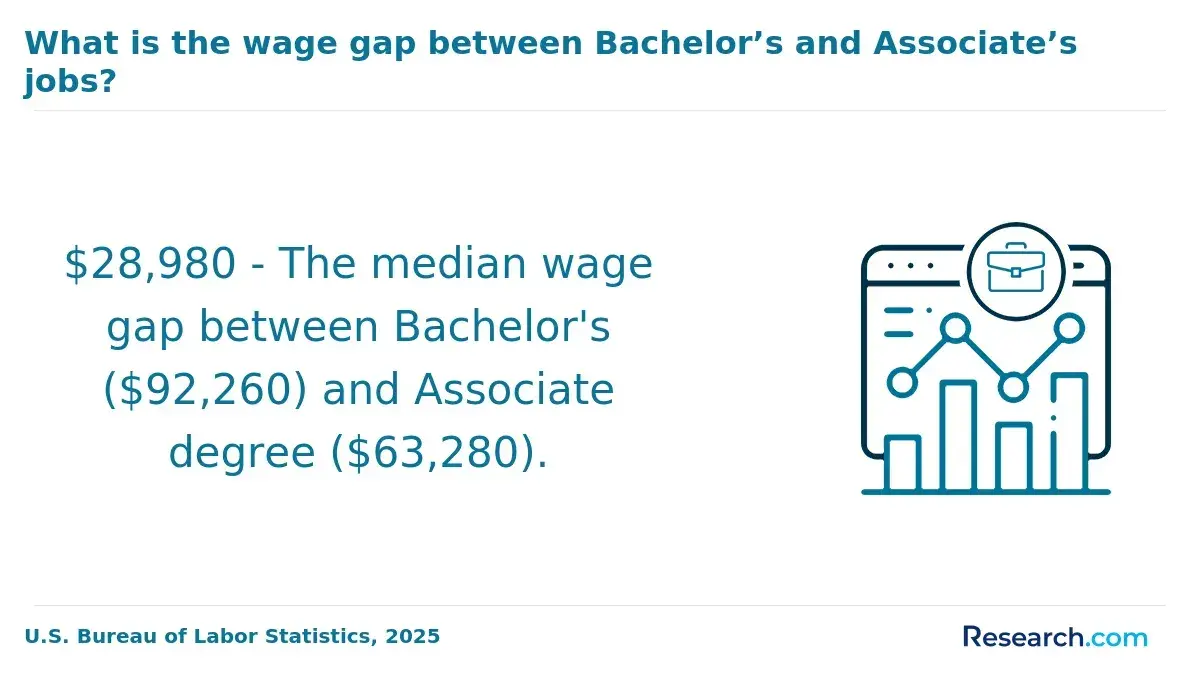
- BLS 2024 labor data shows associate degree holders had median weekly earnings of $1,099 compared with $930 for workers whose highest credential was a high school diploma, but outcomes vary heavily by field, location, experience, and whether credits transfer into a bachelor's degree.
What is an online associate degree in general studies and who is it best for?
An online associate degree in general studies is a broad undergraduate credential built around general education, electives, and transferable lower-division coursework. Instead of preparing for one narrow occupation, it helps students complete core college requirements in areas such as English, math, science, social science, humanities, communication, and technology.
Most programs lead to an Associate of Arts, Associate of Science, or Associate of General Studies. The exact title matters because transfer-oriented AA and AS degrees may align more closely with bachelor's degree pathways, while an AGS can be more flexible but less standardized for transfer. Before enrolling, ask whether the degree is designed for transfer, workforce entry, or both.
This degree is often a strong fit for students in the following situations. The key is matching the flexibility of the major to a clear next step, not choosing it simply because it sounds easier:
- Undecided students who want to complete core college credits before committing to a bachelor's major.
- Working adults who need asynchronous courses, part-time pacing, and the ability to pause or adjust their schedule.
- Students with prior college, military, CLEP, AP, dual-enrollment, or workforce training credits who want to bring scattered credits into one credential.
- Learners planning to transfer into a bachelor's program in business, liberal arts, psychology, communication, social science, education, or related fields.
- Career changers who need a recognized college credential for entry-level office, service, nonprofit, administrative, or support roles.
It may not be the best choice if your goal requires a highly structured program, such as nursing, radiologic technology, cybersecurity, accounting, engineering technology, or teacher licensure. In those cases, a specialized associate degree or a carefully mapped transfer pathway is usually safer. General studies is most valuable when you use it as a flexible foundation rather than an end in itself.
How do online general studies associate programs compare with campus-based options?
Online and campus-based general studies programs often cover similar academic requirements, but they differ in schedule control, support access, student experience, and hidden costs. Online study is usually the better fit when flexibility is the top priority; campus study may be stronger when you need face-to-face advising, lab access, or a highly structured routine.
The table below compares the main trade-offs that affect adult learners, transfer students, and cost-conscious students. Use it to identify which format fits your schedule and learning style before comparing schools:
| Factor | Online general studies associate degree | Campus-based general studies associate degree |
| Schedule flexibility | Often includes asynchronous classes, evening work, and part-time pacing | Typically follows set class meeting times, though hybrid sections may be available |
| Cost considerations | May reduce commuting, parking, relocation, and childcare conflicts; technology fees may apply | May include campus fees, transportation, and schedule-related opportunity costs |
| Student support | Best programs offer online tutoring, virtual advising, library access, and career services | In-person advising, tutoring centers, study groups, and campus events may be easier to access |
| Learning style | Works well for self-directed students who can manage deadlines independently | Works well for students who benefit from classroom structure and immediate interaction |
| Transfer planning | Can be excellent if the school provides degree maps and transfer advising online | Can be easier if local colleges have established transfer agreements with nearby universities |
Online learning is not automatically cheaper, and campus learning is not automatically more rigorous. The smarter comparison is total cost plus completion likelihood. A slightly higher-priced online program may be worth it if it allows you to stay employed, avoid relocation, and complete consistently; a lower-priced campus program may be better if you need structure and live near a strong community college.
A common mistake is assuming "online" means "self-paced." Many online associate programs still have weekly deadlines, group discussions, proctored exams, and term-based calendars. Before enrolling, confirm whether courses are asynchronous, synchronous, hybrid, self-paced, or competency-based.
Which accredited schools offer the most flexible and affordable online general studies associate programs?
The best online associate degrees in general studies usually come from regionally accredited public community colleges or public universities with clear transfer pathways, low tuition, and strong online support. Because tuition changes by residency and academic year, the safest approach is to compare current net price, not just advertised per-credit tuition.
The schools below are practical shortlist options because they are public or broad-access institutions known for online associate-level study, flexible course delivery, and general studies or general education pathways. Always verify current tuition, state authorization, and transfer policies directly with the school before applying:
| School | Program type to review | Why it may balance flexibility and affordability | Best-fit student |
| Ivy Tech Community College | Online associate pathways in liberal arts or general studies-related transfer fields | Large public community college system, many online sections, and transfer-focused pathways | Indiana residents and online students seeking a low-cost public college route |
| Central Texas College | Associate of Arts in General Studies or related online associate options | Long experience serving military, adult, and distance learners | Military-connected students, working adults, and learners with prior credits |
| Barton Community College | Associate in General Studies or online transfer-oriented associate options | Flexible online course availability and community college pricing structure | Students who want broad electives and a customizable associate plan |
| Tulsa Community College | Online general education and transfer associate pathways | Public community college model with online course options and university transfer planning | Oklahoma residents or transfer-focused students comparing affordable online starts |
| Northern Virginia Community College | Online general studies or liberal arts transfer pathways through NOVA Online | Large public two-year institution with extensive online offerings and transfer agreements | Virginia students planning to transfer to public universities |
| Mississippi Gulf Coast Community College | Online associate of arts or general college transfer pathways | Community college tuition structure with online class access and transfer-oriented coursework | Students looking for affordable lower-division credits before a bachelor's degree |
When ranking programs for your own situation, give the most weight to accreditation, total cost, credit transfer, course availability, and advising quality. A program with the lowest tuition can become expensive if credits do not transfer, required courses are rarely offered online, or you need extra semesters to finish.
Red flags include national accreditation without clear transfer acceptance, vague degree maps, aggressive enrollment pressure, unclear fees, poor access to advisors, and promises that credits will transfer "anywhere." Transfer is always controlled by the receiving institution, so get transfer information in writing whenever possible.
What admission requirements and application materials are needed for online general studies associate programs?
Online general studies associate programs usually have accessible admissions policies, especially at community colleges. Many are open-admission programs, meaning students with a high school diploma, GED, or state-approved equivalent can enroll if they meet placement and residency requirements.
Although requirements vary, most schools ask for a similar set of materials. Preparing these early can help you avoid missed registration deadlines or delays in financial aid processing:
- Online application with legal name, contact information, residency details, and intended program.
- Official high school transcript, GED record, homeschool documentation, or prior college transcripts.
- Placement information, which may include high school GPA, SAT or ACT scores, prior college English and math credits, or placement tests.
- Proof of identity, residency, or immunization status if required by the state or institution.
- FAFSA submission if you plan to use federal grants, loans, or work-study.
- Transfer credit, military transcript, AP, IB, CLEP, or workforce training documentation if you want prior learning evaluated.
Selective admissions are uncommon for general studies associate programs, but individual courses may have prerequisites. For example, college algebra may require a placement score or completion of developmental math. English composition may require placement into college-level writing.
The biggest admissions mistake is waiting until after acceptance to discuss transfer credits. If you already have college credits, send every official transcript before registering. Otherwise, you could repeat courses, use financial aid inefficiently, or choose electives that do not apply to your degree plan.
How long does it take to earn an online associate degree in general studies and can you accelerate it?
Most online associate degrees in general studies require about 60 semester credits. Full-time students often finish in two academic years, while part-time working adults may take three or more years depending on course load, transfer credits, and whether summer terms are available.
Acceleration is possible, but it should be planned carefully. Moving faster can save time and reduce living or opportunity costs, but overloaded schedules increase the risk of withdrawals, low grades, and financial aid complications.
Students who want a faster path usually combine several strategies. Before choosing an accelerated plan, ask an advisor to confirm that each credit will count toward your specific degree and intended transfer destination:
- Use prior college credits by submitting official transcripts from every institution attended.
- Ask whether AP, IB, CLEP, DSST, military training, industry certifications, or portfolio assessment can apply.
- Take summer or winter session courses if they are offered online and fit your workload.
- Choose eight-week or accelerated terms only if you can handle compressed deadlines.
- Follow a written degree map so every elective applies to graduation or transfer requirements.
If your long-term goal is a bachelor's degree, compare associate acceleration with future transfer fit. Some students are better served by completing the associate degree steadily and then moving into accelerated online degrees after transfer, where upper-division requirements are clearer.
A useful rule is to accelerate credits, not confusion. If you are undecided, take transferable general education courses first: English composition, college math, public speaking, natural science, social science, humanities, and introductory technology. Avoid using too many electives on courses that may not count later.
What courses and concentrations are typically included in an online general studies associate curriculum?
An online general studies associate curriculum is usually built around broad lower-division coursework. The goal is to develop communication, quantitative reasoning, critical thinking, digital literacy, and cultural awareness while preserving elective space for transfer or career exploration.
The table below summarizes common curriculum areas and why they matter. Exact course titles vary by school, but these categories appear frequently in transfer-oriented associate degrees:
| Curriculum area | Common course examples | Why it matters |
| Written communication | English Composition I and II, technical writing | Builds writing skills required in nearly every bachelor's program and many office roles |
| Oral communication | Public speaking, interpersonal communication | Supports presentations, teamwork, customer interaction, and leadership development |
| Mathematics | College algebra, statistics, quantitative reasoning | Meets transfer requirements and supports business, social science, and data-informed work |
| Natural sciences | Biology, environmental science, physical science | Fulfills lab or non-lab science requirements and strengthens analytical thinking |
| Social and behavioral sciences | Psychology, sociology, history, political science | Useful for students considering education, human services, public administration, or social science majors |
| Humanities and arts | Literature, philosophy, ethics, art appreciation | Develops cultural literacy and critical interpretation skills |
| Technology and electives | Computer applications, business software, introductory programming, electives | Lets students tailor the degree toward transfer, office work, business, language study, or career exploration |
Some schools allow informal concentrations or elective clusters. Common choices include business, communication, psychology, social science, humanities, criminal justice, computer applications, and education foundations. If you are exploring language or international careers, you might compare elective planning with longer-term options such as Spanish degrees online.
The best concentration is the one that supports your next credential or target role. For example, business electives can help if you plan to transfer into management or marketing, while psychology and sociology electives may be better for human services, education, or public-sector pathways.
Do not treat electives as filler. Electives are where many students either create transfer value or lose it. Ask your advisor which electives satisfy both associate graduation requirements and bachelor's prerequisites at your intended transfer school.
How much do online general studies associate degrees cost and what financial aid is available?
The cost of an online general studies associate degree depends on residency, tuition model, fees, course load, books, technology needs, and transfer efficiency. NCES data published in 2024 showed average tuition and fees at public two-year colleges were about $3,900 for in-district students, which helps explain why community colleges are often the most affordable starting point.
Tuition is only one part of the price. To compare programs fairly, estimate the full cost to complete the degree, not just the per-credit rate advertised on the website:
- Tuition per credit and whether online students pay in-district, in-state, out-of-state, or flat online rates.
- Mandatory online learning, technology, student services, proctoring, graduation, and transcript fees.
- Books, access codes, lab kits, software, webcam, laptop, and reliable internet costs.
- Transfer credit acceptance, because accepted credits can reduce the number of courses you must pay for.
- Course availability, because delayed required courses can add extra terms and living expenses.
- Financial aid eligibility, including whether the program is Title IV eligible and whether you meet satisfactory academic progress rules.
Federal aid may include Pell Grants, federal student loans, and work-study for eligible students. For the 2025-26 award year, the maximum Federal Pell Grant is $7,395, though the amount a student receives depends on financial need, enrollment intensity, cost of attendance, and eligibility rules. Grants are especially valuable because they generally do not need to be repaid.
Students can also look for state grants, institutional scholarships, employer tuition assistance, military education benefits, workforce funding, and community foundation awards. If you plan to transfer after the associate degree, compare whether it is cheaper to complete lower-division credits at a community college before moving into a four-year program such as a business degree online.
A common affordability mistake is choosing the cheapest per-credit tuition without checking transfer acceptance. Paying $4,000 for credits that apply cleanly to a bachelor's degree is often better than paying less for credits that must be repeated later.
What entry-level careers can you pursue with an online associate degree in general studies?
An online associate degree in general studies can support entry-level roles that value communication, organization, customer service, basic technology, and problem-solving skills. It is not usually designed for licensed or highly technical occupations, but it can help applicants meet "some college" or "associate degree preferred" requirements.
The table below outlines realistic entry-level directions. These roles may also require experience, software skills, industry knowledge, or additional training depending on the employer:
| Career direction | Typical responsibilities | Helpful electives or add-ons |
| Administrative support | Manage records, scheduling, correspondence, data entry, office coordination, and customer communication | Business communication, spreadsheets, office software, records management |
| Customer service or client support | Respond to customer questions, document issues, process requests, and coordinate with internal teams | Communication, psychology, conflict resolution, CRM software basics |
| Sales support or retail management trainee | Assist with sales operations, inventory, reporting, customer relationships, and team coordination | Marketing, business, public speaking, data analysis basics |
| Human services support | Help clients navigate services, maintain case records, schedule appointments, and support program staff | Psychology, sociology, ethics, human services introduction |
| Nonprofit or public-sector program assistant | Support outreach, event coordination, reporting, communication, and administrative workflows | Writing, public administration, social science, spreadsheet skills |
| Education support roles | Assist with classroom support, tutoring coordination, student services, or administrative tasks | Education foundations, child development, communication, psychology |
To improve employability, pair the degree with a focused skill signal. Examples include Microsoft Office or Google Workspace proficiency, bookkeeping basics, customer relationship management software, project coordination tools, data entry accuracy, bilingual communication, or a short certificate in a specific field.
If you know you want a bachelor's degree but still prefer a broad major, compare transfer pathways early. Students who prioritize ease, speed, and flexibility sometimes research what is the easiest bachelor's degree to get, but the better question is which bachelor's program fits your strengths, transfer credits, and career direction.
General studies works best as a launchpad. For stronger career alignment, use electives, internships, volunteer work, part-time jobs, or certificates to show employers what you can actually do.
What salary expectations and job outlook are associated with careers for general studies associate graduates?
Salary outcomes for general studies associate graduates vary because the degree can lead to many different roles rather than one licensed profession. The most reliable way to evaluate earnings is to compare target occupations, local job postings, and required skills instead of assuming one degree has one salary.
BLS 2024 data shows associate degree holders had median weekly earnings of $1,099, compared with $930 for workers whose highest level of education was a high school diploma. This does not mean every associate graduate will earn more, but it suggests that completing a two-year credential can improve access to roles where employers prefer postsecondary education.
The table below uses BLS May 2024 wage data for common entry-level or associate-accessible occupational categories. These are national medians, so actual pay may be higher or lower depending on region, industry, experience, and job duties:
| Occupation category | 2024 median annual wage | How general studies can fit |
| Customer service representatives | $39,680 | Communication and problem-solving courses can support client-facing roles |
| General office clerks | $40,030 | Office software, writing, and organizational skills can be directly useful |
| Secretaries and administrative assistants, except legal, medical, and executive | $47,460 | Administrative, writing, scheduling, and document management skills are relevant |
| Bookkeeping, accounting, and auditing clerks | $49,210 | Business math, spreadsheets, and accounting electives can help, though some employers prefer specialized coursework |
| Human resources assistants, except payroll and timekeeping | $47,900 | Communication, psychology, business, and records-focused coursework can support entry-level HR offices |
Job outlook also depends on occupation. Some clerical roles face pressure from automation and AI-enabled software, while customer support, operations coordination, healthcare administration support, and human services roles may still need strong interpersonal judgment.
The practical takeaway is to combine general education with durable skills: writing clearly, using spreadsheets, learning workplace software, analyzing information, and communicating with customers or clients.
For long-term earnings growth, many students use the associate degree as the first half of a bachelor's degree. That pathway can make sense if your target field typically expects a four-year credential, such as management, human resources, communication, public administration, social science, education pathways, or professional business roles.
How can you evaluate and choose a reputable, properly accredited online general studies associate program?
The best program is not simply the cheapest or fastest. It is the accredited program that helps you finish with usable credits, manageable debt, real support, and a clear next step. Accreditation is the first filter because it affects transfer, financial aid eligibility, employer recognition, and academic quality controls.
Use the following steps before submitting an enrollment deposit or registering for classes. They are designed to help you compare programs on outcomes that actually affect cost and completion:
- Verify institutional accreditation through the U.S. Department of Education's Database of Accredited Postsecondary Institutions and Programs or the Council for Higher Education Accreditation directory.
- Confirm the exact degree title and whether it is designed for transfer, workforce entry, or flexible credit completion.
- Ask for a written degree map showing required courses, elective choices, course rotation, and online availability.
- Check transfer agreements with the four-year colleges you may attend, including major-specific prerequisites.
- Compare total cost, including fees, books, technology, proctoring, and credits still needed after transfer evaluation.
- Ask how online advising, tutoring, library access, disability services, career services, and technical support are delivered.
- Review student outcome information when available, such as graduation rates, transfer rates, retention, and loan repayment context.
- Test responsiveness by contacting admissions, advising, and financial aid before applying.
Watch for red flags: unclear accreditation language, pressure to enroll immediately, refusal to provide total cost estimates, no transparent credit-transfer policy, limited online course availability, or claims that a general studies associate degree will automatically qualify you for high-paying jobs. Education can improve opportunity, but it does not remove the need for skills, experience, and labor-market alignment.
Finally, choose based on your next step. If you plan to transfer, the best program is the one whose credits apply cleanly to your intended bachelor's major. If you plan to work after graduation, the best program is the one that lets you add marketable electives, certificates, internships, or work-based experience while keeping debt low.
Other Things You Should Know About General Studies
Yes, many institutions evaluate military training for potential credit toward a general studies associate degree. Each college has its own policy, so it's vital to contact admissions to value your experiences against their requirements for credit in 2027.
Many accredited programs accept prior learning assessment, or PLA, for up to 25% of the degree, usually after a portfolio review or standardized exam credit. Schools often cap transfer and PLA credit together at 50% of the 60-credit associate degree.
Yes, but some credits may shift from required courses to electives. If you are considering a more specialized major, talk with an advisor early so you choose math, science, and prerequisite courses that preserve your options.
References
- New to College & Online Learning? Start with Your Associate Degree - Oklahoma Wesleyan University https://www.okwu.edu/news/2022/01/gps-associate/
- General Studies https://www.trine.edu/online/degrees/general-studies/online-general-studies-associate.aspx
- General Studies Degree Jobs: 10 Careers + Salaries (2026) | Extern https://www.extern.com/post/general-studies-degree-jobs-career-guide
- How Much Does an Associate Degree Cost? | SoFi https://www.sofi.com/learn/content/associates-degree-cost/
- Benefits of earning an Online Associate of Arts in General Studies Degree https://www.tuw.edu/school-news/benefits-of-online-associate-degree-general-studies/
- How to Choose an Online College in 10 Easy Steps https://www.straighterline.com/blog/choose-accredited-online-college-10-easy-steps
- 2025 Most Affordable Online Associate Degrees https://www.onlineu.com/most-affordable-colleges/associate-degrees
- Montreat College | Associate Degree in North Carolina https://www.montreat.edu/online/associate-general-studies/