
2027 How to Become a Nurse Midwife in Massachusetts - Midwife Schooling Requirements

Co-Founder and Chief Data Scientist
If you want to become a certified nurse midwife in Massachusetts, the main decision is not simply choosing a school. You need to understand the full pathway: nursing education, RN licensure, graduate midwifery training, national certification, Massachusetts APRN authorization, clinical placement expectations, and long-term renewal requirements. The process is demanding, but it can lead to a highly specialized advanced nursing role focused on pregnancy, birth, postpartum care, newborn health, reproductive care, and well-woman services.
This guide explains the practical steps to becoming a nurse midwife in Massachusetts, including degree requirements, admissions expectations, coursework, clinical hours, costs, financial aid, accreditation, licensing, and career outlook. It is written for BSN students, registered nurses, career changers comparing advanced nursing roles, and healthcare workers deciding whether nurse midwifery is the right next step.
Quick Answer: Becoming a Nurse Midwife in Massachusetts
- To practice as a certified nurse midwife in Massachusetts, you generally need a Master of Science in Nursing (MSN) with a nurse midwifery focus or another qualifying graduate-level midwifery pathway that meets certification and licensure requirements.
- Applicants usually need a BSN, an active RN license, relevant clinical experience, strong references, a resume or CV, and a personal statement that explains their readiness for graduate midwifery training.
- Nurse midwifery programs combine advanced nursing coursework with at least 600 supervised clinical hours across settings such as hospitals, birthing centers, OB/GYN clinics, and community health locations.
- What is the minimum degree requirement to become a nurse midwife in Massachusetts?
- What are the admission requirements for nurse midwife programs in Massachusetts?
- What courses are included in nurse midwife programs in Massachusetts?
- What are the clinical training requirements for nurse midwife programs in Massachusetts?
- How long does it take to become a certified nurse midwife in Massachusetts?
- How much does it cost to attend nurse midwife school in Massachusetts?
- What financial aid options are available for nurse midwife students in Massachusetts?
- What are the top accredited nurse midwife schools in Massachusetts?
- What are the licensing and regulatory renewal requirements for nurse midwives in Massachusetts?
- How does prior healthcare experience influence the nurse midwifery career path in Massachusetts?
- Which advanced degrees support career advancement for CNMs in Massachusetts?
- What organizations accredit nurse midwife programs in Massachusetts?
- What are the job outlook and salary expectations for nurse midwives in Massachusetts?
What is the minimum degree requirement to become a nurse midwife in Massachusetts?
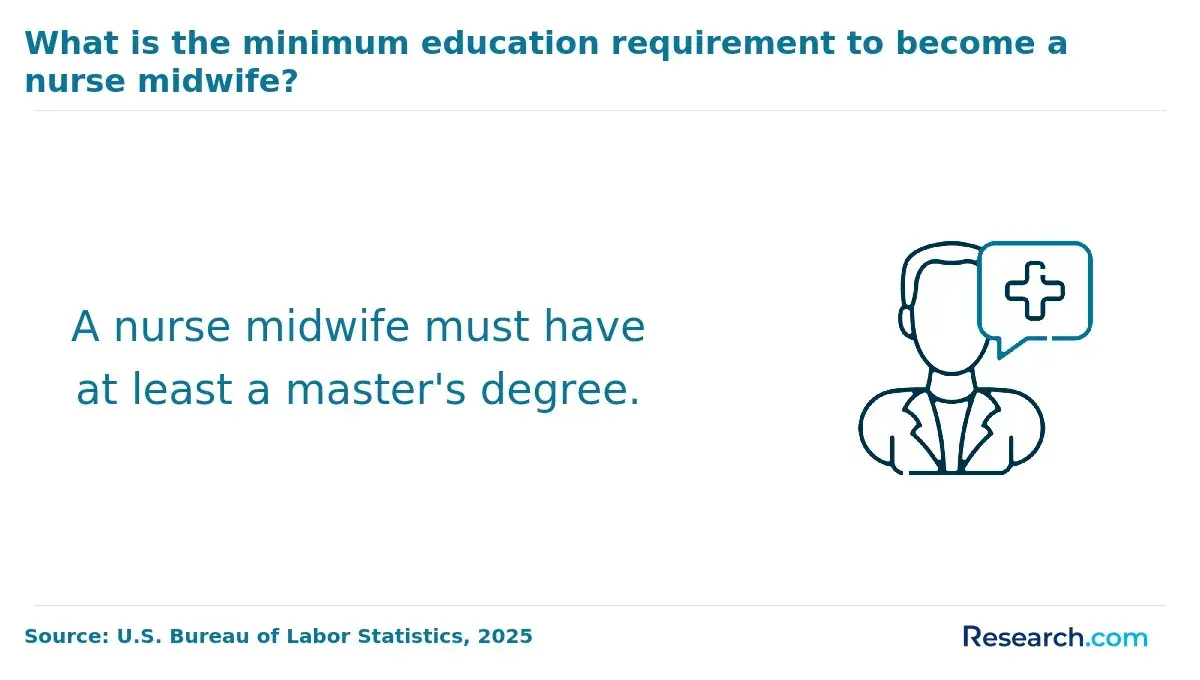
The minimum educational pathway for nurse midwife practice in Massachusetts is graduate-level nursing preparation, most commonly a Master of Science in Nursing (MSN) with a nurse midwifery specialization. This requirement reflects the scope of the role. Nurse midwives are not limited to birth support; they provide advanced assessment, reproductive care, prenatal and postpartum care, newborn evaluation, medication management, and patient education.
An MSN-level nurse midwifery curriculum typically includes advanced health assessment, pharmacology, pathophysiology, women’s reproductive health, evidence-based practice, and supervised clinical care. This formal preparation matters because nurse midwives in Massachusetts may carry major responsibilities, including medication prescription and hospital admissions, depending on their authorization, setting, and employer policies.
For most students, the pathway begins with a Bachelor of Science in Nursing, followed by RN licensure, clinical experience, graduate midwifery education, national certification, and Massachusetts advanced practice authorization. Experience in labor and delivery or women’s health can make the transition easier, but it does not replace the graduate education requirement.
Nurse midwifery is one of several advanced nursing routes that can lead to specialized responsibility and stronger earning potential. Students comparing options may also want to review other high-paying nursing career paths before committing to a graduate program.
| Pathway step | Why it matters | What to verify |
| BSN or qualifying nursing degree | Builds the registered nursing foundation needed for graduate study | Regional accreditation and nursing program accreditation |
| RN license | Allows legal practice as a registered nurse before advanced training | Massachusetts licensure status and renewal standing |
| Graduate nurse midwifery program | Provides advanced clinical and midwifery-specific preparation | ACME accreditation and clinical placement support |
| National certification | Supports eligibility for CNM recognition | AMCB exam eligibility requirements |
| Massachusetts APRN authorization | Allows advanced practice under state rules | Board of Registration in Nursing requirements |
What are the admission requirements for nurse midwife programs in Massachusetts?
Admission standards vary by school, but Massachusetts nurse midwife programs typically look for applicants who already have strong nursing preparation, clinical judgment, and a clear commitment to maternal and reproductive healthcare. Competitive applicants show that they can manage graduate-level science coursework while also succeeding in high-stakes clinical environments.
- Prior nursing degree: Programs commonly require a BSN from a regionally accredited college or university with nursing accreditation through CCNE or ACEN.
- Active RN license: Applicants are generally expected to hold a current, unrestricted Massachusetts RN license before entering the program.
- Academic performance: Many programs expect a cumulative GPA of 3.0 or higher, although some may consider strong clinical experience when an applicant’s GPA is slightly below that benchmark.
- Relevant nursing background: One to two years of nursing experience is often preferred, especially in labor and delivery, women’s health, postpartum care, or a related clinical area.
- Prerequisite courses: Schools may require statistics, research methods, and advanced science preparation such as pharmacology or pathophysiology.
- Professional recommendations: Two or three references from supervisors, faculty members, or advanced practice clinicians can help confirm the applicant’s clinical maturity and leadership potential.
- Personal statement: Applicants usually submit an essay explaining why they want to practice midwifery, how their background has prepared them, and what populations they hope to serve.
- Testing policy: GRE scores may be required by some schools, but many programs have made standardized testing optional.
- Basic Life Support: Current BLS certification is commonly required because students enter clinical environments where emergency readiness is essential.
- Resume or CV: A detailed professional document should highlight nursing roles, certifications, patient care experience, leadership activities, and continuing education.
- Admissions interview: Some programs use interviews to evaluate communication, professionalism, ethical reasoning, and fit with the program’s mission.
- International applicant documentation: Applicants educated outside the United States may need transcript evaluation, English proficiency evidence, and proof that they can meet Massachusetts RN licensure expectations.
Before applying, compare programs by admissions selectivity, clinical placement assistance, format, accreditation, and whether the school’s expectations match your current background. A nurse with labor and delivery experience may be ready for a more intensive timeline, while a nurse from another specialty may need additional preparation before applying.
| If your background is... | Your strongest advantage | What you may need to strengthen |
| Labor and delivery RN | Direct exposure to birth, fetal monitoring, and maternity workflows | Graduate research, leadership, and advanced assessment preparation |
| Women’s health or OB/GYN clinic RN | Experience with reproductive health, counseling, and outpatient care | Intrapartum and newborn care exposure |
| Emergency, ICU, or medical-surgical RN | Strong assessment skills and experience with complex patients | Midwifery-specific experience and a clear personal statement |
| Recent BSN graduate | Fresh academic preparation and flexibility | Clinical experience, references, and evidence of readiness for advanced practice |
Understanding where nurse midwives work can also help applicants shape a focused application. The following chart shows industries that commonly employ nurse midwives.
What courses are included in nurse midwife programs in Massachusetts?
Nurse midwifery coursework in Massachusetts is designed to move registered nurses from general nursing practice into advanced, population-focused care for pregnant people, newborns, and patients seeking reproductive or gynecologic services. The curriculum usually combines advanced nursing science, midwifery theory, clinical decision-making, ethics, and evidence-based care.
- Advanced pathophysiology: Students study complex disease processes and learn how underlying health conditions can affect pregnancy, reproductive health, and long-term wellness.
- Advanced pharmacotherapeutics: Coursework focuses on safe prescribing, medication selection, drug interactions, and medication management for women, pregnant patients, and newborns within applicable practice rules.
- Advanced health assessment: Students develop the ability to perform comprehensive histories and physical exams, interpret findings, and identify when consultation or referral is needed.
- Women’s reproductive healthcare: This course covers contraception, fertility care, menstrual concerns, sexual health, and common gynecologic conditions.
- Obstetric and gynecologic ambulatory care: Students learn to manage preventive care, chronic concerns, prenatal visits, postpartum follow-up, and routine office-based services.
- Antepartum midwifery care: This area prepares students to provide prenatal care, monitor maternal and fetal well-being, assess risk, and support healthy pregnancy planning.
- Intrapartum care: Students learn how to support labor and birth, recognize complications, use appropriate interventions, and collaborate with physicians and hospital teams when needed.
- Postpartum and newborn care: Coursework emphasizes maternal recovery, lactation support, newborn assessment, family education, and early warning signs after birth.
- Family crisis and emergency care: Students prepare for urgent maternal, newborn, and family health situations that require calm clinical judgment and fast coordination.
- Evidence-based practice foundations: Students learn how to evaluate research and apply current evidence to patient care decisions.
- Ethics and quality care: Coursework addresses informed consent, patient autonomy, equity, safety, quality improvement, and professional accountability.
- Biostatistics for healthcare providers: Students build the ability to interpret health data and use statistics in clinical research and quality improvement projects.
Because nurse midwives work across outpatient, inpatient, birth, and community settings, the strongest programs connect classroom learning to real clinical decision-making. Students comparing advanced nursing tracks may also find it useful to review the family nurse practitioner pathway, since both roles require graduate nursing preparation but lead to different patient populations and scopes of care.
What are the clinical training requirements for nurse midwife programs in Massachusetts?
Clinical training is the part of nurse midwifery education where students apply advanced knowledge under supervision. Programs in Massachusetts are structured around national expectations from the Accreditation Commission for Midwifery Education (ACME) and state practice requirements overseen by the Massachusetts Board of Registration in Nursing. Students must complete at least 600 supervised clinical hours.
These hours should expose students to the full scope of nurse midwifery rather than only one type of patient or birth setting. The goal is to prepare graduates who can provide safe, evidence-based care and know when to consult, collaborate, or transfer care.
- Hospital maternity units: Students gain experience with labor, delivery, postpartum care, and higher-acuity situations where interdisciplinary teamwork is essential.
- Birthing centers: Rotations may emphasize physiologic birth, low-intervention care, patient education, and family-centered support.
- OB/GYN clinics: Students participate in prenatal visits, postpartum checks, contraception counseling, gynecologic exams, and routine reproductive care.
- Community health settings: Some placements include health centers or family practice environments that serve diverse communities and broaden exposure beyond hospital-based care.
- Core skill development: Clinical training builds competence in prenatal assessment, labor support, birth management, postpartum follow-up, newborn evaluation, and well-woman care.
- Supervised practice: Preceptors may include certified nurse midwives, nurse practitioners, and physicians who evaluate performance and help students develop independent clinical judgment.
| Clinical setting | What students typically practice | Why it matters |
| Hospital maternity unit | Labor care, delivery support, postpartum care, complex case coordination | Builds readiness for high-acuity and team-based practice |
| Birthing center | Low-intervention birth support and physiologic birth care | Strengthens skills in patient-centered and low-risk birth models |
| OB/GYN clinic | Prenatal visits, gynecologic exams, contraception counseling | Prepares students for outpatient reproductive care |
| Community health site | Preventive care, education, follow-up, underserved population care | Develops cultural humility and population health awareness |
How long does it take to become a certified nurse midwife in Massachusetts?
The full path to becoming a certified nurse midwife in Massachusetts usually takes six to eight years. The timeline depends on whether you already have a BSN, how quickly you obtain RN licensure, how much clinical experience you gain before graduate school, and whether you enroll in an MSN or DNP pathway.
- Complete a BSN: A Bachelor of Science in Nursing generally takes four years of full-time study at an accredited nursing program.
- Earn RN licensure: After graduation, candidates must pass the NCLEX-RN and complete the Massachusetts RN licensing process, which can take several months when exam scheduling and state processing are included.
- Gain clinical nursing experience: Many applicants work for at least one year, often in labor and delivery or women’s health, to strengthen their graduate school applications and clinical confidence.
- Finish graduate midwifery education: An MSN or Doctor of Nursing Practice (DNP) with a nurse midwifery focus usually takes about 2 to 3 years and includes 50–60 credit hours plus extensive clinical training.
- Pass certification and apply for APRN licensure: Graduates must pass the AMCB exam and then apply for Massachusetts APRN licensure, a process that typically takes 4 to 6 weeks.
| Stage | Typical length | Decision point |
| BSN | Four years | Choose an accredited nursing program with strong clinical preparation |
| RN licensure | Several months | Plan for NCLEX-RN preparation and state processing time |
| Nursing experience | At least one year for many applicants | Prioritize labor and delivery, women’s health, or related roles if possible |
| MSN or DNP midwifery program | 2 to 3 years | Compare cost, format, clinical placement support, and accreditation |
| Certification and APRN application | 4 to 6 weeks for APRN processing after certification steps | Confirm AMCB and Massachusetts documentation requirements early |
How much does it cost to attend nurse midwife school in Massachusetts?
Nurse midwife program costs in Massachusetts depend heavily on whether you attend a public or private institution, whether you qualify for in-state tuition, and how long you remain enrolled. Public universities typically charge in-state students around $17,789 per year, while out-of-state students may pay closer to $30,782 annually. Private institutions often use a flat tuition structure regardless of residency, with full MSN program tuition commonly ranging from $40,000 to $75,000.
Tuition is only one part of the total cost. Students should also plan for fees, textbooks, clinical compliance requirements, transportation to clinical sites, certification expenses, licensing fees, health insurance, and reduced work hours during intensive clinical semesters. A lower tuition rate may not be the better option if the program lacks clinical placement support or requires frequent travel.
| Cost category | Why it affects your budget | Question to ask before enrolling |
| Tuition | The largest direct education expense | Is tuition charged per credit, per semester, or as a flat program rate? |
| University fees | May include technology, clinical, health, or student service fees | Are fees included in the published tuition estimate? |
| Clinical placement costs | Travel, parking, background checks, immunizations, and compliance tools can add up | Does the school arrange placements, or must students secure their own? |
| Lost work income | Clinical rotations may limit full-time employment | Can the program be completed part time or in a flexible format? |
| Certification and licensure | Graduates must budget for credentialing after graduation | What exam, application, and renewal costs should be expected? |
Students comparing women’s health roles may also want to examine related pathways, including how long it takes to become a women’s health nurse practitioner. The coursework and patient populations overlap in some areas, but the birth-focused responsibilities and clinical expectations differ.
What financial aid options are available for nurse midwife students in Massachusetts?
Graduate nursing education can be expensive, so nurse midwife students in Massachusetts should build a funding plan before applying. The best approach is to combine federal aid, school-based support, employer benefits, scholarships, and service-based repayment options when available.
- Federal student loans: Students can submit the FAFSA to be considered for Direct Unsubsidized Loans and PLUS Loans, which may offer flexible repayment options.
- State grant opportunities: Massachusetts provides limited grant funding, including “last dollar” support for select nursing credentials, primarily through community colleges.
- Massachusetts Loan Repayment Program: The MLRP may provide up to $50,000 for a two-year service commitment in underserved communities for eligible nurse midwives.
- Private scholarships: Groups such as the A.C.N.M. Foundation offer awards that may consider merit, financial need, leadership, or commitment to midwifery.
- Loan forgiveness: Public Service Loan Forgiveness can help borrowers who work in qualifying nonprofit or public healthcare settings and meet program rules.
- Work-study: Eligible students may use need-based part-time employment to offset some expenses while gaining experience in healthcare or academic settings.
- Institutional aid: Universities may offer nursing scholarships, tuition reductions, assistantships, or internal awards for qualified graduate students.
How to reduce the cost of nurse midwife school
- Ask each school for a full cost-of-attendance estimate, not just tuition.
- Compare public, private, hybrid, and online options based on total cost and clinical placement support.
- Check whether your employer offers tuition reimbursement for advanced nursing education.
- Apply early for scholarships, because many deadlines occur before admission decisions are finalized.
- Consider service-based repayment options only if you are comfortable working in the required setting after graduation.
- Avoid borrowing based on expected salary alone; employment, schedule, location, and role type can vary.
What are the top accredited nurse midwife schools in Massachusetts?
Massachusetts has several well-known nurse midwifery education options, including campus-based, hybrid, and online-supported pathways. The right choice depends on your preferred degree level, schedule, clinical placement needs, geographic flexibility, and long-term career goals. Accreditation should be the first filter; convenience and reputation should come after eligibility for certification and licensure.
- Boston College – Nurse Midwifery Track: This graduate track is known for Boston-area clinical connections and a hands-on learning model supported by small group placements and advanced electives.
- Simmons University – MSN in Nurse Midwifery: Simmons offers individualized faculty support with an 11:1 student-to-faculty ratio and access to a broad Boston healthcare network for clinical learning.
- University of Massachusetts Amherst – DNP Nurse-Midwifery Concentration: UMass Amherst provides a DNP pathway that combines evidence-based practice, advanced clinical preparation, online coursework, and in-person clinical experiences.
- Frontier Nursing University: Although based outside Massachusetts, Frontier offers an ACME-accredited hybrid/online model that may allow Massachusetts students to complete online coursework with local clinical rotations.
- MGH Institute of Health Professions – MSN in Nurse-Midwifery: Affiliated with Massachusetts General Hospital, this program offers access to strong clinical environments and interdisciplinary faculty focused on maternity and newborn care.
| Program option | Best fit for | Factor to confirm |
| Boston College | Students seeking Boston-area clinical partnerships and graduate electives | Current accreditation status and clinical site availability |
| Simmons University | Students who value faculty access and a smaller learning environment | Format, schedule, and clinical placement expectations |
| University of Massachusetts Amherst | Students interested in a DNP-level nurse-midwifery route | Hybrid requirements and on-site commitments |
| Frontier Nursing University | Working nurses who need flexible online coursework | Massachusetts clinical placement approval and state eligibility |
| MGH Institute of Health Professions | Students seeking an academic health system environment | Admission requirements and clinical scheduling demands |
Students who are also considering birth-related nursing roles may find it helpful to compare nurse midwifery with an obstetrics nursing career. Obstetrics nurses and nurse midwives may work with similar patients, but their education requirements, autonomy, certification expectations, and responsibilities are different.
What are the licensing and regulatory renewal requirements for nurse midwives in Massachusetts?
Nurse midwives in Massachusetts must maintain the credentials required for advanced nursing practice. This includes staying in good standing with the Massachusetts Board of Registration in Nursing, meeting renewal deadlines, and keeping documentation of required continuing education. Renewal requirements may include topics related to advanced clinical practice, ethics, prescribing responsibilities, and changes in Massachusetts nursing regulations.
Because APRN rules can change, nurse midwives should not rely only on information from a school brochure or employer onboarding packet. The safest approach is to verify requirements directly with the state board, confirm certification renewal expectations with the appropriate national certifying body, and maintain organized records of continuing education, employment, and competency documentation.
For a broader overview of state nursing expectations, see this guide to becoming a nurse in Massachusetts.
How does prior healthcare experience influence the nurse midwifery career path in Massachusetts?
Prior healthcare experience can make nurse midwifery training more manageable, especially when it involves direct patient care, communication under pressure, documentation, patient education, and teamwork. Experience in labor and delivery is especially relevant, but it is not the only useful background. Nurses from emergency care, community health, primary care, postpartum units, or women’s health clinics may also bring valuable skills.
Foundational healthcare roles can help future nurses build confidence before advancing. For example, experience as a certified nursing aide can strengthen bedside communication, patient observation, and comfort with clinical environments. Students considering an early healthcare entry point can review CNA requirements in Massachusetts.
| Prior experience | How it helps future CNMs | Possible gap to address |
| Labor and delivery | Builds familiarity with birth workflows and obstetric care teams | Advanced primary and reproductive care beyond delivery |
| Women’s health clinic | Supports skills in counseling, reproductive care, and outpatient visits | Hands-on intrapartum experience |
| Emergency or critical care | Develops triage, assessment, and crisis response skills | Continuity-based maternity care |
| Community health | Strengthens cultural humility and population health awareness | Hospital-based birth management exposure |
| CNA or patient care technician | Provides early bedside care experience and patient interaction skills | RN-level assessment and graduate nursing preparation |
Which advanced degrees support career advancement for CNMs in Massachusetts?
After becoming a certified nurse midwife, additional graduate education can support movement into leadership, teaching, policy, research, quality improvement, or specialized clinical roles. The best credential depends on whether the nurse midwife wants to remain primarily clinical, move into administration, teach future clinicians, or influence healthcare systems.
- MSN with a nurse midwifery focus: This is the core graduate credential for many CNMs and supports advanced clinical practice, precepting, and some educator roles.
- Doctor of Nursing Practice: The DNP is a practice-focused doctorate that can prepare CNMs for systems leadership, quality improvement, executive roles, and policy-related work.
- Post-graduate certificate in nurse midwifery: This option may suit nurses who already hold an advanced nursing degree and want to add nurse midwifery preparation.
- Concurrent master’s degree or hybrid certificate pathway: These formats may combine certificate and graduate coursework for nurses seeking flexibility and broader preparation for clinical leadership or academic advancement.
| Credential | Best for | Career use |
| MSN nurse midwifery focus | Nurses pursuing entry into CNM practice | Clinical practice, precepting, advanced maternity care |
| DNP | CNMs interested in leadership or systems improvement | Executive roles, policy, quality improvement, advanced practice leadership |
| Post-graduate certificate | Advanced practice nurses adding midwifery | Role expansion, specialty transition, focused clinical preparation |
| Concurrent or hybrid graduate pathway | Students needing flexible or combined preparation | Clinical practice with added leadership or academic flexibility |
What organizations accredit nurse midwife programs in Massachusetts?
Accreditation is one of the most important checks when choosing a nurse midwife program. For nurse midwifery education, the key accreditor is the Accreditation Commission for Midwifery Education (ACME). ACME evaluates whether programs meet standards for curriculum, faculty qualifications, clinical learning, and graduate readiness. Its role is especially important because AMCB requires graduation from an ACME-accredited program to sit for the CNM exam.
At the state level, the Massachusetts Board of Registration in Nursing oversees nursing licensure and advanced practice requirements. Professional organizations such as the American College of Nurse-Midwives also support the field through advocacy, continuing education, and professional standards, but students should distinguish professional membership from formal program accreditation.
Before enrolling, confirm accreditation on the accreditor’s website, not only on the school’s marketing page. Also ask whether the program’s accreditation status covers your specific track, delivery format, and campus or hybrid option.
- Check ACME accreditation first: This affects eligibility for national certification and should be verified before applying.
- Confirm state eligibility: Ask whether graduates meet Massachusetts APRN requirements after certification.
- Review clinical placement policies: Accreditation does not always mean the school will arrange every clinical site for every student.
- Ask about recent outcomes: Request certification exam pass information, completion patterns, and student support details when available.
Students weighing the cost of graduate nursing education may also want to compare nurse midwifery with other nursing specialization and concentration options.
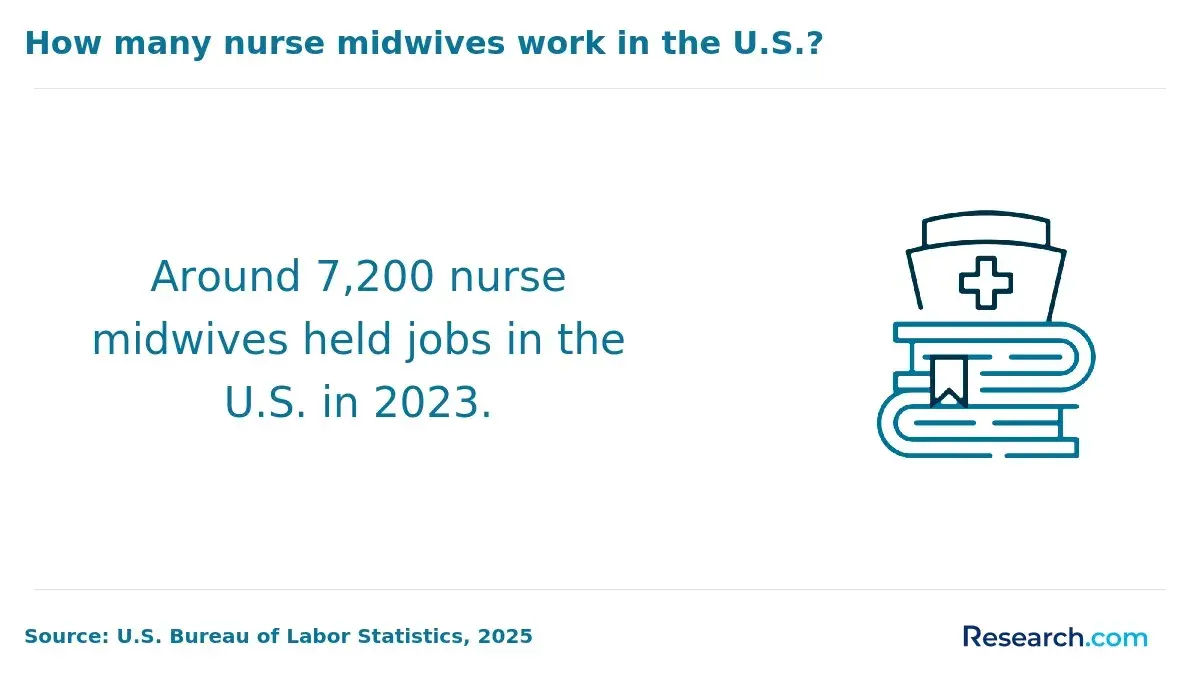
The following image provides additional context on the size of the nurse midwife workforce in the United States.
What do nurse midwives in Massachusetts say about their careers?
-
: "
Working as a nurse midwife in Massachusetts has taught me the importance of combining clinical evidence with compassionate care. I work closely with families and healthcare teams, and the state’s strong medical network has helped me keep growing in the profession. – Ellie
"
-
: "
Massachusetts gives nurse midwives access to hospitals, birth centers, and diverse patient communities. The work can be intense, but each birth reinforces why individualized, safe, and respectful maternity care matters. – Daniel
"
-
: "
My career here has been demanding and meaningful. Caring for patients from many backgrounds has strengthened my clinical skills and reminded me that midwifery plays an important role in maternal and infant health. – Tom
"
What are the job outlook and salary expectations for nurse midwives in Massachusetts?
Nurse midwives in Massachusetts may find opportunities in hospitals, academic medical centers, birth centers, community health organizations, OB/GYN practices, and reproductive health settings. Demand is shaped by access to maternity care, employer staffing needs, patient preference for midwifery models, and broader women’s health service needs. The field has seen 4% growth in the midwifery workforce over the past five years, which signals measured growth rather than rapid expansion.
Compensation can be competitive because CNMs hold graduate-level clinical responsibilities and may provide care across pregnancy, birth, postpartum, newborn, and reproductive health settings. However, salary varies by employer, location, shift structure, experience, call expectations, union status, and whether the role is hospital-based, clinic-based, or mixed. Students should avoid assuming that any specific degree guarantees a salary outcome.
For comparison with related advanced practice nursing options, review nurse practitioner programs in Massachusetts.
Common mistakes to avoid when choosing a nurse midwife program
- Choosing a program before checking accreditation: If the program is not properly accredited for nurse midwifery, certification and licensure eligibility may be affected.
- Looking only at tuition: Fees, travel, clinical costs, lost income, and certification expenses can change the real cost of attendance.
- Assuming online means fully remote: Hybrid and online nurse midwifery programs still require in-person clinical hours and may have campus visits.
- Ignoring clinical placement support: A flexible program can become difficult if students must find their own preceptors without strong school assistance.
- Applying without relevant experience: Some applicants are academically ready but need more clinical exposure to be competitive and confident.
- Relying only on rankings or reputation: The best program is the one that is accredited, affordable, realistic for your schedule, and aligned with Massachusetts licensure expectations.
- Assuming all programs meet every state requirement: Always confirm that the program supports Massachusetts APRN eligibility, especially if the school is located outside the state.
Questions to ask before enrolling
- Is the nurse midwifery track currently accredited by ACME?
- Does the program meet the educational requirements for AMCB certification eligibility?
- Does the school confirm that graduates can pursue Massachusetts APRN licensure?
- How are clinical placements arranged, and what happens if a placement falls through?
- How many campus visits, intensive sessions, or in-person requirements are included?
- What is the full estimated cost, including fees, supplies, travel, and clinical compliance?
- Can students work while enrolled, or are some semesters too clinically intensive?
- What support is available for certification exam preparation?
- What types of employers commonly hire recent graduates?
- How does the program support students who are new to labor and delivery or women’s health?
Related Articles for Nearby States
- 2027 How to Become a Nurse Midwife in Rhode Island - Midwife Schooling Requirements
- 2027 How to Become a Nurse Midwife in Connecticut - Midwife Schooling Requirements
- 2027 How to Become a Nurse Midwife in New Hampshire - Midwife Schooling Requirements
- 2027 How to Become a Nurse Midwife in New York – Midwife Schooling Requirements
- 2027 How to Become a Nurse Midwife in Vermont – Midwife Schooling Requirements
- 2027 How to Become a Nurse Midwife in New Jersey - Midwife Schooling Requirements
- 2027 How to Become a Nurse Midwife in Maine – Midwife Schooling Requirements
- 2027 How to Become a Nurse Midwife in Pennsylvania - Midwife Schooling Requirements
- 2027 How to Become a Nurse Midwife in Delaware – Midwife Schooling Requirements
- 2027 How to Become a Nurse Midwife in Maryland – Midwife Schooling Requirements
Key Insights
- Massachusetts nurse midwives need graduate-level midwifery education, most often an MSN with a nurse midwifery focus, plus RN licensure, national certification, and state advanced practice authorization.
- The complete pathway usually takes six to eight years when BSN education, RN licensure, clinical experience, graduate school, certification, and APRN processing are included.
- Clinical preparation is central to the profession. Students must complete at least 600 supervised clinical hours across maternity, reproductive health, newborn, and community-based care settings.
- Program choice should start with ACME accreditation and Massachusetts eligibility. Reputation, convenience, and cost matter, but they should not come before certification and licensure requirements.
- Costs vary widely. Public university tuition may be around $17,789 per year for in-state students and closer to $30,782 for out-of-state students, while private MSN tuition may range from $40,000 to $75,000.
- Prior labor and delivery or women’s health experience can strengthen an application, but nurses from other clinical backgrounds can also prepare successfully if they address experience gaps.
- Do not choose a program based only on rankings or online convenience. Ask detailed questions about clinical placement, total cost, certification preparation, and state licensure alignment.
References:
- American College of Nurse Midwives. (n.d.). Become a midwife. Retrieved from American College of Nurse Midwives
- Baystate Health. (n.d.). Midwifery education. Retrieved from Baystate Health midwifery education
- Boston College. (n.d.). Master of science, nurse-midwifery - Connell School of Nursing. Retrieved from Boston College nurse-midwifery program
- Learn about Advanced Practice Registered Nurses (APRN) | Mass.gov. (n.d.). Retrieved from Massachusetts APRN information
- Massachusetts Nursing License Map. (n.d.). Become a nurse in Massachusetts (MA) - APRN, RN, NP & LPN. Retrieved from Massachusetts Nursing License Map
- Midwife Schooling. (n.d.). How to become a nurse-midwife CNM in Massachusetts 2025. Retrieved from Midwife Schooling Massachusetts guide
- Provocollege. (n.d.). How to become a nurse midwife | Responsibilities and salary. Retrieved from Provo College nurse midwife overview
- RegisteredNursing.org. (n.d.). 2025 best MSN and RN-to-MSN programs in Massachusetts. Retrieved from Registered Nursing MSN programs in Massachusetts
- UMass Amherst. (n.d.). Baystate midwifery education program : Elaine Marieb College of Nursing. Retrieved from UMass Amherst midwifery education
- U.S. Language Services. (n.d.). How to work in the U.S. as a foreign-educated midwife. Retrieved from U.S. Language Services guide for foreign-educated midwives
Other Things You Need to Know About Becoming a Nurse Midwife in Massachusetts
To become a certified nurse midwife in Massachusetts, you need to pass the American Midwifery Certification Board (AMCB) exam. This certification exam is essential after completing the accredited nurse-midwifery program to ensure you meet professional standards in 2027.
Massachusetts requires national certification from the American Midwifery Certification Board (AMCB) for nurse midwife practice. Candidates must first complete an ACME-accredited nurse-midwifery graduate program, then pass the AMCB certification exam before seeking state authorization to practice.
In Massachusetts, nurse midwives have more specialized training compared to RNs, focusing on women's healthcare and childbirth. They can perform more advanced procedures and provide comprehensive prenatal and postnatal care. However, both roles are crucial in healthcare delivery.
In 2027, becoming a Certified Nurse-Midwife (CNM) in Massachusetts requires an RN license followed by a graduate degree in nurse-midwifery. Direct-entry midwifery is not recognized in Massachusetts, so you must first be a registered nurse before specializing in midwifery.


