
2027 Reasons to Pursue a Career in Nursing

Co-Founder and Chief Data Scientist
Choosing nursing is not just a question of whether you want to work in healthcare. It is a decision about education cost, licensure, work schedule, emotional demands, long-term career mobility, and the kind of responsibility you want to carry in people’s lives. In the United States, nursing remains one of the largest healthcare occupations: the number of nursing and nursing-related jobs in 2024 was approximately 3,400,000, with projected growth of 7% from 2024 to 2034 and around 240,000 jobs added annually throughout the decade (Bureau of Labor Statistics, 2024).
The opportunity is real, but so are the pressures. A severe registered nurse shortage is expected to affect the U.S. from 2024 to 2035, and the average turnover rate of staff registered nurses in U.S. hospitals was around 30.2% in 2024 (Bureau of Labor Statistics, 2024). That means new nurses are entering a field with strong demand, but they also need to understand burnout risks, staffing challenges, licensing rules, and the importance of choosing the right degree pathway.
This guide explains what nursing involves, the main education routes, career paths, salary outlook, industry challenges, and practical reasons nursing may—or may not—be the right career for you. It is written for prospective students, career changers, LPNs considering RN bridge programs, RNs planning to advance, and anyone asking, “Should I become a nurse?”
Quick Answer: Is Nursing a Good Career Choice in 2026?
For many students, nursing can be a strong career choice because it offers multiple entry points, steady healthcare demand, meaningful patient-facing work, and room for advancement into specialties, leadership, education, informatics, telehealth, and advanced practice. However, it is not an easy or low-stress path. Nursing requires clinical judgment, emotional resilience, physical stamina, licensure, continuing education, and the ability to work in high-pressure environments. The best candidates are people who want hands-on patient care, can manage responsibility under pressure, and are willing to keep learning throughout their careers.
Reasons to Pursue a Career in Nursing Table of Contents
- What is nursing?
- Types of Nursing Degrees
- Nursing Career Paths
- State of the Nursing Industry
- Nursing Salary Outlook
- Reasons to Pursue a Career in Nursing
- What alternatives are available for those without a nursing background to pursue a career in nursing?
- What factors impact nursing school costs?
- How can ADN to NP bridge programs accelerate career progression?
- Can LPN to RN bridge programs transform your career path?
- How Can Nurses Build Resilience and Prevent Occupational Burnout?
- How can you select a reputable and cost-effective nursing program?
- How can I choose the right online LPN program for my career?
- How Challenging is the RN to BSN Degree?
- What scholarships and financial aid options are available for nursing students?
- How to Advance Your Nursing Career
- What role does technology play in modern nursing?
- Strategies for Overcoming Common Nursing Education Challenges
What is nursing?
Nursing is the clinical profession focused on promoting health, preventing illness, supporting recovery, managing symptoms, educating patients, coordinating care, and caring for people across the lifespan in hospitals, clinics, long-term care facilities, homes, schools, public health programs, and community settings.
A widely used definition describes nursing as an integral part of the healthcare system that includes health promotion, illness prevention, and care for physically ill, mentally ill, and disabled people of all ages in healthcare and community environments. In practice, that means nurses assess patients, monitor changes, administer medications, communicate with physicians and care teams, teach families what to do next, document care, advocate for safety, and respond when a patient’s condition worsens.
Nursing is often described as a caring profession, but compassion alone is not enough. Good nurses combine empathy with science, clinical reasoning, communication, attention to detail, ethical judgment, and the ability to stay calm when patients and families are frightened or overwhelmed.
Types of Nursing Degrees
Nursing has several academic entry points. The right one depends on your current education, budget, state licensing requirements, career goals, and how quickly you want to enter the workforce. Many programs now include online coursework, but nursing is never fully online because students must complete supervised clinical training. If flexibility matters, compare accredited options through Research.com’s guide to the best online nursing degree programs.
| Nursing education option | Best for | What to check before enrolling |
| Practical or vocational nursing certificate/diploma | Students who want a faster route into basic nursing care roles | State approval, clinical placement rules, licensure exam eligibility, and transfer options into RN programs |
| Associate Degree in Nursing | Students seeking an RN pathway with a shorter timeline than a bachelor’s program | NCLEX-RN pass rates, hospital hiring preferences, bridge options, and whether credits transfer into BSN programs |
| Bachelor of Science in Nursing | Students who want broader RN preparation, leadership potential, and stronger mobility across employers | Accreditation, clinical partnerships, total program cost, graduation rates, and state authorization |
| RN to BSN | Licensed RNs who want to complete a bachelor’s degree while continuing to work | Transfer credit policy, online flexibility, employer tuition support, and practicum requirements |
| Master of Science in Nursing | RNs preparing for advanced practice, education, leadership, informatics, or specialty roles | Specialization fit, clinical hours, certification eligibility, state requirements, and program outcomes |
| Doctoral nursing degree | Nurses pursuing advanced clinical leadership, systems improvement, academia, or research | DNP versus PhD focus, project or dissertation expectations, practicum requirements, and cost |
Cost-conscious students may compare community college ADN programs, state universities, employer-supported RN to BSN options, and affordable RN to BSN programs. The lowest tuition is not always the best value; accreditation, licensing eligibility, clinical quality, and graduation outcomes matter more than sticker price alone.
Nursing Certifications and Specializations
Professional certification helps nurses document expertise in a focused area of practice. Depending on the credential, certification may support movement into critical care, pediatrics, oncology, mental health, geriatrics, informatics, emergency nursing, case management, or advanced practice. Certifications can also signal to employers that a nurse has met experience, exam, and continuing education standards in a specialty.
Examples include credentials such as Certified Pediatric Nurse (CPN) and Critical Care Registered Nurse (CCRN). These do not replace state licensure, but they may strengthen a nurse’s qualifications for specialty units, leadership tracks, or roles that require advanced clinical judgment. Nurses interested in comparing credential options can use Research.com’s guide to nursing certifications.
Nursing Career Paths
Nursing careers are not limited to one job title. Your path depends on your license level, degree, specialty training, clinical experience, and state scope-of-practice rules. The major categories below show how responsibilities expand as education and licensure increase.
Registered nurse (RN)
Registered nurses assess patients, create and carry out care plans, administer medications and treatments, monitor clinical changes, educate patients and families, coordinate with physicians and other professionals, and document care. In the U.S., nursing graduates must pass the NCLEX-RN exam to qualify for RN licensure. The exam is developed by the National Council of State Boards of Nursing (NCSBN) and is designed to evaluate nursing knowledge, clinical reasoning, judgment, and readiness for entry-level practice.
Advanced Practice Registered Nurses (APRN)
Advanced Practice Registered Nurses are licensed RNs who complete graduate-level education, typically at least a master’s degree, and prepare for expanded roles in diagnosis, treatment, primary care, anesthesia, midwifery, specialty care, and clinical leadership. Students considering graduate nursing can compare traditional programs with flexible online master’s degree nursing options.
APRNs Practice Specialist Roles
APRNs may pursue roles such as nurse practitioner, certified nurse-midwife, clinical nurse specialist, or certified registered nurse anesthetist. Scope of practice, prescriptive authority, supervision requirements, and certification rules vary by state and specialty, so students should verify requirements before choosing a program.
Licensed practical and licensed vocational nurses
Licensed practical nurses and licensed vocational nurses provide direct patient care, usually under the supervision of RNs or physicians. Their work may include checking vital signs, helping with activities of daily living, administering certain medications depending on state rules, supporting wound care, communicating patient concerns, and educating families about basic care needs.
Some nurses also choose community-centered or spiritually integrated practice. For example, those exploring faith-based care settings can review Research.com’s information on faith community nurse salary and related responsibilities.
State of the Nursing Industry
The nursing labor market is shaped by several forces at once: population aging, chronic disease management, hospital staffing pressures, long-term care demand, faculty shortages, turnover costs, telehealth adoption, and competition for experienced clinicians. These forces create opportunity for new nurses, but they also explain why students should enter the field with realistic expectations.
Key statistics
- The total RN workforce in 2024 was estimated to be approximately 4.2 million, reflecting continued expansion in nursing employment (American Nurses Association, 2024).
- The 2024 market size, measured by revenue, of the Nursing Care Facilities industry was approximately $171 billion (IBISWorld, 2024).
- The 2024 average age of RNs is 44.2.
- There is a 15% RN estimated job growth over a 10-year projection from 2024.
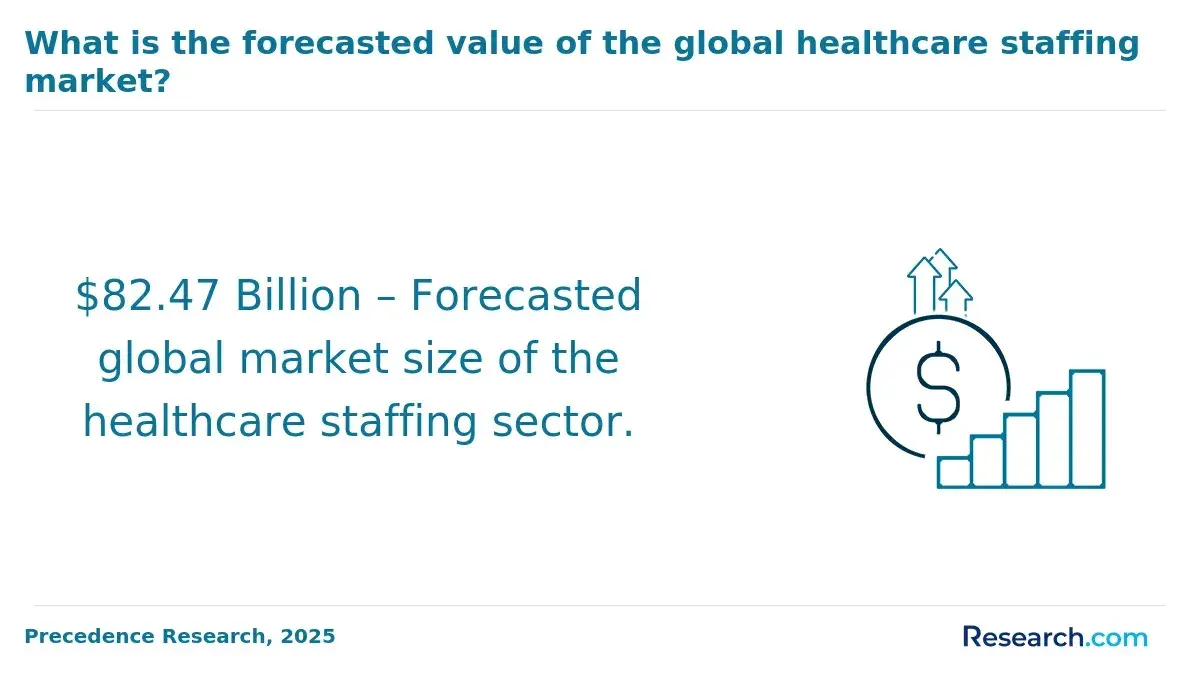
The global long-term care market size is forecast to reach around USD 2.1 trillion by 2026, with a 7.5% CAGR during the forecast period (Grand View Research, 2024). This matters for nursing students because long-term care, home health, rehabilitation, and chronic disease services are likely to remain important employment areas.
Foreign-born registered nurses are also a major part of the U.S. workforce. Of the foreign-born registered nurse population in the U.S., the largest group is from the Philippines with 198,228 RNs, followed by India with 81,509, Mexico with 30,881, and China with 29,002 RNs (Data USA, 2024). Filipino nurses, in particular, have a long history of serving in the U.S. healthcare system and as frontline workers, a history discussed in this overview of Filipino nurses in U.S. healthcare.
Challenges affecting the nursing workforce
- RN turnover cost ranged from $82,000 to $88,000 per nurse who leaves, with total nurse turnover cost for three service lines in a given set of hospitals ranging from $7,875,000 to $8,449,000.
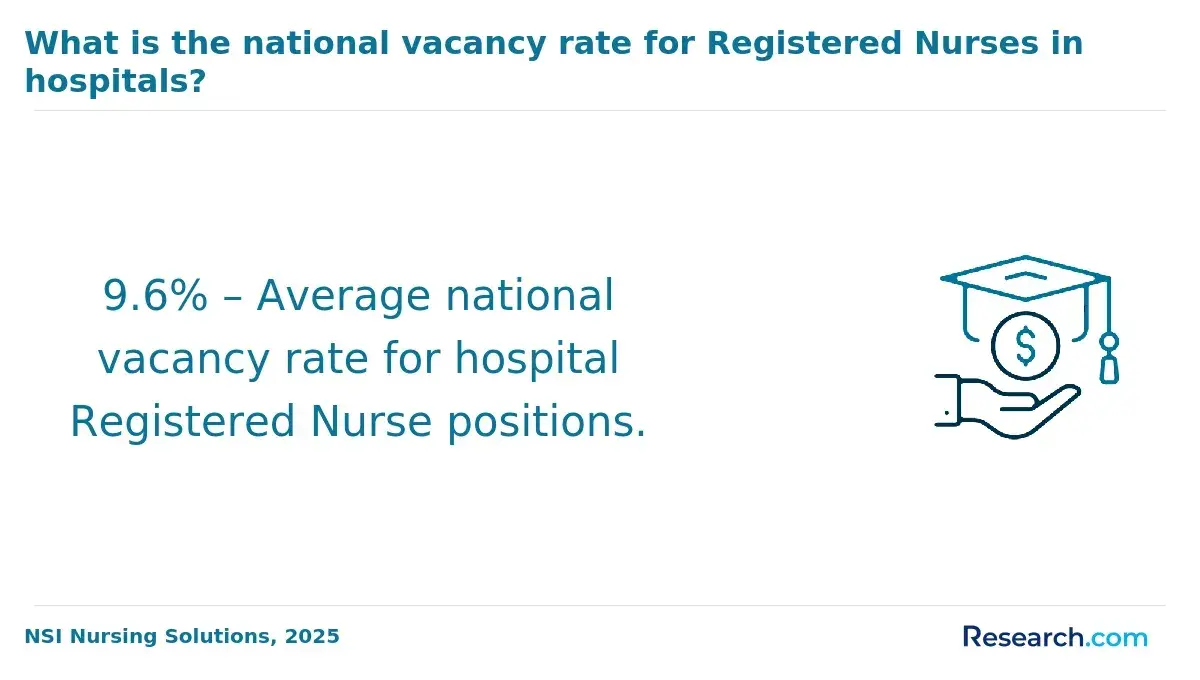
- In 2025, U.S. hospitals averaged a 27% turnover rate of staff registered nurses.
- In the U.S., the average hospital loses $5.2 million to $9 million annually from nurse turnover-associated costs.
- 56% of all nurses and 75% of black nurses interviewed in the U.S. said workplace racism has negatively affected their professional well-being.
- 57% of nurses have challenged racism in the workplace, and 64% said their efforts led to no change.
These challenges should not scare students away from nursing, but they should influence career planning. Ask potential employers about staffing ratios, orientation length, mentorship, safety policies, scheduling flexibility, anti-discrimination practices, and turnover. The workplace you choose can affect your health, learning curve, and career longevity.
Nursing Salary Outlook
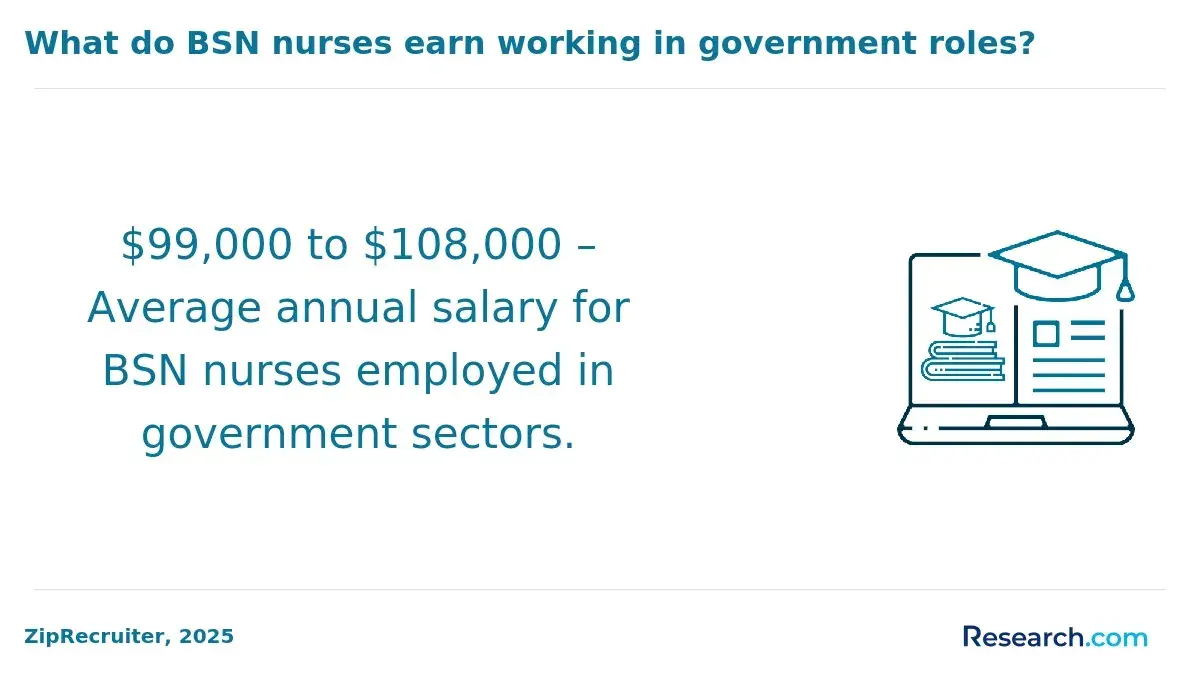
Registered nurse pay varies by state, metro area, employer, specialty, shift, degree level, union coverage, overtime, and experience. Data USA reports that the average salary for registered nurses was $67,878, with the average male salary at $79,060 and the average female salary at $66,430 (DataUSA, 2024). The figure increased to a median pay of $77,600 annually (U.S. Bureau of Labor Statistics, 2025).
The 2026 top-paying U.S. metropolitan areas for registered nurses were all in California: San Francisco-Oakland-Hayward at $164,760, San Jose-Sunnyvale-Santa Clara at $160,020, and Vallejo-Fairfield at $158,340 mean annual salaries (U.S. Bureau of Labor Statistics, 2025).
Specialty, location, and demand can raise earnings, but salary outcomes are never guaranteed. For example, nurses comparing specialties may want to review career-specific information such as labor and delivery nurse salary trends, shift expectations, and clinical requirements.
Some occupations related to RN careers are listed below (Bureau of Labor Statistics, 2025). Students who like healthcare but are uncertain about bedside nursing may compare these roles alongside nursing pathways. Nurses interested in mobile assignments can also learn how to become a travel nurse.
| Occupations related to RNs | 2025 Median Pay | Entry-Level Education |
| Dental Hygienists | $77,810 | Associate's degree |
| Diagnostic Medical Sonographers and Cardiovascular Technologists and Technicians | $75,380 | Associate's degree |
| EMTs and Paramedics | $36,930 | Post-secondary non-degree award |
| Licensed Practical and Licensed Vocational Nurses | $48,070 | Post-secondary non-degree award |
| Nurse Anesthetists, Nurse Midwives, and Nurse Practitioners | $123,780 | Master's degree |
| Physician Assistants | $121,530 | Master's degree |
| Respiratory Therapists | $61,830 | Associate's degree |
| Social Workers | $50,390 | Various |
Nursing administration is another option for nurses who want to move toward management, staffing, quality improvement, budgeting, or healthcare operations. Nursing Administration degrees awarded in the U.S. totaled 8,073 in 2024. The average annual salary is $78,297, with 4.3 million in the workforce (DataUSA, 2025). For a broader overview of program expenses and outcomes, review Research.com’s guide to nursing degree costs, requirements and career opportunities.
The top industries with the highest concentration of employment in registered nurses and their annual salaries are shown in the following chart.
General medical and surgical hospitals were the largest employers of RNs, with 1,724,510 employees. Home healthcare services ranked second, with 173,640 employed (Bureau of Labor Statistics, 2025).
The U.S. metropolitan areas with the highest employment levels in registered nurses include New York-Newark-Jersey City, NY-NJ-PA at 182,710 RNs earning $104,860 annually; Los Angeles-Long Beach-Anaheim, CA at 111660 RNs with an annual salary of $ 125,350; and Chicago-Naperville-Elgin, IL-IN- at 946,40 RNs earning $ 85,260 annually (U.S. Bureau of Labor Statistics, 2025). Additional metro data appears below.
| Metropolitan area | Employment | Hourly mean wage | Annual mean wage |
| New York-Newark-Jersey City, NY-NJ-PA | 182710 | $ 50.41 | $ 104,860 |
| Los Angeles-Long Beach-Anaheim, CA | 111660 | $ 60.26 | $ 125,350 |
| Chicago-Naperville-Elgin, IL-IN-WI | 94640 | $ 40.99 | $ 85,260 |
| Boston-Cambridge-Nashua, MA-NH | 70220 | $ 51.44 | $ 106,980 |
| Philadelphia-Camden-Wilmington, PA-NJ-DE-MD | 69370 | $ 42.23 | $ 87,830 |
| Dallas-Fort Worth-Arlington, TX | 66550 | $ 42.24 | $ 87,850 |
| Houston-The Woodlands-Sugar Land, TX | 58620 | $ 42.73 | $ 88,880 |
| Miami-Fort Lauderdale-West Palm Beach, FL | 55200 | $ 39.33 | $ 81,810 |
| Atlanta-Sandy Springs-Roswell, GA | 45360 | $ 43.40 | $ 90,270 |
| Washington-Arlington-Alexandria, DC-VA-MD-WV | 44120 | $ 44.61 | $ 92,800 |
20 Reasons to Pursue a Career in Nursing
The best reason to become a nurse is not one single benefit. It is the combination of patient impact, career flexibility, licensure-based mobility, and long-term healthcare need. The reasons below are strongest when weighed against the realities of shift work, emotional stress, physical demands, and education costs.
1. Nursing remains one of the most trusted professions
Nursing was the most trusted profession in 2024 for more than 20 years. 86% of U.S. adults rated nurses as having “very high” or “high” honesty and ethical standards, placing them above all other rated professions. For people who want work rooted in public trust and direct human service, that reputation is meaningful.
2. The job outlook is relatively stable
In the U.S., the number of nursing and nursing-related jobs in 2024 was approximately 3,380,000, with a projected job growth rate of 7% from 2024 to 2034. Around 236,000 new jobs per year throughout the decade are expected (Bureau of Labor Statistics, 2024). Openings may be especially important in regions where shortages are more severe, including parts of the Southern and Western states.
3. Nursing is tied to a large healthcare infrastructure
In 2024, total wages in U.S. nursing care facilities are projected to be approximately $70 billion. The U.S. had 27,500 nursing care facility businesses as of 2024, employing around 1,620,000 people as of 2024. This scale gives nurses access to many employer types, from hospitals and rehabilitation centers to long-term care, home health, and community-based services.
4. Nurses can make a direct difference in patients’ lives
Nurses often spend more time with patients than many other healthcare professionals. They notice subtle changes, answer questions, comfort frightened families, explain treatment plans, and help people through pain, recovery, birth, trauma, aging, and end-of-life care. If you want work where your actions can matter immediately to another person, nursing offers that kind of responsibility.
5. Nurses help people rebuild after crisis
Nursing can place you beside people recovering from accidents, violence, substance use, chronic illness, war trauma, neglect, or sudden loss of independence. Nurses cannot fix every problem, but they can help patients feel seen, supported, and informed during vulnerable moments. That human connection is one reason many nurses stay in the field despite its difficulty.
6. RN income can be competitive, especially with experience or specialization
Registered nurses in the U.S. were paid, on average, $77,600 annually in 2022, which increased to a median pay of $82,750 per year in 2024 (U.S. Bureau of Labor Statistics, 2024). Pay can increase with overtime, shift differentials, specialty units, travel assignments, union contracts, advanced degrees, and high-cost labor markets. Still, students should compare expected earnings against local cost of living and education debt.
7. Support networks for nurses are expanding
Hospitals, professional associations, peer groups, and wellness initiatives increasingly recognize that retention depends on more than pay. In a 2024 nurse survey, around 78% reported that safety, flexibility in work-life balance and scheduling, trusting and caring teams, and feeling valued by the organization were among the most influential reasons to stay in a role (American Nurses Association, 2024).
8. Nurses are essential during disease outbreaks and public health emergencies
The 2019 Covid-19 pandemic showed how central nurses are to emergency rooms, ICUs, infection control, patient education, vaccination campaigns, testing, isolation procedures, and public health communication. According to the World Health Organization, nurses make up approximately 59% of the global health workforce and play a critical role in pandemic response efforts, including vaccination campaigns and health education (World Health Organization, 2024).
9. Aging populations increase the need for geriatric and chronic care
By 2026, one in five people in the United States will be 65 or older, and nearly 75% of people over 65 currently have two or more chronic conditions (CDC, 2024). This creates continuing demand for nurses skilled in medication management, fall prevention, dementia care, rehabilitation, palliative care, home health, and chronic disease coordination.
10. Experienced nurses can teach and mentor
Nurses who gain clinical expertise can mentor new nurses, precept students, lead unit education, or move into academic roles. The need is significant because many colleges have had to reject qualified applicants from nursing programs because of limited faculty, classrooms, equipment, and clinical capacity.
11. Nursing is becoming more diverse, though gaps remain
The U.S. nursing workforce is predominantly Caucasian/white at 3,480,388, or around 80%. The remaining 20% includes growing representation from other racial and ethnic groups, including Asian nurses at 319,695 and Black/African American nurses at 275,607 RNs.
National Nursing Shortage Rate by Role in 2026

Diversity matters because patient trust, cultural understanding, language access, and equitable care can improve when the nursing workforce better reflects the communities it serves. At the same time, the profession must address discrimination and workplace inequities rather than placing the burden on individual nurses.
12. Nurses can choose from many specialties
Nursing offers a wide range of specialty tracks, including burn care, ambulatory care, cardiac care, case management, critical care, dialysis, genetics, geriatrics, mental health, neonatal care, neuroscience, oncology, orthopedics, pediatrics, and advanced practice. Some nurses also combine nursing with another area of interest, such as public health, nutrition, healthcare administration, informatics, or education. Students interested in nutrition-related graduate study can compare top nutrition graduate programs.
13. Benefits can strengthen total compensation
Many nursing jobs include benefits such as health insurance, life insurance, paid sick leave, vacation time, holidays, family leave, retirement plans, wellness programs, tuition reimbursement, exam fee reimbursement, and childcare support. Benefit quality varies widely by employer, so compare the full compensation package rather than salary alone.
14. Telehealth creates additional nursing options
Telehealth nursing uses phones, video platforms, patient portals, remote monitoring tools, and digital education resources to support patients outside traditional in-person settings. Nurses may help with triage, chronic disease monitoring, discharge follow-up, medication education, and care coordination. Professionals interested in adjacent healthcare communication roles can also explore online SLP programs.
15. Nursing builds strong professional relationships
Nursing is deeply team-based. Nurses work closely with physicians, therapists, pharmacists, social workers, aides, case managers, patients, and families. Those relationships can create strong workplace bonds and professional networks. However, nurses should also maintain boundaries, follow employer policies, and choose workplaces with respectful team cultures.
16. Workforce needs create openings for new and returning nurses
According to statistics from the 2024 National Nursing Workforce Survey, over 250,000 experienced RNs and approximately 70,000 experienced LPNs/LVNs left the workforce, with nearly 30% of all nurses planning to leave or retire within the next five years (Journal of Nursing Regulation, 2024). Replacement needs can create opportunities, but they also make retention, onboarding, and safe staffing crucial.
17. There are multiple routes to RN licensure
RN licensure does not require every nurse to begin with a bachelor’s degree. The 2024 distributions of RNs below bachelor’s degree level were as follows: 4.8% had vocational or practical certificates, 6.9% had diplomas, and 33.4% had Associate’s degrees (Journal of Nursing Regulation, 2024). However, some employers prefer or require a BSN, especially for certain hospitals or advancement tracks. Students comparing degree value can review what a BSN can lead to.
18. Simulation technology improves nursing education
Nursing students increasingly use simulation labs, 3D anatomy tools, virtual patients, digital charting exercises, and scenario-based training to practice clinical judgment before working with real patients. The NIH’s Visible Human Project helped advance the digitization of human anatomy resources that informed later simulation and visualization tools.
19. License renewal keeps nurses accountable and current
Registered nurses must renew their licenses every two or three years depending on state rules. Requirements commonly include continuing education, approved professional activities, or a minimum amount of nursing employment. Renewal expectations help nurses stay current with evidence-based care, safety standards, ethics, and changing regulations.
20. Nurses often act before anyone notices
Many of nursing’s most important moments happen quietly: catching a medication concern, recognizing deterioration, comforting a patient at night, teaching a family how to manage care at home, or coordinating help during a disaster. One public example came during President Barack Obama’s 2013 State of the Union Address, when he praised Menchu Sanchez, a Filipino nurse who led the rescue of hospitalized infants in New York during superstorm Sandy.
What alternatives are available for those without a nursing background to pursue a career in nursing?
Career changers do not always need to start from the beginning. People with a non-nursing background may consider accelerated BSN programs, direct-entry master’s programs, ADN programs, practical nursing programs, or hybrid pathways that combine online coursework with local clinical placements. The best option depends on prior college credits, science prerequisites, budget, timeline, and whether the program meets state licensure requirements.
Students who already hold a degree in another field should compare admission requirements carefully. Some programs require anatomy and physiology, microbiology, chemistry, statistics, psychology, or nutrition before entry. Research.com’s guide to online RN programs for non nurses can help career changers understand available formats and how to begin evaluating options.
What factors impact nursing school costs?
Nursing school cost is more than tuition. Students should estimate the total cost of attendance, including fees, textbooks, uniforms, lab supplies, background checks, immunizations, liability insurance, transportation to clinical sites, exam preparation, licensure fees, technology requirements, and living expenses. Online and hybrid programs may reduce commuting, but they can still require in-person labs or clinical rotations.
| Cost factor | Why it matters | Question to ask |
| Tuition and fees | These determine the base price of the degree or certificate. | What is the full program cost from admission to graduation? |
| Clinical placement | Travel, scheduling, and site availability can affect both cost and graduation timeline. | Does the school place students, or must students find clinical sites? |
| Transfer credits | Accepted credits can reduce time and expense. | Which credits will transfer, and will they apply to nursing requirements? |
| Licensure and exam costs | Students often pay for testing, applications, background checks, and review materials. | Are NCLEX preparation and licensure fees included or separate? |
| Lost work time | Clinical schedules can limit employment hours. | Can I realistically work while completing this program? |
For a deeper cost breakdown, review Research.com’s guide to how much nursing school costs.
How can ADN to NP bridge programs accelerate career progression?
ADN to NP bridge pathways are designed for nurses who began with an associate degree and want to move toward advanced practice without completing unnecessary repeated coursework. These programs typically build from RN preparation into bachelor’s- and graduate-level nursing concepts, with advanced clinical training, evidence-based practice, leadership, and population health content.
This route can be efficient, but it is not automatically the fastest or cheapest option for every nurse. Before enrolling, confirm admission requirements, bridge coursework, clinical hour expectations, certification eligibility, state authorization, and whether the program’s specialty matches your intended practice. Nurses comparing bridge options can explore ADN to NP pathways.
Can LPN to RN bridge programs transform your career path?
LPN to RN bridge programs can help practical or vocational nurses qualify for broader responsibilities, RN licensure, and potentially stronger advancement options. These programs usually recognize prior nursing experience while adding RN-level coursework in assessment, pharmacology, care planning, leadership, and clinical judgment.
Bridge programs can be a good fit for LPNs who want more autonomy, wider job options, and a pathway toward BSN or graduate study. They are less ideal for students who cannot accommodate clinical hours, lack prerequisite coursework, or have not verified that the program qualifies graduates for RN licensure in their state. For accelerated online options, compare LPN to RN bridge programs.
How Can Nurses Build Resilience and Prevent Occupational Burnout?
Burnout prevention should begin before the first nursing job. Nurses need sleep protection, healthy boundaries, supportive teams, safe staffing, realistic overtime limits, debriefing after traumatic events, and access to mental health resources. Individual self-care helps, but burnout is also a systems problem tied to workload, leadership, safety, and workplace culture.
Practical strategies include choosing employers with structured residency programs, using peer support, taking scheduled breaks when possible, learning stress recovery techniques, reporting unsafe conditions, and avoiding the belief that exhaustion proves dedication. Nurses planning long-term advancement may also compare flexible graduate programs, including affordable online nurse practitioner programs, so career growth does not come at the expense of personal stability.
How can you select a reputable and cost-effective nursing program?
A reputable nursing program should be properly approved for licensure, transparently report outcomes, provide qualified faculty, offer reliable clinical placements, and prepare students for the appropriate exam or certification. Do not choose a school based only on convenience, advertising, or a low tuition figure.
| Program quality factor | Why it matters | What to verify |
| Accreditation and state approval | Licensure, transfer credits, employer recognition, and graduate admission may depend on it. | Confirm approval with the state nursing board and recognized accrediting bodies. |
| NCLEX-RN pass rates | Pass rates help show whether graduates are prepared for licensure. | Ask for recent cohort results, not only multi-year averages. |
| Clinical placements | Strong placements develop real patient-care competence. | Ask where clinicals occur and who arranges them. |
| Graduation and retention rates | Low completion can signal weak support or unrealistic program design. | Ask how many admitted students finish on time. |
| Total cost and aid | Debt can affect the return on investment. | Compare net cost after grants, scholarships, and employer benefits. |
Nurses already planning doctoral preparation can also compare cost-conscious advanced pathways such as affordable MSN to DNP programs.
How can I choose the right online LPN program for my career?
Online LPN programs should be evaluated with extra caution because practical nursing requires hands-on clinical training. A credible program should clearly explain which parts are online, where labs and clinicals happen, whether the program is approved in your state, and what graduates are eligible to do after completion.
Compare accreditation or approval status, faculty access, clinical support, technology requirements, student services, exam pass rates, and total cost. Students seeking lower-cost options can review Research.com’s guide to the most affordable licensed practical nurse online program options.
How Challenging is the RN to BSN Degree?
An RN to BSN program is often manageable for working nurses, but it still requires discipline. The coursework typically emphasizes leadership, community health, evidence-based practice, research interpretation, health assessment, ethics, policy, and broader clinical reasoning. Many programs are online or hybrid, which helps with scheduling but requires strong self-management.
The difficulty depends on workload, family responsibilities, writing expectations, transfer credits, employer support, and how recently the student completed academic coursework. Nurses considering this step can review how difficult an RN to BSN degree can be.
What scholarships and financial aid options are available for nursing students?
Nursing students may be able to reduce costs through federal aid, scholarships, employer benefits, state programs, loan repayment, and service-based awards. Because aid rules change and eligibility varies, students should confirm details directly with the school, scholarship provider, employer, or government agency.
- Federal Student Aid (FAFSA): Completing the Free Application for Federal Student Aid can help eligible students access grants, loans, and work-study. Submitting early is important because some aid is limited.
- Nursing-specific scholarships: Healthcare and nursing organizations often fund students pursuing nursing education. Examples include the Tylenol Future Care Scholarship, the Johnson & Johnson Discover Nursing Scholarship, and American Association of Colleges of Nursing scholarship opportunities for students at AACN member schools.
- State-specific financial aid programs: Many states offer programs intended to attract or retain nurses. Some programs require service in high-need or underserved areas after graduation.
- Employer-sponsored tuition assistance: Hospitals, clinics, long-term care facilities, and health systems may help employees pay for nursing school, bridge programs, BSN completion, or graduate study.
- Loan forgiveness and repayment programs: Nurses who work in public service, underserved areas, or designated shortage settings may qualify for programs such as Public Service Loan Forgiveness or Nurse Corps loan repayment options, depending on eligibility.
- Private scholarships: Foundations, community groups, professional associations, and scholarship databases may offer awards based on academic merit, financial need, background, location, or intended specialty.
How to Advance Your Nursing Career
Career advancement in nursing usually comes from a combination of experience, education, certification, specialty competence, leadership skills, and professional networking. The best next step depends on whether you want deeper bedside expertise, higher pay, more autonomy, a leadership role, a teaching position, or a move away from direct patient care.
Pursue Higher Education: RN to BSN, MSN, or Doctoral Programs
Many nurses begin with an ADN or BSN, then return to school when their goals become clearer. An RN to BSN can support broader practice and leadership preparation. An MSN may lead to advanced practice, education, informatics, administration, or specialty roles. A DNP or PhD can support high-level clinical leadership, systems improvement, research, or academic work.
Working RNs who need flexibility may compare fast track RN to BSN online programs. Before enrolling, check transfer credits, practicum expectations, weekly workload, faculty support, and employer reimbursement.
Earn Professional Certifications
Certifications can help nurses document specialty knowledge and stand out for certain roles. Common advanced or specialty credentials include:
- Certified Nurse Practitioner (CNP)
- Certified Nurse Midwife (CNM)
- Certified Registered Nurse Anesthetist (CRNA)
- Certified Clinical Nurse Specialist (CNS)
- Certification in Nursing Informatics (RN-BC)
Certification requirements often include a license, specialty experience, continuing education, and an exam. Always verify the certifying organization’s current requirements before planning your timeline.
Choose a Nursing Specialty
Specialization can help nurses build expertise, improve job fit, and pursue roles aligned with their strengths. Examples include pediatric nursing for children and adolescents, geriatric nursing for older adults, oncology nursing for cancer care, and cardiac nursing for patients with heart conditions. A specialty should match your clinical interests, stress tolerance, schedule preferences, and long-term goals.
Stay Current with Technology and Healthcare Innovations
Nurses increasingly use electronic health records, medication scanning systems, clinical decision support, telehealth platforms, remote patient monitoring, mobile apps, and simulation tools. Comfort with technology can improve documentation, communication, safety, and employability. It can also open doors to nursing informatics, quality improvement, telehealth, and care coordination roles.
Leadership Roles and Management Opportunities
Nurses interested in leadership may pursue nurse manager, charge nurse, clinical nurse leader, director, educator, quality coordinator, or healthcare administrator roles. These jobs require more than clinical skill. They also involve budgeting, staffing, conflict resolution, regulatory compliance, coaching, patient safety, and performance improvement.
What role does technology play in modern nursing?
Technology is changing how nurses document care, monitor patients, communicate with teams, train for rare scenarios, and deliver services outside traditional facilities. It does not replace nursing judgment; it adds tools that nurses must learn to use safely and critically.
- Electronic Health Records (EHRs): EHR systems allow nurses to review and update patient information, document assessments, track orders, and communicate across care teams.
- Telehealth and remote monitoring: Nurses may use video visits, phone triage, wearable data, and remote monitoring devices to support patients at home.
- Mobile health applications: Apps can support medication reminders, patient education, chronic disease tracking, and clinical decision support.
- Wearable technology: Devices can monitor activity, sleep, heart rate, and other indicators that may help nurses identify trends or reinforce education.
- Robotics and automation: Robots and automated systems may assist with supply transport, room disinfection, medication workflows, inventory, or scheduling.
- Virtual and augmented reality: VR and AR tools can support nursing education, procedural practice, and clinical scenario training.
- Artificial Intelligence (AI): AI may help analyze patient data, flag deterioration risks, support staffing decisions, and assist clinical decision-making, but nurses must understand its limits and use professional judgment.
Strategies for Overcoming Common Nursing Education Challenges
Nursing school can be demanding because students must manage science-heavy coursework, skills labs, clinical rotations, exams, documentation, and often work or family responsibilities. Success depends on planning early and using support before problems become emergencies.
| Challenge | Common mistake | Better strategy |
| High program cost | Comparing tuition only | Calculate total cost, financial aid, commuting, supplies, licensure fees, and lost work time. |
| Accreditation confusion | Assuming every advertised program leads to licensure | Verify state board approval and recognized accreditation before applying. |
| Clinical scheduling | Choosing an online program without understanding in-person requirements | Ask where clinicals occur, who secures placements, and whether weekend or evening options exist. |
| Academic overload | Waiting until failing grades appear to seek help | Use tutoring, faculty office hours, peer study groups, and NCLEX-style practice early. |
| Work-life balance | Assuming full-time work and full-time nursing school will be easy | Build a weekly schedule around clinicals, study blocks, sleep, commuting, and family obligations. |
| Program selection | Relying only on rankings or advertising | Compare outcomes, faculty support, pass rates, graduation rates, and student services. |
Students worried about admission competitiveness may compare pathways carefully. For advanced practice candidates, Research.com’s guide to the easiest NP schools to get into can help frame admissions expectations, though “easier to enter” should never replace checking quality, outcomes, and licensure alignment.
The Future of Nursing Degrees
Nursing degrees will remain important because healthcare systems need licensed professionals who can combine clinical knowledge with patient education, care coordination, technology use, and ethical judgment. At the same time, related programs such as associate degrees in healthcare management also play a role in strengthening healthcare operations.
The future of nursing education is likely to emphasize flexible learning, simulation, stronger clinical partnerships, bridge pathways, workforce retention, mental health support, telehealth, data literacy, and leadership development. Students should choose programs that prepare them for today’s licensure requirements and tomorrow’s healthcare settings.
Questions to Ask Before You Become a Nurse
- Am I comfortable providing hands-on care to people who are ill, injured, frightened, confused, or in pain?
- Can I handle shift work, weekends, holidays, or physically demanding clinical environments?
- Which license or degree do I actually need for my target role?
- Does the program I am considering qualify graduates for licensure in my state?
- What are the program’s recent NCLEX pass rates, graduation rates, and job placement outcomes?
- How much debt would I take on, and what salary range is realistic in my location?
- What support systems do I have for childcare, transportation, study time, and stress management?
- Do I want bedside care long term, or am I aiming for leadership, education, informatics, telehealth, or advanced practice?
Key Insights
- Nursing can be a strong 2026 career choice, but it is not low-stress work. The field offers demand, mobility, and patient impact, but students should prepare for emotional intensity, physical demands, licensure rules, and lifelong learning.
- There is more than one route into nursing. Certificates, diplomas, ADN programs, BSN programs, RN to BSN tracks, MSN programs, bridge pathways, and doctoral degrees serve different goals and timelines.
- Accreditation and state approval are non-negotiable. Before enrolling, confirm that the program supports licensure or certification eligibility where you plan to work.
- Salary depends heavily on location, specialty, employer, and experience. California metro areas appear among the highest-paying markets, but cost of living and working conditions should be considered alongside pay.
- Workplace culture matters as much as career demand. Turnover, burnout, staffing, safety, racism, scheduling, and leadership support can shape whether nurses stay in the profession.
- Technology is now part of nursing competence. EHRs, telehealth, remote monitoring, simulation, mobile tools, and AI-supported systems are changing how nurses work and learn.
- The best nursing decision is personal and practical. Choose nursing if the work aligns with your strengths, values, and tolerance for responsibility—and choose your program based on outcomes, cost, clinical quality, and licensure fit.
References:
- HRSA. (2025). 2024 National Sample Survey of Registered Nurses. https://bhw.hrsa.gov/data-research/access-data-tools/national-sample-survey-registered-nurses
- U.S. Bureau of Labor Statistics. (2025). Occupational Outlook Handbook: Registered Nurses. https://www.bls.gov/ooh/healthcare/registered-nurses.htm
- NurseJournal. (2025). The Top 20 Highest-Paying Nursing Specialties. https://nursejournal.org/articles/best-nursing-specialities-for-the-future/
- Nightingale College. (2024). Nursing Shortage: 2026 US Statistics. https://nightingale.edu/blog/nursing-shortage-by-state.html
- NSI Nursing Solutions. (2025). 2025 NSI National Health Care Retention Report. https://nsi.com
- College Ave. (2025). BSN Nurse Salary: What Graduates Can Expect to Earn. https://www.collegeave.com
- Centers for Medicare & Medicaid Services. (2024). Nursing Home Data Compendium 2024. https://www.cms.gov/files/document/2024-nursing-home-data-compendium.pdf
- Precedence Research. (2025). Healthcare Staffing Market Size to Hit USD 82.47 Bn. https://www.precedenceresearch.com/healthcare-staffing-market
- Grand View Research. (2024). Long-term Care Market Size, Share & Trends Analysis Report. https://www.grandviewresearch.com/industry-analysis/long-term-care-market
- World Health Organization. (2024). Global nursing workforce report. https://www.who.int/publications/i/item/9789240071024
- Journal of Nursing Regulation. (2024). 2024 National Nursing Workforce Survey report. https://www.nursingregulation.org/research/2024nursingworkforcesurvey
Other Things You Should Know About Pursuing a Career in Nursing
Nursing offers a stable and rewarding career with numerous opportunities for growth and specialization. The demand for nurses is high, and the profession is highly respected and trusted, making it a fulfilling choice for those interested in healthcare.
In 2027, nursing offers substantial benefits, including a high demand leading to job security, competitive salaries, and flexible work hours. Nurses also find fulfillment in providing vital care and have numerous opportunities for specialization, allowing for continuous learning and career advancement.
In 2027, the job outlook for nurses remains highly promising. With an aging population and increasing healthcare demands, the need for qualified nurses grows. The U.S. Bureau of Labor Statistics predicts continued job growth in the nursing field, ensuring stability and numerous opportunities for new graduates.
Advancing a career in nursing typically involves pursuing higher education, such as a master's or doctoral degree, obtaining certifications in specialized areas, and gaining experience in advanced practice roles or leadership positions.
Essential skills for a nursing career include strong communication, critical thinking, problem-solving, empathy, attention to detail, teamwork, and time management. These skills help nurses provide high-quality care and navigate complex healthcare environments.
Nurses face challenges such as high stress levels, risk of burnout, exposure to infectious diseases, and the emotional toll of patient care. Addressing these challenges involves support systems, adequate staffing, and professional development opportunities.


