
2027 How to Become a Nurse in New Mexico

Co-Founder and Chief Data Scientist
Becoming a nurse in New Mexico requires more than choosing a nursing school and passing an exam. You need to understand which nursing role fits your goals, whether your program meets state licensure rules, how the Nurse Licensure Compact works, and what the labor market looks like across hospitals, rural clinics, home health, public health, and advanced practice settings. New Mexico has faced a documented nursing shortage, with projections indicating a need for over 4,000 additional registered nurses by 2025, so the state can offer meaningful opportunities for new graduates and experienced nurses. This guide explains the practical steps, education options, licensing requirements, career paths, online program considerations, and common mistakes to avoid before you invest time and money in nursing education.
Quick Answer: How do you become a nurse in New Mexico?
To become a nurse in New Mexico, you must complete a state-approved or accredited nursing program, apply through the New Mexico Board of Nursing, pass the appropriate NCLEX exam, complete the required background check, and maintain your license through renewal and continuing education. Registered nurse candidates typically earn an Associate Degree in Nursing or a Bachelor of Science in Nursing before taking the NCLEX-RN. Licensed practical nurse candidates complete a practical nursing program and take the NCLEX-PN. Advanced practice nurses need graduate education, national certification, and APRN licensure.
Key Things You Need to Know About Becoming a Nurse in New Mexico
- New Mexico needs nurses across many settings. Demand is shaped by an aging population, greater healthcare needs, rural access issues, and retirements within the existing workforce.
- Registered nurses in New Mexico earn approximately $75,000 per year on average. Pay can differ by experience, employer, specialty, and location, with metropolitan areas generally offering stronger compensation than some rural markets.
- The registered nursing outlook is strong. The Bureau of Labor Statistics projected 12% growth for registered nursing positions in New Mexico from 2020 to 2030.
- Licensure is mandatory. You cannot legally practice as an RN, LPN, or APRN in New Mexico without the correct license or valid compact practice privilege.
- Program choice matters. Accreditation, clinical placement quality, NCLEX preparation, cost, transfer policies, and whether the program meets New Mexico Board of Nursing expectations should all influence your decision.
- Steps to becoming a nurse in New Mexico
- Education requirements for New Mexico nursing careers
- Nursing roles legally recognized in New Mexico
- New Mexico nursing licensure requirements
- Types of nursing licenses in New Mexico
- Compact nursing privileges in New Mexico
- Practicing nursing without a license in New Mexico
- Ways to broaden a healthcare career in New Mexico
- Advanced nursing certifications for career growth
- Nurse practitioner education requirements in New Mexico
- Current state of nursing in New Mexico
- Allied healthcare roles that complement nursing
- LVN and LPN pathway considerations in New Mexico
- Online nursing programs in New Mexico
- Ongoing license maintenance requirements
- Financial aid options for nursing students
- How to become a nurse midwife in New Mexico
- Nursing job outlook in New Mexico
- LPN education options in New Mexico
- How a BSN can affect career opportunities
- How to choose the right nursing program in New Mexico
What are the steps to becoming a nurse in New Mexico?
The path depends on whether you want to become an LPN, RN, or advanced practice nurse, but the core process is similar: complete the required education, pass the correct licensing exam, apply to the New Mexico Board of Nursing, and keep your license active after you begin working.
- Choose the nursing role you want first. An LPN pathway can be shorter, while an RN pathway through an ADN or BSN provides broader clinical responsibilities. APRN roles, including nurse practitioner and nurse midwife, require graduate-level preparation.
- Enroll in an approved or accredited nursing program. RN candidates usually choose either an Associate Degree in Nursing or a Bachelor of Science in Nursing. ADN programs typically take two years, while BSN programs generally require four years and may provide stronger preparation for leadership, public health, specialty, and graduate study.
- Complete clinical training. Nursing programs must include supervised clinical practice. This is where students learn patient assessment, medication administration, documentation, communication, safety procedures, and care coordination.
- Apply for licensure through the New Mexico Board of Nursing. Graduates submit proof of education, complete required forms, pay applicable fees, and follow the board’s background check process.
- Pass the NCLEX. RN candidates take the NCLEX-RN. LPN candidates take the NCLEX-PN. Passing the exam demonstrates entry-level readiness for safe practice.
- Start working and plan for license renewal. New Mexico nurses must renew their licenses every two years and complete required continuing education to stay compliant.
- Consider specialization or advancement. After gaining experience, nurses may pursue certifications, RN-to-BSN programs, graduate degrees, or advanced practice roles. If you are comparing specialty income potential, reviewing psychiatric nurse practitioner salary by state can help you understand how compensation varies across locations.
| Goal | Typical education route | Licensing exam | Best fit for |
| Licensed Practical Nurse | Approved practical nursing program, often about one year | NCLEX-PN | Students seeking a shorter entry path into bedside care under RN or physician supervision |
| Registered Nurse | ADN or BSN | NCLEX-RN | Students who want broader clinical responsibilities and stronger long-term mobility |
| Advanced Practice Registered Nurse | MSN, DNP, or other qualifying graduate preparation | National certification requirements vary by specialty | Experienced nurses pursuing roles such as NP, CNM, CNS, or CRNA |
What are the educational requirements for becoming a nurse in New Mexico?
New Mexico nursing education requirements vary by license level. The most important decision is whether you want a practical nursing role, a registered nursing role, or an advanced practice role. Each option has different time commitments, costs, clinical expectations, and career outcomes.
- Licensed Practical Nurse: LPN candidates complete an approved practical nursing program, commonly offered through community colleges or vocational schools. These programs typically last about one year and prepare graduates for the NCLEX-PN. Students moving from medical assisting into nursing may compare bridge-style options, including the best medical assistant to LPN programs online.
- Registered Nurse: RN candidates usually choose between an Associate Degree in Nursing and a Bachelor of Science in Nursing. An ADN is commonly a two-year route focused on entry-level RN practice. A BSN is generally a four-year degree and includes additional coursework in leadership, community health, evidence-based practice, and care coordination.
- Advanced Practice Registered Nurse: Nurse practitioners, clinical nurse specialists, certified registered nurse anesthetists, and certified nurse midwives need graduate education, usually through a Master of Science in Nursing or doctoral nursing program. These programs often take two to three years beyond the RN level and include advanced clinical training.
- Doctoral nursing preparation: Nurses pursuing the highest academic or practice-focused preparation may complete a Doctor of Nursing Practice or Doctor of Philosophy in Nursing. These pathways typically require three to five years of study beyond the MSN.
Accreditation should be a nonnegotiable part of your school search. Even if you are comparing the easiest nursing schools to get into, do not choose a program simply because admission looks less competitive. Look for recognized nursing accreditation, such as accreditation from the Commission on Collegiate Nursing Education or the Accreditation Commission for Education in Nursing, and confirm that the program satisfies New Mexico Board of Nursing expectations.
Students who already have college credits or a prior degree may also consider accelerated or flexible formats. Options such as the cheapest online accelerated nursing programs can reduce time to completion for qualified students, but you still need to verify clinical placement requirements, state authorization, accreditation, and licensure eligibility.
What types of nurses can legally practice in New Mexico?
New Mexico recognizes several nursing and nursing-related roles. The legal authority to practice depends on education, examination, licensure, certification, and scope-of-practice rules.
- Registered Nurses: RNs complete an accredited nursing program, pass the NCLEX-RN, and hold a New Mexico RN license or valid compact privilege. They assess patients, implement care plans, administer medications, coordinate care, educate patients, and collaborate with healthcare teams.
- Licensed Practical Nurses: LPNs complete an approved practical nursing program and pass the NCLEX-PN. They provide basic nursing care under the supervision of RNs, physicians, or other authorized providers.
- Advanced Practice Registered Nurses: APRNs include nurse practitioners, clinical nurse specialists, certified registered nurse anesthetists, and certified nurse midwives. APRNs need graduate nursing education, national specialty certification, and state recognition. In New Mexico, APRNs have full practice authority to assess patients, diagnose conditions, interpret diagnostic tests, and begin treatment plans without physician supervision.
- Certified Nursing Assistants: CNAs are not licensed nurses, but they are important members of the care team. They complete state-approved training and pass a competency exam to be listed on the New Mexico Nurse Aide Registry.
| Role | Primary scope | Education level | Independent practice? |
| CNA | Personal care and basic support tasks | State-approved nurse aide training | No |
| LPN | Basic nursing care under supervision | Practical nursing program | No |
| RN | Comprehensive nursing assessment, care planning, medication administration, patient education | ADN or BSN | Works within RN scope; not the same as APRN independent authority |
| APRN | Advanced assessment, diagnosis, treatment, prescribing and specialty care as authorized | Graduate nursing degree plus certification | Yes, New Mexico allows full practice authority for APRNs |
What are the licensing requirements for nurses in New Mexico?
The New Mexico Board of Nursing sets licensure requirements for LPNs, RNs, and APRNs. Requirements differ by role, but most applicants should expect to document their education, pass the appropriate exam, submit an application, pay fees, and complete a criminal background check.
- Education: Applicants must graduate from an approved or accredited program appropriate to the license they seek. RN candidates generally complete an ADN or BSN. LPN candidates complete a practical nursing program.
- Examination: LPN candidates take the NCLEX-PN, while RN candidates take the NCLEX-RN. These exams measure whether a graduate has the entry-level knowledge and judgment needed for safe nursing practice.
- Application: Applicants submit licensure materials to the New Mexico Board of Nursing. This includes proof of education, exam documentation, identity information, and fees.
- Fees: The application fee is currently $100 for RNs and $75 for LPNs. Fingerprinting and background check requirements may create additional costs.
- Background check: New Mexico requires fingerprinting and a criminal background check through the New Mexico Department of Public Safety as part of the licensure process.
Before enrolling in any program, ask the admissions office to confirm in writing that graduates are eligible to apply for New Mexico licensure. This is especially important for online, out-of-state, accelerated, and bridge programs.
What types of nursing licenses are available in New Mexico?
New Mexico offers multiple nursing licensure pathways, each connected to a different scope of practice and level of responsibility.
- Registered Nurse license: RN candidates complete an accredited nursing degree program and pass the NCLEX-RN. Licensed RNs provide patient assessments, develop and carry out care plans, administer medications, coordinate with physicians and other clinicians, and educate patients and families.
- Licensed Practical Nurse license: LPN candidates complete a practical nursing program, typically lasting about one year, and pass the NCLEX-PN. LPNs monitor patients, assist with daily care, administer certain medications, and support RNs and physicians within a defined scope of practice.
- Advanced Practice Registered Nurse license: APRN licensure covers nurse practitioners, clinical nurse specialists, certified registered nurse anesthetists, and certified nurse midwives. APRNs need advanced nursing education and specialty certification. If nurse anesthesia is your goal, learning how to get into CRNA school can help you understand the academic and clinical competitiveness of that path.
- Licensure by endorsement: Nurses already licensed in another state may apply for New Mexico licensure by endorsement if they meet eligibility rules. This pathway allows qualified nurses to transition into New Mexico practice without retaking the NCLEX.
All licensed nurses must pay attention to renewal rules and continuing education expectations. A license is not a one-time credential; it must be maintained throughout your career.
The chart below shows the type of licenses currently held by registered nurses in the U.S.
Can a Compact nurse practice in New Mexico?
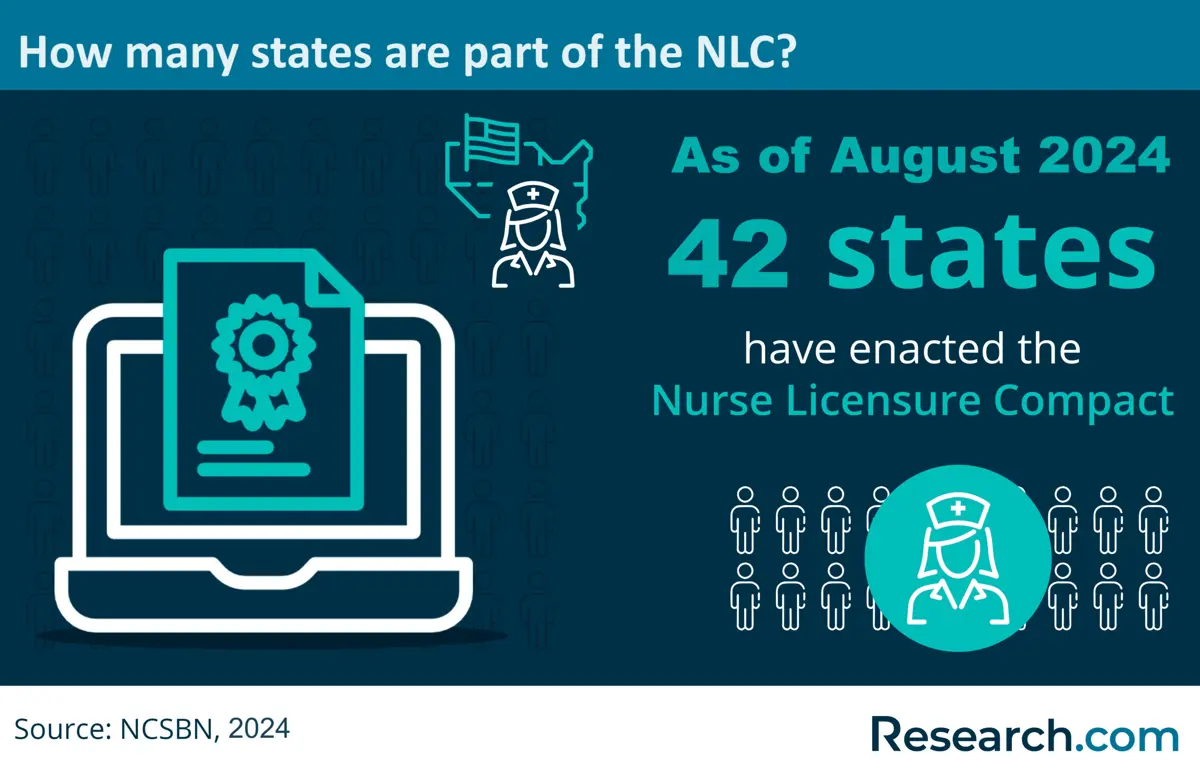
Yes. New Mexico participates in the Nurse Licensure Compact, specifically the Enhanced Nurse Licensure Compact. A nurse who holds a valid multistate compact license from another participating state may practice in New Mexico without obtaining a separate New Mexico license, as long as the nurse meets compact rules.
Compact practice in New Mexico generally requires:
- An active multistate license: The nurse must hold a valid compact license issued by a participating state.
- Compliance with compact standards: Compact licensure includes uniform requirements, including education standards and criminal background check expectations.
- Awareness of residency rules: Nurses whose primary state of residence is New Mexico must apply for a New Mexico nursing license rather than relying on another state’s compact license.
The compact can be especially useful for travel nurses, telehealth nurses, and employers responding to staffing gaps. It also reduces the need to pay for multiple single-state licenses when a nurse qualifies for multistate practice. However, compact status does not eliminate the need to follow New Mexico’s scope-of-practice rules, employer policies, and professional standards.
If you are already an RN and want to move into advanced practice or leadership, comparing online RN to MSN programs may help you identify faster graduate pathways.
Can you practice as a nurse without a license in New Mexico?
No. You may not practice as a nurse in New Mexico without a valid license or lawful compact privilege. The New Mexico Nursing Practice Act requires nurses to be properly licensed through the New Mexico Board of Nursing before performing nursing functions. This protects patients, employers, and the nursing profession.
Unlicensed nursing practice can lead to serious consequences, including disciplinary action, fines, and possible criminal exposure. It also places patients at risk because nursing work involves clinical judgment, medication safety, assessment, documentation, and intervention decisions that require formal preparation and legal authorization.
The global workforce context makes licensure even more important. The World Health Organization has warned of a potential shortage of 18 million healthcare professionals by 2030, with nurses representing a major part of the workforce need. Shortages can create pressure to fill roles quickly, but they do not remove legal licensing requirements.
-
: "
Practical rule: If a job asks you to perform nursing duties before you are licensed, pause and verify the role with the New Mexico Board of Nursing or a qualified compliance officer. Student clinical work is different from independent nursing practice and must occur under approved supervision.
"
Is it possible to diversify your healthcare career in New Mexico?
Yes. Nurses and healthcare workers in New Mexico can broaden their careers by combining clinical experience with complementary healthcare knowledge. This can be useful for professionals interested in medication safety, care coordination, healthcare operations, community health, or leadership. For example, understanding how to become a pharmacist in New Mexico can help nurses better appreciate pharmacology, prescribing workflows, and interdisciplinary medication management, even if they do not plan to become pharmacists.
What advanced nursing certifications can enhance my career in New Mexico?
Advanced certifications can help nurses move into specialty practice, leadership, or higher-responsibility clinical roles. Certification is not the same as initial licensure; it usually validates expertise in a focused area after a nurse has met education, experience, and examination requirements. Nurses interested in mental health care may explore shortest online PMHNP certificate programs if they already meet the entry requirements for post-graduate psychiatric-mental health preparation.
Before pursuing a certificate, ask whether it will qualify you for the exact role you want in New Mexico. Check admission requirements, required clinical hours, national certification eligibility, state APRN rules, and whether local employers recognize the credential.
What Are the Nurse Practitioner Education Requirements in New Mexico?
Nurse practitioners in New Mexico must first be registered nurses and then complete advanced nursing education with graduate-level coursework and supervised clinical training. Most NP pathways include an MSN, DNP, or qualifying post-graduate certificate aligned with a population focus such as family practice, psychiatric-mental health, adult-gerontology, pediatrics, or women’s health.
Prospective NPs should compare programs against the nurse practitioner education requirements in New Mexico, including curriculum structure, clinical placement expectations, national certification eligibility, and APRN licensure rules. New Mexico’s full practice authority for APRNs can make the NP pathway especially attractive, but autonomy also comes with significant clinical responsibility.
What is the state of nursing in New Mexico?
Nursing in New Mexico is shaped by strong demand, rural access challenges, an aging population, chronic disease needs, and a healthcare system that relies heavily on nurses in hospitals, clinics, long-term care, home health, public health, and community-based settings. For students, this means opportunities exist, but the best path depends on location, specialty, credential level, and willingness to serve high-need communities.
Recent figures cited for the state indicate approximately 30,000 registered nurses actively working in New Mexico. Even with that workforce, shortages remain in some rural and underserved areas. This creates openings for new graduates and experienced nurses, but it can also mean heavier workloads and the need to evaluate employer support carefully.
Salary information varies by source and role. The average annual salary for registered nurses in New Mexico is cited at around $70,000 in one recent data point, while another estimate places the average at approximately $75,000 per year. Differences may reflect timing, methodology, location, experience, and employer type.
The top nursing employment settings in New Mexico include:
- Hospitals: Acute care facilities employ many RNs in emergency care, medical-surgical units, intensive care, labor and delivery, perioperative care, and specialty departments.
- Long-term care facilities: Nursing homes and assisted living providers need nurses to support aging residents and patients with chronic needs.
- Home health care: Home-based care continues to be important for patients who need skilled services outside hospital settings.
- Public health organizations: Nurses support vaccination, health education, disease prevention, community outreach, and care access initiatives, especially in underserved communities.
The chart below, meanwhile, shows the five highest-paying industries for NPs in the country, along with their average annual salaries.
How Can Allied Healthcare Roles Expand Your Healthcare Career in New Mexico?
Allied healthcare roles can strengthen a nurse’s understanding of the full healthcare system. Skills in documentation, coding, billing, informatics, compliance, and administration can be useful for nurses who want to move into case management, quality improvement, utilization review, revenue cycle work, or clinic leadership. If you are interested in the administrative side of care delivery, review how to become a medical biller and coder in New Mexico.
What are the essential steps for becoming an LVN in New Mexico?
New Mexico commonly uses the title Licensed Practical Nurse rather than Licensed Vocational Nurse, although LVN and LPN are often treated as comparable practical nursing roles in different states. If you are searching for the LVN pathway in New Mexico, focus on approved practical nursing programs, clinical training quality, NCLEX-PN preparation, and New Mexico Board of Nursing licensure rules. For a role-specific overview, see how to become an LVN in New Mexico.
Are online nursing programs a viable pathway in New Mexico?
Online nursing programs can be a practical option in New Mexico, but only if they meet licensure, accreditation, and clinical training requirements. Many nursing programs use hybrid formats: didactic coursework may be online, while labs, simulations, and clinical rotations require in-person participation. This is especially important for pre-licensure programs, where hands-on clinical education cannot be replaced by online coursework alone.
Online formats may work well for RN-to-BSN students, working nurses, and graduate students who need flexibility. They can be riskier for first-time nursing students if the school does not provide clear clinical placement support in New Mexico. To compare quality and format, review the best online nursing programs in New Mexico.
| Program format | When it may work well | What to verify before enrolling |
| Campus-based | You want structured labs, local clinical placements, and face-to-face support | Accreditation, NCLEX outcomes, clinical sites, cost, and graduation support |
| Hybrid | You need some flexibility but still want local skills training | Required campus visits, lab dates, clinical placement process, and technology requirements |
| Online | You are already licensed or pursuing a completion or graduate pathway | State authorization, accreditation, clinical requirements, and New Mexico licensure eligibility |
What Are the Ongoing Requirements to Maintain Nursing Licensure in New Mexico?
Licensed nurses in New Mexico must renew their licenses on schedule and meet continuing education requirements. RNs are required to renew every two years, and continuing education helps ensure that nurses stay current with clinical standards, patient safety expectations, ethics, technology, and state practice requirements.
Because renewal rules can change, nurses should review the requirements for nursing licensure in New Mexico before each renewal cycle. Do not wait until the deadline to check requirements, especially if you have changed your name, moved states, changed license status, or added an advanced practice credential.
What financial aid opportunities can help me finance my nursing education in New Mexico?
Nursing school costs can include tuition, fees, textbooks, uniforms, supplies, background checks, immunizations, exam fees, transportation to clinical sites, and lost work hours. Financial aid may come from federal aid, state programs, institutional scholarships, employer tuition assistance, grants, and loan forgiveness options tied to service in high-need areas.
When comparing the best nursing schools in New Mexico, look beyond tuition. Ask each school for a full cost estimate, scholarship availability, average debt information if available, clinical travel expectations, and whether students can work while enrolled. A lower advertised tuition may not be the least expensive option if the program has limited clinical support, poor completion rates, or costs that are not obvious upfront.
How Can I Become a Nurse Midwife in New Mexico?
To become a nurse midwife in New Mexico, you typically begin by becoming a licensed registered nurse, gaining relevant clinical experience, and completing a graduate nursing program focused on midwifery. Nurse midwives provide care related to pregnancy, birth, postpartum recovery, reproductive health, and newborn care. They may work in hospitals, birth centers, clinics, and community health settings.
Graduates usually pursue board certification through recognized certifying bodies and then apply for appropriate state recognition. Because maternal health needs can vary widely across New Mexico’s urban, rural, and culturally diverse communities, strong clinical preparation is essential. For a detailed pathway, review how to become a nurse midwife in New Mexico.
What is the job outlook for nursing in New Mexico?
The nursing job outlook in New Mexico is positive, especially for registered nurses and advanced practice nurses. According to the U.S. Bureau of Labor Statistics, RN employment in New Mexico was projected to grow by approximately 12% from 2020 to 2030. Demand is connected to preventive care, aging populations, healthcare expansion, and persistent staffing needs in rural and underserved regions.
Registered nurses in New Mexico earn approximately $75,000 annually, or about $36 per hour, though pay varies by experience, geographic area, specialty, shift, and employer. Salaries should be treated as estimates rather than guarantees.
Top-paying metropolitan areas cited for New Mexico nurses include:
- Albuquerque: RNs can earn an average salary of around $76,000.
- Santa Fe: RNs can expect approximately $74,000 per year.
- Las Cruces: RNs earn about $70,000 on average.
Higher-paying nursing settings in New Mexico may include outpatient care centers, specialty hospitals, and home healthcare services. Nurse anesthetists and nurse practitioners often earn more than entry-level RN or LPN roles, with some exceeding $100,000 annually. LPNs generally earn less, with an average salary of around $48,000.
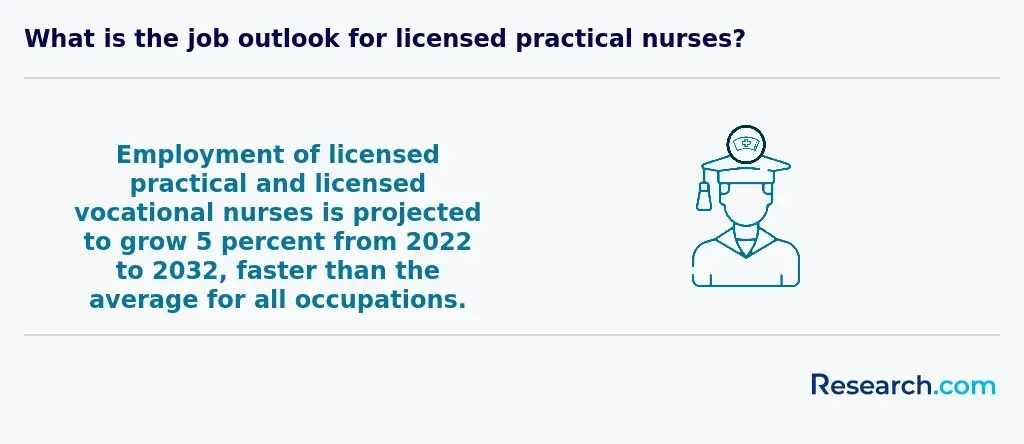
The graphic below, meanwhile, shows the general job outlook for LPNs in the country.
What are the benefits of joining a nursing association in New Mexico?
A nursing association can help you stay connected, informed, and professionally visible. This is useful for students, new graduates, experienced bedside nurses, and advanced practice nurses.
- Networking: Associations create opportunities to meet mentors, employers, educators, and peers through conferences, local meetings, webinars, and committees.
- Continuing education: Many organizations provide continuing education resources that can help nurses meet renewal requirements and keep up with practice changes.
- Advocacy: Professional groups often represent nurses in conversations about workforce policy, workplace safety, scope of practice, and healthcare access.
- Career support: Members may receive access to job boards, leadership opportunities, specialty groups, résumé resources, and professional development events.
What options are available for LPN education in New Mexico?
LPN education in New Mexico is designed for students who want a shorter route into nursing practice than the RN pathway. LPN programs focus on foundational patient care, medication support, vital signs, basic assessment, documentation, and clinical skills. Graduates must pass the NCLEX-PN before becoming licensed.
Students should compare traditional campus programs, hybrid formats, and online LPN programs in New Mexico carefully. Pre-licensure practical nursing programs still require hands-on clinical training, so an “online” program should explain exactly where and how clinical requirements are completed.
Can a BSN Open Greater Career Opportunities in New Mexico?
A BSN can improve long-term flexibility for New Mexico nurses, especially those interested in leadership, public health, specialty units, case management, graduate school, or advanced practice. While ADN-prepared nurses can become licensed RNs, BSN coursework usually adds more preparation in evidence-based practice, population health, management, research, and interprofessional care.
BSN value depends on cost, employer expectations, your timeline, and whether you plan to pursue graduate education. If compensation is a major factor in your decision, reviewing BSN salary information can help you evaluate potential career returns without assuming that a degree automatically guarantees a specific income.
How to Choose the Right Nursing Program in New Mexico
The right nursing program is the one that qualifies you for licensure, fits your life realistically, provides strong clinical preparation, and offers a reasonable cost for your expected career path. Rankings can help with research, but they should not replace due diligence.
- Confirm accreditation and board approval. Ask whether the program is accredited by a recognized nursing accreditor and whether graduates are eligible for New Mexico licensure. This is essential for NCLEX eligibility, transfer options, graduate school, and some employers.
- Choose the right credential level. An ADN may be faster and more affordable for RN entry. A BSN can create broader opportunities. An MSN or doctoral program is necessary for many advanced practice roles. If advanced practice is your goal, compare the best NP programs in New Mexico based on specialty fit, clinical placements, and certification outcomes.
- Evaluate total cost, not just tuition. Include fees, supplies, travel, exam preparation, background checks, uniforms, technology, and lost income. Ask about scholarships, grants, employer tuition benefits, and loan forgiveness options.
- Ask about clinical placements. Strong clinical partnerships can make a major difference. Find out where students complete rotations, whether the school arranges placements, and how far you may need to travel.
- Review NCLEX preparation and student support. Ask about tutoring, simulation labs, skills remediation, faculty access, graduation support, and exam readiness resources.
- Check flexibility honestly. Online and hybrid options can help working adults, but nursing school is time-intensive. Make sure class schedules, clinical days, commute time, and family obligations are realistic.
- Talk to current students and recent graduates. Ask about workload, faculty responsiveness, clinical quality, hidden costs, and whether the program delivered what was promised.
| Common mistake | Why it can hurt you | Better approach |
| Choosing a school only because it is easy to enter | Admission ease does not guarantee licensure eligibility, strong clinical training, or NCLEX readiness | Verify accreditation, outcomes, clinical support, and board approval |
| Looking only at tuition | Fees, supplies, travel, and delayed graduation can raise the true cost | Request a full cost breakdown before enrolling |
| Assuming any online program works for New Mexico | Some online programs may not meet state authorization, clinical, or licensure rules | Confirm New Mexico eligibility directly with the school and board resources |
| Ignoring clinical placement details | Weak or distant placements can make completion harder | Ask who arranges placements and where students train |
| Assuming salary outcomes are guaranteed | Pay depends on employer, specialty, experience, location, and shifts | Use salary data as planning guidance, not a promise |
Questions to Ask Before Applying to a New Mexico Nursing Program
- Is the program accredited by a recognized nursing accreditor?
- Are graduates eligible to apply for New Mexico nursing licensure?
- What is the program’s NCLEX preparation process?
- Who arranges clinical placements, and where do students complete them?
- What is the full estimated cost, including fees and required supplies?
- Can transfer credits reduce my timeline or cost?
- Does the program support working adults, parents, or students in rural areas?
- What student support is available if I struggle academically or clinically?
- Does the program lead to the role I actually want, such as LPN, RN, NP, CRNA, or CNM?
Related Articles for Nearby States
- 2027 How to Become a Nurse in Arizona
- 2027 How to Become a Nurse in Colorado
- 2027 How to Become a Nurse in Texas
- 2027 How to Become a Nurse in Utah
- 2027 How to Become a Nurse in Oklahoma
- 2027 How to Become a Nurse in Nevada
- 2027 How to Become a Nurse in Kansas
- 2027 How to Become a Nurse in Wyoming
- 2027 How to Become a Nurse in Nebraska
- 2027 How to Become a Nurse in California
References:
- nursinglicensure.org. (04 Nov 2020). RN Career Paths in New Mexico: Becoming an RN. nursinglicensure.org.
- nursinglicensemap.com (10 Mar 2020). Become a Nurse in New Mexico – Licensure & Requirements. nursinglicensemap.com.
- bon.nm.gov (09 Jun 2023). New Mexico Board of Nursing. bon.nm.gov.
- Kathleen Gaines (11 Jun 2024). Compact Nursing States List 2024. nurse.org.
- Tacy, J., McElwain, S., & Fletcher, A. (2023). Strategies for success that led to 99.98% school of nursing retention. Journal of Nursing Education and Practice.
Key Insights
- Licensure is the central requirement. New Mexico nursing careers require the correct education, NCLEX exam, background check, board application, and ongoing renewal compliance.
- ADN and BSN routes both lead to RN licensure, but they serve different goals. An ADN can be a faster RN entry path, while a BSN may support leadership, specialty practice, and graduate study.
- New Mexico’s workforce demand creates opportunity, especially in underserved areas. The state has faced a need for over 4,000 additional RNs by 2025, and RN employment was projected to grow 12% from 2020 to 2030.
- Compact licensure can help mobile nurses practice in New Mexico. Nurses with a valid multistate license from an eNLC state may practice in New Mexico, but New Mexico residents must hold a New Mexico license.
- Online nursing programs can work, but verification is essential. Confirm accreditation, New Mexico licensure eligibility, clinical placement support, and state authorization before enrolling.
- Do not choose a nursing school based only on convenience or price. The strongest decision considers accreditation, clinical quality, NCLEX preparation, total cost, schedule fit, and career alignment.
Other Things You Should Know About Becoming a Nurse in New Mexico
To obtain a nursing license in New Mexico in 2027, complete a state-approved nursing program and pass the NCLEX-RN. Submit an application to the New Mexico Board of Nursing, including a background check and proof of education. Continuing education may be necessary for license renewal.
In 2027, to apply for a nursing license in New Mexico, complete an accredited nursing program, pass the NCLEX-RN examination, and submit your application to the New Mexico Board of Nursing. Ensure to provide all required documentation, including transcripts and background check information.
To become a licensed nurse in New Mexico in 2027, complete an accredited nursing program, pass the NCLEX-RN or NCLEX-PN, and apply for licensure through the New Mexico Board of Nursing. Continuing education is also needed for license renewal every two years.


