
2027 How to Become a Nurse Practitioner in New Mexico

Co-Founder and Chief Data Scientist
Becoming a nurse practitioner in New Mexico is a multi-step process: you need RN licensure, graduate-level nurse practitioner education, national certification, and approval from the New Mexico Board of Nursing. The decision matters because NP preparation is expensive, clinically demanding, and tied closely to state scope-of-practice rules. In New Mexico, the payoff can be strong for the right candidate: nurse practitioners have full practice authority, work in settings ranging from rural clinics to hospitals and telehealth practices, and serve a state with ongoing primary care and behavioral health access needs.
This guide explains how to become a nurse practitioner in New Mexico, which degree options meet state expectations, how licensing and renewal work, what programs may cost, how long the process can take, and how to compare specialties such as family practice, pediatrics, psychiatric mental health, adult-gerontology, and women’s health. It is written for registered nurses planning an advanced practice career, LPNs mapping a longer route into advanced nursing, and career changers who want a realistic view of the education, cost, and licensing process.
Quick answer: How do you become a nurse practitioner in New Mexico?
To become a nurse practitioner in New Mexico, you generally need to become a registered nurse, complete an accredited Master of Science in Nursing (MSN) or Doctor of Nursing Practice (DNP) nurse practitioner program, pass a national certification exam in your specialty, complete the New Mexico Board of Nursing application process, and maintain your license through renewal, continuing education, and clinical practice requirements. New Mexico grants full practice authority to nurse practitioners, which means qualified NPs can evaluate patients, diagnose conditions, order and interpret tests, and manage treatment independently within their scope.
Key things you should know about becoming a nurse practitioner in New Mexico
- New Mexico nurse practitioner candidates must hold graduate-level nursing preparation, usually an MSN or DNP from an accredited institution, along with a valid New Mexico RN license and supervised clinical training through an NP program.
- National board certification is required in the nurse practitioner’s population focus or specialty area. Common certification routes include family, pediatric, adult-gerontology, psychiatric mental health, and women’s health practice through organizations such as the American Association of Nurse Practitioners (AANP) and the American Nurses Credentialing Center (ANCC).
- The average annual salary for nurse practitioners in New Mexico is approximately $136,770, and the average hourly wage is around $65.76.
- One employment projection cited for New Mexico nurse practitioners shows 45% job growth from 2020 to 2030, reflecting strong demand for advanced practice providers, especially in rural and underserved communities.
- New Mexico NPs may work in hospitals, community clinics, private practices, long-term care, school-based or public health settings, and telehealth models that help reach patients outside major metro areas.
- According to the US Health Resources & Services Administration, around 78% of NPs have expressed satisfaction in their work, but satisfaction depends heavily on workload, specialty, employer support, compensation, and clinical autonomy.
- Steps to become a nurse practitioner in New Mexico
- Degree requirements for New Mexico nurse practitioners
- Licensing requirements for nurse practitioners in New Mexico
- Continuing education and renewal requirements
- How long NP programs take in New Mexico
- Typical nurse practitioner program costs in New Mexico
- Benefits of advanced nursing education in New Mexico
- New Mexico nurse practitioner scope of practice
- Professional development and mentorship resources
- Accelerated NP programs in New Mexico
- Nutrition knowledge in NP practice
- Nurse practitioner specializations in New Mexico
- Legal and liability considerations
- LPN to nurse practitioner pathway
- Community health impact
- How to choose a New Mexico NP program
- Job prospects by specialty
- New Mexico nursing license requirement checklist
- Other healthcare career paths for NPs
- Telehealth and NP practice in New Mexico
- Transitioning from NP to nurse midwife
- Salary expectations for nurse practitioners in New Mexico
How do you become a nurse practitioner in New Mexico?
The usual route to nurse practitioner practice in New Mexico begins with registered nursing preparation and ends with advanced practice licensure. Many students start with a Bachelor of Science in Nursing (BSN), which commonly takes four years. Nurses who are already licensed RNs may use an RN-to-BSN pathway instead; if completion speed is a major concern, reviewing the fastest RN to BSN program online options can help you compare accelerated formats.
After completing the required nursing education, candidates must pass the National Council Licensure Examination for Registered Nurses (NCLEX-RN) and obtain RN licensure. From there, the next step is graduate study in an accredited nurse practitioner program. New Mexico recognizes advanced nursing preparation through MSN and DNP pathways, and the program should include both advanced coursework and clinical training in the intended NP specialty.
Once the graduate program is complete, the candidate must pass a national certification exam aligned with the population focus. For example, a future Family Nurse Practitioner would seek FNP certification, while a future Psychiatric Mental Health Nurse Practitioner would pursue PMHNP certification. Certification agencies commonly include AANP and ANCC, depending on the specialty.
The final step is applying through the New Mexico Board of Nursing. Applicants should expect to submit proof of RN licensure, graduate education, national certification, and background screening. New Mexico is a full-practice state for NPs, so licensure has real practice implications: qualified NPs may assess patients, diagnose illnesses, interpret diagnostic results, and start treatment plans without mandatory physician supervision under state practice rules.
New Mexico nurse practitioner licenses are renewed every two years. Renewal requires at least 30 hours of continuing education, and NPs should keep documentation organized well before the renewal deadline.
In a year, over 150,000 bachelor's degrees in nursing are conferred in the United States, as shown by the visual below.
New Mexico NP pathway at a glance
| Step | What you need to complete | Decision point for students |
| 1. Become an RN | Complete an accredited nursing program and pass the NCLEX-RN. | Choose BSN, ADN-to-BSN, or bridge options based on your current license and education level. |
| 2. Earn graduate NP preparation | Complete an accredited MSN or DNP nurse practitioner program with clinical training. | Pick a specialty before enrolling because certification and clinical placements must match your population focus. |
| 3. Pass national certification | Take the certification exam required for your specialty, such as FNP or PMHNP. | Confirm which certifying body your program prepares you for before you apply. |
| 4. Apply for New Mexico NP licensure | Submit education, certification, RN licensure, and background check documentation. | Use the Board of Nursing checklist to avoid delays from missing or inconsistent records. |
| 5. Renew and stay compliant | Complete renewal requirements every two years, including CE and practice documentation. | Track CE, pharmacology hours, certification status, and clinical practice hours continuously. |
What degree do you need to become a nurse practitioner in New Mexico?
New Mexico nurse practitioner candidates need graduate-level nursing education, typically an MSN or DNP with an NP concentration. The program should be accredited by a recognized nursing accreditor such as the Commission on Collegiate Nursing Education (CCNE) or the Accreditation Commission for Education in Nursing (ACEN). Accreditation is not a formality; it can affect certification eligibility, licensure review, transfer options, and employer confidence.
The MSN is often the practical route for RNs who want to enter advanced practice efficiently, while the DNP may be better for nurses who want deeper preparation in leadership, evidence-based practice, systems improvement, or future academic and executive roles. Both pathways can lead to NP practice when they meet specialty certification and state licensure expectations.
Several New Mexico institutions offer graduate nursing pathways for aspiring NPs. The University of New Mexico (UNM) offers MSN and DNP options with specializations such as Family Nurse Practitioner (FNP) and Psychiatric Mental Health Nurse Practitioner (PMHNP). New Mexico State University (NMSU) offers an MSN with an FNP focus, and Eastern New Mexico University (ENMU) provides a Master of Science in Nursing with NP tracks. Applicants should verify current program availability, accreditation, clinical placement policies, and certification pass-rate disclosures directly with each school before enrolling.
MSN vs. DNP for New Mexico nurse practitioner candidates
| Degree option | Best fit | Main advantage | Trade-off |
| MSN nurse practitioner program | RNs who want the required graduate preparation for NP practice without committing to the longest academic route. | Usually a more direct path into NP certification and clinical practice. | May offer less depth in systems leadership and doctoral-level scholarship than a DNP. |
| DNP nurse practitioner program | Nurses who want doctoral-level practice preparation, leadership development, and broader systems-focused training. | Can strengthen preparation for advanced clinical leadership, quality improvement, and higher-level practice roles. | Generally takes longer and may cost more than an MSN route. |
| Post-master’s NP certificate | Master’s-prepared nurses who want a new NP specialty or population focus. | May avoid repeating a full graduate degree when prior coursework applies. | Eligibility varies by school, prior degree, specialty, and clinical hour requirements. |
What are the licensing requirements for nurse practitioners in New Mexico?
New Mexico nurse practitioner licensure starts with an active RN license. To reach that point, candidates must complete an approved nursing education pathway and pass the NCLEX-RN. Applicants educated outside New Mexico or those moving from another state should confirm endorsement and compact-related rules directly with the New Mexico Board of Nursing.
After RN licensure, the candidate must graduate from an accredited nurse practitioner program at the MSN, DNP, or approved post-graduate level. New Mexico does not require a separate state NP exam, but it does require national certification in the applicant’s specialty area. Common certification bodies include the American Association of Nurse Practitioners and the American Nurses Credentialing Center.
Applicants also complete a criminal background check through the New Mexico Department of Public Safety, including fingerprinting. This step can delay licensure if names, dates, transcripts, certification records, or license information do not match exactly across documents, so candidates should review all materials before submission.
The application fee for a nurse practitioner license in New Mexico is approximately $150, and applicants may also pay separate fingerprinting and background check costs.
The New Mexico Board of Nursing regulates NP licensure and practice requirements. Professional groups such as the New Mexico Nurse Practitioner Council can also help candidates understand practice regulations, advocacy issues, and professional development opportunities.
Licensure documents to prepare before applying
- Current RN license information for New Mexico or documentation needed for licensure by endorsement.
- Official graduate nursing transcript showing completion of an accredited NP program.
- National certification verification in the correct specialty area.
- Fingerprinting and criminal background check materials.
- Application fee and any additional processing fees.
- Consistent legal name and contact information across all records.
What are the continuing education requirements for nurse practitioners in New Mexico?
New Mexico nurse practitioners must complete at least 30 hours of continuing education every two years to maintain licensure. Of those hours, at least six must be in pharmacology. Because NPs often prescribe medications, pharmacology CE is a core compliance requirement rather than an optional add-on.
NPs must also document at least 1,000 hours of clinical practice during the same two-year period. Acceptable CE may include approved workshops, conferences, online courses, specialty training, and other activities recognized by appropriate accrediting organizations. NPs should also keep their national certification active because state renewal depends in part on continued certification status.
A practical way to avoid renewal stress is to track CE immediately after completing each activity. Save certificates, course descriptions, pharmacology designations, dates, provider information, and practice-hour records in one secure location. Waiting until the renewal month increases the risk of missing documentation or discovering that an activity does not meet the required category.
-
: "
“The renewal process is manageable when you track everything as you go. The hardest part is not usually completing education; it is proving that each hour, pharmacology credit, and practice record is properly documented.”
"
How long does it take to complete a nurse practitioner program in New Mexico?
Most nurse practitioner programs in New Mexico take about two to four years, depending on the student’s prior education, enrollment status, degree level, specialty, and clinical placement schedule. MSN programs are often shorter than DNP programs, while part-time and online formats may extend the calendar even when they are easier to balance with work.
- Family Nurse Practitioner programs commonly take about two to three years.
- Pediatric Nurse Practitioner programs often require about two to three years.
- Psychiatric Mental Health Nurse Practitioner programs may take about three years because of specialty coursework and clinical expectations.
Students should not evaluate speed alone. A shorter program is not automatically better if it offers weak clinical placement support, limited faculty access, or a schedule that makes certification preparation difficult. Working nurses should compare the weekly workload, required campus visits, clinical hour expectations, and whether the school helps secure placements in New Mexico.
Typical NP program timeline
| Stage | Estimated timing | What can slow you down |
| BSN or RN-to-BSN preparation | Commonly four years for a traditional BSN; shorter for some RN-to-BSN students. | Transfer credit limits, part-time attendance, prerequisite gaps, and clinical scheduling. |
| MSN or DNP nurse practitioner program | Usually two to four years. | Specialty requirements, part-time study, delayed clinical placements, or DNP project timelines. |
| Certification and licensure | Varies by exam scheduling, transcript processing, and Board review. | Incomplete documents, certification delays, background check timing, or name mismatches. |
What are the costs associated with a nurse practitioner program in New Mexico?
Nurse practitioner education in New Mexico can require a significant investment. Tuition rates average around $625 per credit hour. For a program requiring about 58 credit hours, tuition may approach $36,250 before additional costs. Students should also budget for clinical fees, which can average $100, and textbooks, which may range from $600 to $1,000 annually.
Licensing and professional expenses should be part of the budget from the beginning. Prospective NPs may pay an initial application fee of $100 and a renewal fee of $110, along with separate costs for background checks, fingerprinting, national certification exams, technology, professional memberships, travel to clinical sites, and required equipment. Online students should also ask about campus intensives, proctoring costs, and whether clinical placements require travel or relocation.
Students interested in other nursing income paths sometimes compare NP preparation with procedural or aesthetic nursing roles. For example, nurses exploring cosmetic practice may ask, How much do botox nurses make an hour? That comparison can be useful, but the roles differ substantially in scope, training, regulation, and long-term career direction.
Cost factors to compare before enrolling
| Cost category | What to ask | Why it matters |
| Tuition | Is tuition charged per credit, per term, or as a flat program rate? | The advertised cost may not include all required credits or fees. |
| Clinical placement | Does the school arrange placements, or must students find preceptors? | Limited placement support can delay graduation and add travel expenses. |
| Books and technology | Are digital platforms, simulation tools, exam prep, and software included? | Online and hybrid programs may have technology costs beyond tuition. |
| Licensure and certification | Which exam, application, fingerprinting, and renewal fees should be budgeted? | These costs arrive near graduation, when students may already be financially stretched. |
| Lost work hours | Will clinical rotations require reducing work hours? | The true cost of school includes income you may forgo while completing clinical requirements. |
What are the benefits of pursuing advanced nursing education in New Mexico?
Advanced nursing education can be especially valuable in New Mexico because the state allows full practice authority for nurse practitioners. That autonomy can make NP preparation more professionally meaningful: graduates are not only adding credentials, but also preparing for independent assessment, diagnosis, prescribing, and treatment responsibilities.
New Mexico also has healthcare access challenges in rural and underserved areas. NPs who train in primary care, psychiatric mental health, family practice, or community-based care may find opportunities to serve patients who otherwise face long travel distances or limited appointment availability. For students comparing in-state options, reviewing the best nurse practitioner programs in New Mexico can help identify programs with relevant specialties, clinical partnerships, and flexible formats.
Another benefit is cultural and community relevance. Strong programs in New Mexico should prepare students to care for diverse populations, understand regional health disparities, and communicate effectively across cultural and linguistic differences. These skills matter in everyday NP practice, especially in primary care, behavioral health, maternal health, chronic disease management, and rural outreach.
What is the scope of practice for nurse practitioners in New Mexico?
New Mexico is a full-practice state for nurse practitioners. Within their education, certification, and clinical scope, NPs can provide primary and specialty care services independently. This includes performing assessments, diagnosing conditions, ordering and interpreting diagnostic tests, managing acute and chronic illnesses, and prescribing medications.
New Mexico NPs may prescribe and dispense medications, including Schedule II-V controlled substances when they meet applicable requirements. They are also recognized as primary care providers and have signature authority for many healthcare documents. The New Mexico Board of Nursing oversees advanced practice regulation and sets standards for safe practice.
Full practice authority does not mean unlimited practice. NPs remain responsible for working within their population focus, certification, training, and applicable state and federal rules. Some service limitations and reimbursement barriers may still affect care delivery, including restrictions related to certain essential services such as home health care. These issues remain part of broader policy discussions among nursing organizations and healthcare access advocates.
LPNs who want to move toward RN licensure before eventually pursuing NP education can compare quick LPN to RN online programs. Bridge programs can shorten the route for eligible students, but candidates should confirm accreditation, clinical requirements, and state licensure compatibility.
The chart below shows that NPs have a particularly high demand in the next decade.
What professional development and mentorship resources are available for nurse practitioners in New Mexico?
Professional development is important for new and experienced NPs because clinical guidelines, prescribing rules, telehealth standards, and patient needs change over time. In New Mexico, NPs can look to professional organizations, employer-based training, specialty associations, continuing education conferences, and peer networks for support.
Mentorship is especially useful during the transition from RN to NP practice. A mentor can help new NPs build clinical confidence, document appropriately, understand referral patterns, prepare for credentialing, and navigate full-practice responsibilities. Nurses still early in the nursing pathway can use how to become a nurse in New Mexico as a starting point for understanding RN preparation before advanced practice.
Are accelerated nurse practitioner programs an effective option for rapid career advancement in New Mexico?
Accelerated nurse practitioner programs can be effective for experienced nurses who already have strong clinical foundations and can handle a compressed academic schedule. These programs may combine intensive coursework, fast-moving clinical expectations, and limited breaks, so they are not ideal for every student.
Before choosing an accelerated option, confirm that the program is accredited, prepares graduates for national certification, includes the correct specialty track, and provides realistic clinical placement support in or near New Mexico. Speed should never come at the expense of licensure eligibility or certification readiness. Nurses comparing faster routes can review accelerated nurse practitioner programs to understand the format and trade-offs.
When an accelerated NP program makes sense
| Good fit | Potential concern | What to verify |
| You have substantial RN experience and strong time-management skills. | The workload may be difficult while working full time. | Weekly course expectations and clinical rotation schedules. |
| You already know your NP specialty and career goal. | Changing tracks later can delay graduation. | Certification alignment for the specialty you choose. |
| You have local clinical contacts or strong school placement support. | Finding preceptors independently can become a major barrier. | Whether the school guarantees, coordinates, or only approves placements. |
How can nurse practitioners integrate nutritional expertise into their practice?
Nutrition knowledge can strengthen nurse practitioner care in primary care, pediatrics, women’s health, geriatrics, and chronic disease management. NPs regularly counsel patients on diabetes, hypertension, obesity, pregnancy, cardiovascular risk, and preventive health, so evidence-based nutrition guidance can improve the quality of patient education.
NPs should stay within their training and refer to registered dietitians or nutrition specialists when patients need complex medical nutrition therapy. Nurses interested in nutrition as a separate or complementary career path can review how to become a nutritionist in New Mexico.
What are the different specializations for nurse practitioners in New Mexico?
New Mexico nurse practitioners can choose from several specialties, and the right choice depends on patient population, preferred work setting, clinical interests, and long-term goals. The specialty you choose affects your graduate curriculum, clinical placements, certification exam, and job options.
Family Nurse Practitioners are among the most versatile because they provide primary care across the lifespan. FNPs may work in family clinics, urgent care, community health centers, rural practices, retail clinics, and telehealth settings. RNs who want a more direct and affordable route into family practice can compare the cheapest online RN to FNP programs, while still confirming accreditation and clinical placement support.
Adult-Gerontology Nurse Practitioners focus on adults and older adults. Their training is valuable in primary care, internal medicine, chronic disease management, long-term care, and specialty practices that serve aging patients.
Psychiatric Mental Health Nurse Practitioners provide mental health assessment, diagnosis, therapy-related support, and medication management. This specialty is important in areas with limited behavioral health access and may be especially relevant for New Mexico communities with shortages in mental health services.
Pediatric Nurse Practitioners care for infants, children, adolescents, and sometimes young adults depending on the certification scope. They may work in pediatric primary care, specialty clinics, school-linked health programs, and hospital settings.
Women’s Health Nurse Practitioners focus on reproductive health, preventive screenings, gynecologic care, contraception counseling, and related services. This path may appeal to nurses interested in reproductive and preventive care across different life stages.
Paramedics planning a career change into nursing may be able to use bridge education to move faster toward RN licensure before considering graduate NP study. One option to research is fast-track paramedic to RN programs, but students should confirm state approval and clinical requirements.
Common NP specialties in New Mexico
| Specialty | Typical patient focus | Common settings | Best for nurses who want to... |
| Family Nurse Practitioner | Patients across the lifespan. | Primary care, rural clinics, urgent care, telehealth, community health. | Provide broad primary care and keep career options flexible. |
| Psychiatric Mental Health Nurse Practitioner | Patients with mental health and behavioral health needs. | Mental health clinics, integrated care practices, telehealth, hospitals. | Address psychiatric conditions and medication management needs. |
| Adult-Gerontology Nurse Practitioner | Adults and older adults. | Internal medicine, long-term care, specialty clinics, chronic care programs. | Work with adult chronic illness, aging, and complex care management. |
| Pediatric Nurse Practitioner | Children and adolescents. | Pediatric offices, children’s clinics, hospitals, school-based care. | Focus on child health, growth, development, and family-centered care. |
| Women’s Health Nurse Practitioner | Women’s and reproductive health patients. | OB-GYN practices, community clinics, preventive health programs. | Provide reproductive, gynecologic, and preventive services. |
What legal and liability considerations should nurse practitioners be aware of in New Mexico?
Full practice authority increases opportunity, but it also increases accountability. New Mexico NPs should understand state scope-of-practice rules, prescribing requirements, documentation standards, informed consent expectations, referral responsibilities, and professional boundaries. Independent practice does not remove the need for collaboration when a patient’s condition falls outside the NP’s training or specialty.
Malpractice coverage is another major consideration. NPs should confirm whether their employer provides coverage, what the policy limits are, whether tail coverage applies after leaving a job, and whether the policy covers telehealth, prescribing, procedures, and independent practice. Those opening or joining a private practice should consider legal review of contracts, payer agreements, employment terms, and compliance policies.
Documentation quality is often the best risk-management tool. Clear clinical reasoning, medication rationale, follow-up plans, referrals, patient education, and test-result communication can help protect both patient safety and the provider. NPs who are also comparing healthcare administrative or reimbursement-related careers may find it useful to review the average salary for medical biller in New Mexico as part of broader healthcare career research.
How can I transition from an LPN to a nurse practitioner in New Mexico?
An LPN can become a nurse practitioner, but it is a long pathway with several education and licensing milestones. The first major step is becoming an RN, often through an LPN-to-RN bridge program. After RN licensure, the nurse typically completes a BSN or qualifies for an RN-to-MSN bridge, depending on the school’s admission rules.
After meeting graduate admission requirements, the nurse completes an accredited MSN or DNP nurse practitioner program, passes national certification, and applies for New Mexico NP licensure. LPNs who are still researching the earliest stage of this path can start with how to become an LPN in New Mexico to understand the foundation before planning advanced practice.
LPN to NP pathway
- Earn LPN education and licensure if you are not already licensed.
- Complete an LPN-to-RN pathway and pass the NCLEX-RN.
- Earn a BSN or enter an eligible bridge route if available.
- Gain RN experience, ideally in a setting related to your future NP specialty.
- Complete an accredited MSN or DNP nurse practitioner program.
- Pass national certification in your specialty.
- Apply for New Mexico nurse practitioner licensure.
How can nurse practitioners influence community health outcomes in New Mexico?
Nurse practitioners can affect community health in New Mexico by expanding access to primary care, managing chronic disease, supporting behavioral health services, leading preventive screenings, and partnering with local organizations. Their full practice authority allows them to respond more directly to care gaps, particularly in communities where physician access is limited.
Community impact also depends on training. Programs that emphasize culturally responsive care, rural health, population health, and interprofessional collaboration can prepare NPs for the realities of New Mexico practice. Students comparing broader nursing education options can explore the best nursing schools in New Mexico to evaluate academic pathways before specializing.
What factors should I consider when selecting a nurse practitioner program in New Mexico?
The best NP program is not simply the cheapest, fastest, or highest ranked. It is the program that meets licensure and certification requirements, fits your specialty goal, provides strong clinical training, and works with your budget and schedule.
Accreditation should be the first filter. Look for CCNE or ACEN accreditation and confirm that the program’s specialty track matches the certification exam you intend to take. Then evaluate clinical placement support, faculty experience, board certification preparation, graduation requirements, technology expectations, and whether online coursework includes any campus visits. Working nurses should also compare part-time options, asynchronous coursework, and flexibility during clinical rotations. For students who need distance learning, the best online nursing programs in New Mexico can be a useful place to begin comparing formats.
Questions to ask before choosing a New Mexico NP program
- Is the program accredited by CCNE or ACEN?
- Which national certification exam does the specialty track prepare graduates to take?
- Does the school arrange clinical placements, help identify preceptors, or require students to find sites independently?
- How many clinical hours are required, and where can they be completed?
- What are the total estimated costs, including fees, books, technology, travel, and certification expenses?
- Are there required campus visits, simulation intensives, or in-person assessments?
- What support is available for working nurses?
- How does the program prepare students for prescribing, telehealth, rural practice, and culturally responsive care?
- What are the graduation, certification, and employment outcomes the school can document?
Common mistakes when choosing an NP program
| Mistake | Why it can hurt you | Better approach |
| Choosing based only on tuition. | Low tuition may not include clinical fees, travel, technology, or limited placement support. | Compare total cost of attendance and clinical placement responsibilities. |
| Ignoring accreditation. | Graduation from a non-qualifying program can affect certification and licensure eligibility. | Verify CCNE or ACEN accreditation before applying. |
| Assuming every online program works for New Mexico licensure. | State authorization, clinical placement rules, and certification alignment can vary. | Ask the program and the New Mexico Board of Nursing about eligibility. |
| Picking a specialty too casually. | Changing specialties later can mean extra coursework, clinical hours, and certification steps. | Shadow NPs, compare job postings, and review clinical interests before enrolling. |
| Underestimating clinical placement logistics. | Delayed preceptors can postpone graduation and certification. | Ask exactly how placements are secured and what happens if a site falls through. |
What are the job prospects for nurse practitioners in different specialties in New Mexico?
Job prospects for New Mexico nurse practitioners are strong across several specialties. One projection cited for the state estimates NP employment growth of approximately 55.7% from 2022 to 2032, compared with a national average of 45%. Demand is supported by primary care needs, an aging population, chronic disease management, behavioral health gaps, and the use of NPs in rural and underserved areas.
Family Nurse Practitioners may find opportunities in primary care, urgent care, rural clinics, and telehealth. Psychiatric Mental Health Nurse Practitioners are positioned for roles in mental health clinics, integrated care teams, and virtual behavioral health services. Adult-gerontology NPs may be needed in chronic care, internal medicine, long-term care, and specialty practices. Pediatric and women’s health NPs can pursue roles in clinics, hospitals, school-linked health programs, and community health organizations.
Common employers of nurse practitioners in New Mexico include:
- Hospitals and healthcare systems, including UNM Hospital, the state’s only Level 1 trauma center.
- Community health clinics serving rural and underserved populations.
- Private medical practices and specialty offices.
- Long-term care and post-acute care facilities.
- Telehealth providers and hybrid care organizations.
New Mexico’s full-practice environment can make the state attractive to NPs who want more autonomy, but job quality still varies. Before accepting a role, compare patient load, call expectations, administrative time, malpractice coverage, onboarding, collaboration culture, salary, benefits, and whether the role matches your certification scope.
What are the key considerations to meet New Mexico nursing license requirements?
Licensure delays often come from preventable documentation problems. New Mexico NP applicants should make sure transcripts, certification records, RN license details, background check information, and application materials are accurate and consistent. Even small discrepancies can slow review.
Because nursing rules can change, candidates should rely on official Board of Nursing instructions rather than informal advice from classmates or social media. Professional networks can be helpful, but the final authority is the licensing board. For a broader checklist, review the New Mexico nursing license requirements.
Are there other career paths in the healthcare industry that nurse practitioners can explore?
Nurse practitioner training can lead to direct patient care, but it can also open doors to leadership, education, quality improvement, informatics, policy, telehealth operations, clinical administration, and specialty consulting. Some NPs remain in full-time clinical practice, while others combine patient care with teaching, management, research, or program development.
Nurses considering a different healthcare direction may compare NP practice with other licensed roles. For example, those interested in medication therapy, pharmacology, and patient counseling may research how to become a pharmacist in New Mexico. The education and licensing path is different, but comparing responsibilities can clarify whether advanced nursing practice is the best fit.
How are nurse practitioners leveraging telehealth to expand patient care in New Mexico?
Telehealth allows New Mexico nurse practitioners to reach patients who may live far from clinics, have transportation barriers, or need follow-up care that does not require an in-person visit. NPs may use telehealth for medication follow-ups, chronic disease check-ins, mental health visits, patient education, triage, and post-discharge support.
Telehealth practice still requires careful attention to licensure, documentation, prescribing rules, privacy requirements, emergency protocols, and whether a remote visit is clinically appropriate. NP students should look for programs that include telehealth workflows, virtual assessment skills, and ethical use of digital tools. Cost-conscious students comparing online routes can review the cheapest online nurse practitioner programs, while confirming that each program supports New Mexico clinical and licensure needs.
Is transitioning to a nurse midwife career an option for nurse practitioners in New Mexico?
Transitioning from nurse practitioner practice to nurse midwifery can be possible, but it requires additional education, clinical training, and certification specific to midwifery. Existing NP experience may help with assessment, patient education, prescribing, and care coordination, but it does not automatically qualify someone to practice as a nurse midwife.
This path may appeal to NPs who want to focus on pregnancy, childbirth, reproductive health, and maternal care. Before making the switch, compare required coursework, clinical birth experience, certification rules, liability coverage, and employment settings. For a detailed pathway, review how to become a nurse midwife in New Mexico.
What are the salary expectations for nurse practitioners in New Mexico?
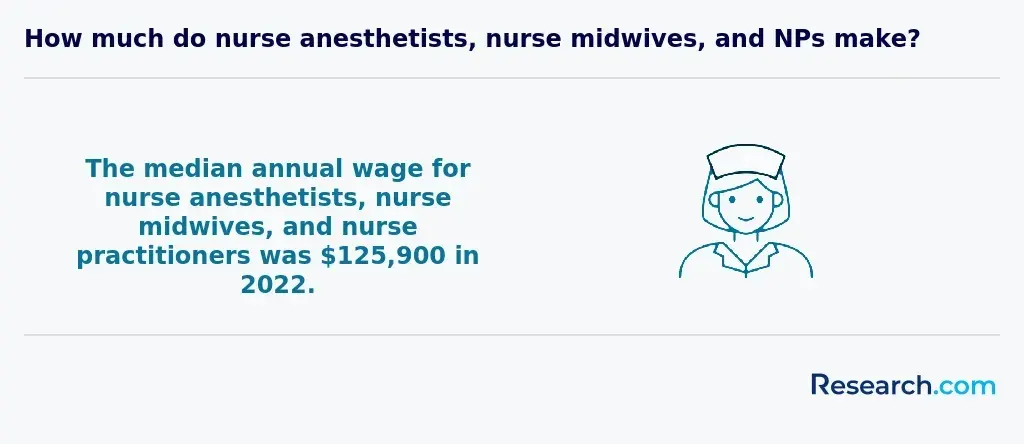
Nurse practitioners in New Mexico can expect an average annual salary of approximately $136,770, which is above the national average for the profession. The salary range varies by experience, specialty, employer, location, schedule, and responsibilities. The lowest 10% earn around $95,210, while the top 10% earn up to $170,730.
Reported city-level salary averages also vary. Santa Fe has an average salary of about $150,851 for nurse practitioners. Las Cruces follows with an average of $144,685, Albuquerque with $144,319, and Farmington with $142,009. These figures can help with planning, but they should not be treated as guarantees. Actual offers depend on clinical demand, certification, negotiation, productivity expectations, benefits, and employer type.
New Mexico nurse practitioner salary snapshot
| Salary measure | Amount | How to interpret it |
| Average annual salary in New Mexico | Approximately $136,770 | A useful statewide benchmark, but individual offers can be higher or lower. |
| Average hourly wage | Around $65.76 | Helpful for comparing full-time, part-time, contract, and telehealth work. |
| Lowest 10% | Around $95,210 | May reflect entry-level roles, lower-paying settings, or less favorable markets. |
| Top 10% | Up to $170,730 | May reflect experience, specialty demand, leadership duties, or high-paying employers. |
Average nurse practitioner salaries by selected New Mexico city
| City | Average salary |
| Santa Fe | About $150,851 |
| Las Cruces | $144,685 |
| Albuquerque | $144,319 |
| Farmington | $142,009 |
Here’s what graduates say about becoming a nurse practitioner in New Mexico
“My New Mexico NP program challenged me academically while giving me practical clinical experience. Online coursework helped me keep working while I completed the degree, and I am ready to use the training to support patients in my community.” - Anitta
“The flexibility mattered, but the faculty support mattered even more. Having instructors who answered questions, gave feedback, and encouraged me during clinical preparation helped me feel more confident entering advanced practice.” - Selena
“The program gave me the structure I needed without requiring me to step away from my local healthcare community. Training in New Mexico clinical settings helped me understand the needs of the patients I hope to serve.” – Camilla
Related Articles for Nearby States
- 2027 How to Become a Nurse Practitioner in Arizona
- 2027 How to Become a Nurse Practitioner in Colorado
- 2027 How to Become a Nurse Practitioner in Texas
- 2027 How to Become a Nurse Practitioner in Utah
- 2027 How to Become a Nurse Practitioner in Oklahoma
- 2027 How to Become a Nurse Practitioner in Nevada
- 2027 How to Become a Nurse Practitioner in Kansas
- 2027 How to Become a Nurse Practitioner in Wyoming
- 2027 How to Become a Nurse Practitioner in Nebraska
- 2027 How to Become a Nurse Practitioner in California
Key insights
- New Mexico requires nurse practitioners to hold RN licensure, complete accredited graduate NP education, pass national specialty certification, and apply through the New Mexico Board of Nursing.
- An MSN is often the most direct graduate route into NP practice, while a DNP may be better for nurses who want doctoral-level preparation, leadership training, or broader systems-focused roles.
- New Mexico offers full practice authority, giving qualified NPs substantial autonomy in assessment, diagnosis, treatment, and prescribing within their scope.
- Renewal is not just a fee payment. NPs must complete at least 30 hours of continuing education every two years, including at least six pharmacology hours, and document at least 1,000 clinical practice hours.
- Program cost can extend beyond tuition. Budget for fees, books, clinical travel, technology, certification, licensing, background checks, and possible lost work hours during rotations.
- The average New Mexico NP salary is approximately $136,770, but actual earnings vary by city, specialty, experience, employer, and workload.
- Do not choose a program based only on speed or price. Accreditation, certification alignment, clinical placement support, and New Mexico licensure compatibility are more important for long-term career success.
- Family practice, psychiatric mental health, adult-gerontology, pediatrics, and women’s health all offer viable NP paths in New Mexico; the best specialty depends on the population you want to serve and the settings where you want to work.
References:
- BLS (2024, April 3). 29-1171 Nurse Practitioners. BLS
- BLS (2024, August 29). Nurse Anesthetists, Nurse Midwives, and Nurse Practitioners. BLS
- BON (2022, May 17). APRN Certified Nurse Practitioner. BON
- BON. Fees. BON
- Glassdoor (2024, June 6). Nurse Practitioner Salaries in Albuquerque, NM. Glassdoor
- Glassdoor (2024, June 6). Nurse Practitioner Salaries in Farmington, NM. Glassdoor
- Glassdoor (2024, June 6). Nurse Practitioner Salaries in Las Cruces, NM. Glassdoor
- Glassdoor (2024, June 6). Nurse Practitioner Salaries in Santa Fe, NM. Glassdoor
- Health Resources, & Services Administration (2022). NCHWA Nursing Workforce Dashboard. Health Resources & Services Administration
- Highlands University. Online Master's Degree in Nursing – Family Nurse Practitioner. Highlands University
- NMNPC. LAWS • REGULATIONS • guidelines. NMNPC
- NMNPC. What is a nurse practitioner? NMNPC
- State of New Mexico (2019, October 18). Advanced Practice Nurse. State of New Mexico
- University of New Mexico (2023). Estimated Costs Of Attendance for 2023-2024. University of New Mexico
- University of New Mexico. MSN Family Nurse Practitioner (FNP). University of New Mexico
Other Things You Should Know About Becoming a Nurse Practitioner in New Mexico
Yes, a Bachelor of Science in Nursing (BSN) is required to become a nurse practitioner in New Mexico in 2027. It is a necessary step before enrolling in a Master of Science in Nursing (MSN) or a Doctor of Nursing Practice (DNP) program, which are essential for advanced practice roles.
Yes, in 2027, various financial aid options are available for nurse practitioner programs in New Mexico, such as scholarships, federal student loans, and grants. Prospective students should explore opportunities offered by individual schools and state-specific programs to support their education costs.


