2027 Online Construction Management Bachelor's Degree Completion Programs for Working Adults

Co-Founder and Chief Data Scientist
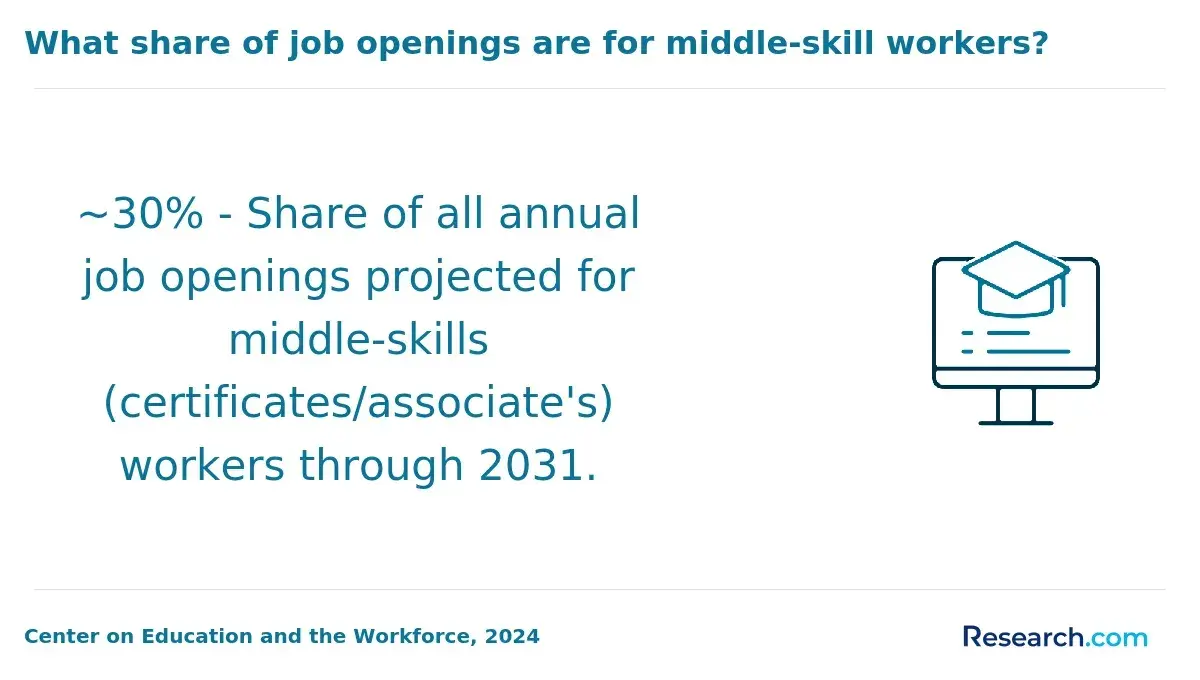
Finishing a construction management bachelor's degree online is usually a transfer-credit decision before it is a school-choice decision. Working adults need to know how many previously earned credits will count, whether the program is properly accredited, how the online schedule fits around jobsite or office responsibilities, and what the total cost will be after fees, not just the advertised tuition rate. According to the National Center for Education Statistics, over 60% of online bachelor's degree completion students juggle full-time employment while studying, so flexibility is not a convenience; it is often the condition that makes completion possible.
This guide explains how online construction management bachelor's degree completion programs work, who they are built for, how they differ from traditional four-year pathways, what admissions and transfer-credit rules to expect, and how to compare tuition, financial aid, prior learning credit, schedules, concentrations, and graduate outcomes. The goal is to help adults with prior college credit choose a practical path to a credential that can support advancement in construction, project coordination, estimating, safety, and related management roles.
Key Benefits of Online Construction Management Bachelor's Degree Completion Programs for Working Adults
- Online construction management degree completion programs offer flexible scheduling, enabling working adults to balance professional duties and academic progress without compromising job performance.
- Fully asynchronous coursework allows students to study anytime, accommodating demanding work hours while maintaining steady income streams throughout their education.
- These programs often have accelerated timelines, letting students graduate faster than starting a new traditional four-year degree, saving time and tuition costs.
What Are Online Construction Management Bachelor's Degree Completion Programs, and Who Are They Designed For?
Online construction management bachelor's degree completion programs are bachelor's pathways for students who have already earned college credits and want to finish the remaining upper-division work without starting over. Instead of repeating a full four-year sequence, students apply eligible transfer credits toward general education, electives, and sometimes lower-level construction coursework, then complete the required construction management major courses through the degree-granting institution.
These programs are mainly designed for adults who have some college but no completed bachelor's degree. Common students include community college graduates, former engineering or business majors, military veterans, tradespeople moving into supervisory roles, and construction professionals who need a bachelor's credential for promotion, bidding, project management, or employer requirements.
According to data from the National Center for Education Statistics (NCES), millions of Americans have completed some college coursework without earning a credential. Degree completion programs respond to that gap by giving students a structured route back to graduation. Students who still need a shorter credential before transferring may also compare online associate degree options before committing to a bachelor's completion pathway.
- Best fit: Adults with prior college credit who want to finish a bachelor's degree while remaining employed.
- Typical structure: Transfer-friendly programs that focus on upper-level construction management coursework, including planning, estimating, contracts, scheduling, safety, and project controls.
- Delivery format: Mostly online or hybrid coursework, often with asynchronous classes that allow students to complete assignments around work and family obligations.
- Credit recognition: Many programs review military training, professional certifications, work-based learning, and prior college coursework, although acceptance rules vary by institution.
- Main advantage: Students can reduce time and cost by applying previous academic work toward degree requirements instead of repeating courses.
How Do Online Construction Management Degree Completion Programs Differ From Traditional Four-Year Construction Management Bachelor's Degrees?
The main difference is starting point. A traditional four-year construction management bachelor's degree is built for first-time college students entering at the freshman level. A degree completion program is built for students who already have college credits and need a focused path to finish the remaining requirements.
For students transferring in with 60 or more credits, a completion program can be faster, more flexible, and less expensive overall than a traditional pathway. However, the exact benefit depends on how credits transfer, whether prerequisites are missing, and how many credits the institution requires students to complete in residence.
| Comparison point | Online degree completion program | Traditional four-year bachelor's program |
| Typical student | Working adult, transfer student, veteran, or mid-career professional with prior credits | First-time or early-stage college student |
| Credit load | Generally requires 60 to 65 credits after transfer | Typically requires 120 to 130 credits in total |
| Time to completion | Often 1.5 to 2 years full-time for students entering with 60+ transfer credits | About 4 years for students starting from the beginning |
| Course sequencing | Emphasizes remaining major, upper-division, and institution-specific requirements | Includes the full sequence of general education, prerequisites, electives, and major courses |
| Cost profile | Often lower total tuition because fewer credits remain | Usually higher total tuition because the student completes the full degree sequence |
| Schedule design | Often designed around adult learners and working professionals | May follow a more traditional semester-based campus model |
According to IPEDS data, credit-hour tuition rates for completion and traditional paths at the same institutions are often similar. The savings usually come from reducing the number of credits still required, not from a lower per-credit price. That is why students should compare the final degree plan, not only the tuition page.
Accreditation matters in both formats. Regionally accredited institutions and construction management programs with recognized programmatic accreditation, such as ABET or ACCE where applicable, are more likely to carry employer confidence. Students comparing construction management with other professional fields may also encounter unrelated graduate pathways such as an MLIS, but construction management students should prioritize industry fit, transfer policy, accreditation, and project-based coursework.
Which Accredited Universities Offer the Most Affordable Online Construction Management Bachelor's Degree Completion Programs?
The most affordable online construction management bachelor's degree completion programs usually combine three features: recognized accreditation, low or flat online tuition, and generous transfer-credit policies. A school with a low advertised rate may still become expensive if it accepts fewer transfer credits, charges high out-of-state tuition, or adds substantial fees.
- Fort Hays State University: Charges a uniform rate of $226 per credit hour for all online students. It is accredited by the Higher Learning Commission (HLC), and the program also holds American Council for Construction Education (ACCE) accreditation. The school welcomes transfer credits and offers extra opportunities for military veterans.
- Columbia Southern University: Charges a flat tuition rate of $295 per credit hour and is accredited by the Distance Education Accrediting Commission (DEAC). Its construction management degree is ACCE-accredited. The program supports flexible enrollment dates and substantial credit for prior learning.
- Colorado State University Global: Charges $350 per credit hour for online courses. The school is regionally accredited by HLC and emphasizes real-world projects and career readiness. Its transfer process is designed for working adults.
- University of North Dakota: Offers online undergraduate credits at $374 each and holds HLC regional accreditation. The construction management program is ACCE-certified and uses an online format suited to adult learners. Transfer policies favor credits from regionally accredited institutions.
- Appalachian State University: Charges $279 per credit hour for in-state online students and $1,015 for out-of-state online students. It is accredited by the Southern Association of Colleges and Schools Commission on Colleges (SACSCOC), and its program is ACCE-accredited. The university grants significant transfer credit, especially for community college students, and allows flexible pacing.
When comparing affordability, ask each school for a transfer evaluation and a written estimate of remaining credits before enrolling. That one document can change the real cost calculation. For example, a lower tuition rate may not save money if the school rejects many prior credits, while a higher per-credit program may be competitive if it allows a shorter path to graduation. Students comparing broader options can review related construction management programs to understand how accelerated formats and completion pathways differ.
The strongest low-cost programs tend to offer flat or predictable online tuition, regional or recognized institutional accreditation, ACCE program approval where available, clear transfer policies, adult-friendly schedules, and transparent fees. Programs with steep out-of-state pricing or restrictive credit rules may be less affordable even if their curriculum appears similar.
A professional who completed an online construction management bachelor's degree described the experience as demanding but manageable because transfer credit and prior work experience reduced the time required. He noted that early technical issues with the online platform were frustrating, but responsive student support helped him stay on track. He also valued practical, employer-relevant projects that connected coursework with jobsite realities.
How Many Transfer Credits Can Working Adults Apply Toward an Online Construction Management Degree Completion Program?
Many online construction management degree completion programs allow substantial transfer credit, but the exact number depends on the institution, the age and level of the courses, accreditation of the prior school, grade requirements, and whether the courses match degree requirements. Most programs set transfer-credit caps, typically between 60 and 90 semester hours.
- Transfer credit caps: Many programs accept up to 60 to 90 semester hours, while still requiring students to complete a minimum number of credits through the degree-granting institution. This residency requirement helps preserve academic standards and accreditation compliance.
- Course equivalency review: Schools evaluate whether previous courses match their curriculum. They may request syllabi, course descriptions, catalogs, or assignments, especially for technical construction courses.
- General education versus major credit: General education courses often transfer more easily than upper-level construction management courses. A course may transfer as elective credit even if it does not satisfy a specific major requirement.
- Articulation agreements: Community college-to-university agreements can reduce credit loss by pre-approving certain courses. These are especially useful for students coming from construction technology, drafting, engineering technology, or business programs.
- Credit loss risk: Data from the U.S. Department of Education reveal an average 40% loss of credits during transfer. This makes a formal transcript evaluation essential before committing to a program.
- Military and professional learning: Some schools review ACE-recommended military training, professional certifications, and employer-based training. Acceptance is not automatic, so students should ask how these credits apply to the degree plan.
Best next step: Request an official or preliminary transcript evaluation from every school on your shortlist. Do not rely only on a general transfer-credit maximum. The important question is not how many credits the school can accept in theory, but how many will apply to your specific construction management degree requirements.
Students focused on minimizing cost can also compare programs listed among the most affordable online construction management degree options.
What Are the Typical Admission Requirements for Online Construction Management Bachelor's Degree Completion Programs?
Admission requirements vary by school, but online construction management bachelor's completion programs usually expect applicants to bring prior college coursework, acceptable grades, and documentation showing readiness for upper-division study. Some programs are transfer-friendly and broad-access, while others are more selective because of accreditation, cohort limits, or prerequisite sequencing.
- Transfer credits: Applicants commonly need 24 to 60 college credit hours from previous study. These credits often cover general education and introductory coursework before students move into advanced construction management classes.
- GPA requirements: Many programs expect a cumulative GPA between 2.5 and 3.0 on a 4.0 scale. More selective programs may prefer stronger academic records.
- Official transcripts: Schools typically require official transcripts from every college previously attended, even if the student does not expect all credits to transfer.
- Additional documents: Some programs request a résumé, personal statement, letters of recommendation, or evidence of construction-related work experience.
- Field-specific prerequisites: Applicants may need prior coursework in areas such as construction materials, safety protocols, plan reading, estimating, or project scheduling. Missing prerequisites can add time to completion.
- Conditional admission: Some schools offer provisional or conditional admission for applicants who are close to meeting GPA or prerequisite requirements. Students may need to earn certain grades in early courses to continue.
How to strengthen an application: Gather transcripts early, keep syllabi for technical courses, document construction work experience clearly, and ask the admissions office whether prerequisite gaps can be completed through a community college or accredited online provider. Applicants with a lower GPA should look for programs that consider recent academic performance, professional experience, or conditional admission.
One graduate described the transfer process as initially overwhelming because each school categorized prior coursework differently. Careful documentation of prior classes and work experience helped her receive a clearer degree plan. Conditional admission gave her a path forward when her GPA was slightly below the threshold, but she emphasized that consistent course planning and persistence were necessary to finish while working full time.
How Long Does It Take to Complete an Online Construction Management Bachelor's Degree Completion Program as a Working Adult?
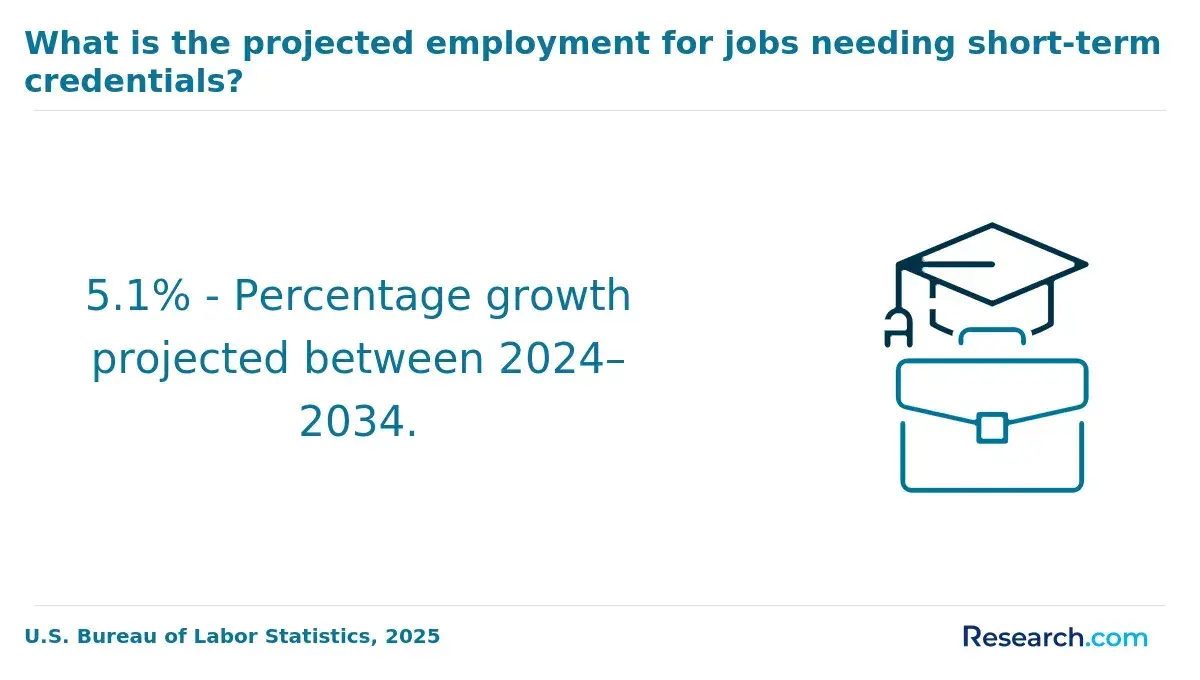
Completion time depends mainly on accepted transfer credits and course load. A student who enters with 90 accepted transfer credits may need about 30 additional credits and could finish in one to two years. A student entering with 30 transfer credits may need closer to the full 120 total credits and may take three to four years, especially when studying part time.
- Amount of accepted transfer credit: More accepted credits generally shorten the path. The key word is accepted: credits that transfer only as electives may not reduce major requirements.
- Part-time versus full-time enrollment: Many working adults take 6 credits, or two courses, each semester. Full-time students taking 12 or more credits per term may finish sooner but face a heavier workload.
- Two-course pace: A two-course schedule is common for professionals balancing job responsibilities, commuting, overtime, and family obligations. It is often sustainable but may extend the timeline.
- Accelerated eight-week terms: Shorter sessions can help students focus on fewer courses at a time while completing more terms per year. This can reduce total time if the student can keep pace.
- Summer enrollment: Taking summer courses can trim several months from the degree plan, but students should avoid overloading if work schedules are unpredictable.
- Competency-based options: Some programs allow students to advance by demonstrating mastery rather than spending a fixed amount of time in class. This may benefit experienced professionals with strong self-discipline.
- Employer and personal support: Flexible work schedules, tuition assistance, family support, and predictable job demands can significantly affect whether a student finishes on time.
- Completion trends: Online bachelor's degree completion rates among working adults have risen by 15% over the past five years, indicating increased accessibility and support in this education segment.
Before enrolling, ask for a term-by-term graduation plan based on your transfer evaluation. A realistic plan should show remaining courses, prerequisites, course availability, required sequencing, and whether classes are offered every term or only once per year.
What Financial Aid, Grants, and Employer Tuition Assistance Options Are Available for Online Construction Management Completion Students?
Online construction management completion students may qualify for many of the same financial aid options available to other undergraduate students, provided the school and program meet eligibility requirements. Funding can include federal aid, state grants, institutional scholarships, employer tuition assistance, military education benefits, and private scholarships.
Eligible students can apply for federal Pell Grants based on financial need, while federal Direct Loans remain a common borrowing option. Some states also offer grants for adult learners returning to college, although availability and eligibility vary by residency. Institutional scholarships may be available for transfer students, non-traditional students, veterans, or students in construction-related majors.
Employer tuition assistance can be especially valuable for working adults already employed in construction, engineering, facilities, or project management. Under IRS Section 127, employers can provide up to $5,250 annually in tax-free tuition benefits. Policies differ by employer, so students should confirm reimbursement limits, grade requirements, approved institutions, and whether they must remain employed for a set period after receiving benefits.
- File the FAFSA: Submit the Free Application for Federal Student Aid to determine eligibility for federal aid and some state or institutional funding.
- Ask about state grants: Search for adult learner, workforce development, or degree completion grants in your state. Some require separate applications.
- Contact HR early: Ask whether your employer offers tuition reimbursement, direct billing, apprenticeship-related education benefits, or Section 127 tax-free assistance.
- Apply for institutional scholarships: Many schools have awards for transfer students, veterans, online learners, or students in construction and technology fields.
- Check industry scholarships: Construction associations, contractor groups, and professional foundations may support students pursuing construction management credentials.
- Compare aid after transfer evaluation: A scholarship may look generous, but the lowest net cost depends on remaining credits, fees, books, and how much tuition assistance can be used each year.
Students should avoid borrowing based only on the maximum loan amount offered. A better approach is to calculate the total remaining cost of attendance, subtract grants and employer benefits, and borrow only what is needed to complete the degree.
How Does Per-Credit-Hour Tuition for Online Construction Management Completion Programs Compare Across Accredited Institutions?
Per-credit tuition is useful, but it does not show the full cost of an online construction management degree completion program. NCES and IPEDS data show a national average cost per credit hour between $450 and $600, while individual schools vary widely. Public state universities often offer rates near $300 per credit hour, while private institutions may charge $700 or more.
The total price depends on the number of credits you still need after transfer. For example, a program charging $350 per credit hour for 60 remaining credits results in $21,000 in tuition, similar to a program with a $700 rate for only 30 remaining credits. This is why students should compare tuition, accepted transfer credits, graduation requirements, and fees together.
| Cost factor | Why it matters | Question to ask |
| Per-credit tuition | Shows the base price for each course credit | Is the rate the same for online, out-of-state, and part-time students? |
| Remaining credits | Determines the largest part of total tuition | How many of my credits apply directly to this degree? |
| Total credits required | Some programs require more than the standard 120 total credits | How many total credits are required for graduation? |
| Fees | Technology, proctoring, graduation, and course fees can raise the real cost | What mandatory fees are charged each term or course? |
| Books and materials | Construction courses may use software, codes, texts, or digital resources | Are materials included in tuition or billed separately? |
Additional expenses such as technology fees, graduation fees, proctoring charges, and textbooks can significantly raise the actual cost beyond advertised tuition. A lower per-credit rate does not guarantee the cheapest overall degree if the school requires extra credits, rejects transfer coursework, or charges high fees.
Students considering graduate study after a construction management bachelor's degree may also compare financing patterns in adjacent areas, including affordable online project management degrees.
- Tuition variation: Online construction management programs charge between $300 to $700 per credit hour, depending on public or private status, residency policy, and institutional pricing.
- Total credits required: Some programs require over 120 credits, which can increase cost even when the per-credit rate appears low.
- Ancillary fees: Technology, proctoring, graduation, software, and textbook fees can change the final price.
- Best comparison method: Use the total remaining cost after transfer evaluation, not the tuition rate alone.
What Prior Learning Assessment and Credit-by-Exam Options Exist in Online Construction Management Degree Completion Programs?
Prior learning assessment, often called PLA, allows students to seek academic credit for college-level learning gained outside a traditional classroom. In online construction management degree completion programs, PLA may include CLEP and DSST exams, portfolio assessment, ACE-reviewed military training, professional certifications, employer training, and documented work experience.
PLA can reduce time and cost, but it is not automatic. Each school decides which assessments it accepts, how many credits can be awarded, what fees apply, and whether PLA credits count toward general education, electives, or major requirements. Students should review these rules before enrolling because a generous-sounding PLA policy may not apply to the specific construction management courses needed for graduation.
- CLEP and DSST exams: These standardized exams can help students earn credit for certain lower-division or general education subjects, allowing them to bypass courses they already understand.
- Portfolio assessment: Students document college-level learning through work samples, certifications, training records, supervisor letters, project documentation, and reflective essays. Faculty evaluators then determine whether credit is appropriate.
- ACE evaluations: ACE credit recommendations may support credit for military training, corporate training, and other structured learning. Veterans and service members should request official military transcripts when applicable.
- Professional certifications: Some schools review credentials related to safety, estimating, project management, inspection, or construction technology, though acceptance varies widely.
- Credit limits: PLA credits may count toward transfer-credit caps, residency requirements, or elective limits, so students should ask how they affect the final degree plan.
To improve the chance of receiving credit, organize documentation before applying. Keep course descriptions, training outlines, certificates, licenses, project records, and employer verification letters. Students comparing credit policies across technical fields may also review affordable online environmental engineering degree programs, which can have similar transfer and assessment considerations.
How Do Asynchronous Schedules in Online Construction Management Programs Accommodate Full-Time Working Professionals?
Asynchronous online construction management programs are designed so students do not have to log in at a fixed class time. Instead, they complete readings, lectures, discussion posts, assignments, quizzes, and projects by posted deadlines. This format is often the best match for full-time workers, especially those with changing shifts, travel, overtime, or jobsite responsibilities.
- Fully asynchronous design: Students can study before work, after work, on weekends, or during travel periods, as long as they meet weekly or module deadlines.
- Synchronous formats: Programs with live online meetings can provide real-time discussion and instructor access, but they may be difficult for shift workers or students in different time zones.
- Hybrid formats: Hybrid programs combine online coursework with live sessions, labs, campus visits, or field requirements. They may be useful for hands-on learning but require more scheduling control.
- Eight-week terms: Accelerated courses allow students to focus on fewer subjects at one time while completing more sessions during the year. The trade-off is a faster pace and less room to fall behind.
- Weekly planning: Successful working adults often set two or three fixed study blocks per week, submit assignments before the deadline, and avoid stacking all coursework on Sunday night.
- Digital tools: Calendar apps, task managers, cloud storage, note-taking tools, online libraries, and construction software access can help students manage assignments and group projects.
The most flexible schedule is not always the easiest schedule. Asynchronous courses require self-direction, consistent communication, and early planning. Before enrolling, students should ask whether exams require proctoring, whether group projects include live meetings, and how quickly instructors respond to questions.
What Concentrations and Career Tracks Are Available Within Online Construction Management Degree Completion Programs?
Online construction management bachelor's degree completion programs may offer concentrations, electives, or informal career tracks that help students align coursework with professional goals. These tracks often fit within the standard 120-credit curriculum, but students should confirm whether a concentration adds credits, restricts course availability, or affects graduation timing.
- Project Management: Focuses on planning, scheduling, leadership, contracts, communication, and coordination across owners, subcontractors, designers, and field teams. Graduates may pursue roles such as project coordinator, assistant project manager, project manager, or site supervisor. Median salaries are near $97,000, with demand supported by ongoing infrastructure needs.
- Construction Safety: Emphasizes hazard recognition, OSHA compliance, risk management, incident prevention, and safety program administration. It can support roles such as safety coordinator, safety manager, or compliance officer. Some students may pursue certifications such as Certified Safety Professional (CSP), depending on eligibility requirements.
- Estimating and Cost Control: Covers quantity takeoff, budgeting, bid preparation, cost analysis, procurement, and financial tracking. Career paths may include cost estimator, assistant estimator, preconstruction coordinator, or budget analyst. Median income is around $66,000, and some professionals pursue credentials such as Certified Professional Estimator (CPE).
- Sustainable Construction: Addresses green building methods, resource efficiency, environmental standards, and sustainable materials. Graduates may work in sustainability coordination, green building management, or construction operations where LEED accreditation and environmentally responsible practices are valued.
Choose a concentration based on the work you want to do every day, not just the title. Project management may suit students who enjoy coordination and leadership. Estimating may fit detail-oriented students who like numbers and bid strategy. Safety may appeal to professionals focused on compliance and risk reduction. Sustainable construction may be strongest for students interested in energy-efficient and environmentally responsible building practices.
What Graduates Say About Online Construction Management Bachelor's Degree Completion Programs for Working Adults
- : "Completing my degree in construction management online was a game changer, especially because the program's accreditation assured me and my employer of its quality and relevance. The clear transfer credit policy made it easy to bring my previous coursework into the program without losing time or money. I truly appreciated the flexible tuition model, which allowed me to balance work and studies effectively. — Alfonso"
- : "Reflecting on my experience, the prior learning options offered by the program helped me receive credit for my hands-on experience in the field, speeding up my path to graduation. The structure of the online coursework was thoughtfully designed for busy professionals like me, ensuring I could manage both my job and school. Graduating has opened new doors professionally, proving that investing in a construction management degree was the right decision. — Eduardo"
- : "The practical transfer credit guidelines and industry-recognized accreditation were decisive factors for me when choosing this construction management program. I also valued how the tuition model provided financial predictability during my studies. Ultimately, the degree significantly enhanced my leadership skills and career opportunities, which motivated me to push through the challenging moments. — Thiago"
Other Things You Should Know About Construction Management Degrees
Prerequisites typically include an associate degree or equivalent credits in construction or a related field. Some programs may require prior work experience in construction management, with completion of specific coursework in project management or engineering as additional requirements for enrollment in 2027.
Most completion programs require upper-division courses in construction estimating, scheduling, project management, construction law, safety, and building codes. Students usually finish about 60 upper-division credits after transferring prior college work, and many programs also include a capstone or senior project focused on real job-site planning.
References
- Online Construction Management Program | Technology and Occupational Sciences https://nmu.edu/tos/construction-online
- Asynchronous Education vs Fixed Schedule Online Classes: Which Works for Working Professionals https://puie.ac/asynchronous-education-vs-fixed-schedule-online-classes-which-works-for-working-professionals/
- AAS Transfer Option - Department of Construction Management https://cet.ecu.edu/construction/aas-transfer-option/
- The Benefits of Construction Management | ITI Technical College https://iticollege.edu/blog/the-benefits-of-entering-construction-management/
- Bachelor of Construction Management https://adelaideuni.edu.au/study/degrees/online/bachelor-of-construction-management/
- What methods of Prior Learning Assessment (PLA) qualify for additional credits? https://online.wpunj.edu/faq/what-methods-of-prior-learning-assessment-pla-qualify-for-additional-credits/
- Best Online Construction Management Degrees https://www.affordablecollegesonline.org/degrees/construction-management-programs/
- How a Prior Learning Assessment Could Help You Advance in Your Career https://aic-builds.org/prior-learning-assessment/
- Scholarships - Construction Management Degrees Online https://www.constructionmanagementdegreeonline.com/scholarships-construction-management-degree/