2027 Easiest Online Construction Management Bachelor's Degree Programs That Pay Well: High-Salary Degrees with Simple Admissions

Co-Founder and Chief Data Scientist
Choosing an “easy” online construction management bachelor’s degree is not about finding a low-effort credential. It is about finding a legitimate program with fewer admissions barriers, flexible scheduling, clear transfer policies, and enough academic support to help working adults finish. For students already employed in construction, trades, real estate, facilities, or project coordination, the right online program can turn jobsite experience into a stronger path toward supervisory and management roles.
The timing matters. According to the U. S. Bureau of Labor Statistics, employment in construction management is projected to grow 11% from 2022 to 2032. That demand makes degree completion more valuable, but only if the program fits your schedule, budget, academic background, and career goals. This guide explains which online construction management bachelor’s degree programs tend to have simpler admissions, where test-optional and accelerated formats fit, which concentrations may be easier to enter, and what graduates can expect from career outcomes and long-term growth.
Key Benefits of the Easiest Online Construction Management Bachelor's Degree Programs That Pay Well
- These programs offer flexible online formats tailored for working adults, allowing course completion on personal schedules without compromising professional responsibilities.
- Admissions often require minimal standardized tests and accept prior coursework, making enrollment accessible to a wider range of applicants.
- Graduates pursue careers with a median annual wage exceeding $95,000, reflecting strong industry demand and high return on investment within the growing construction sector.
Which Online Construction Management Bachelor's Degree Programs Have Simple Admissions?
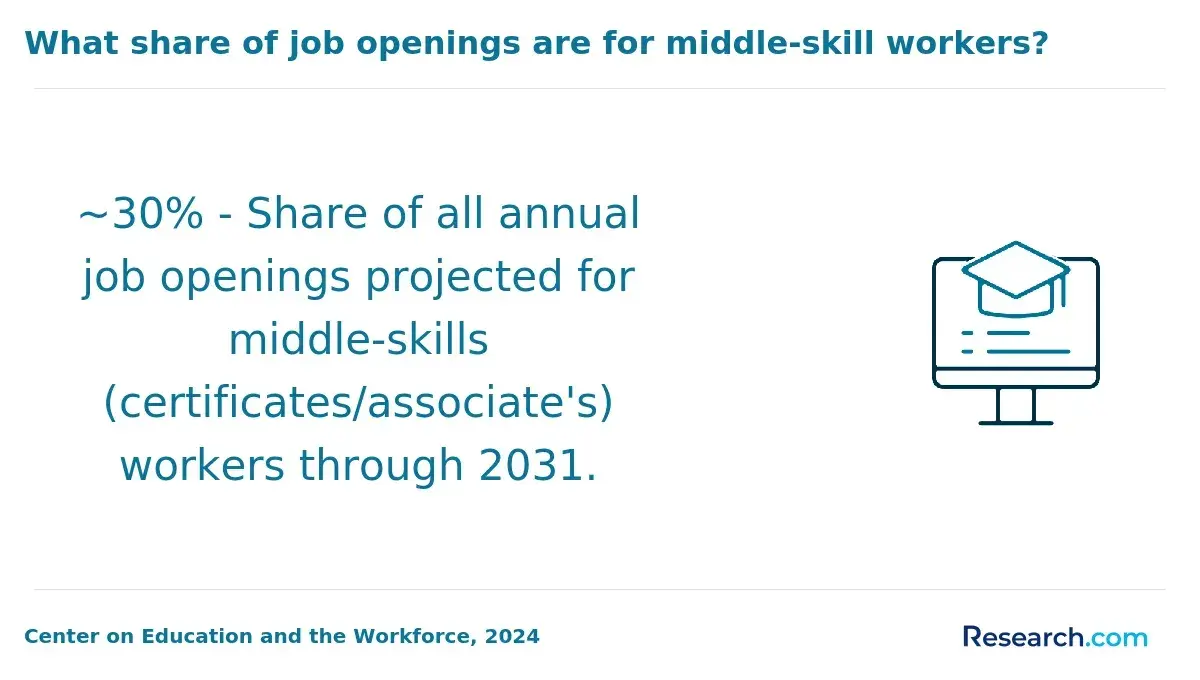
Online construction management bachelor’s degree programs with simple admissions usually reduce unnecessary application steps while still requiring proof that the student is prepared for undergraduate work. The easiest programs to enter often serve adult learners, transfer students, military-affiliated students, and applicants with construction or technical work experience. Recent trends show that nearly 60% of U.S. colleges have adopted flexible admissions criteria to widen opportunities for non-traditional learners.
Simple admissions does not always mean open enrollment. A school may still review transcripts, verify a high school diploma or GED, evaluate transfer credits, or require placement assessments. The difference is that the process is clearer, faster, and less dependent on standardized tests or a long list of prerequisites.
- Rolling Enrollment: Rolling admission lets students apply at multiple points during the year instead of waiting for one fall or spring deadline. This is helpful for applicants who need to start when work schedules, finances, or family responsibilities allow.
- Minimal Prerequisite Requirements: Accessible programs often avoid extensive pre-major coursework. Instead, they may admit students with a high school diploma or GED and build construction, business, math, estimating, safety, and project management skills into the degree plan.
- Streamlined Application Processes: Many online construction management programs with easy admission requirements focus on essential documents: an application, transcripts, proof of graduation, and sometimes a short statement. Fewer forms reduce delays for working adults.
- Flexible Entry Pathways: Some programs consider transfer credits, military training, technical coursework, industry certifications, or prior college experience. This can shorten the path to graduation and make admission less dependent on a traditional academic background.
- Open Admissions Policies: Some institutions allow nearly all applicants who meet basic eligibility requirements to enroll. This can benefit students who are returning to school after a long gap or who did not have a strong high school academic record.
Before applying, students should confirm that the institution is properly accredited, that online students receive the same degree as campus students, and that transfer-credit rules are clear in writing. Affordability should also be reviewed carefully, including tuition, fees, software costs, and any required field or internship components. For a broader comparison of how affordability can affect online program choice in another discipline, students can review Research.com’s guide to the most affordable online MSW programs.
Are There Test-Optional Online Construction Management Bachelor's Degrees?
Yes. Several online construction management bachelor’s degree programs use test-optional admissions, meaning applicants may apply without submitting SAT or ACT scores. These policies are especially useful for adult learners, transfer students, and applicants whose work experience or college coursework says more about their readiness than a standardized test score.
In a test-optional review, schools may place more weight on high school GPA, college transcripts, relevant coursework, work history, personal statements, recommendation letters, or prior technical training. This can make the process less stressful and more practical for applicants who have been out of school for several years or who did not take college entrance exams recently.
- Best fit: Students with solid grades, transfer credits, construction experience, trade experience, or a clear career goal.
- Potential drawback: Test-optional does not mean automatic admission. Weak transcripts, missing documents, or low college-level readiness can still lead to conditional admission or required support courses.
- What to ask admissions: Whether test scores are truly optional, whether submitting scores can improve scholarship eligibility, and whether math placement is handled separately.
Students comparing test-optional online construction management bachelor’s degrees should focus on outcomes, not just admission ease. A flexible admissions policy is valuable only if the curriculum prepares students for roles involving scheduling, estimating, safety, contracts, budgeting, and team supervision. Students exploring degree choices with strong earning potential may also compare construction management with other options listed among the highest paying majors.
Are Accelerated Online Construction Management Bachelor's Degree Programs Easier?
Accelerated online construction management bachelor’s degree programs are usually faster, not easier. They may reduce the time to graduation by using shorter terms, year-round enrollment, heavier course loads, generous transfer-credit policies, or credit for prior learning. However, the academic expectations typically remain the same as in a standard bachelor’s program.
These programs commonly condense traditional curricula into two to three years, which can require around 30% more weekly study time than standard programs. Students may move quickly through topics such as construction documents, cost estimating, project scheduling, building systems, risk management, safety, contracts, and leadership. That pace can be manageable for organized students, but difficult for those with unpredictable work hours or limited study time.
- Accelerated programs may feel easier if: You transfer in many credits, already work in construction, can study consistently each week, and are comfortable with online platforms.
- Accelerated programs may feel harder if: You are new to construction concepts, need extra help with math or technical reading, or cannot protect regular study time.
- Best strategy: Ask for a sample degree plan before enrolling and calculate the weekly time commitment for each term, not just the total months to graduation.
Students who want speed should compare admission requirements, transfer-credit limits, course pacing, and tuition structure before choosing an online construction management bachelor's degree. A faster format is only worthwhile if it helps you finish without sacrificing learning, grades, or work performance.
A recent graduate described the trade-off clearly: the admissions process was streamlined, but the workload required discipline every week. He said the program helped him finish faster and align his education with career goals, but he also emphasized that falling behind in an accelerated format can happen quickly.
Which Online Construction Management Bachelor's Degree Concentration Is the Easiest to Get Into?
The easiest online construction management bachelor’s degree concentration to enter is usually one with broad foundational coursework and few specialized prerequisites. Concentrations focused on project administration, construction technology, facilities management, sustainability, or construction business management often welcome students from varied academic and professional backgrounds.
Admissions ease can depend on the school, but concentrations that do not require advanced math, engineering prerequisites, or a highly technical portfolio may be more accessible. Enrollment trends indicate that concentrations in project administration and construction technology continue to grow steadily, reflecting strong interest from students seeking practical, career-focused pathways.
- Construction Project Management: Often one of the most accessible options because it emphasizes coordination, scheduling, communication, budgeting, and leadership. It may fit students with field experience who want to move into supervisory roles.
- Construction Technology: This concentration focuses on tools, methods, software, and applied construction processes. It can be a good match for students with technical curiosity but not necessarily an engineering background.
- Facilities Management: This option combines building operations, maintenance planning, safety, budgeting, and vendor coordination. It may appeal to students already working in property management, maintenance, or operations.
- Green Building and Sustainability: Programs in this area may attract students interested in energy efficiency, sustainable materials, and environmentally responsible construction practices. Admissions may be broad because the field draws from construction, design, business, and environmental interests.
- Construction Business Management: This concentration blends construction knowledge with accounting, contracts, procurement, and management. It can be accessible for students with business, administrative, or entrepreneurship goals.
Students should not choose a concentration only because it seems easy to enter. The better question is whether it supports the job you want. For example, project management may fit those aiming for superintendent or construction manager roles, while facilities management may fit those interested in building operations. Students who want stronger financial tracking skills for estimating, budgets, or small construction businesses may also find value in Research.com’s guide to the best bookkeeping courses.
Is an Online Construction Management Bachelor's Degree Easy to Complete?
An online construction management bachelor’s degree can be easier to fit into a busy life than a campus program, but it is not automatically easy to finish. The degree requires consistent reading, technical assignments, group work, software use, project planning, and applied problem-solving. Data from the National Center for Education Statistics shows nearly 60% of students in online undergraduate programs reach graduation, which also shows that many students face real completion barriers.
Completion depends on both program design and student habits. A flexible schedule helps, but students still need reliable internet access, weekly study blocks, communication with instructors, and a plan for handling demanding terms.
- Course Format Flexibility: Asynchronous courses allow students to watch lectures, review materials, and complete assignments around work or family obligations. This is useful, but it also places more responsibility on the student to stay on schedule.
- Academic Support: Tutoring, advising, library access, writing support, software help, and instructor availability can make the difference between stopping out and finishing. Students should ask whether support is available outside normal business hours.
- Consistency of Workload: Programs with predictable due dates, clear rubrics, and well-organized online classrooms are easier to manage than programs with uneven assignment loads or unclear expectations.
- Student Motivation: Online learners need self-discipline because there are fewer in-person reminders. Students who create weekly routines and communicate early when problems arise are more likely to stay on track.
One graduate described the experience as “challenging but manageable.” She valued recorded lectures and responsive faculty, but said balancing coursework with a busy work schedule became difficult during major project phases. Her experience reflects a common reality: online flexibility helps, but degree completion still requires planning, persistence, and proactive communication.
What Are the Best Industries for Online Construction Management Bachelor's Degree Graduates?
An online construction management bachelor’s degree can prepare graduates for more than traditional residential or commercial building work. The degree develops skills in planning, scheduling, budgeting, documentation, safety, quality control, and team coordination, which are useful across multiple construction-related industries. The U.S. Bureau of Labor Statistics projects an 11% increase in construction manager employment between 2022 and 2032, signaling continued demand for qualified professionals.
The best industry depends on the student’s experience, preferred work environment, and long-term goals. Some roles are field-heavy, while others involve more office-based planning, estimating, procurement, or client coordination.
- Real Estate Development: Graduates may help coordinate residential, commercial, or mixed-use projects from planning through completion. This sector often suits professionals who enjoy budgeting, scheduling, stakeholder communication, and market-driven work.
- Infrastructure and Civil Engineering: This area includes public works projects such as roads, bridges, utilities, and transportation systems. Graduates may work with contractors, government agencies, engineers, and inspectors.
- Manufacturing: Construction management skills can apply to prefabricated building components, modular construction, materials production, and industrial facility projects. This setting may involve more controlled processes than traditional jobsites.
- Architectural and Engineering Services: Graduates may coordinate between design teams, clients, contractors, and field crews. Strong communication and document-management skills are especially important in this sector.
- Renewable Energy: Solar, wind, and related infrastructure projects require construction planning, site coordination, safety oversight, and schedule control. This field may appeal to graduates interested in sustainability-focused construction work.
Students should compare industries by typical work setting, travel expectations, project size, safety requirements, advancement paths, and whether roles require additional credentials or field experience.
What Are the Highest-Paying Roles with an Online Construction Management Bachelor's Degree?
The highest-paying roles for online construction management bachelor’s degree graduates usually involve responsibility for budgets, schedules, crews, safety, contracts, and project outcomes. According to the U.S. Bureau of Labor Statistics, the median annual wage for construction managers is around $97,180. Actual pay can vary by location, employer, industry, project size, experience, and whether the role requires travel or specialized technical knowledge.
Graduates should expect to build toward the highest-paying roles over time. A bachelor’s degree can strengthen eligibility, but employers often also value field experience, leadership ability, software skills, estimating knowledge, and a record of delivering projects safely and on schedule.
- Construction Manager: Oversees planning, budgeting, schedules, subcontractors, site coordination, and project delivery. This role requires strong leadership, cost control, communication, and regulatory awareness.
- Project Engineer: Supports project execution by coordinating technical details, documentation, quality control, schedules, and communication between field and office teams. This role is common in infrastructure, commercial, and industrial construction.
- Cost Estimator: Prepares cost projections for labor, materials, equipment, subcontractors, and project bids. Accuracy, analytical thinking, and attention to detail are essential because estimates influence whether projects are profitable.
- Safety Manager: Oversees jobsite safety programs, training, inspections, incident prevention, and OSHA compliance. This role is especially important in heavy civil, industrial, and large commercial settings.
- Construction Superintendent: Manages daily onsite work, coordinates crews and subcontractors, monitors progress, solves field problems, and keeps projects moving according to schedule and quality expectations.
Students who want higher-paying roles should look for programs that teach practical skills employers can verify: scheduling software, estimating methods, plan reading, contracts, safety management, building systems, and construction law basics.
What Is the Long-Term Career Growth for an Online Construction Management Bachelor's Degree?
An online construction management bachelor’s degree can support long-term growth by helping workers move from trade, assistant, coordinator, or technician roles into supervisory and management tracks. Graduates learn to manage resources, lead teams, interpret project documents, control costs, communicate with stakeholders, and keep work aligned with safety and quality standards.
According to the U.S. Bureau of Labor Statistics, employment for construction managers is projected to grow by 11% from 2022 to 2032, faster than the average for all occupations. This projected growth can support career mobility, but advancement still depends on experience, performance, employer demand, and the ability to manage larger and more complex projects.
- Early career: Graduates may work as assistant project managers, project coordinators, field engineers, estimators, or assistant superintendents.
- Midcareer: With experience, professionals may manage larger project phases, supervise teams, handle client communication, or lead cost and schedule control.
- Advanced career: Experienced professionals may move into senior project management, operations management, construction executive roles, consulting, or business ownership.
Certifications can also strengthen long-term value. The Certified Construction Manager (CCM) credential, for example, can help validate professional expertise. Graduates may also pursue continuing education in safety, sustainability, estimating, construction technology, or leadership. Those considering broader career changes or additional graduate study can compare how online education works in other fields, including an online masters in social work.
What Is the Hardest Part of an Online Construction Management Bachelor's Degree?
The hardest part of an online construction management bachelor’s degree is usually not admission. It is staying consistent through technical coursework while managing work, family, and other responsibilities. About 40% of learners in fully online programs do not finish their degrees, which shows how important structure and support are for online students.
Construction management coursework can be demanding because it combines business, technical, legal, safety, and leadership topics. Students must learn how projects are planned, priced, documented, staffed, and controlled. The work is practical, but it still requires careful reading, calculations, software use, and communication.
- Time Management: Online courses require students to plan ahead without the structure of regular in-person class meetings. Missing one week can make it difficult to catch up, especially in accelerated terms.
- Maintaining Motivation: Motivation can fade when students are studying alone after work or during family responsibilities. Setting short-term milestones and communicating with instructors can help prevent disengagement.
- Navigating Online Platforms: Students may need to use learning management systems, scheduling tools, estimating software, document-sharing platforms, and video conferencing. The technology is manageable, but the learning curve can be frustrating at first.
- Balancing Responsibilities: Many online students work full time or provide caregiving. Successful students usually create protected study blocks and plan around busy construction seasons or major work deadlines.
- Staying Engaged: Without face-to-face interaction, students may feel isolated. Discussion boards, virtual office hours, group projects, and peer communication can help maintain accountability and deepen understanding.
Students interested in construction technology, automation, and data-driven project tools may also look at how technical career paths are evolving in related fields, including Research.com’s resource on artificial intelligence degree salary.
Is an Online Construction Management Bachelor's Degree Worth It?
An online construction management bachelor’s degree can be worth it for students who want a flexible path into project leadership, construction supervision, estimating, safety, facilities, or operations roles. It is especially useful for working adults who already have industry experience but need a bachelor’s degree to qualify for advancement or compete for management positions.
Financially, the degree can be a strong investment when tuition is reasonable and the program supports career growth. The U.S. Bureau of Labor Statistics reported a median annual wage near $98,000 for construction managers in 2023. However, salary outcomes are not guaranteed. Pay depends on region, experience, employer, project type, and level of responsibility.
The degree is most likely to be worth it if the program is accredited, affordable, transfer-friendly, and aligned with the student’s career goals. Students should compare total cost, graduation support, faculty experience, curriculum relevance, internship or field expectations, and employer recognition. A low-barrier admissions process is helpful, but it should not be the only reason to enroll.
For students who dislike self-paced learning, need hands-on labs every week, or cannot commit regular study time, an online format may be difficult. For students who are organized, career-focused, and already familiar with construction environments, the flexibility of an online bachelor’s degree can make advancement more realistic.
What Graduates Say About the Easiest Online Construction Management Bachelor's Degree Programs That Pay Well
-
: "Choosing an online construction management bachelor’s degree with an easy admissions process helped me begin without the long wait times I expected from traditional programs. The affordability mattered because I could keep working while studying. Since graduating, I have seen stronger career opportunities and better salary potential.
Alfonso"
-
: "The straightforward admissions process reduced stress and let me focus on the coursework. The cost was more manageable than I expected compared with many campus-based options. Now that I am working in the field, the degree has supported both higher earnings and professional growth.
Eduardo"
-
: "Getting accepted into the online construction management program was simpler than I expected, which made a big difference while I was balancing family responsibilities. Lower tuition helped me avoid excessive debt. Professionally, finishing the degree opened doors to better-paying roles that were not available to me before.
Thiago"
Other Things You Should Know About Construction Management Degrees
In 2027, online construction management programs offer flexible schedules, allowing working professionals to balance their studies with job commitments. The asynchronous coursework means students can access materials and complete assignments at their own pace, providing the flexibility needed by those with full-time jobs.
In 2027, most online construction management bachelor's degree programs allow credit transfers. Typically, students must provide transcripts and course descriptions from accredited institutions. Each program has specific guidelines, often evaluating if past coursework aligns with current curriculum requirements, facilitating a smoother transfer process.
Students pursuing online construction management degrees can access federal financial aid, including grants and loans, by completing the FAFSA application. Many programs also offer scholarships specific to construction-related fields or online learners. Employer tuition reimbursement is another option, especially for those currently employed in related industries.
While many online construction management programs emphasize theoretical knowledge, several require or strongly recommend internships or capstone projects to gain hands-on experience. Some universities partner with local construction firms to facilitate internships, which help students apply skills in real-world settings and improve job prospects after graduation.
References
- 7 Best Degrees for Construction: From Entry-Level to Six Figures - College Educated https://collegeeducated.com/online-degrees/best-degrees-for-construction/
- Online Bachelor's in Construction Management | NMU https://online.nmu.edu/bachelors-construction-management/
- Can a Bachelor's degree in Construction Management be earned through an online program? https://www.onlineschoolscenter.com/bachelors-construction-management-online-program/
- Construction Management Major https://www.widener.edu/academics/undergraduate-programs/construction-management
- BSc (Hons) Construction Management https://www.ube.ac.uk/undergraduate/construction-management/
- Best Online Construction Management Degrees https://www.affordablecollegesonline.org/degrees/construction-management-programs/
- Is a degree in construction management worth it? | edX https://www.edx.org/resources/is-a-degree-in-construction-management-worth-it
- 5 Construction Management Career Opportunities Out of College https://aic-builds.org/5-construction-management-career-opportunities-out-of-college/
- Top 10 Benefits of a Construction Management Degree and What You Can Do With It - NewSchool of Architecture & Design https://newschoolarch.edu/top-10-benefits-of-a-construction-management-degree-and-what-you-can-do-with-it/
- Are online construction management bachelor's degrees worth it? https://m.umu.com/ask/q11122301573854640760