2027 Online Construction Management Bachelor's Degrees for Veterans and Military Students

Co-Founder and Chief Data Scientist
Choosing a construction management degree after military service is not just an education decision. It affects how quickly you can move into civilian project leadership, how well your military training transfers, and how far your VA education benefits will go. For veterans, active-duty service members, reservists, spouses, and other military-affiliated students, online bachelor's programs can make construction management study possible without requiring a fixed campus schedule.
Construction management is a practical fit for many military learners because the field values planning, safety awareness, logistics, budgeting, team leadership, and accountability under pressure. An online format can help students continue working, relocate when required, or manage family responsibilities while building a civilian credential. Recent data highlights that 67% of veteran students prefer online learning to accommodate their unique schedules.
This guide explains how online construction management bachelor's degrees work for military students, what to check for accreditation and GI Bill eligibility, how much programs may cost, whether military experience can count for credit, and how these degrees can support the transition into civilian construction careers.
Key Benefits of Online Construction Management Bachelor's Degrees for Veterans and Military Students
- Online construction management degrees offer flexibility, enabling veterans to balance coursework with active duty, family, or civilian jobs without fixed class schedules.
- These programs are accessible nationwide, allowing students to continue studies during deployment or relocation, supporting uninterrupted education despite military mobility.
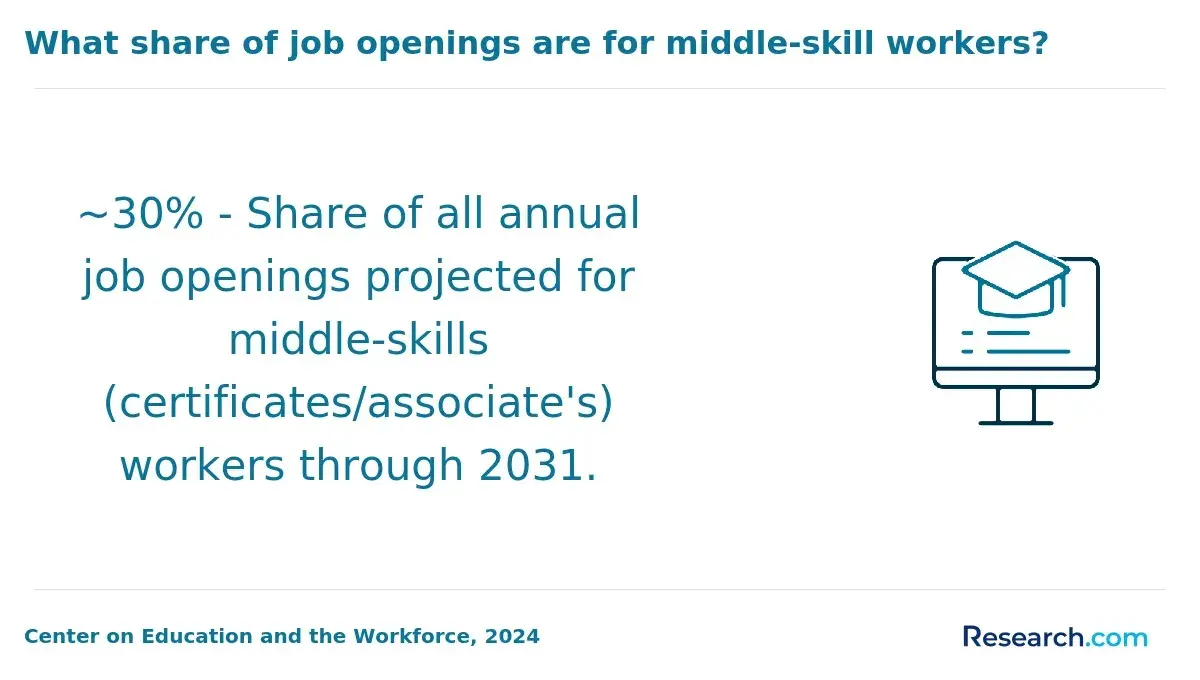
- Online degrees help military students transition careers by fostering skills applicable to construction industry growth, with 8% job growth projected through 2031, emphasizing long-term professional opportunities.
How Do Online Construction Management Degrees Work for Service Members?
Online construction management bachelor's degree programs for service members deliver most or all coursework through a digital learning platform. Students usually watch recorded lectures, complete readings, join discussion boards, submit assignments online, and work through construction-focused projects such as schedules, cost estimates, safety plans, contract documents, and site management scenarios.
The best fit for military students is usually a program with a strong asynchronous structure. Asynchronous courses let students complete weekly work without logging in at one fixed time, which is useful for deployments, shift changes, field training, permanent change of station moves, and family obligations. Some programs also include synchronous sessions, group presentations, or live instructor meetings, so students should confirm how often real-time attendance is required before enrolling.
What the online format typically includes
- Recorded lectures and digital course materials: Students can review lessons when their schedule allows and revisit technical topics such as estimating, scheduling, codes, safety, and construction law.
- Project-based assignments: Many courses ask students to solve realistic construction problems instead of only taking exams. This helps connect military planning and leadership experience to civilian construction workflows.
- Online collaboration: Group projects, discussion boards, and shared documents help students practice communication with owners, subcontractors, inspectors, and project teams.
- Remote advising and support: Military-friendly programs often provide virtual academic advising, benefits guidance, tutoring, library access, and technical support.
- Flexible testing and deadlines: Some schools offer extended submission windows or deployment-related accommodations, but policies vary and should be confirmed in writing.
Students comparing different online options should look closely at course pacing, transfer-credit policies, accreditation, and construction-specific career support. A well-structured construction management online degree can be especially useful for military learners who need flexibility without giving up a career-focused curriculum.
For students planning long-term academic advancement, options such as an online doctorate may later support goals in teaching, research, executive leadership, or specialized consulting, but the bachelor's degree is usually the more direct credential for entry into construction management roles.
Are Online Construction Management Degrees for Military Students Accredited?
Yes, many online construction management degrees are accredited, but students should verify both institutional and program-level recognition before applying. Accreditation matters because it signals that a school or program has been reviewed for academic quality, faculty qualifications, student support, and administrative standards. For military students using education benefits, it can also affect transfer credit, employer recognition, and eligibility for certain funding.
At a minimum, students should confirm that the institution is accredited by a recognized regional accrediting body authorized by the U.S. Department of Education. Some construction-related programs may also hold specialized accreditation through organizations such as the Accreditation Board for Engineering and Technology (ABET), depending on the program's focus and structure.
Why accreditation is especially important for military students
- GI Bill and benefit eligibility: VA-approved programs must meet specific requirements. Accreditation is often part of the broader quality and approval picture students need to review.
- Transferability: Accredited coursework is more likely to be accepted if a student changes schools because of relocation, deployment, or a new career plan.
- Employer confidence: About 85% of employers prefer or require graduates from accredited programs, making accreditation a practical employment consideration rather than just an academic label.
- Graduate school options: Students who later pursue a master's degree, certification, or related professional study may need a degree from an accredited institution.
- Protection from low-value programs: Accreditation helps students avoid schools that may be expensive, poorly supported, or weakly recognized in the construction industry.
Before enrolling, military students should check the school's accreditation page, the U.S. Department of Education database, and the VA's approval status for the specific program. It is not enough for a school to say it is “military friendly.” The program should be recognized, academically credible, and aligned with the student's career goals. Students researching other accelerated pathways can also compare how accreditation works in fields such as an accelerated psychology degree online, where institutional recognition also affects transfer and graduate study options.
Does the GI Bill Cover Online Construction Management Bachelor's Degrees?
The GI Bill can cover many online construction management bachelor's degrees if the school and program are approved by the VA. Eligible veterans, service members, and some dependents may use benefits toward tuition and mandatory fees at approved institutions. The key is to verify eligibility before enrolling, because not every online program qualifies for VA funding.
Current statistics reveal that more than 30% of GI Bill beneficiaries are opting for online education, which reflects the growing demand for flexible formats among military students. Online study can be a strong option, but students should understand how benefit rules apply differently to distance education.
What to confirm before using GI Bill benefits
- Tuition Coverage: The GI Bill generally pays tuition and mandatory fees for approved online programs. The amount covered depends on the student's benefit level, the institution type, and whether charges fall within the VA's maximum allowable amounts.
- Housing Allowances: Veterans using the Post-9/11 GI Bill may receive a monthly housing stipend, but this allowance is reduced for online students. Instead of matching local in-person rates, the VA calculates it as a percentage of the national average rental value.
- Enrollment Criteria: To qualify for full benefits, students usually must be enrolled at least half-time in a VA-recognized program. Less-than-half-time enrollment or non-degree coursework may reduce or eliminate some forms of support.
- Approved Program Status: Only programs officially approved by the VA are eligible for GI Bill funding. Students should confirm approval for the exact school and degree, not just the institution name.
- Degree applicability: Courses typically must count toward the approved degree plan. Taking classes outside the program may create payment problems.
A veteran currently studying construction management online shared that using benefits required close attention to program approval and enrollment status: "It was reassuring to have tuition covered, but understanding how housing allowances worked for online study took some research." She appreciated the flexibility the GI Bill provided, allowing her to balance coursework with family obligations while pursuing career advancement. Although the reduced housing funds were a challenge, she encouraged other students to confirm VA status early and speak with both the school's veterans office and the VA before the first term begins.
How Much Does an Online Construction Management Bachelor's Degree Cost for Veterans?
The total tuition cost for an online construction management bachelor's degree for veterans generally falls between $10,000 and $40,000, depending on the school, transfer credits, residency status, program length, and available military benefits. On average, in-state tuition at public universities for online undergraduate programs is about $15,000 per year, though many military students reduce out-of-pocket costs through GI Bill benefits, tuition assistance, scholarships, or institutional discounts.
Veterans should compare total program cost rather than only the advertised per-credit rate. A lower tuition rate may not be the cheapest option if the school accepts few transfer credits, adds multiple fees, or requires more credits than another program.
Cost factors veterans should review
- Type of Institution: Public universities often charge lower tuition than private colleges, though online pricing varies widely. Some private institutions offer military discounts that narrow the difference.
- Residency Status: Veterans may qualify for in-state tuition at some public schools, while other online programs charge one flat rate regardless of location.
- Program Length and Credit Requirements: The number of required credits affects total cost. Transfer credit from previous college study, military training, or prior learning assessments can reduce both time and expense.
- Military Discounts and Tuition Assistance: Some schools offer reduced tuition for veterans, active-duty service members, spouses, or dependents. Students should ask whether discounts can be combined with GI Bill benefits or other aid.
- Additional Fees: Technology fees, course materials, proctoring fees, graduation fees, and construction software costs can increase the total price beyond base tuition.
- Benefit strategy: Students should consider how many months of GI Bill entitlement they have left and whether saving benefits for graduate school makes sense for their goals.
A practical approach is to ask each school for a written degree plan showing accepted credits, remaining credits, tuition, fees, estimated aid, and projected time to completion. This makes it easier to compare programs on real cost rather than marketing claims.
Can Military Experience Count Toward an Online Construction Management Bachelor's Degree?
Yes, military experience can count toward some online construction management bachelor's degrees, but the amount of credit depends on the school and how closely the student's training matches the curriculum. Veterans and active-duty students with experience in engineering, logistics, facilities, equipment operations, safety, contracting, supervision, or project coordination may be especially well positioned for credit review.
Credit for military learning can shorten time to graduation and reduce tuition costs, but it is not automatic. Students need official documentation and should ask how credits will apply to the degree, not just whether they will appear as electives.
Common ways military experience may be evaluated
- Transfer Credit Evaluation: Colleges often review official military transcripts and American Council on Education (ACE) credit recommendations to determine whether completed military courses and training align with degree requirements.
- Prior Learning Assessment (PLA): Some schools allow students to submit a portfolio demonstrating college-level learning from military service, construction work, leadership roles, or technical assignments.
- Alignment with Coursework: Military roles involving project coordination, logistics, safety standards, personnel management, quality control, and equipment planning may correspond with construction management electives or core topics.
- Documentation Review: Schools may review military records, certifications, occupational specialties (MOS), training certificates, performance evaluations, and civilian credentials.
- Certification credit: Construction-related or safety-related certifications may be considered by some institutions, depending on their credit policies.
Because policies differ by school, prospective students should contact admissions, the registrar, and the veterans support office before applying. Ask how many credits are likely to transfer, whether those credits satisfy major requirements, and whether a maximum transfer-credit limit applies. Students comparing military-friendly graduate pathways after a bachelor's degree may also review accelerated MBA programs if their long-term goal is business leadership in construction, real estate, operations, or contracting.
How Do Military Students Apply to Online Bachelor's Programs?
Military students apply to online construction management bachelor's programs through the standard college admissions process, with a few additional steps related to military documentation, transfer credit, and education benefits. Currently, more than 300,000 veterans nationwide are actively pursuing online higher education, showing how common this pathway has become for military-affiliated learners.
The strongest applicants prepare early by gathering transcripts, confirming VA benefit eligibility, and asking how military experience may reduce remaining degree requirements. The application itself may be straightforward, but benefit processing and transfer evaluation can take time.
Typical application steps
- Submit Academic Records: Applicants usually provide official high school transcripts, GED documentation, and transcripts from any colleges previously attended. Transfer students should send every prior college transcript, even if the coursework seems unrelated.
- Provide Military Documentation: Schools may request documentation such as DD-214 discharge papers, military ID, Joint Services Transcript, Community College of the Air Force transcript, or other records confirming military status and training.
- Complete the Online Application: The application collects personal information, education history, intended major, residency details, and sometimes employment or service background.
- Meet Program Prerequisites: Some programs expect readiness in math, communication, computer use, or technical coursework. Military training or previous college classes may satisfy some requirements.
- Submit a Personal Statement or Interview: Some schools request an essay or interview to understand the student's goals, motivation, leadership background, and ability to manage online coursework.
- Coordinate Education Benefits: Students using the GI Bill, tuition assistance, or other military funding should work with the school's veterans certifying official before the term begins.
- Review the Degree Audit: After admission, students should request a written evaluation showing accepted transfer credits and remaining courses for the construction management major.
A common mistake is enrolling before confirming how benefits, transfer credits, and program requirements fit together. Military students should not rely only on a general admissions representative; the veterans office, academic department, and registrar may each control a different part of the process.
Are Online Construction Management Degrees Self-Paced for Military Students?
Some online construction management degrees are self-paced, but many are not fully self-paced. Most programs use a structured online format with weekly modules, term start and end dates, assignment deadlines, and instructor feedback. Military students should not assume that “online” means “complete everything whenever you want.”
According to a recent National Center for Education Statistics report, nearly 80% of military-affiliated students prefer online programs enabling asynchronous or self-paced learning. That preference makes sense for service members, but the right format depends on how much structure the student needs and how unpredictable their military schedule is.
Common pacing models
- Fully Self-Paced Learning: Students move through coursework at their own pace within broad completion limits. This model can help during deployments or irregular duty cycles, but it requires strong self-discipline and consistent progress.
- Asynchronous Classes: Students access recorded lectures and materials 24/7 while completing assignments by set weekly or module deadlines. This is one of the most common formats for military-friendly online programs.
- Structured Term-Based Courses with Flexible Deadlines: Courses follow fixed academic terms but may allow extensions, make-up work, or deployment accommodations when properly documented.
- Hybrid Pacing Models: These programs combine scheduled milestones with some self-directed work, giving students flexibility without removing all structure.
How to choose the right format
- Choose self-paced if: Your schedule changes often, you are highly organized, and you can study independently without frequent reminders.
- Choose asynchronous term-based if: You want flexibility but still benefit from weekly structure and instructor deadlines.
- Avoid programs with frequent live meetings if: Your duty schedule, time zone, or deployment status makes attendance unpredictable.
A military student enrolled in an online construction management bachelor's degree described the value of flexible pacing this way: "Juggling deployments and training with school was challenging. The self-paced parts let me catch up after long missions, which really eased the pressure. At times, though, I had to request deadline extensions during intense operational periods. The program's mix of scheduled and open coursework felt like it was designed with someone in uniform in mind."
Can Military Students Study While Deployed?
Yes, some military students can study while deployed, but success depends on the deployment environment, internet access, duty schedule, time zone, security restrictions, and the program's accommodation policies. Online construction management programs can make deployed study possible, but students should plan for interruptions rather than assuming coursework will continue normally.
Before deployment, students should notify academic advisors, instructors, and the veterans office. They should also ask about leave-of-absence policies, incomplete grades, deadline extensions, and how military orders are documented for accommodations.
Program features that help deployed students continue
- Asynchronous Learning Access: Recorded lectures, digital readings, and online assignments allow students to work when duty schedules permit.
- Mobile-Friendly Platforms: Courses that work on phones and tablets can help students stay connected when laptop access is limited.
- Extended Deadlines: Flexible submission windows can reduce academic penalties when missions, travel, or connectivity problems interrupt coursework.
- Offline Coursework Options: Downloadable readings, lectures, and assignment instructions help students study without continuous internet access.
- Academic Support Services: Advisors and tutors familiar with military life can help students adjust course loads, request accommodations, and avoid unnecessary withdrawals.
- Clear communication policies: Students should know how quickly instructors respond and what to do if they lose access for several days or weeks.
Deployed students should consider taking a lighter course load, especially in math-heavy, software-heavy, or group-project courses. Construction management classes often require collaboration, scheduling tools, estimating software, or detailed project submissions, so connectivity matters. Veterans considering broader business credentials after construction management may also compare the cheapest AACSB accredited online MBA programs as part of a longer-term career plan.
What Are the Best Military-Friendly Online Colleges for Construction Management Degrees?
The best military-friendly online colleges for construction management degrees are not defined only by rankings or marketing labels. They are the schools that combine credible academics, VA-approved benefits processing, flexible online delivery, fair transfer-credit policies, and strong support for military-affiliated students. With veterans making up about 10% of the online student population, many institutions now compete for military learners, but quality and support still vary.
What to look for in a military-friendly construction management program
- Public universities with strong online divisions: These schools often have established online systems, broad student services, and experience evaluating military and transfer credits.
- Dedicated military support offices: A strong veterans office can help students understand GI Bill certification, tuition assistance, residency policies, deployment accommodations, and documentation requirements.
- Flexible asynchronous learning models: Programs with recorded lectures and limited live attendance requirements are usually easier for active-duty students and veterans with work or family obligations.
- Clear military credit policies: The school should explain how it evaluates Joint Services Transcripts, ACE recommendations, prior college credits, and professional certifications.
- Construction-specific curriculum: Look for coursework in estimating, scheduling, safety, contracts, project management, building systems, construction law, and construction technology.
- Career services tied to the construction industry: Strong programs help students prepare resumes, translate military experience, connect with employers, and understand roles such as assistant project manager, superintendent, estimator, safety coordinator, or construction manager.
- Transparent total cost: Military-friendly schools should make tuition, fees, benefit rules, and transfer-credit outcomes easy to understand before enrollment.
Competency-based education providers may also work well for veterans with strong professional or military experience because they allow students to progress by demonstrating mastery. However, students should confirm how employers, graduate schools, and licensing or certification pathways view the credential.
Veterans and military students exploring 2 year online degrees or bachelor's-level construction management pathways should prioritize fit over convenience alone. The right school should help convert military experience into academic progress and civilian career momentum.
Do Online Construction Management Bachelor's Degrees Help Military Transition to Civilian Careers?
Yes, an online construction management bachelor's degree can help military students transition into civilian careers by turning service-based leadership, logistics, planning, and technical experience into a recognized academic credential. Data from the Department of Labor in 2023 shows about 75% of veterans holding a bachelor's degree find employment within a year after service.
The degree can be especially valuable for veterans who already have experience with facilities, engineering, operations, safety, transportation, contracting, personnel supervision, or mission planning. Construction employers often need professionals who can coordinate teams, control schedules, manage risk, communicate clearly, and make decisions under pressure.
How the degree supports career readiness
- Transferable Technical Skills: Coursework in logistics, project coordination, estimating, scheduling, engineering concepts, budgeting, and site management builds on experience many military students already have.
- Communication and Teamwork: Construction projects require coordination among owners, architects, engineers, subcontractors, inspectors, and field crews. Military leadership experience can translate well when paired with civilian industry terminology.
- Digital Literacy: Online programs often introduce construction software, project management tools, scheduling platforms, and digital documentation practices used in modern construction.
- Problem-Solving and Adaptability: Case studies and scenario-based assignments help students practice responding to cost changes, safety issues, material delays, weather disruptions, and stakeholder conflicts.
- Civilian credentialing: A bachelor's degree can help employers understand the academic level of a veteran's skills and may support advancement into supervisory or management roles.
Students should also plan how they will explain their military background to civilian employers. A strong resume should translate unit leadership, safety responsibility, equipment accountability, logistics planning, and mission execution into construction-relevant language. Career services, internships, employer partnerships, and veteran hiring networks can make a major difference in how quickly a degree turns into job opportunities.
What Graduates Say About Online Construction Management Bachelor's Degrees for Veterans and Military Students
- : ""The flexibility of the online construction management program was a game-changer for me as an active duty service member. I could balance deployments and family life while progressing toward my degree at my own pace. This program truly understands the unpredictable nature of military service and provides the support needed to succeed on and off the base." — Amanda"
- : ""Transitioning from military service to civilian life was complex, but the career support offered through my construction management degree smoothed the path significantly. With real-world project experience and mentorship, I felt ready to tackle the construction industry confidently. Earning this degree opened doors I never thought possible after my military career." — Edward"
- : ""Completing my bachelor's in construction management has had a profound impact on my role as a military engineer and beyond. The program's focus on leadership and logistics perfectly complemented my military background, enhancing my professional skills. It's rewarding to see how this education continues to advance my career both in uniform and in civilian projects." — Terence"
Other Things You Should Know About Construction Management Degrees
Yes. Many accredited online construction management bachelor’s degrees accept VA education benefits, including the Post-9/11 GI Bill and Montgomery GI Bill, and active-duty students may use DoD Tuition Assistance. Schools must be approved by the state approving agency or the VA before benefits can be applied.
Veterans should request an official evaluation of their military training and experience through their chosen school's admissions or registrar office. Many institutions use the American Council on Education (ACE) recommendations to determine credit equivalencies for military coursework. This process can reduce the time and cost to degree completion by recognizing relevant military training as college credit.
Veterans enrolled in online construction management programs often have access to dedicated military student services, including academic advising, career counseling, and tutoring. Some schools offer orientation programs tailored to military students to help them adjust to academic life. Additionally, many institutions provide flexible scheduling and online resources to accommodate deployments or other military commitments.
References
- Is Construction Management School a Good Prerequisite to Military Service? https://iticollege.edu/blog/is-construction-management-school-a-good-prerequisite-to-military-service/
- Accredited Online Construction Management Degree Programs https://www.accreditedonlinecolleges.org/construction-management/
- Can You Take Online Classes While Deployed? https://www.collegevaluesonline.com/resources/military/online-classes-while-deployed/
- Construction Management A.S. https://vfmcollege.edu/academics/degrees/construction-management/
- The Best Way for Veterans to Start Military to Civilian Career Training https://blog.masterofproject.com/the-best-way-for-veterans-to-start-military-to-civilian-career-training/
- Online Construction Management Program | Technology and Occupational Sciences https://nmu.edu/tos/construction-online
- Best Online Construction Management Degrees https://www.affordablecollegesonline.org/degrees/construction-management-programs/
- Construction Management BS https://online.usm.edu/undergrad/online-construction-management-degree/
- G.I. Bill: The Degrees and Certificates That Can Get You Employed in Construction : CEG https://www.constructionequipmentguide.com/gi-bill-the-degrees-and-certificates-that-can-get-you-employed-in-construction/34319
- Online Degrees for Veterans: Why Flexible Learning is a Great Fit https://www.ucumberlands.edu/blog/benefits-of-online-degrees-for-veterans