2027 Fastest Online Construction Management Bachelor's Degree Programs You Can Finish in 3 Years or Less

Co-Founder and Chief Data Scientist
Choosing a fast online construction management bachelor’s degree is mostly a question of fit: can you handle an intensive schedule, transfer enough credit to shorten the path, and still graduate from a school employers will respect? For working adults, military learners, career changers, and students who already have college credit, the right accelerated program can reduce both time and cost. In fact, 68% of online construction management students report choosing accelerated programs to reduce time to degree without compromising quality.
This guide explains how the fastest online construction management bachelor’s degrees work, which formats can realistically be completed in three years or less, how transfer credits and competency-based education affect your timeline, and what to check before enrolling. You will also learn how accreditation, admissions requirements, financial aid, curriculum design, and employer perception should shape your decision.
Key Benefits of the Fastest Online Construction Management Bachelor's Degree Programs
- These programs offer flexible scheduling, enabling working professionals to balance full-time jobs and studies through asynchronous courses and multiple start dates.
- Accelerated formats allow students to complete coursework faster, gaining vital construction management skills in less time without compromising academic rigor.
- Students connect globally via online platforms, expanding professional networks and accessing diverse industry perspectives that enhance career opportunities worldwide.
What Are the Fastest Online Construction Management Bachelor's Degree Programs You Can Complete in 3 Years or Less?
The fastest online construction management bachelor’s degree programs usually combine short academic terms, year-round course availability, generous transfer credit policies, and, in some cases, competency-based pacing. A three-year timeline is most realistic for students who can study full time, take summer or winter courses, and enter with previous college credit. Students starting with no credits may still finish faster than the traditional four-year schedule, but the workload is usually demanding.
When comparing fast programs, look beyond the advertised completion time. Ask how many credits are required, how many credits you can transfer, whether major courses are offered every term, and whether the school is properly accredited. A program that looks fast on paper may take longer if required courses are offered only once per year.
| School | Program features that support faster completion | Time and cost details stated |
| University of Southern New Hampshire | Online BS in Construction Management with 8-week terms offered year-round and transfer-friendly policies. | 120 credits; transfer of up to 90 credits; completion in as little as 18 months; tuition is approximately $320 per credit hour. |
| Oregon State University | Online BS in Construction Engineering Management with multiple start dates and accelerated terms. | 180 quarter credit hours; transfer students can finish in about three years; tuition is about $370 per credit. |
| Arizona State University | Online BS in Construction Management with year-round accelerated eight-week sessions. | 120 credits; transfer credits and competency assessments can reduce completion time to under three years; tuition runs around $530 per credit hour. |
| Colorado State University Global | Competency-based structure with no set semesters, allowing self-directed students to move faster. | 120 credits; full-time students with transfer credits may finish in less than three years; tuition is a flat rate of $350 per credit. |
| Eastern New Mexico University | Fully online structure with year-round accelerated courses and transfer options. | 120 credits; can be completed in three years by enrolling year-round and transferring credits; tuition is about $200 per credit. |
For students comparing accelerated construction pathways, an online construction project management degree can be useful to review alongside broader construction management programs, especially if your goal is to move into project coordination, estimating, scheduling, or site leadership faster.
The main trade-off is intensity. Accelerated terms can make it easier to focus on one or two courses at a time, but assignments, exams, and projects arrive quickly. Before committing, confirm whether you can maintain the required weekly study time, whether your employer can accommodate busy course periods, and whether the school will evaluate your transfer credits before you enroll.
If you are also thinking beyond the bachelor’s level, Research.com’s guide to an easy masters degree can help you compare how accelerated formats differ at the graduate level.
How Does an Accelerated Online Construction Management Bachelor's Degree Save You Money Compared to a Traditional 4-Year Program?
An accelerated online construction management bachelor’s degree can save money in two ways: by reducing the number of terms you pay for and by helping you enter the workforce sooner. The savings are not automatic, however. They depend on tuition structure, transfer credits, fees, course load, financial aid eligibility, and whether you can complete courses on schedule without retaking classes.
According to the National Center for Education Statistics (NCES), average annual tuition and fees for public four-year institutions are about $10,000 for in-state students. Completing a degree in three years instead of four can reduce tuition exposure by roughly 25%, along with recurring semester-based charges such as technology fees, administrative fees, and course-specific costs. These fees may seem small individually, but they can add several hundred dollars each term.
The other major financial benefit is earlier workforce entry. The U.S. Bureau of Labor Statistics (BLS) reports that bachelor’s degree holders earn median weekly wages near $1,200. Graduating one year sooner potentially increases earnings by approximately $62,400, which can offset a meaningful portion of education costs.
| Cost factor | Traditional 4-year route | Accelerated 3-year route |
| Tuition exposure | More semesters or academic years billed. | Fewer semesters can reduce tuition and fee costs by about 25%. |
| Recurring fees | Technology, registration, and administrative charges repeat over more terms. | Fewer terms may mean fewer recurring charges. |
| Time away from full earning potential | Longer wait before entering or advancing in full-time roles. | Earlier graduation can support earlier workforce entry. |
| Risk | Lower term-by-term intensity but longer overall commitment. | Higher workload; failed or withdrawn courses can reduce expected savings. |
For example, consider an online construction management program charging $12,000 annually plus $500 per semester in fees. The total costs over four years reach about $54,000, while the accelerated three-year plan totals around $40,500. This results in direct savings of $13,500, excluding the additional income gained by quicker workforce entry.
- Reduced tuition: Fewer academic terms can lower the total amount paid for instruction.
- Lower fee accumulation: Semester-based costs add up, so shortening the schedule can reduce non-tuition expenses.
- Earlier income: Graduating faster may help you qualify for management-track roles sooner.
- Lower opportunity cost: Less time in school can mean fewer months of delayed earnings or delayed promotion.
- Better return on transferred credits: Prior college, military, or professional learning can have real financial value if the school accepts it.
When evaluating affordability, do not compare tuition alone. Ask for a full cost estimate based on your transfer evaluation, likely course sequence, aid eligibility, and expected graduation date. Students interested in how flexible online programs structure tuition may also compare cost models in resources such as Research.com’s guide to online executive MBA programs.
Which Accredited Online Colleges Offer the Cheapest Construction Management Bachelor's Degrees That Can Be Completed in Under 3 Years?
The cheapest accredited online construction management bachelor’s degrees are usually those with low per-credit tuition, flat-rate competency-based pricing, strong transfer credit policies, or a combination of all three. The best value is not always the lowest listed tuition. A school that accepts more of your prior credits may cost less overall than a cheaper school that makes you repeat coursework.
Accreditation matters because it affects financial aid eligibility, credit transfer, graduate school options, and employer confidence. Regional accreditation generally carries broader recognition among employers and traditional colleges than national accreditation, although nationally accredited schools may still be recognized by approved agencies.
| College | Cost details stated | Accreditation and acceleration notes |
| Western Governors University | About $3,755 per six-month term with a flat-rate tuition model. | Students can take unlimited courses during the term; competency-based format often allows completion in less than three years. Accredited regionally by the Northwest Commission on Colleges and Universities (NWCCU). |
| Fort Hays State University | Roughly $226 per credit hour, with a total cost near $27,000 for the 120-credit online degree. | Regionally accredited by the Higher Learning Commission (HLC); offers accelerated tracks suitable for motivated learners aiming to finish close to three years. |
| Texas A&M University - Commerce | Online tuition runs about $276 per credit hour with an overall cost around $33,000. | Regionally accredited through the Southern Association of Colleges and Schools Commission on Colleges (SACSCOC); features transfer-friendly accelerated options. |
| Columbia Southern University | Lower tuition near $245 per credit hour for an estimated cost under $30,000. | Uses term-based online courses with accelerated sessions and is nationally accredited by the Distance Education Accrediting Commission (DEAC), which while recognized by CHEA, is less widely accepted by traditional employers and institutions. |
| Granite State College | Approximately $298 per credit hour. | Competency-based approach allows many students to complete in under three years. Regionally accredited by the New England Commission of Higher Education (NECHE), supporting credit transferability and employer recognition. |
Before choosing the least expensive option, request a transfer credit review and ask whether tuition is charged per credit, per course, per term, or by subscription period. In flat-rate models, the savings depend on how many courses you complete during each billing period. In per-credit programs, the savings usually come from transferring credit, avoiding retakes, and finishing on schedule.
- : "A professional who completed one of the fastest online construction management bachelor’s degree programs described the pace as intense but manageable with the right support. Flexible pacing and clear transfer policies helped him avoid losing prior credits, while the competency-based format allowed him to move quickly through material he already knew. He also noted that clear accreditation gave employers confidence when he changed roles."
What Admissions Requirements Must You Meet for a Fast-Track Online Construction Management Bachelor's Program?
Admissions requirements for fast-track online construction management bachelor’s programs vary by school, but most applicants should expect to provide proof of high school graduation or prior college attendance, official transcripts, and evidence that they are ready for college-level math and technical coursework. Some programs also review work experience, especially when the curriculum includes construction estimating, project controls, safety, or engineering-related courses.
Many programs use a minimum GPA between 2.5 and 3.0 on a 4.0 scale. Prerequisites may include math, physics, or introductory engineering. Some schools may still request SAT or ACT scores, although many have adopted test-optional policies. Open-enrollment and competency-based programs may have fewer entry barriers and may waive GPA or test requirements, but students still need the discipline to succeed in a fast academic format.
Common admissions materials
- Official transcripts: Required from high school, colleges, military education programs, or technical schools attended.
- GPA documentation: Some accelerated tracks use GPA thresholds such as 2.5 and 3.0 on a 4.0 scale.
- Prerequisite coursework: Math, physics, or introductory engineering may be required before advanced construction courses.
- Work experience or portfolio: Construction-related employment, certifications, or project documentation may strengthen an application.
- Background checks: Programs connected to internships or field placements may require screening before placement.
- Personal statement or recommendations: Competitive programs may ask applicants to explain their goals and readiness for accelerated study.
To avoid delays, confirm prerequisites before applying. A missing math or science course can push back your start date or prevent you from enrolling in upper-division construction management classes. If you plan to transfer credit, ask for an evaluation early and in writing. This is especially important for students trying to complete the degree in three years or less.
Applicants comparing accelerated formats across disciplines may find it useful to review Research.com’s guide to the fastest online business degree, since business and construction management programs often use similar accelerated term structures and transfer review processes.
How Many Credit Hours Are Required to Finish an Online Construction Management Bachelor's Degree in 3 Years or Less?
Most online construction management bachelor’s degrees require around 120 credit hours. To finish in three years, students generally need to complete about 40 credits per year. That usually means taking a full course load in fall and spring plus additional summer coursework. A typical plan may include 13 to 14 credits in fall and spring and 6 to 7 credits in summer.
This pace is possible, but it is not light. Construction management courses often include technical assignments, estimating exercises, scheduling tools, safety analysis, and group projects. Students who work full time should be especially careful about stacking multiple demanding courses in the same short term.
| Acceleration method | How it can reduce time | What to verify |
| Transfer credits | Prior college courses can reduce the number of credits you still need to complete. | Whether credits apply to general education, electives, or major requirements. |
| Prior Learning Assessments (PLA) | Documented work, military, or professional learning may count toward credit. | Portfolio requirements, fees, limits, and whether PLA credits apply to the major. |
| CLEP exams | Passing exams can satisfy selected lower-division requirements. | Which exams are accepted and the minimum scores required. |
| Military training credits | Approved training may count toward electives or degree requirements. | How the school evaluates military transcripts. |
| Competency-based education | Students progress by demonstrating mastery instead of waiting for fixed semester timelines. | How pacing works, how tuition is billed, and how assessments are graded. |
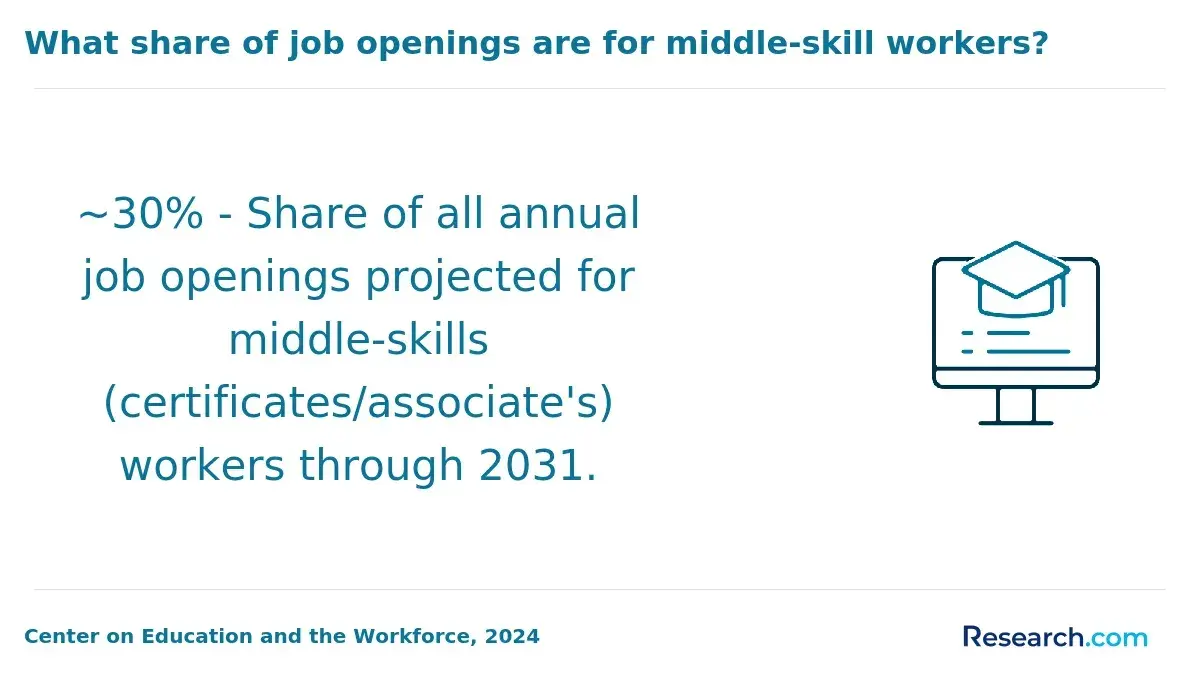
According to the National Center for Education Statistics, nearly 75% of bachelor’s degree students who utilize credit transfer or prior learning assessments complete their degrees faster, underscoring the value of flexible credit options in accelerated programs.
A three-year plan works best when the course sequence is mapped before enrollment. Ask your advisor which courses are prerequisites, which courses are available in summer, and whether any capstone, internship, or practicum must be completed during a specific term.
- : "One graduate who completed her online construction management bachelor’s degree on a three-year accelerated plan said the key was planning every semester and summer in advance. Transfer credits from her associate degree and military training allowed her to move into advanced courses sooner, while competency-based elements let her demonstrate skills she already had. The pace required discipline, but the clear roadmap helped her graduate sooner than she expected."
Can You Transfer Credits to Finish Your Online Construction Management Bachelor's Degree Faster - and How Does It Work?
Yes. Transfer credits are one of the most practical ways to finish an online construction management bachelor’s degree faster. The process usually begins with official transcripts from every college or training provider you attended. The university then reviews your prior coursework to determine which credits match its general education, elective, or construction management requirements.
Not all transferred credits save the same amount of time. A course that counts toward a major requirement can shorten your path more than a course that counts only as a free elective. Schools may also ask for syllabi, course descriptions, or documentation to confirm that prior coursework meets academic level and content expectations.
How different credit types are usually reviewed
- College credits: Credits from accredited colleges usually transfer most smoothly, but every school applies its own equivalency rules.
- CLEP credits: CLEP exams can demonstrate college-level knowledge and may satisfy selected lower-division requirements.
- AP credits: AP credits come from high school testing and are accepted by some programs under varying policies.
- Prior Learning Assessments: PLAs may award credit for documented professional or military experience, but they are less commonly accepted and highly dependent on university rules.
- Military training: Military credits may apply to electives or technical requirements if the school recognizes the training.
Some online universities, such as Southern New Hampshire University and Western Governors University, stand out for accepting up to 90 transfer credits. For students who enter with substantial prior coursework, that policy can reduce both time and tuition significantly.
Transfer students should also plan for possible credit loss. On average, students may forfeit about 13 semester credit hours due to course mismatches or program differences. To reduce that risk, request a preliminary transfer evaluation before committing, ask how each course applies to the degree plan, and confirm the maximum number of credits that can be transferred.
The strongest transfer strategy is to combine several tools: prior college credit, accepted exams, military credit when applicable, and competency-based pacing. Together, these options can make an under-three-year timeline more realistic without relying on overloads every term.
What Financial Aid Options Are Available for Students Pursuing an Accelerated Online Construction Management Bachelor's Degree?
Financial aid for an accelerated online construction management bachelor’s degree usually starts with the Free Application for Federal Student Aid (FAFSA). Students enrolled in eligible accredited programs may qualify for Pell Grants, subsidized and unsubsidized federal loans, and Federal Work-Study. Pell Grants are need-based and do not require repayment, while federal loans must be repaid under applicable repayment terms.
The key issue in accelerated programs is enrollment intensity. Full-time students generally receive larger federal aid packages, but accelerated schedules can concentrate credits into shorter terms. Students should confirm that their course load keeps them at least half-time when required, because dropping below eligibility thresholds can reduce or interrupt aid.
Funding sources to compare
- Federal aid: FAFSA may unlock Pell Grants, subsidized loans, unsubsidized loans, and work-study for eligible students in accredited programs.
- Institutional scholarships: Colleges may offer merit-based awards, transfer scholarships, adult learner scholarships, or online student discounts.
- Construction-related scholarships: Industry organizations and foundations may support students preparing for construction management careers.
- Employer tuition reimbursement: Working students should ask whether their employer covers online and accelerated construction management degrees.
- Military and veteran benefits: Eligible students should confirm how benefits apply to compressed terms and online enrollment.
Employer tuition reimbursement can be especially valuable for students already working in construction, engineering, facilities, or project coordination. Before enrolling, ask whether reimbursement is paid upfront or after grades are posted, whether there is a grade requirement, and whether you must stay with the employer for a set period after receiving funds.
Over 60% of online bachelor’s students now choose accelerated degree tracks, driving increased availability of tailored financial aid programs. Even so, students should avoid assuming that faster always means cheaper. A heavier course load can affect work hours, family responsibilities, and the risk of withdrawing from a course. Build a budget that includes tuition, fees, books, software, equipment, and any unpaid time required for internships or field experiences.
How Does Competency-Based Education (CBE) Help You Finish an Online Construction Management Bachelor's Degree Faster?
Competency-based education (CBE) can help students finish faster by allowing them to advance when they demonstrate mastery, rather than when a semester ends. This format is especially useful for students who already have construction experience, military training, technical coursework, or strong knowledge of project management concepts.
In a traditional online course, students usually follow a fixed calendar. In CBE, progress depends on assessments that measure specific skills or competencies. If you already understand a topic, you may move through it quickly. If a topic is new, you can spend more time on it. This makes CBE flexible, but it also requires strong self-management.
| CBE advantage | How it helps | Potential drawback |
| Self-paced learning | Students can move quickly through familiar material. | Students who need external deadlines may struggle. |
| Use of prior knowledge | Work experience or previous coursework can shorten the learning curve. | Students still must prove mastery through required assessments. |
| Flexible scheduling | Working adults can organize study time around jobs and family obligations. | Flexibility can lead to procrastination without a clear weekly plan. |
| Potential cost efficiency | Flat-rate terms may reward students who complete more courses in each term. | Savings depend on actual pace, not just enrollment in a CBE program. |
Several accredited online universities, including Western Governors University (WGU) and Southern New Hampshire University (SNHU), now provide CBE tracks in construction management. These programs hold recognized regional accreditation and qualify for federal financial aid, supporting both legitimacy and affordability. Many students can complete their degrees in as little as 12 to 18 months because they focus exclusively on areas needing development.
CBE is not the easiest option for every learner. Students need to read independently, meet assessment standards, track deadlines, and ask for help before falling behind. Some employers may also be less familiar with competency-based formats, so graduates should be ready to explain that the degree is accredited and that progress is based on verified mastery.
Students comparing CBE and other accelerated online formats may also review related flexible pathways such as urban planning masters programs online to understand how pacing, tuition models, and accreditation differ across fields.
What Is the Difference Between an Accelerated Online Construction Management Degree and a Degree-Completion Program?
An accelerated online construction management degree is designed to move students through a full bachelor’s curriculum faster than the traditional four-year schedule. It may work for students starting with few or no credits, provided they can handle year-round enrollment and a heavy workload.
A degree-completion program is different. It is built for students who already have substantial college credit, often from an associate’s degree or previous bachelor’s coursework. These programs focus on the remaining upper-division, major, and general education requirements needed to finish the bachelor’s degree. They usually require 30 to 60 transfer credits and can be completed in one to two years.
| Comparison point | Accelerated online degree | Degree-completion program |
| Best for | Students starting fresh or with limited prior credit. | Adult learners and transfer students with significant completed credit. |
| Typical timeline | Three years or less with an intensive schedule. | One to two years when transfer credits apply well. |
| Credit strategy | Relies on compressed terms, summer study, and sometimes transfer credits. | Relies heavily on prior credits, associate degrees, and credit evaluations. |
| Format | May use cohort, term-based, or accelerated course schedules. | Often flexible and designed for working adults. |
| Main risk | Heavy workload from the beginning. | Losing credits if prior coursework does not match degree requirements. |
Choose an accelerated degree if you need a structured full bachelor’s pathway and can commit to fast pacing from the start. Choose a degree-completion program if you already have credits and want the shortest practical route to a finished credential.
According to the National Center for Education Statistics (2023), nearly 60% of adult learners enroll in degree-completion bachelor’s programs to balance career and studies effectively. Students comparing flexible online degree models may also find useful examples in Research.com’s guide to online graphic design schools, especially when evaluating accreditation, transfer policies, and online delivery formats.
What Does a Typical Curriculum Look Like in a Fast-Track Online Construction Management Bachelor's Program?
A fast-track online construction management bachelor’s curriculum combines general education, business foundations, technical construction courses, and applied projects. The academic content should be similar to a traditional program; the difference is the pace. Accelerated courses often run 5 to 10 weeks instead of the typical 16-week semester, which means students cover material quickly and must keep up with assignments every week.
Students should expect to study both management and technical subjects. Common topics include project controls, materials, estimating, scheduling, safety, contracts, cost management, construction methods, building systems, and leadership. Many programs also include a capstone, practicum, internship, or applied project that requires planning well in advance if the goal is to finish within three years.
Common curriculum components
- General education: Communication, math, science, humanities, and social science requirements that support a bachelor’s-level education.
- Business and management courses: Accounting, finance, leadership, organizational behavior, and project management foundations.
- Construction core: Estimating, scheduling, construction materials, safety, project controls, codes, contracts, and construction documentation.
- Technology and tools: Courses may involve scheduling software, estimating tools, plan reading, and digital project documentation.
- Applied experience: Capstone projects, internships, or practicums help students connect coursework to real construction management problems.
Accelerated formats require disciplined time management. Students may need roughly 15-20 hours per week per course, particularly in technical classes with calculations, project deliverables, or software-based assignments. Taking too many difficult courses in one term can slow progress if it leads to withdrawals or low grades.
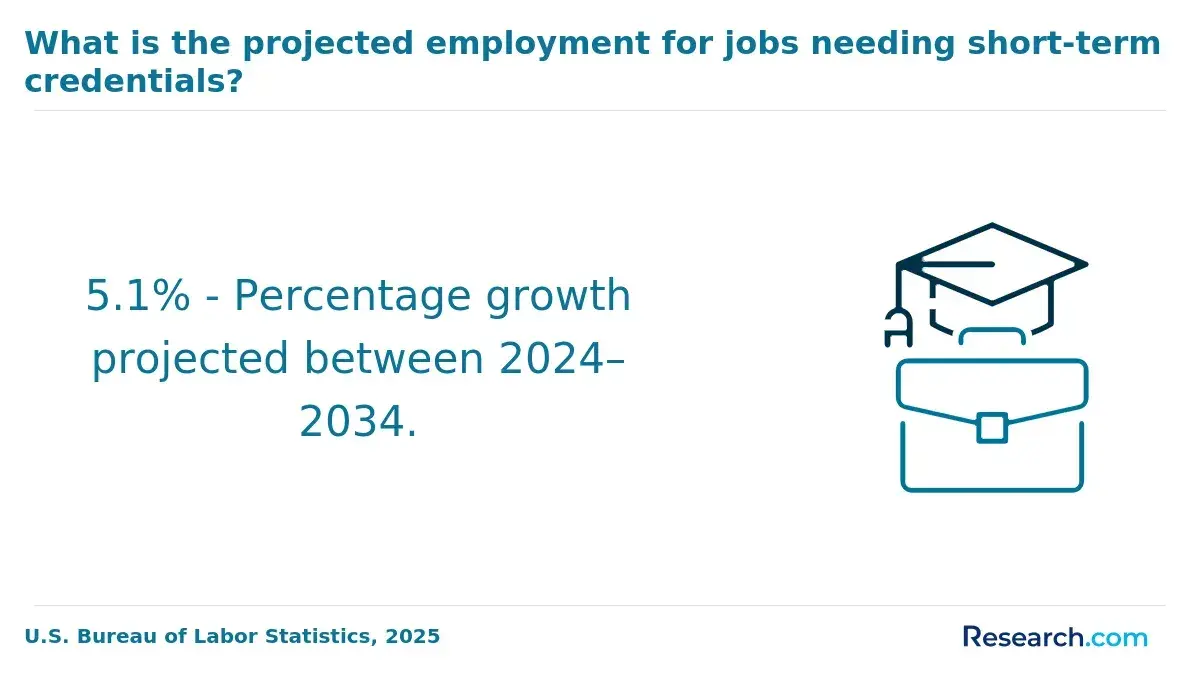
Accredited programs should maintain academic standards comparable to campus-based degrees. Programs aligned with organizations such as the American Council for Construction Education (ACCE) are designed to demonstrate quality and industry relevance. Employment for construction managers is expected to grow 11% from 2022 to 2032, indicating strong demand for graduates who can combine technical knowledge with project leadership skills.
How Does Employer Perception of an Accelerated Online Construction Management Bachelor's Degree Compare to a Traditional Campus Degree?
Employer acceptance of accelerated online construction management degrees has improved, especially when the degree comes from a regionally accredited institution. For many hiring managers, the most important questions are whether the school is legitimate, whether the curriculum is relevant, and whether the candidate can demonstrate job-ready skills. The delivery format matters less when the program is accredited and the graduate has practical experience.
Research from the National Association of Colleges and Employers (NACE) emphasizes that accreditation status is the foremost criterion for assessing a candidate’s degree, regardless of whether it was obtained online or through an accelerated program. Students should verify institutional legitimacy through the Council for Higher Education Accreditation (CHEA) database, which lists recognized accrediting agencies and approved schools.
How to strengthen employer confidence
- Verify accreditation: Choose a school with recognized accreditation and be prepared to name the accreditor if asked.
- Build practical evidence: Keep a portfolio of estimating work, schedules, project plans, safety analyses, and capstone deliverables.
- Gain field exposure: Internships, construction work, assistant project roles, or site experience can make an online degree more persuasive.
- Consider certifications: Professional credentials such as Certified Construction Manager (CCM) can strengthen credibility when paired with a degree.
- Research target employers: Some companies, government agencies, or specialized firms may still prefer campus-based programs or specific accreditation types.
The safest approach is to choose an accredited program, maintain strong grades, complete applied projects, and gain relevant experience while enrolled. If an employer questions the accelerated format, focus on outcomes: the program’s accreditation, required coursework, project experience, and the skills you can demonstrate on the job.
What Graduates Say About Their Fast Online Construction Management Bachelor's Degree Program
- : "Choosing an online construction management bachelor’s degree was a game-changer for me because it allowed me to balance work and study without compromising either. The affordability of the program was a huge relief, especially compared to traditional on-campus options. Since completing my degree, I’ve seen a significant boost in my career opportunities and salary. — Alfonso"
- : "Reflecting back, the decision to pursue my construction management degree online was largely driven by the flexibility it offered. It saved me both time and money, making education accessible without the heavy financial burden. Professionally, the skills I gained have been instrumental in handling complex projects, elevating my role within my company. — Eduardo"
- : "I was drawn to the accelerated pace of the online construction management bachelor’s program, which suited my ambition to move forward quickly. The cost-effectiveness was impressive, allowing me to invest smartly in my education. Through this program, I gained the confidence and qualifications needed to transition into a management role seamlessly. — Thiago"
Other Things You Should Know About Construction Management Degrees
Many universities offer accredited online Construction Management bachelor's degree programs that can be completed in 3 years or less, including Arizona State University, Purdue University, and University of Southern Mississippi. Each provides a robust curriculum designed to equip students with skills for managing construction projects efficiently and effectively.
Yes, many accelerated online Construction Management bachelor's programs integrate internship opportunities to provide practical experience. These internships can be essential for gaining industry skills and improving employment prospects after graduation, typically arranged in cooperation with construction firms or organizations.
To enroll in a fast-track online Construction Management bachelor's program, you typically need a high school diploma or equivalent. Some programs may require prior coursework in math or science and a minimum GPA, depending on the institution's specific criteria for accelerated degrees.
References
- What do you learn in a bachelor's in construction management? | edX https://www.edx.org/resources/what-do-you-learn-in-a-bachelors-in-construction-management
- What is Competency-Based Education (CBE)? | University of Phoenix https://www.phoenix.edu/blog/what-is-competency-based-education-and-how-does-it-work.html
- Competency-Based Education (CBE) https://www.cnm.edu/programs/cnm-my-way/cbe
- What Is Competency-Based Education? - 10 Facts About This Online Learning Model https://www.umassglobal.edu/blog-news/competency-based-education-10-facts-online-learning-model
- Tips for Succeeding In a Competency-Based Program https://lakeshore.edu/about/news-and-events/blog/tips-succeeding-competency-based-program
- Construction Project Management Fast-Track Career Training Program https://laurelridgeworkforce.com/construction-project-management-fast-track-career-training-program/
- Online Construction Management Programs - Project Management FormulaProject Management Formula https://projectmanagementformula.com/online-construction-management-programs/
- A Real Look at Finishing Your Bachelor's Degree Online https://www.georgefox.edu/adult-degree/articles/finish-online.html
- Online Bachelor's in Construction Management | NMU https://online.nmu.edu/bachelors-construction-management/
- Online Master's in Construction Management (Accelerated) | NEIT https://www.neit.edu/academics/graduate-degrees/construction-management-ms