2027 Cheapest Online Construction Management Bachelor's Degrees That Pay Well: Tuition, Duration, and Earnings

Co-Founder and Chief Data Scientist
Choosing an online construction management bachelor's degree is often a cost-and-career calculation: you need a program that is affordable enough to finish, credible enough for employers, and flexible enough to fit around work or family responsibilities. This guide is designed for students with some college credit, working adults, career changers, and construction professionals who want a bachelor's credential without taking on unnecessary debt.
The demand side of the decision is strong. According to the U. S. Bureau of Labor Statistics, employment for construction managers is projected to grow 11% from 2022 to 2032. Still, not every low-cost program delivers the same value. Tuition, accreditation, transfer credit rules, program length, specializations, and graduate outcomes all affect whether a degree is truly affordable.
Below, you will find a practical comparison of affordable accredited online construction management bachelor's programs, how public and private tuition differ, ways to graduate faster, financial aid options, accreditation checks, admission requirements, and ROI factors to review before enrolling.
Key Benefits of the Cheapest Online Construction Management Bachelor's Degree That Pays Well
- Online construction management bachelor's degrees often feature lower tuition and reduced fees, helping students minimize debt while maintaining access to accredited programs with strong ROI.
- Flexible scheduling and accelerated course formats allow working professionals to upskill efficiently without sacrificing income, optimizing time-to-degree completion.
- These programs provide access to national and global industry networks, increasing job prospects and salary potential, with graduates earning median salaries aligning with BLS data above $75,000 annually.
What Are the Most Affordable Accredited Online Construction Management Bachelor's Degree Programs Available Today?
The most affordable accredited online construction management bachelor's programs combine low per-credit tuition with recognized institutional or programmatic accreditation, flexible transfer policies, and coursework that prepares students for construction operations, estimating, scheduling, safety, contracts, and project leadership. Accreditation matters because it affects employer confidence, graduate school eligibility, federal financial aid access, and the likelihood that previously earned credits will transfer.
Among affordable options, these programs stand out for cost and credibility:
- Western Carolina University: offers an ABET-accredited Bachelor of Science in construction management at about $331 per credit hour for online in-state students, with flexible transfer policies and financial aid options.
- Fort Hays State University: charges roughly $226 per credit hour online and provides a regionally accredited program with a practical skills focus that can appeal to working adults and transfer students.
- Oregon Institute of Technology: provides an ABET-accredited program at $368 per credit hour, combining technical construction knowledge with management-oriented coursework.
- Middle Georgia State University: costs approximately $225 per credit hour and offers regional accreditation, financial aid opportunities, and transfer credit flexibility.
- Eastern New Mexico University: delivers a regionally accredited program at about $210 per credit hour, designed for students who need a lower-cost online pathway into construction management.
When comparing affordable programs, do not focus on tuition alone. A slightly higher per-credit rate may still be a better value if the program accepts more transfer credits, offers stronger advising, includes industry-relevant software training, or has better alignment with your target construction role. Conversely, the lowest sticker price may cost more in the long run if few credits transfer or required courses are offered infrequently.
Students planning long-term academic advancement can also review related graduate pathways such as online doctoral programs for working professionals, although most construction management roles do not require a doctorate.
How Does Tuition Cost for Online Construction Management Bachelor's Programs Compare Across Public and Private Universities?
Public universities usually offer lower online construction management tuition than private nonprofit universities, largely because public institutions receive state support. Private nonprofit programs often charge more per credit, but the final cost can be closer than expected after scholarships, transfer credits, accelerated schedules, or reduced course requirements are applied.
- Per-credit pricing: Public universities typically charge between $250 and $450 per credit, while private nonprofit institutions range from $400 to $700 per credit. This difference is often the largest driver of total program cost.
- Total program cost: A lower per-credit price is not always the cheapest route. A private university that accepts more transfer credits or allows faster completion can reduce the number of credits you must pay for after admission.
- Residency rules: In-state students at public universities often pay less than half of out-of-state or private tuition costs. Online students should confirm whether the school charges one flat online rate or separates in-state and out-of-state tuition.
- Delivery model: Public universities often use asynchronous formats and larger course sections to control cost. Private programs may include smaller cohorts, more structured advising, or mentorship, which can raise tuition but improve completion support.
- Financial aid: Private nonprofits may offer institutional scholarships and grants that reduce the net price. Always compare the net cost after aid, not just the advertised tuition rate.
A practical tuition comparison should include four numbers: cost per credit, credits required after transfer, mandatory fees, and estimated aid. Students comparing construction management to other undergraduate options can use Research.com's guide to high-paying bachelor's degrees for broader earnings context.
What Is the Typical Duration of an Online Construction Management Bachelor's Degree, and How Can Students Graduate Faster?
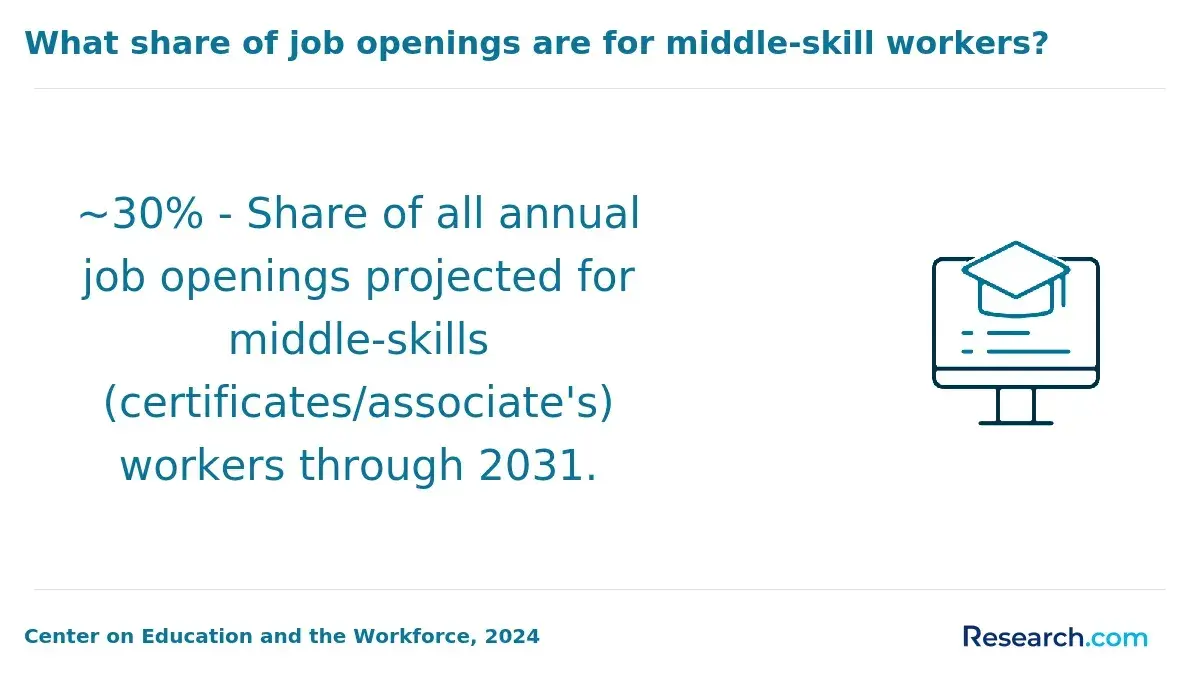
Most online construction management bachelor's degrees require about 120 credit hours and are designed to take four years for first-time, full-time students. Adult learners often finish sooner if they transfer prior college credits, enroll year-round, or choose an accelerated format. Students balancing full-time work may take longer, especially if they enroll part time.
The fastest path is usually not simply taking the most courses at once. It is choosing a program that accepts the credits you already have, offers required courses frequently, and uses a calendar that lets you move through classes without long gaps. Western Carolina University's online construction management bachelor's degree uses eight-week courses that may allow graduation in 2.5 to 3 years. Southern New Hampshire University offers a competency-based program that adjusts pace to the individual, which can shorten time-to-degree for motivated students.
- Standard schedule: About 120 credits over four years remains the typical structure for a bachelor's degree.
- Accelerated terms: Eight-week courses and year-round enrollment can help students complete more credits each year.
- Transfer credits: Prior coursework can shorten the degree if credits apply to general education, electives, or major requirements.
- Competency-based learning: Some programs allow students to advance by demonstrating mastery, which can benefit learners with construction or management experience.
- Workload planning: Faster completion can reduce opportunity cost, but overloaded schedules may hurt grades, retention, and learning quality.
If speed is a major priority, compare each online construction management program by accepted transfer credits, term length, course availability, and whether major courses are offered every session.
A professional who enrolled in an online construction management bachelor's program described the format as manageable but demanding: "The flexibility helped me manage work and study, but staying disciplined was key." He said the eight-week courses created steady momentum: "It felt intense but rewarding to complete classes faster and move toward my career goals." His experience highlights a common trade-off: accelerated programs can shorten the timeline, but they require consistent weekly time management.
Which Online Construction Management Bachelor's Programs Offer the Best Earning Potential After Graduation?
The online construction management bachelor's programs with the strongest earning potential typically have recognized accreditation, industry-aligned coursework, applied project experience, and connections to construction employers. The U.S. Bureau of Labor Statistics reports a median annual wage near $98,000 for construction managers, but graduate earnings vary by location, experience, employer size, project type, and specialization.
Programs that emphasize project management, sustainable construction, estimating, building information modeling, construction law, or real estate development may support stronger career mobility because they prepare students for specialized responsibilities beyond entry-level field coordination. Regional labor markets also matter. Graduates near metropolitan areas with heavy commercial development may see more opportunities than those in slower-growth markets.
- Accreditation: ACCE-accredited and otherwise well-recognized programs may improve employer confidence and graduate school options.
- Specialized coursework: Tracks in project management, sustainable construction, construction law, or real estate development can align with higher-responsibility roles.
- Industry exposure: Programs with capstones, employer projects, internships, or faculty with construction experience may better prepare students for job interviews and promotion.
- Location strategy: Students planning to work in active commercial or infrastructure markets may benefit from programs with regional employer relationships.
- Time to completion: Accelerated options and transfer-friendly policies can improve lifetime earnings by helping students enter or advance in the workforce sooner.
Students who want to move into senior leadership later may also compare construction management coursework with business-focused options such as accelerated MBA programs. An MBA is not required for most construction management positions, but it may be useful for professionals targeting executive, development, or operations roles.
What Financial Aid and Scholarship Opportunities Are Available for Online Construction Management Bachelor's Students?
Online construction management bachelor's students may qualify for federal aid, state aid, institutional scholarships, industry scholarships, employer tuition assistance, and military education benefits. The best approach is to apply early, compare net price across schools, and use grants and scholarships before borrowing.
The Free Application for Federal Student Aid (FAFSA) is the starting point for federal grants and loans, including the Pell Grant, which does not require repayment. According to the College Board's 2023 Trends in Student Aid report, nearly 30% of undergraduate students benefit from Pell Grants. Students may also qualify for subsidized federal loans, where the government pays interest during enrollment, making them less expensive than unsubsidized loans.
- Federal Pell Grants: Need-based grants available through FAFSA that do not have to be repaid.
- Subsidized federal loans: Federal loans for eligible students where interest is covered during school enrollment.
- Institutional scholarships: Awards from colleges or universities, sometimes reserved for construction management majors, transfer students, adult learners, or online students.
- State-based grants: Aid for residents attending eligible in-state programs; availability and rules vary by state.
- Industry scholarships: Awards from construction associations, skilled trades organizations, and nonprofit groups that support students entering construction-related fields.
Before accepting loans, ask each school for a full cost estimate that includes tuition, fees, books, software, technology requirements, and any required campus visits. Also confirm whether online students are eligible for the same scholarships as campus-based students.
A graduate of an online construction management bachelor's program said financial aid felt overwhelming at first, but early action helped: "Applying for FAFSA early made a big difference in securing those funds." She qualified for a subsidized loan and a specialized scholarship from a national construction association, then found state-sponsored aid that further reduced her borrowing. Her advice was simple: apply for every grant and scholarship you may qualify for before considering higher-interest debt.
How Many Transfer Credits Can Online Construction Management Bachelor's Programs Accept, and From Which Institutions?
Many online construction management bachelor's programs accept a substantial number of transfer credits, often between 60 and 90 credits, depending on the school, the source of credit, grades earned, accreditation status, and whether courses match degree requirements. Transfer credit can be the single biggest factor in reducing cost and completion time.
Southern New Hampshire University permits up to 90 transfer credits, which is nearly three-quarters of a typical 120-credit degree. Purdue University Global also accommodates extensive transfer credit, including military and CLEP exam credits. Programs with articulation agreements can make the process smoother for students coming from specific community colleges or accredited partner institutions.
Students should request a formal transfer evaluation before committing to a program. A school may accept a credit as elective credit but not apply it toward a major requirement, which can limit its usefulness. Data from the National Center for Education Statistics reveals that around 70% of online undergraduates bring credits from previous institutions, making transfer policy a major affordability issue for online learners.
- Typical transfer range: Many reputable online construction management programs allow between 60 and 90 transfer credits.
- Common sources: Credits may come from regionally accredited colleges, community colleges, CLEP exams, DSST exams, military training, and evaluated workplace learning.
- Best-case savings: Transfer credits reduce the number of courses taken at the degree-granting institution, lowering tuition and time in school.
- Policy differences: Schools vary in grade minimums, age limits for technical credits, and rules for applying credits to the major.
- Recommended step: Submit all transcripts and ask for a degree audit showing exactly which requirements remain.
What Accreditation Should an Online Construction Management Bachelor's Program Have to Ensure Quality and Employer Recognition?
An online construction management bachelor's program should be offered by an institution with recognized accreditation. Regional accreditation is widely accepted by employers, graduate schools, and financial aid systems. Examples of regional accreditors include the Higher Learning Commission (HLC), the Southern Association of Colleges and Schools Commission on Colleges (SACSCOC), and the New England Commission of Higher Education (NECHE).
Programmatic accreditation can add another layer of confidence. In construction management, the American Council for Construction Education (ACCE) reviews programs against industry-specific standards. Some programs may also hold ABET accreditation, depending on their structure and academic focus. Programmatic accreditation is not always required for employment, but it can signal that the curriculum has been reviewed for relevance and quality.
Nationally accredited schools may be legitimate, but credits from nationally accredited institutions can be harder to transfer into regionally accredited colleges. Unaccredited programs create far greater risk: students may lose access to federal aid, face transfer problems, or encounter employer skepticism.
Prospective students should verify accreditation through the U.S. Department of Education's Accreditation Database before enrolling. Recent research reveals that 85% of employers prefer candidates holding degrees from regionally accredited institutions, which makes accreditation a practical employment consideration, not just an academic detail.
- Regional accreditation: Confirms that the institution meets recognized academic standards and is generally accepted by employers and graduate schools.
- Programmatic accreditation: ACCE accreditation validates construction-specific quality and alignment with industry expectations.
- Transfer impact: Regional accreditation usually improves the chances that credits will transfer to another institution.
- Financial aid eligibility: Recognized accreditation is essential for many forms of federal financial aid.
- Verification: Check accreditation directly rather than relying only on marketing language from a program website.
What Are the Admission Requirements for the Cheapest Online Construction Management Bachelor's Programs?
The cheapest online construction management bachelor's programs usually have accessible admission requirements. Most ask for a high school diploma or GED, official transcripts, and a minimum GPA that commonly ranges from 2.0 to 3.0. Transfer applicants may need to submit transcripts from every college attended, even if they do not plan to use all credits.
Many affordable programs are test-optional and do not require SAT or ACT scores, which can help adult learners and working professionals. Open-admission and rolling-admission policies are also common, allowing students to apply throughout the year. However, easy admission should not be the only factor. Students should also evaluate advising, tutoring, course availability, graduation support, and employer recognition.
Applicants who do not meet minimum requirements may improve their chances by completing prerequisite courses in areas such as algebra, English composition, or introductory construction topics. Relevant work experience, military training, supervisor recommendations, and a focused personal statement can also strengthen an application.
Students still exploring career direction may compare construction management with other flexible online pathways, including a human services online degree, before choosing a major.
- High school diploma or GED: The standard baseline requirement for first-time undergraduate admission.
- Minimum GPA: Commonly between 2.0 and 3.0, though some programs offer conditional or flexible admission.
- Official transcripts: Required for high school, GED, and prior college coursework.
- Test-optional policies: Many programs do not require SAT or ACT scores.
- Application support: Work history, recommendations, and prerequisite coursework can help applicants with weaker academic records.
What Concentrations or Specializations Are Available Within Affordable Online Construction Management Bachelor's Degree Programs?
Affordable online construction management bachelor's programs may offer concentrations that help students tailor the degree to a specific career path. The right specialization depends on whether you want to manage job sites, estimate costs, lead sustainability efforts, work with construction technology, oversee safety, or move toward development and operations leadership.
- Project Management: Focuses on planning, budgeting, scheduling, procurement, and supervision from project start to closeout. Graduates may pursue roles such as project manager or construction supervisor, with median wages near $98,000 annually. The Project Management Professional (PMP) certification can further support advancement.
- Sustainable Construction: Covers green building practices, energy efficiency, materials, and environmental considerations. Potential roles include sustainability consultant and energy auditor, with median salaries around $76,000. LEED accreditation is commonly recommended for professionals in this area.
- Construction Safety: Emphasizes safety planning, regulatory compliance, hazard control, and risk reduction. Graduates may move into safety manager or compliance officer roles. Certifications such as Certified Safety Professional (CSP) are often valuable or required for advancement.
- Building Information Modeling (BIM): Trains students to use digital models for coordination, design review, scheduling, and project communication. BIM specialists may work as coordinators or technicians and earn mid-$70,000 median salaries. Software proficiency, including tools like Revit, may require additional training.
- Construction Economics and Estimating: Develops skills in cost forecasting, bid preparation, quantity takeoffs, financial analysis, and budget control. Graduates may work as estimators or cost analysts with average earnings near $65,000. The Certified Professional Estimator (CPE) credential can improve competitiveness.
Students should choose a concentration by comparing three factors: the work they want to do daily, the credentials employers prefer in that specialty, and the local demand for those skills. A specialization can make a low-cost degree more valuable if it aligns with a clear job target. Students can also review practical certifications that pay well to identify credentials that complement construction management coursework.
Can Students Earn College Credit Through CLEP, DSST, or Prior Learning Assessments in Online Construction Management Bachelor's Programs?
Yes. Many affordable online construction management bachelor's programs allow students to earn credit through CLEP, DSST, or Prior Learning Assessments (PLA). These options are especially useful for adult learners, military students, and construction professionals who already have college-level knowledge from work, training, or independent study.
CLEP and DSST exams are standardized tests that can satisfy certain general education or elective requirements. PLA is broader and may involve portfolios, employer training records, military transcripts, certifications, job descriptions, or documented professional learning. Some programs allow up to 45 semester hours of credit through prior learning routes. Credits are often evaluated using American Council on Education (ACE) recommendations.
Students should confirm three details before relying on these credits: which exams or experiences the school accepts, the maximum number of credits allowed, and how credits apply to the degree plan. Assessment fees may apply, but the savings can be significant if the credits replace full tuition-bearing courses.
- CLEP credit: Earned through standardized exams in general education and subject areas.
- DSST credit: Commonly used by military-affiliated and adult learners to document college-level knowledge.
- PLA portfolios: May include certificates, job descriptions, training records, work samples, and supervisor verification.
- ACE recommendations: Help colleges evaluate nontraditional learning, military training, and workplace education.
- Planning caution: Credits that count only as electives may not shorten the degree as much as credits that satisfy required courses.
What Is the Return on Investment (ROI) of Earning a Cheap Online Construction Management Bachelor's Degree?
The ROI of a cheap online construction management bachelor's degree depends on how much you pay, how quickly you finish, how much debt you take on, and whether the credential helps you enter or advance in construction management. A low-cost degree can have strong ROI when it leads to higher earnings without requiring excessive borrowing.
ROI is commonly calculated by subtracting total education costs, including tuition and fees, from estimated long-term earnings gains, then comparing that net gain with the original cost. The Georgetown University Center on Education and the Workforce reports that bachelor's degree ROI typically ranges from 14% to 21% over 20 years. Payscale data further indicates that low-cost online construction management programs with solid accreditation and industry relevance often exceed these average benchmarks.
Construction management can produce favorable ROI because the field offers competitive salaries and advancement paths into project leadership, estimating, operations, safety, and development. Median starting salaries for construction management professionals range from $60,000 to $70,000, while experienced construction managers may earn more depending on market, employer, and project scope.
- Lower tuition: Affordable online programs reduce upfront cost and can improve ROI compared with higher-priced campus programs.
- Faster completion: Transfer credits, CLEP, DSST, PLA, and accelerated terms can reduce both tuition and opportunity cost.
- Accreditation: A recognized degree improves access to jobs, graduate study, and financial aid.
- Debt control: Grants, scholarships, employer assistance, and careful borrowing can protect ROI.
- Career alignment: ROI is strongest when the degree supports a specific role, promotion path, or salary increase.
Before enrolling, estimate your personal ROI using your expected net tuition, credits remaining, likely completion time, current income, target role, and realistic salary growth. The cheapest program is not automatically the best investment; the best value is the accredited program you can finish and use.
What Graduates Say About Earning the Cheapest Online Construction Management Bachelor's Degree That Pays Well
- : "Choosing the online construction management bachelor's degree program was a game-changer for me because it offered the flexibility I needed while working full-time. The cost was surprisingly reasonable compared to traditional programs, which made it accessible without sacrificing quality. Since graduating, I've been promoted twice and now lead major projects, a direct result of the skills I gained. Alfonso"
- : "I decided to pursue this online construction management program after careful consideration of my career goals and the program's strong curriculum. It was a worthwhile investment, especially since the online format significantly reduced expenses related to commuting and housing. The knowledge and credentials I earned have opened doors to new opportunities in the industry, and I feel well-prepared to tackle complex challenges. Eduardo"
- : "This program suited my needs perfectly because it offered both affordability and comprehensive coverage of essential concepts in construction management. The online structure allowed me to balance family life with my studies effectively. After completing the degree, I noticed a clear shift in how employers value my expertise, giving me confidence to pursue leadership roles within the field. Thiago"
Other Things You Should Know About Construction Management Degrees
In 2027, while tuition might be low for affordable online construction management bachelor's programs, students should be aware of potential additional fees, such as technology fees, course materials fees, and lab fees. It's essential to confirm the total cost with each program before enrolling, to avoid unexpected surprises.
Yes, several accredited online construction management bachelor's programs offer uniform tuition rates regardless of a student's residency. This feature makes these programs especially attractive to out-of-state or international students seeking affordable and consistent pricing. It is important for prospective students to verify tuition policies directly with the institution, as residency-based fees vary widely across schools.
The ranking is influenced by tuition costs, accreditation status, program length, and graduate earnings. In 2027, schools offering higher value for the tuition charged and those with positive graduate outcomes typically achieve higher rankings in affordability lists.
References
- 5 Most Affordable Online Construction Management Degrees - Online Schools Report https://www.onlineschoolsreport.com/cheapest-online-bachelors-in-construction-management/
- Everything You Need To Know About The CLEP Exam https://www.affordablecollegesonline.org/college-resource-center/clep-exam/
- The Comprehensive 2026 Guide to Earning an Online Construction Management Degree - Career Path Edu https://careerpathed.com/onliconstruction-management-degree/
- AWARDS & SCHOLARSHIPS https://www.acce-hq.org/awards-scholarships
- Return on Education for Bachelor’s Degrees | SoFi https://www.sofi.com/learn/content/roi-by-bachelor-degree/
- Online Specialization in Construction Management | Colorado State University Global https://csuglobal.edu/academic-programs/undergraduate-specializations/undergraduate-specialization-construction-management
- Accreditation and Education Framework https://www.ciob.org/learning-providers/accreditation-education-framework
- Is College Worth it? | Return on Investment Analysis of College Degree https://educationdata.org/college-degree-roi
- Construction Management Accreditation | Academics | Michigan Tech https://www.mtu.edu/academics/construction-management/accreditation/
- PART-TIME | WINNIPEG LOCATIONS CONMP-NA Construction Management Courses https://catalogue.rrc.ca/Programs/WPG/Parttime/CONMP-NA/TransferCreditOpportunities