
2027 How To Become a Marine Biologist? Salary & Career Paths

Co-Founder and Chief Data Scientist
Choosing marine biology means preparing for a science career that connects ocean ecosystems, wildlife conservation, field research, data analysis, and environmental decision-making. It is a strong fit for students who want to study marine life, but it is not a simple “work by the ocean” career path. Some jobs are accessible with a bachelor’s degree and field experience, while research-led positions often require graduate study. Competition is also real: about 1,500 openings for zoologists and wildlife biologists, including marine biologists, are projected each year over the next decade.
This guide explains how to become a marine biologist in a practical way. You will learn what marine biologists actually do, which degrees and skills employers value, how salary varies, what costs to expect, which specializations are available, and how to decide whether this career matches your interests, budget, and long-term goals.
Quick Answer: How Do You Become a Marine Biologist?
To become a marine biologist, most students earn a bachelor’s degree in marine biology, biology, ecology, environmental science, zoology, oceanography, or a closely related field. From there, they build field, laboratory, research, and data-analysis experience through internships, faculty research projects, volunteer monitoring programs, aquarium work, or conservation placements. Entry-level roles may be available after a bachelor’s degree, while advanced research, teaching, and leadership jobs often require a master’s degree or doctorate.
The strongest candidates usually combine science coursework with practical skills in statistics, GIS, scientific writing, field sampling, lab methods, and safe marine work. Depending on the role, SCUBA, scientific diving, CPR, boat handling, GIS, or environmental impact assessment training may also improve employability.
What to Know Before You Commit to Marine Biology
- Marine biology covers many job types. Professionals may work in research, conservation, fisheries, aquariums, environmental consulting, education, policy, or marine technology.
- The field is large but selective. The global marine biology workforce includes approximately 2.99 million professionals, and 19,220 biological scientists are employed in scientific research and development services.
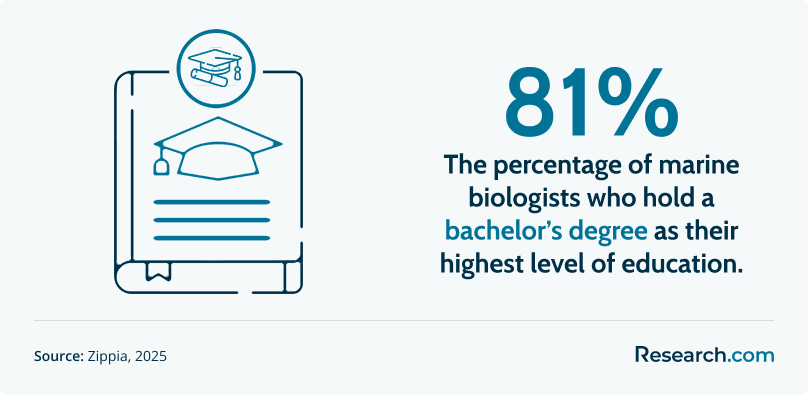
- A bachelor’s degree is the usual starting credential. About 81% of marine biologists hold a bachelor's degree, while 33.9% specialize in ecology, population biology, and epidemiology.
- Salary depends on role and employer. The average annual salary for a marine biologist in the U.S. is around $72,586, with salaries ranging from $74,000 to $133,000 depending on experience and education level.
- Career outcomes are not limited to one title. Common options include research scientist, conservation biologist, environmental consultant, aquarist, and fisheries biologist.
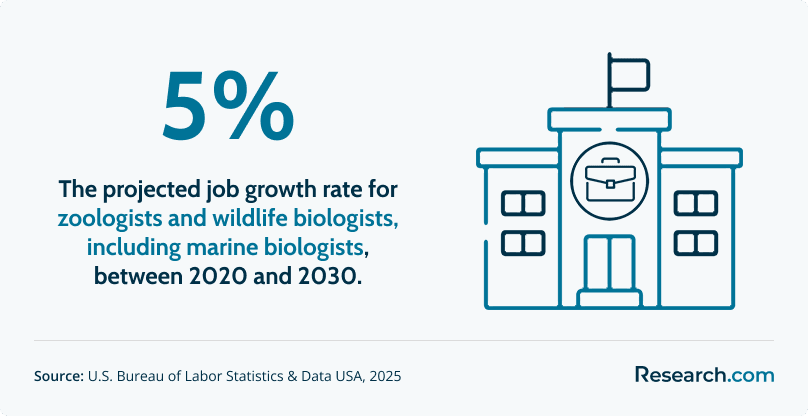
- Growth is steady rather than rapid. Employment for zoologists and wildlife biologists, including marine biologists, is expected to grow by 5% from 2020 to 2030.
- What is a marine biologist?
- What does a marine biologist do?
- How to Become a Marine Biologist for 2027?
- How much can you earn as a marine biologist?
- What are the costs associated with becoming a marine biologist?
- What are the career paths for marine biologists?
- What are the specializations in marine biology?
- How Can Marine Biologists Contribute to Global Sustainability Efforts?
- How Does Interdisciplinary Education Enhance a Marine Biology Career?
- What are the emerging research trends in marine biology?
- Which professional organizations and networks can help advance a marine biology career?
- Can online education boost my marine biology career?
- What are the essential skills required to be a marine biologist?
- What certifications and training programs are available for marine biologists?
- What is the job outlook for marine biologists?
What is a marine biologist?
A marine biologist is a scientist who studies life in saltwater environments. This can include oceans, seas, estuaries, coral reefs, coastal wetlands, tide pools, and deep-sea ecosystems. The work may focus on marine animals, plants, microbes, genetics, behavior, food webs, pollution, climate impacts, habitat loss, fisheries, or conservation planning.
Marine biology is a discipline, not one fixed job. One marine biologist may spend most days in a lab processing DNA or water samples. Another may work from boats, dive sites, coastal marshes, aquariums, hatcheries, research stations, government offices, or university labs. The best route depends on whether you want to focus on field science, laboratory research, conservation, education, policy, consulting, or technology-supported ocean monitoring.
Available workforce data shows that marine biology includes about 2.99 million professionals globally. In scientific research and development services, approximately 19,220 biological scientists are estimated to be employed, including professionals who study marine organisms and ecosystems.
What does a marine biologist do?
Marine biologists investigate marine organisms and the habitats that support them. Their work commonly includes planning studies, collecting samples, tracking species, observing behavior, measuring environmental conditions, analyzing data, writing reports, and sharing results with researchers, agencies, conservation organizations, industry clients, students, or the public.
The daily routine depends heavily on the job setting. A fisheries biologist may estimate fish population health and support sustainable harvest decisions. An aquarist may care for marine animals and explain conservation issues to visitors. A conservation biologist may monitor threatened species and help design habitat protection strategies. A research scientist may publish studies, seek grant funding, supervise teams, and contribute to long-term scientific questions.
| Work setting | Typical responsibilities | Best fit if you like |
| Field research | Sampling water or tissue, surveying species, tagging animals, operating from boats, or using dive equipment | Outdoor science, travel, hands-on work, and changing field conditions |
| Laboratory research | Testing samples, using microscopes, running genetic or chemical analyses, and maintaining research datasets | Careful procedures, experiments, technical tools, and controlled settings |
| Conservation and policy | Assessing habitat health, preparing scientific reports, advising agencies, and supporting management plans | Environmental protection, applied science, and public decision-making |
| Aquariums and education | Feeding and monitoring animals, maintaining exhibits, teaching visitors, and supporting breeding or conservation programs | Animal care, communication, outreach, and informal education |
| Consulting | Reviewing environmental impacts, preparing compliance documents, and advising organizations on marine or coastal projects | Project-based work, problem-solving, and regulatory analysis |
As with researching what an ER nurse does, the title alone does not explain the full role. Marine biology blends scientific investigation, environmental responsibility, technical analysis, teamwork, and clear communication.
How to Become a Marine Biologist for 2027?
The most dependable path into marine biology combines a strong science education with real experience. Employers usually want candidates who can collect reliable data, work safely in field settings, analyze results, write clearly, and understand marine ecosystems. Graduate school is not mandatory for every job, but it can be important for independent research, college teaching, and senior scientific roles.
Step 1: Select a science-focused undergraduate program
Most future marine biologists start with a bachelor’s degree in marine biology or a related field such as biology, ecology, environmental science, zoology, oceanography, or marine sciences. Students who need flexibility may consider an accelerated online bachelor’s degree, but they should verify that the program includes the science prerequisites, lab access, transfer pathways, and field preparation needed for marine biology jobs or graduate school.
Education data reports these highest degree levels among marine biologists:
- Bachelor's (81%)
- Master's (13%)
- Associate (3%)
- Doctorate (2%)
- Other Degrees (1%)
Your exact major matters less than the competencies you develop. A strong plan usually includes biology, chemistry, ecology, statistics, marine systems, research design, scientific writing, and hands-on lab or field work.
| Majors in Marine Biology | Percentage Distribution |
| Ecology, Population Biology, And Epidemiology | 33.9% |
| Biology | 25.5% |
| Environmental Science | 8.5% |
| Marine Sciences | 7.9% |
| Zoology | 6.7% |
| Source: Zippia, 2025 |
Step 2: Get research, lab, and field experience before graduation
Marine biology attracts many motivated students, so experience can separate a strong applicant from a basic one. Look for faculty research assistant roles, coastal monitoring programs, aquarium volunteer positions, conservation internships, fisheries agency work, summer field stations, or lab jobs that involve sample processing, specimen handling, and data entry.
Start early. Even introductory experience with field notebooks, spreadsheets, water-quality testing, animal care, sample labeling, public interpretation, or basic statistical analysis can help you qualify for more selective roles later.
Step 3: Build technical skills employers can verify
Employers are not only looking for enthusiasm for the ocean. They want practical scientific ability. Prioritize statistics, R or Python, GIS, data visualization, scientific writing, lab techniques, safety procedures, and field sampling methods. If your intended role involves underwater research, SCUBA and scientific diver training may be useful or required.
Step 4: Decide whether graduate school fits your target role
A bachelor’s degree may lead to jobs such as field technician, laboratory assistant, aquarist, environmental technician, outreach educator, or fisheries technician. A master’s degree can strengthen access to applied research, consulting, conservation planning, and management roles. A doctorate is most relevant for university faculty careers, principal investigator positions, and senior research leadership.
| Career goal | Common education route | How to decide |
| Entry-level field or lab role | Bachelor’s degree plus internships, research, or field experience | Prioritize practical methods, strong references, and evidence that you can work safely in the field. |
| Conservation or environmental consulting | Bachelor’s or master’s degree | Add GIS, environmental impact assessment knowledge, regulatory awareness, and polished writing samples. |
| Independent research scientist | Master’s degree or doctorate | Choose programs with active marine research labs, publication opportunities, and faculty aligned with your interests. |
| Professor or principal investigator | Doctorate | Prepare for a long research path involving publications, grants, teaching, and competitive appointments. |
Step 5: Apply with a targeted, evidence-based profile
When you begin applying, focus on employers that match your specialty. Universities, research institutes, aquariums, environmental consulting firms, conservation nonprofits, government agencies, and fisheries departments may all hire candidates with marine science training. Customize every resume and clearly list your field methods, lab techniques, software, certifications, research projects, presentations, and reports.
- Define your target employers. Search for organizations connected to fisheries, marine mammalogy, coral reef research, conservation, consulting, aquaculture, or oceanographic research.
- Create a technical resume. Include software, sampling methods, lab procedures, fieldwork, certifications, publications, presentations, and data tools.
- Prepare specific examples. Be ready to explain a dataset you analyzed, a field challenge you handled, a report you wrote, or a research question you helped investigate.
- Keep learning after graduation. Follow developments in climate impacts, remote sensing, genomics, ecosystem modeling, marine policy, and conservation technology.
How much can you earn as a marine biologist?
Marine biologist salaries vary by job title, employer, location, degree level, funding source, and experience. As of 2025, the average annual salary for a marine biologist in the United States is approximately $72,586. Some salary sources report salaries ranging from $74,000 to $133,000 depending on experience and education level, while other reported figures describe top earners making around $57,000 annually. Because sources may define “marine biologist” differently, use salary figures as estimates rather than guaranteed outcomes.
Entry-level field and technician roles may pay less than senior research, consulting, or government positions. Graduate education can improve access to higher-responsibility jobs, although it also adds time and cost. Professionals who want to advance while limiting time away from work sometimes compare fast master’s degree options, but any program should be evaluated for research quality, faculty fit, and relevance to marine science.
| Level of Experience | Median Salary Per Year (USD) |
| 0-1 year | $68,889 |
| 1-3 years | $71,417 |
| 4-6 years | $73,871 |
| 7-9 years | $73,963 |
| 10-14 years | $73,957 |
| 15+ years | $79,721 |
| Source: Glassdoor, 2025 |
Location also matters. Coastal access, cost of living, research funding, fisheries activity, environmental regulation, and agency budgets can all influence pay. For example, marine scientists working in high-demand states like California or Alaska can earn higher salaries, with figures around $92,720 and $94,319 annually, respectively.
What are the costs associated with becoming a marine biologist?
Education is usually the biggest expense on the way to becoming a marine biologist. Total cost depends on institution type, residency status, degree level, housing, transportation, lab access, field courses, travel, equipment, certifications, and whether you continue into graduate school.
- In-state and out-of-state tuition: Public universities usually charge less for in-state students. The average in-state tuition for public institutions is approximately $9,687, while out-of-state tuition averages around $21,184.
- Public and private institutions: Private colleges often have higher listed tuition. The average tuition for private institutions is about $35,087.
- Online and campus formats: Online study may reduce housing or commuting costs, but tuition varies. In-state tuition for online degrees at public universities averages $40,926, while in-person tuition is around $39,000. Private institutions may charge $62,756 for online degrees compared to $198,616 for on-campus degrees.
- Marine biology-specific expenses: Students may need to budget for textbooks, lab fees, housing, field courses, transportation, personal gear, and sometimes diving or boat safety training. The average tuition for marine biology programs is around $31,992 per year.
| Cost factor | Why it affects your budget | How to control the cost |
| Tuition | Prices differ widely by school, residency, and program format. | Compare net price after aid rather than relying only on published tuition. |
| Field courses | Marine programs may involve travel, boat time, residential fieldwork, or special equipment. | Ask whether field expenses are included or billed separately. |
| Certifications | SCUBA, CPR, GIS, and boating credentials may help for certain roles. | Choose certifications that appear in job descriptions for your target path. |
| Graduate school | Research-heavy roles may require a master’s degree or doctorate. | Look for assistantships, funded projects, tuition support, and paid research roles. |
To reduce total cost, compare scholarships, grants, financial aid packages, work-study options, transfer agreements, and paid assistantships. Students seeking flexibility may also review affordable online colleges for general education or related science coursework, but they should confirm that lab, field, and graduate-school prerequisites can still be completed.
What are the career paths for marine biologists?
Marine biology can lead to several career directions. Before selecting a program or graduate degree, think carefully about the work you want to do on a weekly basis. A person who wants to care for animals in an aquarium may need a different preparation plan than someone who wants to publish ecological research or prepare environmental compliance reports.
1. Research Scientist
Research scientists study marine organisms, ecosystems, disease, environmental change, genetics, behavior, and ecological patterns. They may design projects, manage research teams, publish findings, seek grants, and collaborate with universities, government agencies, or private research organizations. Independent research roles often require graduate education.
Median salary: $130,117 per year
2. Conservation Biologist
Conservation biologists work to protect marine species, habitats, and biodiversity. Their responsibilities may include monitoring species, restoring habitats, supporting environmental planning, advising on policy, and working with nonprofits, agencies, or conservation programs.
Median salary: $89,403 per year
3. Environmental Consultant
Environmental consultants help organizations assess and manage environmental impacts from coastal development, offshore work, pollution, restoration projects, or permitting requirements. Students interested in this applied path may consider a fast-track bachelor’s degree in environmental science or a related field if they want to enter entry-level environmental work sooner.
Median salary: $56,151 per year
4. Aquarist
Aquarists care for marine animals in aquariums, zoos, marine parks, research facilities, and educational centers. Their work can include feeding, health monitoring, tank maintenance, exhibit support, visitor education, and assistance with breeding or conservation initiatives.
Median salary: $31,289 per year
5. Fisheries Biologist
Fisheries biologists study fish populations, aquatic habitats, and harvest practices. They collect population data, evaluate stock health, support sustainable management, and may work for government agencies, conservation organizations, tribal agencies, or private employers.
Median salary: $69,980 per year
| Career path | Choose it if you prefer | Trade-off to consider |
| Research scientist | Advanced methods, scientific questions, publications, and long-term studies | Graduate school and research funding are often part of the path. |
| Conservation biologist | Species protection, habitat planning, biodiversity, and policy impact | Jobs may depend on grants, nonprofit budgets, or agency priorities. |
| Environmental consultant | Applied analysis, client projects, permitting, and compliance work | Deadlines, documentation, and regulatory detail can be demanding. |
| Aquarist | Animal care, public engagement, and exhibit operations | Pay may be lower than in research, consulting, or senior agency roles. |
| Fisheries biologist | Population data, aquatic systems, field surveys, and resource management | Work can be seasonal, weather-dependent, or tied to agency funding. |
What are the specializations in marine biology?
Specializing can help you choose better electives, mentors, internships, research projects, and graduate programs. It also helps employers understand where your skills fit.
- Marine Ecology: Studies relationships among marine organisms and their environments, including food webs, biodiversity, habitat change, and human impact.
- Marine Mammalogy: Focuses on whales, dolphins, seals, manatees, and related species, including behavior, migration, communication, health, and conservation.
- Ichthyology: Examines fish anatomy, genetics, behavior, habitats, and population health, often connecting to fisheries, conservation, and aquaculture.
- Marine Biotechnology: Applies marine organisms and biological processes to develop products or solutions in medicine, biofuels, biomaterials, and environmental technology.
- Fisheries Science: Uses biology and ecology to manage fish populations, limit overfishing, support food systems, and protect aquatic biodiversity.
- Oceanography: Investigates ocean chemistry, currents, climate interactions, physical processes, and weather-related systems.
- Marine Microbiology: Studies bacteria, viruses, and other microscopic ocean life that affect nutrient cycles, climate processes, pollution response, and drug discovery.
When choosing a specialization, compare work duties, job settings, and advancement requirements—not just the subject that sounds most interesting. This is similar to reviewing role-specific information such as patient care coordinator salary and career paths: compensation, responsibilities, and growth opportunities can differ significantly by focus area.
How Can Marine Biologists Contribute to Global Sustainability Efforts?
Marine biologists contribute to sustainability by producing the evidence communities and organizations need to manage ocean resources responsibly. Their research can guide fisheries policies, protected-area design, habitat restoration, pollution control, climate adaptation, coastal planning, and biodiversity protection.
Some professionals remain directly in marine science, while others apply their training to broader environmental work. Students interested in climate resilience, conservation planning, corporate responsibility, resource management, or public policy can review related sustainability career options to see how marine science skills may transfer beyond traditional biology roles.
How Does Interdisciplinary Education Enhance a Marine Biology Career?
Modern marine biology often overlaps with data science, chemistry, environmental law, public policy, engineering, remote sensing, climate science, and public health. Students who pair biological training with quantitative and technical skills may be better prepared for current research and applied environmental roles.
Useful supporting coursework can include statistics, GIS, programming, ecological modeling, environmental law, ocean chemistry, policy analysis, and science communication. Students comparing related fields can also review environmental scientist education requirements to understand where marine biology overlaps with broader environmental science careers.
What are the emerging research trends in marine biology?
Marine biology is becoming more technology-intensive. Researchers increasingly use high-resolution imaging, autonomous instruments, remote sensing, genomic tools, environmental DNA, and machine learning to identify species, monitor ecosystems, detect change, and model ecological risks.
Important research areas include climate change effects on marine ecosystems, coral reef resilience, ocean acidification, marine disease, microplastics, fisheries sustainability, deep-sea ecology, environmental DNA, and predictive ecosystem modeling. Students who want to add analytical or policy skills to biological training may consider an affordable online environmental science degree, especially if the curriculum includes data, geospatial, or environmental policy coursework.
Which professional organizations and networks can help advance a marine biology career?
Professional networks can help students and early-career marine biologists find mentors, conferences, research opportunities, job postings, publications, and collaborators. Organizations such as the American Society of Naturalists and the Marine Technology Society may offer access to conferences, publications, technical communities, and professional development resources.
Students should also look for regional coastal science groups, aquarium associations, fisheries societies, conservation nonprofits, university labs, and local volunteer monitoring programs. Interdisciplinary networking can matter too; professionals interested in coastal resilience, marine planning, or sustainable development may find useful connections through fields such as online urban planning master’s programs.
Can online education boost my marine biology career?
Online education can support a marine biology career when it helps you build related skills in environmental science, statistics, GIS, policy, data analysis, or scientific communication. It can also help working adults, transfer students, or students completing general education requirements before moving into a lab- or field-based program.
Still, marine biology cannot be learned entirely online. Students should ask how a program handles labs, fieldwork, internships, research mentorship, and graduate-school preparation. An online environmental science degree may be useful for conservation, policy, or applied environmental work, but students aiming for marine research should also gain in-person lab and field experience.
What are the essential skills required to be a marine biologist?
Marine biologists need a mix of scientific, technical, and workplace skills. Strong candidates can collect reliable information, analyze it correctly, explain results clearly, and work safely in unpredictable environments.
Technical Skills Required for Marine Biologists
- SCUBA Diving and Underwater Research: Roles involving underwater observation, sampling, or habitat surveys may require SCUBA training.
- Data Analysis and Statistics: Marine research often involves large datasets, and tools such as R or Python can support population analysis, trend detection, and ecosystem modeling.
- Scientific Writing and Reporting: Marine biologists must write journal articles, technical reports, grant proposals, environmental assessments, and policy briefs.
- Geographic Information Systems (GIS): GIS helps professionals map habitats, study species distributions, analyze spatial patterns, and plan conservation strategies.
- Laboratory and Molecular Biology Techniques: Work in genetics, microbiology, toxicology, and physiology may require DNA sequencing, microscopy, chemical testing, and careful sample preparation.
Like a PACU nursing career path, marine biology requires more than academic knowledge. Professionals need real-world training, safety awareness, documentation habits, and the ability to stay focused under demanding conditions.
General Skills Required for Marine Biologists
- Problem-Solving: Weather, equipment problems, field access, and biological variation can disrupt research plans, so judgment and flexibility are important.
- Communication and Writing: Findings must be explained to scientists, funders, policymakers, students, community groups, and the general public.
- Adaptability: Work may shift between offices, labs, boats, shorelines, aquariums, and remote field sites.
- Teamwork and Collaboration: Marine projects often involve researchers, agencies, vessel crews, volunteers, technicians, and community partners.
- Attention to Detail: Errors in sampling, labeling, data entry, or analysis can reduce the quality of research findings.
As with nurse case manager qualifications, success depends on analytical judgment, coordination, communication, and accurate documentation.
What certifications and training programs are available for marine biologists?
Certifications do not replace a degree, but the right ones can strengthen your application for specific jobs. The key is to match training to the work you plan to do.
- SCUBA Diving Certification: Useful for underwater habitat surveys, species observation, and sample collection.
- Scientific Diver Certification: Adds research-specific procedures, safety protocols, methods, and equipment training beyond recreational SCUBA.
- Environmental Impact Assessment (EIA) Certification: Helpful for consulting, coastal development review, permitting, and environmental compliance. While some students compare easy online certifications, marine biology candidates should prioritize credentials employers actually request.
- First Aid and CPR Training: Valuable for field crews working in remote, aquatic, or physically demanding settings.
- Boat Handling and Navigation Training: Helpful for research that requires vessel access or work with coastal and offshore crews.
- GIS Training: Important for habitat mapping, spatial analysis, species tracking, and ecological monitoring.
- Marine Conservation and Monitoring Training: Supports work in species surveys, habitat restoration, ecosystem assessment, and conservation program evaluation.
Common Mistakes to Avoid When Preparing for a Marine Biology Career
| Mistake | Why it creates problems | Better choice |
| Picking a school only because it is near the ocean | A coastal location does not automatically mean strong research labs, internships, or faculty mentorship. | Compare faculty projects, field stations, lab access, internship pipelines, and graduate outcomes. |
| Avoiding math, statistics, and coding | Current marine biology relies heavily on data analysis, modeling, and spatial tools. | Take statistics, R or Python, GIS, and research methods seriously. |
| Waiting until senior year to gain experience | Entry-level employers often prefer candidates with field, lab, aquarium, or volunteer experience. | Begin with small research, monitoring, conservation, or animal care opportunities early. |
| Assuming a bachelor’s degree guarantees a research career | Independent research jobs may require graduate study, publications, and specialized methods. | Match your degree plan to your target role and ask advisors about realistic hiring requirements. |
| Looking only at tuition | Housing, lab fees, field courses, travel, certifications, and equipment can raise total cost. | Compare full cost of attendance and ask about aid, scholarships, assistantships, and field fees. |
| Collecting unrelated certifications | Credentials that do not match job requirements may not improve your application. | Choose training tied to specific roles, such as GIS, diving, CPR, boating, or EIA. |
What is the job outlook for marine biologists?
The outlook for marine biologists is positive but competitive. According to the U.S. Bureau of Labor Statistics, employment of zoologists and wildlife biologists, including marine biologists, is projected to grow by 5% between 2020 and 2030. Demand is connected to conservation, habitat protection, climate change, wildlife management, and environmental monitoring.
The broader marine biology workforce is also growing, with nearly 3 million biology graduates in the workforce and a growth rate of 3.91% over the past year. However, because many students are drawn to ocean and wildlife careers, applicants with field experience, quantitative skills, technical training, graduate preparation, and a clear specialization may be more competitive.
Questions to Ask Before Choosing Marine Biology
- Am I genuinely interested in science coursework, including biology, chemistry, statistics, and research methods?
- Can I handle fieldwork that may involve weather, boats, travel, early schedules, or remote locations?
- Would I be open to related jobs in environmental science, fisheries, consulting, education, or conservation if my first job is not titled “marine biologist”?
- Am I willing to build data, writing, coding, GIS, and technical skills in addition to learning about marine life?
- Do the jobs I want require graduate school, and can I manage the time and cost involved?
- Does the program I am considering provide real lab work, field training, internships, research mentorship, or access to marine science facilities?
Here’s What Graduates Have to Say About Becoming a Marine Biologist
-
: "
Marine biology allowed me to take part in research travel and experience ecosystems I had previously only studied in books. The most rewarding part is knowing that field data can help protect ocean environments. – Jewel
"
-
: "
I did not expect the training to become so hands-on. Field sampling, data recording, and species observation showed me how classroom science supports real environmental decisions. – Richmond
"
-
: "
The variety made the field exciting. Some projects happened in the lab, others were outdoors, and each experience helped connect my interest in science with my concern for marine ecosystems. – Danielle
"
Key Insights
- Marine biology is a science-intensive career, not simply a way to work near the ocean. Biology, chemistry, statistics, field methods, lab skills, and scientific writing all matter.
- A bachelor’s degree is the most common entry point, with 81% of marine biologists holding that credential, but advanced research and leadership roles may require a master’s degree or doctorate.
- Experience is one of the biggest differentiators. Internships, research assistantships, field monitoring, aquarium volunteering, and lab work can make graduates more competitive.
- Costs can vary widely. In-state public tuition averages around $9,687, private college tuition averages about $35,087, and students should also plan for housing, fieldwork, lab fees, travel, equipment, and certifications.
- Marine biology career paths include research scientist, conservation biologist, environmental consultant, aquarist, and fisheries biologist. Each path has different duties, pay expectations, and education requirements.
- Certifications such as SCUBA, scientific diving, GIS, CPR, boat handling, and Environmental Impact Assessment training are most useful when they match your target job.
- The job outlook is steady but competitive. Employment for zoologists and wildlife biologists, including marine biologists, is expected to grow by 5% from 2020 to 2030.
- The best next step is to choose a target role first, then select the degree, field experience, technical skills, and certifications that directly support that path.
References:
- Bureau of Labor Statistics. (n.d.). Marine Biologists. U.S. Department of Labor. Retrieved March 21, 2025, from BLS occupational employment data.
- Glassdoor. (n.d.). Marine Biologists Salary. Retrieved March 21, 2025, from Glassdoor marine biologist salary data.
- ZipRecruiter. (n.d.). Aquarist Salary. ZipRecruiter. Retrieved March 21, 2025, from ZipRecruiter aquarist salary data.
- ZipRecruiter. (n.d.). Conservation Biologist Salary. ZipRecruiter. Retrieved March 21, 2025, from ZipRecruiter conservation biologist salary data.
- ZipRecruiter. (n.d.). Environmental Consultant Salary. ZipRecruiter. Retrieved March 21, 2025, from ZipRecruiter environmental consultant salary data.
- ZipRecruiter. (n.d.). Fisheries Biologist Salary. ZipRecruiter. Retrieved March 21, 2025, from ZipRecruiter fisheries biologist salary data.
- ZipRecruiter. (n.d.). Research Scientist Salary. ZipRecruiter. Retrieved March 21, 2025, from ZipRecruiter research scientist salary data.
- Zippia. (2023, February 15). Best states for marine scientists. Zippia. Retrieved March 21, 2025, from Zippia marine scientist state data.
- Zippia. (2023, December 11). Marine Biologist job trends. Zippia. Retrieved March 21, 2025, from Zippia marine biologist job trends.
- Zippia. (2023, October 17). Marine Biologist Education Requirements. Zippia. Retrieved March 21, 2025, from Zippia marine biologist education requirements.
Other Things You Should Know About Becoming a Marine Biologist
The most useful certifications are Basic Safety Training under the STCW Code, a valid passport, and in some cases scuba certification such as AAUS scientific diver training. Research-vessel employers may also require first aid, CPR, and sea-sickness fitness clearance before deployment.
To become a marine biologist in 2027, a bachelor's degree in marine biology or a related field such as oceanography or environmental science is typically required. Advanced positions may necessitate a master's degree or Ph.D. Practical experience through internships and fieldwork is crucial for career advancement.


