
2027 Certified Nurse Aide (CNA) License Education Requirements in Virginia

Co-Founder and Chief Data Scientist
Becoming a Certified Nurse Aide in Virginia is often one of the fastest ways to enter direct patient care, but it is not as simple as signing up for any short healthcare course. Virginia has specific training, clinical practice, testing, registry, renewal, and continuing education expectations that determine whether you can legally work as a CNA in the state.
This guide is for prospective nurse aides, career changers, high school graduates, healthcare support workers, and out-of-state CNAs who want a clear path into Virginia’s CNA workforce. You will learn what education is required, what CNA classes cover, how the licensing process works, how long it may take, where new CNAs can work, what salary ranges to expect, and how CNA experience can lead to higher nursing roles.
Quick Answer: Virginia CNA Education Requirements
To become a CNA in Virginia, you generally need to complete a Virginia Board of Nursing-approved nurse aide training program with at least 140 hours of instruction and practice. That training includes classroom learning, at least 20 laboratory hours, and 40 hours of supervised clinical experience. After training, candidates must pass the Virginia Nurse Aide Competency Exam, which includes both a written portion and a hands-on skills evaluation.
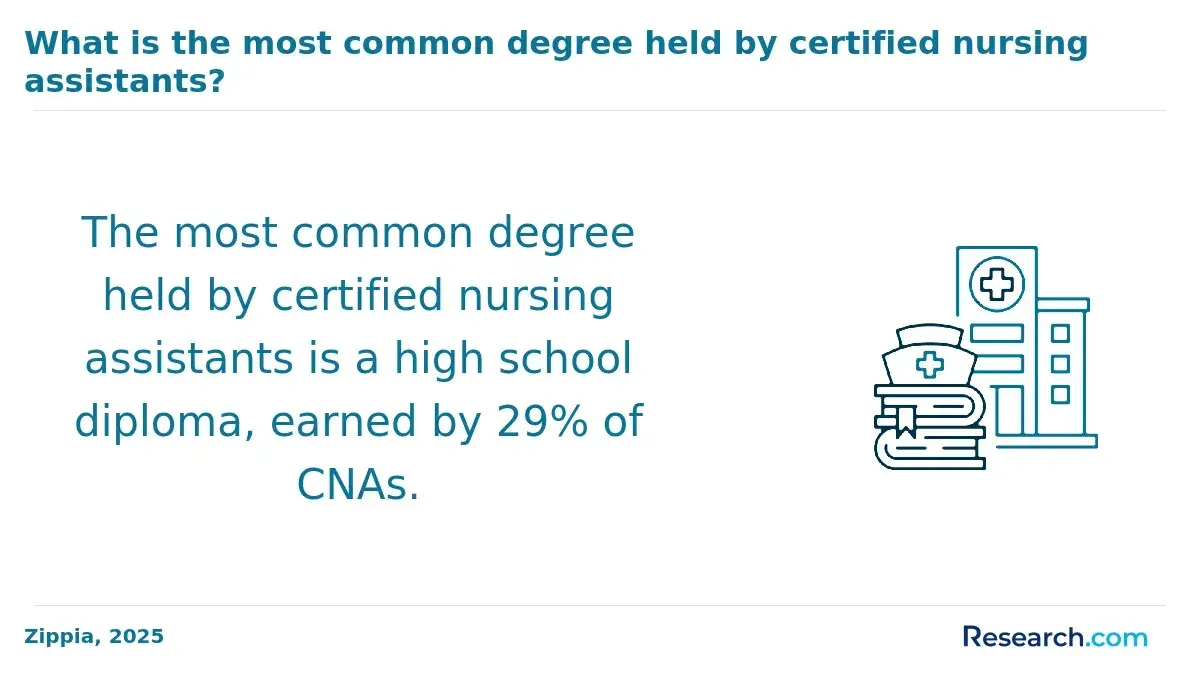
Most applicants should also be prepared for program-level admission requirements, health screening, background checks, and documentation needed for the Virginia Nurse Aide Registry. Although many programs expect a high school diploma or GED, this is commonly a school requirement rather than a universal state prerequisite.
- What education do you need to become a CNA in Virginia?
- What do Virginia CNA classes teach?
- How do you get a CNA license in Virginia?
- How long does the Virginia CNA licensing process take?
- When do Virginia CNAs need to renew certification?
- What continuing education is required for Virginia CNAs?
- Which extra certifications can help Virginia CNAs grow?
- Can CNAs from another state transfer certification to Virginia?
- Where can newly certified nurse aides work in Virginia?
- How much do CNAs earn in Virginia?
- How can Virginia CNAs move into higher nursing careers?
What are the education requirements to become a CNA in Virginia?
Virginia CNA education is built around one main requirement: completing a state-approved nurse aide training program. This matters because only approved training prepares you for the state competency exam and registry eligibility. A short caregiving class, non-approved online certificate, or informal healthcare experience may be useful, but it will not replace the approved nurse aide training requirement.
Virginia-approved CNA programs combine classroom instruction, skills lab practice, and clinical care. The purpose is practical: CNAs help patients with daily needs, observe changes in condition, communicate with licensed nurses, and follow safety and infection-control procedures. Training must prepare students to perform those duties safely with real patients.
| Requirement | What it means for Virginia CNA candidates | Why it matters |
| State-approved nurse aide program | You must complete an approved program with at least 140 hours of training. | Only approved training supports eligibility for Virginia CNA certification. |
| Laboratory practice | Training includes a minimum of 20 laboratory hours for hands-on skill development. | The lab gives students a place to practice procedures before working with patients. |
| Clinical training | Programs include 40 hours of supervised clinical experience in a healthcare setting. | Clinical practice helps students apply classroom learning under supervision. |
| Academic readiness | Most programs expect applicants to have a high school diploma or equivalent, even if the state does not universally mandate it. | Reading, communication, and basic science skills make CNA coursework easier to complete. |
| Competency exam | Graduates must pass both written and practical skills exams. | The exam confirms that candidates can understand core concepts and perform essential aide duties. |
Students who already know they want to move beyond CNA work should think about long-term nursing goals early. CNA training can be a strong first step, but advanced roles require additional education. If you are comparing future nursing specializations, Research.com’s guide to FNP and AGNP career differences explains how advanced practice pathways can diverge after RN preparation.
What subjects are taught in CNA classes in Virginia?
Virginia CNA classes focus on the knowledge and practical routines nurse aides use every shift. The curriculum is not designed to make students independent clinicians. Instead, it prepares them to provide basic nursing support, recognize when a patient needs help, protect patient dignity, and work under appropriate supervision.
Most CNA programs in Virginia cover the following subject areas:
- Nurse aide role and scope of practice: Students learn what CNAs are allowed to do, what must be reported to licensed nurses, and how nurse aides fit into the broader healthcare team.
- Communication skills: Coursework explains how to speak with patients, families, nurses, and other staff while using clear, respectful, and accurate communication.
- Infection prevention: Students practice hand hygiene, personal protective equipment use, standard precautions, and procedures that reduce the spread of illness.
- Patient safety: Training covers fall prevention, safe transfers, emergency response, environmental safety, and proper use of basic equipment.
- Basic nursing care: Students learn common CNA tasks such as taking vital signs, assisting with mobility, observing patients, and documenting relevant information.
- Personal care: Programs teach bathing, grooming, dressing, feeding assistance, toileting, positioning, and other activities of daily living.
- Mental health and social needs: CNA students learn how to support patients with emotional distress, confusion, cognitive impairment, isolation, or behavioral changes.
- Legal and ethical responsibilities: Training includes confidentiality, patient rights, abuse prevention, boundaries, and Virginia-specific regulatory expectations.
- Restorative care basics: Students are introduced to techniques that support mobility, independence, range of motion, and safe use of assistive devices.
- Anatomy and physiology overview: CNA classes provide basic body-system knowledge so aides can understand care tasks and report concerning changes.
Students interested in specialized healthcare work may later branch into other nursing fields. For example, learning about what forensic nurses do can help CNA students see how direct care experience can eventually connect to legal, investigative, and trauma-informed nursing roles.
| Class topic | Typical CNA skill connected to it | Example workplace use |
| Infection control | Hand hygiene and PPE use | Reducing infection risk in hospitals, nursing homes, and home care |
| Communication | Reporting changes in condition | Telling a nurse when a resident becomes confused, weak, or short of breath |
| Personal care | Bathing, feeding, and dressing assistance | Helping residents maintain dignity during daily routines |
| Safety | Transfers and fall prevention | Assisting patients from bed to chair without avoidable injury |
| Restorative care | Mobility support and range-of-motion assistance | Helping patients maintain function after illness, injury, or surgery |
What steps are required to get a CNA license in Virginia?
The Virginia CNA licensing process is straightforward when you follow it in order. The biggest mistake is starting with a program that is not approved or waiting until the end to understand testing and documentation requirements. Before enrolling, confirm that the program qualifies graduates to sit for the Virginia Nurse Aide Competency Exam.
- Confirm basic eligibility. Applicants must be at least 16 years old. Many programs also expect a high school diploma or GED. Health screenings, tuberculosis testing, immunization documentation, and criminal background checks may be required by the program or clinical site.
- Enroll in a Virginia-approved nurse aide training program. Choose a program approved by the Virginia Board of Nursing. The program must include at least 140 hours of training, with classroom learning, skills lab practice, and supervised clinical work.
- Complete all classroom, lab, and clinical requirements. Attendance matters. Missing required hours can delay program completion and exam eligibility.
- Apply for the Virginia Nurse Aide Competency Exam. The exam is administered by Credentia and includes a written knowledge test and a practical skills assessment.
- Pass both exam components. The written exam checks understanding of CNA concepts, while the skills test evaluates whether you can perform selected nurse aide tasks correctly and safely.
- Complete required background screening. State and federal checks help identify disqualifying history, especially issues involving abuse, neglect, or unsafe care.
- Submit required certification information. After training, testing, and screening requirements are satisfied, the Virginia Board of Nursing process leads to placement on the Nurse Aide Registry.
- Keep your certification active. After certification, CNAs must meet renewal, employment, and continuing education expectations to avoid a lapse.
| Step | Best action | Common delay to avoid |
| Choosing a program | Verify state approval before paying tuition. | Enrolling in a course that does not qualify you for the exam. |
| Completing training | Track classroom, lab, and clinical attendance. | Missing required hours and having to make them up later. |
| Scheduling the exam | Start planning as soon as your program gives exam guidance. | Waiting too long and finding limited testing appointments. |
| Background checks | Submit accurate information and respond quickly to requests. | Incomplete documentation or unresolved screening questions. |
| Registry approval | Keep copies of training and testing records. | Assuming the process is finished before registry status is confirmed. |
How long does it take to receive a CNA license in Virginia?
Most Virginia CNA candidates should plan for roughly two to three months from the start of training to official certification, although the exact timeline depends on the program schedule, exam availability, background check processing, and how quickly documents are submitted.
The training portion is often the most predictable part. A state-approved CNA program must include at least 140 hours and commonly takes four to eight weeks. Accelerated programs may move quickly, while evening, weekend, or part-time options can take longer.
After training, candidates need to schedule and pass the Virginia Nurse Aide Certification Exam. Because the exam includes both a written assessment and a hands-on skills evaluation, appointment availability can affect the overall timeline. Once the exam is passed, application processing and background checks commonly add one to three weeks.
| Stage | Typical time mentioned | What can slow it down |
| CNA training program | Four to eight weeks | Part-time schedules, missed hours, limited clinical slots |
| Exam scheduling | Varies by testing availability | Limited appointments or delayed registration |
| State processing and background review | One to three weeks | Incomplete forms, documentation issues, extended background review |
| Total path from training start to certification | Two to three months for many candidates | Exam delays, paperwork errors, program scheduling constraints |
A practical way to reduce delays is to ask your school three questions before enrolling: when clinical hours are scheduled, when graduates are usually eligible to test, and how the program helps students prepare exam paperwork. A six-week program can still take closer to three months if testing appointments are limited or background documentation is not ready.
One Virginia CNA described the wait after training as the hardest part. She completed her coursework in six weeks, but exam availability pushed her timeline closer to three months. Her advice was simple: keep copies of every document, check email often, and communicate with both the school and testing provider as soon as questions come up.
How often do you need to renew your CNA license in Virginia?
Virginia CNAs need to keep certification active to continue working legally as nurse aides. Renewal is more than an administrative task; it confirms that a CNA remains connected to nursing-related work and understands ongoing care expectations.
The renewal details can be confusing because renewal timing, employment verification, and continuing education are often discussed together. Candidates and current CNAs should verify current requirements directly with the Virginia Nurse Aide Registry or the Department of Health Professions before a deadline approaches.
- Renewal frequency: CNAs in Virginia must renew their certification annually.
- Renewal deadline: The due date generally falls on the final day of the month in which the original certification was issued.
- Fees: Publicly available fee details may not be easy to confirm, so CNAs should check directly with the Virginia Nurse Aide Registry or Department of Health Professions.
- Work requirement: To remain eligible, CNAs must have worked in a paid nursing-related position at least once in the two years before certification expiration.
- If the work requirement is not met: A CNA who does not meet the employment requirement may need to pass the competency evaluation again.
If your long-term goal is advanced practice nursing, renewal compliance is only one part of career planning. CNAs who eventually want graduate-level nursing options may benefit from researching accelerated pathways such as 12-month FNP programs, while remembering that those programs require prior nursing education and licensure beyond the CNA level.
What continuing education is required for CNAs in Virginia?
Continuing education helps CNAs maintain safe habits, adapt to workplace expectations, and stay current on essential patient-care practices. It also gives aides a documented way to show that they are still building job-relevant knowledge after initial certification.
Virginia CNAs must complete 12 hours of continuing education each year. Training may cover subjects such as infection control, patient rights, communication, safety practices, and other topics tied to daily nurse aide responsibilities.
| Continuing education item | Virginia CNA expectation | Practical tip |
| Annual hours | 12 hours of continuing education each year | Do not wait until the renewal deadline; spread hours across the year. |
| Common topics | Infection control, patient rights, communication, and related care topics | Choose training that matches your current workplace and future goals. |
| Format | In-person and online courses may be acceptable | Confirm that your employer or registry accepts the course before relying on it. |
| Documentation | CNAs are responsible for keeping proof of completed training | Save certificates, dates, course titles, and provider names. |
Continuing education can also help CNAs test interest in future roles. A CNA who enjoys patient education, chronic disease support, or clinical decision-making may eventually explore nursing degrees. Research.com’s resource on nurse practitioner programs and salary considerations can help readers understand how far the nursing ladder can extend after RN and graduate-level preparation.
What complementary certifications can boost a CNA's career in Virginia?
A CNA credential can lead to stable entry-level healthcare work, but additional training may help aides qualify for broader responsibilities, different care settings, or a clearer path toward nursing school. The right add-on credential depends on the job you want next.
| Career add-on | Best for CNAs who want to | Decision note |
| Medication aide training | Take on medication-related responsibilities where allowed | Make sure the program is state-approved and aligned with your workplace setting. |
| Advanced CNA preparation | Build deeper long-term care or specialty skills | Useful for CNAs who want more responsibility without immediately entering an LPN or RN program. |
| Medical assistant training | Move toward outpatient clinics, front-office support, and basic clinical procedures | Compare duties carefully because medical assistants and CNAs often work in different environments. |
| Specialty continuing education | Strengthen skills in areas such as wound care, dementia care, or palliative care | Short courses can improve confidence, but they do not replace nursing licensure. |
CNAs who want a wider healthcare support role may compare nurse aide training with medical assistant preparation. Research.com’s guide on becoming a medical assistant in Virginia explains how that path differs from CNA work and when it may make sense.
Can out-of-state CNAs transfer their license to Virginia?
Yes. CNAs certified in another state may transfer to Virginia through reciprocity or endorsement if their certification is active and in good standing. Applicants should not have suspensions, disqualifying disciplinary actions, or unresolved registry issues.
Virginia’s endorsement process requires an online application with demographic information, certification history, and any additional verification requested from the original certifying state. The process does not charge a fee, does not require additional exams, and does not require fingerprint-based background checks for out-of-state CNAs.
Processing typically takes 30 to 45 days. Applicants can reduce delays by checking the status of their original certification, entering all information accurately, and responding quickly if Virginia requests more documents.
| Reciprocity factor | Virginia approach | What applicants should do |
| Certification status | Must be active and in good standing | Verify your registry status before applying. |
| Application method | Online endorsement application | Use accurate names, dates, and certification details. |
| Additional testing | No additional exams required | Keep proof of your current certification available. |
| Fees | No fee is charged for the process | Be cautious of third parties charging unnecessary fees. |
| Processing time | Usually 30 to 45 days | Apply before you need to start work, not after a job offer deadline. |
One CNA who moved into Virginia said the process was reassuring because her previous certification was recognized without hidden testing requirements. Her only delay came when the state asked for more information about her work history. Her experience highlights the main lesson for transfer applicants: the process can be simple, but complete documentation still matters.
Which employers hire newly certified nurse aides in Virginia?
Newly certified nurse aides in Virginia can work in several healthcare and residential care settings. The best first job depends on your schedule, comfort level, career goals, and preferred patient population. Hospitals may offer exposure to acute care, while long-term care facilities often provide extensive hands-on experience with daily living support.
| Employer type | Common CNA duties | Best fit for |
| Hospitals | Taking vital signs, helping with mobility, assisting with hygiene, reporting patient changes | CNAs who want fast-paced work and exposure to acute care teams |
| Nursing homes and long-term care facilities | Bathing, dressing, feeding, repositioning, documenting resident needs | CNAs who want consistent patient relationships and strong daily-care experience |
| Assisted living communities | Supporting independence, helping with mobility, providing reminders and personal care | CNAs who prefer residential settings and relationship-based care |
| Home health agencies | One-on-one personal care, companionship, light household support, safety observation | CNAs who are comfortable working independently in clients’ homes |
| Rehabilitation centers | Assisting patients recovering from surgery, illness, or injury while supporting therapy goals | CNAs interested in recovery-focused care and interdisciplinary teamwork |
Before accepting a first CNA job, ask about orientation length, patient-to-aide expectations, weekend requirements, shift differentials, supervision, documentation systems, and whether the employer supports continuing education or tuition assistance.
What is the average salary for CNAs in Virginia?
CNA pay in Virginia depends on experience, employer type, shift, location, and whether the position includes overtime, per diem work, bonuses, or shift differentials. Salary figures should be treated as planning estimates rather than guaranteed outcomes.
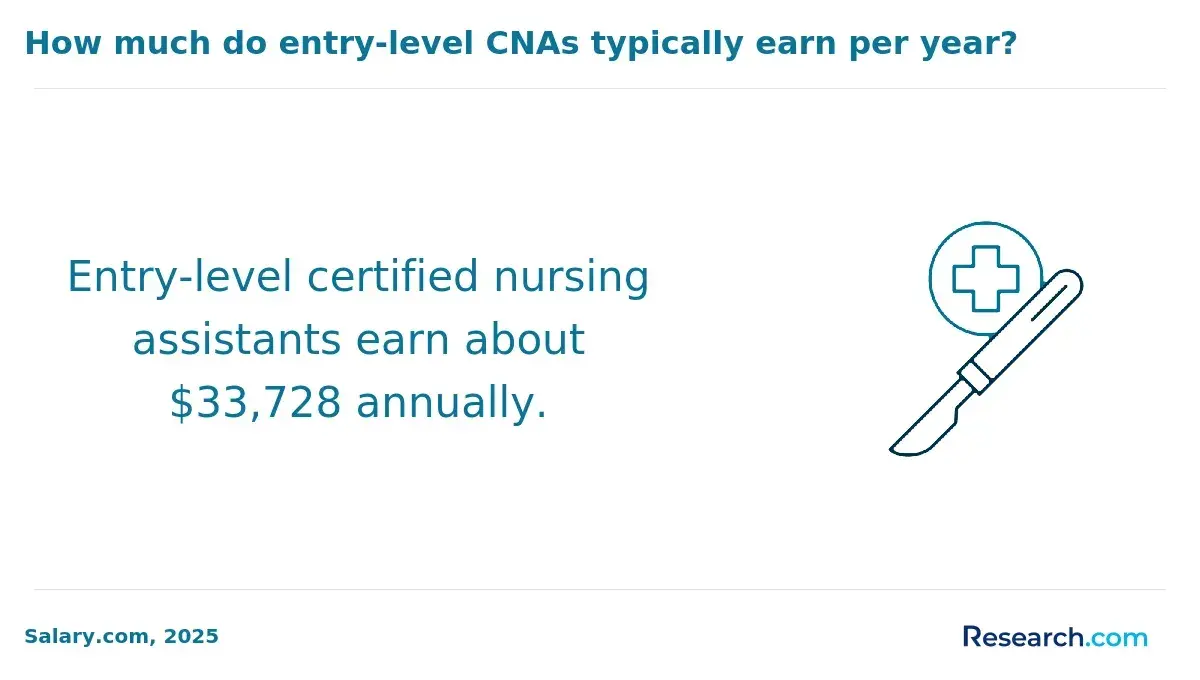
The average annual salary for CNAs in Virginia is approximately $37,150, or about $18 per hour. Reported annual earnings commonly fall between $33,871 and $41,075. Entry-level CNAs may start near $13 per hour, while experienced CNAs or those with specialized skills may earn up to $25 per hour.
| Pay factor | How it can affect earnings | What to compare before accepting a job |
| Experience level | New CNAs often start lower, while experienced aides may qualify for higher wages. | Ask how raises are determined and when performance reviews occur. |
| Work setting | Hospitals often pay more than nursing homes, assisted living, or home health agencies. | Compare workload, benefits, and schedule demands, not just hourly pay. |
| Location | Pay is often higher in Richmond, Virginia Beach, and Arlington than in many rural areas. | Consider commuting costs and local cost of living. |
| Shift and overtime | Nights, weekends, overtime, bonuses, and hazard pay can increase total income. | Confirm whether differentials are guaranteed or occasional. |
| Additional credentials | Specialized skills can help some CNAs qualify for better-paying roles. | Ask employers which certifications they actually reward. |
CNAs who want a major income increase usually need additional nursing education. For those who eventually become RNs and want advanced practice preparation, Research.com’s guide to affordable online RN-to-FNP programs can help with long-term education planning.
How can CNAs in Virginia advance to higher nursing roles?
CNA work can be a valuable starting point for a nursing career because it builds bedside confidence, patient communication skills, and familiarity with healthcare routines. However, moving into higher nursing roles requires formal education, exams, and licensure beyond CNA certification.
| Advancement path | Typical requirement mentioned | How it changes the CNA career path |
| Medication Aide | About 68 hours of instruction and clinical practice through a state-approved program, followed by a certification exam | Allows qualified aides to administer routine medications in approved settings. |
| Licensed Practical Nurse | Completion of a 12-18 month practical nursing program, commonly through a community college | Expands clinical responsibilities and increases earning potential compared with entry-level CNA work. |
| Registered Nurse | Completion of an ADN or BSN, generally taking two to four years, followed by the NCLEX-RN exam | Provides a broader scope of practice, more clinical authority, and access to many nursing specialties. |
| Advanced CNA certification | Additional Board-approved education | Strengthens skills and may support better job opportunities in select settings. |
| Specialty training | Focused education in areas such as wound care or palliative care | Can help CNAs become more competitive for specialized aide roles. |
The best next step depends on your timeline and finances. A medication aide path may be faster than nursing school, while LPN and RN programs require a larger commitment but open more clinical doors. If you are unsure, spend time working as a CNA first, then ask nurses in your workplace about their education path, schedule, and costs.
What Do CNAs in Virginia Say About Their Career?
- "My CNA training at Richmond Health Academy gave me practical experience and helped me feel ready for my first healthcare role in a local school. Supporting students and staff each day has shown me how important basic health services are in education settings. I appreciate that Virginia offers accessible training options, and I see CNA work as a stable place to begin while I keep building my skills." Aaliyah
- "Becoming a certified nurse aide and working in a school setting has tested me, but it has also been deeply meaningful. Virginia’s diverse communities have helped me learn how to communicate with students and families from many backgrounds. My CNA program at Tidewater Healthcare Academy prepared me for the health concerns I see at work, and the role has strengthened my patience, empathy, and confidence." Marcus
- "Blue Ridge Medical Institute gave me the foundation I needed to begin a service-focused healthcare career. Working in rural Virginia has taught me to be flexible and resourceful, especially when students and families need support. I like knowing that my work contributes to student health, school success, and community well-being, and I plan to keep learning as I grow in the field." Lan
Related Articles for Nearby States
- 2027 Certified Nurse Aide (CNA) License Education Requirements in West Virginia
- 2027 Certified Nurse Aide (CNA) License Education Requirements in Maryland
- 2027 Certified Nurse Aide (CNA) License Education Requirements in North Carolina
- 2027 Certified Nurse Aide (CNA) License Education Requirements in Tennessee
- 2027 Certified Nurse Aide (CNA) License Education Requirements in Kentucky
- 2027 Certified Nurse Aide (CNA) License Education Requirements in Pennsylvania
- 2027 Certified Nurse Aide (CNA) License Education Requirements in South Carolina
- 2027 Certified Nurse Aide (CNA) License Education Requirements in Ohio
- 2027 Certified Nurse Aide (CNA) License Education Requirements in Delaware
- 2027 Certified Nurse Aide (CNA) License Education Requirements in New Jersey
Common Mistakes to Avoid When Becoming a CNA in Virginia
- Choosing a program without checking approval: A low-cost or convenient class is not useful if it does not qualify you for the Virginia CNA exam.
- Looking only at tuition: Ask about books, uniforms, background checks, health screenings, exam fees, transportation to clinical sites, and make-up hour policies.
- Assuming online training is enough: CNA preparation requires hands-on lab and clinical practice. Be cautious with programs that appear to be fully online without supervised clinical components.
- Waiting to schedule the exam: Testing availability can extend the timeline, so understand your school’s exam process before graduation.
- Ignoring renewal requirements: Keep records of work history, continuing education, and certification dates so you do not accidentally let your credential lapse.
- Assuming CNA pay is the same everywhere: Compare setting, shift, benefits, overtime rules, commute, and workload before choosing an employer.
- Not planning the next step: If you want to become an LPN, RN, or advanced practice nurse later, ask whether employers offer tuition support or flexible scheduling.
Questions to Ask Before Enrolling in a Virginia CNA Program
- Is the program approved for Virginia CNA certification eligibility?
- How many total hours does the program include, and how are classroom, lab, and clinical hours scheduled?
- Where do clinical rotations take place, and what transportation will I need?
- What are the total costs beyond tuition?
- What health screenings, immunizations, background checks, or drug tests are required?
- What percentage of students complete the program and pass the CNA exam?
- Does the school help graduates register for the Credentia exam?
- Are evening, weekend, or part-time schedules available?
- Does the program have employer partnerships with hospitals, nursing homes, or home health agencies?
- What happens if I miss a class, lab, or clinical day?
Key Insights
- Virginia CNA candidates must complete a state-approved nurse aide program with at least 140 hours of training, including lab and clinical practice.
- The CNA exam has both written and skills components, so students should prepare for knowledge questions and hands-on performance.
- Many candidates finish the full process in about two to three months, but exam scheduling and background checks can extend the timeline.
- CNAs in Virginia must pay attention to renewal, work-history, and continuing education expectations to keep certification active.
- New CNAs can work in hospitals, long-term care, assisted living, home health, and rehabilitation settings, but each workplace has different demands.
- Virginia CNA pay varies by experience, location, employer, shift, and additional credentials; salary figures are estimates, not guarantees.
- CNA experience can support advancement into medication aide, LPN, RN, advanced CNA, or specialty care paths, but each step requires additional preparation.
- The smartest first move is to verify program approval, understand total costs, and choose training that fits both your immediate job goal and long-term nursing plans.
References:
- CNA license revocation and future education considerations - Legal Answers https://www.avvo.com/legal-answers/i-had-my-cna-licence-revoked-recently-and-i-am-cur-677908.html
- CNA Salary in Virginia Guide: Annual Incomes, Etc. [2024] https://nursa.com/salary/cna/virginia
- Virginia CNA Requirements - NursingHome411 https://nursinghome411.org/cna-reqs/reqs-va/
- Certified Nurse Aid | Virginia Highlands Community College https://www.vhcc.edu/certified-nurse-aid
- Per Diem Nursing Jobs for Certified Nurse Assistant in Virginia up to $33 | AMN Healthcare https://www.amnhealthcare.com/careers/nursing/apply/per-diem-certified-nurse-assistant-nursing-jobs-in-virginia/
- Certified nursing assistant jobs in Virginia Beach, VA, October 2025 | Glassdoor https://www.glassdoor.co.uk/Job/virginia-beach-va-certified-nursing-assistant-jobs-SRCH_IL.0,17_IC1130324_KO18,45.htm
- Advanced Certified Nursing Aide https://leadingagevirginia.org/page/AdvancedCertifiedNursingAide
- Travel Nursing: How to Transfer CNA License to Another State https://www.careerstaff.com/clinician-life-blog/how-to-transfer-your-cna-license-to-another-state/
- Certified Nurse Aide – Healthcare – Virginia Western Community College https://www.virginiawestern.edu/academics/health-professions/cna/
- PHAP Perspective: My Experience as a Certified Nurse Aide (CNA)/Patient Care Technician | UVA Career Center https://career.virginia.edu/phap-perspective-my-experience-certified-nurse-aide-cnapatient-care-technician
Other Things You Should Know About CNA License Education Requirements in Virginia
In Virginia, CNA certification in 2027 requires completing at least 40 clinical hours. These hours are part of a state-approved nurse aide training program and allow students to gain hands-on experience under supervision, crucial for developing practical skills.
The Virginia Board of Nursing approves Nurse Aide Education Programs for CNA training. Programs must include at least 120 hours of instruction, with classroom and clinical components, and meet state curriculum standards before students can qualify for the state competency evaluation.
Yes, CNA training programs in Virginia in 2027 typically require students to undergo health screenings and provide proof of immunizations such as hepatitis B and tuberculosis tests. These health prerequisites ensure safety in clinical settings.


