
2027 How to Become a Nurse in Washington

Co-Founder and Chief Data Scientist
Choosing a nursing path in Washington means weighing several decisions at once: which credential to pursue, how long school will take, whether an online or campus program fits your life, how licensing works, and what kind of job market you are entering. The need is real: Washington is projected to face a shortage of over 20,000 registered nurses by 2028, even though registered nurses in the state earn an average salary of approximately $111,030 per year. This guide explains how to become a nurse in Washington, compares the main education and license options, and highlights the practical questions you should ask before enrolling in a program or applying for licensure.
Quick Answer: How Do You Become a Nurse in Washington?
To become a nurse in Washington, you must complete an accredited nursing program, pass the appropriate NCLEX exam, apply for licensure through the Washington State Department of Health, complete the required background check, and maintain your license through renewal and continuing education. The fastest nursing route is usually practical nursing for LPNs, while the most common RN routes are an Associate Degree in Nursing or a Bachelor of Science in Nursing. Advanced roles such as nurse practitioner, nurse midwife, or nurse anesthetist require graduate education and national certification.
Key Things You Should Know About Becoming a Nurse in Washington
- Washington’s nursing workforce is under pressure, with a projected deficit of over 20,000 registered nurses by 2028. That shortage can create strong hiring demand, but it may also mean heavier workloads, burnout risk, and staffing challenges in some facilities.
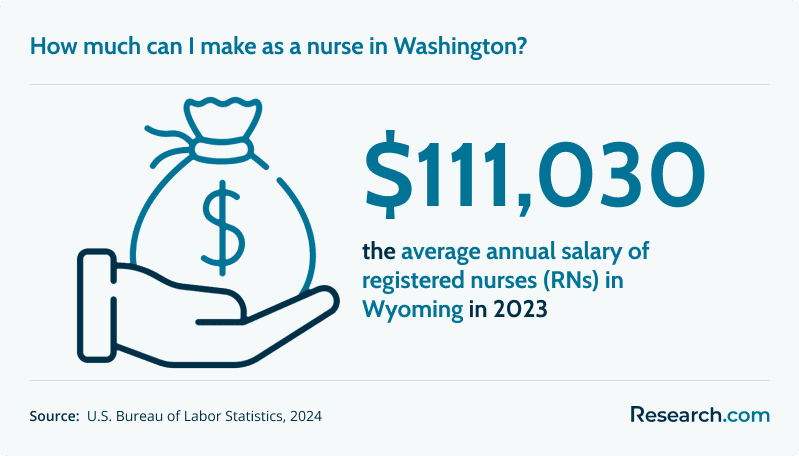
- Registered nurses in Washington earn an average salary of approximately $111,030 per year, which is above the national average. Pay still varies by region, experience level, employer, shift, and specialty, so students should compare likely earnings with tuition, debt, and local living costs.
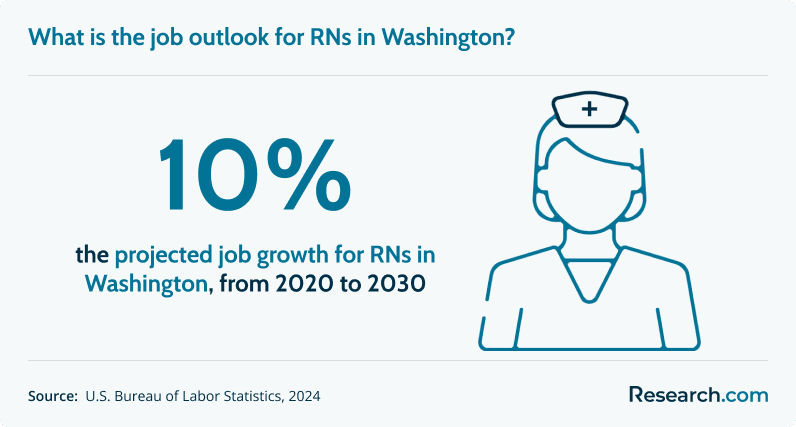
- The employment outlook for nurses in Washington is strong, with projected growth of 10% from 2020 to 2030. This demand is tied to population aging, expanded healthcare needs, and continued reliance on nurses in hospitals, clinics, long-term care, and community settings.
- You do not need a four-year degree to start every nursing role. Washington has practical nursing, associate degree, bachelor’s degree, bridge, and graduate pathways, but each option leads to a different scope of practice and career ceiling.
- Financial aid, scholarships, and loan repayment programs may reduce the cost of nursing education in Washington. Students should still check eligibility rules, service obligations, accreditation, transfer policies, and total program costs before enrolling.
- Steps to become a nurse in Washington
- Education requirements for Washington nurses
- Washington nursing licensing requirements
- Types of nursing licenses in Washington
- Compact nursing practice in Washington
- Practicing without a nursing license in Washington
- Alternative healthcare careers in Washington
- Affordable advanced nursing education options
- How to become a nurse practitioner in Washington
- Challenges Washington nurses face
- Non-clinical career options for nurses
- Nursing programs available in Washington
- Innovative nursing education models
- Transferring an out-of-state nursing license
- Renewal and continuing education requirements
- How to become a nurse midwife in Washington
- How to become an LVN or LPN in Washington
- Current state of nursing in Washington
- Washington nursing job outlook
- Most in-demand nursing specializations and job outlook context
What are the steps to becoming a nurse in Washington?
The basic path to nursing practice in Washington is straightforward, but your timeline depends on the license you want. An LPN route is usually shorter and prepares you for supervised practical nursing. An RN route takes longer but opens broader clinical responsibilities, more job settings, and stronger advancement options. Graduate nursing paths add another layer of education, certification, and specialized practice authority.
- Choose the nursing role you want. Decide whether you want to become an LPN, RN, ARNP, nurse midwife, nurse anesthetist, or another nursing professional. This choice determines the degree, exam, and license you need.
- Complete an approved nursing program. Future LPNs generally complete a practical nursing program. Future RNs usually complete an ADN or BSN. Because demand is high, some applicants also compare admission-friendly options such as the easiest nursing programs for admission, but ease of entry should never be the only selection factor.
- Prepare for and pass the NCLEX. LPN candidates take the NCLEX-PN. RN candidates take the NCLEX-RN. Passing the correct exam is required before independent licensed practice.
- Apply for Washington licensure. Submit the state application, education documentation, exam information, fees, and required background check materials through the appropriate Washington licensing process.
- Start with the right first job. New nurses often benefit from employers that offer residencies, mentorship, specialty orientation, manageable patient assignments, and support for continuing education.
- Maintain and build your credential. Nursing practice changes constantly, so license renewal, continuing education, specialty certifications, and graduate study can all affect long-term opportunities.
Students planning an advanced practice future should think beyond the first license. For example, an RN who wants to become a family nurse practitioner may eventually need to compare certifications such as FNP-BC vs FNP-C and choose a graduate program aligned with that goal.
| Path | Typical starting credential | Best fit | Main trade-off |
| Practical nursing | LPN | Students who want a shorter entry route into patient care | More limited scope and advancement options than RN practice |
| Associate degree nursing | RN | Students seeking a lower-cost RN route through a community college or similar program | Some employers may prefer or require a BSN |
| Bachelor’s nursing | RN | Students who want stronger preparation for hospital practice, leadership, and graduate school | Usually requires more time and tuition than an ADN |
| Graduate nursing | ARNP or other advanced role | Licensed RNs pursuing specialization, prescribing authority, leadership, research, or teaching | Requires additional admission requirements, clinical hours, and certification steps |
What are the educational requirements for becoming a nurse in Washington?
Washington nursing education requirements depend on the license and role. The key is to choose a program that is properly approved or accredited, prepares you for the correct exam, and matches your career goals. A less expensive or faster program is not automatically better if it limits transfer credit, graduate admission, licensure eligibility, or employer acceptance.
- Associate Degree in Nursing (ADN): An ADN is commonly offered by community colleges and is often completed in about two years. Graduates can sit for the NCLEX-RN and apply for RN licensure. Many nurses later complete a bachelor’s degree through accelerated RN to BSN online programs.
- Bachelor of Science in Nursing (BSN): A BSN usually takes four years at a college or university. It prepares graduates for the NCLEX-RN and typically includes broader coursework in leadership, public health, evidence-based practice, and complex patient care. Many hospitals and healthcare systems prefer or require BSN-prepared nurses for certain roles.
- Master of Science in Nursing (MSN): Nurses pursuing advanced practice roles such as nurse practitioner or clinical nurse specialist generally need an MSN or higher. Some career changers also investigate quick online MSN for non-nurses, especially when they already hold a non-nursing bachelor’s degree.
- Doctor of Nursing Practice (DNP) and Doctor of Philosophy in Nursing (PhD): A DNP is practice-focused and often supports advanced clinical leadership, while a PhD is research-focused and commonly leads to academic, scientific, or policy work.
Accreditation matters because it can affect licensure eligibility, graduate school admission, federal financial aid access, transfer credit, and employer confidence. Before applying, confirm whether the program is approved for Washington licensure and whether its clinical placements are available in the state or region where you plan to practice.
How to choose the right nursing degree in Washington
- Pick the license first. Do not choose a degree until you know whether your target role requires an LPN, RN, or advanced practice credential.
- Check clinical placement support. Online coursework can be flexible, but nursing programs still require hands-on clinical learning.
- Ask about NCLEX preparation. Strong programs should explain how they support students before the licensing exam.
- Confirm transfer and bridge options. If you start with an ADN or LPN program, ask whether credits apply smoothly toward future RN or BSN study.
- Compare total cost, not just tuition. Include fees, books, uniforms, background checks, testing, transportation, technology, and lost work time.
What types of nurses can legally practice in Washington?
Washington recognizes several nursing and nursing-related roles, each with its own training expectations and practice limits. Understanding these distinctions helps students avoid enrolling in a program that does not lead to the responsibilities or autonomy they want.
- Registered Nurses (RNs): RNs assess patients, coordinate care, administer medications, educate patients and families, and collaborate with physicians and other clinicians. RN candidates complete an accredited nursing program such as an ADN or BSN and pass the NCLEX-RN.
- Licensed Practical Nurses (LPNs): LPNs deliver basic nursing care under appropriate supervision. Their work may include monitoring vital signs, supporting activities of daily living, administering certain medications, and documenting patient status. LPNs complete a practical nursing program and pass the NCLEX-PN.
- Advanced Registered Nurse Practitioners (ARNPs): This group includes nurse practitioners, clinical nurse specialists, nurse anesthetists, and nurse midwives. ARNPs need graduate nursing education and national specialty certification, and their scope may include diagnosis, treatment, prescribing, and specialized care depending on role and preparation.
- Certified Nursing Assistants (CNAs): CNAs are not licensed nurses, but they are important members of the care team. They complete state-approved training and competency requirements and often provide direct support with daily patient needs.
Advanced nursing roles can lead to substantially different salary outcomes. In 2023, nurse anesthetists had the highest salary among nurse occupations in Washington, earning around $246,350 per year. The chart below provides additional salary context.
What are the licensing requirements for nurses in Washington?
Washington nursing licenses are issued through the state’s nursing regulatory process. The requirements are designed to verify education, exam readiness, professional fitness, and public safety. Applicants should treat licensing as a formal process rather than a final paperwork step after graduation.
- Complete the required education. RNs generally need an ADN or BSN, while LPNs complete a practical nursing program. RNs who begin with an associate degree can later use bridge options, including some RN to BSN without clinicals, when appropriate for their goals and eligibility.
- Pass the correct NCLEX exam. RN applicants take the NCLEX-RN. LPN applicants take the NCLEX-PN. These exams evaluate whether candidates can practice safely at entry level.
- Submit the state application. Applicants provide education verification, exam results, identifying information, and a non-refundable application fee, which is currently around $200.
- Complete fingerprinting and background checks. Washington requires a criminal background review as part of licensure to help protect patients and the public.
- Budget for related expenses. In addition to the application fee, candidates may need to pay for fingerprinting, exam registration, test preparation, transcripts, and any expedited services they choose.
Licensing requirements are manageable when planned early. The most common avoidable delays come from missing transcripts, incomplete background check steps, unresolved disciplinary disclosures, or applying before the school has submitted the required documentation.
| Licensing step | Why it matters | Practical tip |
| Program completion | Shows that you finished the required nursing education | Confirm state approval before enrolling, not after graduation |
| NCLEX exam | Measures entry-level nursing competence | Use your school’s review resources and schedule preparation time |
| Application and fee | Starts the state licensure review | Check all names, dates, and documents for consistency |
| Background check | Supports patient safety and public trust | Disclose required information accurately and keep records |
| License renewal | Keeps your authorization to practice active | Track deadlines and continuing education throughout the cycle |
What types of nursing licenses are available in Washington?
Washington offers nursing credentials for different levels of training and responsibility. The right license depends on how much independence you want, how quickly you want to enter the workforce, and whether you plan to advance into specialized or graduate-level practice.
- Licensed Practical Nurse (LPN): This entry-level nursing license typically follows a practical nursing program lasting about one year. LPNs provide basic care under supervision and often work in long-term care, clinics, rehabilitation settings, and related environments.
- Registered Nurse (RN): RN candidates complete an associate or bachelor’s nursing degree and pass the NCLEX-RN. RNs have a broader scope than LPNs, including patient assessment, care planning, education, and coordination. The initial licensing fee for RNs is $138 for a single-state license and $203 for a multistate license. The multistate option allows eligible RNs and LPNs to practice in Washington and 40 other participating states.
- Advanced Registered Nurse Practitioner (ARNP): ARNPs complete graduate nursing education and specialty preparation. Depending on their role, they may diagnose conditions, treat patients, prescribe medication, and provide primary, acute, maternal, psychiatric, or specialty care.
- Nursing Technician (NTEC): This credential supports individuals who perform defined nursing-related tasks while they are still building toward broader nursing qualifications. It can provide exposure to clinical environments, but it is not the same as full LPN or RN licensure.
Each license has its own scope of practice. Students should compare the day-to-day work of each credential before choosing a program because upgrading later may require additional coursework, clinical hours, exams, and fees.
In 2023, Washington had around 65,030 RNs and 6,260 LPNs. The chart below provides more workforce detail.
Can a Compact nurse practice in Washington?
Yes. Washington joined the Nurse Licensure Compact on July 24, 2023. This means nurses who hold an eligible multistate license can practice in Washington without obtaining a separate single-state Washington license, as long as they follow compact rules and meet applicable requirements.
- Multistate practice is more flexible. A compact license can allow a nurse to work across participating states without repeatedly applying for separate licenses, which is especially useful for travel nurses, telehealth nurses, and nurses near state borders.
- Your primary state of residence matters. Compact practice is tied to a nurse’s primary state of residence. A nurse who moves to Washington has a 60-day window to update that primary state of residence.
- Washington multistate applications opened after implementation. Starting January 31, 2024, nurses could apply for a Washington multistate license. The review process is expected to take two to three weeks and includes an FBI background check plus the Uniform Multistate License Requirements.
The compact makes mobility easier, but it does not remove professional responsibility. Nurses still need to understand the laws, employer policies, documentation standards, and scope-of-practice rules that apply where the patient receives care. For nurses considering leadership roles beyond bedside practice, options such as the fastest executive MHA programs may support a transition into administration or healthcare operations.
What are the most in-demand nursing specializations in Washington?
Washington’s nursing demand is not limited to general hospital roles. Some specialties are especially important because of population aging, mental health needs, high-acuity care, and gaps in primary and community-based services.
- Geriatric nursing: Older adults often need complex medication management, chronic disease monitoring, mobility support, discharge planning, and family education. Nurses with elder care experience may find opportunities in long-term care, home health, primary care, and hospital units serving older patients.
- Mental health nursing: Psychiatric and behavioral health needs continue to shape staffing demand. Psychiatric mental health nurse practitioners may be especially relevant where access to mental healthcare is limited.
- Acute care nursing: Intensive care, emergency, and specialty hospital settings need nurses who can manage rapidly changing patient conditions, use advanced equipment, and collaborate in high-pressure teams.
- Primary care and family practice: Nurse practitioners trained in family care, women’s health, and pediatrics can help expand access in clinics and community settings.
If you are considering advanced practice, compare programs carefully by specialty, clinical placement support, certification preparation, and state authorization. Researching the best NP programs in Washington can help you narrow options aligned with family care, women’s health, pediatrics, mental health, or other practice areas.
Can you practice as a nurse without a license in Washington?
No. You cannot legally practice as a nurse in Washington without the appropriate license. Nursing licensure is not just an administrative requirement; it protects patients by confirming that the practitioner has completed approved education, passed a competency exam, and met state standards for safe practice.
- Patient safety depends on verified competence. Unlicensed practice can place patients at risk because nursing decisions often involve medication, assessment, documentation, triage, and clinical judgment.
- Professional titles are regulated. A person cannot present themselves as an LPN, RN, ARNP, or other licensed nursing professional unless they hold the required credential.
- Support roles are different from nursing practice. Volunteering, working as a CNA, or serving in a healthcare support job can build experience, but these roles do not authorize independent nursing practice.
One Washington nurse described learning this distinction while volunteering in a clinic during nursing school. She could support the team, observe patient care, and learn from licensed staff, but she could not make nursing judgments or administer medications as a nurse until her license was issued. That boundary can feel frustrating for students, but it is essential: the authority to practice comes only after the state verifies that the nurse is qualified.
Are there alternative healthcare careers available in Washington?
Yes. If you are drawn to healthcare but unsure that nursing is the best fit, Washington offers other clinical and administrative paths. Pharmacy, medical billing and coding, health information, therapy support, public health, and healthcare administration each involve different education, licensure, and work environments. For example, learning how to become a pharmacist in Washington can help you compare nursing with a medication-focused doctoral career that has a separate regulatory pathway.
How can I secure affordable advanced nursing education in Washington?
Advanced nursing education can be expensive, so affordability should be evaluated before enrollment. Look beyond advertised tuition and compare fees, clinical placement costs, travel, books, technology, certification exam preparation, and the income you may lose if you reduce work hours. Nurses considering doctoral-level clinical education can also compare flexible options such as online DNP programs cheap, while confirming accreditation, state authorization, and clinical support.
Ways to reduce nursing education costs
- Ask employers about tuition reimbursement, nurse residency benefits, and education partnerships.
- Apply for scholarships, grants, and loan repayment programs tied to nursing shortages or service commitments.
- Use transfer credits when possible, especially in RN-to-BSN or graduate bridge pathways.
- Choose a program with clinical placements near your home or workplace to reduce travel costs.
- Compare completion timelines because a cheaper program can become more expensive if it delays graduation or licensure.
How can I become a nurse practitioner in Washington?
To become a nurse practitioner in Washington, you generally need an active RN license, graduate nursing education in a nurse practitioner specialty, supervised clinical preparation, national certification, and state recognition as an advanced practice nurse. The exact path depends on your chosen population focus, such as family practice, pediatrics, psychiatric mental health, women’s health, or acute care. For a dedicated step-by-step overview, review the nurse practitioner education requirements in Washington.
What challenges do nurses face in Washington and how can they overcome them?
Washington nurses may benefit from strong demand, but demand also brings pressure. Staffing shortages, high patient acuity, administrative burden, long shifts, rural access gaps, and technology changes can all affect job satisfaction and retention. The solution is not simply to “work harder.” Nurses need supportive employers, safe staffing practices, mentorship, mental health resources, and realistic career planning.
| Challenge | Why it matters | Better response |
| Burnout and workload | High demand can increase stress and turnover | Seek employers with mentorship, staffing transparency, and strong orientation |
| Cost of education | Debt can limit career flexibility | Compare total program cost, aid, employer support, and loan repayment options |
| Clinical placement limitations | Delayed placements can delay graduation | Ask programs how placements are arranged before enrolling |
| Rapid technology change | Telehealth, EHRs, and simulation tools affect daily work | Choose continuing education that builds digital and clinical confidence |
| Career stagnation | Some nurses want growth beyond bedside roles | Consider certification, leadership training, or advanced programs such as a 12-month FNP program online |
How can nurses expand their career options beyond clinical roles in Washington?
Nurses who want to move away from bedside care can use their clinical background in administration, quality improvement, utilization review, case management, informatics, public health, education, compliance, and health information roles. These paths may require additional training, but they can be a good fit for nurses who enjoy systems, documentation, leadership, or operations. If you are considering administrative healthcare work, learning how to become a medical biller and coder in Washington can help you evaluate one non-clinical option.
What nursing programs are available in Washington?
Washington students can choose from practical nursing, ADN, BSN, RN-to-BSN, direct-entry, MSN, DNP, and specialty graduate programs. The best option depends on your current education, target license, schedule, budget, and preferred learning format. Students interested in practical nursing can start by comparing online LPN programs in Washington, while remembering that even online nursing programs must include hands-on clinical training.
Questions to ask before choosing a Washington nursing program
- Is the program approved for the license I want in Washington?
- Is the school institutionally accredited, and is the nursing program properly accredited or approved?
- Where are clinical placements located, and who is responsible for securing them?
- What are the program’s NCLEX preparation resources and student support services?
- Can I transfer credits into a future BSN, MSN, or DNP program?
- What is the full cost after tuition, fees, supplies, testing, transportation, and lost work time?
- Does the program meet requirements if I later move or use a compact license?
How can innovative educational models future-proof my nursing career in Washington?
Nursing education is increasingly shaped by hybrid learning, simulation labs, telehealth exposure, electronic health record training, and competency-based skill development. These tools can help students practice decision-making before entering high-stakes clinical environments. They do not replace patient care experience, but they can strengthen preparation when combined with well-supervised clinical rotations. To compare flexible options, review the best online nursing programs in Washington.
Can I transfer my out-of-state nursing license to Washington?
Yes, nurses licensed in another state may be able to obtain Washington licensure by endorsement if they meet state requirements. Applicants usually need credential verification, proof of current or recent practice when required, background review, and a clear or explainable disciplinary history. Because Washington participates in the Nurse Licensure Compact, some nurses may also qualify for multistate practice depending on their primary state of residence and license type. For a focused overview, review the requirements for nursing licensure in Washington.
What are the licensure renewal and continuing education requirements for nurses in Washington?
Washington nurses must keep their licenses active by meeting renewal and continuing education rules set by the state nursing authority. Requirements can change, so nurses should verify current renewal deadlines, continuing education expectations, and any mandatory topics directly with official state resources before each renewal cycle. Nurses who want to combine renewal planning with degree advancement can also compare the best nursing schools in Washington.
How can I become a nurse midwife in Washington?
To become a nurse midwife in Washington, you need graduate-level nursing education focused on maternal, reproductive, prenatal, birth, postpartum, and newborn care. You also need appropriate clinical preparation, national certification, and state authorization for advanced practice. Because nurse midwifery involves both independent judgment and collaborative care, students should choose programs with strong clinical placements and clear certification outcomes. For a complete path, see how to become a nurse midwife in Washington.
How can I become an LVN in Washington?
Washington typically uses the title Licensed Practical Nurse rather than Licensed Vocational Nurse, but the practical nursing pathway is the closest equivalent. To enter this role, you complete a state-approved practical nursing program, finish required clinical training, pass the NCLEX-PN, and apply for licensure. Before enrolling, confirm program approval, clinical placement details, exam preparation support, and total cost. For more information on this pathway, review how to become an LVN in Washington.
What is the state of nursing in Washington?
Nursing in Washington is marked by strong demand, high compensation relative to many states, and serious workforce challenges. Hospitals, clinics, long-term care facilities, home health agencies, outpatient centers, and community health organizations all rely on nurses, but staffing pressure remains a concern in both urban and rural areas.
- Workforce demand is high. The state needs nurses across acute care, outpatient, home health, long-term care, mental health, and community-based settings.
- Licensed nurse supply is substantial but uneven. Washington has a large number of licensed nurses, yet shortages can still occur by region, specialty, shift, or facility type.
- Burnout remains a major issue. High turnover, rising patient complexity, and the long-term effects of the COVID-19 pandemic have contributed to stress in parts of the workforce.
- Cost of living affects career decisions. Areas such as Seattle and Bellevue may offer higher salaries, but housing and living costs can reduce the practical value of that pay. Rural positions may have different trade-offs, including access, commuting, and staffing support.
- Hospitals remain major employers. Nursing homes, outpatient care centers, home health agencies, mental health services, and community health organizations also create important employment opportunities.
As of 2023, the average annual salary for registered nurses in Washington is around $111,030, which is higher than the national average of approximately $77,000. New nurses should still evaluate pay in context: specialty, location, shift differentials, union environment, benefits, student debt, and living expenses can all change the real value of a job offer.
What is the job outlook for nursing in Washington?
The nursing job outlook in Washington is strong. According to the Washington State Employment Security Department, registered nurse employment is projected to grow by approximately 10% from 2020 to 2030. Demand is supported by an aging population, healthcare technology, preventive care, chronic disease management, and continued need for nurses in hospitals, outpatient care, home health, and long-term care settings.
That outlook does not mean every job will be equally attractive. New graduates should compare orientation length, patient ratios, specialty training, schedule expectations, union representation, benefits, tuition support, and advancement opportunities. A strong labor market helps, but choosing the right first employer can affect confidence, retention, and long-term career growth.
Common mistakes to avoid when becoming a nurse in Washington
- Choosing a program without checking approval or accreditation. This can create licensure, transfer, or employment problems later.
- Looking only at tuition. Fees, supplies, commuting, exam costs, and lost income can change the total price significantly.
- Assuming online means fully online. Nursing programs require clinical experience, and students must know where and how placements are completed.
- Ignoring local cost of living. A higher salary in an expensive city may not stretch as far as expected.
- Assuming salary outcomes are guaranteed. Pay depends on role, specialty, employer, location, experience, shift, and credentials.
- Waiting too long to plan advancement. If you want an NP, midwife, CRNA, leadership, or teaching role, choose early programs that support future progression.
- Relying only on rankings. Rankings can help you build a shortlist, but licensure fit, clinical placement quality, cost, and student support matter more.
What nurses say about becoming a nurse in Washington
- Becoming a nurse in Washington has been deeply rewarding for me. I value the emphasis on continuing education and the chance to care for patients from many backgrounds. At the same time, living in a city like Seattle can be expensive, so salary needs to be evaluated against rent, commuting, and everyday costs. Karla
- I entered nursing in Washington because I wanted to serve a rural community. The work is meaningful, and I can see the difference our clinic makes. Still, staffing is a real concern in underserved areas, and nurses need support systems that make the workload sustainable. James
- The teamwork among clinicians here has been one of the best parts of my career. Washington’s nursing practice environment gives nurses room to advocate for patients, but rising demand also raises serious questions about burnout and long-term job satisfaction. Linda
Related Articles for Nearby States
- 2027 How to Become a Nurse in Oregon
- 2027 How to Become a Nurse in Idaho
- 2027 How to Become a Nurse in Montana
- 2027 How to Become a Nurse in California
- 2027 How to Become a Nurse in Nevada
- 2027 How to Become a Nurse in Utah
- 2027 How to Become a Nurse in Wyoming
- 2027 How to Become a Nurse in Arizona
- 2027 How to Become a Nurse in Colorado
- 2027 How to Become a Nurse in New Mexico
References
- wcnursing.org (16 Apr 2020). Nursing Degrees. wcnursing.org
- Washington Center for Nursing nursing degree information; nursing.wa.gov (n.d.). Washington State Board of Nursing. nursing.wa.gov
- Washington nursing education resource; Washington nursing regulatory resource; Snapp, B., Moore, T., Wallman, C., & Staebler, S. (2021). 2020 Neonatal Nurse Practitioner Workforce Survey. Advances in Neonatal Care, 21, 242 - 246. ANC.
Key Insights
- Washington offers several nursing entry points, but the right path depends on your target role: LPN for faster entry, ADN or BSN for RN practice, and graduate education for advanced practice.
- The state’s projected shortage of over 20,000 registered nurses by 2028 creates opportunity, but students should also consider workload, burnout risk, location, and employer support.
- Registered nurses in Washington earn an average of approximately $111,030 per year, but pay should be compared with local living costs, debt, benefits, specialty, and schedule.
- Licensure requires more than graduation. You must pass the NCLEX, complete the application process, satisfy background check requirements, and renew your license properly.
- Washington’s participation in the Nurse Licensure Compact improves mobility for eligible nurses, especially those working across state lines or in telehealth.
- Program choice is the biggest early decision. Confirm approval, accreditation, clinical placement support, NCLEX preparation, total cost, and transfer options before enrolling.
- Advanced and specialized roles such as nurse practitioner, nurse midwife, psychiatric mental health nursing, geriatric nursing, and acute care can expand opportunities, but they require careful planning and additional credentials.
Other Things You Need to Know About Nursing in Washington
In 2027, to become a nurse in Washington, one needs to complete an accredited nursing program, passing the National Council Licensure Examination (NCLEX-RN), and apply for the state license through the Washington State Nursing Care Quality Assurance Commission. Continuing education may also be required for license renewal.
When considering a career in nursing in Washington, many prospective students wonder if an accelerated nursing program is a viable option. Accelerated nursing programs are designed for individuals who already hold a bachelor's degree in another field and wish to transition into nursing more quickly. While these programs can be appealing, it’s essential to weigh their viability, competency, and return on investment (ROI).
- Viability: Accelerated nursing programs in Washington typically last 12 to 18 months, allowing students to enter the workforce sooner than traditional programs, which can take two to four years. Given the ongoing nursing shortage in Washington, particularly in urban areas, graduates from these programs often find job placements readily available. According to the Washington State Department of Health, the demand for registered nurses is projected to grow by 10% from 2020 to 2030.
- Competency: While accelerated programs are rigorous and fast-paced, they are designed to ensure that students acquire the necessary skills and knowledge to practice competently. Graduates must pass the NCLEX-RN exam to become licensed, and many report feeling well-prepared for clinical practice. However, some critics argue that the condensed format may not provide enough hands-on experience compared to traditional programs.
- Return on Investment (ROI): The financial aspect of accelerated programs is also a consideration. Tuition can be higher than traditional programs, averaging between $30,000 to $70,000. However, the potential for a higher starting salary—averaging around $111,030 annually for registered nurses in Washington—can make the investment worthwhile. Graduates often recoup their costs within a few years of employment.
In conclusion, an accelerated nursing program can be advisable for those looking to enter the nursing field quickly in Washington. However, prospective students should carefully consider their learning preferences and financial situations before making a decision.


