2027 How to Become a Nurse in Colorado

Co-Founder and Chief Data Scientist
Becoming a nurse in Colorado requires more than choosing a school and passing an exam. You need to understand which nursing role fits your goals, whether your program is approved for licensure, how Colorado handles compact licenses, what clinical training you need, and how education costs compare with likely career outcomes. This guide is for prospective nursing students, current CNAs or LPNs considering advancement, out-of-state nurses moving to Colorado, and working RNs deciding whether to pursue a BSN, MSN, DNP, or specialty certification. You will learn the practical steps to licensure, the main nursing pathways, how to compare programs, what salary and job outlook figures mean, and which mistakes can delay or derail your nursing career in Colorado.
Quick Answer: How Do You Become a Nurse in Colorado?
To become a licensed nurse in Colorado, you generally must complete a state-approved or accredited nursing program, pass the correct NCLEX exam, submit an application to the Colorado Board of Nursing, complete fingerprinting and a background check, and maintain your license through the required renewal process. Colorado participates in the Enhanced Nursing Licensure Compact, so eligible nurses with a multistate license from another compact state may practice in Colorado without applying for a separate single-state Colorado license.
- Colorado has been described as facing a significant nursing shortage, with projections indicating a need for over 10,000 additional registered nurses by 2030.
- Registered nurses in Colorado earn an average salary of approximately $80,000 per year, although pay varies by city, employer, specialty, experience, and shift type.
- Some projections estimate nursing job growth in Colorado at 20% over the next decade, while other cited figures in this guide report different growth rates depending on the source, timeframe, and nursing role.
- The standard RN route is to complete an ADN or BSN, pass the NCLEX-RN, and apply for licensure through the state nursing board.
- Colorado offers multiple advancement options, including RN-to-BSN programs, MSN and DNP programs, nurse practitioner tracks, midwifery pathways, and specialty certifications.
- What are the steps to becoming a nurse in Colorado?
- What education do you need to become a nurse in Colorado?
- What types of nurses can legally practice in Colorado?
- What are the licensing requirements for nurses in Colorado?
- What types of nursing licenses are available in Colorado?
- Can a Compact nurse practice in Colorado?
- Can you practice as a nurse without a license in Colorado?
- What is the state of nursing in Colorado?
- How much does nursing education cost in Colorado?
- What is the job outlook for nursing in Colorado?
- How can online programs without clinical requirements benefit my nursing career in Colorado?
- How can you advance your nursing career in Colorado?
- What is the career pathway for LVNs in Colorado?
- Are online nursing programs a viable option in Colorado?
- What kind of education is best for aspiring nurses in Colorado?
- What factors should I consider when choosing a nursing program in Colorado?
- What are the career prospects for nurse midwives in Colorado?
- Can a nursing background open doors to alternative healthcare roles in Colorado?
- What are the nurse practitioner education requirements in Colorado?
- How do evolving healthcare policies impact nursing careers in Colorado?
- What are the continuing education and renewal requirements for nurses in Colorado?
What are the steps to becoming a nurse in Colorado?
The route to nursing licensure in Colorado depends on whether you want to become an LPN, RN, APRN, or nursing assistant. For most future registered nurses, the process starts with an approved nursing program and ends with licensure through the Colorado Board of Nursing.
- Choose the right nursing role first. Decide whether you want to begin as a CNA, LPN, RN, or pursue an advanced practice role later. This decision affects program length, cost, admissions requirements, and long-term earning potential.
- Complete an approved nursing program. RN candidates commonly choose an Associate Degree in Nursing, which typically takes 2-3 years, or a Bachelor of Science in Nursing, which usually requires about four years. LPN candidates complete a practical nursing program.
- Prepare for the correct NCLEX exam. RN candidates take the NCLEX-RN. LPN candidates take the NCLEX-PN. Your school should provide NCLEX preparation, but you should also review pass rates before enrolling.
- Apply through the Colorado Board of Nursing. After meeting education and exam requirements, submit the required documentation to the state. The Colorado Board of Nursing manages licensure, renewal, and regulatory information.
- Complete fingerprinting and a background check. Colorado requires background screening as part of the licensure process. Start early because processing delays can affect your employment timeline.
- Keep your license active. Nurses must renew their licenses on the state’s schedule and stay compliant with any renewal requirements that apply to their license type.
| Path | Typical starting credential | Best for | Main licensing exam |
| CNA | State-approved nurse aide training | Students who want direct patient-care experience quickly | Competency exam |
| LPN | Practical nursing program | Students who want a shorter nursing pathway before considering RN advancement | NCLEX-PN |
| RN through ADN | Associate Degree in Nursing | Students who want to enter RN practice faster than a four-year route | NCLEX-RN |
| RN through BSN | Bachelor of Science in Nursing | Students seeking broader preparation, leadership options, or future graduate study | NCLEX-RN |
| APRN | MSN, DNP, or other advanced nursing degree | Experienced RNs seeking advanced clinical roles | Specialty certification requirements vary |
Registered nurses in Colorado have been reported to earn an average annual salary of approximately $80,670. Specialty choices can also affect compensation. For example, nurses interested in cosmetic or aesthetic practice may want to compare career expectations with information on how much do botox nurses make an hour.
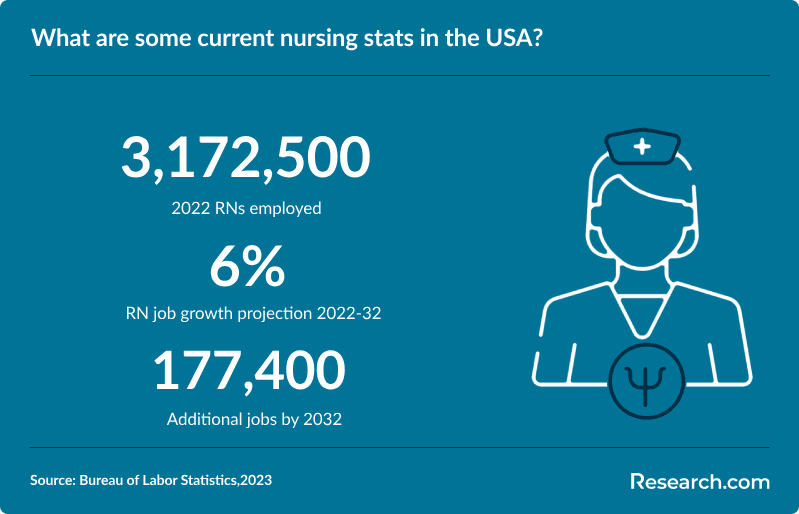
Nationally, the nursing workforce is large and still growing. As of 2022, there were approximately 3,172,500 registered nurses employed in the United States. Employment is expected to increase by 6% over the next decade, adding 177,400 nursing jobs by 2032. These numbers reflect demand from healthcare access needs, population aging, and changes in medical care delivery.
What education do you need to become a nurse in Colorado?
Colorado nursing education is not one-size-fits-all. The best degree depends on whether you want the fastest entry point, the strongest long-term mobility, or preparation for advanced practice.
- Associate Degree in Nursing: An ADN is commonly a two-year route for students who want to become registered nurses without completing a four-year degree first. Graduates can sit for the NCLEX-RN if the program meets licensing requirements.
- Bachelor of Science in Nursing: A BSN is a four-year degree that usually includes broader coursework in leadership, community health, evidence-based practice, and care coordination. Many employers increasingly prefer or encourage BSN preparation, especially for advancement.
- Master of Science in Nursing: An MSN is typically required for advanced nursing roles such as nurse practitioner, nurse educator, nurse administrator, or clinical specialist. Students comparing long-term earning potential may also review DNP salary by state when deciding between graduate options.
- Doctor of Nursing Practice or PhD in Nursing: A DNP is practice-focused and often supports advanced clinical leadership, while a PhD is research-focused and commonly fits academic or scientific careers.
| Education option | Typical purpose | Strengths | Possible limitations |
| ADN | Entry into RN practice | Shorter and often less expensive than a BSN | May offer fewer leadership or specialty opportunities than a BSN |
| BSN | RN practice with broader preparation | Useful for advancement, graduate school, and competitive employers | Longer time commitment than an ADN |
| MSN | Advanced clinical, education, or leadership roles | Required or preferred for many advanced roles | Requires RN preparation and additional graduate study |
| DNP or PhD | High-level practice, leadership, research, or academia | Supports top clinical, administrative, or scholarly goals | Significant academic and financial commitment |
Accreditation should be a non-negotiable factor. A program that is not properly approved or accredited can create problems with licensure, transfer credits, graduate admissions, and employer recognition. Students interested in mobile careers should also consider how education affects travel roles and compare compensation using resources such as travel nurse salary details by state.
One cited projection reports job growth of 16% for registered nurses through 2024. Because nursing employment projections vary by source, time period, and occupation category, use these figures as a starting point rather than a guarantee of local hiring conditions.
What types of nurses can legally practice in Colorado?
Colorado recognizes several nursing and nursing-adjacent roles, each with different education, supervision, and scope-of-practice expectations. Understanding these distinctions can prevent you from choosing a program that does not match the work you actually want to do.
- Registered Nurses: RNs assess patients, develop and coordinate care plans, administer medications, educate patients, and collaborate with physicians and other healthcare professionals. RN candidates typically complete an ADN or BSN and pass the NCLEX-RN. Working RNs who want to finish a bachelor’s degree can compare easy online RN to BSN programs.
- Licensed Practical Nurses: LPNs provide basic nursing care under the supervision of RNs, physicians, or other authorized providers. They complete a practical nursing program and pass the NCLEX-PN. If you are deciding between a shorter practical nursing route and an RN degree, review the trade-offs between LPN certificates vs. nursing associate degrees .
- Advanced Practice Registered Nurses: APRNs include nurse practitioners, clinical nurse specialists, certified registered nurse anesthetists, and certified nurse midwives. These roles require graduate-level nursing education and specialty certification.
- Certified Nursing Assistants: CNAs are not licensed nurses, but they are essential members of the care team. They help with daily living tasks, basic patient monitoring, and comfort care under supervision. Students considering this first step can compare CNA pay 2024 information before committing.
Each role can be valuable, but they do not lead to the same scope of practice. If your long-term goal is independent assessment, advanced prescribing authority, or specialty practice, plan early for RN and graduate-level education rather than stopping at a short entry-level credential.
What are the licensing requirements for nurses in Colorado?
Nursing licensure in Colorado is designed to verify that applicants have the education, testing, and background needed for safe practice. Requirements differ by license type, but most applicants should expect the following steps.
- Graduate from an approved nursing program. The program must meet state expectations for classroom instruction, clinical preparation, and professional competencies.
- Pass the required NCLEX exam. RN applicants take the NCLEX-RN, while LPN applicants take the NCLEX-PN.
- Submit a licensure application. Applicants provide education documentation, exam results, identifying information, and any other required materials.
- Complete fingerprinting and a criminal background check. This screening is used to protect patients and maintain professional standards.
- Pay required fees. The application fee for a Colorado nursing license is approximately $90, with additional costs for fingerprinting and background checks.
Before applying, confirm requirements directly with the state rather than relying only on school marketing materials. Rules can change, and the state board is the authoritative source for licensure instructions.
What types of nursing licenses are available in Colorado?
Colorado’s nursing workforce includes entry-level support roles, practical nurses, registered nurses, and advanced practice professionals. The right license depends on how much responsibility you want, how long you can study, and whether you plan to specialize.
- Registered Nurse: RNs complete a nursing degree and pass the NCLEX-RN. They provide comprehensive care, monitor patient status, deliver treatments, coordinate teams, and educate patients and families.
- Licensed Practical Nurse: LPNs complete practical nursing education and pass the NCLEX-PN. Their work often includes medication administration, basic procedures, patient observation, and bedside care under supervision.
- Advanced Practice Nurse: This group includes nurse practitioners, clinical nurse specialists, nurse anesthetists, and nurse midwives. These nurses complete graduate education and pass specialty certification exams. They may diagnose, treat, prescribe, and manage care within their authorized scope.
- Certified Nurse Aide: CNAs assist with personal care, mobility, feeding, hygiene, and basic monitoring. This route can help students test their interest in healthcare before committing to nursing school.
- Psychiatric Technician: Psychiatric technicians support patients with mental health needs in clinical or residential settings. Nurses interested in advanced mental health practice may later compare psychiatric mental health nurse practitioner salary information.
- Certified Midwife: Midwives support pregnancy, birth, postpartum care, and reproductive health. This pathway requires specialized preparation and certification.
Reported national salary data show wide variation across nursing specialties. According to data from PayScale and the U.S. Bureau of Labor Statistics, Certified Nurse Midwives have the highest average annual salary at $131,570, followed by Adult-Gerontology NPs at $107,530. Other cited averages include Dermatology NPs at $94,742, Nurse Educators at $86,530, Aesthetic Nurses at $80,321, Neonatal RNs and ICU Nurses at around $78,000 per year, and Psychiatric Nurses, Public Health Nurses, and Pediatric Nurses ranging from $68,000 to $75,000 annually.
Can a Compact nurse practice in Colorado?
Yes. Colorado participates in the Enhanced Nursing Licensure Compact, commonly called the eNLC. If you hold an eligible multistate nursing license from another compact state and meet compact requirements, you may practice in Colorado without applying for a separate Colorado single-state license.
- It helps nurses move faster into jobs. A compact license can reduce delays for nurses relocating to Colorado or accepting temporary work.
- It supports travel nursing. Travel nurses can use compact privileges to work across participating states, provided they follow compact rules and maintain eligibility.
- It can expand employment options. Compact practice may be useful for nurses considering hospital, outpatient, rural, home health, or short-term assignments in Colorado.
Compact privileges are not automatic for every nurse. You must meet eligibility criteria, hold a valid license in your primary state of residence, and comply with background check and professional conduct standards. If Colorado becomes your primary state of residence, check whether you need to apply for Colorado licensure rather than continuing to rely on another state’s compact license.
Can you practice as a nurse without a license in Colorado?
No. You cannot legally practice as an RN or LPN in Colorado without the proper nursing license. Licensure protects patients by ensuring that nurses have completed required education, passed standardized exams, and met professional standards.
- Students may provide care only within approved training limits. Nursing students participate in clinical experiences under school and facility supervision, but that is not the same as independent nursing practice.
- CNAs and other support staff have separate scopes. A CNA credential does not authorize RN or LPN duties.
- Internationally educated nurses must complete the state process. Approximately 5.6% to 16% of U.S. nurses are internationally educated nurses. International applicants may need credential evaluation, exam documentation, and additional steps before licensure.
Practicing without a license can lead to legal consequences and can harm future licensure eligibility. If you are waiting for approval, confirm what work you may legally perform before accepting a role that includes nursing duties.
What is the state of nursing in Colorado?
Nursing in Colorado is shaped by strong healthcare demand, workforce shortages, regional cost differences, and a mix of urban and rural care needs. The state is home to over 110,000 licensed nurses, and demand is expected to remain significant across hospitals, outpatient centers, home healthcare, and long-term care.
- Hospitals: Hospitals remain major employers for RNs, LPNs, APRNs, and specialty nurses in emergency, surgical, intensive care, maternity, psychiatric, and medical-surgical units.
- Outpatient care centers: As more care moves outside inpatient settings, ambulatory clinics and procedure centers need nurses for care coordination, education, triage, and treatment support.
- Home healthcare: Home-based care continues to grow as patients seek recovery, chronic disease management, and support outside hospitals.
- Long-term care facilities: Nursing homes, assisted living communities, rehabilitation centers, and memory-care settings need nurses to support older adults and medically complex residents.
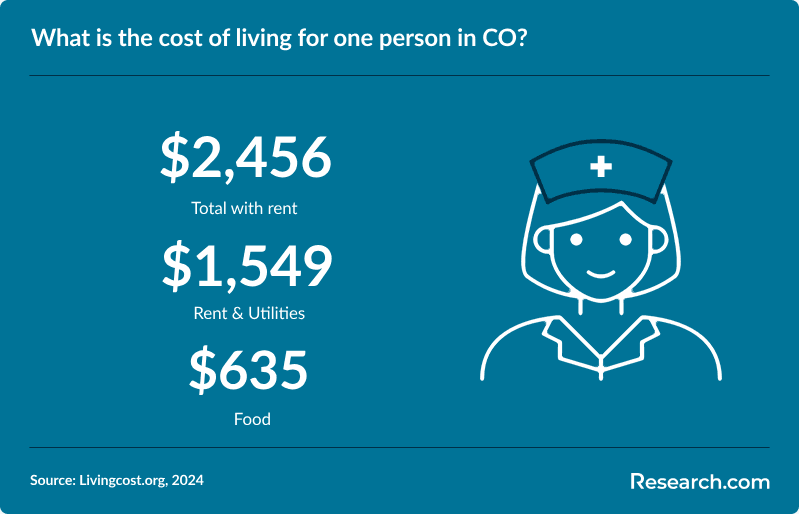
Colorado can be attractive for nurses who value outdoor recreation, city and mountain communities, and diverse clinical settings. However, cost of living should be part of your career calculation. As of March 1, 2024, the cost of living for a single person in Colorado was $2,456 per month. Housing costs, including rent and utilities, amounted to $1,549. Without housing, monthly living costs were $907, and food expenses averaged $635 per month.
Salary can offset some expenses, but not equally across the state. A job in Denver may pay more than a rural role, but housing costs may also be higher. When evaluating offers, compare base pay, differentials, overtime policies, benefits, commute, staffing ratios, and whether the employer supports tuition reimbursement or specialty certification.
How much does nursing education cost in Colorado?
The cost of nursing education in Colorado depends on the school type, credential level, residency status, online or campus format, and whether you already have transfer credits. Community colleges and public institutions may offer lower-cost routes, while accelerated BSN, private university, and graduate nursing programs often require a larger investment.
| Cost category | Why it matters | Questions to ask |
| Tuition and mandatory fees | This is usually the largest direct cost of the program. | Is tuition charged per credit, term, or program? Are nursing course fees separate? |
| Clinical expenses | Clinical participation may require transportation, health screenings, immunizations, and background checks. | Where are clinical sites located, and who arranges placements? |
| Books, supplies, and technology | Nursing programs often require software, lab supplies, uniforms, and equipment. | What are the estimated out-of-pocket costs beyond tuition? |
| Licensure and testing | Students should budget for NCLEX registration, state application fees, fingerprinting, and background checks. | Which costs are included in tuition, and which are paid separately? |
| Lost income | Full-time or accelerated study can reduce work hours. | Can the program be completed part time or with evening, weekend, or online coursework? |
Do not choose a program by tuition alone. A cheaper program that has weak support, poor clinical coordination, or low completion rates may cost more in the long run. For a broader cost breakdown, review How much does nursing school cost?.
What is the job outlook for nursing in Colorado?
The outlook for nurses in Colorado is generally favorable, but projections differ by source and timeframe. One cited U.S. Bureau of Labor Statistics-based figure projects demand for registered nurses in Colorado to grow by 14% from 2020 to 2030. Another cited figure reports job growth expected to increase by 20% over the next decade. These estimates point in the same direction: Colorado is expected to need a steady supply of qualified nurses.
Compensation also varies. As of 2023, the average annual salary for registered nurses in Colorado is approximately $80,000. Reported metro-level examples include salaries that can exceed $90,000 in Denver-Aurora-Lakewood, around $85,000 in Boulder, and around $80,000 in Colorado Springs. Nurse anesthetists and nurse practitioners are among the highest-paid nursing roles, with salaries often exceeding $120,000 annually, while licensed practical nurses average around $55,000.
- Higher-paying settings may require experience or specialization. Outpatient care centers, specialty hospitals, advanced practice roles, and high-acuity units can pay more, but they may also expect stronger credentials.
- Location affects both pay and living costs. Compare salary with rent, commuting, benefits, and scheduling demands.
- Growth does not guarantee automatic employment. Employers still evaluate licensure, clinical readiness, references, certifications, and fit for the unit.
According to data from the U.S. Bureau of Labor Statistics, RNs working in government positions earn the highest average annual salary at $85,970. Hospitals, including state, local, and private hospitals, average $78,070. Ambulatory healthcare services average around $76,700, nursing and residential care facilities average $72,420, and educational services such as state, local, and private schools average $61,780 per year. These are averages, and individual pay can vary widely.
How can online programs without clinical requirements benefit my nursing career in Colorado?
Some online nursing programs are designed for licensed nurses who already have clinical experience. For example, RN-to-BSN programs may focus on leadership, public health, research, health assessment, and evidence-based practice rather than requiring extensive new clinical rotations. This can be helpful for working RNs who want a bachelor’s degree without leaving their jobs or relocating.
Programs such as RN to BSN online no clinicals may fit nurses who already hold RN licensure and want to improve promotion potential, meet employer preferences, or prepare for graduate school. However, “no clinicals” does not mean “no practice-related learning.” Programs may still require projects, community health assignments, simulations, or applied coursework.
| Online no-clinical or low-clinical program may fit if... | It may not fit if... |
| You are already licensed and working as an RN. | You are trying to qualify for initial RN licensure. |
| Your employer values a BSN for advancement. | You need supervised clinical hours for a new license or APRN certification. |
| You need flexibility because of shifts, family obligations, or location. | You learn best through in-person labs and face-to-face support. |
| You are preparing for leadership, public health, or graduate study. | You have not verified accreditation or state authorization. |
How can you advance your nursing career in Colorado?
Career advancement in Colorado usually requires a mix of education, experience, credentials, and strategic job moves. The right path depends on whether you want higher pay, more autonomy, leadership responsibility, a specialty role, or a transition away from bedside care.
- Earn a BSN if you entered through an ADN. An RN-to-BSN program can strengthen your qualifications for leadership, specialty units, public health, and graduate school.
- Pursue graduate education for advanced practice. Nurses interested in diagnosing, treating, and managing patient care can compare the best NP programs in Colorado.
- Choose certifications that match local demand. Acute care, geriatrics, mental health, emergency nursing, perioperative nursing, and critical care credentials may improve competitiveness.
- Use employer benefits strategically. Tuition reimbursement, clinical ladder programs, preceptor pay, differential pay, and specialty training can reduce the cost of advancement.
- Build a professional network. State nursing organizations, hospital committees, conferences, and preceptor relationships can lead to mentorship and internal promotions.
Some nurse practitioner specialties report average salaries exceeding $120,000 annually, but higher pay often comes with additional responsibility, graduate tuition, certification requirements, and liability considerations. Treat salary data as one part of the decision, not the whole reason to pursue a role.
What is the career pathway for LVNs in Colorado?
Colorado commonly uses the term Licensed Practical Nurse rather than Licensed Vocational Nurse, but students searching for LVN pathways are usually looking for practical nursing options. The route generally involves completing an approved practical nursing program, passing the NCLEX-PN, and applying for licensure.
An LPN pathway can make sense if you want to enter nursing sooner, gain bedside experience, and later bridge into RN education. Many practical nurses eventually pursue LPN-to-RN or LPN-to-BSN options to expand their scope of practice and long-term earning potential. For state-specific guidance, see how to become an LVN in Colorado.
Are online nursing programs a viable option in Colorado?
Online nursing programs can be a strong option in Colorado when they are properly accredited, authorized for your state, transparent about clinical placement, and aligned with your licensure goals. They are especially useful for working nurses completing RN-to-BSN, MSN, or DNP coursework.
For prelicensure students, online study usually does not eliminate in-person requirements. Initial RN and LPN programs require labs, simulations, and supervised clinical experiences. Before enrolling, confirm whether the school arranges Colorado clinical placements or expects you to find your own sites. To compare available options, review the best online nursing programs in Colorado.
| Format | Best for | Important caution |
| Campus-based | Students who want direct lab access and structured in-person support | May be less flexible for working adults |
| Hybrid | Students who want online coursework with required labs or clinicals | Travel to campus or clinical sites may still be required |
| Fully online post-licensure | Licensed nurses pursuing BSN completion or graduate coursework | Some programs still include projects, practicums, or local requirements |
What kind of education is best for aspiring nurses in Colorado?
The best nursing education path depends on your starting point and career goal. If you want the fastest healthcare entry point, CNA training may help you gain experience. If you want a shorter licensed nursing route, an LPN program may be appropriate. If your goal is RN practice, choose an ADN or BSN program that qualifies graduates for the NCLEX-RN. If you already know you want advanced practice, plan for a BSN and graduate education.
Students who want practical nursing as a first step can explore online LPN programs in Colorado, but they should verify whether the program includes required in-person labs and clinicals. For RN candidates, the most important factors are approval status, accreditation, clinical quality, NCLEX preparation, and student support.
What factors should I consider when choosing a nursing program in Colorado?
Choosing a nursing program is one of the most important decisions in your career. A school with attractive tuition or convenient scheduling is not enough if it does not support licensure, clinical readiness, or employment outcomes.
- Accreditation and state approval: Confirm that the program meets Colorado licensure expectations and holds appropriate nursing accreditation when relevant.
- NCLEX pass rates: Strong pass rates may indicate effective curriculum and exam preparation, but also review admission selectivity and student support.
- Clinical placement quality: Ask where students complete clinicals, how placements are assigned, and whether sites match your career interests.
- Total cost: Compare tuition, fees, supplies, transportation, testing, and lost work time.
- Schedule and format: Make sure the program fits your work, family, commute, and learning style.
- Transfer and bridge options: If you may pursue a BSN, MSN, or DNP later, ask how credits transfer.
- Student outcomes: Look for graduation rates, job placement support, employer partnerships, and student reviews.
Rankings can help you build a shortlist, but they should not replace your own due diligence. Start with data-driven comparisons such as the best nursing schools in Colorado, then verify accreditation, costs, clinical placements, and licensure outcomes directly with each school.
Common mistakes to avoid when choosing a Colorado nursing program
| Mistake | Why it can hurt you | Better approach |
| Choosing only by tuition | Low tuition does not always mean strong clinical support or NCLEX preparation. | Compare total cost, outcomes, accreditation, and student support. |
| Ignoring accreditation | It can affect licensure, transfer credits, graduate school, and employer recognition. | Verify approval and accreditation before applying. |
| Assuming online means fully remote | Prelicensure nursing programs require hands-on training. | Ask about labs, simulations, clinical locations, and travel requirements. |
| Overlooking NCLEX performance | Poor exam preparation can delay licensure and employment. | Review pass rates and ask how the program supports students who struggle. |
| Relying only on rankings | A highly ranked program may not fit your schedule, budget, or location. | Use rankings as one tool, not the final decision. |
What are the career prospects for nurse midwives in Colorado?
Nurse midwives provide pregnancy, birth, postpartum, reproductive, and newborn-related care. In Colorado, they may work in hospitals, birthing centers, clinics, and community health settings. This role can appeal to nurses who want a highly specialized, relationship-centered practice focused on maternal and family health.
Midwifery requires advanced education, clinical preparation, and certification. Before pursuing this path, compare program requirements, clinical placement expectations, state practice rules, and local employer demand. For a more detailed route, see how to become a nurse midwife in Colorado.
Can a nursing background open doors to alternative healthcare roles in Colorado?
Yes. Nursing experience can support transitions into case management, utilization review, healthcare administration, informatics, quality improvement, patient education, public health, insurance review, clinical research, and compliance. Some nurses also move into related licensed professions, but those routes may require additional education and separate licensure.
For example, a nurse interested in medication management, pharmacology, and patient counseling might compare nursing with pharmacy by reviewing how to become a pharmacist in Colorado. The key is to identify which parts of nursing you want to keep—patient interaction, clinical decision-making, education, leadership, or systems work—and choose the next credential accordingly.
What are the nurse practitioner education requirements in Colorado?
Nurse practitioners in Colorado must first become registered nurses and then complete advanced nursing education. The typical route includes a BSN followed by an MSN or DNP with coursework in advanced health assessment, pharmacology, diagnostics, pathophysiology, evidence-based practice, and specialty clinical training.
NP candidates must also meet certification requirements for their population focus or specialty. Depending on the program and role, this may include family practice, adult-gerontology, psychiatric mental health, pediatrics, women’s health, acute care, or other specialty areas. For a step-by-step explanation, review the nurse practitioner education requirements in Colorado.
How do evolving healthcare policies impact nursing careers in Colorado?
Healthcare policy affects where nurses work, how care is reimbursed, what documentation is required, how scope-of-practice rules are applied, and which services expand in hospitals, clinics, home care, and community health. Nurses who understand policy changes can adapt more quickly and identify emerging roles in care coordination, compliance, quality improvement, and telehealth-supported services.
Policy and payment changes also create demand for administrative and revenue-cycle knowledge. Nurses who want to move away from bedside work may explore adjacent healthcare roles, including how to become a medical biller and coder in Colorado. This kind of transition can be useful for professionals who want to use clinical knowledge in documentation, coding accuracy, utilization review, or compliance-related work.
What are the continuing education and renewal requirements for nurses in Colorado?
Colorado nurses must keep their licenses current by following the renewal process that applies to their license type. Renewal can include confirming professional information, paying required fees, and meeting any continuing competency or education expectations required by the state at that time.
Because renewal rules can change, nurses should verify current instructions before the deadline rather than waiting for employer reminders. For current details, review the requirements for nursing licensure in Colorado.
What should you ask before becoming a nurse in Colorado?
Before committing to a Colorado nursing pathway, ask practical questions that connect education, licensure, cost, and work conditions. These questions can help you avoid expensive surprises.
- Does this program qualify graduates for the license I want?
- Is the program accredited and approved for Colorado licensure?
- What are the program’s NCLEX pass rates and graduation rates?
- Who arranges clinical placements, and where are they located?
- What is the total cost after fees, supplies, transportation, and testing?
- Can I work while enrolled, or is the schedule too intensive?
- Will credits transfer if I pursue a BSN, MSN, or DNP later?
- Does the school support students who fail a course or need extra NCLEX preparation?
- How do local salaries compare with housing and commuting costs?
- What specialty or advancement options will this path leave open?
What do nurses say about becoming a nurse in Colorado?
- Carol describes Colorado nursing as meaningful because she works with patients from many backgrounds in a busy urban hospital. She values the professional support around her and says hiking after demanding shifts helps her maintain perspective and balance. Carol
- Timothy says the state’s demand for nurses has helped him feel secure in his career choice. He points to a projected job growth of 9% through 2030, according to the Bureau of Labor Statistics, and says Colorado has given him room to explore interests such as community health. Timothy
- Josephine appreciates the variety of settings available to nurses, from major cities to mountain communities. She says the ability to work in different environments has helped her build skills while still enjoying the outdoor lifestyle Colorado is known for. Josephine
Related Articles for Nearby States
- 2027 How to Become a Nurse in Wyoming
- 2027 How to Become a Nurse in Nebraska
- 2027 How to Become a Nurse in Kansas
- 2027 How to Become a Nurse in New Mexico
- 2027 How to Become a Nurse in Utah
- 2027 How to Become a Nurse in Oklahoma
- 2027 How to Become a Nurse in Arizona
- 2027 How to Become a Nurse in Texas
- 2027 How to Become a Nurse in South Dakota
- 2027 How to Become a Nurse in Nevada
Key Insights
- Colorado nursing licensure starts with the right program. Verify approval, accreditation, clinical requirements, and NCLEX eligibility before enrolling.
- An ADN can be a faster RN route, while a BSN may offer stronger long-term mobility, advancement potential, and preparation for graduate study.
- Colorado’s compact license participation can help eligible multistate nurses practice across state lines, but compact privileges depend on residency and eligibility rules.
- Salary and job outlook figures are encouraging, but they vary by role, location, specialty, employer, and source. Compare pay with cost of living before making a decision.
- Online nursing programs can be useful, especially for licensed nurses, but prelicensure students should expect in-person labs and clinical placements.
- The biggest mistakes are choosing a school without checking accreditation, focusing only on tuition, assuming online means no clinicals, and relying on rankings without verifying licensure outcomes.
- Nursing can lead to many paths in Colorado, including bedside care, advanced practice, midwifery, leadership, education, informatics, compliance, and other healthcare careers.
References:
- Colorado Department of Regulatory Agencies. (2024). Nursing. Colorado Department of Regulatory Agencies.
- Colorado Technical University. (2024). How to become an RN. Colorado Technical University.
- Living Cost. (2024). Cost of living & prices in Colorado: 28 cities compared. Living Cost.
- Nurse.org. (2024). Enhanced nurse licensure compact (eNLC). Nurse.org.
- NurseJournal.org. (2023, September 27). Become a nurse in Colorado: Requirements, licensing, and salary outlook. NurseJournal.org.
- U.S. Bureau of Labor Statistics. (2023, December 27). Occupational outlook handbook - Registered nurses. U.S. Bureau of Labor Statistics.
Other Things You Should Know About Becoming a Nurse in Colorado
To become licensed in Colorado in 2027, you must complete a nursing degree from an accredited program, pass the NCLEX-RN exam, and submit an application to the Colorado Board of Nursing, including fingerprints and a background check. You also need to fulfill any continuing education requirements to maintain your license.
Becoming a registered nurse in Colorado typically takes 2 to 4 years, depending on the chosen educational path. An Associate Degree in Nursing (ADN) usually requires about 2 years, while a Bachelor of Science in Nursing (BSN) takes approximately 4 years to complete.