
2027 Average DNP Salary by State: How Much Do DNPs Make?

Co-Founder and Chief Data Scientist
A Doctor of Nursing Practice is a major career investment. Before enrolling, nurses usually want a practical answer to one question: will the degree improve their earning power, role options, and long-term influence enough to justify the time, tuition, and clinical demands? For many advanced practice nurses, the answer can be yes, but only when the program aligns with their license, specialty, state practice rules, employer expectations, and career goals.
This guide explains DNP salary expectations using the figures provided in the available 2024 data, including average pay, high-paying states and cities, top industries, common employers, specialization differences, and how DNP compensation compares with MSN and BSN pathways. It also covers how to evaluate DNP return on investment, what mistakes to avoid, and how online, bridge, and accelerated nursing pathways may fit into a longer doctoral plan.
Quick Answer: How Much Do DNP Graduates Earn?
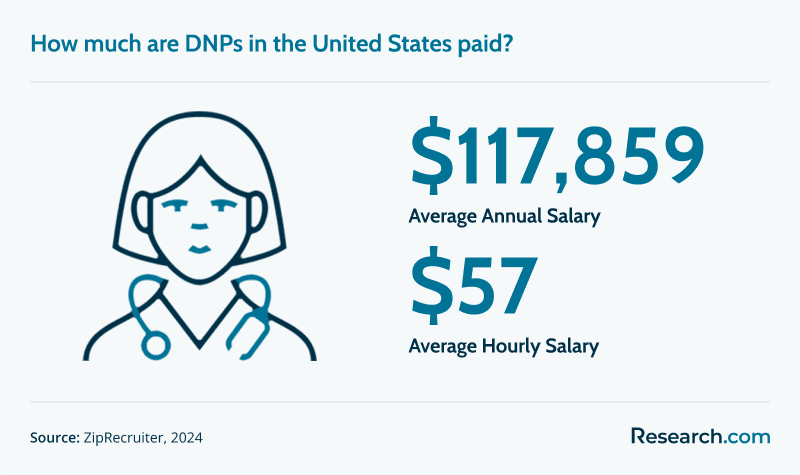
According to 2024 ZipRecruiter data, the average annual salary for a DNP graduate is $117,859, or about $57 per hour. Nurse practitioners, one of the most common APRN roles for DNP-prepared nurses, earn a median annual salary of $126,260 and an average annual salary of $128,490 based on 2024 U.S. Bureau of Labor Statistics data.
The highest earnings are not evenly distributed. Pay changes significantly by role, specialty, state, city, employer type, experience, and scope-of-practice environment. For example, California reports an average annual salary of $161,540 for nurse practitioners, while Certified Nurse Anesthetist roles show an average annual salary of $235,000 among the specializations listed in this guide.
Key Benefits of Getting a DNP Degree
- The average annual salary of a DNP graduate is $117,859.
- NPs earn a median annual salary of $126,260 and an average annual salary of $128,490.
- In 2024, U.S. cities with the highest average annual salaries for DNPs are Green River, WY ($152,445), Santa Clara, CA ($140,422), San Francisco, CA ($136,458), Bolinas, CA ($136,052), and Washington, DC ($135,678).
- The US states with the highest average annual salaries for NPs are California ($161,540), Nevada ($148,670), Washington ($145,400), New Jersey ($145,030), and Oregon ($144,950).
- The highest-paying NP specializations, based on average annual salary, are Certified Nurse Anesthetist ($235,000), Neonatal Nurse Practitioner ($144,461), and Emergency Nurse Practitioner ($137,280).
- Average DNP salary and what the number means
- Highest-paying states and cities for DNP-prepared nurses
- States with the most nurse practitioner jobs
- Factors that raise or lower DNP salary
- DNP vs. MSN vs. BSN salary comparison
- Highest-paying nursing specializations
- Highest-paying non-clinical nursing roles
- Highest-paying industries for nurse practitioners
- Largest employers of nurse practitioners
- Leadership and advancement options for DNP graduates
- DNP job outlook in 2027 and beyond
- Whether a DNP can be completed faster
- How RN-to-master’s bridge programs can shorten the pathway
- How to finance a DNP more cost-effectively
- Online DNP admission requirements
- Whether the DNP is worth the investment
- How RN-to-BSN online no-clinical programs may support DNP planning
- How an MSN can lead toward nurse executive leadership
- How to balance work and online DNP study
- Less obvious benefits of earning a DNP
- Core skills DNP-prepared nurses need
- Whether online DNP programs are respected
- How direct-entry MSN programs can lead to a DNP
- Additional questions to ask before choosing a DNP path
What DNP-Prepared Nurses Say About Their Work
-
: "
As a DNP-prepared nurse practitioner, I now have the authority to influence healthcare policies and mentor the next generation of nurses. The advanced education has enriched my practice, enabling me to offer high-quality care and innovative solutions to improve patient outcomes. - Lisa
"
-
: "
The DNP program pushed me to be a better leader and advocate for my patients. Now, I collaborate with physicians as an equal, ensuring patients receive the most holistic care possible. The teamwork is amazing, and together we're making a real difference in our community. - Wendy
"
-
: "
My DNP ignited my passion for research. While treating patients, I'm constantly identifying areas where we can improve care delivery. The DNP equipped me with the skills to conduct research and translate findings into practice, making a lasting impact on the entire healthcare system. - Jim
"
What Is the Average Salary for DNPs?
Using 2024 ZipRecruiter data, DNP graduates report an average annual salary of $117,859, equal to an hourly rate of $57. This figure is best understood as a broad earnings benchmark rather than a guaranteed outcome because the DNP is a degree, not one single job title.
For nurse practitioners specifically, 2024 BLS data shows a median annual salary of $126,260 and an average annual salary of $128,490. Those amounts are more than three times the national median yearly salary for a regular employee, which is $48,060.
The DNP can support several career directions, including advanced clinical practice, nursing leadership, quality improvement, informatics, education, and healthcare administration. Some students choose flexible or accelerated options, including easy DNP programs, but the stronger question is whether the program is accredited, aligned with licensure needs, and respected by employers in the student’s intended specialty.
| Salary measure | Reported amount | How to interpret it |
| Average annual salary for DNP graduates | $117,859 | A broad salary benchmark across DNP-prepared roles, not a promise for every graduate. |
| Hourly equivalent for DNP graduates | $57 | A useful estimate for comparing roles, schedules, and contract opportunities. |
| Median annual salary for NPs | $126,260 | The midpoint for nurse practitioner earnings in the BLS data. |
| Average annual salary for NPs | $128,490 | A national mean that may be pulled higher by high-paying states, industries, and specialties. |
| Median yearly salary of a regular employee in the country | $48,060 | A general labor-market comparison, not a nursing-specific benchmark. |
The chart below shows average annual salaries for NPs across all US states. Use the menu in the upper right corner of the chart to view the full data set.
Which US States and Cities Pay DNPs the Highest?
Location is one of the largest drivers of DNP and nurse practitioner compensation. Higher-paying areas often have a combination of higher cost of living, stronger healthcare demand, more specialized facilities, and larger employer budgets. Similar location effects can appear across healthcare and public service fields, including graduates comparing affordable online public health degree options.
Highest-Paying US Cities for DNP Graduates
According to 2024 ZipRecruiter data, these cities report the highest average annual salaries for DNP graduates:
| Rank | City | Average annual salary |
| 1 | Green River, WY | $152,445 |
| 2 | Santa Clara, CA | $140,422 |
| 3 | San Francisco, CA | $136,458 |
| 4 | Bolinas, CA | $136,052 |
| 5 | Washington, DC | $135,678 |
Highest-Paying States for Nurse Practitioners
BLS 2024 data identifies the following states as the highest-paying for nurse practitioners. As with other graduate-level healthcare and counseling pathways, such as online masters degree programs in counseling, students should compare salary against cost of living, state licensing rules, and local job availability.
| Rank | State | Average annual salary for NPs |
| 1 | California | $161,540 |
| 2 | Nevada | $148,670 |
| 3 | Washington | $145,400 |
| 4 | New Jersey | $145,030 |
| 5 | Oregon | $144,950 |
Which States Employ the Most Nurse Practitioners?
High salary and high employment are not always the same thing. A state may pay very well but have fewer openings, while another state may have a large volume of jobs across hospitals, physician offices, outpatient care centers, and home health organizations.
The following US states have the highest employment levels for nurse practitioners:
| State | NP employment level | What it may signal |
| Florida | 22,270 | Large healthcare market with substantial NP hiring volume. |
| California | 21,740 | High employment combined with one of the highest average salaries. |
| Texas | 20,170 | Large population and broad range of healthcare employers. |
| New York | 16,670 | Major hospital systems, outpatient networks, and specialty practices. |
| Tennessee | 14,040 | Notable NP employment concentration relative to many states. |
BLS reports also identify California, New York, Texas, Florida, and Georgia as leading states for average annual openings for nurse practitioners until 2030. The chart below shows how many NPs these states are projected to need each year over the next several years.
What Factors Influence the Average DNP Salary?
DNP pay depends on more than the letters after a nurse’s name. The strongest salary factors usually include clinical specialization, job title, work setting, state scope-of-practice rules, years of experience, and whether the role involves revenue-generating clinical care, executive leadership, education, informatics, or policy work. For a more detailed state-level view, compare nurse practitioner salary by specialty.
| Salary factor | Why it matters | Decision point for students |
| DNP specialization | Some specialties require more advanced technical expertise or serve high-acuity patients. Nurse anesthetists, for example, typically earn more than many nurse practitioner roles. | Choose a specialization based on both market demand and fit with your clinical strengths. |
| Work setting and job title | Hospitals, outpatient care centers, executive offices, academic departments, and public health agencies can pay very differently. | Look at actual job postings in your target area before assuming a degree will lead to a specific salary. |
| Geographic location | Cost of living, competition, shortages, and state practice authority can all influence pay. | Compare salary with housing, taxes, commuting, and licensing requirements. |
| Years of experience | Experienced DNP-prepared nurses may qualify for higher-level clinical, administrative, or leadership roles. | Evaluate how your RN, APRN, management, or specialty experience will transfer into the role you want. |
| Employer type | Physician offices, hospitals, business support services, and home health care services report different compensation patterns. | Do not compare job offers by salary alone; review workload, call expectations, benefits, and autonomy. |
Salary variation is common in other graduate fields as well, including programs such as the cheapest masters in psychology. The key is to connect the credential to a specific labor market and role rather than assuming the degree alone determines income.
How Does the Average DNP Salary Compare to an MSN and a BSN?
The DNP is the terminal practice-focused degree in nursing. It can support advanced practice, executive, systems leadership, and evidence-based practice roles. The average annual salary listed for DNP graduates is $117,859.
The MSN is commonly used as a graduate pathway into advanced practice registered nursing and leadership roles. According to 2024 Payscale data, MSN graduates have an average annual salary of $104,000. Nurses comparing graduate options may want to review cheap online MSN programs before deciding whether to stop at the master’s level or continue to a doctorate.
The BSN remains a common undergraduate pathway for registered nurses. Based on 2024 Payscale data, the average annual salary of a BSN graduate is $95,000. Working RNs who need the bachelor’s degree before moving into graduate study may consider least expensive RN to BSN online programs.
Associate degrees and certificate pathways may be appropriate for students whose first goal is RN licensure rather than doctoral-level practice. If cost is the immediate concern, compare cheapest ADN online programs. If speed is the priority after graduate prerequisites are met, review the shortest DNP program online options carefully and verify accreditation.
| Nursing credential | Reported average annual salary | Best fit | Important caution |
| DNP | $117,859 | Nurses seeking advanced clinical practice, leadership, quality improvement, policy, or systems-level impact. | The degree is valuable only when matched with the right license, specialty, and employer expectations. |
| MSN | $104,000 | RNs pursuing APRN preparation, leadership, education, or specialty graduate roles. | Some roles may not require a DNP, so compare costs before continuing. |
| BSN | $95,000 | RNs who want broader employment options and a foundation for graduate nursing education. | A BSN alone does not qualify a nurse for APRN practice. |
What Are the Highest-Paying Specializations in Nursing?
Specialization can have a larger effect on pay than the degree level by itself. Some nursing specializations require advanced procedural skill, high-acuity clinical judgment, and intensive certification preparation, which can lead to higher compensation.
The highest-paying nursing specializations in the salary set reviewed for this guide are:
| Specialization | Average annual salary |
| Certified Nurse Anesthetist | $235,000 |
| Neonatal Nurse Practitioner | $144,461 |
| Emergency Nurse Practitioner | $137,280 |
| Nurse Midwife | $129,650 |
| Hospitalist Nurse Practitioner | $128,483 |
| Psychiatric/Mental Health Nurse Practitioner | $128,480 |
| Oncology and Hematology Nurse Practitioner | $128,264 |
| Urgent Care Nurse Practitioner | $127,320 |
| General Surgery Nurse Practitioner | $127,133 |
| Critical Care Nurse Practitioner | $126,953 |
Certified Nurse Anesthetist roles stand out as the highest-earning option in this list. The $235,000 average annual salary is far above the $144,461 figure for Neonatal Nurse Practitioners. For context, non-practitioner neonatal nurses also report strong earnings; if you are comparing that path, review how much does a neonatal nurse make a year, where the listed figure is around $127,391.
The chart below shows common nurse practitioner specializations, with family nurse practitioners representing the largest segment of NPs.
What Are the Highest-Paying Non-Clinical Careers in Nursing?
A DNP does not have to lead only to direct patient care. Some DNP-prepared nurses move into executive leadership, operations, informatics, education, quality improvement, or specialized transport and emergency systems roles. These options may appeal to nurses who want broader organizational influence or who are ready to move away from bedside responsibilities.
The highest-paid non-clinical nursing positions in the reviewed salary set are:
| Non-clinical nursing role | Average annual salary | Typical focus |
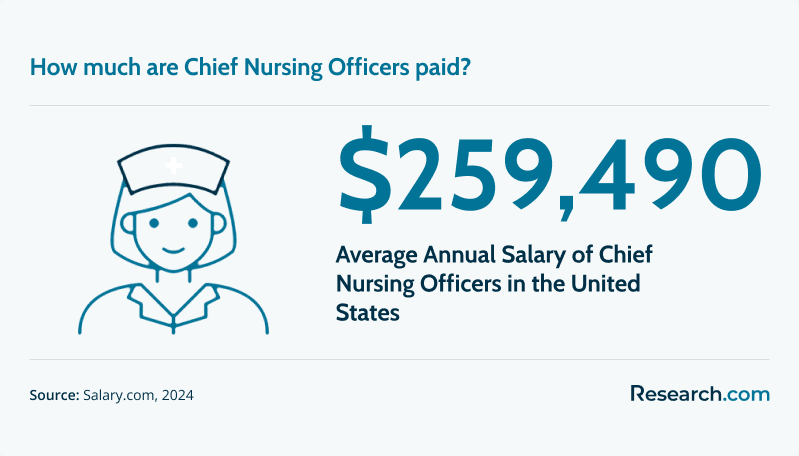
| Chief Nursing Officer | $259,490 | Executive nursing strategy, staffing, quality, budgets, and organizational leadership. |
| Director of Nursing | $166,027 | Department operations, nursing standards, supervision, and care delivery oversight. |
| Nurse Manager (Nurse Practitioner) | $165,617 | Clinical team leadership, scheduling, performance, and patient care coordination. |
| Nurse Informatics Specialist | $157,086 | Health technology, clinical data, workflow improvement, and electronic health records. |
| Flight Nurse | $134,000 | High-acuity transport nursing and emergency response coordination. |
What Are the Highest-Paying Industries for Nurse Practitioners?
Industry choice can affect compensation as much as geography. Some sectors pay more because the work involves specialized populations, business operations, high-demand services, or hard-to-fill roles.
According to 2024 BLS data, the industries with the highest average annual salaries for NPs are:
| Industry | Average annual salary for NPs |
| Business Support Services | $180,570 |
| Residential Intellectual and Developmental Disability, Mental Health, and Substance Abuse Facilities | $158,140 |
| Business, Professional, Labor, and Political Organizations | $153,580 |
| Home Health Care | $146,850 |
| Other Ambulatory Health Care Services | $144,570 |
High industry pay should be weighed against caseload, travel, on-call expectations, documentation burden, patient acuity, supervision requirements, and benefits. A higher salary may not always mean a better overall job.
Who Are the Biggest Employers of Nurse Practitioners?
The largest employers of nurse practitioners are not always the highest-paying industries. For job stability and easier entry into the market, students should study where most NPs are employed, not just where the top salaries appear.
These sectors employ the most NPs in the United States:
| Employer sector | NP employment | Why DNP graduates should pay attention |
| Offices of Physicians | 137,030 | Largest NP employment setting and a common path for primary care and specialty practice. |
| General Medical and Surgical Hospitals | 61,740 | Strong fit for acute care, specialty, procedural, and leadership roles. |
| Outpatient Care Centers | 25,440 | Important setting for ambulatory care, urgent care, specialty clinics, and chronic care management. |
| Offices of Other Health Practitioners | 11,400 | May include interdisciplinary and specialty practice environments. |
| Home Health Care Services | 7,410 | Relevant for population health, chronic care, post-acute care, and community-based services. |
The right setting depends heavily on specialty. A certified registered nurse anesthetist is more likely to work in surgical, hospital, or procedural environments, while a psychiatric mental health nurse practitioner may work in outpatient, community, telehealth, or behavioral health settings.
Location also matters. Rural areas may offer strong opportunities when communities face shortages of advanced practice providers, though role autonomy, resources, and call coverage should be reviewed carefully.
What Career Advancement Opportunities and Leadership Roles Are Available for DNP Graduates?
The DNP is designed for practice leadership. For some nurses, that means advanced clinical care. For others, it means leading systems, improving quality, translating research into practice, managing teams, shaping policy, or building new healthcare services.
| Career path | Role description | Salary information provided |
| Chief Nursing Officer (CNO) | Leads nursing operations, staffing strategy, quality standards, and patient care priorities across a healthcare organization. | Average salaries ranging from $135,000 to $259,000 annually. |
| Healthcare Policy Advisor | Works with agencies, advocacy groups, or healthcare organizations to influence rules and policies affecting care delivery. | Typically ranges from $90,000 to $150,000 per year. |
| Director of Nursing Programs | Leads academic nursing programs, curriculum planning, faculty coordination, and student preparation. | Between $95,000 and $180,000 annually. |
| Healthcare Administrator | Manages operations, budgets, policy implementation, and clinical service delivery. | Ranges from $120,000 to $200,000 or more per year. |
| Nurse Entrepreneur | Builds healthcare practices, consulting businesses, specialty services, or education ventures. | Many report annual earnings between $100,000 and $250,000, though successful ventures can exceed this range. |
These roles can offer greater influence, but they also require business judgment, regulatory awareness, communication skills, and the ability to lead through complex organizational change.
What Is the Job Outlook for DNPs in 2027 and Beyond?
BLS data indicates strong employment growth for APRNs, including NPs, nurse midwives, and nurse anesthetists. For NPs, employment from 2022 to 2032 is expected to grow by 45%, which is 15 times higher than the national average. The same outlook includes 29,200 job openings each year for NPs, nurse midwives, and nurse anesthetists.
This outlook supports demand for advanced nursing roles, but graduates should avoid assuming every DNP path has the same market value. Demand is strongest when the nurse’s preparation matches employer needs, state practice rules, and patient care gaps. Physician offices and outpatient care centers remain important employment markets because they have high concentrations of nurse practitioner roles.
Can the DNP Program Be Completed More Quickly Without Compromising Quality?
Some students can reduce completion time through accelerated schedules, transfer credit, prior graduate coursework, year-round enrollment, or intensive hybrid formats. However, speed should never come at the expense of accreditation, clinical preparation, faculty support, or licensure alignment.
If completion time is a top priority, compare programs like the shortest DNP program options, but ask how clinical hours, project requirements, faculty access, and specialty preparation are handled. A faster program is only useful if it still prepares you for the role you want.
How Can an RN to Master’s Bridge Program Streamline Your Path to a DNP?
RN-to-master’s bridge programs can help registered nurses move from ADN or diploma-level preparation into graduate nursing coursework without repeating unnecessary material. These programs can be especially useful for nurses who know they eventually want a DNP but still need graduate-level preparation first.
A strong bridge program should build advanced assessment, research literacy, leadership, pathophysiology, pharmacology, and specialty foundations. To compare this route, review the RN to masters bridge program pathway and verify whether credits can later apply toward a DNP.
How Can You Finance Your DNP Program Cost-Effectively?
DNP affordability is not only about tuition. Students should calculate fees, books, travel, campus visits, technology, clinical placement costs, lost work hours, certification expenses, and loan interest. A lower tuition rate may not be the cheapest option if the program delays graduation or requires expensive travel.
Common funding strategies include scholarships, employer tuition assistance, federal loan programs, part-time enrollment, service-based repayment options, and choosing a program with transparent clinical placement support. Students comparing APRN-focused options may also review accredited nurse practitioner programs online to understand how affordability and quality can be evaluated together.
Questions to Ask Before Financing a DNP
- Is the program accredited by a recognized nursing accreditor?
- Will the program meet licensure or certification requirements in my state?
- How much will I pay beyond tuition?
- Does my employer offer tuition reimbursement, schedule flexibility, or promotion opportunities after graduation?
- How many years will it take to recover the cost based on realistic salary growth?
- Does the school help secure clinical placements, or must students find preceptors independently?
What Are the Admission Requirements for Online DNP Programs?
Online DNP admissions commonly require prior nursing education, an active RN license, clinical experience, transcripts, recommendations, a personal statement, and evidence of leadership or advanced practice potential. Some programs are designed for BSN-prepared nurses, while others are post-MSN options for current APRNs or nurse leaders.
Requirements can vary widely, so students should confirm GPA expectations, licensure rules, clinical-hour requirements, state authorization, preceptor policies, and whether standardized test scores are required. Applicants without a traditional nursing background may need a different entry route first, such as accelerated programs for non nurses online.
Is the DNP Degree Worth the Investment?
A DNP can be worth the investment when it clearly supports a specific career goal: advanced practice authority, higher-level clinical specialization, executive leadership, policy influence, quality improvement, academic leadership, or healthcare entrepreneurship. It is less likely to be worth it if the nurse already qualifies for the desired role with an MSN or if the program does not meet state licensure requirements.
Prospective students should compare the DNP against other pathways, including the quickest path to becoming a nurse practitioner. The best decision is not always the fastest or most prestigious option; it is the path that gets you qualified for the role you want at a cost and pace you can manage.
| A DNP may be worth it if... | A different path may make more sense if... |
| You want a terminal practice degree for advanced clinical or systems leadership. | You only need RN licensure or entry-level nursing employment. |
| Your target employer values or requires doctoral preparation. | Your desired role can be reached with an MSN at lower cost. |
| You want to lead evidence-based practice, quality improvement, or healthcare policy initiatives. | You are not ready for the time, tuition, clinical, or project demands. |
| Your state and specialty pathway align with the program’s curriculum. | The program cannot confirm licensure or certification alignment in your state. |
How Can RN to BSN Online No Clinicals Accredited Programs Streamline Your Transition to a DNP?
For working RNs, an accredited RN-to-BSN program without additional clinical requirements may make the bachelor’s step more manageable. These programs typically emphasize leadership, research, population health, evidence-based practice, and professional nursing concepts while allowing licensed nurses to continue working.
This pathway can help students prepare for graduate study without duplicating hands-on clinical training they have already completed as licensed professionals. If this route fits your background, compare RN to BSN online no clinicals accredited options and confirm that the BSN will satisfy admission requirements for your intended MSN or DNP program.
How Can an MSN Elevate Your Career Toward Nurse Executive Leadership?
An MSN focused on nurse executive leadership can build the management, finance, operations, staffing, quality, and policy skills needed for administrative advancement. For many nurses, it can also serve as a stepping stone to a DNP if doctoral preparation becomes necessary for executive or systems-level roles.
If your long-term goal is administration rather than direct advanced practice, review MSN in nurse executive leadership jobs before committing to a DNP. Some leadership roles may be reachable with an MSN plus strong experience, while others may favor doctoral preparation.
Balancing Work and Study in an Online DNP Program
Online DNP programs can help working nurses continue earning while studying, but flexibility does not mean the workload is light. Students must manage coursework, clinical or practicum expectations, scholarly projects, employment, family responsibilities, and possible travel requirements.
Part-time enrollment, employer support, predictable weekly study blocks, and early clinical planning can make the difference between steady progress and burnout. Some students look for online DNP programs with no clinical requirements, but they should verify whether that description applies to their intended track. Advanced practice programs and leadership-focused programs may have very different practicum expectations.
Before enrolling, ask whether the program helps with preceptor placement, whether synchronous sessions are required, how many campus visits are expected, and how the final DNP project is structured. Also discuss schedule flexibility or tuition reimbursement with your employer before classes begin.
What Are Some Lesser-Known Benefits of Earning a DNP?
Salary is only one reason nurses pursue a DNP. The degree can also expand a nurse’s influence over care delivery, policy, education, and system improvement.
- Stronger evidence-based practice skills: DNP programs emphasize applying research to real clinical and organizational problems, which can improve care processes and patient outcomes.
- Greater career flexibility: Graduates may move among clinical practice, leadership, education, consulting, informatics, administration, and policy roles.
- More influence on healthcare decisions: DNP-prepared nurses may contribute to protocol development, quality initiatives, regulatory discussions, and patient advocacy efforts.
- Higher professional autonomy: Advanced training can support more independent decision-making, depending on the role and state practice environment.
- Expanded professional networks: Doctoral study can connect nurses with faculty, executives, researchers, preceptors, and peers. Similar network-building value may also be found in leadership-focused doctorates such as the cheapest online doctorate in educational leadership.
What Key Skills Are Required for DNPs?
DNP-prepared nurses need more than clinical competence. They must be able to connect patient care, research evidence, quality metrics, team leadership, technology, and policy. Nurses still building the undergraduate foundation may start by comparing options such as the cheapest RN to BSN online programs before moving into graduate study.
| Skill area | Why it matters for DNP roles |
| Advanced clinical judgment | DNP-prepared clinicians must assess complex cases, manage care plans, and apply evidence to patient needs. |
| Leadership and management | Many DNP roles involve supervising teams, redesigning workflows, improving quality, and leading change. |
| Critical thinking and problem-solving | DNPs must evaluate data, identify gaps, and make decisions under clinical and organizational pressure. |
| Communication | Clear communication is essential with patients, families, physicians, executives, regulators, and interdisciplinary teams. |
| Research translation | DNPs are expected to apply research findings to practice rather than simply understand academic literature. |
| Adaptability | Healthcare technology, payment models, patient needs, and regulations continue to change. |
Are Online DNP Programs Credible and Respected in the Healthcare Field?
Online DNP programs can be credible when they are properly accredited, academically rigorous, transparent about clinical or practicum expectations, and aligned with state authorization and licensure requirements. Employers typically care less about whether coursework was online and more about accreditation, clinical preparation, specialty certification eligibility, faculty quality, and graduate readiness.
If you are asking, Is an online nursing degree credible, focus on evidence: accreditation status, board approval where relevant, certification pass preparation, practicum support, faculty credentials, student outcomes, and employer reputation. Avoid programs that make vague promises, hide costs, or cannot explain whether they meet requirements in your state.
What Is the Role of Direct Entry MSN Programs in Advancing to a DNP?
Direct-entry MSN programs are designed for students who already have a bachelor’s degree in a non-nursing field and want to transition into nursing. These programs combine foundational nursing preparation with graduate-level coursework, giving non-nurses a structured route into advanced nursing education.
For someone whose long-term goal is a DNP, a direct-entry MSN can create the academic and clinical foundation needed before doctoral study. However, students should confirm whether the program leads to RN licensure, whether it prepares graduates for APRN eligibility, and what additional requirements are needed before entering a DNP program.
- Accelerated career transition: These programs can shorten the route for non-nurses who do not want to complete a second traditional undergraduate degree first.
- Preparation for advanced roles: Depending on structure, graduates may be positioned for APRN preparation, leadership roles, or further doctoral study.
- Possible DNP pathway: Students can compare direct entry MSN programs for non-nurses online when planning a longer route toward doctoral nursing practice.
Common Mistakes to Avoid When Choosing a DNP Program
- Choosing by salary alone: High-paying specialties may require difficult certification pathways, high-acuity work, irregular schedules, or additional licensure steps.
- Ignoring accreditation: Accreditation affects licensure eligibility, certification preparation, employer acceptance, and financial aid access.
- Assuming online means easier: Online DNP programs can be rigorous and may still require clinical hours, practicum work, campus intensives, or a major scholarly project.
- Looking only at tuition: Total cost includes fees, travel, lost work time, books, certification expenses, and loan interest.
- Not checking state requirements: A program that works for one state may not meet requirements in another.
- Overlooking clinical placement support: Students who must find their own preceptors may face delays if local sites are competitive.
- Assuming a DNP guarantees a specific salary: Earnings depend on role, specialty, state, employer, experience, and negotiation.
How to Decide Whether a DNP Is the Right Next Step
- Define the role you want. Decide whether your goal is NP practice, nurse anesthesia, executive leadership, informatics, education, policy, or entrepreneurship.
- Check licensure and certification requirements. Confirm what your state and specialty board require before applying.
- Compare realistic salaries in your target location. Use state, city, industry, and specialty data rather than relying only on national averages.
- Calculate total program cost. Include tuition, fees, travel, lost income, loan interest, and certification costs.
- Evaluate program quality. Review accreditation, faculty expertise, clinical placement support, graduation requirements, and student services.
- Ask employers what they value. Talk to managers, recruiters, and DNP-prepared nurses in your desired field.
- Compare alternatives. An MSN, post-master’s certificate, RN-to-BSN, ADN-to-MSN bridge, or accelerated BSN may be a better immediate step depending on your background.
References
- BLS (2024, April 3). 29-1171 Nurse Practitioners. BLS
- BLS (2024, April 17). Nurse Anesthetists, Nurse Midwives, and Nurse Practitioners. BLS
- BLS (2024, May 29). Occupation: Nurse Practitioners(SOC code 291171). BLS
- Coursera (2023, November 30). How Long Does It Take to Become a Nurse Practitioner (NP)? Coursera
- Franklin University. How Long Is A DNP Program? Franklin University
- Glassdoor (2024, April 22). How much does a Nurse Manager/Nurse Practitioner make? Glassdoor
- Glassdoor (2024, April 22). How much does a Nursing Informatics Specialist make? Glassdoor
- Payscale (2024, March 21). Bachelor of Science (BS / BSc), Nursing Degree. Payscale
- Payscale (2024, May 17). Master of Science in Nursing (MSN) Degree. Payscale
- Salary.com (2024, April 24). Nursing Director Salary in the United States. Salary.com
- Salary.com. Chief Nursing Officer salary reference. Salary.com
Key Insights
- The average annual salary for DNP graduates is $117,859, while nurse practitioners earn a median annual salary of $126,260 and an average annual salary of $128,490.
- Location matters. The highest-paying listed city for DNP graduates is Green River, WY at $152,445, while the highest-paying listed state for NPs is California at $161,540.
- Specialty choice can dramatically change earning potential. Certified Nurse Anesthetist roles show the highest listed average annual salary at $235,000.
- The biggest NP employers are Offices of Physicians, General Medical and Surgical Hospitals, and Outpatient Care Centers, so students should compare both salary and hiring volume.
- A DNP is most valuable when it supports a defined goal such as advanced practice, executive leadership, quality improvement, policy, informatics, or entrepreneurship.
- Online and accelerated DNP programs can be legitimate, but only if they are accredited, transparent about clinical requirements, and aligned with state licensure or certification rules.
- Before enrolling, calculate total cost, ask about clinical placement support, compare alternatives such as MSN or bridge programs, and confirm that the degree will move you toward the role you actually want.
Other Things You Should Know About the Average DNP Salary by State
A DNP must hold an active registered nurse license, and most states also require an advanced practice registered nurse credential for roles such as nurse practitioner. Licensure is issued by the state board of nursing, and APRN practice may require national certification from a body like the ANCC or AANPCB.
California had the highest average DNP salary in 2027, at approximately $157,000 per year. This is influenced by the high demand for advanced practice nurses and the elevated cost of living in the state.


