
2027 How to Become a Nurse in Oklahoma

Co-Founder and Chief Data Scientist
Becoming a nurse in Oklahoma means choosing the right education path, meeting Oklahoma Board of Nursing requirements, passing the appropriate NCLEX exam, and keeping your license in good standing after you begin practice. The decision matters because your program type affects how quickly you can enter the workforce, whether you qualify for RN or LPN licensure, how easily you can advance later, and whether you can use compact-state mobility.
This guide is for aspiring LPNs, future registered nurses, ADN and BSN students, nurses moving to Oklahoma, and working nurses considering advanced practice. You will learn the main licensing steps, education options, license types, compact rules, job outlook, program selection factors, common mistakes, and practical questions to ask before committing to a nursing school or career track.
Quick answer: How do you become a nurse in Oklahoma?
To become a nurse in Oklahoma, you must graduate from an approved or accredited nursing program, apply to the Oklahoma Board of Nursing, complete the required background check, pass the NCLEX-PN for practical nursing or the NCLEX-RN for registered nursing, and receive an active license before practicing. Nurses who already hold an eligible multistate license from another enhanced Nurse Licensure Compact state may be able to practice in Oklahoma without applying for a separate Oklahoma single-state license.
Key things to know before starting
- Oklahoma is facing a significant nursing shortage, with projections showing a need for over 10,000 additional nurses by 2025.
- The usual RN education options are an Associate Degree in Nursing (ADN) or a Bachelor of Science in Nursing (BSN), while LPN candidates complete a practical nursing program.
- As of 2023, registered nurses in Oklahoma earn an average annual salary of approximately $66,000.
- The Bureau of Labor Statistics projects 7% growth for registered nursing positions through 2030.
- Many nursing roles in Oklahoma may offer flexible scheduling, health insurance, retirement benefits, specialization pathways, and tuition reimbursement, but benefits vary by employer.
- Steps to becoming a nurse in Oklahoma
- Education requirements for Oklahoma nurses
- Types of nurses allowed to practice in Oklahoma
- Oklahoma nursing licensing requirements
- Types of nursing licenses in Oklahoma
- Compact nursing license rules in Oklahoma
- Practicing nursing without a license in Oklahoma
- Current state of nursing in Oklahoma
- Nursing job outlook in Oklahoma
- Nurse practitioner education requirements in Oklahoma
- Military nursing career options
- Paying for nursing school in Oklahoma
- Mentorship and networking for Oklahoma nurses
- How to evaluate online nursing programs
- Licensing challenges to prepare for
- How nursing school rankings should be used
- How to become a nurse midwife in Oklahoma
- Choosing the right nursing program for your goals
- Best education pathways for aspiring nurses
- Ways to specialize and advance in nursing
What are the steps to becoming a nurse in Oklahoma?
The path depends on whether you want to become an LPN, RN, or advanced practice nurse, but the core process is similar: complete the correct education, prove eligibility, pass the required exam, and obtain authorization from the Oklahoma Board of Nursing before practicing.
- Choose your nursing role first. Decide whether you want a practical nursing role, an RN role, or a long-term path toward advanced practice. This choice determines whether you should pursue an LPN program, ADN, BSN, MSN, or doctoral degree.
- Complete an approved nursing program. RN candidates generally complete an ADN or BSN program. LPN candidates complete a practical nursing program. Programs should include classroom instruction, laboratory work, and supervised clinical experiences.
- Apply to the Oklahoma Board of Nursing. After graduation, submit the required licensure application, education documentation, and fees. Incomplete records are one of the most common causes of delays.
- Complete the criminal background check. Oklahoma requires fingerprint-based background screening as part of the licensure process.
- Pass the appropriate NCLEX exam. RN applicants take the NCLEX-RN. LPN applicants take the NCLEX-PN. Passing the exam demonstrates minimum competency for safe entry-level practice.
- Wait for license approval before practicing. Do not begin work as a nurse until your license or valid compact privilege authorizes you to practice.
- Renew your license on schedule. Oklahoma nurses must keep up with renewal rules and continuing education expectations to remain eligible for practice.
If you are comparing Oklahoma nursing with mobile career paths, salary differences can matter. Research.com’s guide to travel nurse salary by state can help you understand how travel nursing compensation varies by location.
| Goal | Typical first step | Exam | Best fit for |
| Become an LPN | Complete a practical nursing program | NCLEX-PN | Students who want a faster route into direct patient care under RN or physician supervision |
| Become an RN | Complete an ADN or BSN | NCLEX-RN | Students who want broader patient-care responsibility and more advancement options |
| Become an APRN | Earn RN licensure, then complete graduate nursing education | National specialty certification exam | RNs seeking roles such as NP, CNS, CRNA, or CNM |
What are the educational requirements for becoming a nurse in Oklahoma?
Oklahoma nursing education requirements vary by license level. The right program is not simply the fastest or cheapest option; it should match your career goal, clinical interests, schedule, and plans for future advancement.
- Associate Degree in Nursing (ADN): An ADN is a common entry route for future registered nurses and typically takes two years. It includes nursing theory, clinical skills, and supervised practice. Graduates can apply for RN licensure and take the NCLEX-RN. Approximately 50% of recently certified registered nurses in the United States are equipped for professional practice with an Associate Degree in Nursing (ADN).
- Bachelor of Science in Nursing (BSN): A BSN generally takes two to four years, depending on prior coursework and program format. It usually provides broader preparation in leadership, community health, research, and evidence-based care. Some employers accept ADN-prepared nurses, while others increasingly prefer BSN graduates.
- Master of Science in Nursing (MSN): An MSN usually requires an additional two years beyond the BSN and is designed for nurses moving into advanced practice, education, administration, or specialized clinical roles. If cost is a major factor, compare options such as the cheapest online MSN programs.
- Doctoral nursing programs: Doctor of Nursing Practice (DNP) and Doctor of Science in Nursing (DSN) programs are intended for nurses pursuing advanced clinical leadership, systems improvement, research-oriented roles, or high-level practice specialization.
| Program type | Common length stated | Career outcome | Decision note |
| Practical nursing program | About one year | LPN eligibility | Good for faster workforce entry, but scope and advancement are more limited than RN pathways |
| ADN | Two years | RN eligibility | Often a practical option for students balancing time and cost |
| BSN | Two to four years | RN eligibility with broader preparation | Often useful for leadership, hospital roles, graduate school, and long-term mobility |
| MSN | Additional two years beyond the BSN | Advanced or specialized nursing roles | Best for RNs who know they want a higher-responsibility role |
| DNP or DSN | Several years of study and research | Advanced clinical, leadership, or scholarly roles | Best for nurses pursuing top-level practice or leadership preparation |
What types of nurses can legally practice in Oklahoma?
Oklahoma recognizes multiple nursing roles, each with a different scope of practice, education requirement, and licensing process. Understanding these differences helps you avoid enrolling in a program that does not match your intended role.
- Registered Nurses (RNs): RN candidates complete an accredited ADN or BSN program and pass the NCLEX-RN. The Oklahoma Board of Nursing recognizes programs accredited by the Accreditation Commission for Education in Nursing (ACEN) and the Commission on Collegiate Nursing Education (CCNE).
- Licensed Practical Nurses (LPNs): LPN candidates complete a state-approved practical nursing program that typically lasts about one year, then pass the NCLEX-PN. LPNs deliver basic nursing care and generally work under the supervision of RNs, physicians, or other authorized providers.
- Advanced Practice Registered Nurses (APRNs): APRNs include Nurse Practitioners (NPs), Clinical Nurse Specialists (CNSs), Nurse Anesthetists (CRNAs), and Certified Nurse-Midwives (CNMs). They must hold graduate nursing education, maintain RN licensure, and earn national certification in their specialty area.
What are the licensing requirements for nurses in Oklahoma?
The Oklahoma Board of Nursing sets the requirements for nurse licensure. Applicants should treat licensure as a documentation-heavy process: transcripts, exam records, background screening, fees, and identity information must be accurate and submitted in the required format.
- Approved education: RN applicants generally need an ADN or BSN. LPN applicants complete a practical nursing program. APRNs complete graduate education in the relevant specialty.
- NCLEX passage: RN applicants must pass the NCLEX-RN, while LPN applicants must pass the NCLEX-PN.
- Application to the OBN: Applicants submit a licensure application and proof of education. The current application fee is $85 for RNs and $75 for LPNs.
- Fingerprint-based background check: Applicants must submit fingerprints through the OBN-approved process. Fingerprinting costs can vary but typically range from $50 to $75.
- Additional costs: Candidates should also plan for transcript fees, NCLEX preparation materials, exam-related expenses, and any school-specific graduation or verification costs.
| Licensing item | Why it matters | Common mistake to avoid |
| Program approval or accreditation | Determines whether your education supports licensure eligibility | Choosing a program based only on convenience or price |
| Background check | Required before licensure decisions are finalized | Waiting until the last minute to complete fingerprinting |
| NCLEX registration and preparation | Required for LPN and RN licensure | Assuming graduation alone allows practice |
| Application documents | Used by the OBN to verify eligibility | Submitting inconsistent names, missing transcripts, or incomplete forms |
| Renewal requirements | Keeps your license active after initial approval | Forgetting renewal deadlines or CE documentation |
What types of nursing licenses are available in Oklahoma?
Oklahoma nursing licenses correspond to different levels of responsibility. Before choosing a program, compare the scope of work you want with the education and licensure required for that role.
- Registered Nurse (RN) license: RNs assess patients, administer medications, coordinate care, educate patients, and work across hospitals, clinics, long-term care, public health, and specialty settings. Candidates complete an ADN, BSN, or transition route such as the cheapest RN to BSN program options for licensed RNs seeking a bachelor’s degree, then pass the NCLEX-RN.
- Licensed Practical Nurse (LPN) license: LPNs complete a practical nursing program, usually lasting about one year, and pass the NCLEX-PN. Their work may include checking vital signs, assisting with activities of daily living, giving certain medications, and supporting care plans under supervision.
- Advanced Practice Registered Nurse (APRN) license: APRNs include NPs, CNSs, CRNAs, and CNMs. They first become RNs, complete a master’s or doctoral program in a specialty area, and pass the appropriate national certification exam.
These license types are not interchangeable. An LPN program will not qualify you for RN practice, and an RN license alone does not qualify you for advanced practice. If you are also comparing allied health roles, Research.com’s guide to radiology tech earnings by state can help you evaluate another healthcare career path.
Can a Compact nurse practice in Oklahoma?
Yes. Oklahoma participates in the enhanced Nurse Licensure Compact (eNLC). This allows eligible RNs and LPNs who hold a multistate license from another compact state to practice in Oklahoma without obtaining a separate Oklahoma license.
A compact license can cover in-person care, telephonic nursing, and electronic nursing services across member states. However, compact privilege does not remove the nurse’s responsibility to follow Oklahoma’s nursing laws while caring for patients in Oklahoma.
If your primary state of residence is not a compact state, or if you plan to practice in a non-compact state, you may need a single-state license for that jurisdiction. Nurses changing careers from a non-nursing bachelor’s degree into nursing can also compare accelerated graduate-entry routes, including quick direct entry MSN programs for non-nurses.
Can you practice as a nurse without a license in Oklahoma?
No. Practicing as a nurse in Oklahoma without an active license or valid compact privilege is not permitted. Completing nursing school, finishing clinicals, or being hired by a healthcare organization does not by itself authorize someone to practice as a nurse.
Unlicensed practice can expose the individual to legal consequences, employer action, fines, and long-term damage to future nursing eligibility. It can also place patients at risk because nursing licensure exists to verify minimum education, competency, and professional accountability.
This applies to all nursing pathways, including graduates of campus-based programs and online programs such as affordable online FNP programs. Always confirm that your license status is active before accepting nursing duties.
- : "A practical rule for new graduates: do not rely on verbal assurances. Check your license status through the official board process before beginning work that requires nursing licensure."
What is the state of nursing in Oklahoma?
Nursing in Oklahoma is shaped by workforce shortages, rural healthcare needs, employer demand, and a relatively broad range of education pathways. For students, this can create opportunity, but it also makes program quality and licensure preparation especially important.
The state’s healthcare employers need nurses across hospitals, long-term care facilities, community clinics, physician practices, public health settings, home health, and specialty care. Students who are flexible about location, shift type, and care setting may find more entry-level options than those focused only on a single hospital or specialty.
What is the job outlook for nursing in Oklahoma?
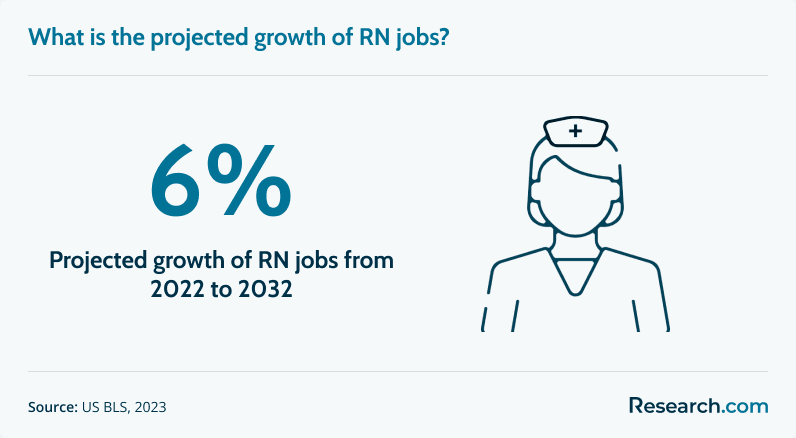
Demand for nurses in Oklahoma remains strong, influenced by the aging population and the continuing need for healthcare services. According to the U.S. Bureau of Labor Statistics, employment for registered nurses in Oklahoma is projected to grow by 10% from 2020 to 2030.
Top-paying metropolitan areas for nurses in Oklahoma include:
| Metropolitan area | Average annual pay stated |
| Oklahoma City | $68,000 |
| Tulsa | $66,000 |
| Lawton | $63,000 |
Advanced roles generally pay more than entry-level nursing roles. Nurse anesthetists and nurse practitioners often exceed $100,000 annually, while licensed practical nurses earn lower wages, with an average salary around $45,000. Salary outcomes still depend on experience, credentials, specialty, shift differentials, employer type, and location.
What are the nurse practitioner education requirements in Oklahoma?
To become a nurse practitioner in Oklahoma, you must first become an RN, complete accredited graduate-level nursing education, obtain national certification in your population focus or specialty, and meet state advanced practice requirements. Most NP candidates complete an MSN or DNP program with advanced coursework and supervised clinical training.
When comparing programs, verify that the curriculum, clinical placement model, faculty credentials, and specialty track align with nurse practitioner education requirements in Oklahoma. This is especially important for online programs, because online coursework does not remove the need for approved clinical experiences.
How can I integrate military nursing opportunities into my career?
Military nursing can appeal to nurses who want structured service, diverse clinical assignments, leadership development, and benefits tied to military employment. It may also involve deployment readiness, physical eligibility standards, and additional training beyond civilian nursing preparation.
If this path interests you, review military-specific qualifications early. Requirements can differ from civilian employer expectations, and your timeline may include commissioning, branch-specific training, and service obligations. Research.com’s guide on How to become a military nurse? explains the broader entry process.
How can I finance my nursing education in Oklahoma?
Paying for nursing school requires looking beyond advertised tuition. Students should compare total program cost, fees, books, supplies, uniforms, background checks, exam costs, commuting, lost work time, and clinical travel requirements.
- Start with federal aid. Complete the FAFSA if you are eligible, then compare grants, loans, and work-study options.
- Ask schools about nursing-specific aid. Some institutions offer scholarships, payment plans, emergency grants, or clinical-site support.
- Check employer support. Some hospitals and healthcare systems offer tuition reimbursement, loan assistance, or paid career-ladder programs.
- Compare completion time. A lower tuition program may not be cheaper if it delays graduation or lacks needed support.
- Plan for licensure costs. Budget for application fees, fingerprinting, NCLEX costs, and transcript requests.
Students who want a healthcare career but are comparing lower-cost or shorter training alternatives may also want to review how to become a medical biller and coder in Oklahoma.
What are the local mentorship and networking opportunities for nurses in Oklahoma?
Mentorship can make the transition from student to nurse much smoother. In Oklahoma, students and new nurses can look for support through nursing faculty, clinical preceptors, hospital residency programs, professional associations, alumni networks, specialty groups, and workplace education departments.
Good mentorship should help you understand patient-care expectations, charting standards, workplace culture, continuing education, specialty options, and licensure responsibilities. If you are starting at the practical nursing level, this guide to how to become an LVN in Oklahoma can help you compare early-career options.
How can I evaluate online nursing programs in Oklahoma?
Online nursing programs can be useful for students who need flexibility, but they require careful review. Nursing cannot be learned entirely through readings and virtual lectures; approved clinical experience remains essential.
| What to check | Why it matters | Question to ask |
| Accreditation and state approval | Protects licensure eligibility | Is this program accepted by the Oklahoma Board of Nursing? |
| Clinical placement support | Clinical hours are required for nursing preparation | Does the school secure placements, or must students find them? |
| NCLEX preparation | Licensure depends on passing the correct NCLEX exam | How does the program prepare students for NCLEX success? |
| Faculty access | Online students still need academic guidance | How quickly do faculty respond, and are tutoring services available? |
| Technology requirements | Online learning depends on reliable platforms | What software, hardware, proctoring, and simulation tools are required? |
For a starting point, compare the best online nursing programs in Oklahoma and then verify each program directly with the school and state board.
What challenges might I encounter during the licensing process in Oklahoma?
Licensing delays often come from documentation problems rather than lack of eligibility. Applicants may run into issues with missing transcripts, name mismatches, incomplete applications, delayed fingerprint processing, unclear exam records, or unresolved background-check questions.
- Use the same legal name across school records, NCLEX registration, and board documents.
- Request transcripts early, especially if your school has graduation processing delays.
- Keep copies of receipts, confirmations, and correspondence.
- Do not schedule employment start dates that assume immediate license approval.
- Contact the Oklahoma Board of Nursing promptly if you notice an error or missing document.
For a more detailed checklist, review the requirements for nursing licensure in Oklahoma.
How do nursing school rankings influence my decision?
Rankings can help you build an initial school list, but they should not be the only factor. A highly ranked program may still be a poor fit if it is unaffordable, lacks clinical placements near you, does not support your schedule, or does not align with your licensure goal.
Use rankings as one data point alongside accreditation, NCLEX preparation, clinical partnerships, student support, graduation requirements, cost, location, and transfer-credit policies. If you are comparing options, Research.com’s list of the best nursing schools in Oklahoma can help you begin your review.
How can I become a nurse midwife in Oklahoma?
To become a nurse midwife in Oklahoma, you typically begin by earning RN licensure, gaining relevant nursing experience, and completing an accredited graduate program focused on midwifery. Coursework and clinical training emphasize maternal health, reproductive care, labor and birth, postpartum care, newborn care, and patient education.
After completing the appropriate graduate education, candidates must pass the required specialty certification exam and meet Oklahoma’s advanced practice licensing rules. Because nurse-midwifery has both nursing and specialty-practice requirements, verify program eligibility before enrolling. For a dedicated roadmap, see how to become a nurse midwife in Oklahoma.
What type of nursing program is best suited for my career goals in Oklahoma?
The best nursing program depends on your target role, timeline, budget, academic background, and willingness to continue education later. A student who wants the quickest path into nursing support work may choose an LPN program, while a student planning for graduate nursing may prefer a BSN from the start.
| If your goal is... | Consider... | Why this path may fit |
| Enter nursing as quickly as possible | LPN program | Shorter preparation for practical nursing roles |
| Become an RN while managing cost and time | ADN program | Direct route to RN eligibility with a shorter typical timeline than a traditional BSN |
| Build stronger long-term advancement options | BSN program | Broader preparation for leadership, specialty, and graduate study |
| Advance from RN to BSN | RN-to-BSN program | Designed for licensed RNs who want bachelor’s-level preparation |
| Become an NP, educator, or advanced clinician | MSN or DNP program | Required for many advanced practice and specialized roles |
If you are considering practical nursing, compare program format, clinical access, and licensure support through resources such as online LPN programs in Oklahoma.
What are the best educational pathways for aspiring nurses in Oklahoma?
The strongest pathway is the one that gets you licensed for your intended role while preserving future flexibility. Students should avoid choosing a program only because it is nearby, inexpensive, or advertised as fast.
Entry-level students may begin with an LPN certificate or an ADN if they want a shorter path into patient care. These options can often be completed in 12-24 months, depending on the program type and student pace. However, students who want broader RN preparation, leadership potential, or graduate-school readiness may benefit from pursuing a BSN.
RNs who want advanced practice roles, such as nurse practitioner positions, usually need an MSN or DNP. If that is your goal, compare specialty tracks, clinical placement support, certification preparation, and admission requirements. You can start with Research.com’s list of the best NP programs in Oklahoma.
What are the continuing education and license renewal requirements for nurses in Oklahoma?
Oklahoma nurses must keep their licenses active by following renewal rules set by the Oklahoma Board of Nursing. Registered nurses in Oklahoma must renew their licenses every two years, and renewal commonly involves continuing education or other approved competency-related requirements.
Do not wait until the renewal deadline to locate CE documentation. Keep records of completed courses, employer training, specialty certifications, and any board-approved continuing competency activities. Nurses exploring broader healthcare credentials can also compare adjacent professional pathways such as how to become a pharmacist in Oklahoma.
How can I further specialize and advance my nursing career in Oklahoma?
After gaining licensure and experience, Oklahoma nurses can advance through specialty certification, bridge programs, graduate degrees, leadership training, preceptor roles, or advanced practice education. Specialization may help nurses move into areas such as critical care, emergency nursing, geriatrics, pediatrics, informatics, anesthesia, midwifery, or primary care.
Nursing informatics is one option for nurses interested in the intersection of clinical care, data, workflow improvement, and health technology. If that direction appeals to you, compare flexible options such as the easiest nursing informatics online programs.
Common mistakes to avoid when becoming a nurse in Oklahoma
- Choosing a program without verifying approval or accreditation. Always confirm whether the program supports Oklahoma licensure eligibility.
- Looking only at tuition. Total cost includes fees, supplies, clinical travel, testing, background checks, and time away from work.
- Assuming online means fully remote. Nursing programs still require clinical experiences, labs, simulations, or in-person components.
- Confusing LPN, RN, and APRN scopes. Each role has different authority, training, and licensure requirements.
- Starting work before licensure is active. Graduation and job offers do not replace board authorization.
- Ignoring transfer-credit rules. Credits may not transfer smoothly between schools or program levels.
- Relying only on rankings. A program should also fit your schedule, budget, clinical needs, and career goal.
Questions to ask before choosing a nursing program in Oklahoma
- Is the program approved for Oklahoma nursing licensure?
- Is the program accredited by a recognized nursing accreditor?
- What NCLEX preparation support does the school provide?
- Where are clinical placements located, and who arranges them?
- What is the full cost after fees, supplies, testing, and travel?
- Can I attend part time, evenings, weekends, or online if needed?
- Will credits transfer into a BSN, MSN, or DNP later?
- What academic support is available if I struggle in a course or clinical rotation?
- Does the program meet requirements for compact-state practice or advanced study?
- What employers hire graduates from this program?
What nurses say about becoming a nurse in Oklahoma
- Jessica: Nursing in Oklahoma can feel community-centered, especially for nurses who work with patients over time. She values the ability to build lasting patient relationships and notes that the lower cost of living can help earnings stretch further.
- Mark: As an LPN working toward an RN credential, he sees Oklahoma as a place where continuing education and employer tuition support can help nurses move up over time.
- Emily: She highlights the value of mentorship, peer support, and strong demand for nurses as important advantages for new professionals entering the field.
Related Articles for Nearby States
- 2027 How to Become a Nurse in Texas
- 2027 How to Become a Nurse in Kansas
- 2027 How to Become a Nurse in Arkansas
- 2027 How to Become a Nurse in Missouri
- 2027 How to Become a Nurse in Colorado
- 2027 How to Become a Nurse in New Mexico
- 2027 How to Become a Nurse in Nebraska
- 2027 How to Become a Nurse in Louisiana
- 2027 How to Become a Nurse in Iowa
- 2027 How to Become a Nurse in Mississippi
Key insights
- To practice nursing in Oklahoma, you need the correct education, NCLEX exam, background check, application approval, and active license or valid compact privilege.
- An LPN program is usually the fastest route into nursing, an ADN is a common RN pathway, and a BSN may provide stronger long-term flexibility.
- Oklahoma participates in the enhanced Nurse Licensure Compact, which can help eligible multistate license holders practice across compact states.
- Program approval, accreditation, clinical placement quality, and NCLEX preparation should matter more than advertising claims or rankings alone.
- Salary and job outcomes vary by role, location, experience, specialty, and employer; do not assume any program can guarantee earnings.
- Advanced roles such as nurse practitioner, nurse anesthetist, and nurse midwife require graduate education, certification, and additional licensing steps.
- The safest next step is to choose your target nursing role first, then verify that your program and timeline match Oklahoma Board of Nursing requirements.
References:
- Oklahoma Board of Nursing (n.d.). Fact Sheet for Licensed Nurses.
- Nurse Journal (2023). Oklahoma nurse licensing requirements.
- The University of Tulsa (2023). Guide to obtaining an Oklahoma nursing license.
- U.S. Bureau of Labor Statistics. (2023). Licensed practical and licensed vocational nurses.
Other Things You Should To Know About Becoming a Nurse in Oklahoma
Becoming a nurse in Oklahoma typically takes 2-4 years, depending on the type of nursing program you choose. An Associate Degree in Nursing (ADN) generally takes 2 years, while a Bachelor of Science in Nursing (BSN) takes around 4 years.
To become a nurse in Oklahoma in 2027, you must complete an accredited nursing program, pass the NCLEX-RN exam, and apply for licensure through the Oklahoma Board of Nursing. Additionally, background checks and continuing education may be required for maintaining your license.
To become a nurse in Oklahoma in 2027, you must complete an accredited nursing program and pass the NCLEX-RN exam. After obtaining your license from the Oklahoma Board of Nursing, you may seek employment in various healthcare settings, such as hospitals, clinics, or nursing homes.


