2027 How to Become a Nurse Practitioner in Pennsylvania

Co-Founder and Chief Data Scientist
Becoming a nurse practitioner in Pennsylvania is not just a matter of earning another nursing credential. It is a regulated career move that requires advanced graduate education, national certification, state authorization, clinical experience, and ongoing compliance with Pennsylvania nursing rules. For registered nurses, career changers, and nursing students, the key question is whether the time, cost, and regulatory requirements are worth the expanded clinical role and earning potential.
This guide explains how to become a nurse practitioner in Pennsylvania, what degree you need, how licensure works, how long programs usually take, what costs to expect, and how Pennsylvania’s scope-of-practice rules affect day-to-day work. It also compares education pathways, specializations, job prospects, salary expectations, telehealth opportunities, and alternatives so you can decide whether the NP path fits your goals.
Quick Answer: How to Become a Nurse Practitioner in Pennsylvania
To become a nurse practitioner in Pennsylvania, you generally need to earn a Bachelor of Science in Nursing (BSN), pass the NCLEX-RN, obtain an RN license, complete an accredited MSN or DNP nurse practitioner program, finish required supervised clinical hours, pass a national certification exam in your specialty, and apply through the Pennsylvania State Board of Nursing. The process commonly takes 2-4 years after becoming an RN, depending on whether you choose an MSN, DNP, bridge program, full-time study, or part-time study.
- Pennsylvania nurse practitioners must hold an advanced nursing degree, typically an MSN or DNP.
- Graduate NP programs usually include 500 to 1,000 clinical hours, depending on the school and specialty.
- Pennsylvania requires national certification in the NP specialty area before state authorization.
- NPs in Pennsylvania work in hospitals, clinics, private practices, long-term care, community health, and telehealth settings.
- Salary and job opportunities vary by region, specialization, employer, experience, and scope-of-practice rules.
Key Things You Should Know About Becoming a Nurse Practitioner in Pennsylvania
- The standard route begins with a BSN and RN license, followed by an MSN or DNP nurse practitioner program. Graduate NP education typically takes 2-4 years and must prepare you for national certification in a population-focused specialty.
- The average salary for nurse practitioners in Pennsylvania is approximately $115,000 per year, while some experienced NPs earn upwards of $130,000. Later BLS-based salary figures in this guide cite an average annual income of around $127,450 as of 2024, with top earners close to $162,820.
- The U.S. Bureau of Labor Statistics projects nurse practitioner job growth of 45% from 2020 to 2030, much faster than the average for all occupations. Other projections cited in this guide include approximately 42.3% growth by 2032 and 46% growth from 2023 to 2033.
- Pennsylvania offers NP opportunities in hospitals, primary care, specialty practices, community clinics, rural care settings, long-term care, and telehealth. Demand is especially important in areas with limited access to primary care providers.
- Available figures describing the size of the NP workforce vary by source and year. Pennsylvania has been described as home to around 18,000 NPs, while other cited figures refer to over 10,000 licensed nurse practitioners and over 7,500 currently practicing NPs in the state.
- How do you become a nurse practitioner in Pennsylvania?
- What degree do you need to become a nurse practitioner in Pennsylvania?
- What are the licensing requirements for nurse practitioners in Pennsylvania?
- What are the continuing education requirements for nurse practitioners in Pennsylvania?
- How long does it take to complete a nurse practitioner program in Pennsylvania?
- What are the costs associated with a nurse practitioner program in Pennsylvania?
- What are the top educational pathways to nurse practitioner licensure in Pennsylvania?
- What is the scope of practice for nurse practitioners in Pennsylvania?
- Are emerging regulatory trends impacting nurse practitioner practice in Pennsylvania?
- How can online education pathways accelerate nurse practitioner training in Pennsylvania?
- What are the different specializations for nurse practitioners in Pennsylvania?
- What are the long-term career advancement opportunities for nurse practitioners in Pennsylvania?
- What are the job prospects for nurse practitioners in different specialties in Pennsylvania?
- How can nurse practitioners leverage telehealth to enhance patient care in Pennsylvania?
- How do legal and ethical challenges impact nurse practitioners in Pennsylvania?
- How can pursuing advanced online education transform a nurse practitioner’s career in Pennsylvania?
- How can nurse practitioners integrate midwifery expertise into their practice in Pennsylvania?
- How can nurse practitioners safeguard ongoing compliance with state licensure requirements?
- What alternatives to nurse practitioner careers are available in Pennsylvania?
- How can nurse practitioners complement their practice with nutritional expertise in Pennsylvania?
- How can integrating medical billing and coding expertise enhance a nurse practitioner’s practice in Pennsylvania?
- What are the salary expectations for nurse practitioners in Pennsylvania?
How do you become a nurse practitioner in Pennsylvania?
The Pennsylvania NP pathway starts with RN preparation and ends with state recognition as a certified registered nurse practitioner. The exact route depends on your current education level, but every candidate must meet nursing education, clinical training, certification, and state application requirements.
- Complete nursing education. Most future NPs begin with a BSN, although nurses with an associate degree may use bridge options later.
- Pass the NCLEX-RN. This exam is required to become licensed as a registered nurse.
- Hold an active RN license. Pennsylvania NP authorization builds on RN licensure.
- Earn a graduate nursing degree. Complete an MSN or DNP program with a nurse practitioner concentration.
- Finish supervised clinical training. NP programs in Pennsylvania commonly require 500 to 1,000 clinical hours, depending on the program.
- Pass national certification. Certification must match your specialty, such as family practice, pediatrics, adult-gerontology, or psychiatric-mental health.
- Apply to the Pennsylvania State Board of Nursing. Submit the required application materials, fees, background check documentation, and proof of credentials.
| Step | What it proves | Decision point for students |
| BSN or nursing foundation | You have the undergraduate nursing preparation needed for RN practice and graduate admission. | If you do not yet have a BSN, compare traditional BSN, RN-to-BSN, and bridge options. |
| RN license | You can legally practice as a registered nurse and enter advanced clinical training. | Check whether your license status and state eligibility meet graduate program requirements. |
| MSN or DNP | You have advanced practice education in a specific NP population focus. | Choose between faster entry into practice through an MSN or broader doctoral preparation through a DNP. |
| National certification | An external certifying body has verified your specialty knowledge. | Select a specialty that matches the patients and settings where you want to work. |
| Pennsylvania authorization | You meet state requirements for NP practice. | Review collaborative practice, prescribing, renewal, and documentation rules before accepting a role. |
What degree do you need to become a nurse practitioner in Pennsylvania?
Pennsylvania nurse practitioners need graduate-level nursing education. In practice, this means earning either a Master of Science in Nursing or a Doctor of Nursing Practice with an NP specialty track. The degree must prepare you for advanced assessment, diagnosis, treatment planning, pharmacology, evidence-based practice, and supervised clinical care in your chosen population area.
An MSN is often the most direct graduate route for RNs who want to become NPs. A DNP may be a better fit for nurses who want deeper preparation in leadership, systems improvement, evidence translation, and complex practice environments. Some students also consider BSN-to-DNP options when they want to move from undergraduate nursing directly into doctoral-level NP preparation; students comparing cost-conscious options can review affordable online BSN-to-DNP programs.
Pennsylvania students may encounter NP options at institutions such as the University of Pennsylvania, Duquesne University, and Pennsylvania State University. Program formats differ, so applicants should compare accreditation, specialty availability, clinical placement support, board certification pass preparation, tuition, and whether online coursework still requires in-person intensives or local clinical rotations.
| Degree pathway | Best for | Important trade-off |
| MSN Nurse Practitioner | RNs who want the most common graduate route into NP practice. | Usually shorter than a DNP but may offer less doctoral-level leadership and systems training. |
| DNP Nurse Practitioner | Nurses who want advanced clinical, leadership, and practice-improvement preparation. | Often takes longer and may cost more than an MSN route. |
| RN-to-MSN | Associate-degree RNs seeking a bridge into graduate nursing education. | Admissions rules, prerequisite courses, and BSN-equivalency requirements vary by program. |
| BSN-to-DNP | BSN-prepared nurses who want doctoral preparation without earning a separate MSN first. | The commitment is larger, so students should evaluate debt, workload, and career goals carefully. |
| Post-master’s certificate | Advanced nurses adding a new NP population focus. | Certification eligibility depends on whether the certificate includes required specialty coursework and clinical hours. |
Professional organizations such as the Pennsylvania Coalition of Nurse Practitioners and the American Association of Nurse Practitioners can help students understand certification, advocacy, networking, and continuing education expectations. Certifying organizations such as the American Nurses Credentialing Center and the American Academy of Nurse Practitioners Certification Board are also important because state eligibility depends on national certification in the appropriate specialty.
What are the licensing requirements for nurse practitioners in Pennsylvania?
To practice as a nurse practitioner in Pennsylvania, you must first hold a valid RN license. After that, you must complete graduate nursing education in an advanced practice specialty, pass a national certification exam, and apply through the Pennsylvania State Board of Nursing. Nurses who started with an associate degree and want a bridge route into advanced practice can compare affordable online RN-to-MSN programs.
The licensure process usually requires documentation of your nursing education, national certification, RN license, application materials, and fees. Pennsylvania also requires a background check that includes fingerprinting. Depending on the applicant’s situation, the combined cost of application steps and background-related fees can range from $100 to $300.
Clinical preparation is a core requirement. Pennsylvania requires a minimum of 500 hours of supervised clinical practice within the educational program. Many programs exceed that minimum, especially for certain specialties or doctoral pathways. Students should confirm that clinical hours are tied to the population focus needed for certification.
| Requirement | What applicants should verify | Why it matters |
| Active RN license | License status, state eligibility, and any disciplinary history. | NP authority depends on RN licensure. |
| Graduate NP degree | Accreditation, specialty track, clinical hour structure, and certification alignment. | A degree that does not match certification requirements can delay licensure. |
| National certification | Certifying body, exam eligibility, renewal cycle, and population focus. | Pennsylvania requires specialty certification for NP practice. |
| Background check and fingerprinting | Submission process, timing, and associated fees. | Delays in background processing can postpone authorization. |
| Clinical practice documentation | Minimum supervised hours and program verification. | The state may require proof that your training meets advanced practice standards. |
Because requirements can change, applicants should review the Board’s current instructions before applying and keep copies of transcripts, certification letters, clinical logs, continuing education records, and renewal confirmations.
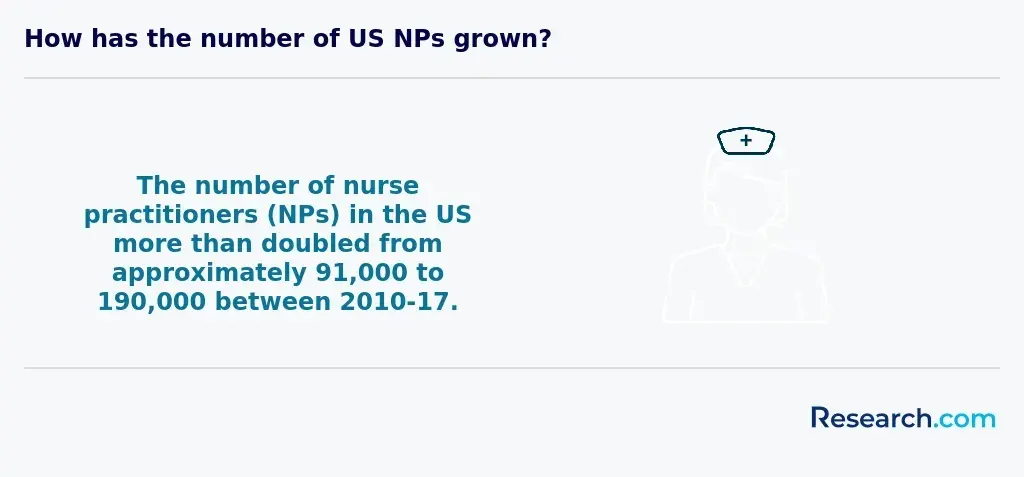
The number of licensed NPs in the United States is steadily growing, as seen in the chart below.
What are the continuing education requirements for nurse practitioners in Pennsylvania?
Pennsylvania nurse practitioners must maintain their credentials after initial licensure. The Pennsylvania State Board of Nursing requires 30 hours of continuing education every two years. Continuing education is not simply a renewal task; it helps NPs stay current with clinical guidelines, prescribing standards, patient safety expectations, telehealth policies, documentation rules, and specialty-specific practice changes.
Pennsylvania also emphasizes ongoing clinical activity. NPs must show a minimum of 1,000 hours of clinical practice within the two-year renewal period. In addition, they must maintain valid national certification in their specialty area, since certification is commonly tied to renewal eligibility and professional credibility.
| Renewal item | Requirement stated in this guide | Practical tip |
| Continuing education | 30 hours every two years | Do not wait until the final month; spread CE across the renewal period. |
| Clinical practice | Minimum of 1,000 hours during the two-year renewal period | Track hours in a secure system and keep employer verification when possible. |
| National certification | Valid certification in the NP specialty | Align national certification renewal deadlines with Pennsylvania license renewal deadlines. |
| Documentation | Proof of completed CE and clinical practice may be requested | Keep certificates, transcripts, course descriptions, and clinical records organized. |
Many NPs use professional organizations, employer education platforms, specialty conferences, and online CE providers to complete requirements. The best approach is to choose CE that strengthens your actual practice area rather than selecting the easiest available courses.
How long does it take to complete a nurse practitioner program in Pennsylvania?
Most nurse practitioner programs in Pennsylvania take two to four years, depending on the degree level, program format, specialty, transfer credits, and enrollment pace. Full-time MSN students may finish faster, while part-time students, BSN-to-DNP students, and those balancing work and family responsibilities often need more time.
- Family Nurse Practitioner: Approximately 2-3 years
- Pediatric Nurse Practitioner: About 2-3 years
- Adult-Gerontology Nurse Practitioner: Typically 2-3 years
- Psychiatric-Mental Health Nurse Practitioner: Generally 2-4 years
| Factor | How it can affect your timeline | Question to ask before enrolling |
| Full-time vs. part-time study | Full-time study may shorten the calendar timeline but increase weekly workload. | Can I realistically complete coursework, clinical hours, and employment obligations at the same time? |
| MSN vs. DNP | DNP pathways often take longer because they include doctoral-level practice and leadership requirements. | Do I need doctoral preparation for my career goals, or is an MSN sufficient? |
| Clinical placement availability | Difficulty securing preceptors can delay graduation. | Does the school arrange clinical placements, or am I responsible for finding sites? |
| Specialty requirements | Some specialties require more intensive clinical preparation or scheduling flexibility. | Are clinical rotations available in my region and desired population focus? |
| Bridge coursework | RN-to-MSN or nontraditional pathways may include extra prerequisites. | Will I need additional undergraduate or statistics, research, or assessment courses? |
What are the costs associated with a nurse practitioner program in Pennsylvania?
The cost of a Pennsylvania nurse practitioner program depends on the school, degree type, residency status, number of credits or course units, online fees, clinical expenses, books, technology, travel, and whether you study full time or part time. Cited estimates place the total financial commitment at approximately $103,187 for full-time students and over $107,000 for students studying part time over three years. Additional expenses may include textbooks, clinical supplies, technology, background checks, immunizations, transportation, and living costs, including off-campus housing expenses that can exceed $22,000.
Tuition varies widely. For example, the University of Pennsylvania charges around $6,640 per course unit. Millersville University lists in-state tuition at about $17,024 and out-of-state tuition around $22,386. Because the sticker price does not always reflect the true net cost, applicants should compare tuition, fees, financial aid, employer tuition assistance, loan repayment options, and clinical placement costs before choosing a program.
| Cost category | What to include in your budget | How to reduce risk |
| Tuition | Per-credit, per-course-unit, or flat-rate program charges. | Compare total program cost, not just one semester’s tuition. |
| Fees | Technology, simulation, clinical, graduation, background check, and application fees. | Ask for a full fee schedule before accepting admission. |
| Clinical expenses | Travel, parking, uniforms, health records, drug screening, and liability coverage. | Confirm whether clinical sites are local or require long-distance travel. |
| Living costs | Housing, food, childcare, reduced work hours, and commuting. | Build a realistic budget for lost income if you reduce work hours. |
| Certification and licensure | National exam fees, state application fees, fingerprinting, and renewal costs. | Plan for these expenses before the final semester. |
Is a nurse practitioner program in Pennsylvania worth the cost?
An NP program may be worth it if the credential moves you into a role with stronger autonomy, higher compensation, better schedule options, or a specialty you genuinely want to practice. It may not be the right investment if you are uncertain about patient population, unwilling to complete graduate-level clinical training, or choosing a program without verifying accreditation and certification eligibility.
What are the top educational pathways to nurse practitioner licensure in Pennsylvania?
The best educational pathway depends on your starting point. A BSN-prepared RN may move directly into an MSN or BSN-to-DNP program. An associate-degree RN may need a bridge pathway. A master’s-prepared nurse may use a post-master’s certificate to add a new NP population focus. Students comparing local options can start with the best nurse practitioner programs in Pennsylvania, but rankings should be only one part of the decision.
Accreditation is critical. Programs accredited by the Commission on Collegiate Nursing Education or the Accreditation Commission for Education in Nursing are designed to meet recognized nursing education standards. Applicants should also verify that the specific NP track—not just the university—is structured for certification eligibility in the intended specialty.
| Pathway | When it makes sense | Watch out for |
| Traditional MSN-NP | You already have a BSN and want a direct graduate route into advanced practice. | Clinical placement support can vary significantly by school. |
| BSN-to-DNP | You want doctoral-level preparation and are ready for a longer academic commitment. | Higher time and cost commitment may not be necessary for every role. |
| RN-to-MSN | You are an RN without a BSN and want a streamlined graduate pathway. | Bridge coursework may extend the timeline beyond the advertised graduate phase. |
| Online APRN program | You need flexibility while continuing to work as a nurse. | Online does not mean fully remote; clinical hours still require approved patient-care sites. |
| Post-master’s NP certificate | You already hold a graduate nursing degree and want another NP specialty. | Certification boards may require specific coursework and clinical hours. |
Students should ask each program how it supports clinical placements, board exam preparation, preceptor verification, Pennsylvania authorization, and specialty-specific outcomes. Nurses or allied health workers earlier in the pipeline may also consider practical stepping-stone options; for example, medical assistants exploring nursing routes can review fast-track medical assistant-to-LPN online programs.
What is the scope of practice for nurse practitioners in Pennsylvania?
Pennsylvania’s nurse practitioner scope of practice is more restrictive than full-practice-authority states. NPs are required to work under formal agreements with two physicians for a probationary period of three years and must accumulate 3,600 hours of clinical practice during that period. These rules influence where NPs can work, how practices are structured, and how quickly experienced NPs may function with fewer administrative barriers.
Within their training and agreements, Pennsylvania NPs may assess patients, diagnose conditions, order and interpret tests, develop treatment plans, and prescribe medications. However, prescribing and practice authority must follow state rules and the terms of collaborative agreements. This can create administrative friction, especially in urgent care, rural care, and settings where physician availability is limited.
Policy advocates have continued to push for modernization. Proposed legislation such as House Bill 100 has been discussed as part of efforts to reduce practice barriers and expand access to care, especially in underserved and rural communities. Anyone planning an NP career in Pennsylvania should follow scope-of-practice developments because regulatory changes can affect job design, employer demand, compensation, and independent practice opportunities.
| Practice issue | How it affects Pennsylvania NPs | What students should do |
| Collaborative agreements | Formal physician agreements shape practice authority and prescribing structure. | Ask employers how agreements are managed before accepting an NP position. |
| Probationary period | The three-year and 3,600-hour framework can affect early-career autonomy. | Clarify supervision, documentation, and transition expectations. |
| Prescriptive authority | Medication management must comply with Pennsylvania law and agreement terms. | Complete pharmacology CE and understand controlled-substance rules. |
| Rural care access | Restrictions may matter more in areas with fewer physicians and limited services. | Evaluate whether employers have stable physician collaboration arrangements. |
Are emerging regulatory trends impacting nurse practitioner practice in Pennsylvania?
Yes. Pennsylvania policy discussions continue to focus on whether collaborative agreement requirements should be revised. Any change to practice authority could affect NP hiring, compensation, patient access, documentation duties, and employer staffing models. Practicing nurses should monitor official state sources and professional associations rather than relying on outdated summaries.
Students building a broader understanding of the state’s nursing pathway can also review how to become a nurse in Pennsylvania, especially if they are still deciding between RN, APRN, and other healthcare roles.
How can online education pathways accelerate nurse practitioner training in Pennsylvania?
Online NP programs can help working nurses complete graduate coursework without relocating, but they do not remove clinical requirements. Most online and hybrid programs combine virtual classes with local supervised clinical rotations, skills checks, simulation work, or campus intensives. This format can be helpful for RNs who need flexibility, but it requires strong time management and early planning for preceptors.
Students interested in primary care can compare online BSN-to-MSN FNP programs. Before enrolling, confirm whether the program accepts Pennsylvania residents, supports clinical placements in Pennsylvania, and prepares graduates for the national certification exam required for state authorization.
What are the different specializations for nurse practitioners in Pennsylvania?
Nurse practitioner specialties are organized around patient populations and care needs. Your specialty affects certification, clinical placements, job settings, salary potential, daily responsibilities, and long-term career direction. The most common Pennsylvania NP specializations include Family Nurse Practitioner, Adult-Gerontology Primary Care Nurse Practitioner, Pediatric Nurse Practitioner, and Psychiatric-Mental Health Nurse Practitioner.
| Specialization | Typical patient population | Common work settings | Best fit for nurses who want to |
| Family Nurse Practitioner | Patients across the lifespan | Primary care, community clinics, retail clinics, urgent care, family practices | Provide broad primary care and manage preventive and chronic conditions. |
| Adult-Gerontology Nurse Practitioner | Adults and older adults | Primary care, specialty clinics, long-term care, internal medicine, geriatric care | Focus on adult health, aging, chronic disease, and complex care coordination. |
| Pediatric Nurse Practitioner | Infants, children, adolescents | Pediatric practices, children’s hospitals, school-based clinics, specialty pediatrics | Work with children and families on acute, preventive, and developmental care. |
| Psychiatric-Mental Health Nurse Practitioner | Patients with mental health and behavioral health needs | Behavioral health clinics, hospitals, community mental health, telepsychiatry | Assess, diagnose, and treat mental health conditions in settings with high access needs. |
Family Nurse Practitioner is one of the most versatile options because it prepares NPs to care for patients across age groups. Adult-gerontology may suit nurses interested in chronic disease management and aging populations. Pediatrics is a strong fit for nurses committed to child and adolescent health. Psychiatric-mental health may appeal to nurses who want to address behavioral health access gaps.
Students comparing specialties should not choose based on salary alone. They should consider patient population, emotional demands, clinical pace, prescribing responsibilities, job availability, and whether the specialty aligns with their long-term professional identity. Nurses considering adjacent specialty areas can also review cosmetic nurse salary information to compare compensation patterns in a different nursing niche.
The chart below displays which specializations are preferred the most by nurse practitioners.
What are the long-term career advancement opportunities for nurse practitioners in Pennsylvania?
Nurse practitioners can advance well beyond entry-level clinical practice. With experience, specialty certification, leadership training, and strong outcomes, NPs may move into senior clinical roles, practice leadership, healthcare administration, quality improvement, education, policy, consulting, or doctoral-level academic work.
| Advancement path | What it involves | Preparation that helps |
| Senior clinical NP | Managing complex cases, mentoring newer clinicians, and leading specialty protocols. | Specialty certification, strong clinical outcomes, and continuing education. |
| Clinical director or practice manager | Overseeing staff, workflows, patient access, quality metrics, and compliance. | Leadership training, operations knowledge, and documentation expertise. |
| Healthcare administrator | Working on service lines, budgets, staffing, population health, and strategic planning. | DNP, MBA-related coursework, or healthcare management experience. |
| Faculty or preceptor | Teaching future nurses and supporting clinical education. | Graduate preparation, teaching experience, and professional service. |
| Policy or advocacy role | Influencing state practice rules, access policies, and workforce planning. | Professional association involvement and understanding of Pennsylvania regulations. |
Nurses who are still comparing the financial value of nursing education can use BSN career salary information as an early benchmark before estimating the added return of graduate NP education.
What are the job prospects for nurse practitioners in different specialties in Pennsylvania?
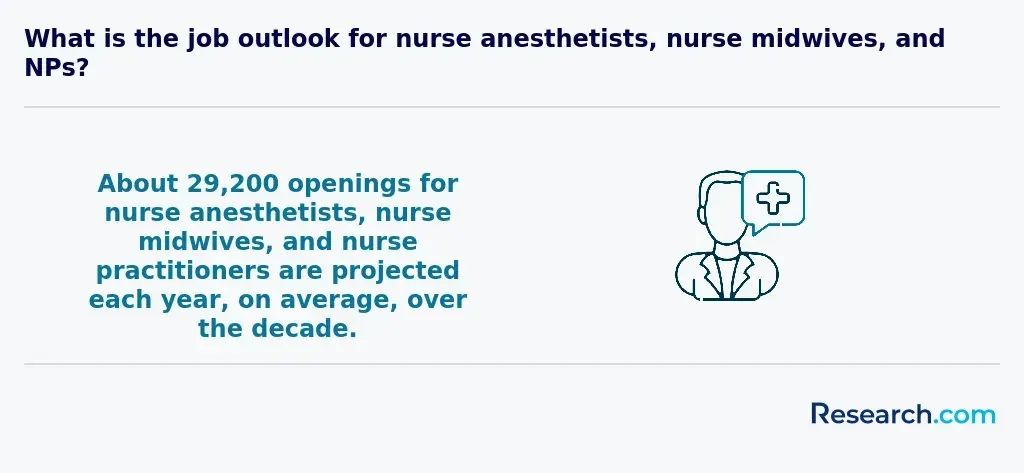
NP job prospects in Pennsylvania are strong, especially in primary care, behavioral health, chronic disease management, long-term care, and underserved communities. Short-term demand is projected to rise by approximately 42.3% by 2032, and long-term projections cite 46% growth from 2023 to 2033 according to the United States Bureau of Labor Statistics. Demand is supported by an aging population, limited primary care access in some regions, and broader use of advanced practice providers.
Family nurse practitioners are especially important in areas with primary care shortages. Psychiatric-mental health nurse practitioners may also find strong demand as mental health access remains a major healthcare challenge. Adult-gerontology NPs are positioned for roles serving older adults and patients with multiple chronic conditions, while pediatric NPs support child and adolescent care across outpatient and specialty settings.
- Hospitals and large healthcare systems
- Community health clinics
- Private practices
- Long-term care facilities
- Telehealth services
| Specialty | Demand drivers | Potential limitation |
| Family Nurse Practitioner | Primary care shortages, preventive care needs, chronic disease management. | Competition may be higher in desirable urban outpatient markets. |
| Adult-Gerontology | Aging population and complex chronic care needs. | Some roles may require comfort with high-acuity or long-term care settings. |
| Pediatrics | Preventive care, acute pediatric care, developmental screening, family education. | Job availability may depend on local children’s hospitals and pediatric practices. |
| Psychiatric-Mental Health | Behavioral health access needs and telepsychiatry growth. | Work can involve complex risk assessment and high emotional demands. |
Nurses who are exploring healthcare fields outside nursing may also compare adjacent high-demand clinical careers. For example, those interested in imaging can review affordable online associate degrees in radiology before deciding whether to stay on the nursing track.
How can nurse practitioners leverage telehealth to enhance patient care in Pennsylvania?
Telehealth allows Pennsylvania NPs to deliver follow-up visits, chronic disease check-ins, medication management, behavioral health support, patient education, and triage when in-person care is not necessary. It can be especially useful for rural patients, mobility-limited patients, and busy families who face transportation or scheduling barriers.
Telehealth also requires careful compliance. NPs must understand licensure rules, prescribing limits, documentation standards, privacy requirements, informed consent, emergency protocols, and payer policies. Telehealth should expand access without lowering clinical quality or weakening patient safety.
Nurses who want to understand practical nursing roles that may support broader care teams can also review how to become an LPN in Pennsylvania.
How do legal and ethical challenges impact nurse practitioners in Pennsylvania?
Legal and ethical issues affect nearly every part of NP practice in Pennsylvania. Collaborative agreements, prescribing authority, malpractice exposure, patient privacy, informed consent, documentation, telehealth boundaries, and scope-of-practice limits all require active attention. A clinically skilled NP can still face risk if documentation is incomplete or practice actions fall outside state rules.
Ethical challenges often involve balancing access, autonomy, patient safety, and resource limitations. For example, a rural patient may need timely care, but the NP still must follow collaborative agreement and prescribing requirements. Strong programs prepare students for these realities through legal, ethical, and policy coursework. Applicants comparing preparation quality can review the best nursing schools in Pennsylvania while also checking each program’s advanced practice curriculum.
How can pursuing advanced online education transform a nurse practitioner’s career in Pennsylvania?
Advanced online education can help working nurses pursue graduate preparation, change specialties, or strengthen leadership credentials without leaving employment. The strongest online programs are not easier versions of campus programs; they combine rigorous coursework, faculty interaction, clinical performance expectations, and approved patient-care experiences.
Online study works best for self-directed nurses who can manage deadlines, communicate proactively with faculty and preceptors, and plan clinical placements early. Students should confirm accreditation, certification alignment, state authorization, clinical support, and technology requirements before enrolling. A useful starting point is Research.com’s guide to the best online nursing programs in Pennsylvania.
How can nurse practitioners integrate midwifery expertise into their practice in Pennsylvania?
Some nurse practitioners may want to add women’s health, reproductive health, prenatal, postpartum, or family-centered care expertise to their practice. Midwifery is a distinct advanced nursing path with its own education, certification, and regulatory requirements, so NPs should not assume they can provide full midwifery services without additional preparation.
For clinicians interested in pregnancy, birth, and postpartum care, the next step is to understand the separate credentialing pathway for nurse-midwives. Research.com explains that route in its guide on how to become a nurse midwife in Pennsylvania.
How can nurse practitioners safeguard ongoing compliance with state licensure requirements?
Compliance is easier when NPs treat documentation as an ongoing professional system, not a last-minute renewal task. Keep digital and backup copies of licenses, national certification, CE certificates, clinical practice records, collaborative agreements, malpractice coverage, prescriptive authority documents, and employer attestations.
- Review state rules at least once each renewal cycle.
- Track CE hours immediately after completing each course.
- Maintain a clinical-hour log that can be verified if requested.
- Monitor national certification expiration dates separately from state renewal dates.
- Save collaborative agreement documents and updates in an organized file.
- Check employer policies for telehealth, prescribing, documentation, and incident reporting.
For a broader state licensure overview, review Pennsylvania nursing license requirements.
What alternatives to nurse practitioner careers are available in Pennsylvania?
The NP path is a strong option for many nurses, but it is not the only healthcare career with patient impact and professional mobility. Some students may prefer pharmacy, radiology, public health, nutrition, health administration, medical billing and coding, nursing education, or other clinical roles. The right alternative depends on whether you want direct patient diagnosis and treatment, medication expertise, technical procedures, administrative work, or preventive health counseling.
For students interested in medication therapy, patient counseling, and pharmacy practice, Research.com provides a separate guide on how to become a pharmacist in Pennsylvania.
How can nurse practitioners complement their practice with nutritional expertise in Pennsylvania?
Nutrition knowledge can strengthen NP practice in primary care, diabetes management, cardiovascular risk reduction, weight management, pediatrics, geriatrics, women’s health, and chronic disease counseling. However, nutrition counseling should be delivered within the clinician’s training, scope, and applicable state rules.
NPs who want a deeper credential in food, diet, and health behavior can explore additional education or certification. Students considering this direction can review how to become a nutritionist in Pennsylvania.
How can integrating medical billing and coding expertise enhance a nurse practitioner’s practice in Pennsylvania?
Medical billing and coding knowledge can make NPs better at documentation, reimbursement awareness, compliance, and practice operations. This is especially useful for NPs in private practice, leadership roles, telehealth, quality improvement, or administrative positions. It can also reduce avoidable claim denials when documentation accurately reflects the care provided.
NPs do not need to become professional coders to benefit from coding literacy, but understanding evaluation and management documentation, diagnosis coding, payer requirements, and revenue cycle basics can improve practice sustainability. For related income and role information, see Research.com’s guide to the average salary for medical billers in Pennsylvania.
What are the salary expectations for nurse practitioners in Pennsylvania?
As of 2024, the average annual income for nurse practitioners in Pennsylvania is around $127,450, according to the BLS, with top earners making close to $162,820. Salary varies by location, specialty, experience, employer type, schedule, productivity expectations, and whether the role includes leadership, on-call duties, or specialty procedures.
NPs in urban centers such as Philadelphia typically earn about 4% more than the state average, and Philadelphia and Pittsburgh are often noted among higher-paying locations for the profession. However, a higher salary in an urban market may come with higher living costs, heavier patient volume, longer commutes, or more competitive hiring.
| Salary factor | How it can affect pay | What to compare before accepting a job |
| Specialty | Psychiatric, acute, primary care, pediatric, and gerontology roles may differ in pay and demand. | Compare salary with workload, patient complexity, and certification requirements. |
| Location | Urban markets may pay more, while rural roles may offer access-focused opportunities. | Consider cost of living, commute, and loan repayment possibilities. |
| Employer type | Hospitals, private practices, community clinics, telehealth companies, and long-term care facilities may use different pay models. | Review benefits, malpractice coverage, schedule, and patient volume expectations. |
| Scope and responsibilities | Roles with leadership, prescribing complexity, call coverage, or specialty procedures may pay differently. | Make sure compensation matches responsibility and risk. |
Salary should be part of the decision, but not the only factor. A lower-paying role with strong mentorship, manageable patient load, and excellent benefits may be better for a new graduate than a higher-paying role with weak onboarding and unclear collaborative arrangements.
Common Mistakes to Avoid When Becoming a Nurse Practitioner in Pennsylvania
- Choosing a program before checking accreditation. Accreditation affects certification eligibility, employer acceptance, and licensure preparation.
- Assuming online means fully remote. NP programs still require supervised clinical practice, and some include campus visits or skills intensives.
- Ignoring clinical placement support. A strong curriculum is not enough if you cannot secure appropriate preceptors.
- Picking a specialty only for salary. Specialty choice affects daily patient care, emotional demands, certification, and long-term satisfaction.
- Underestimating total cost. Tuition is only one part of the budget; include fees, books, travel, lost work hours, licensure, and certification.
- Assuming Pennsylvania rules match other states. Scope-of-practice and collaborative agreement requirements vary widely by state.
- Waiting until renewal season to track CE. Maintain continuing education and clinical-hour records throughout the two-year cycle.
- Relying only on rankings. A highly ranked school may still be a poor fit if it lacks your specialty, clinical support, or affordable tuition.
Questions to Ask Before Enrolling in a Pennsylvania NP Program
- Is the nursing program accredited by a recognized nursing accreditor?
- Does the NP specialty track qualify graduates for the national certification exam I plan to take?
- Does the program accept Pennsylvania residents and prepare students for Pennsylvania authorization?
- Who is responsible for finding clinical placements?
- How many clinical hours are required, and where can they be completed?
- What is the total estimated cost, including fees and clinical expenses?
- Can I complete the program while working full time, or should I reduce my hours?
- What board certification support, exam preparation, and faculty advising are included?
- How does the program support students who struggle academically or clinically?
- What employment settings do graduates commonly enter?
Here’s What Graduates Commonly Report About Becoming a Nurse Practitioner in Pennsylvania
Many NP graduates describe the path as demanding but career-changing. Online students often value flexibility, especially when balancing family responsibilities and RN employment. Campus and hybrid students frequently point to faculty access, simulation, and clinical networking as major advantages. Across formats, graduates tend to emphasize that clinical placements, peer support, and specialty fit can shape the overall experience as much as coursework.
Students should treat graduate testimonials as useful context rather than guaranteed outcomes. Your experience will depend on your school, preceptors, work schedule, specialty, financial situation, and support system.
Related Articles for Nearby States
- 2027 How to Become a Nurse Practitioner in New Jersey
- 2027 How to Become a Nurse Practitioner in Delaware
- 2027 How to Become a Nurse Practitioner in Maryland
- 2027 How to Become a Nurse Practitioner in New York
- 2027 How to Become a Nurse Practitioner in West Virginia
- 2027 How to Become a Nurse Practitioner in Ohio
- 2027 How to Become a Nurse Practitioner in Virginia
- 2027 How to Become a Nurse Practitioner in Connecticut
- 2027 How to Become a Nurse Practitioner in Rhode Island
- 2027 How to Become a Nurse Practitioner in Massachusetts
Key Insights
- To become a nurse practitioner in Pennsylvania, you need RN licensure, graduate NP education, supervised clinical training, national specialty certification, and authorization through the Pennsylvania State Board of Nursing.
- The MSN is the common graduate route, while the DNP may be better for nurses who want doctoral-level clinical leadership, systems improvement, or academic preparation.
- Pennsylvania’s scope-of-practice rules matter. Collaborative agreement requirements, the three-year probationary period, and the 3,600-hour framework can affect job structure and autonomy.
- Program choice should be based on accreditation, certification alignment, clinical placement support, total cost, specialty fit, and Pennsylvania eligibility—not rankings alone.
- NP programs commonly take two to four years and may involve major costs, including tuition, fees, clinical expenses, and possible lost income from reduced work hours.
- Family practice, adult-gerontology, pediatrics, and psychiatric-mental health are major NP specialty options, each leading to different patient populations and work settings.
- Telehealth, mental health access needs, aging populations, and primary care shortages are important trends shaping NP opportunities in Pennsylvania.
- Salary potential is strong, with BLS-based figures citing an average annual income of around $127,450 as of 2024 and top earners close to $162,820, but outcomes vary by location, employer, experience, and specialty.
- The best next step is to identify your current education level, choose a specialty, verify Pennsylvania licensure alignment, compare accredited programs, and calculate total cost before applying.
References:
- BLS (2024, April 3). 29-1171 Nurse Practitioners. BLS occupational employment data for nurse practitioners
- BLS (2024, August 29). Nurse Anesthetists, Nurse Midwives, and Nurse Practitioners. BLS Occupational Outlook Handbook
- Dawson, M. (2021, October 7). Pennsylvania State University nurse practitioner program update
- Delano, J. (2024, February 22). Pittsburgh nurse practitioners say let them do what they're trained to do to expand health care services. CBS News report on Pennsylvania NP practice authority
- Gwynedd Mercy University. Types of Nurse Practitioners. Gwynedd Mercy University guide to NP types
- La Salle University (2020, June 4). Pennsylvania Needs Nurse Practitioners. La Salle University overview of Pennsylvania NP demand
- Millersville University of Pennsylvania (2017, June 16). Graduate certificate in Family/Individual Across the Lifespan Nurse Practitioner. Millersville University NP certificate information
- Pennsylvania Coalition of Nurse Practitioners. Scope of Practice. Pennsylvania Coalition of Nurse Practitioners scope-of-practice resource
- Pennsylvania Code (2024, August 3). Subchapter C. Certified Registered Nurse Practitioners. Pennsylvania Code CRNP regulations
- Saint Joseph's University. Master of Science in Nursing - Nurse Practitioner (MSN). Saint Joseph’s University MSN nurse practitioner program
- The University of Scranton. Family Nurse Practitioner, MSN. University of Scranton FNP MSN program
- University of Pennsylvania (2021, January 25). Pennsylvania Scope of Practice Policy Brief. University of Pennsylvania scope-of-practice policy brief
- University of Pennsylvania. The State of Scope of Practice. University of Pennsylvania nursing scope-of-practice discussion
Other Things You Should Know About Becoming a Nurse Practitioner in Pennsylvania
Becoming a nurse practitioner in Pennsylvania typically takes 6-8 years, including earning a Bachelor of Science in Nursing (4 years) and a Master of Science in Nursing (2-4 years), plus gaining clinical experience. Licensing requirements may extend the timeline slightly.
Pennsylvania nurse practitioners may prescribe medications if they hold active state licensure, national certification, and a collaborative agreement with a physician. Controlled substances require registration with the DEA and compliance with Pennsylvania Board of Nursing rules, including restrictions on prescribing schedule II drugs.