2027 Educational Psychologist: Job Outlook, Required Skills, and More

Co-Founder and Chief Data Scientist
If you are considering educational psychology, you are probably trying to answer a practical question: is this a good career, what training do I need, and where can I actually work? That question matters more now because schools continue to face serious staffing shortages, student mental health needs are rising, and districts are looking for professionals who can support learning, behavior, and assessment in evidence-based ways.
This guide explains what educational psychologists do, what education and licensure usually involve, where the jobs are, what skills matter most, and how to decide whether this path fits your goals. It also covers salary, outlook, certification, specialization, ethics, and alternative careers so you can compare your options with confidence.
Quick answer: what does an educational psychologist do?
Educational psychologists study how people learn and then use that knowledge to improve student outcomes. In school-based roles, many professionals assess learning needs, help design interventions, support special education services, consult with teachers and families, and monitor student progress. In broader settings, they may work in research, policy, training, assessment, or student support services.
The career usually requires graduate study, supervised experience, and state-specific licensure or credentialing. For school psychology roles, many employers also value or require the Nationally Certified School Psychologist (NCSP) credential. If you want a career with direct student impact and a clear shortage-driven need in many states, this field can be a strong option.
Key things to know before you pursue educational psychology
- Around 8.2 million students were eligible to receive special education services under the Individuals with Disabilities Education Act (IDEA) in 2024, up 4% from the previous year.
- The current national average ratio is 1,071 students per school psychologist, compared with the NASP recommended ratio of 1:500.
- Alabama has only one school psychologist per 108,066 students, and the shortage is getting worse, according to NASP.
- Entry into school psychology often does not require prior work experience, which makes the field accessible to new graduates.
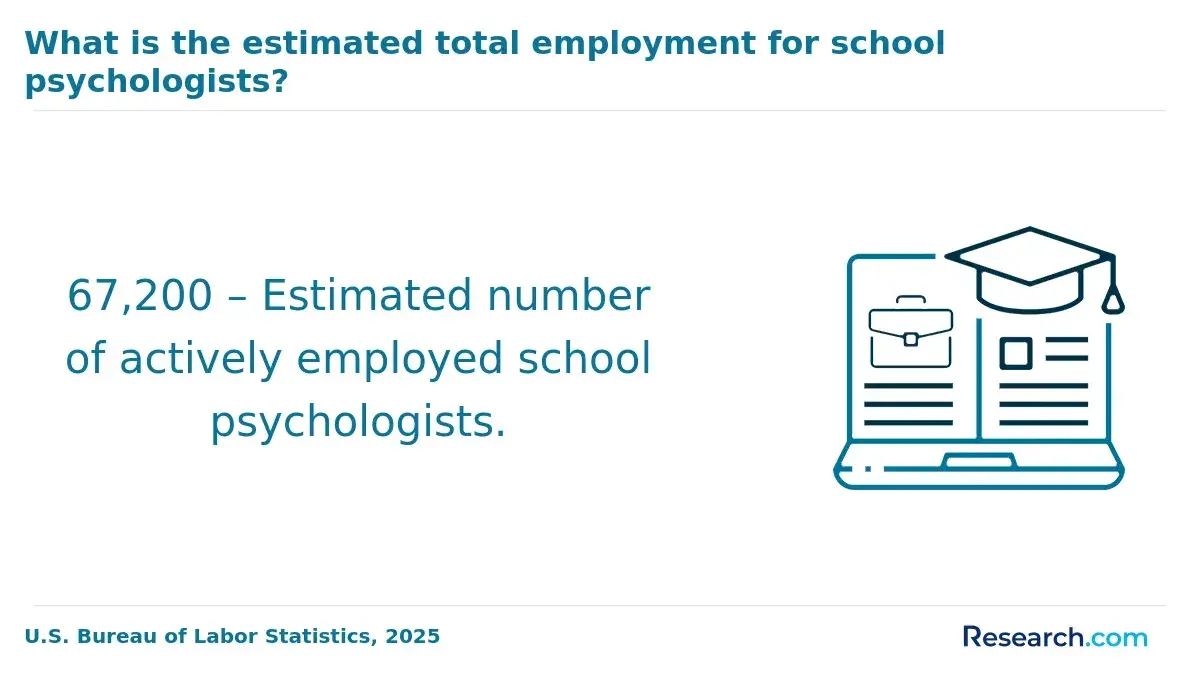
- According to the Bureau of Labor Statistics (BLS), school psychologists in the U.S. have a median annual salary of $78,780.
Contents
- Why choose educational psychology?
- Where do educational psychologists work?
- What is the job outlook?
- What skills do you need?
- How do you become an educational psychologist?
- What can you do with an educational psychology degree in 2027?
- Which certification matters most?
- How do you grow in the field?
- How do culture and income affect practice?
- What further education and specialization options are available?
- How is technology changing practice?
- How does professional development affect career success?
- How do educational psychologists measure intervention success?
- Can educational psychologists work in therapy?
- What does continuous learning look like in this field?
- What are alternative careers?
- What is the outlook for forensic psychology work in schools?
- Is educational psychology a good career choice?
- What ethical issues come up most often?
- How do educational psychologists collaborate with other professionals?
- How can forensic psychology knowledge be used in school settings?
- How does educational psychology connect with other fields?
Why choose educational psychology?
People often enter this field because they want work that is both meaningful and structured. Educational psychologists help improve how students learn, how schools respond to challenges, and how families and teachers support development. The work is especially important now because the student need is large and the workforce is not keeping pace.
The shortage is not just a headline. The national ratio of students to school psychologists remains far above the level recommended by NASP, which means many schools have too few professionals to handle assessments, consultations, crisis support, and intervention planning. That creates opportunities for new graduates, especially in districts that struggle to recruit staff.
Compensation is also a reason many people consider the field. The BLS reports a median annual salary of $78,780 for school psychologists, which is higher than the median wage across all occupations. Pay varies by state, district, degree level, and experience, but the career can offer a stable middle-to-upper income while still being mission-driven.
If you are comparing graduate programs, regional labor markets matter. For example, a student considering a psychology college in Texas may want to compare local job demand with neighboring states, because shortages, licensure rules, and pay can differ widely across the country.
What graduates say about educational psychology careers
- Starting in this field soon after graduation, I was surprised by how quickly the role became both financially stable and personally rewarding. The salary is important, but the bigger payoff has been seeing students grow through support that actually works. - Jasmin
- Because my program was online, I had the flexibility to enter the workforce sooner. That helped me build experience early, and as my skills expanded, my earnings improved too. The degree paid off in more ways than I expected. - Lyon
- The job is demanding, but it never feels pointless. The salary reflects the responsibility, and the shortage of qualified professionals makes the work even more valuable. I feel like my role matters every day. - Joyce
Where do educational psychologists work?
Educational psychologists do not work only in K-12 schools. Their training can apply to a wide range of settings where learning, behavior, development, and assessment matter. If you want flexibility later in your career, this is one of the field’s strengths.
Common work settings include:
- Schools and districts: Public and private schools, where they evaluate learning needs, support student services, and consult with staff and families.
- Healthcare settings: Hospitals, clinics, and developmental programs where they contribute to child development, assessment, and intervention planning.
- Government and policy agencies: Organizations that shape educational programs, special education policy, and student support systems.
- Research and higher education: Universities, research centers, and evaluation teams that study learning, interventions, and outcomes.
- Private practice or consulting: In some states and with the right credentials, professionals may provide assessment or consulting services independently.
Employment patterns also vary by state. BLS data commonly highlights large employment hubs such as California and New York, while shortage states often offer stronger need, even if salaries are not always the highest. For example, New York has an average salary of $103,580, while Colorado and Washington report average salaries of $117,190 and $108,740, respectively.
States with severe shortages can be especially important if you want immediate impact. Alabama, Mississippi, and Iowa are among the states noted for high student-to-psychologist ratios, which can translate into strong demand for qualified professionals.
If you are mapping related opportunities, review broader career paths for psychologists to see how school-based work compares with other psychology roles.
The table below gives a clearer view of where educational psychologists commonly work and what those settings tend to emphasize.
| Work setting | Main focus | Why it appeals to candidates |
| Public schools | Assessment, intervention, consultation, special education support | Direct student impact and steady demand |
| Private schools | Student support, counseling coordination, learning evaluation | Smaller environments and varied responsibilities |
| Hospitals and clinics | Developmental and behavioral assessment, care coordination | Broader medical and psychological collaboration |
| Government agencies | Program design, policy, student services planning | Systems-level influence |
| Research institutions | Data analysis, program evaluation, learning research | Research-driven work and academic advancement |
What is the job outlook for educational psychologists?
The BLS projects 1% growth for school psychologists through 2034, with 3,800 annual openings. On paper, that looks slow. In practice, the outlook is more nuanced because replacement hiring, retirements, and persistent shortages can create better opportunities than the growth rate alone suggests.
The strongest demand is usually in districts and states that cannot meet recommended staffing ratios. NASP recommends one school psychologist for every 500 students, but many states remain far above that benchmark. That gap matters because schools still need professionals to complete evaluations, support IEP teams, respond to crises, and help with behavioral and academic interventions.
For job seekers, the best opportunities often come from being flexible about geography, credentials, and settings. Candidates who are willing to work in shortage areas, rural districts, or high-need schools often find more openings than those who only target large, high-demand metropolitan areas.
What skills do you need for educational psychology?
This career requires more than knowledge of learning theory. The best educational psychologists combine technical assessment skills with strong communication and problem-solving ability. They also need patience, cultural awareness, and the judgment to work with students whose needs may be academic, emotional, behavioral, or developmental.
- Assessment literacy: Comfort using standardized tests, observations, and data to understand student needs.
- Communication: The ability to explain findings clearly to students, families, teachers, and administrators.
- Problem-solving: Skill in identifying barriers and designing practical interventions that fit the school setting.
- Cultural competence: Awareness of how background, language, identity, and access affect learning and behavior.
- Knowledge of learning and development: Understanding how students grow academically, socially, and emotionally.
- Empathy and resilience: The ability to support people through difficult situations without losing professional boundaries.
- Data use: Confidence reviewing progress data and adjusting interventions based on evidence.
These skills matter because the work is not one-size-fits-all. A support plan that helps one student may fail another if cultural context, family circumstances, or learning differences are ignored. The strongest professionals use both data and human insight.
How do you become an educational psychologist?
The path usually starts with a bachelor’s degree and continues into graduate study. In most cases, you cannot move into school psychology or licensed educational psychology work with only an undergraduate degree. Requirements vary by state and role, so it is important to check local licensure rules before choosing a program.
- Earn a bachelor’s degree. Psychology, education, child development, or a related field is a common starting point.
- Apply to a graduate program. Many school psychology roles require a specialist-level degree, master’s degree, or doctorate, depending on the state and employer.
- Complete supervised training. Most licensure paths include a practicum or internship and a supervised experience requirement.
- Pass required exams. Some states use national or state-specific exams for licensure or credentialing.
- Obtain state licensure or certification. This is often required to practice in schools or in independent roles.
- Consider optional credentials. The NCSP can strengthen your résumé and mobility.
One practical tip: do not choose a program based only on title. Some educational psychology degrees are research-focused, while others are designed for school-based practice. Pick the path that matches the job you actually want.
What can you do with an educational psychology degree in 2027?
An educational psychology degree can lead to several different careers, but the exact options depend on the degree level. Some roles are accessible with an associate’s or bachelor’s degree, while others require graduate study and licensure.
| Career path | Typical education level | Common responsibilities | Salary information listed in the source |
| Teacher’s assistant | At least an associate’s degree | Support classroom instruction and help teachers with daily learning activities | Median salary of $35,240 |
| Early childhood educator | At least an associate’s degree | Support preschool development and early learning skills | Around $37,120 |
| Education policy analyst | At least a bachelor’s degree | Review and evaluate education policy in government or nonprofit settings | Median salary of $93,188 |
| School psychologist | At least a master’s degree | Assess student needs, support interventions, and consult with school teams | Median salary of $86,930 |
| Director of research and evaluation | Doctorate | Lead research, data analysis, and program evaluation in education | About $150,000 |
For students comparing degree pathways, this is where the return on investment becomes important. A higher degree can unlock more responsibility, more specialization, and in some cases better pay. But if your goal is direct school support, a shorter path may be more efficient than a research-heavy doctorate.
You can explore broader educational psychology careers if you want to compare graduate options and likely outcomes.
Which certification matters most?
For many school-based professionals, the Nationally Certified School Psychologist (NCSP) is the most recognized optional credential. It is offered by NASP and is widely respected because it signals advanced preparation and professional standards.
The NCSP typically requires at least 60 graduate semester hours and a 1,200-hour internship. Graduates of NASP-approved programs may have a more direct route to the credential. Even where it is not required, it can strengthen job prospects, support interstate mobility, and help employers see that your training meets a clear national benchmark.
That said, certification is not the same as licensure. Always verify what your state requires to practice legally in schools or private settings. A credential can help, but it does not replace state rules.
How do you advance in educational psychology?
Career growth in this field usually comes from a combination of experience, additional credentials, and specialization. If you want to move beyond entry-level school roles, plan early for the training needed for leadership, research, assessment, or private practice work.
- Pursue advanced education: A master’s or doctorate can open doors to more specialized and leadership-oriented roles.
- Earn respected credentials: The NCSP can help you stand out to employers.
- Build expertise in a niche: Special education, assessment, behavior intervention, or multilingual evaluation can make you more marketable.
- Join professional organizations: Networking can lead to mentorship, research, and job opportunities.
- Seek leadership roles: Coordinating teams or programs can prepare you for director-level positions.
- Keep current with research: Evidence-based practice changes over time, and strong professionals adapt.
If your goal is advancement, ask a simple question before enrolling in any graduate program: does this program prepare graduates for the role I want, or only for a general psychology credential?
How do culture and socioeconomic status affect educational psychology practice?
Culture and income level can shape how students learn, how they respond to school, and what kind of support is realistic. Educational psychologists need to work with that reality instead of assuming every student faces the same conditions.
Students from different cultural backgrounds may have different communication styles, family expectations, attitudes toward disability, and approaches to authority. If those differences are misunderstood, assessments and interventions can miss the mark. That is why culturally responsive practice is essential.
Socioeconomic challenges can also affect attendance, stress levels, access to tutoring, internet connectivity, healthcare, food security, and stable housing. Educational psychologists often help schools identify these barriers and recommend support that is practical, respectful, and equitable.
The strongest interventions do not treat academic problems as isolated from real life. They account for family context, trauma exposure, resource access, language differences, and community conditions.
What further education and specialization options are available?
If you want to deepen your role, you can specialize after graduate school through a doctorate, certificate, or focused professional training. Some professionals move toward assessment, consultation, neuropsychology-related work, special education leadership, behavioral intervention, or research and evaluation.
Advanced study can improve your credentials, but it should still match your long-term goals. For example, a research-focused path may be useful if you want university or policy work, while a practice-focused degree may be better if you want to stay in school settings.
One option for professionals seeking broader clinical knowledge is an online masters in clinical psychology, though you should confirm how that training aligns with state licensure and school-based goals. If your interest is more behavioral, you may also compare specialization routes and supervised practice requirements before committing.
How is technology reshaping educational psychology practice?
Technology is changing how educational psychologists assess students, track progress, and communicate with school teams. Digital assessment tools, telepsychology, learning analytics, and adaptive platforms can make services more efficient and accessible when used appropriately.
This does not eliminate the need for professional judgment. Technology can support decision-making, but it should not replace careful observation, ethical practice, or context-aware intervention planning. The most effective professionals use technology to improve service delivery, not to shortcut it.
For students planning their preparation, it can help to look at online psychology programs if flexibility is important. Just make sure any program you consider is aligned with licensure and fieldwork requirements.
How does professional development affect career success?
Ongoing professional development helps educational psychologists stay effective as student needs, regulations, and school systems evolve. Training matters because the field depends on current research, current assessment methods, and current legal or ethical standards.
Useful development opportunities include workshops, conferences, supervision, continuing education, and research collaboration. These experiences can improve your skills in assessment, intervention planning, consultation, and documentation. They also make you more credible when applying for promotions or specialized roles.
If you are budget-conscious, compare the cost and value of graduate and continuing education carefully. Resources such as an affordable online masters in psychology may help reduce debt, but affordability should never come at the expense of accreditation, licensure eligibility, or field placement quality.
How do educational psychologists measure intervention success?
Effective practice depends on evidence, not guesswork. Educational psychologists evaluate interventions by combining test data, observation, progress monitoring, teacher feedback, parent feedback, and student response over time.
In many cases, the real question is not whether an intervention sounds good, but whether it helps a specific student make measurable progress. That means professionals should look for changes in academic performance, behavior, attendance, participation, or functioning, depending on the goal.
It also means rethinking plans when the data do not improve. Good practice is iterative. If the first strategy does not work, the intervention should be adjusted instead of repeated indefinitely.
Can educational psychologists also work in therapeutic roles?
Sometimes, but only with the right training and licensure. Educational psychology and therapy overlap in areas such as behavior, emotional regulation, and family support, yet they are not identical roles.
If a professional wants to provide therapy, they usually need additional preparation and must meet state-specific requirements for that type of practice. In many situations, school psychologists support students through consultation, assessment, and intervention planning rather than standalone therapy.
If you are considering a transition into therapy, it is worth comparing licensing routes before investing in another degree. You can also review resources such as do you need a psychology degree to be a therapist to understand the broader pathway.
What does continuous learning look like in this field?
Continuous learning in educational psychology is not optional. New assessment tools, changing student needs, updated intervention research, and evolving legal expectations all affect practice.
Professionals often stay current by reading journals, attending conferences, joining supervisory groups, and completing continuing education. Some also pursue additional credentials tied to behavior analysis or school-based consultation. For example, training through the most affordable BCBA degree programs online may be relevant for those interested in behavioral intervention, though it is not the right path for every educational psychologist.
What are alternative career options for educational psychologists?
If you enjoy the learning science side of the field but do not want to stay in school-based practice, there are several related careers that use similar skills. Your background in assessment, motivation, behavior, and program evaluation can transfer well.
| Alternative role | What the job involves | Salary information listed in the source |
| Education administrator | Oversee budgeting, staffing, and school operations | $104,070 annually |
| Learning and development specialist | Design training programs for workplaces and employees | $65,850 annually |
| Instructional coordinator | Develop curricula and instructional materials | $74,720 annually |
| Career counselor | Guide students or job seekers on educational and career choices | $65,140 annually |
| Educational researcher | Study learning systems, collect data, and inform policy or practice | $123,959 annually |
If you are exploring adjacent paths, reviewing the smartest degrees to get can help you compare programs with stronger long-term flexibility.
What is the outlook for forensic psychology work in educational settings?
Some educational psychologists build skills that overlap with forensic psychology, especially in areas like behavioral risk assessment, documentation, and crisis response. That hybrid skill set can be useful in disciplinary reviews, safety planning, and high-stakes student evaluations.
This is not a standard path for every school psychologist, and it should not be treated as interchangeable with forensic practice. Still, if your interests include both education and behavioral investigation, there may be room to specialize.
To compare the broader field, you can review the employment outlook for forensic psychologist and decide whether a more forensic-focused route fits your long-term goals.
Is educational psychology a good career choice?
For many people, yes. It can be a strong choice if you want meaningful work, steady demand, and the chance to affect student outcomes in a direct way. It is especially appealing if you enjoy problem-solving, assessment, collaboration, and human development.
The career is not the easiest path. Graduate training is required, licensure rules can be strict, and the work can be emotionally demanding. But those same demands are part of what makes the role important. In a field with shortages like Alabama’s 108,066 students per school psychologist ratio, qualified professionals are not just welcomed — they are needed.
If you want to build a career that blends service and stability, educational psychology can be a smart option. If you are more interested in independent clinical work or private therapy, a different psychology path may fit you better.
What ethical issues come up most often?
Educational psychologists work with minors, families, schools, and sensitive information, so ethics are central to the job. The main concerns are not abstract. They affect daily decisions.
- Confidentiality: Student and family information must be handled carefully, except when disclosure is legally or ethically required.
- Informed consent: Parents, guardians, and in some cases students must understand what assessment or intervention involves.
- Dual relationships: Personal relationships can create conflicts of interest and should be avoided.
- Competence: Professionals should not work outside their training without supervision or referral.
- Cultural sensitivity: Evaluations and interventions must account for language, identity, and context.
- Mandatory reporting: Suspected abuse or neglect may need to be reported according to law.
Ethical practice is not just about avoiding mistakes. It is about protecting students, building trust, and making sure interventions are fair and appropriate.
How do educational psychologists collaborate with other professionals?
Collaboration is one of the defining features of the work. Educational psychologists rarely act alone. They are usually part of a broader student support system that includes teachers, counselors, special educators, administrators, families, and sometimes healthcare providers.
- With teachers: They help adapt instruction, identify barriers, and recommend classroom strategies.
- With school counselors: They coordinate around mental health, behavior, and academic concerns.
- With speech-language therapists: They support students whose communication issues affect learning.
- With special education staff: They contribute to evaluation, eligibility, and IEP planning.
- With parents and caregivers: They explain findings, offer strategies, and help align school and home support.
- With healthcare professionals: They collaborate on conditions such as ADHD, trauma, or other developmental concerns.
Strong collaboration depends on clear communication and shared goals. The best teams focus less on who “owns” the problem and more on what the student needs next.
For readers interested in cross-functional work beyond schools, a business psychology degree can be relevant for leadership, training, and organizational settings where learning and behavior also matter.
How can forensic psychology knowledge be used in school settings?
Forensic-style methods can be useful in school settings when the task involves careful behavioral analysis, risk evaluation, or detailed documentation. Educational psychologists with this background may be better prepared for high-stakes cases that require structured thinking and precise records.
That said, the goal should always remain educational support, student safety, and fair decision-making. Forensic techniques should be adapted to the school environment rather than copied without context. Additional education, such as an affordable masters in forensic psychology online, can deepen this expertise for professionals who want that combination.
How does educational psychology connect with other fields?
Educational psychology sits at the intersection of several disciplines. It connects naturally with special education, counseling, child development, neuroscience, public policy, and organizational training. That breadth is part of the field’s appeal.
In schools, the work often overlaps with special education planning and mental health support. In universities and agencies, it may overlap with research, assessment, and policy design. In workplaces, learning and motivation principles can also support training and employee development.
This cross-disciplinary reach means your degree does not have to limit you to one setting forever. With the right training, you can move between school systems, research, policy, consulting, and organizational learning.
For students deciding whether to continue into graduate school, learning what can you do with a masters in psychology can help clarify which roles may be open after graduation.
How to compare educational psychology programs before you apply
Choosing the right program is one of the most important decisions in this path. The best option is not always the cheapest, the fastest, or the most familiar name. It is the program that matches your licensure goals and career direction.
| What to compare | Why it matters | What to ask |
| Accreditation | Affects licensure, employment, and transferability | Is the program accredited in a way that supports my state’s requirements? |
| Fieldwork hours | Needed for practice readiness and licensure | How many supervised hours are required? |
| Licensure alignment | Not every program leads to the same credential | Does this program meet the licensing rules where I plan to work? |
| Program focus | Some programs are research-heavy and others are practice-based | Is this designed for school practice, research, or both? |
| Cost and financial aid | Debt affects long-term return on investment | What is the total cost after aid, not just tuition? |
| Placement support | Field experiences build employability | How does the school help students find internships or practicum sites? |
| Online vs. campus | Flexibility may help, but field requirements still matter | Can I complete clinical or school placements in my region? |
Common mistakes to avoid
- Choosing a program without checking whether it matches your state licensure rules.
- Focusing only on tuition and ignoring fieldwork, accreditation, and exam eligibility.
- Assuming an online program automatically qualifies you for every state.
- Ignoring whether the degree is research-oriented or practice-oriented.
- Expecting salary outcomes to be identical across states and districts.
- Assuming certification and licensure are the same thing.
- Overlooking the emotional demands of the work and the importance of supervision.
Questions to ask before you commit
- Will this program lead to the credential I need in the state where I want to work?
- How many supervised hours are included?
- What is the total cost after aid?
- What percentage of graduates find jobs in school psychology or related roles?
- Does the curriculum cover assessment, intervention, consultation, and ethics?
- Are practicum and internship placements arranged or supported by the school?
- Is the program recognized by NASP or aligned with NCSP requirements?
Current trends affecting educational psychology
Several trends are shaping the field right now. Schools are facing more pressure to support student mental health, districts are using data more aggressively to track outcomes, and technology is changing how services are delivered. At the same time, shortages mean schools are often looking for professionals who can wear several hats.
Employers increasingly want practitioners who can do more than test and report. They want professionals who can collaborate, communicate clearly, use evidence responsibly, and adjust support plans in real time. That is one reason strong training in assessment, cultural competence, and intervention design matters so much.
Key insights
- Educational psychology is a strong career choice if you want meaningful student impact, but it usually requires graduate education and state-specific licensure.
- The field has a real staffing shortage, and that shortage can create opportunity even though BLS job growth is projected at 1% through 2034.
- School psychologists are in demand because schools need assessment, intervention, consultation, and support services that many districts cannot fully staff.
- The best programs are the ones that align with your licensure goals, fieldwork needs, and budget — not simply the cheapest or most popular option.
- NCSP can strengthen your profile, but it does not replace state licensure requirements.
- Success in this field depends on more than technical knowledge. Communication, cultural competence, data use, and collaboration are essential.
- If you want flexibility later, educational psychology can lead to roles in research, policy, administration, counseling support, and learning and development.
References:
- College Factual. (2025). 2025 Psychology Degree Guide. College Factual.
- National Association of School Psychologists. (2026). State Shortages Data Dashboard. Retrieved March 2026, from NASP.
- Our Kids Count. (2026). Number of IDEA-eligible Students Increases 3 Percent in 2024; Tops 8 Million. Our Kids Count.
- Sohn, E. (2024). There’s a strong push for more school psychologists. American Psychological Association.
- U.S. Bureau of Labor Statistics. (2025). Psychologists. BLS.
- ZipRecruiter. (2026). Education Policy Analyst Salary. Retrieved March 2026, from ZipRecruiter.
Other Things You Should Know About Educational Psychologists
In 2027, educational psychologists face challenges such as adapting to technological advancements in education and addressing diverse student needs. However, the rewarding aspects include the opportunity to make a significant impact on educational policy and improve individual learning outcomes, contributing to the overall betterment of educational practices.
In 2027, the job outlook for educational psychologists is positive, with growing demand in schools and research institutions. As awareness of mental health and learning diversity increases, educational psychologists are increasingly sought to support academic success and well-being in educational settings.