
2027 How to Become a Nurse Practitioner in Indiana

Co-Founder and Chief Data Scientist
Becoming a nurse practitioner in Indiana is a serious career move: you are deciding how much graduate education to complete, which specialty to choose, how to satisfy state licensing rules, and whether the investment of time and money fits your long-term goals. Indiana can be a practical place to build an NP career because the state reports around 80% of NPs expressing satisfaction in their employment, has opportunities in ambulatory care and hospitals, and has a cost of living that is 8% lower than the national average.
The challenge is that Indiana’s requirements are not always easy to interpret. Future NPs must understand graduate degree expectations, national certification, clinical hours, background checks, continuing education, prescriptive authority, and collaborative practice rules. This guide explains how to become a nurse practitioner in Indiana, what degree path makes sense, what licensing steps to expect, how much programs may cost, which specialties are common, and how to evaluate whether the NP route is the right next step for you.
Quick Answer: How to Become a Nurse Practitioner in Indiana
To become a nurse practitioner in Indiana, you generally need to become a registered nurse, complete a graduate nursing degree such as an MSN or DNP, earn national certification in an NP specialty, and apply for advanced practice recognition through the Indiana Professional Licensing Agency. Indiana also requires clinical preparation, a background check, and ongoing license renewal with continuing education. Although NPs in Indiana provide advanced clinical care, the state is commonly treated as a reduced-practice environment because collaborative agreement requirements affect practice authority.
Key Things You Should Know About Becoming a Nurse Practitioner in Indiana
- Minimum education: Indiana NP candidates need a graduate nursing degree, most commonly a Master of Science in Nursing (MSN) or Doctor of Nursing Practice (DNP), before applying for advanced practice credentials.
- Certification matters: National certification through organizations such as the American Association of Nurse Practitioners (AANP) or the American Nurses Credentialing Center (ANCC) is a major licensing step and should match your intended specialty.
- Salary varies by source and setting: As of 2023, the average salary for nurse practitioners in Indiana is approximately $113,000 per year, while another cited wage estimate places average annual pay at approximately $123,320. Location, experience, specialty, employer type, and work schedule can all affect actual earnings.
- Demand is strong but not automatic: Employment opportunities for NPs in Indiana are expected to increase by 45% from 2020 to 2030, and some projections also describe 30% growth in NP employment opportunities over the next decade. Strong demand does not guarantee a specific job, salary, or location.
- Practice rules require careful planning: Indiana allows NPs to provide advanced care, but collaborative agreement requirements can affect prescribing and practice operations. Before choosing a program or job, confirm current rules with official state licensing sources.
- How do you become a nurse practitioner in Indiana?
- What degree do you need to become a nurse practitioner in Indiana?
- What are the licensing requirements for nurse practitioners in Indiana?
- What are the continuing education requirements for nurse practitioners in Indiana?
- How long does it take to complete a nurse practitioner program in Indiana?
- What are the costs associated with a nurse practitioner program in Indiana?
- What is the scope of practice for nurse practitioners in Indiana?
- What are the different specializations for nurse practitioners in Indiana?
- What are the best educational pathways to becoming a nurse practitioner in Indiana?
- Are accelerated BSN programs a viable pathway for nurse practitioners in Indiana?
- How can nurse practitioners integrate nutrition expertise into their practice?
- What factors should I consider when choosing a nurse practitioner program in Indiana?
- What are the job prospects for nurse practitioners in different specialties in Indiana?
- Can transitioning from an LPN role pave the way to advanced nursing opportunities in Indiana?
- How is telehealth shaping the future of nurse practitioner practice in Indiana?
- Are online nurse practitioner programs an optimal choice for busy professionals in Indiana?
- What distinguishes nurse practitioners from nurse midwives in Indiana?
- What common challenges might delay obtaining your NP license in Indiana?
- Are there alternative career paths for individuals interested in healthcare but not nursing?
- What are the salary expectations for nurse practitioners in Indiana?
- What additional certifications can boost a nurse practitioner’s practice efficiency in Indiana?
- How are legislative reforms shaping nurse practitioner autonomy in Indiana?
How do you become a nurse practitioner in Indiana?
The Indiana NP pathway starts with registered nursing preparation and ends with advanced practice authorization. Most candidates begin by earning a Bachelor of Science in Nursing (BSN) or an equivalent nursing degree, passing the RN licensing process, and gaining clinical experience before applying to graduate school.
After becoming an RN, you must complete a graduate nursing program that prepares you for advanced practice. For most NP candidates, that means earning either an MSN or a DNP. The program should align with the patient population you want to serve, such as family practice, pediatrics, adult-gerontology, psychiatric-mental health, or women’s health.
Once you finish the graduate program, you need national board certification in your NP specialty. Common certifying bodies include the AANP and ANCC. Certification demonstrates that your graduate education and clinical preparation meet national standards for your chosen role.
The final state step is applying through the Indiana Professional Licensing Agency for advanced practice authorization. Expect to submit education records, proof of certification, clinical documentation where required, and background check materials. After approval, you can practice as an NP in Indiana subject to state scope-of-practice rules and any applicable collaborative agreement requirements.
| Step | What You Need to Do | Decision Point |
| Complete RN preparation | Earn a qualifying nursing degree and become eligible for RN licensure. | Choose BSN, bridge, or transfer-friendly options based on your current education. |
| Gain nursing experience | Build clinical judgment in direct patient care settings. | Experience in your target specialty can make graduate study and clinical placement easier. |
| Earn an MSN or DNP | Complete an accredited graduate NP program. | Decide whether a shorter MSN route or a more advanced DNP route fits your goals. |
| Pass national certification | Take the exam tied to your NP population focus. | Select a specialty with strong demand and work you actually want to do. |
| Apply in Indiana | Submit state application materials, background check information, and proof of credentials. | Confirm current state rules before submitting documents. |
| Maintain credentials | Renew your license and complete continuing education every two years. | Track pharmacology and life support requirements early to avoid renewal delays. |
Most NPs are around 40 years old or older, as shown in the chart below. That pattern reflects the fact that many NPs enter the role after several years of RN experience rather than immediately after their first nursing degree.
What degree do you need to become a nurse practitioner in Indiana?
Indiana nurse practitioner candidates need graduate-level nursing education. The two main options are the Master of Science in Nursing (MSN) and the Doctor of Nursing Practice (DNP). An MSN is commonly treated as the minimum graduate degree for NP preparation, while a DNP may be preferred by candidates interested in leadership, systems improvement, academic roles, or the highest level of clinical practice preparation.
Both degrees include advanced coursework in assessment, pathophysiology, pharmacology, diagnosis, evidence-based practice, and specialty care. The difference is usually depth, length, and emphasis. MSN programs tend to be more direct for students who want to enter NP practice efficiently. DNP programs add more focus on clinical leadership, quality improvement, policy, and translating research into practice.
| Degree Option | Best For | Trade-Offs |
| MSN Nurse Practitioner | RNs who want the most common graduate route into NP practice. | Usually shorter than a DNP, but may offer less doctoral-level leadership preparation. |
| DNP Nurse Practitioner | Nurses seeking advanced clinical leadership, policy, systems, or executive preparation. | May take longer and cost more, but can support broader long-term roles. |
| RN-to-MSN | RNs without a BSN who want a bridge into graduate nursing. | Can be efficient, but admission requirements and bridge coursework vary. |
| BSN-to-DNP | BSN-prepared nurses who want to move directly into doctoral-level NP preparation. | Longer commitment, but avoids completing separate MSN and DNP programs. |
| Post-master’s NP certificate | Nurses who already hold a graduate nursing degree and want another NP specialty. | Useful for specialization changes, but eligibility depends on prior coursework and certification goals. |
Indiana institutions with NP-related graduate options include Indiana University School of Nursing, Purdue University’s College of Nursing, and Ball State University. Program names, specialty availability, formats, and admission standards can change, so applicants should verify current accreditation, certification alignment, and clinical placement support before applying.

What are the licensing requirements for nurse practitioners in Indiana?
Indiana NP licensure requires more than finishing graduate school. Candidates must complete an accredited advanced nursing program, earn national certification in the appropriate specialty, and submit a state application through the Indiana State Board of Nursing process administered through the Indiana Professional Licensing Agency.
The application process includes a background check and fingerprinting. The application fee for an NP license in Indiana is approximately $75, although candidates should budget for additional expenses connected to fingerprinting, certification exams, transcripts, test preparation, and possible document requests.
Indiana also requires NPs to complete a minimum of 500 clinical practice hours during their educational program. Applicants should keep careful records of clinical hours, preceptor information, specialty focus, and program verification because incomplete or inconsistent documentation can slow approval.
| Requirement | What It Means | How to Avoid Problems |
| Graduate nursing degree | You must complete an MSN, DNP, or qualifying advanced nursing pathway. | Confirm that the program prepares graduates for the specific NP certification you plan to pursue. |
| National certification | You must pass a certification exam in your NP specialty area. | Check that your coursework and clinical hours match the certifying body’s eligibility rules. |
| Clinical hours | Indiana requires a minimum of 500 clinical practice hours during the educational program. | Track hours throughout the program rather than reconstructing them at the end. |
| Background check | Fingerprinting and screening are part of the licensing process. | Follow state instructions exactly and respond quickly to any follow-up requests. |
| Application fee | The NP license application fee is approximately $75. | Budget for related costs, not only the state fee. |
What are the continuing education requirements for nurse practitioners in Indiana?
Indiana nurse practitioners must renew their licenses every two years. For renewal, NPs must complete at least 30 hours of continuing education, including at least 15 hours in pharmacology. Indiana also requires NPs to maintain current Basic Life Support (BLS) or Advanced Cardiac Life Support (ACLS) certification.
The practical challenge is not usually finding continuing education; it is tracking the right mix of hours before the renewal deadline. NPs who prescribe medications should pay particular attention to pharmacology documentation because general clinical education may not count toward that requirement.
| Renewal Item | Indiana Requirement | Practical Tip |
| Renewal cycle | Every two years | Create reminders well before the expiration date. |
| Total continuing education | Minimum of 30 hours | Keep certificates in one secure digital folder. |
| Pharmacology education | At least 15 of the 30 hours | Choose CE providers that clearly label pharmacology hours. |
| Life support certification | Current BLS or ACLS | Do not wait until renewal month to schedule recertification. |
How long does it take to complete a nurse practitioner program in Indiana?
A nurse practitioner program in Indiana typically takes between two to four years, depending on whether you choose an MSN or DNP, enroll full time or part time, and pursue a specialty with more intensive clinical preparation. Family Nurse Practitioner and Pediatric Nurse Practitioner tracks often take about two to three years of full-time study, while Acute Care Nurse Practitioner tracks may take three to four years because the curriculum and clinical expectations can be more complex.
Indiana has reported a 30% increase in NP positions over the past five years, which makes the timeline worthwhile for many nurses. Still, students should not choose a program based only on speed. A faster program is helpful only if it is accredited, certification-aligned, clinically organized, and realistic for your work schedule.
- Family Nurse Practitioner: Usually about two to three years of full-time study.
- Pediatric Nurse Practitioner: Often similar in length, generally around two to three years.
- Acute Care Nurse Practitioner: May require three to four years because of advanced acute and complex-care training.
- Part-time enrollment: Can help working nurses continue earning income, but it extends the calendar timeline.
- Bridge programs: May shorten the overall path for nurses who already hold an RN license but do not yet have the usual graduate entry credentials.
Students sometimes compare accelerated nursing pathways with unrelated fast degree formats, but the standards are not interchangeable. For example, accelerated marketing programs may be useful in business education discussions, but NP preparation must satisfy clinical, accreditation, and licensure standards.
Licensed practical nurses who want to move toward RN and later NP roles may first consider a 6 month LPN to RN program online accredited option. Completing an RN pathway can be an early step, but future NP candidates should also plan for BSN, MSN, DNP, or bridge requirements.
What are the costs associated with a nurse practitioner program in Indiana?
The cost of a nurse practitioner program in Indiana can range from $20,000 to $60,000 for in-state students. The final price depends on the institution, program length, public or private status, delivery format, transfer credit policies, clinical placement requirements, and whether the student pays additional university fees.
Tuition is only part of the cost. NP students may also pay for textbooks, clinical supplies, liability insurance, health documentation, background checks, fingerprinting, certification exam fees, travel to clinical sites, and reduced work hours during intensive rotations.
| Cost Category | Why It Matters | Question to Ask |
| Tuition | This is the largest visible expense, but it does not tell the whole story. | Is tuition charged per credit, per semester, or by program? |
| University fees | Online, technology, lab, simulation, and clinical fees can add up. | Are all mandatory fees listed before enrollment? |
| Clinical expenses | Travel, compliance documents, and site requirements can increase costs. | Does the school help secure clinical placements in Indiana? |
| Certification and licensing | Exam, application, and background check costs arrive near graduation. | Which exams and state fees should I budget for? |
| Lost income | Clinical schedules may reduce overtime or full-time work availability. | Can I complete clinical rotations while keeping my job? |
Funding options may include grants, scholarships, federal loans, employer tuition assistance, private scholarships, and loan repayment programs. Students should compare the net cost after aid rather than relying on sticker price alone.
What is the scope of practice for nurse practitioners in Indiana?
Nurse practitioners in Indiana can perform many advanced clinical functions, including health screenings, diagnosis, chronic disease management, prescribing medications, patient education, and referrals. However, Indiana’s practice environment includes collaborative agreement requirements, which is why the state is often described as having reduced practice authority rather than full independent NP practice.
Under the collaborative model, NPs must provide documentation of prescribing practices to their collaborating physician within a week, including a random selection of patient charts. This requirement can create administrative burden and may affect care delivery, especially in health professional shortage areas, which comprise nearly 86% of the state's counties.
Advocacy organizations, including the Indiana Rural Health Association, have supported full practice authority for nurse practitioners. Supporters argue that fewer restrictions could improve access to care, especially in rural and underserved areas. Current and future NPs should monitor state policy carefully because scope-of-practice reforms can affect employment options, clinic ownership, prescribing processes, and collaboration costs.
Medical assistants who want to enter nursing may need a staged plan rather than jumping directly to NP education. One possible early step is reviewing the best medical assistant to LPN programs online before moving toward RN and graduate nursing pathways.
What are the different specializations for nurse practitioners in Indiana?
Nurse practitioner specialization determines the patient population you serve, the certification exam you take, the clinical placements you need, and the jobs you are likely to qualify for after graduation. In Indiana, Family Nurse Practitioners are especially common, with FNPs making up nearly 70% of NPs in the state.
Family Nurse Practitioners provide care across the lifespan and often work in primary care, community health, retail clinics, and outpatient practices. Pediatric Nurse Practitioners focus on infants, children, and adolescents. Adult-Gerontology Nurse Practitioners care for adult and teenage populations and may choose primary or acute care preparation. Psychiatric-Mental Health Nurse Practitioners focus on mental health assessment, diagnosis, treatment planning, and medication management. Women’s health and geriatric specialties can also support focused career paths.
| NP Specialty | Typical Patient Focus | Best Fit If You Want To |
| Family Nurse Practitioner | Patients across the lifespan | Work in broad primary care or community health settings. |
| Pediatric Nurse Practitioner | Children from infancy through adolescence | Focus on child health, prevention, and pediatric illness management. |
| Adult-Gerontology Nurse Practitioner | Adults, older adults, and sometimes teenage populations | Serve adult primary care, aging populations, or acute care settings. |
| Psychiatric-Mental Health Nurse Practitioner | Patients with behavioral and mental health needs | Combine advanced nursing with mental health assessment and treatment. |
| Women’s Health Nurse Practitioner | Women’s reproductive and preventive health | Work in clinics focused on gynecologic, reproductive, and preventive care. |
Students comparing nursing education levels may also review state-by-state ADN salaries. However, an associate degree alone is not enough for NP licensure; aspiring nurse practitioners need graduate nursing preparation such as an MSN or DNP.
What are the best educational pathways to becoming a nurse practitioner in Indiana?
The best pathway depends on your current credential. A high school graduate, LPN, ADN-prepared RN, BSN-prepared RN, and MSN-prepared nurse will not follow the same route. The fastest credible path is the one that meets accreditation, certification, clinical, and Indiana licensing requirements without unnecessary duplicate coursework.
BSN-prepared RNs often move directly into MSN or BSN-to-DNP NP programs. ADN-prepared RNs may use RN-to-BSN, RN-to-MSN, or bridge options depending on admission rules. Nurses who already hold a graduate nursing degree may use post-master’s certificate pathways to add an NP population focus.
Indiana offers multiple program options for future NPs. To compare schools by format, specialty, and program structure, review the best nurse practitioner programs in Indiana. Use rankings as a starting point, not the only decision tool.
| Your Starting Point | Likely Pathway | What to Verify |
| No nursing license | Earn nursing credentials, become an RN, then pursue graduate NP education. | Program admission rules, RN licensure eligibility, and long-term graduate prerequisites. |
| LPN | Move from LPN to RN, then complete BSN or bridge preparation before graduate study. | Transfer credits, clinical requirements, and NCLEX-RN eligibility. |
| ADN-prepared RN | Use RN-to-BSN, RN-to-MSN, or bridge routes. | Whether the graduate program accepts ADN-prepared nurses. |
| BSN-prepared RN | Apply to MSN-NP or BSN-to-DNP programs. | Specialty fit, certification alignment, and clinical placement support. |
| MSN-prepared nurse | Complete a post-master’s NP certificate or DNP pathway. | Prior coursework review and board certification eligibility. |
Are accelerated BSN programs a viable pathway for nurse practitioners in Indiana?
Accelerated BSN programs can be useful for students who already hold a non-nursing bachelor’s degree and want to enter the nursing profession more quickly. These programs do not make someone an NP by themselves, but they can create the RN and BSN foundation needed before graduate NP education.
Students considering online ABSN programs should confirm how clinical learning is arranged, whether the program meets Indiana RN licensure expectations, and whether the degree will be accepted by MSN or DNP programs later. Speed should never outweigh licensure eligibility or clinical quality.
How can nurse practitioners integrate nutrition expertise into their practice?
Nutrition knowledge can strengthen NP care, especially for patients managing diabetes, cardiovascular disease, obesity, gastrointestinal concerns, pregnancy-related nutrition needs, and chronic disease prevention. NPs do not need to become dietitians to provide basic nutrition counseling within their scope, but advanced nutrition training can improve patient education and referral decisions.
Professionals who want a deeper nutrition-focused credential can explore how nutrition careers are structured in the state, including guidance on how to become a nutritionist in Indiana. NPs should also understand when to refer patients to registered dietitians or other licensed nutrition professionals.
What factors should I consider when choosing a nurse practitioner program in Indiana?
The right NP program should prepare you for certification, meet Indiana licensing expectations, and fit your life well enough that you can finish it. Do not choose solely because a program is online, inexpensive, fast, or highly ranked.
- Accreditation: Confirm that the nursing program holds appropriate accreditation and that graduates are eligible for national certification.
- Specialty alignment: Make sure the program prepares students for the exact NP population focus you want.
- Clinical placement support: Ask whether the school finds placements or requires students to secure their own preceptors.
- Board pass outcomes: Request current board pass rates and ask how the school supports students who need remediation.
- Schedule flexibility: Compare full-time, part-time, hybrid, and online formats against your work and family obligations.
- Total cost: Include tuition, fees, clinical travel, certification exams, and possible lost income.
- State authorization: Online students should verify that the program is authorized to serve Indiana residents and supports Indiana clinical requirements.
If your goal is psychiatric-mental health practice, compare options carefully rather than choosing the first short program you find. A shortest PMHNP program may save time only if it also satisfies certification eligibility and clinical standards.
What are the job prospects for nurse practitioners in different specialties in Indiana?
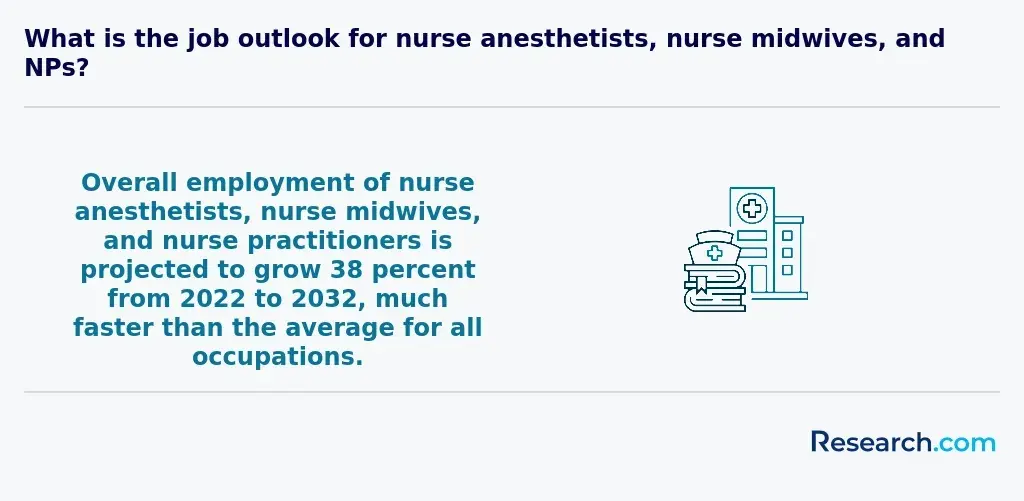
Indiana’s NP job market is supported by demand for primary care, specialty care, behavioral health, chronic disease management, and services in underserved regions. Projections indicate 30% growth in NP employment opportunities over the next decade, equal to around 1,000 new positions. Nationally, the overall job outlook for NPs is expected to rise by 46% from 2023 to 2033.
Long-term demand is also shaped by an aging population, chronic illness, rural access gaps, and the broader use of NPs in team-based care. With approximately 6,740 NPs practicing in Indiana, the state has a sizable workforce but still faces access challenges in many communities.
Common Indiana NP employers include:
- Hospitals and health systems that use NPs in primary care, specialty practices, inpatient services, and transitional care.
- Community health centers that serve rural and underserved populations.
- Private practices where NPs work with physicians and other clinicians to expand patient access.
- Specialty clinics in areas such as behavioral health, cardiology, pediatrics, geriatrics, and women’s health.
- Telehealth organizations and hybrid care models that combine virtual visits with in-person care.
Students comparing graduate nursing options should understand the distinction between role and degree. For example, learning the differences between FNP and DNP can help clarify whether you are choosing a population focus, a degree level, or both.
Can transitioning from an LPN role pave the way to advanced nursing opportunities in Indiana?
Yes. LPN experience can be a strong foundation for advanced nursing, but LPNs still need to move through the required academic and licensing steps. A typical progression is LPN to RN, then BSN or bridge preparation, then MSN or DNP nurse practitioner education.
This route can be practical because LPNs already understand patient care, documentation, communication, and healthcare workflows. However, future NPs should plan carefully around transfer credits, program accreditation, RN licensure, and graduate admission requirements. If you are still at the first stage, start with guidance on how to become an LPN in Indiana.
How is telehealth shaping the future of nurse practitioner practice in Indiana?
Telehealth is expanding how Indiana NPs deliver follow-up care, chronic disease management, medication checks, behavioral health visits, and rural access services. It does not replace all in-person care, but it can reduce travel barriers and help patients stay connected to clinicians between visits.
NP students should look for programs that teach digital communication, privacy, remote assessment limits, electronic health records, and telehealth documentation. Some of the best nursing schools in Indiana increasingly emphasize technology readiness because employers expect clinicians to work across both physical and virtual care environments.
Are online nurse practitioner programs an optimal choice for busy professionals in Indiana?
Online NP programs can be a good fit for working nurses, but they are not automatically easier. The academic work is still rigorous, and students must complete clinical hours in approved settings. The main advantage is flexibility in completing didactic coursework while continuing to work.
Before enrolling, ask who arranges clinical placements, whether campus visits are required, how exams and simulations are delivered, and whether the program supports Indiana licensure. Candidates comparing flexible options can review the best online nursing programs in Indiana as a starting point.
| Format | Advantages | Risks to Check |
| Online | Flexible coursework for working nurses. | Clinical placement support may vary. |
| Hybrid | Combines online learning with in-person labs or intensives. | Travel requirements can affect cost and scheduling. |
| Campus-based | More face-to-face interaction and local networking. | Less flexibility for nurses working shifts. |
What distinguishes nurse practitioners from nurse midwives in Indiana?
Nurse practitioners and nurse midwives are both advanced nursing professionals, but they prepare for different patient care roles. NPs may specialize in family care, adult-gerontology, pediatrics, psychiatric-mental health, women’s health, or acute care. Nurse midwives focus on reproductive health, prenatal care, labor and birth support, postpartum care, and related women’s health services.
The education, certification, and clinical training requirements differ. If your main interest is pregnancy, birth, and reproductive health, compare NP women’s health pathways with certified nurse-midwife preparation. For a separate role overview, see how to become a nurse midwife in Indiana.
What common challenges might delay obtaining your NP license in Indiana?
NP licensing delays often come from preventable documentation problems. Missing transcripts, mismatched names, unclear clinical hour records, delayed background checks, and certification verification issues can all slow approval.
| Common Mistake | Why It Causes Trouble | Better Approach |
| Choosing a program without checking accreditation | You may not qualify for certification or licensure. | Confirm accreditation and certification eligibility before applying. |
| Assuming all online programs work for Indiana | State authorization and clinical placement rules may vary. | Ask the program directly about Indiana students and Indiana clinical sites. |
| Tracking clinical hours loosely | Licensing boards may require clear proof. | Maintain organized records from the first rotation. |
| Focusing only on tuition | Fees, travel, exams, and lost income can change affordability. | Compare full program cost and financial aid. |
| Waiting on continuing education | Renewal can become stressful or delayed. | Complete pharmacology and life support requirements ahead of time. |
| Relying only on rankings | A highly ranked program may not fit your specialty, schedule, or clinical needs. | Use rankings alongside accreditation, outcomes, cost, and placement support. |
For broader state credentialing context, review Indiana nursing license requirements and compare those rules with advanced practice requirements.
Are there alternative career paths for individuals interested in healthcare but not nursing?
Not everyone who wants a healthcare career should become a nurse practitioner. If you prefer medication expertise, diagnostics support, administration, public health, nutrition, medical coding, laboratory work, therapy, or healthcare technology, another path may fit better.
Pharmacy is one alternative for students interested in medication management and patient counseling from a different professional angle. To compare that route, review how to become a pharmacist in Indiana. The education, licensure, and day-to-day responsibilities are distinct from nursing, so compare the roles before committing to a degree plan.
What are the salary expectations for nurse practitioners in Indiana?
Indiana NP salaries vary by data source, employer, city, specialty, and experience level. One cited estimate places average annual salary at approximately $123,320, or about $59.29 per hour. Another cited figure reports an average salary of approximately $113,000 per year as of 2023. The national average for NPs is listed as $128,490.
The salary range for nurse practitioners in Indiana runs from around $100,500 for the lowest 10% to up to $147,490 for the highest 10%. Urban markets often pay more than rural settings, although rural jobs may offer other advantages such as broader scope, community impact, or employer incentives.
Columbus is cited as the highest-paying city for NPs in Indiana, with an average salary of $148,167, followed by Indianapolis at $$138,662. Because salary tools vary in methodology, candidates should compare multiple sources and review actual employer offers rather than relying on a single average.
| Salary Factor | How It Can Affect Pay |
| Specialty | Acute care, psychiatric-mental health, and some specialty practices may differ from primary care pay. |
| Location | Urban areas may offer higher wages, while rural settings may have strong need and different incentives. |
| Experience | New graduates usually earn less than NPs with years of advanced practice experience. |
| Employer type | Hospitals, private practices, community clinics, telehealth companies, and business support services may compensate differently. |
| Schedule | Shift work, weekends, call coverage, and productivity expectations can affect total compensation. |
Nurse practitioners who want a salary boost can find opportunities in the business support services industry, which tends to offer the highest salaries for NPs, as seen in the chart below.
What additional certifications can boost a nurse practitioner’s practice efficiency in Indiana?
Additional training can help NPs work more efficiently, especially if they manage clinics, participate in billing workflows, use electronic health record systems heavily, or plan to lead care teams. Helpful areas may include practice management, documentation quality, medical billing and coding basics, informatics, telehealth operations, and specialty-specific certifications.
Administrative knowledge is especially useful for NPs who want to understand reimbursement, scheduling, coding accuracy, and revenue cycle issues. For a related healthcare administration benchmark, review information on the average salary for medical biller in Indiana. This does not replace NP clinical certification, but it can help advanced practice nurses better understand the business side of care delivery.
How are legislative reforms shaping nurse practitioner autonomy in Indiana?
Indiana’s NP practice environment continues to be shaped by debates over collaborative agreements, prescriptive authority, access to rural care, and workforce shortages. Legislative reforms can influence how independently NPs practice, how quickly patients can receive care, and how easily clinics can staff advanced practice roles.
For aspiring NPs, the key takeaway is simple: do not rely on outdated summaries of practice authority. Check current state board rules, employer policies, and professional association updates before making career or business plans. If you are still mapping the broader nursing path, start with how to become a nurse in Indiana.
Here’s What Graduates Have to Say About Becoming a Nurse Practitioner in Indiana
"My Indiana nurse practitioner program helped me understand how community health connects to everyday clinical decisions. The online format gave me room to keep working while learning how different patient populations experience barriers to care." - Olivia
"The faculty support and curriculum helped me build confidence for advanced practice. I appreciated having a learning platform that made it easier to communicate with instructors and classmates while preparing for a demanding role." - Lin
"Earning my nurse practitioner degree online in Indiana gave me the flexibility I needed as a full-time nurse. The clinical placements helped me apply advanced assessment and treatment skills in real care settings." – Roan
Key Insights
- Indiana NP candidates need graduate nursing education, national certification, state application approval, clinical preparation, and continuing education.
- An MSN is the common direct route into NP practice, while a DNP may be better for nurses who want doctoral-level clinical leadership or systems-focused roles.
- Indiana’s collaborative agreement requirements make scope of practice a major planning issue, especially for NPs interested in prescribing, rural practice, or independent clinic models.
- NP programs in Indiana can cost $20,000 to $60,000 for in-state students, but applicants should compare total cost, not tuition alone.
- Program quality depends on accreditation, certification alignment, clinical placement support, board outcomes, state authorization, and specialty fit.
- NP salaries in Indiana vary by source and setting, with cited averages of approximately $113,000 and approximately $123,320; actual pay depends on specialty, location, employer, and experience.
- Common mistakes include choosing an unverified online program, underestimating clinical placement demands, tracking hours poorly, and assuming strong job growth guarantees a specific salary or position.
- The best next step is to identify your current nursing credential, choose the NP specialty you want, verify Indiana licensing requirements, and compare accredited programs that can realistically get you to certification.
Related Articles for Nearby States
- 2027 How to Become a Nurse Practitioner in Ohio
- 2027 How to Become a Nurse Practitioner in Illinois
- 2027 How to Become a Nurse Practitioner in Kentucky
- 2027 How to Become a Nurse Practitioner in Michigan
- 2027 How to Become a Nurse Practitioner in Wisconsin
- 2027 How to Become a Nurse Practitioner in Missouri
- 2027 How to Become a Nurse Practitioner in Tennessee
- 2027 How to Become a Nurse Practitioner in Iowa
- 2027 How to Become a Nurse Practitioner in West Virginia
- 2027 How to Become a Nurse Practitioner in Minnesota
References:
- American Association of Nurse Practitioners. Indiana. American Association of Nurse Practitioners
- ANA Enterprise (2023, April 25). Types of Nurse Practitioner Specialties. ANA Enterprise
- BLS (2024, April 3). 29-1171 Nurse Practitioners. BLS
- BLS (2024, August 29). Nurse Anesthetists, Nurse Midwives, and Nurse Practitioners. BLS
- Glassdoor (2024, June 6). Nurse Practitioner Np Salaries in Columbus, IN. Glassdoor
- Glassdoor (2024, June 6). Nurse Practitioner Salaries in Indianapolis, IN. Glassdoor
- Health Resources, & Services Administration (2022). NCHWA Nursing Workforce Dashboard. Health, Resources, & Services Administration
- Indiana Rural Health Association (2023). Full Practice Authority for Nurse Practitioners. Indiana Rural Health Association
- McGhee, M. (2022, August 1). 2023 State by State Scope of Practice: Nurse Practitioner. Vivian
- NCSL Scope of Practice Policy. State Overview Indiana. NCSL Scope of Practice Policy
- RentCafe (2024, September). Cost of Living in Indiana. RentCafe
- Wilcox, L. (2023, December 19). 9 different career options for NPs. CompHealth
Other Things You Should Know About Becoming a Nurse Practitioner in Indiana
To become a nurse practitioner in Indiana in 2027, you need a Bachelor of Science in Nursing (BSN), followed by a Master of Science in Nursing (MSN) or Doctor of Nursing Practice (DNP). Additionally, you must pass a national certification exam in your chosen specialty.
The Indiana State Board of Nursing licenses nurse practitioners through the Indiana Professional Licensing Agency. Applicants must hold an active Indiana registered nurse license, complete an approved graduate NP program, and apply for APRN authority before practicing in the state.
In 2027, aspiring nurse practitioners in Indiana must complete a minimum of 500 hours of supervised clinical training during their graduate program. This hands-on experience is crucial for developing practical skills in patient care, diagnosis, and management necessary for professional practice. --- **Question** What are the academic requirements to become a nurse practitioner in Indiana in 2027? **Answer** In 2027, to become a nurse practitioner in Indiana, candidates need a Master of Science in Nursing (MSN) or a Doctor of Nursing Practice (DNP) from an accredited program. They must also hold an active registered nurse (RN) license before enrollment. --- **Question** What steps are necessary to become a nurse practitioner in Indiana in 2027? **Answer** To become a nurse practitioner in Indiana in 2027, first earn an RN license, then complete an accredited MSN or DNP program. Pass a national certification exam for your specialty, and apply for state licensure through Indiana's Board of Nursing. --- **Question** What are the licensing requirements for nurse practitioners in Indiana in 2027? **Answer** In 2027, nurse practitioners in Indiana must maintain an active RN license, hold a master's or doctoral degree from an accredited program, pass a national certification exam in their specialty, and apply for state licensure with the Indiana Board of Nursing.


