2027 Cheapest Accredited Online Family Nurse Practitioner Degree Programs: Tuition, Fees, and Financial Aid

Co-Founder and Chief Data Scientist
Choosing an affordable online Family Nurse Practitioner program is harder than comparing tuition alone. Some schools advertise low per-credit rates but add technology, clinical, assessment, graduation, or out-of-state fees that change the real price.
The stakes are high: the U. S. Bureau of Labor Statistics reports a May 2024 median annual wage of $129,210 for nurse practitioners, making cost and return on investment especially important. This guide is for RNs comparing accredited online FNP options and explains tuition, fees, aid, accreditation, and net price so you can identify programs that are genuinely affordable.
Key Things You Should Know
- The lowest published online FNP tuition in this comparison starts around $373 to $420 per credit, but the cheapest net price depends on mandatory fees, transfer credits, employer benefits, grants, and scholarship renewability.
- Georgia College & State University, Columbus State University, University of West Florida, and United States University are among the lower-cost accredited online MSN-FNP options based on published tuition before aid; students should verify current CCNE or ACEN status before enrolling.
- For federal aid, the school must participate in Title IV programs and the student must file the FAFSA; advertised tuition is not the same as total cost, which may include clinical placement expenses, background checks, exam review, books, and travel.
What Are the Cheapest Accredited Online Family Nurse Practitioner Degree Programs?
The cheapest accredited online Family Nurse Practitioner programs are usually public university MSN-FNP programs with moderate credit requirements, online tuition rates, and limited residency costs. For most BSN-prepared registered nurses, the relevant degree is a Master of Science in Nursing with an FNP concentration, although some schools also offer BSN-to-DNP FNP tracks that cost more because they require more credits.
The table below compares examples of low-cost accredited online FNP programs using published tuition information available in recent academic catalogs and program pages. Treat these figures as a starting point, not a final bill: schools can change rates, and fees, books, clinical compliance costs, and travel may not be included in advertised tuition.
| School | Online FNP degree type | Programmatic accreditation to verify | Approximate credits | Published tuition basis | Estimated tuition before separate fees | Cost note |
| Georgia College & State University | MSN-FNP | CCNE | 40 | About $373 per credit for online graduate nursing coursework | About $14,920 | One of the lowest published tuition estimates, but students should confirm online course fees, clinical requirements, and residency-related charges. |
| Columbus State University | MSN-FNP | CCNE | 44 | About $385 per credit under an online/eTuition model | About $16,940 | Affordable if the online rate applies consistently across terms; confirm mandatory institutional and technology fees. |
| University of West Florida | MSN-FNP | CCNE | 45 | About $384.60 per credit for many online graduate nursing students | About $17,307 | Competitive tuition, but clinical placement, proctoring, background checks, and distance-learning fees can affect total cost. |
| United States University | MSN-FNP | CCNE | 49 | About $420 per credit | About $20,580 | A low published private-university tuition rate; verify fees, payment options, state authorization, and clinical placement expectations. |
| Northern Kentucky University | MSN-FNP | CCNE | 47 | About $536 per credit for the online MSN-FNP | About $25,192 | Often transparent about online tuition, but separate fees, supplies, and clinical compliance costs still matter. |
| University of Texas at Arlington | MSN-FNP | CCNE | 46 | Program-level advertised tuition estimate | About $30,084 | Not the lowest tuition in this list, but may appeal to students who value program scale, name recognition, and structured online delivery. |
Based on published tuition before aid, the lowest-cost options in this snapshot are Georgia College & State University, Columbus State University, University of West Florida, and United States University. The best value, however, may be a program with slightly higher tuition if it offers better scholarship access, clearer clinical support, stronger certification pass-rate reporting, or a schedule that lets you keep working while enrolled.
When comparing programs, ask each school for a written total-cost estimate before applying. That estimate should separate tuition, mandatory university fees, nursing-program fees, books, clinical compliance costs, travel, exam preparation, graduation fees, and any charges that depend on your state of residence.
How Were the Cheapest Online Family Nurse Practitioner Degree Programs Ranked?
The ranking approach prioritizes affordability, accreditation, and cost transparency rather than name recognition alone. A low per-credit price is useful, but it is only one part of the total cost of an online FNP degree.
The main screening factors were designed to answer the practical question students actually ask: "Which accredited online FNP program is likely to cost me the least without putting licensure, certification, or financial aid eligibility at risk?"
- Accreditation screen: Programs had to be offered by institutionally accredited U.S. colleges or universities, with nursing programmatic accreditation through CCNE or ACEN listed for verification.
- Published tuition screen: Programs with lower stated online graduate nursing tuition or lower advertised program tuition received priority.
- Credit-load adjustment: A lower per-credit rate was not treated as cheaper if the program required substantially more credits than comparable MSN-FNP options.
- Fee visibility: Programs with clearer online tuition and fee information were treated as easier for students to compare, even if some clinical expenses must still be confirmed directly.
- Financial aid relevance: Programs were evaluated with attention to Title IV eligibility, FAFSA compatibility, and the likelihood that students could use federal loans, scholarships, employer benefits, or payment plans.
This method does not claim that the lowest listed tuition is automatically the best choice. A program with a higher tuition rate may have stronger faculty access, better clinical placement support, more predictable scheduling, or a better fit for your state licensure requirements, all of which can affect completion and return on investment.

How Can You Verify the Accreditation of an Online Family Nurse Practitioner Degree Program?
Accreditation is the first affordability filter because an inexpensive FNP program can become very costly if it does not meet certification, licensure, employer, or federal aid requirements. For FNP students, there are two layers to verify: institutional accreditation for the college or university and programmatic nursing accreditation for the nursing program.
Institutional accreditation confirms that the school meets broad academic and administrative standards. Programmatic accreditation, usually from CCNE or ACEN for nursing, is especially important for graduate nursing students because certification boards, employers, state boards, and doctoral programs may look for it.
- Confirm the school's institutional accreditation through the U.S. Department of Education-recognized accreditor listed by the institution.
- Verify the nursing program's CCNE or ACEN accreditation directly in the accreditor's public directory, not only on the school's marketing page.
- Check that the specific FNP track, delivery format, and degree level are covered by the accreditation listing.
- Ask the school whether the program meets educational requirements for APRN licensure in your state.
- Confirm that online students in your state are eligible to enroll, complete clinical hours, and receive support for required documentation.
A common mistake is assuming that "accredited university" and "accredited FNP program" mean the same thing. They do not. If you are still completing your BSN before applying to graduate nursing school, comparing accredited pathways such as the best online RN to BSN programs can also help you avoid delays that increase the total cost of becoming an FNP.
How Much Does an Accredited Online Family Nurse Practitioner Degree Really Cost?
The real cost of an accredited online FNP degree is the total amount you pay after combining tuition, mandatory fees, clinical expenses, books, supplies, travel, financing costs, and any lost income from reduced work hours. The net price is what remains after grants, scholarships, employer benefits, tuition waivers, and other aid that does not need to be repaid.
The table below separates common cost categories so you can see why two programs with similar tuition can produce very different final bills. This is especially important for online FNP programs because clinical requirements often create local expenses that are not obvious on tuition pages.
| Cost category | What it usually includes | Why it affects affordability |
| Tuition | Per-credit or program-level instructional charge | This is the easiest number to compare, but it may exclude fees and clinical costs. |
| Mandatory university fees | Technology, distance education, student services, registration, library, or institutional fees | These can add meaningful cost even when the tuition rate looks low. |
| Nursing-program fees | Simulation, testing platforms, skills assessments, lab kits, or course-specific nursing fees | Often tied to clinical or assessment-heavy courses, so they may appear later in the program. |
| Clinical compliance costs | Background checks, drug screening, immunizations, CPR renewal, malpractice insurance, and health documentation | Usually required before clinical placement and may not be covered by financial aid refunds. |
| Travel and residency expenses | Campus intensives, local clinical travel, lodging, parking, and meals | An "online" program may still require in-person activities or travel to clinical sites. |
| Certification and licensure preparation | Board exam review, application fees, transcripts, and state licensure documents | These costs arise near graduation and should be planned before the final term. |
| Financing costs | Loan fees and interest on borrowed funds | A lower monthly payment can still lead to higher total repayment if borrowing is high. |
For a quick estimate, multiply the per-credit tuition by the number of required credits, then add all mandatory fees and predictable clinical expenses. Subtract grants, scholarships, tuition reimbursement, and other aid that does not require repayment. The resulting number is closer to your decision-making cost than the advertised tuition rate.
Which Tuition Models Make Online Family Nurse Practitioner Degree Programs More Affordable?
Tuition model matters because online FNP programs do not all charge students the same way. A program with a higher per-credit rate may still be affordable if it requires fewer credits, offers flat-rate pricing, or allows students to finish faster without paying for extra terms.
These are the tuition structures most likely to affect the final price of an online FNP degree:
- Per-credit tuition: Students pay for each credit attempted, so the total cost depends heavily on credit requirements, transfer approval, and whether any courses must be repeated.
- Flat-rate tuition: Students pay one rate for a credit range during a term, which may reward heavier course loads but can be risky if work or clinical schedules make full-time study unrealistic.
- Program-level pricing: The school advertises an estimated total tuition for the full degree, which is easy to compare but still may exclude fees, books, or clinical costs.
- In-state and out-of-state tuition: Public universities may charge different rates, although many online graduate programs use a single online rate or provide distance-learning waivers.
- Subscription or competency-based pricing: Students pay by term and progress as they demonstrate mastery; this can lower costs in some fields but is less common for FNP programs because clinical hours and faculty-supervised competencies must meet nursing standards.
Students who have used flexible undergraduate models may be familiar with the appeal of a self-paced bachelor's degree online, but graduate FNP study is different. Even when didactic courses are online, clinical hours, preceptor availability, state authorization, and faculty evaluation create timelines that cannot always be accelerated.
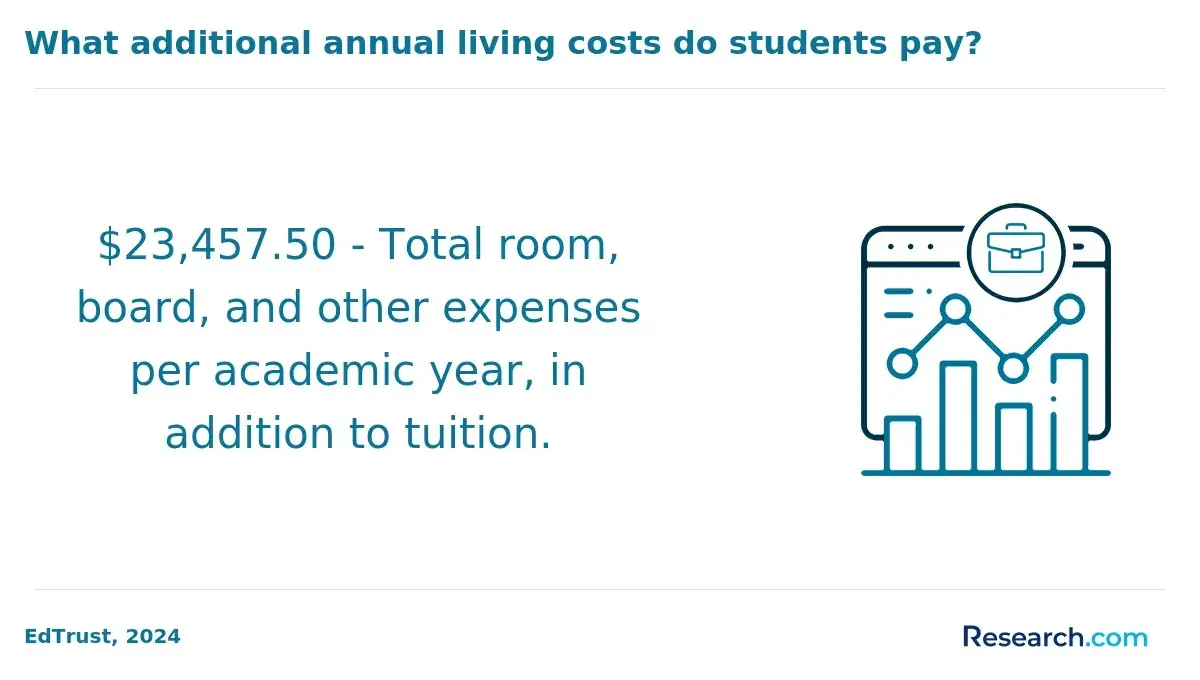
What Fees and Hidden Costs Should Online Family Nurse Practitioner Degree Students Expect?
Online FNP students should expect costs beyond tuition because nurse practitioner education includes clinical preparation, compliance documentation, patient-care competencies, and certification readiness. These expenses are not always "hidden" intentionally, but they may be listed across separate tuition, nursing, registrar, and clinical placement pages.
Before enrolling, request a term-by-term cost sheet and ask whether the following charges are mandatory, optional, one-time, or recurring:
- Technology and online learning fees: Learning management systems, remote proctoring, exam software, library access, and student services.
- Clinical onboarding fees: Background checks, drug screens, immunization tracking, CPR certification, health forms, and malpractice coverage.
- Course materials: Digital textbooks, clinical reference tools, diagnostic equipment, software subscriptions, and assessment platforms.
- Campus or skills intensives: Travel, lodging, meals, parking, and time away from work if the program requires in-person sessions.
- Clinical placement expenses: Travel to approved sites, possible onboarding charges from clinical partners, and costs tied to preceptor documentation.
- Graduation and credentialing expenses: Graduation fees, transcript fees, certification review, national certification exam fees, and state APRN licensure applications.
One red flag is a program that advertises a very low tuition rate but cannot provide a clear answer about clinical placement responsibilities. If students must find their own preceptors, the financial risk is not only money; delayed clinical placement can extend enrollment and add another term of fees.
How Does FAFSA and Federal Financial Aid Work for Online Family Nurse Practitioner Degree Programs?
FAFSA-based aid can apply to online FNP programs when the school participates in federal Title IV aid and the student meets eligibility requirements. The online format alone does not disqualify a program from federal aid, but accreditation, degree status, enrollment level, satisfactory academic progress, and school participation all matter.
Graduate nursing students generally do not receive Pell Grants, which are primarily for eligible undergraduates. Instead, they commonly rely on federal Direct Unsubsidized Loans, Graduate PLUS Loans, scholarships, employer tuition assistance, payment plans, and state or institutional grants where available.
- File the FAFSA for the correct aid year and list every FNP school you are seriously considering.
- Confirm that the program is degree-granting, Title IV-eligible, and available to online students in your state.
- Compare financial aid award letters by separating gift aid from loans that must be repaid.
- Ask whether enrollment pace affects aid eligibility, especially if you plan to study part time.
- Calculate your expected net price after scholarships, grants, and employer benefits before accepting loans.
The FAFSA process has also become more data-driven under recent federal simplification changes, with eligibility calculations tied to the Student Aid Index rather than the older Expected Family Contribution terminology. For graduate FNP students, the practical takeaway is simple: file early, compare award letters carefully, and do not assume that a large aid package is cheaper if most of it is loans.
Which Scholarships, Grants, and Tuition Benefits Can Help Pay for an Online Family Nurse Practitioner Degree?
Scholarships, grants, and employer benefits can lower the net price of an online FNP degree because they reduce the amount you need to pay out of pocket or borrow. The most valuable aid is renewable, stackable, and available to online graduate nursing students, not just campus-based or undergraduate students.
These funding sources are worth checking before you accept the full loan amount in your award letter:
- School-based nursing scholarships: Awards from the nursing school, graduate college, alumni foundation, or health professions office.
- State workforce grants: Programs that support primary care, rural health, underserved communities, or advanced nursing education.
- Employer tuition assistance: Hospital, clinic, or health system benefits that reimburse tuition after successful course completion.
- Professional association scholarships: Awards from nursing organizations, specialty groups, and local nurse practitioner associations.
- Service-linked support: Programs that may provide loan repayment or scholarship assistance in exchange for work in designated shortage areas.
- Military and veteran education benefits: Benefits that may apply to eligible service members, veterans, spouses, or dependents depending on program approval.
Students comparing clinical and nonclinical healthcare graduate routes should also consider how their employer benefit applies across programs. For example, a hospital may reimburse nursing, administration, and leadership programs differently, so comparing accelerated healthcare programs can clarify whether the FNP route is the best funded path for your goals.
Before counting on an award, ask whether it is renewable, whether part-time students qualify, whether online students are eligible, whether it requires a minimum GPA, and whether it can be combined with employer reimbursement. A $2,000 scholarship that renews for several terms can be more valuable than a larger one-time award.
Can Transfer Credits, Prior Learning, and Competency-Based Study Lower the Cost of an Online Family Nurse Practitioner Degree?
Transfer credit can lower the cost of an online FNP degree, but graduate nursing programs are usually more restrictive than undergraduate programs. Because FNP coursework is tied to advanced pharmacology, pathophysiology, health assessment, population care, and supervised clinical competencies, schools often limit how many graduate credits may transfer and how old those credits can be.
Cost savings are most realistic when the prior coursework closely matches the receiving program's curriculum and was completed at an accredited institution. Students should not assume that prior RN experience, specialty certification, or continuing education units will replace graduate FNP clinical requirements.
- Request an unofficial transfer review before enrolling, not after your first term begins.
- Ask how many credits can transfer into the MSN-FNP track and whether transferred credits reduce tuition or only replace electives.
- Confirm course age limits, minimum grades, accreditation requirements, and whether advanced assessment, pharmacology, or pathophysiology must be taken at the school.
- Check residency requirements, which may require you to complete a minimum number of credits at the degree-granting institution.
- Ask whether transfer credits affect financial aid enrollment status or scholarship eligibility.
Prior learning is more useful before nursing graduate school than during the FNP clinical sequence. Career changers sometimes compare an online bachelor's in biology while exploring healthcare options, but becoming an FNP requires RN licensure, a nursing degree pathway, graduate nursing admission, and supervised advanced practice clinical training.
How Should Students Compare the Net Price, Quality, and Return on Investment of Online Family Nurse Practitioner Degree Programs?
The best-value online FNP program is not always the one with the lowest tuition. A stronger value comparison looks at net price, accreditation, state eligibility, clinical support, certification preparation, graduation timeline, faculty access, and the likelihood that you can complete the program without unnecessary delays.
The Bureau of Labor Statistics reports strong demand for nurse practitioners, with the broader advanced practice registered nursing field projected to grow much faster than the average for all occupations in the current 2024 to 2034 projection cycle. For students, that supports the long-term relevance of the credential, but it does not remove the need to borrow carefully and choose a program that fits state licensure rules.
Use the table below to compare low cost against quality signals. This helps prevent the common mistake of choosing the cheapest advertised tuition while overlooking factors that can affect completion, certification, and career mobility.
| Comparison factor | Why it matters | Better-value sign |
| Net price | Shows the cost after grants, scholarships, employer benefits, and tuition discounts | The school provides a written estimate that separates gift aid from loans. |
| Accreditation | Protects eligibility for certification, licensure, employment, and further study | Institutional and CCNE or ACEN accreditation can be independently verified. |
| Clinical placement support | Clinical delays can add terms, fees, and stress | The program clearly explains student and school responsibilities for preceptors. |
| State authorization | Online students must be allowed to complete the program from their state | The school confirms in writing that your state is eligible for enrollment and clinicals. |
| Completion timeline | Longer enrollment can increase fees and reduce work flexibility | The schedule is realistic for your work hours and clinical availability. |
| Certification preparation | FNP graduates typically pursue national certification before APRN licensure | The curriculum aligns with FNP certification domains and includes board-prep support. |
| Opportunity cost | Reduced work hours can be a major indirect cost | The program format lets you balance employment, study, and clinical hours. |
Students who are unsure whether they want advanced clinical practice or healthcare leadership should compare career outcomes before committing. A clinical FNP route differs substantially from the fastest online MHA options, which may be better aligned with administration, operations, or management roles rather than direct patient care.
A practical final step is to create a side-by-side spreadsheet for your top three programs. Include tuition, mandatory fees, estimated clinical expenses, aid that does not require repayment, total borrowing, state eligibility, accreditation status, clinical placement support, and expected completion date. The program with the best balance of verified accreditation, manageable net price, and realistic completion support is usually the safer financial choice.
Other Things You Should Know About Family Nurse Practitioner
To enroll in an online Family Nurse Practitioner program in 2027, applicants typically need a Bachelor of Science in Nursing (BSN), an active RN license, and relevant clinical experience. Specific prerequisites may vary by institution, so always check individual program requirements.
Online Family Nurse Practitioner programs in 2027 are accredited by the Commission on Collegiate Nursing Education (CCNE) and the Accreditation Commission for Education in Nursing (ACEN), ensuring that they meet the necessary standards for quality education in nursing.
An MSN-FNP is usually shorter and less expensive, while a DNP-FNP includes additional doctoral-level coursework in leadership, evidence-based practice, systems improvement, and population health. The better choice depends on your budget, timeline, career goals, and employer expectations.
When comparing tuition fees for online Family Nurse Practitioner programs in 2027, consider accreditation, state residency discounts, program length, additional fees beyond tuition, and available financial aid. These factors can significantly impact the overall cost and value of the program.
References
- Most Affordable Online Family Nurse Practitioner Programs | ThriveAP https://provider.thriveap.com/blog/most-affordable-online-family-nurse-practitioner-programs
- CCNE Accreditation https://www.aacnnursing.org/ccne-accreditation
- 2025 Most Affordable Online Nurse Practitioner Programs https://www.onlineu.com/most-affordable-colleges/nurse-practitioner-masters-degrees
- American Association of Nurse Practitioners (AANP) Scholarships https://www.aanp.org/education/professional-funding-support/scholarships
- MSN Family Nurse Practitioner (FNP) Online | WCU https://westcoastuniversity.edu/online-programs/msn/fnp
- Scholarship Guide for Nurse Practitioner Schools - Rewards & Eligiblity https://www.npschools.com/blog/scholarships-for-np-students
- MSN Family Nurse Practitioner https://www.chamberlain.edu/academics/nursing-school/fnp-family-nurse-practitioner
- Some of the Top CCNE-Accredited Nurse Practitioner Programs https://npdegrees.org/accreditation/ccne-accredited-nurse-practitioner-programs/
- Top Scholarships & Grants for NP and APRN Students https://www.preceptorlink.com/blog-posts/scholarships-and-grants-for-np-and-aprn-students
- Family Nurse Practitioner (MSN-FNP): Earn Your Degree Online https://www.usuniversity.edu/degrees/master-of-science-in-nursing-family-nurse-practitioner