2027 Best Accredited Online Family Nurse Practitioner Degree Programs: Compare Tuition, Admissions, and Career Outcomes

Co-Founder and Chief Data Scientist
Choosing an online Family Nurse Practitioner program is a high-stakes decision because it affects licensure eligibility, clinical placement, debt, and career mobility. The U. S. Bureau of Labor Statistics reports a May 2024 median annual wage of $129,210 for nurse practitioners, but program cost and state approval can vary widely. This guide is for registered nurses comparing accredited online FNP degrees. You will learn how to evaluate tuition, admissions, accreditation, formats, support services, financial aid, and career outcomes so you can choose a program that fits your schedule, budget, and licensing goals.
Key Things You Should Know
- Choose a regionally accredited institution with a CCNE- or ACEN-accredited nursing program, then confirm the program meets your state board's nurse practitioner licensure requirements.
- Value is not the same as lowest tuition; the strongest online FNP programs balance total cost, clinical placement support, board exam preparation, graduation support, and scheduling flexibility.
- BLS projects 40% growth for nurse anesthetists, nurse midwives, and nurse practitioners from 2023 to 2033, making FNP preparation attractive, but outcomes still depend on specialty fit, location, experience, and licensure.
Which Accredited Online Family Nurse Practitioner Degree Programs Offer the Best Overall Value?
The best overall value in an accredited online Family Nurse Practitioner degree program is usually found where three factors overlap: reasonable total cost, credible accreditation, and strong support for clinical placement and certification preparation. For most registered nurses, the goal is not simply to find the cheapest MSN-FNP or BSN-to-DNP FNP program; it is to find the lowest-risk path to eligibility for national certification and state advanced practice licensure.
An online FNP program prepares registered nurses to assess, diagnose, treat, and manage patients across the lifespan, typically in primary care, community health, urgent care, retail health, and outpatient settings.
Most programs are offered as Master of Science in Nursing FNP tracks, post-master's certificates, or Doctor of Nursing Practice FNP pathways. The right option depends on your current degree, whether you already hold an MSN, and whether you want the terminal clinical doctorate.
The table below compares common value profiles among accredited online FNP programs. Published tuition changes frequently, so use the figures as a starting point and verify total program cost directly with each school before applying.
| Program example | Common online pathway | Accreditation to verify | Value profile | Best fit |
| Western Governors University | BSN-to-MSN FNP | Institutional accreditation and CCNE nursing accreditation | Competency-based tuition model can be cost-effective for disciplined, independent learners | Working RNs who can move quickly through self-directed coursework and meet clinical requirements |
| University of Texas at Arlington | Online MSN-FNP | Institutional accreditation and CCNE nursing accreditation | Often considered a strong public-university value because of transparent online pricing and broad recognition | RNs seeking a large online program with structured progression |
| University of Southern Indiana | Online MSN-FNP | Institutional accreditation and CCNE nursing accreditation | Public-university pricing can make it attractive for cost-conscious students | Students prioritizing affordability and an established nursing school |
| Frontier Nursing University | MSN or DNP FNP pathways | Institutional accreditation and ACEN nursing accreditation | Strong fit for students focused on community-based, rural, and primary care practice | RNs who value mission alignment and advanced practice nursing specialization |
| Georgetown University | Online or hybrid-style MSN-FNP | Institutional accreditation and CCNE nursing accreditation | Higher-cost private option with strong brand recognition and intensive support structure | Students willing to pay more for reputation, cohort structure, and academic resources |
For many students, a public online MSN-FNP program provides the strongest return if it meets state licensure rules, offers meaningful clinical coordination, and keeps borrowing manageable. A higher-priced private program may make sense if it provides stronger advising, specialty reputation, better clinical placement assistance, or a format that helps you finish without stepping away from full-time nursing employment.
Use the following decision lens when comparing "best" programs. It helps prevent the common mistake of choosing only by tuition or only by name recognition.
- Choose a lower-cost public or competency-based program if you are self-motivated, already have clinical connections, and want to minimize debt.
- Choose a higher-support private or nationally recognized program if you need more structure, stronger advising, or help navigating clinical placement logistics.
- Choose a DNP-FNP pathway if you want doctoral-level clinical leadership preparation, academic advancement, or broader long-term mobility, but compare the added cost carefully.
- Avoid any program that cannot clearly explain clinical hour requirements, state authorization, board pass support, and whether it is approved for your state of residence.
What Accreditation Should Students Look for in an Online Family Nurse Practitioner Degree Program?
Students should look for two layers of accreditation: institutional accreditation for the college or university and programmatic nursing accreditation for the FNP program. Institutional accreditation affects transferability, financial aid eligibility, and employer recognition. Programmatic accreditation indicates that the nursing curriculum, faculty qualifications, clinical expectations, and outcomes have been reviewed against professional standards.
For online FNP degrees, the most important programmatic accreditors are the Commission on Collegiate Nursing Education and the Accreditation Commission for Education in Nursing. Many state boards of nursing and national certification bodies rely on completion of an accredited graduate nursing program when reviewing eligibility, although exact rules vary by state.
The table below shows what to verify before you submit an application. This is especially important for online students because state authorization and clinical placement rules may differ from where the university is physically located.
| Accreditation or approval item | Why it matters | What to confirm |
| Institutional accreditation | Supports federal financial aid eligibility and general academic recognition | The university is accredited by a recognized institutional accreditor |
| CCNE or ACEN programmatic accreditation | Signals that the graduate nursing program meets professional standards | The specific FNP track or graduate nursing program is currently accredited |
| State authorization | Online programs may not enroll students from every state | The school is authorized to educate students in your state |
| State board licensure alignment | Graduation alone does not automatically grant NP licensure | The curriculum and clinical hours meet your state's APRN requirements |
| Certification eligibility | FNP graduates usually pursue national certification before state licensure | The program prepares students for recognized FNP certification exams |
The safest approach is to verify accreditation in writing before enrolling. Ask admissions for the program's accreditation status, state eligibility map, and any restrictions that apply to clinical placements in your state.
Follow this sequence before you apply:
- Confirm the university's institutional accreditation through the school's accreditation page or accreditor database.
- Confirm CCNE or ACEN accreditation for the graduate nursing program, not just the undergraduate nursing school.
- Check whether the program accepts students from your state and supports clinical placements there.
- Review your state board of nursing's APRN licensure requirements for graduate degree level, clinical hours, pharmacology, assessment, and pathophysiology.
- Ask which national FNP certification exams the curriculum is designed to support.
A major red flag is vague language such as "accreditation pending" without a clear timeline or explanation. Another is a school that says licensure is "the student's responsibility" but cannot provide state-by-state eligibility guidance. Students may still need to confirm requirements independently, but credible programs should be able to explain where their graduates are eligible to pursue licensure.
How Do Tuition Costs Compare Across Accredited Online Family Nurse Practitioner Degree Programs?
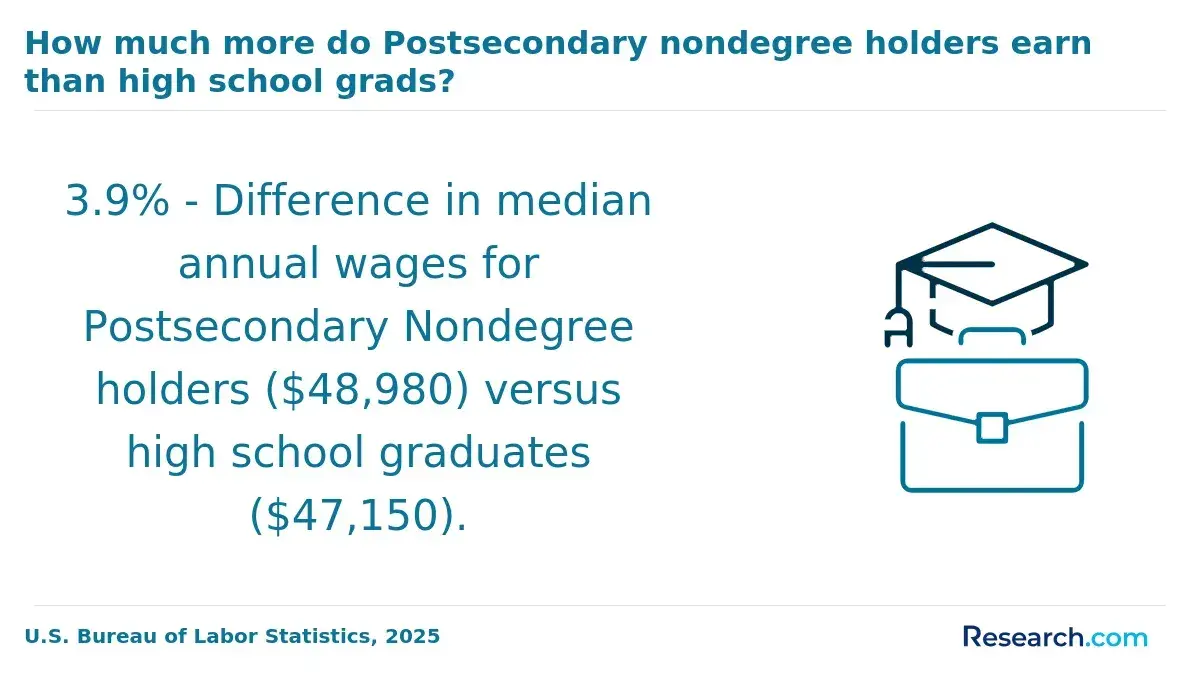
Tuition for accredited online FNP programs varies widely because schools use different pricing models: per-credit tuition, flat-rate competency terms, in-state and out-of-state rates, technology fees, clinical fees, immersion fees, and required campus visits. The most useful number is not advertised tuition; it is estimated total program cost after fees, travel, books, exam preparation, and any lost income from reduced work hours.
Current published tuition for online MSN-FNP programs commonly falls into three broad bands. Use these categories to decide where to focus your search before requesting itemized cost sheets.
- Lower-cost programs: often public universities or competency-based institutions, commonly attractive to students trying to keep total tuition in the lower five-figure range.
- Mid-range programs: often established public or private nonprofit universities with more structured advising, cohort pacing, or specialty resources.
- Higher-cost programs: often private universities with national brand recognition, smaller cohorts, intensive faculty interaction, or more robust student services.
The table below summarizes the cost variables that most often change the real price of an online FNP degree. This comparison is more useful than tuition alone because two programs with similar per-credit rates can have very different total costs.
| Cost factor | How it affects total cost | Question to ask the school |
| Credit requirement | More credits increase tuition even when the per-credit rate looks affordable | How many total credits are required for the FNP track? |
| Clinical placement fees | Some programs charge fees for clinical coordination, onboarding, or documentation platforms | Are clinical fees included in tuition or billed separately? |
| Campus immersions | Travel, lodging, meals, and unpaid time away from work can add substantial cost | How many required campus visits are there? |
| State residency pricing | Public universities may charge different rates for residents and nonresidents | Is online tuition the same for all students? |
| Certification and licensure expenses | Exam, application, background check, and licensing fees usually occur near graduation | Which certification and licensure costs should I budget for? |
A practical comparison method is to build a one-page budget for each school. Include tuition, mandatory fees, clinical expenses, travel, books, test preparation, certification, licensure, and the cost of reducing work hours during clinical rotations. This prevents a common mistake: selecting a program with low tuition but expensive travel requirements or weak clinical support.
Cost also affects timing. Nurses who need a bridge before graduate study may first compare best online RN to BSN programs, especially if their long-term goal is to qualify for BSN-to-MSN FNP admission without adding unnecessary clinical disruptions.
How Competitive Is Admission to Accredited Online Family Nurse Practitioner Degree Programs?
Admission competitiveness varies by institution, but accredited online FNP programs are not open-enrollment graduate programs. Schools usually expect applicants to be licensed registered nurses with a BSN, undergraduate nursing coursework, clinical experience, and evidence that they can handle advanced pathophysiology, pharmacology, health assessment, diagnostics, and primary care decision-making.
Most programs evaluate readiness rather than relying on a single cutoff. GPA matters, but so do RN experience, professional references, a statement of purpose, prior academic performance in science-heavy courses, and whether the applicant understands the clinical responsibilities of advanced practice nursing.
The table below outlines common admissions requirements and how they affect applicant strategy. Requirements vary, so always review the program's current catalog and state-specific enrollment rules.
| Admissions factor | Common expectation | How to strengthen your application |
| Active RN license | Unencumbered RN license, usually in the state where clinicals will occur | Resolve license issues before applying and confirm multi-state practice rules if relevant |
| BSN or equivalent | Most MSN-FNP programs require a BSN from an accredited nursing program | Complete missing prerequisites or bridge requirements early |
| GPA | Many programs set a minimum undergraduate GPA, often with added review for lower GPAs | Highlight recent graduate coursework or strong performance in nursing sciences |
| Clinical experience | One or more years of RN experience may be preferred or required | Emphasize primary care, emergency, pediatrics, women's health, geriatrics, or community health exposure |
| Professional references | Faculty, supervisors, or advanced practice clinicians may be requested | Choose references who can speak to clinical judgment, reliability, and readiness for graduate study |
Admissions flexibility does not automatically mean lower academic quality. Some strong online programs use holistic review to admit experienced nurses whose undergraduate GPA does not fully reflect their current ability. However, be cautious if a program has minimal academic screening, cannot describe clinical expectations, or appears more focused on fast enrollment than student readiness.
Applicants can improve their odds by preparing before the application window opens. The following steps are especially useful for working nurses applying to multiple programs.
- Request unofficial transcript reviews to identify missing prerequisites or GPA concerns.
- Ask whether the program requires recent statistics, health assessment, or undergraduate science coursework.
- Document RN experience by specialty, patient population, leadership duties, and quality improvement work.
- Prepare a focused personal statement explaining why family practice fits your clinical goals.
- Apply only to programs that accept students in the state where you plan to complete clinical hours.
Which Learning Formats Offer the Greatest Flexibility in Online Family Nurse Practitioner Degree Programs?
The most flexible online FNP programs combine asynchronous coursework with predictable deadlines, part-time pacing, and clear clinical scheduling expectations. Still, no accredited FNP program is completely "online only" in the casual sense, because students must complete supervised clinical hours with approved preceptors and may need campus or virtual intensives for skills assessment.
Online learning formats differ in how much control students have over time, pacing, interaction, and clinical planning. The best format depends on your work schedule, family responsibilities, learning style, and access to local clinical sites.
The table below compares the major online FNP formats and the trade-offs that matter most for working registered nurses.
| Format | Flexibility level | Strengths | Watch-outs |
| Asynchronous online | High | Students can complete lectures and assignments around shifts | Requires strong self-management and may still have fixed exam or discussion deadlines |
| Synchronous online | Moderate | Live class meetings create structure and faculty interaction | Harder for nurses with rotating shifts or nights |
| Hybrid with immersions | Moderate | Useful for hands-on assessment, simulation, and faculty evaluation | Travel expenses and time off work can increase total cost |
| Competency-based | High for some students | Can reward prior knowledge and disciplined pacing | Not ideal for students who need frequent live instruction or external structure |
| Cohort-based | Moderate | Peer support and predictable course sequence | Less ability to accelerate or pause without delaying graduation |
Students who succeeded in flexible undergraduate formats may adapt well to asynchronous or competency-based graduate study, but FNP clinical training requires more coordination than most online degrees. If you are still evaluating whether independent online study fits your habits, reviewing how a self-paced bachelor's degree online works can help you understand the discipline required before committing to graduate-level nursing coursework.
Before choosing the most flexible option, ask how the program handles clinical placement. Flexibility is limited if students must secure their own preceptors with little guidance, especially in areas where primary care sites are already saturated with learners.
Use these questions to test whether the advertised flexibility is real:
- Are lectures recorded, live, or both?
- Can students enroll part time without losing financial aid eligibility?
- How early does the school begin clinical placement planning?
- Does the program require campus visits, and how far in advance are dates announced?
- What happens if a preceptor cancels or a clinical site becomes unavailable?
What Student Support Services Improve Success in Online Family Nurse Practitioner Degree Programs?
Student support can be the difference between finishing an online FNP program on time and struggling through clinical delays, academic overload, or certification uncertainty. Because FNP programs combine graduate coursework, patient care hours, documentation, preceptor relationships, and licensure preparation, support services should be evaluated as seriously as tuition.
The most valuable support services are those that reduce preventable obstacles. Clinical placement assistance is often the highest-impact service, but academic coaching, writing support, simulation access, exam preparation, and responsive faculty advising also matter.
The table below identifies support services that can improve completion and readiness. It also shows why students should ask for specifics instead of accepting broad claims such as "student-centered support."
| Support service | Why it matters | What strong support looks like |
| Clinical placement coordination | Clinical delays can postpone graduation and certification eligibility | Clear timelines, site approval help, preceptor documentation support, and contingency planning |
| Faculty advising | FNP students need guidance on course sequencing, clinical readiness, and specialty expectations | Assigned advisors with predictable response times |
| Board exam preparation | Certification is usually required before state APRN licensure | Integrated review resources, practice questions, and feedback on weak areas |
| Writing and research support | Graduate nursing assignments often require evidence-based writing and scholarly sources | Online tutoring, library access, and APA or scholarly writing assistance |
| Technology and simulation support | Online programs rely on learning platforms, virtual assessment, and digital documentation | Reliable tech help and orientation before advanced coursework begins |
One current trend affecting online FNP education is increased use of virtual simulation, telehealth practice scenarios, and digital clinical documentation tools. These can strengthen readiness for modern primary care, but they should supplement-not replace-required supervised direct patient care hours when state boards or certifying bodies require them.
Red flags include unclear clinical placement responsibility, advisors who cannot explain progression policies, limited faculty access, and no published plan for students who fall behind. A program may be academically strong and still be a poor fit if its support model does not match your work schedule, learning needs, or location.
Which Financial Aid Options Are Available for Accredited Online Family Nurse Practitioner Degree Students?
Accredited online FNP students may qualify for several forms of financial aid, but eligibility depends on the school, program level, enrollment intensity, citizenship status, satisfactory academic progress, and whether the institution participates in federal aid programs. Because graduate nursing education can be expensive, students should compare net cost after aid instead of focusing only on sticker tuition.
Common funding options include federal graduate loans, employer tuition assistance, military or veterans benefits, institutional scholarships, state nursing workforce grants, private scholarships, and service-based repayment programs. Some nurses also use part-time enrollment to keep working while limiting borrowing.
The table below summarizes major financial aid options and the main trade-offs for FNP students.
| Funding option | Potential benefit | Important limitation |
| Federal Direct Unsubsidized Loans | Common graduate loan option for eligible students | Interest accrues, and annual limits may not cover all costs |
| Graduate PLUS Loans | Can help cover remaining cost of attendance | Requires credit review and can increase long-term debt |
| Employer tuition assistance | Reduces out-of-pocket cost while maintaining employment | May require continued employment or reimbursement if you leave |
| Scholarships and grants | Do not require repayment when conditions are met | Competitive and often require separate applications |
| Service-based repayment programs | Can support clinicians working in shortage areas | Usually requires qualifying employment and service commitments |
A smart financial aid comparison looks at borrowing, repayment, and flexibility together. A lower-cost program may be the better investment if it reduces debt and still leads to certification eligibility. A higher-cost program may be reasonable if it allows you to stay employed, avoid relocation, and receive enough support to finish on schedule.
Take these steps before accepting an offer:
- Request the full cost of attendance, not just tuition per credit.
- Ask whether part-time enrollment changes financial aid eligibility.
- Compare scholarships, employer reimbursement, and loan estimates across schools.
- Calculate how many hours you may need to reduce work during clinical courses.
- Review repayment obligations for employer or service-based aid before signing.
If you are comparing clinical and administrative healthcare career paths, also consider whether a management route may offer a better fit for your goals. Some nurses explore accelerated healthcare programs when they want leadership or operations roles without advanced practice clinical licensure.
Which Career Outcomes Are Associated With Accredited Online Family Nurse Practitioner Degree Programs?
Accredited online FNP programs are designed to prepare registered nurses for advanced practice roles in family-focused primary care. Typical outcomes include eligibility to pursue national FNP certification, state APRN licensure, and roles in outpatient clinics, community health centers, family medicine practices, telehealth, retail clinics, urgent care, and rural health settings.
The labor market is one reason many nurses consider FNP education. The BLS reports a May 2024 median annual wage of $129,210 for nurse practitioners. That figure should be used as a national benchmark, not a personal salary prediction, because compensation varies by state, setting, specialty demand, experience, schedule, and employer type.
The table below connects common FNP career outcomes with the program features that support them. It can help you compare schools based on your intended practice setting rather than overall reputation alone.
| Career goal | Relevant program features | Why it matters |
| Primary care FNP | Strong adult, pediatric, women's health, and geriatrics clinical exposure | Family practice requires comfort across the lifespan |
| Rural or underserved care | Community health focus and support for local clinical placements | Clinical context can shape readiness for resource-limited settings |
| Telehealth or hybrid care | Training in digital assessment, documentation, patient education, and remote care workflows | Employers increasingly expect comfort with virtual care tools |
| Urgent care or retail health | High-volume assessment, diagnostic reasoning, and episodic care preparation | Fast-paced settings require confident triage and scope awareness |
| Clinical leadership | DNP option, quality improvement coursework, and evidence-based practice projects | Leadership roles may value doctoral preparation or systems training |
Career outcomes are strongest when the program aligns with where you want to practice. For example, a student planning rural primary care should prioritize local preceptor access and broad lifespan training, while a student aiming for academic or leadership roles may place more value on DNP pathways, scholarly projects, and quality improvement experience.
Not every nurse who wants healthcare advancement needs an FNP degree. If your goal is executive, administrative, or operations leadership rather than diagnosing and treating patients, comparing the fastest online MHA options may be a better match than pursuing advanced practice licensure.
How Do Online and Campus-Based Family Nurse Practitioner Degree Programs Compare?
Online and campus-based FNP programs can lead to the same credential when they are properly accredited and meet licensure requirements. The biggest differences are not usually academic legitimacy; they are scheduling, clinical placement logistics, peer interaction, travel, and how much structure the student needs.
Online programs are often best for working RNs who cannot relocate or attend weekly campus classes. Campus-based programs may be better for students who want face-to-face faculty access, local preceptor networks, simulation labs, and a fixed schedule. Hybrid programs sit between the two, combining online coursework with campus intensives or local clinical experiences.
The table below compares online and campus FNP study across decision factors that affect fit and completion.
| Decision factor | Online FNP program | Campus-based FNP program |
| Schedule flexibility | Often stronger, especially with asynchronous coursework | More structured, with fixed class times |
| Clinical placement | May occur near the student's location, but support varies | May benefit from established local site relationships |
| Faculty access | Virtual office hours, email, learning platforms, and video meetings | In-person meetings and on-campus advising |
| Networking | Online cohorts and regional clinical connections | Local peer, faculty, and healthcare system connections |
| Travel cost | Lower unless immersions are required | Higher if commuting or relocation is needed |
The right choice depends on your constraints. Online is usually better if you need to keep working, live far from a graduate nursing school, or need part-time pacing. Campus-based study may be better if you learn best in person, want immediate lab access, or prefer a school with strong local clinical partnerships.
Students who are still early in their healthcare education should be careful not to confuse FNP preparation with general healthcare or science degrees. An online bachelor's in biology can support healthcare-related goals, but it does not replace RN licensure, BSN preparation, or graduate nursing clinical training required for FNP practice.
How Should Students Choose the Best Accredited Online Family Nurse Practitioner Degree Program?
Students should choose the best accredited online FNP program by matching program quality to licensure eligibility, total cost, clinical support, learning format, and career goals. A program that is excellent for one nurse may be a poor fit for another if it does not operate in the student's state, requires inconvenient immersions, or assumes the student can find preceptors independently.
Start with non-negotiables: accreditation, state authorization, and alignment with your state's APRN requirements. Then compare cost, support, schedule, and outcomes. Only after those factors are clear should rankings, brand reputation, or admissions speed influence your decision.
The table below turns common student priorities into program-selection signals. Use it to narrow your list before requesting advising calls.
| If your top priority is... | Look for... | Be cautious about... |
| Lowest debt | Transparent tuition, low fees, part-time options, employer reimbursement compatibility | Programs with low tuition but expensive travel or weak clinical support |
| Finishing while working full time | Asynchronous courses, predictable deadlines, flexible clinical planning | Rigid synchronous schedules or last-minute immersion dates |
| Clinical confidence | Strong simulation, faculty feedback, varied clinical sites, board prep | Programs that focus heavily on convenience but say little about skills evaluation |
| Licensure certainty | State eligibility disclosures and clear certification preparation | Programs that cannot confirm eligibility in your state |
| Long-term leadership | DNP pathway, quality improvement training, scholarly project support | Paying for doctoral study without a clear career reason |
Before applying, complete a structured comparison process. This helps you avoid relying on marketing claims or generic rankings.
- Make a shortlist of accredited programs that accept students in your state.
- Request written confirmation that the program meets or is designed to meet your state's APRN educational requirements.
- Build a total-cost comparison that includes fees, travel, books, certification, and reduced work hours.
- Ask exactly how clinical placement works and what happens if a site falls through.
- Compare board preparation, graduation support, and student outcome disclosures.
- Choose the program that offers the strongest fit across cost, licensure, support, schedule, and career direction.
The biggest mistake is treating "best" as a universal ranking. For a working RN with local preceptor connections, the best value may be a low-cost public online MSN-FNP. For a nurse changing specialties or needing more structure, a higher-support program may be worth the added cost. If your goal is speed into healthcare leadership rather than advanced clinical practice, compare non-clinical options before committing to FNP training.
Other Things You Should Know About Family Nurse Practitioner
Many students work while enrolled, especially during didactic courses. Full-time work becomes harder during clinical semesters because supervised patient care hours must fit preceptor and site schedules.
Many BSN-to-MSN FNP programs take about two to three years, while part-time and DNP pathways can take longer. Post-master's certificates may be shorter for nurses who already hold a graduate nursing degree.
Yes. Coursework may be online, but accredited FNP preparation requires supervised clinical experiences with real patients. These hours are usually completed in approved healthcare settings near the student when available.
An MSN-FNP is often the shorter route to FNP certification eligibility, while a DNP-FNP adds doctoral-level clinical leadership and systems training. The better choice depends on your career goals, budget, timeline, and state or employer expectations.
References
- Guide to Nurse Practitioner Schooling Requirements https://credenzahealth.com/career-advice/guide-to-nurse-practitioner-schooling-requirements
- Online Nurse Practitioner (NP) Programs https://nursinglicensemap.com/nursing-degrees/online-nurse-practitioner-programs/
- All Online Nurse Practitioner Schools, Ranked - NPSchools https://www.npschools.com/
- Master of Science in Family Nurse Practitioner | University of Phoenix https://www.phoenix.edu/online-nursing-degrees/family-nurse-practitioner-masters-degree.html
- Family Nurse Practitioner – Post Master’s Certificate https://online.aic.edu/programs/post-masters-fnp-online
- Top NP Schools: Your Guide to Choosing the Best Programs https://www.nphub.com/blog/best-np-schools-guide
- The Real Cost of NP Programs: Tuition, Tradeoffs, and What To Compare - Nurse Practitioner Degrees https://npdegrees.org/resources/np-programs-true-cost/
- Guide to the Most Affordable Online Nurse Practitioner Programs https://www.edumed.org/online-schools/nurse-practitioner-programs/most-affordable/
- MSN Family Nurse Practitioner https://www.chamberlain.edu/academics/nursing-school/fnp-family-nurse-practitioner
- Home https://www.onlinefnpprograms.com/