2027 ABA Master's Programs With Built-In Fieldwork Support

Co-Founder and Chief Data Scientist
Choosing an ABA master’s program is not just a graduate school decision; it is also a certification, fieldwork, cost, and career-timing decision. Students who want to become behavior analysts need more than coursework. They also need supervised practical experience that aligns with credentialing requirements and prepares them to work with clients, families, schools, clinics, and service teams.
Programs with built-in fieldwork can make that path easier by connecting academic study with supervised practice. This is especially important for career changers, working professionals, and students who do not already have access to approved clinical or educational settings. The right program can reduce guesswork, improve readiness for the BCBA exam, and help students move from theory to professional practice with fewer delays.
This guide explains how ABA master’s programs with fieldwork support work, what to check before applying, how online and campus options compare, what students typically study, and what career and salary outcomes may follow. It also highlights practical questions to ask about accreditation, supervision, admissions, cost, and job demand before committing to a program.
Key Things You Should Know
- Most 2026 ABA master's programs integrate fieldwork hours directly into the curriculum, ensuring students meet BACB experience requirements efficiently while gaining hands-on clinical skills.
- Approximately 70% of these programs offer partnerships with local clinics or schools, providing supervised practical training essential for certification and employment readiness.
- Recent curriculum updates emphasize telehealth fieldwork options, reflecting a 35% annual growth in remote ABA service delivery since 2024.
What Are ABA Master's Programs with Built-In Fieldwork?
ABA master’s programs with built-in fieldwork are graduate programs that combine applied behavior analysis coursework with structured supervised practice. Instead of requiring students to arrange all experience hours on their own, these programs provide fieldwork planning, approved placement options, supervisor coordination, or practicum courses that help students apply ABA principles in real service settings.
The main purpose is to connect academic preparation with the experience needed for Board Certified Behavior Analyst (BCBA) eligibility. Students typically study assessment, behavior intervention, ethics, research methods, data-based decision-making, and behavior-change procedures while completing supervised work in clinics, schools, community agencies, university-based centers, or approved local sites.
Built-in fieldwork does not mean every program handles placement the same way. Some programs assign students to affiliated clinics. Others help students identify local sites, approve supervisors, and monitor documentation. Online programs may offer strong academic flexibility but still require students to complete supervised experience in person where clients are served.
| Program feature | What it means for students |
| University-affiliated practicum | Students may complete hours through clinics, schools, or agencies already connected to the program. |
| Fieldwork coordination | The program helps review sites, supervisors, timelines, and documentation requirements. |
| Local supervised experience | Students complete hands-on work near where they live, often useful for online learners. |
| Integrated coursework and practice | Class topics are reinforced through supervised client-facing or program-support activities. |
These programs are especially useful for students who are new to ABA, live in areas with limited practicum options, or want a clearer route from enrollment to certification preparation. Given an 11% growth in BACB certificants by 2025 to over 70,000 globally, demand for efficient and well-supported preparation routes continues to rise.
Before enrolling, students should confirm whether fieldwork support is guaranteed, optional, or dependent on local site availability. They should also ask who provides supervision, how hours are documented, whether supervisors meet credentialing expectations, and whether the program’s coursework aligns with current certification requirements. Students comparing remote options can also review BCBA courses online to understand how flexible programs handle coursework and fieldwork planning.
Why Choose ABA Master's with Fieldwork Support?
An ABA master’s program with fieldwork support can reduce one of the biggest barriers to becoming a behavior analyst: finding, documenting, and completing appropriate supervised experience. Coursework alone may teach the science of behavior, but fieldwork develops the judgment, communication, observation, and data-based decision-making skills employers expect.
For many students, the value is structure. A supported program helps coordinate what students learn in class with what they practice in the field. This can make it easier to understand how assessments inform intervention plans, how ethical decisions are made with real clients, and how treatment data are reviewed and adjusted over time.
Fieldwork support can also reduce avoidable delays. Students who wait until late in the program to find a supervisor may discover that local placements are full, supervision is expensive, or their work setting does not meet requirements. Programs with early fieldwork advising can help students plan sooner and avoid mismatches between academic progress and certification timelines.
- Better certification planning: Students can map coursework, fieldwork, documentation, and exam preparation together.
- More consistent supervision: Approved supervisors can provide feedback tied to professional standards and ethical practice.
- Stronger career readiness: Students gain experience with clients, teams, data systems, and intervention planning before graduation.
- Professional networking: Field placements may introduce students to clinics, schools, agencies, and future employers.
- More confidence for career changers: Students from unrelated undergraduate backgrounds can build practical skills gradually.
These benefits are not automatic. Students should compare how each program defines “fieldwork support.” A program that only provides a list of possible sites is different from one that actively coordinates placements, verifies supervisors, monitors progress, and provides practicum seminars.
Outcomes can also depend on how well the fieldwork model is integrated. For example, graduates of the University of Washington's ABA online master's program recorded a 92% first-time BCBA exam pass rate in 2025, reflecting comprehensive preparation through combined academic and practical experiences (University of Washington College of Education, 2025 Program Outcomes).
Students evaluating ABA masters programs should look beyond convenience and ask whether the program provides a realistic, supervised, and documented path toward behavior analyst certification and employment readiness.
What Accreditation Do ABA Master's Programs Need?
Accreditation and certification alignment are critical when choosing an ABA master’s program. Students should distinguish between institutional accreditation, program recognition, coursework alignment, and fieldwork requirements. These are related, but they are not the same.
At minimum, students should choose a master’s program offered by an appropriately accredited institution. They should also verify that the ABA coursework and supervised fieldwork structure align with current Board Certified Behavior Analyst (BCBA) eligibility requirements. If a program does not meet certification expectations, graduates may need additional coursework or experience before they can sit for the exam.
The original decision should be practical: will this degree, coursework, and fieldwork plan support the credential and job path the student wants? Students should not rely only on marketing language such as “BCBA-focused” or “certification-ready.” They should request documentation showing how courses map to requirements, how supervision is arranged, and what students must complete independently.
| What to verify | Why it matters |
| Institutional accreditation | It affects degree recognition, transferability, employer acceptance, and financial aid eligibility. |
| ABA coursework alignment | Students need coursework that supports BCBA eligibility and exam preparation. |
| Fieldwork model | Students must understand whether supervision is embedded, arranged locally, or handled separately. |
| Supervisor qualifications | Experience hours must be supervised by qualified professionals under applicable standards. |
| State requirements | Some states have additional licensure or practice rules beyond national certification. |
Fieldwork is a mandatory component for many students pursuing BCBA certification. Programs may integrate practicum hours with coursework, offer externships, or expect students to complete supervised work through approved employers or partner agencies. The original program text cites 1,500 hours of supervised practical experience aligned with BACB standards, so students should confirm the current requirement that applies to their certification pathway before enrolling.
Accreditation and strong outcomes can affect professional opportunities. Graduates from accredited universities often benefit from higher starting salaries; for instance, University of South Florida ABA graduates reported median starting salaries of $68,000 in 2025, 15% above the national BCBA average, according to their 2025 Alumni Survey.
Students considering flexible programs can compare online BCBA masters programs, but they should treat speed as only one factor. The safer choice is a program that clearly explains accreditation, coursework alignment, fieldwork support, supervision standards, and state-specific considerations before the student commits.
Online and campus ABA master’s programs can both prepare students for behavior analysis careers, but they differ in how coursework, supervision, networking, and fieldwork logistics are handled. The better option depends on the student’s location, schedule, experience level, access to approved sites, and need for hands-on support.
Online programs are often the better fit for working adults, students outside major metro areas, and people who need to remain employed while studying. They allow students to complete academic coursework remotely, but fieldwork still takes place in real settings. Online learners should ask whether the school helps approve local sites and supervisors or expects students to secure those arrangements independently.
Campus programs may offer more direct access to university clinics, faculty, peer learning, and established partner sites. This structure can be valuable for students who are new to ABA, prefer face-to-face mentorship, or want a more guided practicum environment. The trade-off is that campus study may require relocation, commuting, or a more fixed schedule.
| Factor | Online ABA master’s | Campus ABA master’s |
| Flexibility | Usually stronger for working students and remote learners. | Often more structured with set class and practicum schedules. |
| Fieldwork access | May require students to arrange approved local placements. | May provide access to affiliated clinics, schools, or agencies. |
| Mentorship | Can be strong, but depends on virtual advising and supervisor quality. | Often easier to access faculty, peers, and on-site supervisors. |
| Best for | Self-directed students with local fieldwork options. | Students who want a more guided, in-person training environment. |
| Potential challenge | Coordinating fieldwork from a distance. | Less scheduling flexibility and possible travel or housing costs. |
Fieldwork quality matters more than delivery format. A highly organized online program with strong supervisor oversight may serve a student better than a campus program with limited placement capacity. Likewise, a campus program with embedded clinic opportunities can be ideal for a student who needs close supervision and direct modeling.
According to St. Cloud State University's 2025 Career Services Report, embedded fieldwork correlates with a 95% alumni placement rate within three months, highlighting employment readiness. That figure reinforces an important point: students should compare how programs support practice, not just whether classes are online or in person.
Additional factors to weigh include:
- How quickly students can begin fieldwork after enrolling.
- Whether supervision costs are included in tuition or billed separately.
- How the program handles students whose placement falls through.
- Whether faculty have experience in the student’s intended practice area.
- Whether the program explains state licensure considerations for online students.
Students exploring a masters degree in behavioral science should choose the format that best supports both learning and supervised practice. Convenience is valuable, but certification progress and fieldwork quality should carry more weight.
A typical ABA master’s curriculum teaches students how behavior works, how to assess behavior, how to design ethical interventions, and how to evaluate whether those interventions are effective. Strong programs connect theory to measurable practice, because behavior analysts are expected to make decisions from observable data rather than assumptions.
Core coursework often includes behavior assessment, experimental behavior analysis, intervention strategies, ethics, verbal behavior, single-subject research methods, and behavior change procedures. Students also learn how to collect and interpret data, write behavior plans, communicate with caregivers and teams, and revise interventions when progress is limited.
Fieldwork is the practical bridge between coursework and professional competence. Most programs mandate at least 750 hours of supervised fieldwork, where students apply principles directly with clients under certified supervisors. During these experiences, students may observe sessions, assist with assessments, collect data, implement intervention procedures, participate in team meetings, and receive feedback on professional conduct.
Some programs include specialization tracks. Common options may focus on autism spectrum disorder, school-based interventions, early intervention, severe behavior, organizational behavior management, or behavioral health applications. Students should choose specializations based on their intended work setting rather than selecting the broadest or fastest option.
| Curriculum area | What students learn |
| Behavior assessment | How to identify behavior patterns, environmental variables, and intervention targets. |
| Intervention design | How to select and implement behavior-change strategies ethically and effectively. |
| Research and data analysis | How to use single-subject designs and data trends to evaluate progress. |
| Ethics and professional practice | How to protect clients, collaborate with stakeholders, and work within professional boundaries. |
| Supervised fieldwork | How to apply ABA skills in real settings under qualified supervision. |
Many programs also require a capstone, thesis, research project, or comprehensive exam. Research-focused students may prefer a thesis option, while practice-focused students may benefit from applied projects tied to fieldwork.
Financial outcomes can vary by program and student circumstances. For example, Simmons ABA students awarded $20,000 scholarships achieved 25% higher return on investment, earning average salaries around $75,000 within a year of graduation, based on Simmons University's 2025 Financial Aid Outcomes data.
Before applying, students should request a course sequence and ask how each course supports certification readiness, fieldwork, and exam preparation. A strong curriculum should not simply cover ABA topics; it should prepare students to make responsible, evidence-based decisions with real clients.
Admission requirements for ABA master’s programs usually start with a completed bachelor’s degree from an accredited institution. Applicants often come from psychology, education, special education, social work, human services, or related behavioral science fields, but many programs also consider career changers who can show readiness for graduate-level study and client-centered work.
Most programs expect a GPA around 3.0 or higher. Applicants may need prerequisite coursework in behavioral principles, statistics, research methods, psychology, or education. If a student lacks prerequisites, the program may require bridge courses before or during the first part of the degree.
Common application materials include:
- Official transcripts from prior colleges or universities.
- A statement of purpose explaining interest in ABA and career goals.
- Letters of recommendation from faculty, supervisors, or professionals who can speak to the applicant’s readiness.
- A resume showing work, volunteer, research, teaching, or human services experience.
- GRE scores if required, though more programs now waive this for qualified applicants.
- Background checks or documentation required for fieldwork sites.
Relevant experience can strengthen an application, especially work with individuals with developmental disabilities, autism spectrum disorder, behavioral health needs, or school-based support plans. However, experience alone does not replace the need for academic preparation. Admissions committees usually look for maturity, ethical judgment, communication skills, and evidence that the applicant understands the responsibilities of behavior analytic work.
Applicants should also evaluate whether they are ready for fieldwork. Programs with integrated practice components may require students to meet agency onboarding rules, complete health or safety documentation, pass background checks, or maintain availability during specific service hours. These requirements can affect students who work full time or have limited daytime availability.
Programs with integrated fieldwork, such as Pepperdine University, illustrate how structured preparation can affect timelines. Pepperdine ABA graduates achieved BCBA certification in under 18 months on average, 30% faster than typical routes (Pepperdine University, 2025 Program Evaluation). Students should still ask how that timeline was achieved and whether it applies to their enrollment status, location, and fieldwork access.
A strong application does more than meet minimum criteria. It shows that the student understands ABA, has realistic career goals, and is prepared to complete both academic and supervised practical requirements.
ABA master’s programs generally take 2 to 3 years of full-time study, depending on course load, program format, fieldwork pace, and whether the student enrolls full time or part time. Students who work while enrolled often choose a slower schedule, while accelerated programs may compress coursework and fieldwork into a shorter timeline.
Programs that integrate concentrated supervised fieldwork can shorten the path to certification. 2025 data indicate an average reduction of 8 months to BCBA certification compared to traditional programs, allowing quicker entry into the workforce. Students should confirm what “accelerated” means, because a shorter calendar does not always mean a lighter workload.
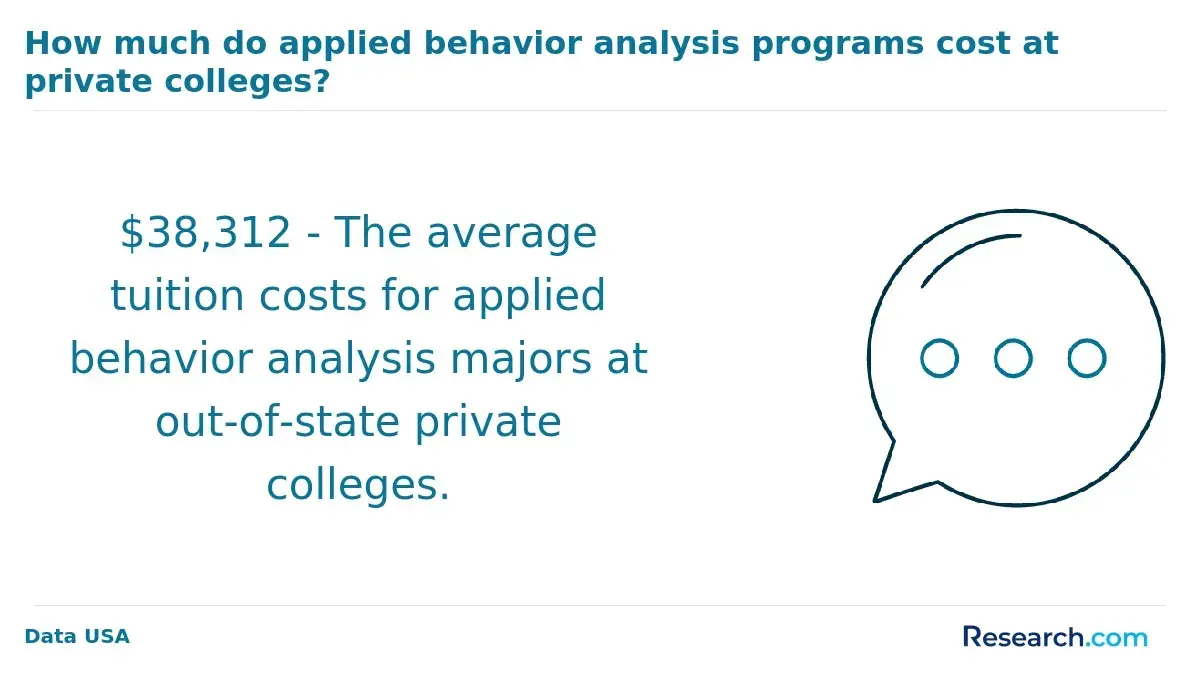
Tuition typically ranges from $20,000 to $50,000 for the entire degree. Actual cost depends on the institution, residency status, online or campus format, fees, and how supervision is billed. Students should also budget for textbooks, technology, assessment tools, background checks, transportation, certification exam fees, and any separate supervision-related expenses.
| Cost or time factor | Why it matters |
| Tuition | The largest direct cost and the easiest figure to compare across programs. |
| Supervision fees | Some programs include supervision support, while others require separate payment. |
| Fieldwork placement | Delayed or limited placements can extend the path to graduation or certification. |
| Enrollment pace | Part-time study improves flexibility but may lengthen completion time. |
| Exam preparation | Students may need additional study time after completing coursework and fieldwork. |
Students comparing cost should calculate total program expense, not just per-credit tuition. A program with slightly higher tuition but included supervision and reliable placements may be more predictable than a cheaper program that leaves fieldwork arrangements to the student.
Key planning steps include:
- Verifying that supervised fieldwork hours comply with BACB standards to avoid certification delays.
- Asking whether fieldwork starts early or only after certain courses are completed.
- Confirming whether supervision is included, optional, or separately billed.
- Checking whether scholarships, employer tuition assistance, or federal financial aid may apply.
- Allocating time for exam preparation beyond graduation requirements.
The best timeline is one the student can actually complete. A fast program may be attractive, but students should be realistic about work hours, family responsibilities, placement availability, and the intensity of supervised practice.
Graduates of ABA master’s programs with integrated fieldwork commonly pursue roles as behavior analysts, behavior consultants, clinical supervisors, school-based specialists, and program coordinators. Many students aim for BCBA certification, which can expand eligibility for advanced practice, supervisory, and leadership roles depending on employer and state requirements.
The most common career path is clinical behavior analysis, often supporting individuals with autism spectrum disorder, developmental disabilities, or behavioral challenges. In these roles, professionals may conduct assessments, design intervention plans, train caregivers or staff, review behavior data, and adjust treatment strategies based on outcomes.
ABA skills also apply outside autism services. Graduates may work in school districts, early intervention programs, behavioral health clinics, residential services, juvenile justice programs, substance abuse treatment settings, or organizational behavior management. Some pursue research, policy, quality assurance, or academic roles that rely on behavioral data and intervention evaluation.
- Clinical behavior analyst in health care or autism therapy centers
- Educational behavior consultant for school districts or special education programs
- Organizational behavior management specialist in corporate environments
- Research assistant or coordinator in behavioral science studies
- Behavior intervention specialist in juvenile justice or substance abuse treatment
Built-in fieldwork can strengthen employability because it gives students supervised examples to discuss in interviews. Employers often want to know whether a graduate has worked with real clients, collected and interpreted data, collaborated with families or teachers, and responded ethically to complex situations.
Career options may depend on certification status, state licensure rules, population experience, and the type of supervision completed. Students who want to work in schools should look for fieldwork connected to educational settings. Students interested in clinics should seek experience with assessment, caregiver training, treatment planning, and interdisciplinary collaboration.
According to Georgetown University Center on Education and the Workforce's 2025 ROI Analysis, ABA careers offer a 285% five-year ROI with a median salary of $72,000, reflecting strong financial benefits. Individual outcomes still depend on location, credentialing, employer type, specialization, and prior experience.
The salary outlook for ABA graduates is favorable, especially for professionals who complete a master’s degree, supervised fieldwork, and BCBA certification. Demand is expanding across health care, education, autism services, behavioral health, and community-based programs.
Job postings are rising 22% year-over-year according to the Burning Glass Institute Labor Insight 2025 Report. This increase far exceeds overall healthcare growth, reflecting expanding opportunities for those holding a master's degree in applied behavior analysis.
Entry-level salaries generally range from $50,000 to $65,000, influenced by location and employer type. School districts or nonprofit organizations may start closer to the lower end, while private clinics, specialized providers, and high-demand regions may offer salaries over $60,000.
Mid-career behavior analysts with BCBA certification and experience may earn between $70,000 and $90,000. Advanced practitioners, including supervisors or program managers in high-demand urban areas, can surpass $100,000 annually. Salary variation also depends on specialization, such as pediatric versus adult services or autism-focused care versus behavioral health.
| Career stage or setting | Typical salary pattern |
| Entry-level ABA graduate | Generally ranges from $50,000 to $65,000. |
| BCBA with experience | May earn between $70,000 and $90,000. |
| Supervisor or program manager | Can surpass $100,000 annually in high-demand urban areas. |
| School or nonprofit role | Often starts nearer the lower end of the range. |
| Private healthcare or specialized clinic | Often offers higher compensation, depending on demand and responsibilities. |
Key factors that affect earning potential include:
- Certification status like BCBA or BCBA-D credentials
- Years of supervised clinical experience and relevant fieldwork
- Type of employer: public schools, healthcare providers, or private practices
- Regional demand, with metropolitan areas generally offering higher wages
- Specialized experience with high-need populations or service models
Students should be cautious when comparing salary claims across programs. Ask whether figures represent graduates, certified BCBAs, full-time employees, specific states, or particular employer types. Fieldwork can improve employability, but salary outcomes still depend on credentialing, market demand, and the graduate’s ability to demonstrate competent practice.
The rising demand highlighted in the Burning Glass Institute Labor Insight 2025 Report indicates a promising career path for those entering applied behavior analysis with advanced credentials and strong supervised experience.
How Does Job Demand Look for ABA Professionals?
Job demand for ABA professionals is strong and continues to expand across clinical, educational, and community settings. The U.S. Bureau of Labor Statistics projects a shortfall of 25,000 BCBAs with practical fieldwork experience by 2030. This shortage reflects growing service needs, wider use of ABA in autism and developmental disability services, and employer preference for candidates who can move quickly from training into supervised professional roles.
Employers often prioritize applicants who combine graduate coursework with real fieldwork experience. A master’s degree may show academic preparation, but supervised practice shows that the candidate has worked with clients, followed ethical procedures, collected data, collaborated with teams, and adjusted interventions based on outcomes.
Demand varies by region and service area. States like California, Texas, and Florida are seeing the highest concentration of job openings due to larger populations and greater autism service investments. Opportunities may be available in early intervention, school-based services, outpatient clinics, home-based therapy, residential programs, adult services, and behavioral health organizations.
Students who want to improve their job prospects should choose programs that provide more than classroom instruction. Strong programs help students build a record of supervised competencies, understand documentation expectations, and prepare for certification and state practice requirements.
- Verify that the program’s coursework and fieldwork support align with BACB standards.
- Ask whether fieldwork includes diverse populations, settings, and intervention models.
- Learn whether your state has licensure requirements beyond national certification.
- Seek placements that match your intended career path, such as schools, clinics, or adult services.
- Use fieldwork to build references, case examples, and professional contacts.
Choosing an ABA master’s program with embedded fieldwork can make graduates more competitive because it connects education with the practical experience employers need. For students planning a long-term ABA career, the strongest programs are those that make certification planning, supervision, fieldwork quality, and employment readiness visible from the start.
Other Things You Should Know About Applied Behavior Analysis
In 2027, ABA Master's Programs with built-in fieldwork support typically require students to complete at least 1,500 hours of fieldwork. This duration aligns with the standards set by the Behavior Analyst Certification Board for professional competence and practical experience in applied behavior analysis.
To enroll in a 2027 ABA Master's Program with built-in fieldwork support, you typically need a bachelor's degree in psychology, education, or a related field. Some programs may also require a minimum GPA and prerequisite courses in behavior analysis or similar subjects.
Yes, graduates with a master's in Applied Behavior Analysis can work in diverse settings such as schools, corporate environments, and community agencies. Their expertise in behavior modification principles allows them to support individuals with developmental disabilities, improve organizational behavior, and contribute to educational programming outside traditional clinical contexts.
BCBA candidates must complete 2,000 supervised fieldwork hours or 1,500 concentrated supervised fieldwork hours under current BACB rules. The hours must be accrued within approved experience categories and documented before applying for the BCBA exam through the Behavior Analyst Certification Board.
- Applied Behavior Analysis Graduate Programs https://www.alumacare.com/blog/applied-behavior-analysis-graduate-programs
- Association for Behavior Analysis International Accreditation Board https://accreditation.abainternational.org/accredited-programs.aspx
- 40+ Best Online ABA Masters Programs [for 2025] https://abamastersprograms.org/online-aba-masters-programs/
- Exploring ABA Therapist Job Outlook | True Progress Therapy https://trueprogresstherapy.com/blog/aba-therapist-job-outlook/
- How is the Job Outlook for Applied Behavior Analysts? https://www.appliedbehavioranalysisprograms.com/faq/how-is-the-job-outlook-for-applied-behavior-analysts/
- BCBA Career Path To Take | Above and Beyond Therapy https://www.abtaba.com/blog/bcba-career-path-to-take
- ABA Therapist Salary Outlook Guide with Pay Ranges | Blossom https://blossomabatherapy.com/blog/aba-therapist-salary
- ABA Therapist Job Demand in 2026: Career Outlook https://www.biermanautism.com/resources/blog/aba-therapist-job-demand-2026/
- Burning Glass - Research https://burning-glass.com/research
- Applied Behavior Analysis (M.Ed.) | York College of Pennsylvania https://www.ycp.edu/academics/programs/applied-behavior-analysis-master-ed