2027 Online BCBA Programs for Single Parents

Co-Founder and Chief Data Scientist
For single parents, the question is not simply whether an online BCBA program is convenient. The real decision is whether a program can fit around childcare, work hours, fieldwork supervision, tuition limits, and certification requirements without delaying career progress. Board Certified Behavior Analyst training can lead to stable roles in schools, clinics, telehealth, autism services, and behavioral health settings, but the path requires careful planning.
This guide explains how online BCBA programs work for single parents, what to check before enrolling, how certification typically unfolds, and which factors matter most when comparing programs. It also covers accreditation, admissions, curriculum, cost, program length, careers, salary outlook, and practical ways to choose a program that supports both family responsibilities and professional goals.
Key Things You Should Know
- Online BCBA programs in 2026 increasingly offer flexible schedules and part-time options, essential for single parents balancing education and caregiving responsibilities.
- Accredited programs now incorporate virtual practicum placements, allowing single parents to complete supervised experience without geographic constraints.
- Data from 2024 shows a 25% enrollment rise in online BCBA courses among single parents, reflecting growing accessibility and targeted support services.
What are online BCBA programs for single parents?
Online BCBA programs for single parents are graduate-level or post-graduate training options designed to help students complete behavior analysis coursework while managing caregiving, work, and household responsibilities. The best fit is usually a program with asynchronous courses, predictable deadlines, part-time enrollment options, and clear guidance on supervised fieldwork.
These programs prepare students for work in applied behavior analysis, commonly known as ABA. Coursework typically covers behavior assessment, intervention planning, ethics, measurement, research methods, and supervision. However, completing online classes alone is not enough. BCBA candidates must also meet Behavior Analyst Certification Board requirements, including supervised fieldwork and exam eligibility standards.
Why flexibility matters for single parents
Single parents often need programs that reduce schedule conflicts rather than simply move lectures online. A useful program should make it realistic to study after bedtime, during lunch breaks, or on weekends while still maintaining academic quality. Important features include:
- Asynchronous lectures that do not require students to attend at fixed times every week
- Part-time pathways for students who cannot take a full course load
- Clear fieldwork planning before enrollment, not after coursework begins
- Advising that helps students align coursework, supervision, and certification deadlines
- Technology support and accessible faculty communication for remote learners
Some programs are fully online, while others use a hybrid model with limited in-person components. Hybrid options may work well for students with reliable local support, but they can be difficult for single parents who cannot travel or arrange childcare for campus visits. Fully online programs can reduce commuting time, but students still need access to approved supervised experience in their area or through an eligible supervision arrangement.
Job demand for BCBAs is strong, with postings growing by 28% year-over-year according to the U.S. Bureau of Labor Statistics Occupational Outlook Handbook update. For single parents, that demand can make the credential appealing, but only if the program is affordable, properly aligned with certification rules, and realistic to complete.
When comparing options, start with eligibility and support rather than convenience alone. Confirm whether the coursework meets BACB expectations, how supervision is handled, what the total cost includes, and whether the school offers financial aid or employer tuition assistance. Students focused on affordability can use cheapest BCBA online program resources as a starting point, then verify program details directly with each institution.
How to become a BCBA with an online program?
To become a BCBA through an online program, students generally need to complete approved behavior analysis coursework, finish supervised fieldwork, meet degree and eligibility requirements, and pass the BCBA certification exam. The online format can make coursework more manageable, but it does not remove the need for supervised practical experience.
Typical steps to BCBA certification
- Choose an eligible online program. Look for a program with a verified course sequence or coursework that aligns with Behavior Analyst Certification Board requirements.
- Complete the required graduate coursework. Courses usually cover behavior assessment, intervention design, ethics, research methods, data collection, and supervision.
- Plan supervised fieldwork early. Candidates must complete 1,500 to 2,000 supervised fieldwork hours, depending on the practicum type. Single parents should ask how fieldwork can fit around work and childcare before enrolling.
- Document supervision carefully. Fieldwork hours, supervisor qualifications, client contact, and activities must be tracked according to BACB rules.
- Apply for exam eligibility. After meeting education and fieldwork requirements, candidates submit documentation for review.
- Prepare for and pass the BCBA exam. Strong online programs provide practice exams, review sessions, study plans, and faculty support.
For single parents, the hardest part is often not the coursework but the fieldwork schedule. A program may advertise flexible online classes, yet still expect students to secure daytime client hours or find their own supervisor. Before enrolling, ask whether the program helps locate supervisors, whether supervision can be completed near your home or workplace, and how students handle fieldwork if they are already employed in education, healthcare, or human services.
Accredited online BCBA programs for single parents often use asynchronous lectures and flexible timelines to support students with caregiving responsibilities. For example, the University of West Florida's online ABA program reported zero student dropouts unrelated to degree completion, reflecting strong support for distance learners managing family demands.
Applicants should also check state-specific licensure rules. BCBA certification is a national credential, but some states have additional licensure requirements for behavior analysts. If you plan to work in schools, clinics, telehealth, or private practice, confirm how your program prepares you for the state where you intend to practice.
For income context while evaluating the return on investment, see this BCBA salary overview.
What are the best online BCBA programs?
The best online BCBA programs for single parents are not necessarily the fastest or the most heavily advertised. They are the programs that combine certification-aligned coursework, realistic fieldwork support, transparent costs, flexible scheduling, and strong student services. A program should help students finish, not just enroll.
For working single parents, a strong program usually has three qualities: coursework that can be completed around family obligations, supervision pathways that do not require relocation, and tuition that does not create unmanageable debt. Florida Institute of Technology's online Behavior Analyst Graduate Certificate offers a total tuition of $11,760 for the 2026-27 academic year, making it an affordable bcba program online for working single parents. Its format supports remote learning along with practicum experiences, which are essential for students who need flexibility.
What to compare before choosing a program
- Certification alignment: Confirm that the coursework supports BCBA exam eligibility and matches current BACB requirements.
- Institutional credibility: Review regional accreditation, faculty qualifications, and student outcomes where available.
- Fieldwork support: Ask whether the school helps students identify qualified supervisors or practicum sites.
- Schedule design: Look for asynchronous coursework, part-time options, and predictable assignment calendars.
- Total cost: Compare tuition, fees, supervision costs, books, technology charges, and exam-related expenses.
- Student support: Prioritize programs with advising, exam preparation, technical support, and responsive faculty.
Single parents should be cautious with programs that advertise speed but offer little supervision guidance. A shorter curriculum may not save time if students spend months trying to arrange fieldwork. Likewise, the lowest tuition may not be the best value if the program has weak advising or limited exam preparation.
Programs with verified coursework aligned with BACB requirements and strong student support are usually the safest options. Fully online master's and graduate certificate pathways can work well when they allow students to coordinate practicum or supervised fieldwork locally. Students who need more options can compare affordable online ABA master's programs to find formats that match their schedule, budget, and certification timeline.
For BCBA preparation, students should verify two separate issues: the institution's accreditation and whether the behavior analysis coursework meets Behavior Analyst Certification Board expectations. Institutional accreditation affects academic credibility and access to financial aid, while BACB-recognized coursework affects exam eligibility.
Many students use the term accreditation broadly, but for BCBA planning the key checkpoint is whether the program includes a Verified Course Sequence or otherwise meets the coursework requirements set by the BACB. Only Verified Course Sequences (VCS) approved by the BACB allow candidates to sit for the BCBA exam. These programs are reviewed for curriculum alignment, faculty qualifications, supervised fieldwork expectations, and coverage of required behavior analysis content.
Common online BCBA program formats
- Campus-based programs: These offer in-person instruction and may provide easier access to local practicum placements, but they are often less flexible for single parents.
- Hybrid programs: These combine online coursework with campus visits or site-based components. They can work if travel and childcare are manageable.
- Fully online programs: These offer remote instruction and may allow students to arrange supervision locally, but students must be proactive about fieldwork planning.
Each format can be appropriate if it meets BACB expectations and provides enough support for students to master the material. Program format alone does not guarantee quality. Important for online BCBA accredited programs for single parents, accreditation impacts exam success; data shows online BCBA VCS programs had a 60% first-time pass rate between 2013 and 2020, 13 points below campus or hybrid programs at 73%. This difference highlights why online students should look closely at exam preparation, faculty access, supervision quality, and student support.
Before enrolling, students should verify the program's current status directly through the official BACB program list and the school's own disclosures. Program approval, curriculum, and eligibility rules can change. A non-aligned program may leave students with graduate credits that do not support BCBA exam eligibility, which can be costly and time-consuming to fix.
Students comparing online options can also review ABA online resources to understand how accredited and certification-aligned programs differ in structure, cost, and support.
Online BCBA program admission requirements usually include a bachelor's degree, official transcripts, recommendation letters, and a statement of purpose. Some programs accept applicants from a wide range of academic backgrounds, while others prefer psychology, education, behavior analysis, social work, counseling, or related fields.
Applicants may also need prerequisite coursework in learning theory, child development, research methods, or basic behavior analysis. If your degree is outside the field, ask whether prerequisites can be completed before admission, during the first term, or through separate non-degree courses. This matters for single parents because added prerequisites can increase both cost and time to completion.
Common application materials
- Official undergraduate and, if applicable, graduate transcripts
- Letters of recommendation from professors, supervisors, or professional mentors
- A personal statement explaining career goals and interest in behavior analysis
- Resume or CV showing work, volunteer, or caregiving-related experience
- Proof of relevant background or experience, when required by the program
- Background check or clearance before practicum or fieldwork placement
Relevant experience with individuals with developmental, educational, or behavioral needs can strengthen an application, but it is not always required. Experience in schools, autism services, residential programs, early intervention, behavioral health, or special education may show that the applicant understands the demands of the field.
Single parents should ask admissions staff practical questions before applying. Can the program be completed part time? Are there evening or asynchronous courses? How soon must fieldwork begin? Does the school help with local placements? Are there deadlines that conflict with school holidays or standard childcare schedules?
Students must also be prepared for supervised fieldwork involving direct client interaction and behavior intervention under qualified supervision. This requirement can shape the entire program experience, so it should be discussed before enrollment rather than after acceptance.
Salaries in this field are competitive. The median annual wage for BCBAs is reported at $98,910, with the top 10% earning over $130,000 according to U.S. Bureau of Labor Statistics Occupational Employment and Wage Statistics.
Online BCBA programs typically take 18 to 36 months to complete. Full-time students may finish closer to 18 months, while part-time students, including many single parents, often need two to three years. The timeline depends on prior education, course load, fieldwork pace, practicum access, and whether the student is completing a master's degree, graduate certificate, or additional coursework.
Tuition generally ranges from $10,000 to $25,000 in total, but the advertised tuition is not always the full cost. Students should also budget for fees, books, supervision-related expenses, technology requirements, application costs, and exam preparation materials. Some schools offer payment plans, scholarships, employer tuition assistance, or financial aid options that can make enrollment more manageable.
The BACB requires 2,000 hours of supervised fieldwork for certification, with up to 30% allowed through remote supervision following recent updates. This can reduce geographic barriers for online learners, but it does not eliminate the need for qualified supervision and appropriate client-facing experience. Students may complete fieldwork while taking courses, but scheduling, supervisor availability, and work responsibilities can extend the total timeline.
Cost and timeline questions to ask before enrolling
- Is the tuition quoted per credit, per course, or for the full program?
- Are supervision costs included, or are they paid separately?
- Can the program be completed part time without losing access to required courses?
- How often are courses offered, and what happens if a student must pause for family reasons?
- Does financial aid apply to the program format, especially if it is a certificate rather than a degree?
- Can fieldwork be completed at an existing workplace, if appropriate and approved?
For single parents, the lowest-cost program is not always the most affordable in practice. A program with better advising, smoother fieldwork coordination, and fewer schedule conflicts may reduce delays and hidden costs. The best financial decision is usually the program that balances total price, completion likelihood, certification eligibility, and family feasibility.
Online BCBA programs cover the principles and applications of behavior analysis. The curriculum is designed to help students assess behavior, design interventions, measure outcomes, follow ethical standards, and use data to make clinical and educational decisions. Strong programs connect theory to practice so students are prepared for supervised fieldwork and the BCBA exam.
Core subjects commonly included
- Principles of applied behavior analysis: Reinforcement, punishment, extinction, stimulus control, prompting, shaping, and behavior change processes.
- Assessment: Functional behavior assessments, preference assessments, skill assessments, and environmental analysis.
- Intervention planning: Behavior intervention plans, skill acquisition programs, caregiver training, and treatment evaluation.
- Measurement and data analysis: Data collection systems, graphing, progress monitoring, and decision-making based on behavioral data.
- Research methods: Single-subject research designs, experimental evaluation, and evidence-based practice.
- Ethics and professionalism: Client rights, consent, scope of competence, supervision standards, documentation, and professional conduct.
- Supervision and management: Training technicians, monitoring implementation, giving performance feedback, and maintaining quality services.
Many programs also offer specialized coursework in verbal behavior, autism spectrum disorder interventions, early intervention, school consultation, or organizational behavior management. These electives can help students align the program with their intended career path, but the required certification content should come first.
Fully online, accredited programs can work well for single parents when they provide recorded lectures, interactive assignments, clear rubrics, and consistent instructor feedback. However, students should not assume that online means easier. BCBA coursework is technical and data-driven, and success often depends on weekly study time, active participation, and steady progress toward fieldwork requirements.
For example, Florida Tech's online ABA program reported a 71% BCBA exam pass rate, exceeding the national average of 54%, reflecting strong curriculum design and student support.
Prospective students should review course descriptions, exam preparation resources, supervision support, and faculty experience before enrolling. A strong curriculum should prepare students not only to pass an exam but also to make ethical, data-based decisions in real practice settings.
BCBA certification can lead to careers in clinical services, schools, healthcare, residential programs, telehealth, consulting, and organizational behavior management. Most roles involve assessing behavior, designing intervention plans, training caregivers or staff, monitoring progress, and adjusting services based on data.
Common BCBA career paths
- Behavior analyst: Designs and oversees behavior intervention programs for clients in clinics, homes, schools, or community settings.
- Clinical supervisor: Supervises behavior technicians, reviews treatment plans, monitors service quality, and trains staff.
- School-based behavior specialist: Works with educators, families, and support teams to address behavior and learning needs.
- Autism services provider: Supports individuals with autism spectrum disorder through assessment, skill-building, and intervention planning.
- Program director or clinical director: Manages service delivery, compliance, staffing, and program outcomes.
- Consultant: Advises schools, agencies, families, or organizations on behavior support systems.
- Organizational behavior management practitioner: Applies behavior analysis to workplace performance, safety, training, and systems improvement.
Employment settings include public schools, private clinics, early intervention programs, hospitals, behavioral health agencies, residential treatment centers, government agencies, nonprofits, and telehealth providers. For single parents, the work setting matters because schedules vary widely. School-based roles may align better with a child's school calendar, while clinic roles may offer higher caseload intensity and different hours. Telehealth roles can reduce commuting but may require strong boundaries between work and home life.
Benefits for single parents include BCBA salaries averaging around $75,000, which help offset typical childcare costs that average $284 weekly in the U.S. This earning potential can support financial stability, especially when paired with roles that offer benefits, predictable schedules, or remote-work options.
Career growth often depends on specialization, supervision experience, continuing education, and the ability to lead teams. Experienced BCBAs may move into clinical leadership, training, quality assurance, private practice, or specialized services such as early intervention, verbal behavior therapy, or autism services.
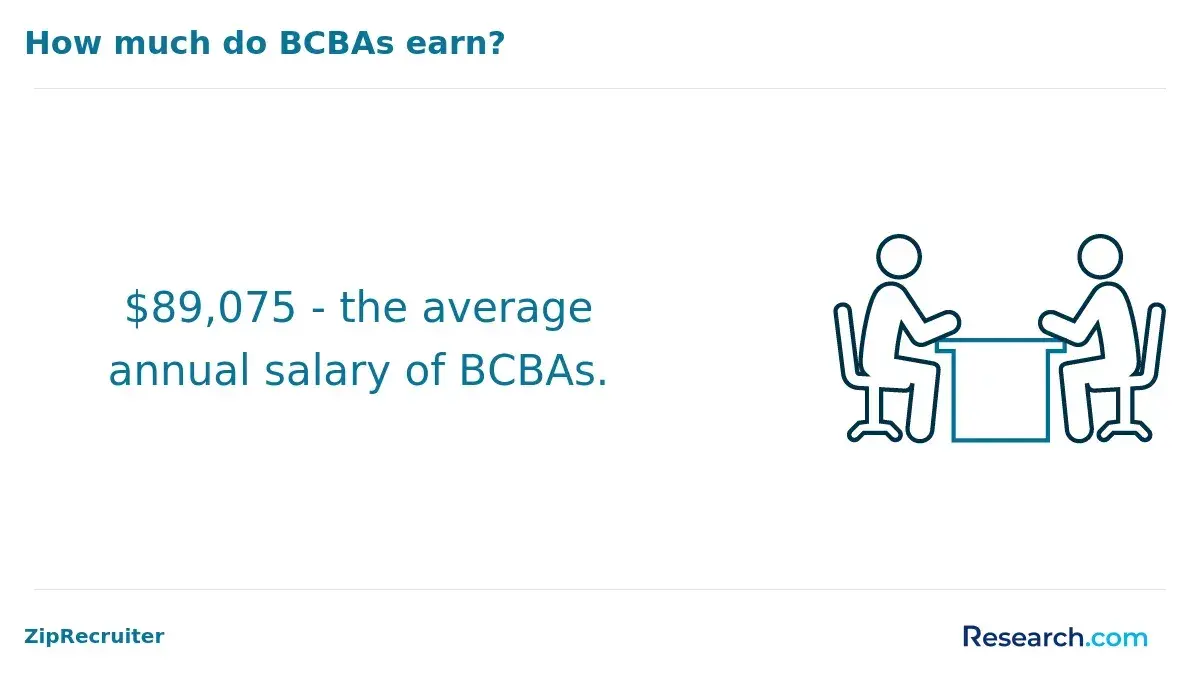
Board Certified Behavior Analysts can earn competitive salaries, but pay varies by location, employer, experience, specialization, and caseload expectations. BCBAs earn a median annual salary ranging from $65,000 to $85,000. Entry-level BCBAs in more affordable areas may start around $60,000, while experienced professionals or those working in high-demand states like California and Florida can earn over $90,000.
Work setting also affects compensation. Private clinics, healthcare organizations, school systems, residential programs, and consulting practices may structure pay differently. Some roles offer salary plus benefits, while others rely on billable hours or contract work. Single parents should compare not only salary but also health insurance, paid time off, schedule control, remote-work options, and childcare compatibility.
The employment outlook for BCBAs is strong, with a projected 22% growth between 2022 and 2032-much faster than the average for all occupations. This demand is tied to expanded autism services, increased recognition of behavior analysis interventions, and the need for qualified professionals serving individuals with developmental disabilities and behavioral challenges. The U.S. Bureau of Labor Statistics Projections (2024) attribute this growth to the rising need for qualified professionals supporting individuals with developmental disabilities and behavioral challenges.
For single parents pursuing online BCBA programs, the career path can offer stability and advancement, especially in areas with strong demand for school-based services, outpatient clinics, early intervention, and telehealth. Flexible roles may make it easier to balance parenting and professional responsibilities, but flexibility varies by employer.
Before choosing a program, prospective students should research local job postings, salary ranges, licensure rules, supervision expectations, and employer preferences in the state where they plan to work. A program that fits the job market in your region is usually more valuable than one that looks appealing but does not connect well to local employment opportunities.
How to choose the right online BCBA program?
Choosing the right online BCBA program means matching certification requirements with your real life. For single parents, the best program is one that is academically sound, financially realistic, schedule-friendly, and honest about fieldwork expectations.
Use this decision checklist
- Verify eligibility first. Confirm that the coursework aligns with BACB requirements and supports your path to the BCBA exam.
- Check institutional accreditation. Make sure the school is properly accredited and that the credential will be respected by employers and licensing bodies.
- Ask about supervision before applying. Find out whether the program helps arrange supervised fieldwork or expects students to find supervisors independently.
- Review the weekly schedule. Look for asynchronous classes, part-time pacing, and assignment calendars that are manageable with childcare and work.
- Calculate the full cost. Include tuition, fees, books, supervision, technology, exam preparation, and any income changes if you reduce work hours.
- Evaluate support services. Strong advising, faculty access, peer connection, technical support, and exam preparation can affect whether students finish on time.
- Compare outcomes. Ask about exam pass rates, completion rates, fieldwork support, graduate employment, and alumni experiences.
- Confirm state requirements. If your state has licensure rules for behavior analysts, make sure the program prepares you for them.
Flexibility is critical, but it should not come at the expense of quality. Programs with asynchronous coursework can help students learn around caregiving responsibilities. Programs that prepare students for telehealth roles may also support more adaptable career options; BACB data shows over 85% retention after five years and 92% report improved work-life balance when engaged in telehealth.
Avoid choosing based only on speed, tuition, or convenience. A fast program may become slow if fieldwork is poorly organized. A cheap program may become expensive if students need extra courses later. A flexible program may still be stressful if faculty are hard to reach or deadlines are unpredictable.
The right choice should answer four questions clearly: Can I meet certification requirements through this program? Can I afford the full cost? Can I complete the work while parenting and working? Will this credential help me qualify for the roles I want in my state or region?
Other Things You Should Know About Applied Behavior Analysis
Yes. Many online BCBA programs are structured for part-time study, with evening and asynchronous classes that help working parents fit coursework into a schedule. Students still must complete the required BACB-approved graduate credits and supervised fieldwork hours before taking the BCBA exam.
BCBAs work in diverse environments including schools, healthcare facilities, private practices, and community agencies. Their role often involves designing and implementing behavior interventions for individuals with autism and other developmental disorders. These settings allow BCBAs to apply evidence-based strategies tailored to client needs.
Yes, BCBAs must complete continuing education units (CEUs) to maintain their certification. The BACB requires 32 CEUs every two years, including specific hours devoted to ethics. This ensures that practitioners stay current with advancements and uphold professional standards.
Accredited online BCBA programs are designed to align with BACB examination content. These programs cover required coursework and provide supervision opportunities to fulfill eligibility criteria. While online study offers flexibility, success on the exam requires disciplined study and practical application of behavior analysis principles.
- 29+ ABAI Accredited Programs: B.A. and Master’s Degrees https://abamastersprograms.org/abai-accredited-bcba-programs/
- What Is A Board Certified Behavioral Analyst (BCBA)? https://www.psychology.org/resources/bcba-meaning-career-overview/
- 10 Best BCBA Programs & Schools (In-Person & Online) | Above and Beyond Therapy https://www.abtaba.com/blog/bcba-programs-and-schools
- The Best ABA Programs for BCBA Certification https://www.abaresourcecenter.com/post/best-aba-programs-for-bcba-certification
- Applied Behavior Analysis Jobs You Should Know https://centriahealthcare.com/resources/applied-behavior-analysis-jobs-you-should-know/
- What Jobs Can a BCBA Do - What are the Roles? https://www.biermanautism.com/resources/blog/what-jobs-can-a-bcba-do/
- Board-Certified Behavior Analyst (BCBA) Salary Guide â Trusted Health https://www.trustedhealth.com/allied-career-guide/behavior-analyst/salary-guide
- BCBA Certification Without a Master’s Degree | Little Champs https://littlechampsaba.com/blog/bcba-without-masters-degree/
- Behavior Analysis Jobs - ABAI Career Center https://job.abainternational.org/
- Top 15 Best Online Applied Behavior Analysis Degree Programs https://www.appliedbehavioranalysisprograms.com/rankings/applied-behavior-analysis-online-programs/