2027 BCBA Specializations in Autism, Behavioral Health, Schools & Beyond

Co-Founder and Chief Data Scientist
Choosing a BCBA specialization is not just an academic preference; it shapes the clients you serve, the settings you work in, the supervision you need, and the career opportunities available after certification. A professional coming from education, psychology, healthcare, counseling, social services, or an unrelated field may see several possible paths: autism services, behavioral health, school-based practice, pediatric care, organizational behavior, or clinical consulting.
The right path depends on more than interest alone. You need to compare credential requirements, fieldwork access, salary expectations, licensure rules, client populations, and the type of daily work you want to do. A specialization that fits one candidate well may be a poor match for another if local supervision, state requirements, or job demand do not align.
This guide explains how BCBA specializations differ, what accredited preparation typically requires, how online and campus-based programs compare, and how to evaluate career paths in autism, behavioral health, schools, and related sectors. It is designed to help prospective students and career changers make a practical, evidence-informed decision before committing time and money to a program.
Key Things You Should Know
- BCBA specializations in 2026 increasingly address autism spectrum disorder, behavioral health, and school-based interventions, reflecting a 12% growth in demand for targeted expertise since 2024.
- The integration of telehealth and digital tools in behavioral health expanded BCBA roles by 18%, enhancing service accessibility for remote and underserved populations.
- Schools remain key employment sectors, with over 40% of BCBAs specializing in educational settings to support individualized student behavioral plans and inclusive learning environments.
What is a BCBA specialization and how does it differ from general behavior analysis training?
A BCBA specialization is a focused area of applied behavior analysis practice built on top of core behavior-analytic training. General BCBA preparation teaches foundational skills such as measurement, assessment, reinforcement, behavior-change procedures, ethics, supervision, and data-based decision-making. A specialization applies those same principles to a defined population, setting, or service model.
For example, a BCBA specializing in autism may focus on early intervention, functional communication, social skills, caregiver training, and reduction of behaviors that interfere with learning. A school-based BCBA may use similar behavioral principles but spend more time on classroom consultation, individualized education plan support, teacher coaching, and district-level systems. A behavioral health BCBA may work with more complex clinical presentations, interdisciplinary teams, and co-occurring mental health needs.
The main difference is depth of application. General training prepares you to understand behavior analysis broadly; specialization helps you become more effective in a specific environment where laws, funding, assessment tools, caregiver expectations, and intervention goals can differ significantly.
| Area of comparison | General BCBA training | BCBA specialization |
| Primary focus | Core principles and ethical practice across settings | Focused expertise for a population, setting, or service model |
| Typical examples | Assessment, intervention design, measurement, supervision | Autism, behavioral health, school-based ABA, pediatric practice |
| Fieldwork emphasis | Broad supervised experience aligned with certification requirements | Targeted supervised experience with specialty-specific clients and systems |
| Career value | Builds eligibility for BCBA practice | Helps position candidates for specialized roles and stronger setting-specific competence |
In 2026, about 82% of BCBAs have chosen autism specialization, reflecting strong demand and well-established intervention models in autism services. That concentration can create many employment options, but it can also mean greater competition in some markets and a need for strong practical training, not just coursework.
When choosing a specialization, consider the population you want to serve, the kind of supervision you can access, state licensure expectations, local job demand, and whether the day-to-day work matches your strengths. Candidates comparing cost-conscious pathways can also review the most affordable BCBA certification programs while checking that any program supports their intended specialization and fieldwork needs.
What are the educational requirements and prerequisites to pursue a BCBA credential?
To pursue the BCBA credential in the United States, candidates generally need a master's degree or higher in a relevant field such as psychology, education, or behavior analysis from an accredited institution recognized by the Behavior Analyst Certification Board (BACB). The degree must include verified graduate-level coursework in applied behavior analysis, ethics, assessment, measurement, research methods, and behavior-change procedures.
Coursework alone is not enough. Candidates must also complete BACB-approved supervised experience, typically ranging from 1,500 to 2,000 hours. These hours are where candidates learn to turn academic knowledge into clinical and consultative judgment: conducting assessments, collecting and interpreting data, writing treatment plans, training caregivers or staff, and adjusting interventions when outcomes do not improve.
The most common prerequisites include:
- A qualifying graduate degree from an accredited institution.
- Verified graduate coursework aligned with BACB requirements.
- Supervised fieldwork that meets BACB documentation and supervision standards.
- Experience with behavior assessment, intervention planning, data collection, and ethical decision-making.
- Successful completion of the BCBA certification exam.
Applicants with an unrelated undergraduate background may still be able to enter the field, but they should expect to complete prerequisite coursework and gain relevant experience before or during graduate study. Programs may also ask for a resume, statement of purpose, letters of recommendation, minimum GPA, and evidence of readiness for supervised practice.
Workforce trends show why preparation quality matters. There was a 65% increase in credentialed BCBAs between 2018 and 2021, reaching 45,103 professionals nationwide. This growth rate of over 21% annually surpasses the 7% rise in autism spectrum disorder prevalence reported by NIH/PMC research, underscoring the expanding need for qualified behavior analysts.
Prospective students should compare accredited BCBA programs by coursework alignment, supervision support, exam preparation, faculty expertise, and whether fieldwork can be completed in the population or setting they plan to serve.
How do online versus campus-based BCBA programs compare in accreditation and outcomes?
Online and campus-based BCBA programs can both prepare students for certification when they meet current BACB-aligned coursework and supervised fieldwork expectations. The delivery format matters less than program quality, supervision access, faculty support, and the student’s ability to complete fieldwork with qualified supervisors.
Campus-based programs may be a strong fit for students who want face-to-face interaction, structured routines, access to university clinics, and easier networking with local practicum sites. In-person learning can be especially useful for students who benefit from live modeling, immediate feedback, and close peer collaboration.
Online programs can be better for working adults, rural students, military-connected learners, and candidates who cannot relocate. They often use virtual classrooms, recorded lectures, discussion boards, and remote advising. The trade-off is that students may need to take more responsibility for finding and verifying acceptable fieldwork placements in their local area.
| Factor | Online BCBA programs | Campus-based BCBA programs |
| Flexibility | Often stronger for working professionals and remote learners | More fixed schedules and location requirements |
| Faculty access | May rely on virtual office hours and online advising | May offer more informal in-person interaction |
| Fieldwork | Students may need to secure local supervision proactively | May have established nearby practicum or clinic connections |
| Peer interaction | Usually virtual and dependent on course design | Often easier through live classes and cohort activities |
| Best fit for | Self-directed students needing schedule flexibility | Students wanting structured, in-person academic support |
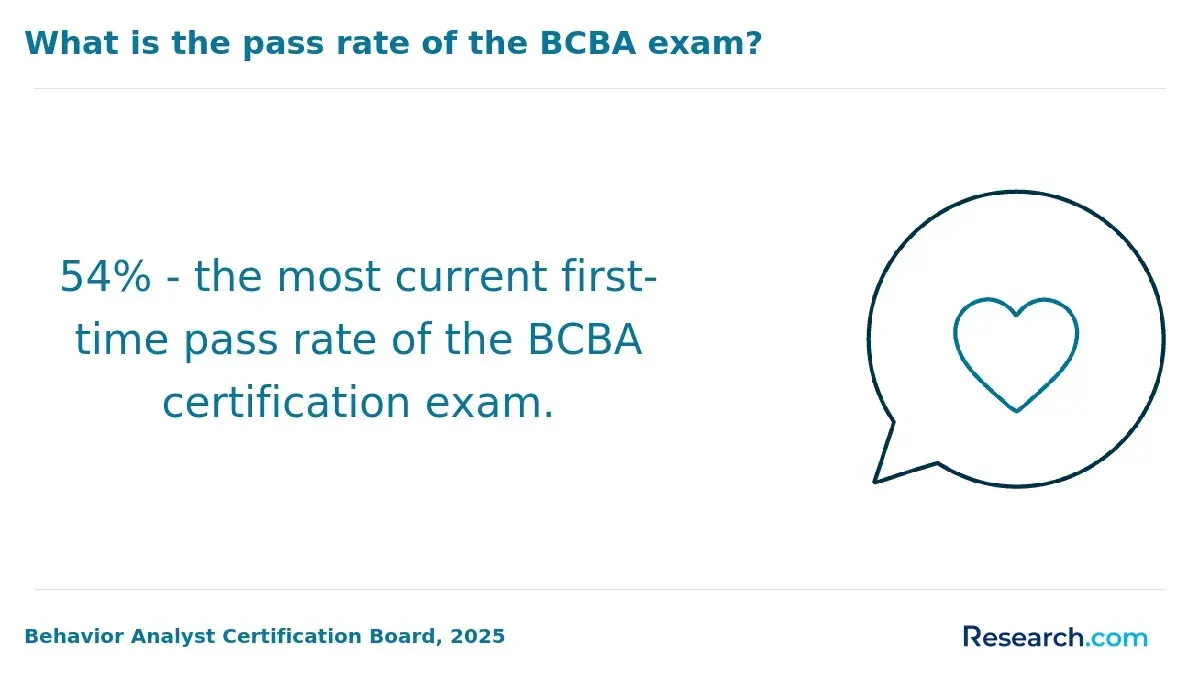
Pass rates for the BCBA exam show minimal differences between graduates of online and campus programs when both strictly follow BACB accreditation requirements. The stronger predictor is often the quality of supervised fieldwork and exam preparation, not whether the lectures were delivered online or in person.
With 48,352 individuals holding BCBA credentials as of July 1, 2025, candidates should choose a format that helps them complete requirements efficiently while building real competence. Students seeking a flexible route can explore an online MS in ABA, but they should verify supervision arrangements before enrolling.
The BACB certification process typically begins with graduate education, verified behavior-analytic coursework, and supervised fieldwork. Candidates must complete coursework aligned with BACB standards, covering behavior principles, measurement, assessment, intervention, ethics, supervision, and research methods. They must also accumulate at least 2,000 hours of supervised independent fieldwork or 1,500 hours under qualified supervision before applying for the BCBA exam.
The process is sequential and documentation-heavy. Candidates should keep careful records of coursework, fieldwork hours, supervision meetings, client-facing activities, restricted and unrestricted activities, and supervisor approvals. Errors in documentation can delay exam eligibility even when the candidate has completed the required experience.
- Complete a qualifying graduate degree and required ABA coursework.
- Secure supervision from an eligible, qualified supervisor.
- Complete the required supervised fieldwork hours and maintain accurate records.
- Apply to the BACB and submit required documentation.
- Pass the BCBA certification exam.
- Meet ongoing renewal, continuing education, and ethics requirements.
Exam outcomes vary widely by institution. Exam pass rates range from as low as 17% to 100%, with institutions like the University of Alabama in Huntsville and the University of British Columbia reporting perfect pass rates. Candidates should review program-level outcomes where available and ask how the program supports exam readiness.
Certification and licensure are related but not identical. The BACB grants the BCBA credential, while state licensure requirements vary by jurisdiction. Some states require a separate behavior analyst license, additional applications, fees, background checks, or continuing education rules. Candidates pursuing BCBA certification requirements for California professionals should verify current state-specific expectations before choosing a program or fieldwork site.
To maintain BCBA licensure in current Applied Behavior Analysis practice, certificants must complete 32 continuing education hours every two years, including 4 ethics hours, alongside submitting renewal applications and fees. Missing renewal or continuing education requirements can affect credential status and professional eligibility.
Students comparing training options can review ABA therapy degree programs while paying close attention to fieldwork quality, supervisor qualifications, exam preparation, and state licensure alignment.
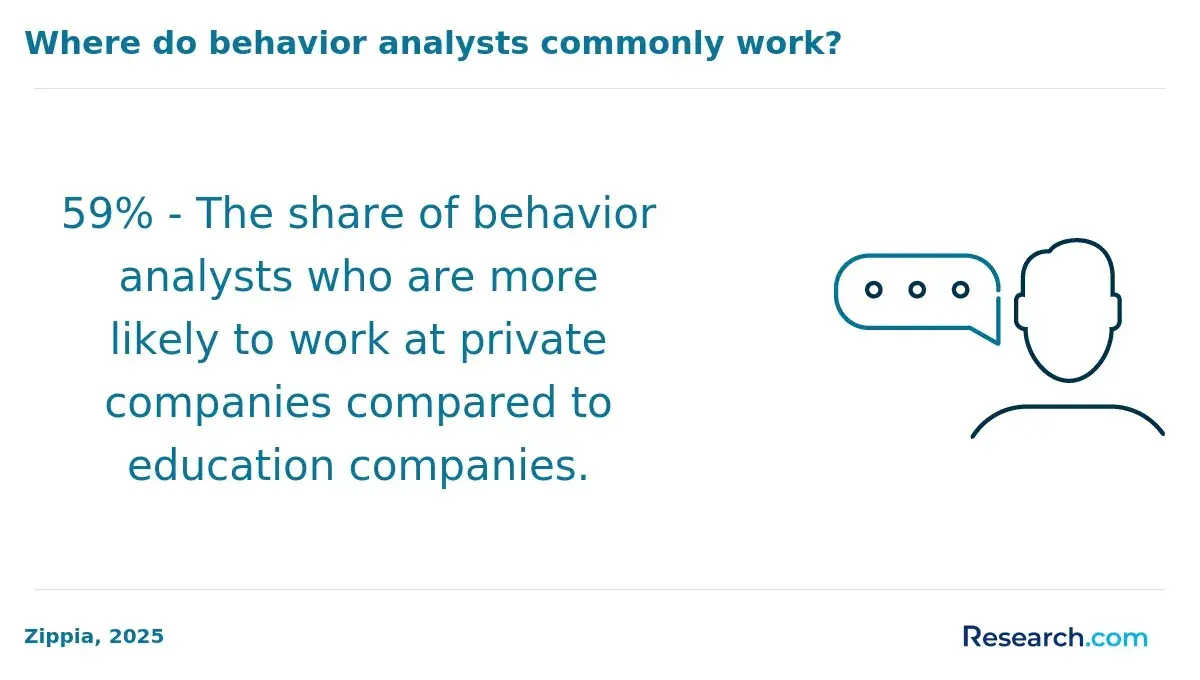
BCBA specialists work in clinical, educational, healthcare, community, and consultative roles. Job titles vary by employer, funding model, state rules, and client population, but most roles involve assessment, intervention planning, data review, staff or caregiver training, and ethical oversight of behavior-change services.
In autism services, BCBAs commonly supervise therapy teams, design individualized treatment plans, train registered behavior technicians, work with families, and monitor progress toward communication, adaptive behavior, and social goals. Common titles include Autism Specialist, Clinical Supervisor, Autism Program Coordinator, Clinical Director, and Behavior Interventionist Supervisor.
In behavioral health, BCBAs may serve clients with anxiety, disruptive behavior, developmental disabilities, substance use concerns, or severe behavior challenges. Titles may include Behavioral Health Specialist, Clinical Behavior Analyst, Behavioral Consultant, or Program Supervisor. These roles often require collaboration with psychologists, social workers, physicians, and other clinicians.
School-based BCBAs support students, teachers, administrators, and families. They may conduct functional behavior assessments, design behavior intervention plans, train staff, assist with individualized education plan implementation, and advise on positive behavior support systems. Common titles include School Behavior Analyst, Positive Behavior Support Coordinator, District Behavior Specialist, and ABA Consultant.
Healthcare and pediatric settings may use BCBAs as Pediatric Behavior Analysts, Behavioral Medicine Consultants, or developmental service specialists. These roles can involve feeding, sleep, adherence to medical routines, adaptive skills, or behavior challenges linked to developmental or medical conditions.
| Sector | Common job titles | Typical work focus |
| Autism services | Autism Specialist, Clinical Supervisor, Clinical Director | Individualized ABA programs, caregiver training, therapy-team supervision |
| Behavioral health | Behavioral Health Specialist, Clinical Behavior Analyst | Complex behavior needs, interdisciplinary care, broader clinical applications |
| Schools | School Behavior Analyst, Positive Behavior Support Coordinator | Functional assessments, classroom supports, teacher consultation, IEP-related services |
| Healthcare | Pediatric Behavior Analyst, Behavioral Medicine Consultant | Adaptive skills, medical routine adherence, developmental and pediatric behavior needs |
| Consulting and research | ABA Consultant, Program Evaluator, Training Specialist | Systems improvement, staff training, policy advising, data-based program review |
- NIH/PMC research highlights that 45 U.S. counties have autism-to-BCBA ratios exceeding 100, illustrating significant service shortages.
- Prospective BCBAs should consider geographic demand, population fit, supervision availability, and long-term advancement opportunities before committing to a sector.
BCBA salaries and job growth vary by setting because reimbursement, funding sources, caseloads, work schedules, and employer expectations differ. Autism services often show strong demand because of insurance coverage and the continued need for early intervention and family-centered supports. Behavioral health roles can offer broader clinical scope but may be shaped by reimbursement limits and integration with mental health systems. School-based roles may offer predictable calendars and benefits, but salaries are often tied to district budgets.
| Setting | Typical salary range | Growth and demand factors | Key trade-offs |
| Autism services | $65,000 to $80,000 | Supported by expanded insurance coverage; 60% of private plans now include ABA services for children, according to the KFF Study 2021 | High demand, but caseload intensity and supervision responsibilities can be significant |
| Behavioral health | $60,000 to $75,000 | Steady growth, influenced by clinical integration and reimbursement structures | Broader clinical exposure, but may require stronger interdisciplinary experience |
| School settings | $50,000 to $65,000 | Moderate growth tied to public education funding and state mandates for behavioral services | More stability and benefits, but salary growth may be limited by district pay scales |
Autism-focused positions may provide higher earning potential, especially in clinical organizations with multiple service lines or supervisory ladders. However, candidates should evaluate workload, billable-hour expectations, travel, staff turnover, and support for ethical caseload management.
Behavioral health roles may appeal to BCBAs who want to work beyond autism services and handle more varied clinical concerns. These roles can require comfort with risk assessment, crisis planning, co-occurring diagnoses, and collaboration with licensed mental health professionals.
School-based roles may be attractive for candidates who value educational collaboration, stable schedules, and systems-level work. The limitations are often administrative: budget cycles, staffing ratios, district policies, and competing priorities can affect what services can realistically be implemented.
When comparing paths, look beyond the salary range. Consider supervision responsibilities, benefits, schedule predictability, advancement routes, licensure requirements, and whether the setting supports ethical, high-quality practice.
BCBA specialization pathways typically develop through a combination of coursework, supervised fieldwork, continuing education, mentorship, and job experience. The credential provides the foundation, but specialty competence comes from working with the relevant population under qualified supervision and learning the systems that shape service delivery.
Autism specialization focuses on assessment and intervention for individuals with autism spectrum disorder. Common practice areas include early intervention, communication, social skills, adaptive behavior, caregiver training, and reduction of behaviors that interfere with learning or safety. A more refined autism pathway may center on early childhood, adolescents, transition-age youth, or family consultation.
Behavioral health specialization applies behavior analysis to more varied clinical concerns. BCBAs in this pathway may work with anxiety, substance use treatment, severe behavioral challenges, emotional regulation, or co-occurring developmental and mental health needs. This pathway often requires strong interdisciplinary collaboration and careful attention to scope of practice.
School-based practice focuses on behavior support within educational systems. BCBAs in schools may conduct functional behavior assessments, write or support behavior intervention plans, train teachers and paraprofessionals, advise on classroom management, and contribute to individualized education plan implementation. Knowledge of special education processes, team consultation, and practical classroom constraints is essential.
| Pathway | Best fit for candidates interested in | Skills to prioritize |
| Autism | Developmental services, early intervention, communication, family support | Functional assessment, caregiver training, treatment planning, progress monitoring |
| Behavioral health | Complex clinical needs, interdisciplinary care, community or outpatient services | Crisis planning, collaboration, clinical documentation, ethical scope management |
| School-based practice | Education systems, classroom behavior, teacher consultation, student supports | FBA/BIP development, IEP collaboration, staff training, systems-level problem-solving |
The BCBA exam has a first-time pass rate of 72% (BACB 2022 Data), which underscores the value of structured preparation and supervised practice. Candidates should avoid choosing a specialization based only on salary or popularity. The better question is where they can obtain high-quality supervision, develop competence, and sustain the work long term.
Specialized subfields, such as early childhood autism, trauma-informed behavioral health, or district-level positive behavior support, can further narrow a career path. Before committing, candidates should observe professionals in the setting, review job postings, and confirm that their program or employer can support relevant fieldwork.
Accredited BCBA programs generally require 1 to 2 years of graduate-level study, depending on whether the student enrolls full time, part time, online, on campus, or in an accelerated format. The academic program is only one part of the timeline; candidates must also complete supervised fieldwork, often alongside or after coursework.
Most programs combine graduate coursework with about 1,500 hours of supervised fieldwork to meet Behavior Analyst Certification Board (BACB) standards. Some students complete fieldwork through their current employer, while others rely on university partnerships, clinics, schools, or approved community providers. Fieldwork availability can affect total time to certification as much as course sequencing does.
Tuition costs vary widely, typically ranging from $15,000 to over $35,000 depending on the institution, delivery format, residency status, and whether the program is part of a full master’s degree or a certificate pathway. Candidates should also budget for books, technology fees, supervision costs, exam preparation materials, application fees, and the certification exam.
| Program factor | Typical expectation | What to verify before enrolling |
| Length | 1 to 2 years of graduate-level study | Full-time, part-time, accelerated, and fieldwork sequencing options |
| Fieldwork | About 1,500 hours of supervised fieldwork | Whether placements or supervisors are provided, recommended, or entirely student-arranged |
| Cost | $15,000 to over $35,000 | Total cost, including fees, supervision, materials, and exam-related expenses |
| Admissions | Bachelor's or master's degree in psychology, education, or a related field is often expected | Prerequisites, minimum GPA, recommendations, statement of purpose, and experience requirements |
Admission usually requires a bachelor's or master's degree in psychology, education, or a related field, along with prerequisite courses in behavior analysis or psychology. Competitive applicants often have a minimum GPA of 3.0, letters of recommendation, and a statement of purpose outlining career goals. Applicants from unrelated fields may need foundational coursework before beginning advanced ABA classes.
The CDC reports autism spectrum disorder affects 1 in 36 children, creating consistent demand for BCBA professionals in educational and clinical settings. That demand can influence program availability, acceptance rates, and tuition pricing, so applicants should compare programs early and confirm deadlines well in advance.
Start by confirming that the program meets current requirements for the BCBA pathway you plan to follow. Do not rely only on marketing language. Review the curriculum, institutional accreditation, faculty qualifications, supervised fieldwork support, exam outcomes, and whether the program prepares students for the state where they intend to practice.
Accreditation and eligibility should be the first filter. A program that is convenient or inexpensive is not a good choice if it does not align with certification, licensure, or coursework expectations. Candidates should also ask how often the curriculum is reviewed against current BACB standards.
Next, evaluate specialization fit. If you want autism practice, look for coursework, faculty, and fieldwork sites connected to pediatric, developmental, or autism services. If you want school-based practice, prioritize programs with school partnerships, special education expertise, and training in consultation. If you want behavioral health, look for interdisciplinary exposure and supervised experience with complex cases.
Fieldwork quality is one of the most important decision points. A strong program should explain how students find supervisors, what settings are available, how supervision is monitored, and what happens if a placement falls through. Programs with partnerships in schools, clinics, hospitals, or behavioral health agencies may provide a smoother path to hours and mentorship.
- Confirm certification alignment and institutional accreditation.
- Ask for BCBA exam pass rates and graduation outcomes.
- Review faculty expertise in autism, behavioral health, schools, or your target area.
- Compare fieldwork support, not just course format.
- Check whether online or hybrid delivery still includes meaningful advising and supervision guidance.
- Ask about career services, internships, employer partnerships, and alumni roles.
- Estimate total cost, including tuition, fees, supervision, materials, and exam preparation.
Because over 70% of BCBA professionals work with children on the autism spectrum, many programs emphasize pediatric or autism-related practice. That can be useful, but it should not be assumed to fit every career goal. A candidate interested in adult behavioral health, schools, or organizational work should make sure the program offers relevant training and fieldwork options.
The best BCBA program is the one that meets credential requirements, supports high-quality supervised practice, fits your schedule and finances, and gives you direct preparation for the population and setting where you want to work.
What continuing education and advanced certifications are available beyond the BCBA credential?
Continuing education helps BCBAs maintain competence after certification and adapt to changes in research, ethics, service delivery, and state requirements. Advanced training can also help practitioners move into supervision, leadership, specialty clinical roles, research, policy, or program development.
One advanced designation is the Board Certified Behavior Analyst-Doctoral (BCBA-D), which is associated with doctoral-level training and may support roles in research, university teaching, leadership, and policy development. It does not replace the need for strong applied competence, but it can strengthen credibility for advanced academic or administrative positions.
BCBAs may also pursue specialized certificates or structured continuing education in areas such as early childhood intervention, trauma-informed care, school-based ABA, severe behavior, clinical supervision, verbal behavior analysis, telehealth delivery, and behavioral health integration. For example, the Verbal Behavior Certification from the Verbal Behavior Special Interest Group (VBSIG) sharpens skills in language acquisition key to ASD populations.
Clinical supervision training is especially important for BCBAs who plan to supervise trainees, registered behavior technicians, or multidisciplinary teams. Poor supervision can affect client outcomes, staff retention, documentation quality, and ethical compliance, so this is a practical investment rather than a résumé add-on.
Gender disparities in ASD diagnosis-around a 4:1 male-to-female ratio per ZipDo Education Reports 2026-impact caseloads, driving demand for training focused on female ASD presentations and co-occurring conditions. This makes continuing education in differential diagnosis, masking, co-occurring mental health needs, and individualized intervention increasingly relevant.
When choosing continuing education, prioritize training that is evidence-based, within your scope of practice, and directly connected to the clients or systems you serve. Conferences, workshops, peer-reviewed publications, supervised consultation, and advanced certificates can all be valuable when they improve clinical judgment and ethical decision-making.
Other Things You Should Know About Applied Behavior Analysis
BCBAs specializing in behavioral health are required to complete 32 continuing education units every two years, with at least 4 units in ethics. Courses must be approved by the Behavior Analyst Certification Board (BACB) to ensure relevance and quality.
To specialize in autism, a BCBA in 2027 must have a master's degree in behavior analysis or a related field, complete specialized coursework, and acquire experience in autism interventions. They must also pass the BCBA certification exam administered by the Behavior Analyst Certification Board (BACB).
School-based BCBA specializations usually require verified behavior-analytic coursework, plus training in school consultation, classroom behavior support, and data collection. Most candidates need 315 graduate-level instruction hours for BCBA certification, then district or state-specific school endorsement rules if they plan to work in public schools.
- The Rate of Job Growth for BCBAs | Sunray ABA https://www.sunrayaba.com/post/the-rate-of-job-growth-for-bcbas-112d6
- The Rate of Job Growth for BCBAs | Grateful Care ABA https://www.gratefulcareaba.com/blog/the-rate-of-job-growth-for-bcbas
- Why School Based Therapy For Autism Makes A Big Difference | Radiant Autism Center https://radiantautismcenter.com/school-based-therapy-autism/
- M.S. Applied Behavior Analysis - The Chicago School https://www.thechicagoschool.edu/programs/behavioral-sciences/applied-behavior-analysis/ms/
- What Certification Now That BCBAs Soon Will Not Be Certified Outside The US? https://ibcces.org/what-certification-without-bcba-outisde-us/
- The Role of a Board Certified Behavior Analyst (BCBA) https://shccares.com/blog/allied-health/the-role-of-a-board-certified-behavior-analyst-bcba-a-comprehensive-overview/
- Jobs Working with Autistic Children: 5 Career Paths https://www.appliedbehavioranalysisedu.org/2021/07/autism-careers/
- BCBA Programs & Schools | Advanced Therapy Clinic https://www.advancedtherapyclinic.com/blog/bcba-programs-schools
- Unprecedented Growth in the Behavior Analysis Field - apricott ABA https://www.apricott.com/resources/the-rate-of-job-growth-for-bcbas-ac438
- 2026 BCBA CEU Requirements: Your Recertification Guide https://www.rethinkbehavioralhealth.com/resources/bcba-ceu-requirements-complete-guide/