2027 Why BCBA Certification Appeals to Education and Psychology Professionals

Co-Founder and Chief Data Scientist
BCBA certification is often considered by teachers, school counselors, psychologists, behavior technicians, and related professionals who want to move into applied behavior analysis without starting over in a completely new career. The credential can expand your scope of practice, qualify you for supervisory roles, and prepare you to design data-based behavior interventions in schools, clinics, community agencies, and private practice.
The decision is not simple. BCBA certification requires graduate-level education, supervised fieldwork, exam preparation, and ongoing professional responsibility. It may also intersect with state licensure rules, employer requirements, and financial considerations. This guide explains what the BCBA credential is, who it is best suited for, what the training involves, how long the process may take, and what career and salary outcomes professionals can realistically expect.
Key Things You Should Know
- BCBA certification offers education and psychology professionals a robust framework to apply behavioral principles, with a 21% projected job growth rate for behavior analysts through 2031.
- Demand for evidence-based interventions in educational settings and mental health fuels BCBA appeal, enhancing career versatility and impact on diverse populations.
- BCBA credentialing requires graduate-level coursework and supervised fieldwork aligned with the BACB's 2024 standards, ensuring rigorous preparation and professional credibility.
What is BCBA certification?
Board Certified Behavior Analyst certification is a professional credential for practitioners who assess behavior, design behavior-change programs, supervise implementation, and use data to evaluate whether interventions are working. A BCBA is not simply a classroom aide or behavior technician. The role typically involves clinical judgment, program design, supervision, documentation, and ethical decision-making.
To qualify, candidates must hold a master's degree in behavior analysis, education, psychology, or a related field; complete approved behavior-analytic coursework; finish supervised fieldwork; and pass the BACB exam. These requirements are designed to ensure that certificants can apply applied behavior analysis principles responsibly in real service settings.
BCBAs often work with individuals with developmental disabilities such as autism spectrum disorder, but the credential is broader than autism services alone. Depending on training, licensure, and employer needs, BCBAs may support learners in schools, clients in clinics, families in home-based programs, or organizations that need behavior-change expertise.
Common BCBA responsibilities include:
- Conducting functional behavior assessments and interpreting behavioral data.
- Writing individualized behavior intervention plans.
- Training and supervising direct-service staff, including Registered Behavior Technicians.
- Monitoring treatment fidelity and adjusting programs when progress stalls.
- Collaborating with teachers, psychologists, speech-language pathologists, occupational therapists, caregivers, and medical providers.
- Maintaining ethical and professional standards set by the certifying body and any applicable state licensure board.
The scale of the ABA workforce helps explain why BCBA supervision is in demand. With over 186,000 Registered Behavior Technician (RBT) certifications as of July 2025, employers need qualified BCBAs to oversee services, support clinical quality, and ensure interventions are implemented appropriately.
For professionals comparing education options, BCBA classes online can offer a flexible way to complete required coursework while continuing to work. Before enrolling, students should confirm that the program aligns with current BACB requirements and any state-specific licensure expectations.
Why pursue BCBA certification in education and psychology?
BCBA certification can be valuable for education and psychology professionals because it adds a structured, data-driven method for understanding behavior and improving outcomes. For educators, the credential can deepen expertise in classroom behavior support, individualized education planning, and systems-level intervention. For psychology professionals, it can strengthen skills in assessment, measurable treatment planning, and evidence-based behavior change.
The main reason to pursue the credential is not simply to add letters after your name. It is to qualify for roles where you are expected to design, supervise, and evaluate behavior-analytic services. That distinction matters because many schools, clinics, and agencies reserve BCBA-level responsibilities for certified professionals.
Benefits for education professionals
Teachers, special education professionals, school behavior specialists, and instructional leaders may use BCBA training to address challenging behavior more systematically. Instead of relying on general classroom management strategies alone, they learn to identify the function of behavior, collect meaningful data, design interventions, and monitor whether supports are producing measurable change.
In practical terms, a teacher with BCBA certification may be better prepared to create individualized behavior plans that reduce classroom disruptions, increase engagement, and support academic participation. The credential may also support movement into behavior specialist, district consultant, program coordinator, or supervisory positions, depending on employer requirements.
Benefits for psychology professionals
Psychologists and counseling-related professionals may pursue BCBA certification to expand their applied intervention skills. ABA training can complement clinical work by emphasizing observable behavior, environmental variables, skill acquisition, reinforcement systems, and data-based decision-making.
Psychologists with BCBA credentials may apply behavior analysis principles in services for autism spectrum disorder, developmental disabilities, anxiety-related behavior patterns, and other areas where behavior-change methods are appropriate. Scope of practice still matters: professionals must work within their training, certification, and any applicable license.
Career advantages and trade-offs
BCBA certification can improve access to specialized roles in schools, healthcare organizations, private practices, community agencies, corporate training, and research environments. Demand for BCBA and BCBA-D credentials has risen, reflecting employer preference for professionals who can conduct behavior assessment, supervise interventions, and document outcomes.
The credential also comes with trade-offs. Candidates must invest time in graduate coursework, supervised fieldwork, exam preparation, and continuing education. Some roles involve high caseloads, complex family systems, insurance documentation, or supervision of multiple direct-care staff. The best candidates are those who want both applied client work and responsibility for program quality.
Professionals comparing graduate options can review BCBA masters programs to identify programs that combine certification preparation with a degree structure that fits their career goals.
What are BCBA certification requirements?
BCBA certification requirements generally include graduate education, behavior-analytic coursework, supervised practical experience, and a passing score on the BCBA exam. Candidates should treat these as linked requirements, not separate boxes to check. A weak program, poor supervision plan, or delayed exam preparation can extend the timeline and increase costs.
A master's degree in behavior analysis, education, psychology, or a related field from an accredited institution is essential. The required coursework must cover BACB task list areas such as ethics, measurement, experimental design, behavior assessment, behavior-change procedures, supervision, and professional responsibilities.
Candidates must also complete at least 1,500 hours of supervised practical experience under a qualified BCBA. This fieldwork is where students learn to apply concepts in real settings such as clinics, schools, home-based service programs, or behavioral health agencies. Documentation matters: candidates are responsible for tracking hours, activities, supervision meetings, and compliance with BACB standards.
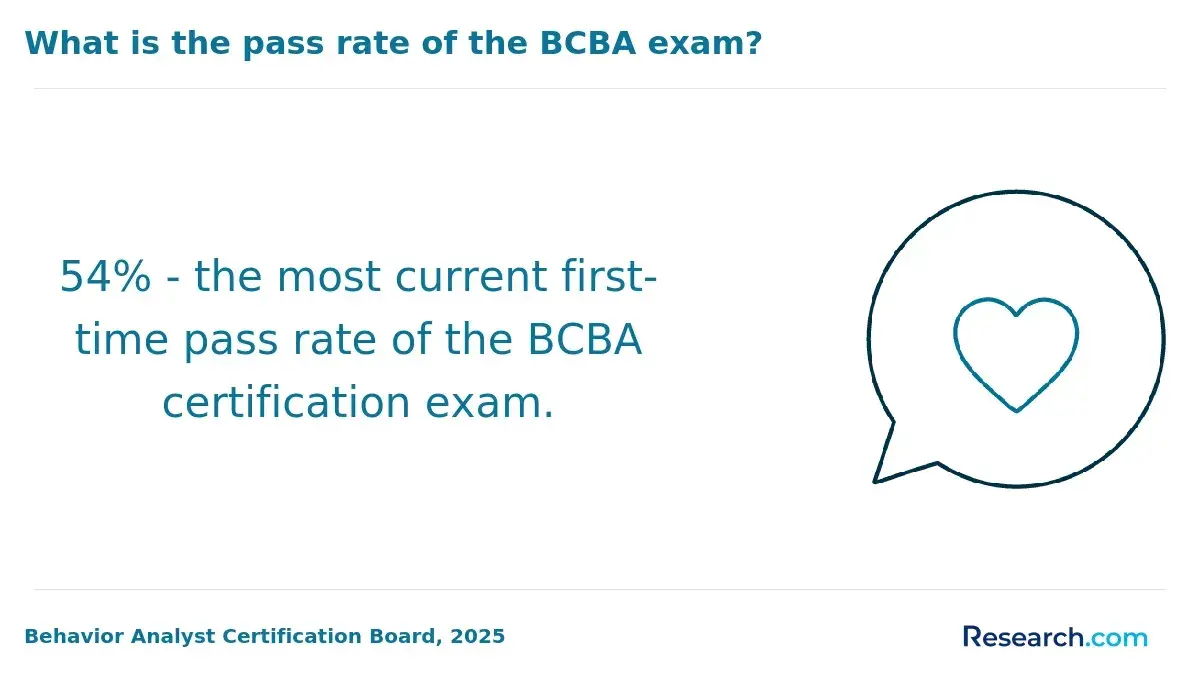
The final step is the BCBA exam. The exam tests applied knowledge of behavior analysis, ethics, assessment, intervention, measurement, and supervision. It should not be treated as a basic graduation test. With only 51% of first-time test takers passing recently, candidates need a serious study plan that includes practice questions, concept review, fluency with terminology, and application-based reasoning.
Requirement checklist
- Graduate degree: Complete a qualifying master's degree in behavior analysis, education, psychology, or a related field.
- Coursework: Ensure the curriculum aligns with BACB content requirements and current task list expectations.
- Supervised fieldwork: Complete at least 1,500 hours under a qualified supervisor, with proper documentation.
- Exam: Apply for and pass the BCBA exam after meeting eligibility requirements.
- State rules: Confirm whether your state requires separate behavior analyst licensure in addition to certification.
Before enrolling, prospective students should verify the program's BACB alignment, supervision support, accreditation status, exam preparation resources, and state licensure relevance. Requirements can change, so candidates should check current BACB guidance rather than relying only on marketing language from a school.
For students who want a focused graduate route, an ABA therapist master's degree may help organize coursework and fieldwork planning around the certification pathway.
BCBA certification requires graduate-level education. Candidates typically need at least a master's degree in psychology, education, behavior analysis, or a closely related field, along with specific behavior-analytic coursework that meets BACB standards. The degree alone is not enough if it does not include the required ABA content.
The Behavior Analyst Certification Board (BACB) requires candidates to complete 270 hours of graduate coursework covering foundational principles, ethics, research methods, measurement, behavior assessment, behavior-change procedures, and related professional topics. Students may complete this coursework through a qualifying graduate program, a certificate sequence, or other verified coursework from qualified providers.
Candidates must also complete supervised practical experience ranging from 1,500 to 2,000 hours, depending on the selected experience pathway. This requirement is central to professional preparation because it gives candidates practice conducting assessments, writing intervention plans, analyzing data, training staff, and receiving feedback from a board-approved supervisor.
Professionals with related graduate degrees often need additional ABA coursework. For example, a psychology graduate may have strong training in assessment or counseling but still need dedicated coursework in behavior analysis. An educator may have classroom expertise but need formal study in functional assessment, reinforcement procedures, single-case design, and BACB ethics.
How to choose the right education path
- If you do not yet have a master's degree: Consider a master's program in applied behavior analysis, psychology, education, or a related field that is designed to meet BCBA coursework requirements.
- If you already have a qualifying master's degree: A graduate certificate or verified coursework sequence may be sufficient, provided it meets current BACB requirements.
- If you work full time: Look for programs with predictable course schedules, online or hybrid options, and clear supervision planning.
- If you plan to practice in a specific state or province: Review local licensure rules before choosing a program, because certification and legal authorization to practice may not be identical.
The field's growth has increased the importance of formal training aligned with current standards. BCBA certificants grew from 74,125 to 81,566 within a year, showing rising demand for professionals who complete the full academic and supervised training pathway.
Those comparing options can explore online and in-person ABA programs. Students asking what education is needed for BCBA certification in British Columbia or another jurisdiction should verify both BACB requirements and local rules before enrolling.
A BCBA program curriculum covers the science of behavior, methods for assessing behavior, strategies for changing behavior, ethics, data analysis, supervision, and professional practice. The goal is to prepare students to make defensible decisions based on evidence rather than intuition alone.
Students learn how to define behavior in observable terms, collect reliable data, analyze patterns, identify environmental variables, and design interventions that are measurable and individualized. This training is especially important when working with individuals with developmental disabilities, autism spectrum disorder, and other behavioral challenges where poorly designed interventions can be ineffective or harmful.
Core curriculum areas
- Principles of behavior analysis: Reinforcement, punishment, extinction, stimulus control, motivating operations, generalization, and maintenance.
- Measurement and data collection: Frequency, duration, latency, interval recording, graphing, interpretation, and treatment evaluation.
- Functional behavior assessment: Methods for identifying why behavior occurs and which environmental conditions maintain it.
- Behavior-change procedures: Skill acquisition, prompting, shaping, chaining, differential reinforcement, antecedent strategies, and consequence-based interventions.
- Research methods: Single-subject research design, experimental control, visual analysis, and evidence-based decision-making.
- Ethics and professional conduct: Client dignity, informed consent, confidentiality, cultural responsiveness, scope of competence, documentation, and conflicts of interest.
- Supervision and leadership: Training staff, monitoring implementation, providing feedback, and managing behavioral service programs.
Many programs also include verbal behavior, communication intervention, social skills instruction, caregiver training, consultation models, and systems-level behavior support. These topics help future BCBAs work across educational, clinical, and community settings.
Exam outcomes show why curriculum quality matters. The BCBA first-time exam pass rate fell to 51% from 56%, whereas the BCaBA pass rate remained steady at 60%, according to the BACB Annual Data Report. Students should look for programs that teach applied problem-solving, not just terminology memorization.
Yes. Online BCBA programs are widely available, and many are designed for working adults in education, psychology, human services, and behavioral health. Online delivery can make the coursework more accessible, but students still need to complete supervised fieldwork that meets BACB standards.
Online programs vary in structure. Some are fully asynchronous, allowing students to complete weekly work on their own schedule. Others use live virtual classes, cohort models, or hybrid formats with occasional in-person meetings. The best format depends on how much structure, peer interaction, and instructor access you need.
Common online formats
- Asynchronous courses: Best for students who need maximum scheduling flexibility and can manage deadlines independently.
- Live virtual classes: Useful for students who want real-time discussion, instructor interaction, and a more traditional classroom rhythm.
- Hybrid programs: Appropriate for students who prefer online coursework but want occasional in-person skills practice, evaluations, or campus engagement.
Online programs can remove geographic barriers, especially for candidates who do not live near a university with ABA coursework. They may also help students stay employed while completing graduate classes. However, convenience should not be the only selection factor.
What to verify before enrolling
- Whether the coursework meets current BACB requirements.
- Whether the school is properly accredited.
- How students secure supervised fieldwork and whether the program helps with placement.
- Whether supervisors are available in your state or service setting.
- How the program prepares students for the BCBA exam.
- Whether graduates are eligible for state licensure where they plan to practice.
Recent data shows a steady rise in BCBA certifications, partly supported by broader access through online education. Still, students should be cautious about programs that advertise flexibility but provide little guidance on supervision, documentation, or exam preparation.
BCBA certification generally takes 1.5 to 3 years, depending on prior education, enrollment status, fieldwork pace, and exam preparation. Candidates who already hold a qualifying master's degree and can begin supervised fieldwork quickly may finish sooner. Students who need to complete a full graduate degree part time may take longer.
The timeline has three main components: coursework, supervised experience, and exam preparation. Coursework includes approximately 270 hours covering behavior analytic theory, research methods, ethics, assessment, and intervention techniques. Supervised experience can be the longest part of the process because candidates must complete the required hours while meeting quality, supervision, and documentation standards.
Those with a relevant master's degree in psychology or education commonly complete 2,000 hours of supervised experience within 12 to 24 months. Candidates completing graduate coursework and fieldwork at the same time may need about three years, particularly if they are working full time or taking a reduced course load.
What can shorten or lengthen the timeline?
- Prior graduate education: Having a qualifying master's degree may reduce the academic time needed.
- Course load: Full-time study is usually faster than part-time enrollment but may be harder for working professionals.
- Fieldwork access: Candidates with a qualifying job site and available supervisor may accumulate hours more efficiently.
- Supervision model: Intensive and well-organized supervision can prevent delays caused by missing documentation or nonqualifying activities.
- Exam readiness: Candidates who begin studying early may reduce the gap between eligibility and passing the exam.
- Prerequisites: Extra coursework or degree requirements can extend the timeline.
After completing education and supervision requirements, candidates must apply for and pass the BCBA exam. Many candidates spend several months preparing because the exam emphasizes applied reasoning and ethical judgment, not only memorized definitions.
The demand for BCBA-certified professionals rose 23% nationwide from 2021 to 2022, with strong growth in states like Colorado and Nevada, according to Inclusive ABA. For students entering a growing labor market, careful timeline planning can help avoid unnecessary delays while still protecting training quality.
BCBA certification can lead to roles in schools, clinics, hospitals, home-based service programs, community agencies, private practice, disability services, and organizational settings. The common thread is behavior-change expertise: BCBAs assess behavior, design interventions, supervise implementation, and use data to guide decisions.
In education, BCBAs may support students with autism spectrum disorder, developmental disabilities, emotional and behavioral challenges, or complex learning needs. They may help schools reduce disruptive behavior, improve replacement skills, train staff, and create more inclusive support systems.
In clinical and healthcare settings, BCBAs often design treatment plans, supervise Registered Behavior Technicians, consult with families, and coordinate care with other professionals. Some work in early intervention, intensive autism services, severe behavior programs, residential services, or outpatient behavioral health settings.
BCBAs may also move into leadership and consulting roles. Because certification requires training in assessment, supervision, ethics, and data-based decision-making, experienced professionals may oversee programs, manage teams, train staff, or consult with organizations that need behavior systems expertise.
Potential job titles
- Behavior Analyst
- Clinical Supervisor
- School Behavior Specialist
- Consultant for Disability Services
- Program Coordinator in Social Services
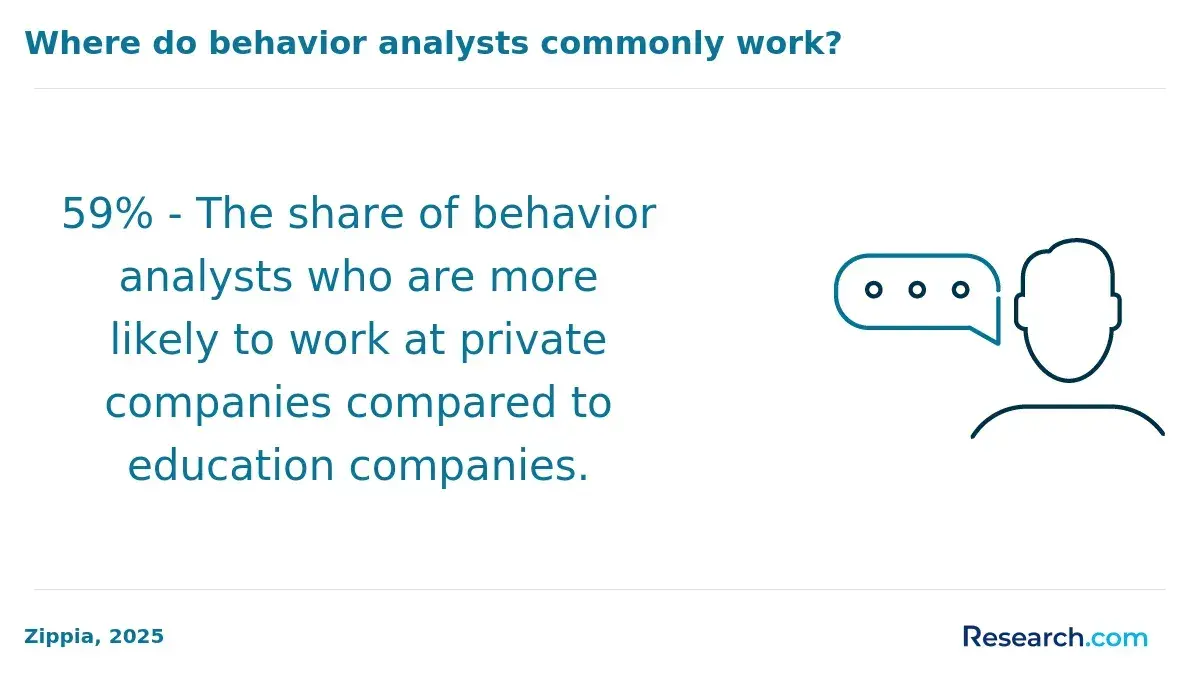
Where BCBAs commonly work
- Public and private schools: Behavior intervention planning, teacher consultation, student support, and staff training.
- ABA clinics: Assessment, treatment planning, supervision, and clinical quality monitoring.
- Home and community programs: Family training, skill generalization, and behavior support in natural environments.
- Hospitals and healthcare organizations: Behavioral consultation and interdisciplinary treatment planning.
- Private practice: Direct services, consultation, supervision, and specialized program development.
- Community and social service agencies: Prevention programs, disability support, and behavioral assessment for at-risk groups.
The Educational Pathway Diversity in this field is notable. Professionals may come from master's degrees in psychology, education, or social work, which can support interdisciplinary collaboration with speech therapists, occupational therapists, mental health counselors, physicians, and school teams. Certification does not replace those professions; it adds a specialized behavior-analytic role within coordinated care.
The average BCBA salary in the United States ranges from $65,000 to $85,000 annually, but actual pay depends on location, experience, work setting, caseload, supervisory responsibility, and employer type. Entry-level BCBAs in educational settings or smaller clinics often start near the lower end of the range, while experienced professionals in healthcare, leadership, or private practice may earn over $90,000.
Salary should be evaluated alongside workload and benefits. A higher-paying role may involve more supervision, documentation, travel, insurance requirements, crisis cases, or after-hours communication. A slightly lower-paying role may offer school-year scheduling, stronger mentorship, or better work-life balance.
Factors that influence BCBA pay
- Experience: BCBAs with several years of successful clinical or school-based practice may qualify for higher pay.
- Setting: Healthcare, private practice, and specialized autism intervention roles may pay more than some school or nonprofit roles.
- Location: Salaries vary by region and local demand for behavior analysts.
- Supervisory duties: Roles overseeing RBTs, teams, or multiple programs often carry higher compensation.
- Specialization: Expertise in autism intervention, severe behavior, early intervention, or organizational behavior management may improve earning potential.
- Total compensation: Bonuses, continuing education support, flexible schedules, health benefits, and paid supervision time can change the real value of an offer.
Candidates should also consider exam timing. Passing the BCBA exam remains a meaningful hurdle, with a retake pass rate of only 23% according to the BACB Annual Data Report. Delayed certification can postpone eligibility for BCBA-level roles and compensation.
The strongest salary strategy is to pair careful exam preparation with high-quality supervised experience. Employers are more likely to value candidates who can document competence in assessment, intervention design, staff training, ethical practice, and measurable client outcomes.
What is the job outlook for BCBAs?
The job outlook for BCBAs remains strong because schools, healthcare providers, autism service organizations, and community agencies continue to need professionals trained in evidence-based behavior assessment and intervention. Demand is especially tied to services for autism spectrum disorder and developmental disabilities, but BCBAs may also work with broader behavioral, educational, and organizational needs.
Growth in the direct-service workforce also points to continued need for BCBA-level supervision. The rise in Registered Behavior Technician (RBT) certificants-an increase of 25% from 196,579 to 246,109 within a year-reflects strong foundational workforce growth supporting BCBA roles, as reported in the BACB Annual Data Report.
BCBAs are important in schools because they help teams design behavior plans, improve learning conditions, and support students whose behavior interferes with participation. In healthcare and clinical settings, they support assessment, intervention planning, caregiver training, and data-based treatment decisions for clients with complex needs.
Opportunities tend to be stronger in urban and suburban regions where larger clinics, school districts, and healthcare systems operate. Telehealth has also expanded access to remote BCBA positions and consultation models, although remote work may still depend on client needs, payer rules, state licensure, and supervision requirements.
How to improve job prospects
- Gain hands-on experience as an RBT, Behavioral Technician, teacher, counselor, or related service provider before or during graduate training.
- Choose supervised fieldwork that builds real assessment, intervention, and supervision skills rather than only routine service hours.
- Develop competence with data systems, treatment fidelity checks, caregiver training, and interdisciplinary collaboration.
- Understand state licensure requirements before relocating or accepting remote clients.
- Build expertise with specialized populations or settings, such as early intervention, school consultation, severe behavior, or staff training.
Professionals with advanced supervision skills and specialized experience may qualify for leadership roles and higher salaries. For education and psychology professionals who want a structured, evidence-based career path, BCBA certification can offer long-term stability, but success depends on rigorous preparation and ethical, competent practice.
Other Things You Should Know About Applied Behavior Analysis
Applied behavior analysis is distinct because it relies on data collection and analysis to understand behavior and the environment influencing it. It emphasizes the use of evidence-based interventions tailored to the individual's needs. Unlike some therapies, it focuses mainly on measurable behavior change rather than exploring internal thoughts or feelings.
Yes, applied behavior analysis is effective across the lifespan. While it is often associated with children, especially those with developmental disabilities, ABA techniques are also used with adults in settings such as vocational training, mental health treatment, and organizational behavior management.
Candidates must complete 2,000 supervised fieldwork hours or 1,500 concentrated supervised hours under a qualified supervisor. The fieldwork must follow BACB standards, and applicants also need graduate coursework in applied behavior analysis before they can sit for the BCBA exam.
- BCBA Certification Without a Master’s Degree | Little Champs https://littlechampsaba.com/blog/bcba-without-masters-degree/
- ABA Certification Explained: RBT, BCaBA, BCBA, BCBA-D https://onlinecounselingprograms.com/mental-health-careers/how-to-become-behavior-analyst-bcba/aba-certification-explained/
- BCBA Job Outlook in 2025 Growing Demand and Opportunities https://www.connectncareaba.com/blog/bcba-job-outlook
- How Much Do BCBAs Earn on Average? | Advanced Autism Services https://www.advancedautism.com/post/average-bcba-salaries
- How Long Does It Take to Become a BCBA? https://bluegemsaba.com/how-long-does-it-take-to-become-a-bcba/
- What is a BCBA? Your Guide to the BCBA Certification and Exam https://www.thechicagoschool.edu/insight/career-development/bcba-guide-bcba-certification-exam/
- 25+ Affordable ABA/BCBA Online Programs (Masters & Certs) https://abamastersprograms.org/affordable-online-aba-masters-programs/
- Strategies for Career Advancement and Professional Growth Beyond Certification Renewal for BCBAs | Behavior Webinars https://behavioranalystce.com/strategies-for-career-advancement-and-professional-growth-beyond-certification-renewal-for-bcbas/
- Choosing Excellence: Discover the Best BCBA Programs Online | Brighter Strides ABA https://www.brighterstridesaba.com/blog/bcba-programs-online/
- Association for Behavior Analysis International Accreditation Board https://accreditation.abainternational.org/accredited-programs.aspx