2027 BCBA vs Occupational Therapist: Career Comparison

Co-Founder and Chief Data Scientist
If you are comparing a BCBA career with occupational therapy, the main question is not which profession is “better.” It is which type of work fits the way you want to help clients, the graduate training you are willing to complete, and the settings where you want to build a career.
Board Certified Behavior Analysts focus on behavior change using applied behavior analysis, data collection, assessment, and intervention plans. Occupational therapists help people participate more independently in daily activities by addressing motor skills, sensory needs, cognition, adaptive strategies, and environmental barriers. The two fields often serve overlapping populations, especially children with autism spectrum disorder or developmental disabilities, but they are built on different professional models.
This guide compares BCBA and occupational therapy careers across scope of practice, education, certification, licensure, job duties, online program availability, cost, salary, and employment outlook. It is designed for prospective graduate students, working educators, therapy professionals, and career changers who need a practical way to evaluate both paths before choosing a program.
Key Things You Should Know
- BCBAs focus on behavior interventions based on applied behavior analysis, with a median salary of $76,000 in 2025 and a strong job growth projected at 20% through 2030.
- Occupational therapists work to improve patients' daily living skills, earning a median salary around $88,000, with a 14% job growth expected by 2030 per BLS data.
- BCBAs require certification through the BACB and a master's degree, while occupational therapists need a master's or doctoral degree and state licensure to practice.
What is the difference between a BCBA and an occupational therapist?
The core difference is focus. A Board Certified Behavior Analyst (BCBA) uses applied behavior analysis to understand why behavior happens and to design measurable interventions that increase helpful behaviors or reduce harmful ones. An occupational therapist (OT) helps clients build or regain the skills needed for daily life, such as dressing, feeding, writing, bathing, play, work tasks, mobility, and sensory regulation.
BCBAs usually work from a behavior-change framework. They conduct assessments, identify environmental triggers and consequences, collect data, and adjust intervention plans based on observed progress. Their services are often used for individuals with autism spectrum disorder, developmental disabilities, behavioral challenges, or skill deficits in school, clinic, home, and community settings.
Occupational therapists use a broader functional and medical-rehabilitation lens. They evaluate physical, sensory, cognitive, emotional, and environmental factors that affect participation in everyday activities. OTs may work with children with developmental delays, adults recovering from stroke or injury, older adults adapting to physical changes, or clients with sensory processing and fine motor needs.
- BCBA focus: behavior assessment, reinforcement strategies, skill acquisition, data-based intervention, caregiver or staff training, and behavior reduction plans.
- OT focus: daily living skills, fine motor development, sensory processing, adaptive equipment, cognitive strategies, and environmental modification.
- Training difference: BCBAs need graduate-level behavior analysis preparation and certification, while OTs need a master's or doctoral degree in occupational therapy and state licensure.
- Best fit: BCBA may suit readers who prefer data-driven behavior intervention; OT may suit readers who want a broader rehabilitation and daily-function role.
Employment data also reflects the different markets. The U.S. Bureau of Labor Statistics estimates 14% growth for occupational therapists through 2034 due to aging populations and rehabilitation demand, while BCBA-related roles fall under broader mental health counselor categories with an 8% growth forecast. Students comparing applied behavior analysis routes can review online BCBA master's options when evaluating accredited and affordable pathways.
What are the education and certification requirements for becoming a BCBA?
To become a Board Certified Behavior Analyst in the United States, candidates must meet the Behavior Analyst Certification Board requirements for graduate education, behavior-analytic coursework, supervised fieldwork, and examination. BCBA is a professional certification; state licensure rules may also apply depending on where a person practices.
The typical route begins with a master's degree or higher in behavior analysis, psychology, education, or a related field. The degree alone is not enough. Candidates must also complete BACB-approved graduate-level coursework in areas such as behavior principles, measurement, assessment, ethics, research methods, intervention design, and professional practice.
Supervised experience is a major part of the process. Candidates complete between 1,500 and 2,000 hours of supervised fieldwork, depending on the supervision model. During this period, they learn to conduct assessments, collect and interpret behavior data, write intervention plans, train caregivers or staff, and make treatment decisions under qualified supervision.
After meeting education and fieldwork requirements, candidates must pass the BACB certification exam. The exam evaluates applied behavior analysis knowledge, ethical decision-making, assessment, intervention, supervision, and professional conduct. Certification maintenance requires continuing education, so the credential is not a one-time requirement.
A practical BCBA preparation plan should include the following checks:
- Confirm that the graduate program meets current BACB coursework requirements.
- Ask how students secure supervised fieldwork and whether placements are supported by the program.
- Calculate the time needed to complete between 1,500 and 2,000 hours of supervised fieldwork.
- Review state rules for behavior analyst licensure, if applicable.
- Plan for exam fees, supervision costs, and continuing education after certification.
This path differs from occupational therapy, where the central requirement is an accredited OT degree followed by the NBCOT exam and state licensure. For behavior analysis students, program alignment with certification requirements is critical. Prospective students can use resources on BCBA degree and certification programs to compare approved training routes. According to ZipRecruiter data adjusted for inflation, BCBAs earn an average of $87,535 annually, compared to occupational therapists' median salary of $96,370 as of May 2024.
What education and licensing does an occupational therapist need?
Occupational therapists must complete a graduate occupational therapy program accredited by the Accreditation Council for Occupational Therapy Education (ACOTE). The required degree is typically a master's or doctoral degree in occupational therapy. By 2026, the Doctor of Occupational Therapy (OTD) will become the standard entry-level degree, though the master's degree remains valid until phased out.
OT education is clinically intensive because occupational therapists must be prepared to evaluate and treat clients across physical, neurological, developmental, cognitive, and psychosocial needs. Coursework commonly includes anatomy, physiology, neuroscience, therapeutic methods, assistive technology, activity analysis, clinical reasoning, and professional ethics. Students also complete at least 24 weeks of supervised clinical fieldwork.
After graduation, candidates must pass the National Board for Certification in Occupational Therapy (NBCOT) exam to earn the OTR® credential. Licensure is mandatory in all U.S. states. While exact state requirements vary, states require NBCOT certification, and some also require jurisprudence exams or continuing education. Applicants should check the licensing board in the state where they plan to practice before enrolling or relocating.
Specialization is optional but can strengthen long-term career direction. OTs may pursue advanced credentials or focused experience in pediatrics, hand therapy, geriatrics, neurological rehabilitation, mental health, school-based practice, or assistive technology. Many OTs renew licensure annually or biennially and complete continuing competence activities to stay in good standing.
Employment trends show approximately 42,840 OTs work in offices of other health practitioners, earning a mean annual wage around $95,380, reflecting demand in outpatient clinical settings. Students who are also interested in behavioral intervention can compare occupational therapy requirements with online master's in ABA pathways, especially if they want to understand how applied behavior analysis may complement OT practice.
BCBAs and occupational therapists may serve some of the same clients, but their daily work looks different. BCBAs are primarily responsible for behavior assessment and intervention. Occupational therapists are primarily responsible for improving participation in meaningful daily activities.
Typical BCBA responsibilities
- Conduct functional behavior assessments and identify why a behavior may be occurring.
- Develop behavior intervention plans and skill-acquisition programs.
- Collect, graph, and interpret behavioral data to evaluate progress.
- Train parents, caregivers, teachers, technicians, or direct support staff.
- Supervise behavior technicians or other team members when applicable.
- Collaborate with schools, clinics, physicians, therapists, and families.
BCBAs often work with individuals with autism spectrum disorder or developmental disabilities, although behavior analysis may also be applied in education, organizational behavior management, mental health, and community settings. Common workplaces include ABA clinics, schools, homes, early intervention programs, residential programs, and community-based service providers.
Typical occupational therapist responsibilities
- Evaluate a client's ability to perform daily activities and identify barriers.
- Build treatment plans for motor, sensory, cognitive, physical, or psychosocial needs.
- Teach adaptive strategies for dressing, feeding, writing, bathing, work, or school tasks.
- Recommend assistive devices, splints, equipment, or environmental modifications.
- Support recovery after injury, surgery, stroke, illness, or developmental delay.
- Document progress and coordinate with medical, school, or rehabilitation teams.
OTs work across a wider range of healthcare and educational settings, including hospitals, rehabilitation centers, outpatient clinics, schools, nursing homes, home health agencies, and offices of other health practitioners. Their caseloads may include children, adults, and older adults with many different diagnoses and functional goals.
Regional salary and workforce data can also influence career planning. In California, approximately 12,470 OTs earn a mean annual wage of $113,550, compared to fewer BCBA positions with a higher average salary of $124,910. Students who prefer behavioral assessment and data-based intervention may want to compare online master's in ABA programs with OT programs before committing to a graduate route.
Salary and job outlook depend heavily on state, employer type, credentials, experience, and setting. Occupational therapy has a well-established national labor market across healthcare, schools, rehabilitation, and home health. BCBA employment is more specialized, but demand can be strong in areas with autism services, school-based behavioral support, and behavioral health funding.
Occupational therapists in the U.S. generally have higher top-end salary potential at the national level, with the top 10% reaching about $129,620 annually according to the Bureau of Labor Statistics (BLS) May 2023 wage percentiles. BCBAs can also earn competitive salaries in high-demand areas. For example, BCBAs in Alaska average top earnings around $118,270 based on 2020 state data.
Occupational therapy also has a broad employment base. The BLS projects a 17% increase from 2022 to 2032, faster than average. BCBA job growth is tied more directly to behavioral health, autism services, and education systems. In some local markets, BCBA demand may exceed OT demand; in others, OT roles may be more plentiful because the profession is embedded in hospitals, rehabilitation facilities, schools, nursing homes, and home health agencies.
- Choose BCBA if: you want to specialize in applied behavior analysis, work with behavior data, supervise ABA programming, and focus on measurable behavior change.
- Choose OT if: you want a broader healthcare and rehabilitation career that supports daily function across age groups and diagnoses.
- Compare locally: salaries and openings can differ sharply by state, insurance environment, school district demand, and provider networks.
- Look beyond averages: entry-level pay, supervision requirements, productivity expectations, caseload size, and benefits can matter as much as advertised salary.
Geographic flexibility is an important difference. Occupational therapists generally find roles nationwide in hospitals, schools, rehab centers, nursing facilities, home health, and outpatient clinics. BCBA opportunities are often concentrated in urban areas, ABA providers, school systems, and specialized developmental disability services, though access is expanding as awareness of behavior analysis interventions grows.
BCBA certification requires graduate-level preparation that aligns with Behavior Analyst Certification Board standards. Most candidates complete a master's degree or higher in behavior analysis, psychology, education, or a closely related field from an accredited institution. The key is not only the degree title, but whether the coursework meets BACB requirements for certification eligibility.
BCBA coursework is centered on applied behavior analysis. Programs commonly cover behavior principles, experimental analysis of behavior, measurement, assessment, behavior-change procedures, ethics, supervision, research methods, and intervention planning. Applicants complete an approved sequence of approximately 315 graduate-level hours, with emphasis on both conceptual knowledge and applied decision-making.
Coursework alone does not make a candidate practice-ready. BCBA preparation also includes supervised experiential learning, where students apply behavior-analytic skills in real service settings. This experience helps candidates learn how to conduct functional assessments, select appropriate interventions, monitor treatment fidelity, analyze data, and revise plans when progress is limited.
When comparing BCBA programs, students should ask:
- Does the curriculum align with BACB certification requirements?
- Is supervised fieldwork integrated, supported, or left for students to arrange independently?
- Are faculty experienced in applied behavior analysis and supervision?
- Does the program prepare students for ethical practice, not just exam content?
- Can fieldwork be completed in the student's current community or workplace?
This pathway differs substantially from occupational therapy degree preparation. OT programs focus on anatomy, physiology, therapeutic methods, clinical reasoning, activity analysis, and clinical rotations. According to the Bureau of Labor Statistics May 2023 data, home health care positions offer occupational therapists a mean annual salary of $110,460 across 11,740 jobs-often exceeding BCBA salaries in nonprofit or school settings. For prospective students, the right choice depends on whether they want specialized behavior-analytic practice or a broader rehabilitative healthcare role.
The standard occupational therapy pathway begins with a bachelor's degree followed by a graduate occupational therapy program accredited by ACOTE. Many students enter OT programs with undergraduate backgrounds in health sciences, psychology, biology, kinesiology, education, or related fields, but programs may accept applicants from other majors if prerequisites are completed.
Occupational therapists must complete at least a master's degree in occupational therapy from an ACOTE-accredited program. This typically requires two to three years of graduate study after a bachelor's degree. Programs include academic coursework, lab-based skill development, fieldwork, and preparation for the NBCOT exam.
Since 2018, many institutions have shifted toward requiring a Doctor of Occupational Therapy (OTD) for entry-level practice, reflecting the increasing complexity of healthcare and emphasizing advanced clinical and leadership training. However, those with master's degrees remain eligible for licensure and clinical work.
Common OT degree options include:
- Master's in occupational therapy: a graduate route that prepares students for entry-level OT practice and licensure.
- Doctor of Occupational Therapy: an entry-level doctoral pathway with expanded emphasis on clinical reasoning, leadership, program development, and advanced practice preparation.
- Bridge or post-professional programs: options for practicing professionals who want to advance credentials or transition into doctoral-level study.
- Specialty certifications: post-licensure pathways in areas such as pediatrics, geriatrics, or hand therapy.
All U.S. states mandate licensure, and passing the National Board for Certification in Occupational Therapy (NBCOT) exam is required. Students should verify admissions prerequisites, fieldwork expectations, accreditation status, NBCOT preparation, and state licensure rules before enrolling.
Employment growth is concentrated in regional hubs like Massachusetts, Texas, Florida, and Georgia, alongside increasing demand for BCBA roles. Although occupational therapy salaries tend to rise more slowly per job compared to BCBA positions, these regional trends are important for students and professionals planning their education and careers.
BCBA programs are generally more online-friendly than occupational therapy programs. Many applied behavior analysis programs offer online coursework because the academic content can be delivered remotely, while supervised fieldwork can often be completed locally with qualified supervision. This format is useful for working professionals, educators, and students who do not live near a campus-based ABA program.
Even when BCBA coursework is online, students should not assume the entire pathway is remote. Supervised fieldwork requires real client-service experience, approved supervision, documentation, and consistent performance feedback. Before enrolling, students should ask whether the program helps students locate supervisors or whether fieldwork placement is the student's responsibility.
Occupational therapy programs are less likely to be fully online because OT education requires substantial hands-on training, lab work, clinical skill development, and supervised fieldwork. Some accredited programs use hybrid formats, combining online lectures or virtual learning with in-person labs, simulations, and clinical rotations. Fully online OT options are limited because accreditation standards require direct practical preparation.
- BCBA programs: often available online or in hybrid formats, with in-person supervised fieldwork arranged separately or locally.
- OT programs: commonly campus-based or hybrid, with required hands-on labs and clinical fieldwork.
- Key accreditation check: students should confirm that online or hybrid delivery still meets certification, licensure, and fieldwork requirements.
- Best for working adults: BCBA pathways may offer more scheduling flexibility, while OT programs may require more in-person availability.
Some occupational therapists with qualifying master's degrees pursue BCBA certification to expand their behavioral intervention skills, especially in ABA clinics or school-based settings. According to the report, OT jobs are growing by 14%, paralleling increased demand in Applied Behavior Analysis services. This dual-skill direction may appeal to OTs who want to integrate behavioral strategies into functional therapy goals.
Program cost varies by institution type, residency status, degree level, format, and whether a student must reduce work hours during fieldwork or clinical placements. The most important comparison is not tuition alone, but total cost to credential: tuition, fees, books, clinical or fieldwork expenses, exam costs, supervision costs, travel, and lost income.
Occupational therapy programs generally require a master's degree, with public universities charging $20,000 to $40,000 in total tuition and private institutions often exceeding $50,000. OT students should also budget for fieldwork-related expenses, background checks, health requirements, transportation, professional fees, exam preparation, and state licensure costs.
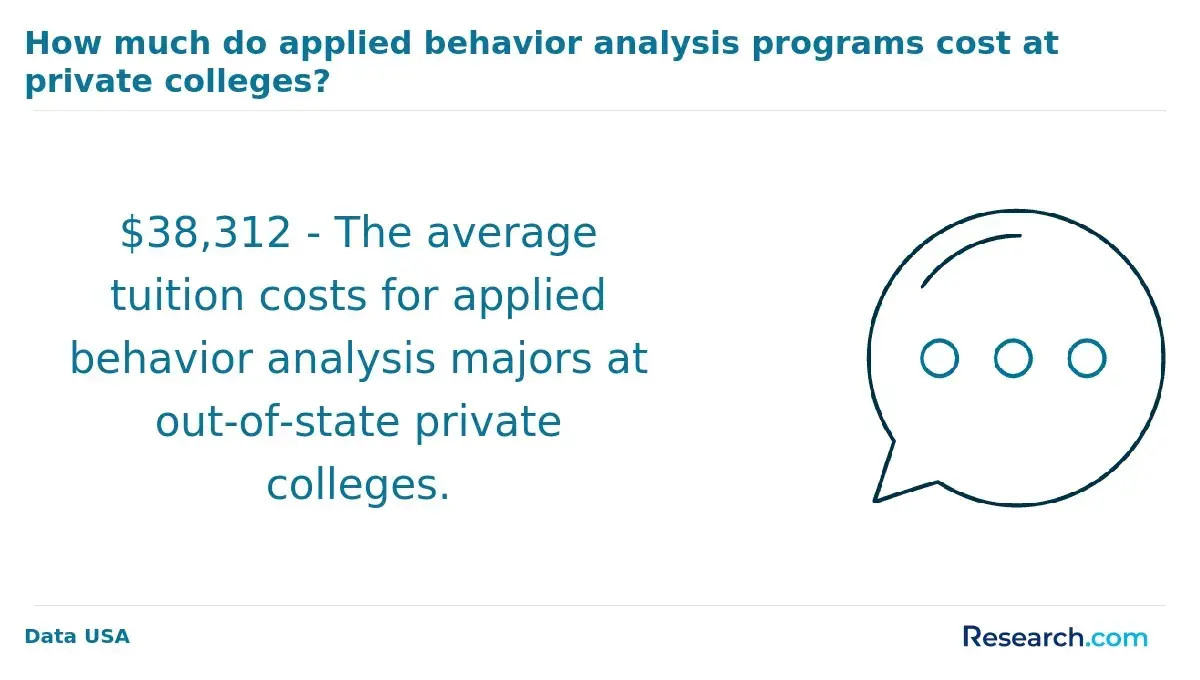
Becoming a Board Certified Behavior Analyst typically requires a master's degree in behavior analysis or a related field, with tuition costs ranging from $25,000 to $45,000. Candidates also face additional expenses for supervised fieldwork-1,500 hours of which are usually unpaid or minimally paid-and exam fees costing between $300 and $1,000. Continuing education to maintain BCBA certification adds ongoing costs over a career.
Return on investment depends on how quickly graduates can enter full professional practice. According to the Bureau of Labor Statistics (May 2023), occupational therapists start around $65,210 at the 10th percentile, enabling faster recoupment of education costs. BCBA candidates may experience delayed earnings if they must complete extensive supervised hours before certification, even when graduate tuition is similar.
- Compare total cost, not sticker tuition: include fees, supervision, exams, licensure, travel, and time away from paid work.
- Ask about paid fieldwork: BCBA supervised hours may be unpaid or minimally paid, while OT fieldwork may also limit work availability.
- Check employer support: some schools, clinics, hospitals, and agencies may offer tuition assistance or paid training routes.
- Model repayment realistically: use expected entry-level pay in your target state, not only national salary averages.
Which career path offers better job growth and employment opportunities in healthcare?
Occupational therapy generally offers broader healthcare employment opportunities because OT is integrated across hospitals, rehabilitation centers, outpatient clinics, home health, nursing facilities, schools, and community-based care. BCBA careers are growing, but they are more specialized and are concentrated in applied behavior analysis, autism services, developmental disability programs, education, and behavioral health settings.
According to Bureau of Labor Statistics data and Achieve Beyond special education salary reports, about 17,690 licensed occupational therapists work in special education settings earning a mean wage of $85,180. Occupational therapy is expected to grow by 14%, driven by the needs of aging populations and increased healthcare services.
BCBAs have strong opportunities in certain markets, especially where schools, clinics, and community programs need behavior assessment, autism intervention, staff supervision, and treatment planning. However, behavior analysis roles are usually tied to specific service models and client populations rather than the full healthcare system.
- Occupational therapy advantage: wider range of employers, broader patient populations, and established licensure in healthcare and education systems.
- BCBA advantage: specialized expertise in behavior change, strong relevance in autism services, special education, and behavioral intervention programs.
- Best employment strategy: compare job postings in the state or metro area where you plan to live before choosing a degree.
- Career flexibility: OT may provide more cross-setting mobility, while BCBA may provide deeper specialization in behavior-analytic services.
For students deciding between the two, occupational therapy is usually the broader healthcare career path, while BCBA is the more specialized applied behavior analysis pathway. The better choice depends on whether you want a rehabilitation-oriented profession serving many functional needs or a behavior-analytic profession focused on assessment, intervention, and measurable behavior change.
Other Things You Should Know About Applied Behavior Analysis
To become a BCBA, a master's degree in behavior analysis or a related field is needed, along with BCBA certification. An Occupational Therapist requires a master's or doctoral degree in occupational therapy and passing the NBCOT exam for licensure in 2027.
BCBA candidates need a behavior-analytic graduate degree from an ABAI-accredited or Board Certified Behavior Analyst®-approved program, while occupational therapists must earn a degree from a program accredited by ACOTE. After graduation, BCBAs take the BACB exam, and OTs take the NBCOT exam before state licensure.
In 2027, BCBAs primarily focus on behavior modification through data-driven interventions, often working in settings involving developmental disorders like autism. Occupational Therapists, however, focus on improving a patient’s ability to perform daily activities through therapeutic practices, addressing both physical and cognitive challenges.
- 11 Types of Healthcare Careers - Education & Requirements https://nursinglicensemap.com/resources/healthcare-careers/
- Is Healthcare a Good Career Path? Top Benefits & Opportunities | USAHS https://www.usa.edu/blog/is-healthcare-a-good-career-path-top-benefits-opportunities/
- ABA Certification Explained: RBT, BCaBA, BCBA, BCBA-D https://onlinecounselingprograms.com/mental-health-careers/how-to-become-behavior-analyst-bcba/aba-certification-explained/
- BCBA Programs & Schools | Carry on Therapy https://www.carryontherapy.com/blog/bcba-programs-schools
- BCBA Requirements: College Years Explained | Divine Steps https://www.divinestepstherapy.com/blog/bcba-exam-college-years
- Job Descriptions: Templates and Examples https://www.businessballs.com/human-resources/job-descriptions/
- Which Healthcare Career Is Right for You? https://explorehealthcareers.org/careers/which-health-career-is-right-for-you/
- Online Occupational Therapy Degrees https://www.occupationaltherapydegrees.org/programs/online
- How to Become an Occupational Therapist in CA | West Coast University https://westcoastuniversity.edu/about/career-guides/how-to-become-an-occupational-therapist-in-ca
- What Is a Job Role? Essential Guide for Professionals https://taggd.in/hr-glossary/job-role/