2027 Data Science Roles Growing Fast in AI, Cloud Data, and Business Intelligence

Co-Founder and Chief Data Scientist
Choosing a data science career now means deciding where you fit in a market reshaped by AI, cloud platforms, and business analytics. The U. S. Bureau of Labor Statistics projects data scientist employment to grow 36% from 2023 to 2033, much faster than average, making education and skill choices especially important. This guide is for students, career changers, and working analysts comparing roles, degrees, costs, and outcomes. You will learn which paths match your goals and how to evaluate programs before investing time or money.
Key Things You Should Know
- Data scientist employment is projected by the U.S. Bureau of Labor Statistics to grow 36% from 2023 to 2033, with demand strongest where AI, automation, cloud infrastructure, and analytics affect business decisions.
- The most practical education path depends on the target role. Bachelor's degrees can support analyst and junior data roles, while many machine learning, AI engineering, and research-oriented roles prefer graduate-level preparation.
- The BLS reported a May 2024 median annual wage of $112,590 for data scientists, but pay varies significantly by industry, location, technical depth, portfolio quality, and leadership responsibility.
What are the fastest-growing data science roles in AI, cloud, and business intelligence?
The fastest-growing data science roles are not limited to one job title. Employers increasingly hire people who can turn messy data into models, build reliable data pipelines, deploy AI systems, and explain insights to business leaders. The best role for you depends on whether you prefer coding, statistics, infrastructure, product strategy, or decision support.
The table below compares common data science career paths by focus area. Use it to identify which roles match your strengths before choosing a degree, certificate, or specialization.
| Role | Primary focus | Common responsibilities | Best fit for |
| Data scientist | Modeling and decision support | Build predictive models, analyze trends, test hypotheses, communicate findings | Students who like statistics, programming, and applied business problems |
| Machine learning engineer | Production AI systems | Deploy models, optimize algorithms, monitor performance, work with software teams | Strong coders who want deeper AI and engineering responsibilities |
| AI engineer | Applied artificial intelligence | Build AI applications, integrate large language models, automate workflows, evaluate outputs | Learners interested in generative AI, automation, and software-enabled products |
| Cloud data engineer | Data infrastructure | Design pipelines, manage warehouses, improve data reliability, support analytics platforms | People who enjoy databases, architecture, and cloud services |
| Business intelligence analyst | Dashboards and business reporting | Create reports, define metrics, interpret performance data, support executives and teams | Career starters who want a business-facing analytics role |
| Analytics manager | Team leadership and strategy | Prioritize analytics work, mentor analysts, translate business goals into data projects | Experienced professionals moving from individual contributor to leadership roles |
AI-focused roles tend to require stronger programming, model evaluation, and mathematics skills, while business intelligence roles often value domain knowledge, SQL, visualization, and communication. Cloud data roles sit between analytics and engineering because they make sure the data is accurate, accessible, secure, and scalable.
A practical way to choose is to look at the work you want to do every week. If you want to answer business questions, start with analytics or BI. If you want to build data systems, focus on cloud data engineering. If you want to design and deploy intelligent products, build toward machine learning or AI engineering.
What skills and responsibilities define modern data science careers across industries?
Modern data science is broader than building models. Employers want professionals who can frame a business problem, collect and clean data, apply the right analytical method, explain uncertainty, and help teams act on the result. In healthcare, finance, retail, education, manufacturing, and government, the most valuable data professionals connect technical work to decisions.
Most data science roles combine several skill groups. The following list can help you identify where to strengthen your preparation before applying for internships, entry-level jobs, or graduate programs.
- Programming: Python and SQL are the most common baseline skills, with R, Java, Scala, or JavaScript useful in specific teams or industries.
- Statistics and modeling: Regression, classification, experimental design, forecasting, causal inference, and model evaluation help you avoid misleading conclusions.
- Data management: Databases, warehouses, data lakes, ETL or ELT workflows, and data quality checks are essential for reliable analysis.
- Cloud platforms: AWS, Microsoft Azure, and Google Cloud skills matter because many organizations now store, process, and deploy analytics in cloud environments.
- Visualization and storytelling: Dashboards, charts, executive summaries, and plain-language explanations help nontechnical stakeholders make decisions.
- Ethics and governance: Privacy, bias detection, security, documentation, and responsible AI practices are increasingly important as automated systems affect customers, patients, students, and employees.
The day-to-day work can vary widely. A business intelligence analyst may spend much of the week building dashboards and meeting with department leaders. A machine learning engineer may focus on testing models, writing production code, and monitoring drift. A data scientist often sits in the middle, balancing exploratory analysis, modeling, documentation, and stakeholder communication.
One common mistake is treating data science as a purely technical career. Technical skills get you into consideration, but the strongest candidates can explain why a model matters, what its limits are, and what action the organization should take next.
What education level and degree type do you need for data science roles?
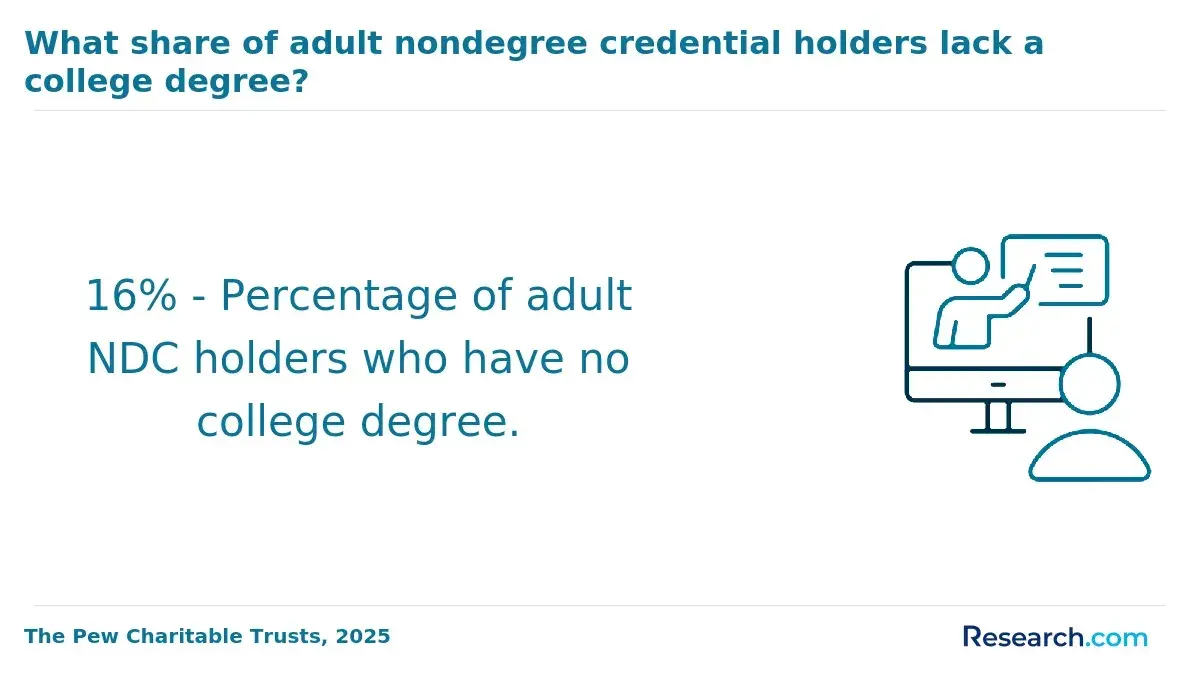
There is no single required degree for every data science job, but education level strongly affects which roles are realistic. Entry-level analytics and business intelligence roles may accept a bachelor's degree in data science, statistics, computer science, information systems, economics, mathematics, engineering, or another quantitative field. More advanced AI, machine learning, and research-focused roles often prefer a master's degree or higher.
The table below summarizes common education paths and when each one makes sense. Use it to compare the trade-off between speed, cost, depth, and career target.
| Education option | Typical career fit | Strengths | Limitations |
| Certificate or bootcamp | Career exploration, skill refresh, portfolio building | Fast, focused, often practical | May not satisfy degree preferences for competitive data scientist or AI roles |
| Associate degree | Data technician, reporting assistant, transfer pathway | Lower cost and accessible start | Usually not enough alone for most data scientist positions |
| Bachelor's degree | BI analyst, data analyst, junior data scientist, analytics associate | Broad foundation and strong entry-level credential | May need projects, internships, or graduate study for specialized AI roles |
| Master's degree | Data scientist, machine learning specialist, analytics lead, AI-focused roles | Deeper modeling, research, and specialization | Higher cost and time commitment than short-form credentials |
| Doctorate | Research scientist, advanced AI research, academic or lab roles | Best fit for original research and theory-heavy work | Often unnecessary for applied business analytics roles |
A data science masters online can be a strong option for working professionals who already have quantitative experience and want to move into more advanced modeling, AI, or leadership roles without leaving the workforce.
Degree choice should follow the role, not the other way around. If your goal is BI, a bachelor's degree plus SQL, visualization, and business domain experience may be enough to start. If your goal is machine learning engineering, prioritize programs with advanced algorithms, software engineering, cloud deployment, and model operations.
How do online and campus-based data science programs compare for flexibility and outcomes?
Online and campus-based data science programs can both be credible when they are offered by accredited institutions and include rigorous technical coursework. The better choice depends on your schedule, learning style, need for campus resources, and access to internships or employer networks.
The comparison below highlights practical differences that affect working adults, full-time students, and career changers. It can help you decide which format fits your constraints rather than assuming one format is automatically better.
| Factor | Online programs | Campus-based programs |
| Schedule flexibility | Often better for working adults, parents, military learners, and students outside commuting range | Best for students who can attend scheduled classes and participate in campus life |
| Networking | Depends on live sessions, cohort design, alumni access, and project collaboration | Often stronger for in-person events, labs, clubs, and local recruiting |
| Hands-on learning | Can be strong when programs include cloud labs, capstones, and team projects | Can offer physical labs, research assistantships, and face-to-face faculty access |
| Cost structure | May reduce relocation and commuting costs, but tuition varies widely | May involve housing, transportation, and campus fees in addition to tuition |
| Best fit | Self-directed learners who need flexibility and can manage deadlines independently | Students who want structure, in-person support, and campus recruiting opportunities |
Online learning is especially useful in fast-changing technical fields because students can often apply new skills at work immediately. However, online students should confirm how the program supports mentoring, career services, peer collaboration, and access to computing resources.
When comparing online education across fields, the same questions apply: accreditation, faculty qualifications, career support, and curriculum relevance matter whether you are evaluating a data science program or an online degree for library science. The format is less important than whether the program has the academic quality and support structure to help you finish and compete.
What core courses and specializations prepare students for AI and cloud data careers?
A strong data science curriculum should build from foundations to applied projects. The best programs do not simply list trendy tools; they teach students how to reason with data, write maintainable code, evaluate models, and deploy solutions responsibly.
Students preparing for AI and cloud data careers should look for coursework in several connected areas. These subjects help build both employability and long-term adaptability as tools change.
- Mathematics and statistics: Linear algebra, probability, statistical inference, optimization, and experimental design.
- Programming and software practices: Python, SQL, version control, testing, APIs, and reproducible workflows.
- Machine learning and AI: Supervised learning, unsupervised learning, deep learning, natural language processing, generative AI, and model evaluation.
- Cloud and data engineering: Distributed computing, data pipelines, databases, data warehouses, orchestration, and cloud deployment.
- Business intelligence: Dashboard design, metrics development, visualization, analytics strategy, and decision communication.
- Ethics, privacy, and governance: Bias, fairness, explainability, data security, documentation, and responsible AI use.
- Capstone or practicum: A substantial project using real or realistic data, ideally with stakeholder-style presentation requirements.
Specializations are useful when they align with a target role. An AI specialization may fit students who want to work with machine learning systems, while a cloud analytics concentration may better serve those interested in data engineering or platform roles.
Business analytics tracks can be ideal for people who want to influence strategy rather than spend most of their time building infrastructure.
Students comparing an online masters in AI with a broader data science degree should review how much of the curriculum focuses on applied deployment, not just theory. AI roles increasingly reward candidates who can test, monitor, and explain models in real organizational settings.
How can you evaluate accredited, reputable data science programs in the United States?
Accreditation and program quality should be checked before tuition, rankings, or marketing claims. In the United States, institutional accreditation from an agency recognized by the U.S. Department of Education or the Council for Higher Education Accreditation is the baseline indicator that a college or university meets broad academic standards.
Use the following steps to evaluate programs before applying. This sequence helps reduce the risk of choosing a program that looks appealing online but does not support your career goal.
- Verify institutional accreditation through official accreditor or federal databases, not only the school's marketing pages.
- Review the curriculum for Python, SQL, statistics, machine learning, cloud data systems, ethics, and a capstone or applied project.
- Check whether faculty have relevant research, industry, or applied analytics experience.
- Ask how career services support data roles, including resume reviews, portfolio guidance, employer events, and internship searches.
- Compare total cost, not just tuition, including technology fees, textbooks, residency requirements, travel, and lost work time.
- Look for transparent outcomes such as completion rates, job placement support, alumni examples, and employer partnerships, while remembering that individual results vary.
- Confirm transfer credit, prior learning, and prerequisite policies before enrolling.
Red flags include vague curriculum descriptions, no clear accreditation information, pressure-heavy admissions calls, unrealistic salary promises, and programs that focus on tool names without teaching statistics, data quality, or ethics. A reputable program should be willing to explain requirements, costs, faculty support, and student expectations clearly.
This same due diligence applies across career-focused online education. For example, students evaluating medical billing and coding programs also need to verify accreditation, financial aid eligibility, and career alignment instead of relying only on convenience or advertised affordability.
What are typical admission requirements for undergraduate and graduate data science degrees?
Admission requirements vary by institution, but most data science programs look for evidence that applicants can handle quantitative, technical, and analytical coursework. Requirements are usually more flexible at the undergraduate level and more specialized at the graduate level.
The table below shows common admission expectations by degree level. Use it to identify gaps you may need to address before applying.
| Program level | Common requirements | What applicants should prepare |
| Associate degree | High school diploma or GED, placement testing, basic math readiness | Transcripts, placement scores if required, and transfer planning if aiming for a bachelor's degree |
| Bachelor's degree | High school transcript, GPA review, math preparation, sometimes standardized test scores depending on school policy | Algebra, precalculus or calculus readiness, introductory coding experience, and a clear interest in analytics |
| Graduate certificate | Bachelor's degree, resume, statement of purpose, sometimes prerequisites in statistics or programming | Evidence of technical readiness and a plan for how the certificate supports career goals |
| Master's degree | Bachelor's degree, transcripts, resume, recommendations, statement of purpose, quantitative prerequisites, and sometimes GRE scores | Prior coursework or experience in statistics, programming, calculus, linear algebra, databases, or analytics |
| Doctoral program | Strong academic record, research fit, advanced quantitative preparation, recommendations, and faculty alignment | Research interests, writing sample or prior research when requested, and evidence of long-term research commitment |
Students without a computer science background can still be competitive for some programs, especially if they complete prerequisites before enrollment. Many schools offer bridge courses in Python, statistics, calculus, or database concepts.
However, applicants should be cautious about entering an advanced program without enough preparation, because catching up while taking graduate-level machine learning can be difficult.
Before applying, ask admissions advisors which prerequisites are required, which are only recommended, and whether admitted students can complete missing coursework during the first term. This helps you avoid surprises that could delay graduation or increase total cost.
How long do data science programs take, and what do they cost to complete?
Program length and cost depend on degree level, enrollment pace, transfer credits, residency status, institution type, and whether you study online or on campus. The most affordable option is not always the best value if it lacks career support, applied projects, or the coursework needed for your target role.
The College Board reported average published tuition and fees for 2024-2025 of $11,610 for in-state students at public four-year institutions and $43,350 at private nonprofit four-year institutions. Those figures are useful benchmarks, but they do not include every program-specific fee or living expense, so students should request a full cost estimate from each school.
The table below gives a practical overview of timeline and cost considerations. It is intended for comparison, not as a universal price quote.
| Program type | Common completion time | Major cost factors | Best value strategy |
| Certificate | Several months to one year | Tuition model, software access, employer reimbursement eligibility | Choose one tied to a clear skill gap, such as SQL, cloud data, or machine learning |
| Associate degree | About two years full time | Community college tuition, transfer agreements, course materials | Use as a lower-cost transfer pathway into a bachelor's program |
| Bachelor's degree | About four years full time | Residency status, transfer credits, housing, fees, summer enrollment | Maximize transfer credit and seek internships before graduation |
| Master's degree | About one to three years depending on pace | Per-credit tuition, prerequisite courses, technology fees, work schedule | Compare total program cost against the specific roles the degree can help you pursue |
| Doctorate | Often four or more years | Funding package, assistantships, research expectations, opportunity cost | Prioritize funded options when pursuing research-heavy careers |
To manage costs, start with the total price rather than the advertised per-credit rate. Ask about transfer credit, employer tuition assistance, scholarships, assistantships, federal financial aid eligibility, and whether prerequisite courses add extra credits. Working adults should also consider opportunity cost: a slower part-time path may preserve income, while an accelerated path may reduce time away from higher-level roles.
A common mistake is choosing the cheapest program without checking whether it includes the skills employers expect. A low-cost degree can be a poor investment if it lacks applied projects, cloud exposure, or career support; a higher-cost program can also be a poor investment if its outcomes and support do not justify the price.
What salaries, advancement paths, and leadership opportunities exist in data science?
Data science salaries vary by role, region, industry, education, technical specialization, and experience. The U.S. Bureau of Labor Statistics reported a May 2024 median annual wage of $112,590 for data scientists. Readers should treat that figure as a labor-market benchmark, not a personal salary prediction, because entry-level analysts, senior machine learning engineers, and analytics directors can sit in very different pay ranges.
The table below shows how responsibilities often expand over time. Use it to think beyond the first job and plan which skills to build for advancement.
| Career stage | Common titles | Main value to employer | Skills that support advancement |
| Entry level | Data analyst, BI analyst, junior data scientist, reporting analyst | Clean data, build reports, answer defined business questions | SQL, Python, dashboards, statistics basics, communication |
| Early career | Data scientist, analytics engineer, data engineer, machine learning associate | Build models, improve pipelines, automate analysis, support decision-making | Machine learning, cloud tools, data modeling, experimentation |
| Midcareer | Senior data scientist, machine learning engineer, cloud data architect, product analyst | Own complex projects, influence product or operational strategy | System design, stakeholder management, model deployment, domain expertise |
| Leadership | Analytics manager, data science manager, director of analytics, head of data | Set priorities, manage teams, align data work with business goals | Team leadership, roadmap planning, governance, budgeting, executive communication |
Advancement does not always require becoming a manager. Some professionals grow as technical specialists in machine learning, data architecture, experimentation, or AI safety. Others move toward product management, operations strategy, finance analytics, healthcare analytics, or executive leadership.
For long-term growth, build a portfolio that shows business context, not just code. A strong project explains the problem, data source, method, limitations, ethical considerations, and recommended action. Hiring managers often look for evidence that you can make data useful, not simply that you can run a model.
What is the job outlook for data scientists in AI, cloud computing, and business intelligence?
The job outlook for data scientists remains strong because organizations continue to expand their use of AI, automation, cloud platforms, and data-driven decision-making. The BLS projection of 36% employment growth for data scientists from 2023 to 2033 signals demand well above the average for all occupations, but competition can still be intense for roles at top technology companies or in popular metro areas.
Several trends are shaping hiring. Generative AI is increasing demand for professionals who can evaluate model outputs, reduce hallucination risk, protect sensitive data, and integrate AI into workflows.
Cloud adoption is pushing employers to hire people who understand scalable data pipelines and governance. Business intelligence remains important because leaders still need accurate metrics, dashboards, and performance analysis before making decisions.
To improve your chances in this market, take a targeted approach rather than trying to learn every tool at once. The following steps can help you move from interest to employability.
- Choose a target role first, such as BI analyst, data scientist, cloud data engineer, or machine learning engineer.
- Build the core stack for that role, usually including SQL, Python, statistics, and one visualization or cloud platform.
- Create two or three portfolio projects that solve realistic problems and explain decisions clearly.
- Gain practical experience through internships, research projects, freelance work, employer projects, or open data challenges.
- Learn the industry context for the jobs you want, such as healthcare, finance, retail, manufacturing, education, or public policy.
- Practice explaining trade-offs, model limitations, privacy risks, and business impact in interviews.
The outlook is strongest for candidates who combine technical depth with judgment. AI can automate parts of coding and analysis, but employers still need people who can define the right problem, verify data quality, evaluate risk, and guide responsible use.
Other Things You Should Know About Data Science
Yes, but you need evidence of technical readiness. Many data professionals come from statistics, mathematics, engineering, economics, information systems, physics, or business analytics backgrounds. If your degree is less technical, build a portfolio showing Python, SQL, statistics, and applied projects.
The most recognized certifications include AWS Certified Data Analytics – Specialty, Microsoft Certified: Azure Data Scientist Associate, Google Cloud Professional Data Engineer, and Tableau Desktop Specialist. Employers use them as proof of cloud pipeline, machine learning, and dashboard skills, especially for roles tied to production analytics and BI reporting.
A portfolio is very important, especially for entry-level candidates and career changers. Good projects show how you clean data, choose methods, interpret results, explain limitations, and connect analysis to a real decision.
In 2027, data science roles are expanding rapidly, particularly in artificial intelligence (AI), cloud data management, and business intelligence. Data Scientists focusing on machine learning engineering, data analytics, and cloud data infrastructure are in high demand to drive innovation and strategic decision-making.
References
- Future of Data Science Careers: Skills That Matter Most https://codedrivenlabs.com/the-future-of-data-science-careers-skills-that-will-matter-most/
- The Future Landscape of Data Science Careers You Need to Know - CertLibrary Blog https://www.certlibrary.com/blog/the-future-landscape-of-data-science-careers-you-need-to-know/
- Best universities for Data Science in USA: Rankings & Courses India https://ieltsidpindia.com/blog/universities-for-data-science-in-usa
- Uncovering Data Science: Skills, Careers and Education https://www.databricks.com/blog/uncovering-data-science-skills-careers-and-education
- Online vs Campus Data Science Degree Programs: Complete Comparison https://hakia.com/compare/data-science-online-vs-campus/
- Top 10 Data Science Career Paths are in Trends 2026 https://brollyacademy.com/data-science-career-paths/
- Data Scientist: missions, skills, training, salary and career development | EM Normandie https://www.em-normandie.ie/em-normandie-experience/immerse-yourself-professional-world/professions-after-business-school/data-scientist
- Data Science Roles - A Definitive Guide - Data Science PM https://www.datascience-pm.com/data-science-roles/
- What are the Data Science Jobs? — Dataquest https://www.dataquest.io/data-science-jobs/
- How Long Does It Take to Become a Data Scientist? | Flatiron School https://flatironschool.com/blog/how-long-does-it-take-to-become-a-data-scientist/