2027 Online Data Science Degrees With Practice-Focused Curricula

Co-Founder and Chief Data Scientist
Choosing an online data science degree is no longer just about flexibility; it is about whether the program gives you enough real practice to compete for analytics and AI-related roles. The U. S. Bureau of Labor Statistics reports that data scientists had a median annual wage of $112,590 in May 2024, which makes program quality and return on investment especially important. This guide is for prospective bachelor's and master's students who want applied training, not just theory. You will learn how to compare curricula, costs, accreditation, employer value, career paths, and red flags before enrolling.
Key Things You Should Know
- Practice-focused online data science degrees should include portfolio-ready work such as coding labs, machine learning projects, cloud-based analytics, database work, and a capstone using real or realistic datasets.
- Employer respect depends more on institutional accreditation, curriculum quality, project evidence, and technical skills than on whether the degree was completed online or on campus.
- Costs vary widely, but financing matters: federal Direct Unsubsidized Loans for graduate students carried an 8.08% fixed interest rate for 2024-25, so total cost and repayment planning should be part of program comparison.
What is an online data science degree with a practice-focused curriculum?
An online data science degree with a practice-focused curriculum is a bachelor's or master's program delivered primarily online that teaches students to collect, clean, analyze, model, interpret, and communicate data through applied work. Instead of relying mainly on lectures and exams, these programs require students to build models, write code, query databases, create dashboards, and explain findings to technical and nontechnical audiences.
The "practice-focused" part matters because data science hiring is skills-based. Employers often want evidence that a candidate can use tools such as Python, R, SQL, machine learning libraries, visualization platforms, and cloud environments to solve messy business or research problems. A strong online program should therefore help students graduate with a portfolio, not just a transcript.
These degrees generally fit students who want structured academic training, career mobility, access to financial aid, and a recognized credential. They may not be the best fit for someone who only needs one narrow skill, such as learning SQL for a current job, because a certificate or short course could be faster and less expensive.
The table below shows how common online data science degree types differ. Use it to match the credential level to your current background and target role.
| Degree type | Best fit | Typical applied focus | Common outcome |
| Bachelor's in data science, analytics, statistics, or computer science | Students starting or changing careers who need a full undergraduate credential | Programming, statistics, databases, data visualization, introductory machine learning, and general education | Entry-level analyst, junior data scientist, business intelligence analyst, or analytics associate roles |
| Master's in data science or analytics | Working professionals or bachelor's graduates seeking advanced technical roles | Machine learning, data engineering, predictive modeling, cloud analytics, experiments, and capstone projects | Data scientist, machine learning analyst, analytics manager, or specialized industry analytics roles |
| Graduate certificate | Professionals testing the field or adding a focused skill set | Smaller set of technical courses, often in Python, statistics, databases, or machine learning | Skill upgrade, pathway into a master's program, or support for an internal career move |
How do online data science programs compare to campus-based options for hands-on learning?
Online data science programs can be just as hands-on as campus programs when they use interactive coding environments, cloud labs, group projects, recorded demonstrations, live technical support, and instructor feedback on real assignments. The format itself is not the deciding factor; the design of the learning experience is.
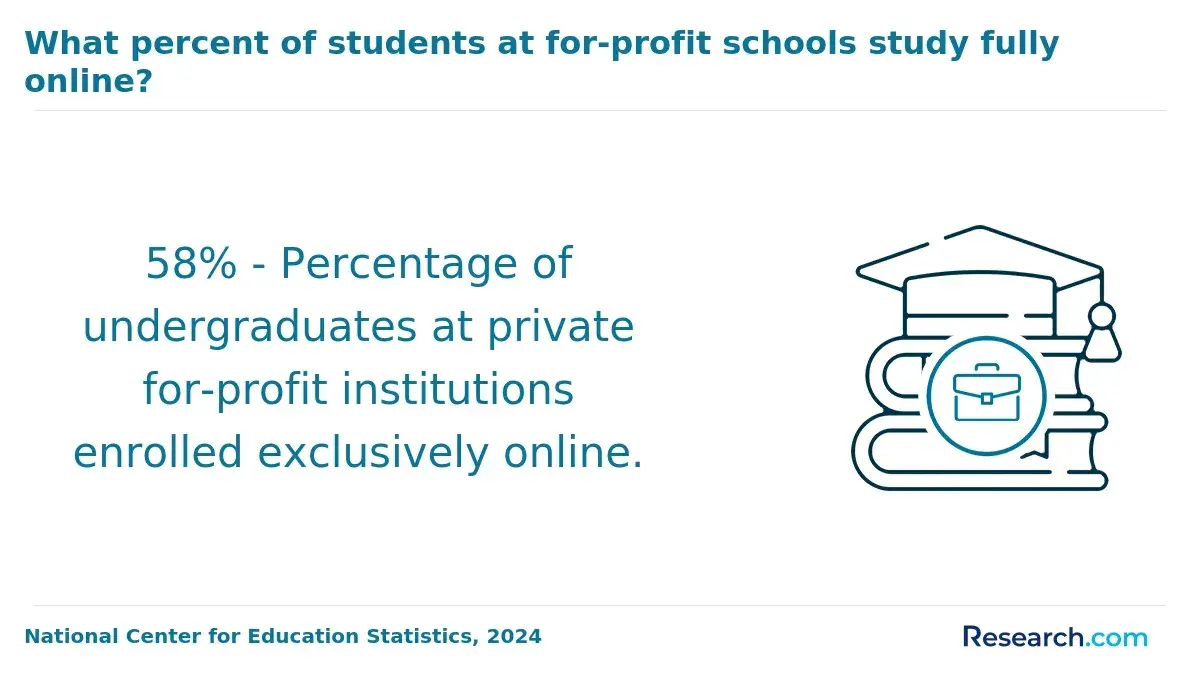
Online learning is now mainstream in U.S. higher education. The National Center for Education Statistics reported in 2024 that more than half of postsecondary students took at least one distance education course in fall 2022. For data science students, that normalization matters because employers and universities have become more familiar with remote collaboration, online labs, and digital portfolios.
The table below compares online and campus-based options specifically on hands-on learning, since that is often the biggest concern for students evaluating applied data science programs.
| Factor | Online data science degree | Campus-based data science degree | Decision point |
| Labs and coding practice | Usually completed through browser-based notebooks, virtual machines, learning platforms, or cloud services | May use computer labs, in-person workshops, or the same cloud tools used online | Ask whether assignments require original coding and model building rather than watching demonstrations only |
| Team projects | Often asynchronous, with collaboration through Git, shared notebooks, discussion boards, and video meetings | Often easier to coordinate in person, but still commonly uses digital tools | Online students should check how teams are formed and how group work is graded |
| Faculty access | Office hours may be virtual, scheduled, or discussion-board based | May include drop-in meetings, lab hours, and face-to-face mentoring | Look for response-time expectations and access to teaching assistants or technical coaches |
| Networking | Depends heavily on virtual career events, alumni groups, Slack or Teams communities, and project showcases | May offer easier access to local employers, campus recruiting, and peer groups | Online students should prioritize programs with active career services and employer-connected projects |
| Flexibility | Stronger for working adults, caregivers, military students, and learners outside major tech hubs | Stronger for students who want a traditional campus community and fixed schedule | Choose based on how much structure you need to stay on track |
The strongest online option is usually one that combines flexibility with accountability. If a program has no graded coding labs, no instructor feedback on technical work, and no capstone or portfolio requirement, it may be convenient but not sufficiently practice-focused.
Are online data science degrees accredited and respected by U.S. employers?
Online data science degrees can be accredited and respected by U.S. employers, but students need to verify the right type of accreditation. The most important baseline is institutional accreditation from an agency recognized by the U.S. Department of Education or the Council for Higher Education Accreditation. This indicates that the college or university has been reviewed for academic quality, governance, financial stability, and student support.
Programmatic accreditation is less standardized in data science than in fields such as nursing, accounting, or engineering. Some data science programs may sit inside accredited business, computer science, engineering, or statistics departments, but there is no single required professional license for most data scientist roles in the U.S. That means the practical quality of the curriculum, faculty expertise, employer connections, and student outcomes become especially important.
Before applying, students should complete a basic verification process. These steps help reduce the risk of enrolling in a program that looks credible online but lacks recognized academic standing.
- Confirm the institution's accreditation through the school's official accreditation page and a recognized accreditation database.
- Check whether the online degree name on the diploma and transcript differs from the campus version, since most reputable schools do not label the credential as "online" on the diploma.
- Review faculty backgrounds for evidence of data science, statistics, computer science, analytics, or applied research experience.
- Ask whether credits can transfer into another accredited institution or into a higher-level degree, especially if you may pursue graduate study later.
- Look for transparent information about graduation rates, retention, career services, and alumni outcomes, while remembering that salary outcomes are not guaranteed.
Employer respect also depends on how you present your learning. A graduate who can show clean code, explain modeling decisions, and discuss project trade-offs will usually be more competitive than a graduate who can only list course titles.
What courses and applied projects are included in practice-focused data science curricula?
Practice-focused data science curricula combine mathematical foundations with technical implementation and domain context. A good program should help students understand why a model works, when it fails, and how to communicate results responsibly.
The table below summarizes the applied elements students should expect to see. It can help you distinguish a hands-on curriculum from a program that only uses "data science" as a broad label.
| Curriculum area | What students practice | Why it matters |
| Programming for data science | Writing Python or R scripts, using notebooks, importing libraries, debugging code, and documenting workflows | Most data roles require repeatable technical work, not manual spreadsheet analysis alone |
| Statistics and probability | Testing hypotheses, estimating uncertainty, interpreting distributions, and identifying bias | Statistical judgment helps prevent misleading conclusions from noisy or incomplete data |
| Databases and SQL | Querying relational databases, joining tables, cleaning records, and preparing analysis-ready datasets | Real data science often begins with finding and preparing data before modeling starts |
| Machine learning | Training models, evaluating performance, avoiding overfitting, and comparing algorithms | Employers want candidates who can use models appropriately and explain their limits |
| Data visualization and storytelling | Building dashboards, charts, presentations, and executive summaries | Insights only create value when decision-makers can understand and use them |
| Data ethics and governance | Assessing privacy, fairness, transparency, security, and responsible AI concerns | Organizations increasingly expect analysts to understand legal, ethical, and reputational risks |
| Capstone or practicum | Completing an end-to-end project from problem definition to final presentation | A capstone can become a portfolio centerpiece for job applications |
Students comparing data science with more AI-heavy study should also review artificial intelligence degree programs, because some roles emphasize model development, deep learning, and automation more than business analytics or reporting.
Strong applied projects usually require students to make choices, not just follow instructions. Look for assignments that involve messy datasets, open-ended questions, peer or instructor critique, reproducibility, and written interpretation. Red flags include programs that rely mostly on multiple-choice assessments, outdated software, or projects that cannot be shared in a portfolio.
What admission requirements do online data science degree programs typically have?
Admission requirements vary by school, degree level, and selectivity, but online data science programs usually evaluate whether applicants can handle quantitative, technical, and writing-intensive coursework. Some programs are beginner-friendly, while others expect prior programming, calculus, statistics, or professional analytics experience.
The table below outlines common requirements by credential level. Use it to identify preparation gaps before you spend money on applications.
| Program level | Common academic requirements | Common supplemental requirements | Preparation concern |
| Online bachelor's degree | High school diploma or equivalent, transcripts, and sometimes minimum GPA expectations | Placement tests, personal statement, transfer credit review, or prior college transcripts | Students may need algebra, precalculus, or introductory programming before upper-level coursework |
| Online bachelor's completion program | Prior college credits or an associate degree, often with general education courses completed | Transfer evaluation and sometimes prerequisites in math or computing | Transfer policies can strongly affect time to graduation and total cost |
| Online master's degree | Bachelor's degree, transcripts, quantitative coursework, and sometimes prerequisite statistics or programming | Resume, statement of purpose, recommendations, interview, or optional test scores | Applicants without technical backgrounds may need bridge courses before core graduate classes |
| Graduate certificate | Bachelor's degree or professional experience, depending on the institution | Short application, transcript review, or proof of technical readiness | Some certificates are not automatically transferable into a full master's program |
If you do not have a computer science background, do not assume you are disqualified. Many online programs admit students from business, social science, health, engineering, mathematics, and liberal arts backgrounds. The key is whether the program offers prerequisites, bridge courses, tutoring, and realistic pacing.
Before applying, gather the information admissions teams commonly request and evaluate your own readiness. This short checklist can help you avoid applying to programs that are either too basic or too advanced for your goals.
- Review your most recent math experience and identify whether you need statistics, linear algebra, or calculus refreshers.
- Complete a small Python or SQL project before applying so you can judge whether you enjoy technical problem-solving.
- Ask whether prerequisite courses add time, tuition, or financial aid implications to the advertised program length.
- Confirm whether test scores are required, optional, or waived based on work experience or prior academic performance.
- Check whether international transcripts, military credits, or professional certifications can be evaluated for credit.
How long do online data science degrees take, and what do they cost?
Online data science degrees can take anywhere from about one year to several years, depending on credential level, enrollment intensity, transfer credits, prerequisites, and whether the program uses traditional semesters or shorter accelerated terms. The fastest path is not always the best path, especially for students who are working full time and need time to build a strong portfolio.
Cost is more complicated than tuition per credit. College Board's 2024 pricing data listed average published tuition and fees for public four-year in-state undergraduates at $11,610 for 2024-25, while private nonprofit four-year institutions averaged $43,350. Online students may avoid room and board, but they still need to compare tuition, fees, technology costs, books, software, and lost work time.
The table below summarizes timeline and cost drivers. It is not a price quote; instead, it shows the variables that most often change the final amount students pay.
| Factor | How it affects timeline | How it affects cost | What to ask |
| Full-time versus part-time enrollment | Full-time study is faster; part-time study is easier to combine with work | Part-time study may spread payments out but can extend fees across more terms | Is there a maximum time limit to finish the degree? |
| Transfer credits | Accepted credits can shorten a bachelor's completion path | More accepted credits can reduce total tuition | How many credits will transfer before I enroll? |
| Prerequisites or bridge courses | May add one or more terms before core coursework | Can add tuition beyond the advertised program cost | Are bridge courses included in the listed tuition estimate? |
| Per-credit tuition model | Timeline depends on credits taken each term | Total cost rises with extra credits, repeated courses, or nontransferable electives | What is the total estimated cost to complete, not just the per-credit rate? |
| Flat-rate or subscription model | Can reward students who move quickly | Can be cost-effective for highly self-directed learners | What happens financially if I need to slow down? |
| Residency or campus requirements | Short intensives may add scheduling constraints | Travel and lodging can increase out-of-pocket costs | Are any in-person experiences required? |
Students using loans should calculate the repayment impact before enrolling. For 2024-25, federal Direct Unsubsidized Loans carried a 6.53% fixed interest rate for undergraduate borrowers and an 8.08% fixed rate for graduate borrowers, while PLUS Loans carried a 9.08% fixed rate. Those rates make it important to borrow only what is needed and to compare lower-cost accredited options before choosing a high-tuition program.
To control costs, focus on actions that reduce total completion cost rather than only chasing the lowest advertised tuition. The following steps are especially useful for online students.
- Request an official transfer credit evaluation before committing to a bachelor's program.
- Ask for a full cost-of-attendance estimate that includes fees, books, software, and required equipment.
- Compare employer tuition assistance, military benefits, scholarships, and payment plans before taking private loans.
- Check whether prerequisite courses can be completed affordably at an accredited community college or through the university itself.
- Estimate the opportunity cost of full-time study if it would require reducing work hours.
What data science careers can graduates pursue, and in which industries?
Graduates of practice-focused data science programs can pursue roles across technology, finance, healthcare, retail, manufacturing, government, education, logistics, cybersecurity, and consulting. The best path depends on whether the student's strengths are technical modeling, business communication, data systems, domain expertise, or research.
The table below connects common roles with responsibilities and industries. Use it to identify which curriculum features matter most for your preferred career direction.
| Role | Typical responsibilities | Industries that commonly hire | Useful preparation |
| Data analyst | Clean data, run analyses, build dashboards, and summarize trends for business teams | Finance, healthcare, retail, education, government, and operations | SQL, Excel or spreadsheet modeling, visualization, statistics, and communication |
| Business intelligence analyst | Develop reports, monitor key performance indicators, and support decision-making systems | Corporate strategy, sales, marketing, logistics, and enterprise operations | SQL, dashboard tools, data warehousing basics, and stakeholder communication |
| Data scientist | Build predictive models, design experiments, evaluate algorithms, and translate findings into decisions | Technology, finance, insurance, health analytics, advertising, and product teams | Python or R, machine learning, statistics, experimentation, and model evaluation |
| Machine learning analyst | Train, test, monitor, and improve models used in products or internal systems | Software, AI products, e-commerce, cybersecurity, and automation | Machine learning, data pipelines, model deployment basics, and version control |
| Data engineer | Build pipelines, manage data infrastructure, and prepare reliable data for analytics teams | Cloud services, enterprise technology, financial services, media, and large-scale operations | SQL, Python, databases, cloud platforms, data modeling, and workflow orchestration |
| Domain analytics specialist | Apply data science methods to a specific field such as healthcare, biology, education, or public policy | Hospitals, biotech, universities, nonprofits, government agencies, and research organizations | Domain knowledge, statistical methods, privacy awareness, and applied project experience |
Students interested in genomics, healthcare data, or life science analytics may also want to compare data science training with bioinformatics career paths, where biology, computing, and statistics overlap more directly.
Entry-level graduates often start in analyst or business intelligence roles, then move into data scientist, machine learning, data engineering, or analytics leadership positions as their technical depth and domain experience grow. A degree helps, but hiring decisions still depend heavily on project evidence, communication skills, internships, prior work experience, and the ability to solve practical problems.
What salary ranges and earning potential can data science graduates expect?
Data science salaries vary by role, industry, location, education level, experience, and technical specialization. Students should treat salary data as a market benchmark, not a guaranteed outcome from any specific degree program.
The U.S. Bureau of Labor Statistics reported a median annual wage of $112,590 for data scientists in May 2024. That figure suggests strong earning potential compared with many occupations, but early-career graduates, career changers, and workers in lower-cost regions may see different results.
The table below uses recent U.S. labor market benchmarks to show how related roles can differ. It is most useful for comparing career direction rather than predicting an individual graduate's pay.
| Role category | Salary context | What can move pay higher | What can limit early pay |
| Data scientist | BLS median annual wage was $112,590 in May 2024 | Advanced modeling, cloud skills, product analytics, industry expertise, and experience deploying models | Limited portfolio evidence, weak programming ability, or applying only to highly competitive entry-level roles |
| Data analyst or business intelligence analyst | Often lower than specialized data scientist roles, especially at entry level | Strong SQL, dashboarding, stakeholder communication, and measurable business impact | Work that is limited to reporting without deeper statistical or technical responsibility |
| Data engineer | Can be highly competitive when paired with cloud infrastructure and pipeline experience | Distributed systems, cloud certifications, database architecture, and production data workflows | Limited software engineering experience or lack of exposure to real data systems |
| Machine learning-focused roles | Often depend on employer size, technical depth, and product environment | Model deployment, MLOps, deep learning, experimentation, and strong software skills | Only completing classroom models without production or evaluation experience |
To evaluate earning potential responsibly, compare the program's total cost with your target role, current salary, geographic market, and time to completion. A lower-cost accredited program with strong projects may produce a better personal return than a more expensive program with weak career support, but the right choice depends on your goals and circumstances.
What is the job outlook for data science and related analytics roles?
The job outlook for data science and related analytics roles remains strong because organizations continue to collect more data and need workers who can turn it into decisions, forecasts, automation, and risk controls. Demand is also being shaped by generative AI, which is changing the tools data professionals use but not eliminating the need for statistical judgment, data quality control, governance, and model evaluation.
The U.S. Bureau of Labor Statistics projects employment for data scientists to grow 34% from 2024 to 2034, much faster than the average for all occupations. For students, this means the field is expanding, but it does not mean every graduate will automatically land a data scientist title immediately after graduation.
Current hiring trends favor candidates who can combine technical skills with business or domain context. Employers increasingly expect data professionals to understand model limitations, privacy risks, explainability, and how AI-generated outputs can be validated before being used in decisions.
Students who want research-intensive leadership roles, university teaching, or advanced methodology work may eventually consider an online data science PhD, but most applied industry roles do not require a doctorate. For many students, a practice-focused bachelor's or master's degree plus a strong portfolio is the more direct route.
To stay competitive, students should build skills that remain valuable even as tools change. These include statistical reasoning, data cleaning, reproducible coding, clear communication, ethical judgment, and the ability to evaluate whether a model is actually useful for a business or social problem.
How can students choose a reputable online data science program that fits their goals?
Choosing a reputable online data science program starts with matching the curriculum to your goal. A student aiming for business intelligence needs different preparation than a student targeting machine learning engineering, healthcare analytics, or doctoral research. The best program is not necessarily the highest ranked or most expensive; it is the one with recognized accreditation, strong applied coursework, credible support, and a realistic path to completion.
Use the following steps to compare programs in a practical way. They are designed to help you avoid common mistakes before you invest time and money.
- Define your target role first, then map required skills to the curriculum instead of choosing a program based only on the degree title.
- Verify institutional accreditation and confirm that the degree is awarded by the university, not only by a third-party course provider.
- Review at least three syllabi or course descriptions for evidence of coding assignments, datasets, projects, and instructor feedback.
- Ask admissions whether the program includes a capstone, practicum, internship option, or employer-connected project.
- Compare total program cost, transfer credit policies, prerequisite costs, financial aid eligibility, and loan repayment impact.
- Evaluate career services for online students, including resume help, portfolio reviews, mock interviews, alumni networking, and employer events.
- Check whether the program teaches current tools while also emphasizing durable concepts such as statistics, databases, experimental design, and ethics.
Some red flags should slow down your decision. Be cautious if a school will not clearly state accreditation, publishes vague curriculum descriptions, promises specific salaries, avoids questions about total cost, or has no meaningful technical projects. Also be careful with programs that advertise extreme speed but leave little time for practice, especially if you are new to programming.
Students drawn to data organization, digital archives, metadata, or information systems may also want to compare data science with adjacent information-focused programs such as online library schools. That comparison can clarify whether your interest is mainly in analytics, information management, research support, or digital knowledge systems.
A strong final shortlist should include no more than a few programs you can compare deeply. Ask each school the same questions, request written answers when possible, and choose the option that best balances academic credibility, applied experience, affordability, flexibility, and fit with your career target.
Other Things You Should Know About Data Science
For a 2027 online data science degree with a practice-focused curriculum, proficiency in Python and R programming is beneficial. Familiarity with data visualization tools like Tableau and statistical software such as SAS or SPSS can also enhance your learning experience.
A portfolio is not always formally required, but it is highly useful. Employers often want to see how you clean data, write code, explain assumptions, evaluate models, and communicate results beyond what appears on a transcript.
Most practice-focused online data science degrees require calculus, linear algebra, and introductory statistics before graduation. Many programs also expect competency in programming, usually Python or R, plus one or two courses in data structures, probability, or machine learning fundamentals.
References
- Do Employers Recognize Online Masters Degrees? - MIA Digital University https://miauniversity.com/do-employers-recognize-online-masters-degrees/
- How to Choose the Right Data Science Course? https://henryharvin.ae/blog/how-to-choose-the-right-data-science-course/
- Top 6 Universities Offering a Fully Online MSc in Data Science - Toolshero https://www.toolshero.com/featured-posts/top-6-universities-data-science/
- Data Science Online Course | Upskilling & Courseware | Codio https://www.codio.com/data-science
- J Multimed Inf Syst: An Analysis of Curricula for Data Science Undergraduate Programs https://www.jmis.org/archive/view_article
- Data Science Course vs. University – Which path is better in 2026? https://www.wbscodingschool.com/blog/data-science-course-vs-university/
- Choose the Right Data Science Program for Career | Learnbay https://www.learnbay.co/blogs/how-to-choose-the-right-data-science-program-for-your-career-goals
- Top Data & Analytics Careers in 2026 https://www.thoughtspot.com/data-trends/analytics/top-data-and-analytics-careers
- Data Science Courses & Tutorials | Codecademy https://www.codecademy.com/catalog/subject/data-science
- I want a shortlist for the universities for Data Science and MIS. Also, can you provide the requirements for admission? https://mentr-me.com/question/i-want-a-shortlist-for-the-universities-for-data-science-and-mis-also-can-you-provide-the-requirements-for-admission