2027 Online Data Science Degrees With Low Total Student Debt Potential

Co-Founder and Chief Data Scientist
Choosing an online data science degree is really a debt-and-career decision: will the program build marketable analytics skills without leaving you overborrowed? The timing matters because the U. S. Bureau of Labor Statistics reports a May 2024 median annual pay of $112,590 for data scientists, while tuition and federal loan interest rates remain high. This guide is for bachelor's, master's, certificate, and career-change students comparing online options. You will learn how to spot lower-debt programs, compare online and campus value, estimate total cost, and choose a path that fits your goals.
Key Things You Should Know
- The lowest-debt online data science options are usually regionally accredited public programs, transfer-friendly bachelor's completion degrees, employer-supported master's programs, and lower-credit graduate certificates that can stack into a degree.
- Cost should be judged by total borrowing need, not tuition alone; federal Direct Unsubsidized Loans for graduate students carried an 8.08% interest rate for 2024-25, making scholarships, employer aid, and pay-as-you-go pacing especially valuable.
- Career value depends on role fit: BLS data shows data scientists had a May 2024 median annual pay of $112,590, but outcomes vary by location, portfolio strength, prior experience, industry, and whether the program teaches applied Python, SQL, statistics, machine learning, and cloud workflows.
Which online data science degrees offer the lowest total student debt potential?
Online data science degrees with the lowest total student debt potential are not always the programs with the lowest advertised tuition. The strongest low-debt choices combine reasonable tuition, regional accreditation, transfer credit, part-time flexibility, no relocation requirement, and clear alignment with data roles that can justify the investment.
The table below compares the degree profiles most likely to reduce borrowing. Use it to decide which type of program fits your current education level, work schedule, and career target.
| Online degree profile | Why debt potential may be lower | Main trade-off | Best fit |
| Public university online bachelor's completion program | Transfer credits can reduce the number of credits paid at four-year tuition rates. | Students must confirm that prior math, programming, and general education credits apply. | Associate degree holders, working adults, and students returning to finish a degree. |
| Regionally accredited public online master's degree | In-state, flat-rate, or competitively priced tuition can reduce the need for graduate borrowing. | Some programs require stronger prerequisites in statistics, calculus, or programming. | Professionals moving from analytics, IT, engineering, economics, or business roles. |
| Stackable graduate certificate leading to a master's | Students can test the field before committing to a full degree and may apply credits later. | Certificate credits do not always transfer across institutions. | Career changers who need a lower-risk starting point. |
| Competency-based or accelerated online program | Students with existing skills may finish faster and pay for fewer terms. | The format requires strong self-direction and may not suit students who need frequent live instruction. | Experienced analysts, programmers, and highly organized learners. |
| Employer-partnered or tuition-reimbursement-supported degree | Employer assistance can directly reduce out-of-pocket cost and borrowing. | Reimbursement may require minimum grades, continued employment, or post-completion service. | Working professionals whose employers invest in analytics, AI, or business intelligence talent. |
The most affordable route for many graduate students is a public, accredited master's with a transparent total tuition estimate and limited required fees. If you are specifically comparing graduate programs, a list of the cheapest master in data science options can help you create a starting shortlist, but you should still verify fees, prerequisite courses, and financial aid eligibility with each school.
A practical way to identify low-debt potential is to calculate the amount you would need to borrow after all non-loan funding is applied. Before enrolling, compare programs using this sequence:
- Confirm regional accreditation and whether the data science program is offered by a recognized academic department such as computer science, statistics, engineering, business analytics, or information systems.
- Ask for the total program cost in writing, including tuition, technology fees, proctoring fees, graduation fees, software costs, and required foundation courses.
- Request a transfer credit or prerequisite review before committing, especially if you already completed calculus, statistics, programming, or database courses.
- Estimate how much you can pay from income, savings, employer reimbursement, scholarships, or assistantships before using loans.
- Compare the degree's curriculum with target job postings to see whether the program teaches the tools employers request.
Be cautious with programs that advertise "fast" or "job-ready" outcomes but do not publish curriculum details, faculty credentials, accreditation status, total cost, or student support services. Low tuition is useful only if the degree is credible, completable, and relevant to the roles you want.
How do online data science degrees compare with campus programs for cost and value?
Online data science degrees can offer better cost control than campus programs because students often avoid relocation, commuting, campus housing, and reduced work hours. However, online is not automatically cheaper. Some universities charge the same tuition to online and campus students, and some online programs add technology or distance-learning fees.
National pricing data shows why format matters. The College Board reported that average published tuition and fees for public four-year in-state students were $11,610 for 2024-25, while private nonprofit four-year tuition and fees averaged $43,350. Those figures are not data-science-specific, but they show how institution type, residency rules, and tuition structure can create large differences before books, software, and living costs are considered.
The table below summarizes the cost and value differences that matter most when choosing between online and campus study.
| Decision factor | Online data science degree | Campus data science degree | What it means for debt |
| Living costs | Students can usually remain where they live and work. | Students may need to relocate or pay campus-area housing costs. | Online study may reduce indirect borrowing if the student can keep housing stable. |
| Work flexibility | Asynchronous and evening formats can support part-time employment. | Daytime schedules may limit work hours for some students. | Maintaining income can lower loan reliance. |
| Networking | Often depends on virtual events, projects, alumni groups, and faculty access. | May provide easier access to labs, clubs, recruiting events, and peer networks. | Campus value may justify higher cost for students who use these resources heavily. |
| Technical support | Quality varies; strong programs provide cloud labs, remote tutoring, and code review. | Students may have direct access to labs, teaching assistants, and in-person help. | Weak support can increase completion risk, which is a hidden debt risk. |
| Employer perception | Usually strongest when the transcript and accreditation match the university's academic standards. | Often familiar to local employers and campus recruiters. | The degree format matters less when the institution is credible and skills are demonstrated. |
Online programs often deliver the best value for working adults, parents, military students, and students who already have access to local internships or analytics work. Campus programs may be worth the higher total cost for students who need a structured environment, intensive mentoring, undergraduate research access, or in-person recruiting pipelines.
The key comparison is not "online versus campus" in isolation. It is whether the format helps you finish, build a portfolio, avoid unnecessary borrowing, and reach the job market with the skills employers expect.
What should students look for to find affordable, accredited online data science programs?
Affordable online data science programs should be judged on accreditation, total cost, curriculum quality, student support, and career fit. A low-debt program that lacks accreditation or teaches outdated tools can become expensive if credits do not transfer, employers question the credential, or students need additional training after graduation.
Start with accreditation because it affects federal financial aid eligibility, credit transfer, graduate school options, and employer trust. In the U.S., the baseline is institutional accreditation from a recognized regional or national accreditor; for data science, programmatic accreditation is less standardized than in fields such as nursing or engineering, so curriculum and institutional credibility become especially important.
The following checklist helps you separate genuinely affordable programs from programs that only look inexpensive at first glance:
- Verify institutional accreditation through the school's official accreditation page and recognized accreditation databases.
- Ask whether online students receive the same transcript wording and academic credit as campus students in the same program.
- Request a full cost sheet that includes tuition, fees, textbooks, software, exams, required residencies, and prerequisite courses.
- Review the curriculum for Python, SQL, statistics, machine learning, data ethics, data visualization, cloud tools, and a capstone or applied project.
- Check whether courses are taught by qualified faculty with academic or industry experience in statistics, computing, AI, analytics, or domain-specific data work.
- Confirm access to tutoring, advising, library databases, career services, interview preparation, and technical help for remote learners.
- Ask about transfer credit, credit for prior learning, military credit, and whether certificate credits can stack into a degree.
- Compare completion rules, course rotation, and maximum time limits so part-time study does not unexpectedly delay graduation.
Cost transparency is a cross-disciplinary issue in online education. Students comparing another applied online program, such as an online animal science degree, face a similar need to look beyond tuition and examine fees, hands-on requirements, transfer rules, and whether the format fits the subject matter.
Common red flags include vague accreditation language, pressure to enroll immediately, no published faculty list, no course descriptions, unrealistic salary claims, unclear refund policies, and programs that require expensive prerequisite sequences without warning. If a school cannot explain total cost and academic expectations clearly, keep comparing.
What types of online data science degrees are available and who are they for?
Online data science education exists at several levels, and the right choice depends on your current credentials, math background, work experience, and target role. A full degree is most useful when you need a recognized credential for entry, advancement, or a career change; a certificate may be enough when you already have a related degree and need focused technical upskilling.
The table below compares common online data science pathways by purpose and student profile.
| Program type | Typical level | Who it is for | When it may not be enough |
| Associate degree or transfer pathway | Undergraduate | Students building foundations in programming, statistics, databases, and general education before transferring. | Many data scientist roles prefer at least a bachelor's degree or equivalent experience. |
| Bachelor's degree in data science, analytics, computer science, or statistics | Undergraduate | First-degree students seeking entry-level analytics, business intelligence, junior data engineering, or graduate school preparation. | Highly specialized machine learning roles may require graduate study or substantial experience. |
| Graduate certificate in data science or analytics | Post-baccalaureate | Professionals testing the field or adding Python, SQL, machine learning, or visualization skills to an existing degree. | Some employers may still prefer a full master's for senior data scientist roles. |
| Master's degree in data science | Graduate | Career changers and professionals seeking deeper preparation in modeling, statistics, data systems, and applied machine learning. | It may be excessive for students who only need basic reporting, dashboarding, or spreadsheet analytics skills. |
| Doctoral or research-focused pathway | Advanced graduate | Students targeting research, academia, advanced AI research, or high-level quantitative roles. | It is usually not the fastest or lowest-debt route to common business analytics jobs. |
Students should also compare data science with adjacent fields. Data science focuses on extracting insight from data using statistics, programming, machine learning, and communication. Artificial intelligence programs often go deeper into intelligent systems, deep learning, robotics, natural language processing, and algorithm design. If your long-term goal is AI product development or machine learning engineering, an AI degree may be a better fit than a general data science program.
A degree may not be the best investment if you only need one tool for your current job, such as Tableau, Excel automation, or introductory Python. In that case, a short certificate, employer training, or portfolio course could be a lower-risk first step before committing to a full program.
How much do online data science programs typically cost, and what financial aid is available?
Online data science program costs vary by institution type, residency status, degree level, credit requirements, and whether the school charges online program fees. The most reliable number is the school's official total program cost, not the per-credit tuition rate shown on a marketing page.
For broad context, public in-state tuition is often lower than private nonprofit tuition nationally, but online pricing can break the usual pattern. Some public universities charge a single online rate to all students, some preserve in-state discounts, and some private nonprofit programs offer competitive online tuition or institutional scholarships.
When estimating what you may pay, separate direct educational costs from indirect costs that can still affect borrowing. These common cost categories should appear in your budget:
- Tuition based on required credits, per-credit rate, or flat-term pricing.
- Mandatory university, technology, distance learning, library, graduation, or proctoring fees.
- Foundation or bridge courses required before graduate-level data science coursework.
- Textbooks, cloud computing credits, statistical software, hardware upgrades, or certification exam costs.
- Reduced income if course load, internships, or capstone work require fewer work hours.
- Interest that accrues on loans while enrolled, depending on loan type and repayment status.
Federal financial aid can help, but loans are still debt. For 2024-25, federal Direct Loans carried rates of 6.53% for undergraduate borrowers and 8.08% for graduate Direct Unsubsidized borrowers; graduate PLUS Loans were higher at 9.08%. Those rates make it important to borrow only what is needed and to prioritize grants, scholarships, employer tuition benefits, and lower-cost course sequencing first.
Students commonly use several forms of aid to reduce out-of-pocket cost. Availability depends on the school, degree level, enrollment status, academic performance, and FAFSA eligibility:
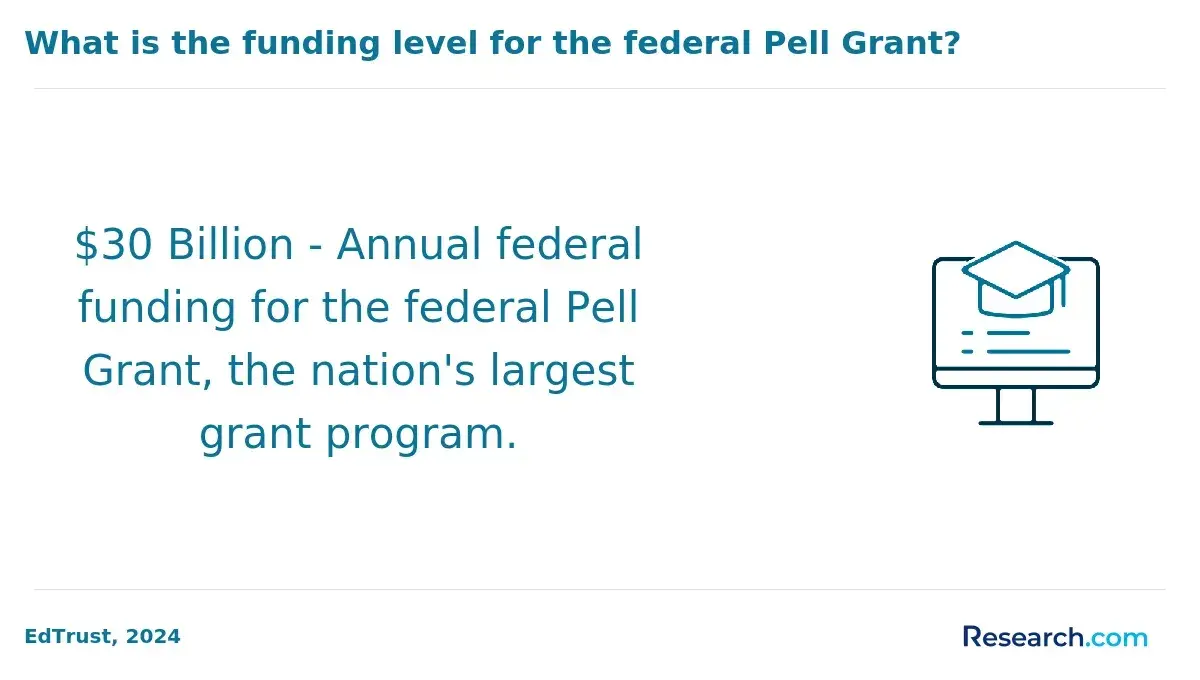
- Federal Pell Grants for eligible undergraduates.
- Federal Direct Subsidized and Unsubsidized Loans for eligible students.
- Graduate PLUS Loans for graduate or professional students who meet credit requirements.
- Institutional scholarships, departmental scholarships, and need-based grants.
- Employer tuition assistance or reimbursement for analytics-related education.
- Military and veteran education benefits where applicable.
- Payment plans that spread tuition across a term and may reduce short-term borrowing.
The safest affordability strategy is to compare net cost, not sticker price. Ask each school for a personalized aid estimate, then calculate how much you would borrow if you studied full time, part time, or with employer reimbursement. A slightly longer part-time path may produce less debt if it lets you keep income and avoid high-interest borrowing.
What core courses and technical skills are taught in online data science degrees?
A strong online data science degree should teach students how to turn raw data into reliable decisions. That requires more than coding. Graduates need statistical reasoning, data cleaning skills, model evaluation, ethical judgment, communication ability, and enough domain knowledge to understand what the data means in context.
Most reputable programs combine theory, tools, and applied projects. The table below summarizes common course areas and the skills they are meant to develop.
| Course area | What students learn | Why it matters for employment |
| Programming for data science | Python or R, scripting, data structures, notebooks, reproducible workflows. | Employers expect analysts and data scientists to manipulate data and automate analysis. |
| Statistics and probability | Distributions, inference, regression, hypothesis testing, uncertainty, experimental design. | Statistical judgment helps prevent misleading conclusions from noisy data. |
| Databases and SQL | Relational databases, querying, joins, data modeling, basic data warehousing concepts. | Much real-world analytics work starts with extracting and preparing data from databases. |
| Machine learning | Supervised and unsupervised learning, model selection, validation, feature engineering. | Machine learning is central to prediction, recommendation, classification, and automation tasks. |
| Data visualization and communication | Dashboards, charts, storytelling, presentation, stakeholder communication. | Technical work has value only when decision-makers can understand and use the results. |
| Data ethics and governance | Bias, privacy, fairness, responsible AI, documentation, compliance-aware data use. | Employers increasingly need professionals who can use data responsibly and explain limitations. |
| Capstone or practicum | End-to-end project using real or realistic data. | Portfolio-ready projects help students demonstrate ability beyond course grades. |
AI is changing the skill mix, but it is not eliminating the need for data science fundamentals. Generative AI tools can write code, summarize data, or suggest models, yet students still need to verify assumptions, test outputs, evaluate bias, protect sensitive data, and explain decisions. Programs that teach prompt use without statistics, databases, and validation are not enough for serious data roles.
Before enrolling, review recent syllabi or course descriptions. Look for hands-on assignments using messy datasets, version control, model evaluation, and written interpretation. A program that relies only on multiple-choice exams may not give you enough evidence of skill for hiring managers.
What are the typical admission requirements and prerequisites for online data science programs?
Admission requirements vary by degree level and selectivity, but online data science programs usually look for evidence that students can handle quantitative coursework. The more technical the program, the more likely it is to require prior statistics, calculus, linear algebra, programming, or database experience.
The table below outlines typical requirements by program level. Always confirm current rules with the school because prerequisites, test policies, and bridge-course options can change.
| Program level | Common admission requirements | Common prerequisites | Preparation advice |
| Associate or transfer pathway | High school diploma or equivalent, placement testing, transcripts. | College algebra or readiness for introductory programming may be expected. | Use community college math and programming courses to reduce later transfer cost. |
| Bachelor's degree | High school or transfer transcripts, minimum GPA, application materials, possible placement scores. | Precalculus, statistics, or introductory computing may be required before major courses. | Prioritize transfer-friendly general education and math courses before upper-division tuition. |
| Graduate certificate | Bachelor's degree, transcripts, resume, statement of purpose, sometimes professional experience. | Introductory statistics, programming, or quantitative coursework may be required. | Choose a certificate that can stack into a master's if you may continue later. |
| Master's degree | Bachelor's degree, transcripts, resume, statement, recommendations, and sometimes GRE scores. | Statistics, calculus, linear algebra, programming, and databases are common expectations. | Complete low-cost prerequisite courses before applying if your background is not technical. |
Many online programs are designed for career changers, so a computer science bachelor's degree is not always required. However, students without recent math or programming experience should plan realistically. Jumping straight into machine learning without comfort in Python, algebraic thinking, and probability can lead to dropped courses, repeated credits, and higher cost.
Applicants can strengthen their readiness before enrolling by completing a short sequence of preparation steps:
- Refresh algebra, basic calculus concepts, and probability before taking graduate statistics or machine learning.
- Build comfort with Python, SQL, spreadsheets, and basic command-line workflows.
- Create a small project that imports, cleans, analyzes, and visualizes a public dataset.
- Ask admissions whether bridge courses count toward the degree or add extra cost.
- Confirm whether GRE waivers, professional experience, or prior graduate coursework can support admission.
Admissions flexibility can be helpful, but it should not be mistaken for low academic rigor. The best programs give nontraditional students a path in while being transparent about the quantitative skills needed to finish.
How long do online data science degrees take to complete, and can you study part time?
Completion time depends on degree level, credit requirements, transfer credit, course availability, and whether students study full time or part time. Online programs can be flexible, but flexibility only reduces debt if the schedule supports steady progress without forcing students to repeat or withdraw from courses.
The table below gives general completion patterns for common online pathways. Actual time varies by school calendar, prerequisite needs, and how many courses a student can manage while working.
| Program type | Common completion pattern | Part-time feasibility | Debt-related consideration |
| Associate or transfer pathway | Often structured around two academic years of full-time study. | Usually feasible, especially through community colleges. | Lower-division credits can reduce the cost of a later bachelor's degree. |
| Bachelor's degree | Often four years for first-time full-time students, shorter for transfer students. | Feasible, but course sequencing can extend the timeline. | Transfer credit and prior learning review are major debt reducers. |
| Graduate certificate | Often completed in several courses across one or more terms. | Highly feasible for working professionals. | Can test fit before committing to a full master's. |
| Master's degree | Commonly planned around one to three years depending on load and prerequisites. | Very common in online formats. | Part-time study can preserve income but may extend fee exposure or delay career transition. |
Full-time study makes sense when students can fund the program without excessive borrowing, want to change careers quickly, and can handle intensive technical coursework. Part-time study often makes more sense for working professionals because it allows them to apply new skills immediately, maintain benefits, and use employer reimbursement if available.
Before choosing a pace, ask the school these timing questions:
- Are required courses offered every term or only once per year?
- Can online students pause for a term without losing catalog rights or financial aid status?
- Is there a maximum time limit for degree completion?
- Do prerequisite or bridge courses extend the timeline?
- Are capstone, internship, or practicum courses available online and during flexible terms?
The lowest-debt pace is the one you can finish. A rushed schedule that leads to withdrawals or repeated courses can cost more than a slower plan that fits your work, family, and study capacity.
What data science careers, salaries, and advancement opportunities can graduates expect?
Online data science graduates can pursue roles in analytics, data engineering, machine learning, business intelligence, operations, finance, healthcare, retail, government, cybersecurity, and technology. Job title matters because "data science" is broad: some roles emphasize statistics and experimentation, while others focus on dashboards, data pipelines, or machine learning deployment.
BLS data places the May 2024 median annual pay for data scientists at $112,590. Use that number as labor-market context, not a promise. Salary depends on location, industry, seniority, portfolio quality, graduate education, prior work experience, and whether the job requires advanced modeling or production engineering skills.
The table below compares common career directions for online data science graduates.
| Role | Typical responsibilities | Education and skill emphasis | Advancement path |
| Data analyst | Clean data, build reports, analyze trends, create dashboards, explain findings. | Bachelor's degree or certificate plus SQL, spreadsheets, statistics, and visualization. | Senior analyst, analytics manager, data scientist, business intelligence lead. |
| Business intelligence analyst | Design dashboards, track performance metrics, support business decisions. | SQL, data modeling, visualization tools, stakeholder communication. | BI developer, analytics architect, product analytics lead. |
| Data scientist | Build models, design experiments, evaluate predictions, communicate insights. | Statistics, Python or R, machine learning, domain knowledge, portfolio projects. | Senior data scientist, principal data scientist, machine learning scientist. |
| Machine learning engineer | Deploy models, build pipelines, monitor performance, collaborate with software teams. | Programming, software engineering, ML operations, cloud tools, algorithms. | Senior ML engineer, AI engineer, applied scientist, technical lead. |
| Data engineer | Build data pipelines, manage databases, support analytics infrastructure. | SQL, Python, cloud platforms, data warehousing, distributed systems. | Senior data engineer, analytics engineer, data architect. |
| AI data specialist or AI trainer | Evaluate model outputs, label data, improve AI systems, document quality issues. | Data quality, domain knowledge, writing ability, evaluation methods, responsible AI basics. | AI operations lead, data quality manager, AI product analyst. |
AI-related work is creating additional entry points for people who combine data literacy with evaluation and communication skills. Students exploring human-in-the-loop AI work can compare responsibilities and compensation context in an AI trainer salary guide, especially if they want a role adjacent to data science before moving into more technical modeling positions.
To improve career outcomes, students should avoid treating the degree as the whole credential. Employers often want evidence that candidates can solve real problems. A practical job-readiness plan includes a portfolio, GitHub or project repository, SQL samples, clear project write-ups, internship or work-based projects, and interview practice using case studies.
How is the job outlook for data science roles, and what credentials boost employability?
The U.S. job outlook for data science remains strong, but competition is rising for entry-level roles because more graduates, bootcamp alumni, and career changers are entering the field. The BLS projects data scientist employment to grow 34% from 2024 to 2034, which is much faster than the average for all occupations. For students, that means opportunity exists, but the best prospects usually go to candidates who can show applied skill, not just credential completion.
Employer expectations are also changing because AI tools can automate parts of coding, data cleaning, and reporting. This raises the value of skills that are harder to automate: problem framing, statistical judgment, data governance, domain expertise, experiment design, model validation, and communication with nontechnical stakeholders.
Credentials that can strengthen employability depend on the target role. The table below shows which add-ons tend to match different career directions.
| Credential or evidence | Best for | Why it helps |
| Portfolio of applied projects | All data science and analytics candidates. | Shows practical ability with data cleaning, modeling, visualization, and communication. |
| Cloud platform certification | Data engineering, ML engineering, analytics engineering. | Signals familiarity with modern data infrastructure and deployment environments. |
| SQL and database certification or verified coursework | Data analyst, BI analyst, data engineer. | Demonstrates a core skill used in many business data roles. |
| Specialized domain certificate | Healthcare analytics, finance, cybersecurity, supply chain, marketing analytics. | Helps connect technical skills to industry-specific problems. |
| Graduate degree | Data scientist, machine learning scientist, senior analytics roles. | Can support roles requiring deeper statistics, modeling, and research ability. |
The most common mistake is collecting credentials without building proof of problem-solving. A certificate in a tool is useful when it supports a larger story: what data you used, what problem you solved, what assumptions you tested, and how your recommendation could affect a decision.
A smart employability plan should be role-specific. Students targeting data analyst jobs should prioritize SQL, dashboards, business metrics, and communication. Students targeting data scientist roles should add statistics, machine learning, experimentation, and a strong capstone. Students targeting machine learning engineering should add software engineering, cloud deployment, and model monitoring.
Other Things You Should Know About Data Science
Yes. Many programs require access to Python, R, Jupyter Notebook, SQL tools, and a cloud platform such as AWS or Google Colab. Some schools provide campus licenses, while others expect students to use free open-source software and pay for optional pro versions only.
A portfolio is very important for many data roles because it shows how you think through real problems. A strong portfolio should include clean code, a clear explanation of the question, data limitations, methods used, and practical conclusions.
Yes, but students often need to be proactive. Look for remote internships, local employer projects, university-sponsored practicums, research assistant opportunities, and capstone projects with real stakeholders.
To minimize debt, students can select programs with low tuition costs, apply for scholarships and grants, work part-time, consider employer-sponsored education benefits, and opt for online degrees from public universities known for value and affordability.
References
- How Data Science Certification Impacts Your Job Search https://itchronicles.com/technology/how-data-science-certification-impacts-your-job-search/
- Data, AI, and Cloud Courses https://www.datacamp.com/courses-all
- Student Loan Debt by Major [2026]: Highest + Lowest Average Debt https://educationdata.org/student-loan-debt-by-major
- 2026 Best Online Data Science Degrees https://www.onlineu.com/degrees/data-science
- Uncovering Data Science: Skills, Careers and Education https://www.databricks.com/blog/uncovering-data-science-skills-careers-and-education
- Data Science Course vs. University – Which path is better in 2026? https://www.wbscodingschool.com/blog/data-science-course-vs-university/
- Best Data Science Bachelor's Degrees Online https://www.computerscience.org/degrees/best-online-bachelors-data-science/