2027 Online Data Science Degrees That Help Build Cloud Data Skills

Co-Founder and Chief Data Scientist
Choosing an online data science degree now means judging more than statistics and Python courses; employers increasingly expect graduates to work with cloud databases, pipelines, and AI-ready infrastructure. The U. S. Bureau of Labor Statistics projects data scientist employment to grow 34% from 2024 to 2034, making cloud fluency a practical career differentiator. This guide is for prospective students comparing online programs, costs, admissions, curricula, and career outcomes. You will learn how to evaluate accredited degrees and choose a program that fits your budget, schedule, and cloud-focused goals.
Key Things You Should Know
- Cloud-focused online data science degrees are strongest when they combine statistics, machine learning, data engineering, distributed systems, databases, and hands-on work with platforms such as AWS, Microsoft Azure, or Google Cloud.
- According to BLS May 2024 wage data, the median annual wage for data scientists was $112,590, while database administrators and architects had a median annual wage of $123,100; actual pay varies by role, industry, experience, and location.
- For cost planning, NCES reported average graduate tuition and required fees of $12,596 at public institutions and $29,931 at private nonprofit institutions for the 2022-23 academic year, so total program cost can differ sharply by residency status, credit load, and institutional aid.
What is an online data science degree and how does it build cloud data skills?
An online data science degree is a bachelor's or master's program delivered primarily through digital coursework that teaches students how to collect, clean, analyze, model, and communicate data. A cloud-focused version goes further by showing students how data moves through modern computing environments: storage buckets, data warehouses, serverless functions, streaming tools, containerized workflows, and scalable machine learning systems.
Cloud data skills matter because many analytics teams no longer run everything on local servers. They use managed platforms to store large datasets, automate data pipelines, train models, govern access, and deploy dashboards or AI tools. A good online program helps students connect theory to production-style practice rather than treating data science as a set of isolated coding assignments.
Students should look for programs that build the following capabilities across several courses, not just in one elective:
- Data science foundations: probability, statistics, programming, machine learning, data visualization, and experimental design.
- Cloud data architecture: cloud storage, distributed computing, relational and nonrelational databases, data lakes, warehouses, and lakehouse concepts.
- Data engineering practice: extract-transform-load workflows, orchestration, APIs, streaming data, version control, testing, and reproducible pipelines.
- Security and governance: identity management, access controls, privacy-aware analytics, compliance basics, and responsible AI practices.
- Applied projects: capstones or labs that require students to deploy, document, and explain a cloud-based data solution.
This degree path usually fits learners who want roles in analytics, machine learning, business intelligence, data engineering, or cloud-enabled AI product teams. It may not be the best fit for someone who only wants a short introduction to dashboards or who needs a narrow vendor skill immediately; in those cases, a certificate or bootcamp may be faster and cheaper.
How do online data science programs compare with campus-based options for cloud-focused training?
Online and campus-based data science programs can both prepare students for cloud-focused work, but they differ in delivery, networking, flexibility, and access to hands-on infrastructure. The better choice depends on how much structure you need, whether you plan to work while studying, and how important in-person labs or recruiting events are to your goals.
The table below compares common decision factors so you can match the format to your learning style and career timeline.
| Factor | Online data science degree | Campus-based data science degree | Best fit |
| Schedule | Often asynchronous or evening-friendly, with part-time options for working adults. | Usually follows fixed class times and campus calendars. | Online works well for students balancing employment, caregiving, or relocation limits. |
| Cloud labs | May use virtual labs, cloud sandboxes, notebooks, and remote project environments. | May include campus computing clusters, research labs, and in-person technical support. | Either format can work if the program provides real cloud tooling instead of only lectures. |
| Networking | Depends on cohort design, live sessions, alumni events, and group projects. | Often stronger for spontaneous networking, student clubs, and campus recruiting. | Campus may help students who need intensive relationship-building; online can still work if career services are active. |
| Cost structure | May reduce relocation and commuting costs, though technology and proctoring fees can apply. | May include housing, transportation, campus fees, and opportunity costs from reduced work hours. | Online often helps cost-conscious working adults, but total tuition still needs careful review. |
| Learning discipline | Requires self-management, written communication, and comfort troubleshooting remotely. | Provides more face-to-face accountability and immediate instructor access. | Campus may fit students who need frequent in-person support; online fits independent learners. |
For cloud-focused training, the most important question is not whether the program is online or on campus. It is whether students use realistic tools, build portfolio-ready projects, receive feedback on technical design, and learn how to explain trade-offs in cost, scalability, security, and model performance.
Which accredited U.S. schools offer online data science degrees with strong cloud curricula?
Many accredited U.S. universities now offer online data science, analytics, or computer science degrees with cloud-relevant coursework. If you are comparing graduate options, this broader guide to the best data science master's programs can help you evaluate affordability alongside curriculum depth.
The examples below are not a ranking. They show the kinds of institutionally accredited U.S. programs students often consider when looking for online data science degrees with data engineering, scalable analytics, or cloud-adjacent coursework. Always confirm the current catalog, tuition, residency rules, and course availability before applying.
| School | Online degree example | Cloud-relevant strengths to verify | Who it may fit |
| Georgia Institute of Technology | Online Master of Science in Analytics | Large-scale analytics, computing, machine learning, and analytics systems coursework. | Students seeking a highly technical analytics degree with strong quantitative expectations. |
| University of Illinois Urbana-Champaign | Online Master of Computer Science in Data Science track | Computer science foundation, data mining, cloud computing-adjacent systems, and scalable data work. | Students who want a computing-heavy route into data science and engineering roles. |
| University of California, Berkeley | Online Master of Information and Data Science | Applied machine learning, data engineering, ethics, privacy, and production-minded projects. | Students seeking a cohort-based professional program with strong brand recognition. |
| Syracuse University | Online Master of Science in Applied Data Science | Data administration, analytics applications, information management, and applied technical projects. | Students who want an applied information-school perspective on analytics systems. |
| Arizona State University | Online data science, analytics, or engineering-oriented graduate options | Analytics, engineering, databases, and technology management pathways depending on program selection. | Students who want flexible online study at a large public research university. |
| University of Wisconsin system partners | Online Master of Science in Data Science | Statistics, database systems, data mining, machine learning, and decision-support analytics. | Students seeking a public-university consortium model with applied data science coverage. |
When reviewing any school, check institutional accreditation first. Then look beyond the degree title and inspect syllabi for cloud labs, database platforms, distributed processing, applied capstones, and faculty or industry partnerships tied to cloud analytics.
Employer Confidence Share in Online vs. In-Person Degree Skills, Global 2024

What admission requirements do online data science degree programs typically have?
Admission requirements vary by degree level and selectivity, but most online data science programs look for evidence that applicants can handle quantitative work, programming, and graduate-level problem solving. Master's programs are often designed for students with technical or analytical backgrounds, though some offer bridge courses for applicants who need preparation.
Typical application requirements include the following items, and each one affects how quickly you can start:
- Prior degree: Bachelor's programs usually require a high school diploma or equivalent, while master's programs require a bachelor's degree from an accredited institution.
- Academic transcripts: Schools review GPA, prior math courses, statistics exposure, and computing-related coursework.
- Prerequisite skills: Common expectations include calculus or linear algebra, statistics, and programming experience in Python, R, Java, or a similar language.
- Statement of purpose: Applicants explain career goals, technical interests, and why the program's curriculum fits their plans.
- Recommendations: Graduate programs may request academic or professional references who can speak to analytical ability and persistence.
- Resume or CV: Work experience in analytics, software, IT, finance, operations, research, or engineering can strengthen an application.
- Standardized tests: Some programs are test-optional, while others may require or accept GRE scores; policies can change by term.
Applicants without a technical background should not assume they are automatically disqualified. However, they should ask whether the program offers preparatory coursework and whether those courses count toward the degree. Paying for multiple noncredit prerequisites can change the real cost and timeline.
A common mistake is applying to the most recognizable school without checking prerequisite alignment. If you have little coding experience, a program with a fast-paced machine learning sequence may be frustrating.
If you already work as a software engineer, a program that repeats introductory programming for multiple terms may not provide enough return on investment.
What core courses and specializations focus on cloud platforms and data engineering?
Cloud-ready data science programs usually combine analytics theory with systems thinking. Students need to understand models, but they also need to know where data lives, how it is transformed, how users access it, and how models or dashboards are maintained after deployment.
The table below summarizes course areas that are especially relevant for students who want cloud data roles rather than purely academic or reporting-focused positions.
| Course area | What students learn | Why it matters for cloud data skills |
| Programming for data science | Python, R, SQL, notebooks, version control, testing, and reproducible workflows. | Cloud projects still depend on clean, maintainable code that teams can review and rerun. |
| Databases and data warehousing | Relational design, SQL optimization, dimensional modeling, NoSQL concepts, and data warehouse architecture. | Cloud analytics commonly runs on managed databases, warehouses, and lakehouse systems. |
| Data engineering | Batch and streaming pipelines, orchestration, APIs, data quality checks, and metadata management. | Employers need professionals who can move data reliably, not just analyze static files. |
| Distributed and cloud computing | Scalable storage, parallel processing, containers, serverless tools, and managed cloud services. | Large datasets and AI workflows often require elastic infrastructure and cost-aware design. |
| Machine learning operations | Model deployment, monitoring, feature stores, drift detection, experiment tracking, and CI/CD basics. | Models create business value only when they can be deployed, governed, and updated safely. |
| Data ethics and governance | Privacy, bias, explainability, access control, and responsible data use. | Cloud systems can expand access quickly, so governance must be designed into workflows. |
Students who want a cloud-oriented specialization should look for electives that go beyond introductory analytics. Useful specialization themes include:
- Data engineering and platform architecture: Best for students targeting pipeline, warehouse, or analytics infrastructure roles.
- Machine learning engineering or MLOps: Best for students who want to deploy and maintain models in production environments.
- Business analytics with cloud BI: Best for students who want decision-support, dashboarding, and analytics translation roles.
- Cybersecurity and data governance: Best for students working with sensitive healthcare, finance, education, or public-sector data.
Before enrolling, ask for sample assignments. A strong cloud-focused course should require students to design, implement, test, and document a workflow. A weaker course may only ask students to read about cloud services without using them in a meaningful project.
How long do online data science degrees take and what do they cost to complete?
Program length depends on degree level, transfer credits, enrollment intensity, and whether the school uses semesters, quarters, or accelerated terms. Many online master's degrees in data science take about 18 months to three years, while bachelor's completion programs can take two to four years depending on previously earned credits.
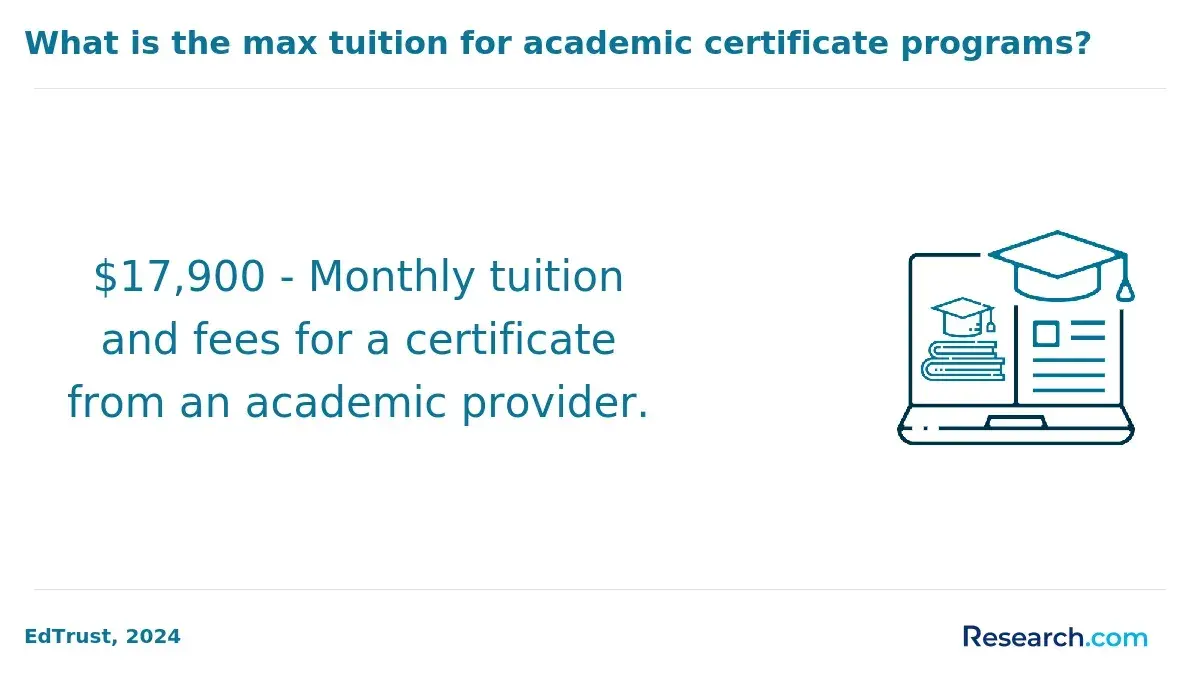
Cost planning should include tuition, required fees, books, software, cloud lab charges, travel for any residencies, and the opportunity cost of reducing work hours. NCES data gives a useful benchmark for graduate study, but individual online data science programs can sit well below or above national averages.
- Average graduate tuition and required fees at public institutions: $12,596 for the 2022-23 academic year, according to NCES data published in 2024.
- Average graduate tuition and required fees at private nonprofit institutions: $29,931 for the 2022-23 academic year, according to the same NCES data.
- Program-level total cost can differ from annual averages because online degrees may charge per credit, per course, per term, or by residency status.
The same total-cost logic applies outside technology degrees; for example, this guide to an animal science degree online shows why students should separate tuition from fees, materials, and program-specific requirements when estimating affordability.
The table below shows timeline and cost variables that can change the real investment required to finish an online data science degree.
| Variable | How it affects completion | Decision point |
| Full-time versus part-time study | Full-time study can shorten the calendar timeline but may reduce work income. | Choose full-time only if you can manage the workload and cash-flow impact. |
| Transfer credits | Accepted credits can reduce course load, especially in bachelor's completion programs. | Request a written transfer evaluation before committing. |
| Prerequisite or bridge courses | Preparatory courses can add time before core data science coursework begins. | Ask whether bridge courses carry graduate credit and financial aid eligibility. |
| Residency or immersion requirements | Some online programs require short in-person sessions or synchronous events. | Budget for travel, missed work, and scheduling constraints. |
| Cloud lab model | Programs may include cloud credits, virtual labs, or student-paid platform usage. | Clarify whether cloud usage is included in tuition or billed separately. |
To reduce cost without weakening the value of the degree, students can take several practical steps before enrollment:
- Ask for a total program cost estimate that includes tuition, mandatory fees, technology fees, books, and expected cloud platform costs.
- Confirm whether tuition is locked for the cohort or can increase while you are enrolled.
- Compare employer tuition assistance, federal financial aid eligibility, scholarships, and payment plans.
- Check whether prior graduate coursework, professional certificates, or military training can reduce required credits.
- Calculate the value of continuing to work part time or full time while enrolled, not just the sticker price of tuition.
What careers can graduates pursue with cloud-focused online data science degrees?
Cloud-focused online data science degrees can lead to several career paths, especially when students graduate with a portfolio of pipeline, database, analytics, or model deployment projects. The strongest path depends on whether you prefer statistics, software systems, business decision-making, or infrastructure.
Some students also explore adjacent digital fields such as blockchain degree programs, especially when their interests involve distributed ledgers, financial technology, data security, and decentralized data systems.
The table below connects common roles to responsibilities and the cloud signals employers may look for in projects or resumes.
| Career path | Typical responsibilities | Cloud-focused evidence to build |
| Data scientist | Build predictive models, analyze experiments, communicate insights, and support product or business decisions. | Projects using cloud-hosted datasets, scalable model training, and documented evaluation pipelines. |
| Data engineer | Design data pipelines, automate ingestion, maintain warehouses, enforce data quality, and support analytics teams. | ETL or ELT pipelines, orchestration workflows, SQL optimization, and data lake or warehouse design. |
| Machine learning engineer | Turn models into deployable services, monitor performance, manage model versions, and collaborate with software teams. | MLOps projects, APIs, containers, model monitoring, and reproducible deployment workflows. |
| Cloud data analyst | Create dashboards, query cloud warehouses, translate metrics, and help teams make data-informed decisions. | BI dashboards connected to cloud data sources, strong SQL, and clear business documentation. |
| Analytics engineer | Build governed data models, transform raw data into analysis-ready tables, and maintain metric definitions. | Data modeling projects, transformation frameworks, testing, documentation, and version-controlled SQL. |
| Data architect | Design enterprise data environments, define standards, plan integrations, and guide governance decisions. | Architecture diagrams, migration planning, access-control design, and experience with multiple data platforms. |
Graduates rarely move into advanced cloud architecture roles from coursework alone. Entry-level candidates usually benefit from internships, capstones, open-source contributions, supervised work projects, or analyst roles that let them grow into data engineering or machine learning operations responsibilities.
What salary ranges and earning potential exist for cloud-oriented data science roles?
Salary potential for cloud-oriented data science roles is strong, but it is not automatic. Pay depends on location, employer type, industry, technical depth, portfolio quality, previous experience, and whether the role is closer to analytics, engineering, research, or architecture.
BLS May 2024 wage data provides a reliable national baseline for several related occupations. These figures are medians, not promises, and they do not isolate cloud-specific premiums.
| Role category | Closest BLS occupation | Median annual wage, May 2024 | How to interpret it |
| Data scientist | Data scientists | $112,590 | A useful benchmark for modeling, analytics, experimentation, and AI-oriented data roles. |
| Data engineer or data architect | Database administrators and architects | $123,100 | Relevant for roles focused on databases, data warehouses, governance, and platform design. |
| Machine learning engineer | Software developers | $133,080 | A practical proxy when the role emphasizes production code, APIs, deployment, and systems integration. |
| Research-oriented AI or data role | Computer and information research scientists | $140,910 | Most relevant to advanced research, algorithm development, or roles that may require a graduate degree. |
The job outlook is also favorable for students with the right skills. BLS projects data scientist employment to grow 34% from 2024 to 2034, which signals continued demand for professionals who can turn complex data into usable models and decisions.
For readers, the key takeaway is that cloud skills can strengthen employability when paired with solid statistics, communication, and software fundamentals.
To improve earning potential, students should avoid building a portfolio made only of classroom notebooks. Employers often value evidence that you can handle messy data, automate a workflow, control costs, secure access, and explain business trade-offs to nontechnical stakeholders.
What industry certifications complement an online data science degree in cloud computing?
Industry certifications can complement an online data science degree by validating platform-specific cloud skills. They are most useful when they support your target role, not when collected randomly. A degree shows broader academic preparation; a certification can show you know how to work within a particular vendor ecosystem.
The table below summarizes certification categories that commonly align with cloud-oriented data science careers.
| Certification type | Examples to research | Best for | How it complements a degree |
| Cloud fundamentals | AWS Certified Cloud Practitioner, Microsoft Azure Fundamentals, Google Cloud Digital Leader | Beginners who need cloud vocabulary and platform basics. | Helps students understand services, pricing concepts, shared responsibility, and basic architecture. |
| Data engineering | AWS Data Engineer, Microsoft Azure Data Engineer Associate, Google Professional Data Engineer | Students targeting pipelines, warehouses, lakes, and analytics infrastructure. | Connects coursework in databases and data engineering to vendor-specific tools. |
| Machine learning and AI | AWS Machine Learning, Azure AI Engineer, Google Professional Machine Learning Engineer | Students interested in model deployment, AI services, and MLOps. | Shows familiarity with production-oriented AI workflows beyond academic modeling. |
| Security and governance | Cloud security or data privacy certifications from recognized providers | Students working with regulated or sensitive data. | Supports roles where access control, privacy, and risk management are central. |
| Analytics and BI platforms | Power BI, Tableau, or cloud warehouse-related credentials | Students aiming for analyst, BI, or analytics engineering roles. | Demonstrates dashboarding and metric communication skills that employers can verify quickly. |
A practical certification sequence is to start with one cloud fundamentals credential only if you are new to cloud computing, then choose a role-specific credential after completing related coursework. Do not pay for multiple exams before you know whether you prefer data engineering, machine learning engineering, analytics, or architecture.
How can students evaluate and choose a reputable online data science program for cloud skills?
Choosing a reputable online data science program requires more than comparing rankings or brand names. You are making an education investment, so the program should match your technical starting point, career target, budget, support needs, and preferred learning format.
Accreditation and financial aid checks are especially important across online education fields. For example, students comparing medical billing and coding programs face a similar need to verify institutional legitimacy, aid eligibility, and career alignment before enrolling.
Use the following evaluation steps to compare online data science programs in a structured way:
- Confirm the school's institutional accreditation through recognized accreditation databases or the school's official accreditation page.
- Map the curriculum to your target role, separating statistics, programming, databases, cloud computing, data engineering, machine learning, and governance courses.
- Ask whether students receive real cloud lab access, sandbox credits, or guided projects using current platforms.
- Request a total cost estimate and ask how tuition changes, fees, transfer credits, and prerequisite courses affect the final amount.
- Review faculty qualifications, industry experience, course update cycles, and whether cloud tools are current rather than outdated.
- Evaluate student support, including tutoring, technical help, advising, disability services, library access, and career coaching for online learners.
- Ask for employment outcome context, but treat salary and placement claims carefully unless the school explains how the data was collected.
- Compare capstone requirements and portfolio opportunities because cloud data roles often require proof of applied ability.
- Check flexibility policies, including leave of absence, course availability, synchronous attendance, proctoring, and time-zone expectations.
- Speak with current students or alumni when possible to learn whether the online experience matches admissions claims.
Watch for red flags: unclear accreditation, vague tuition pages, few technical course descriptions, no cloud or data engineering labs, aggressive enrollment pressure, limited faculty transparency, and career promises that sound guaranteed. A reputable program should be willing to explain prerequisites, outcomes, transfer policies, and technical expectations before you commit.
The best program is not always the cheapest, fastest, or most famous. It is the one that gives you credible academic preparation, hands-on cloud practice, manageable debt, and a realistic path to the roles you actually want.
Other Things You Should Know About Data Science
An online data science degree in 2027 offers formal education, theoretical insights, and exposure to a broad skill set not typically covered by certifications alone. While certifications validate specific skills, degrees provide holistic knowledge and can enhance career opportunities in cloud data roles.
Usually not. Many programs use cloud labs, remote notebooks, or virtual machines for heavier workloads. Still, you should confirm hardware requirements because you may need a reliable laptop, stable internet, webcam, and enough memory for local coding tools.
Most programs require college algebra, statistics, and sometimes introductory programming before admission or early in the first term. Graduate tracks may also expect calculus or linear algebra, plus a minimum GPA, often 2.5 to 3.0, and official transcripts for review.
References
- Data Analysis Course: How to Choose the Right One https://infinisynapse.com/en/blog/data-analysis-course
- Top Cloud Computing Careers by Salary in 2026 https://firebrand.training/en/blog/top-cloud-computing-jobs-by-salary
- Data Science: The Art of Turning Data into Decisions https://immune.institute/en/blog/data-science-el-arte-de-transformar-datos/
- 15 Free Data Engineering Courses + 5 Paid Courses: Complete Guide – DataTalks.Club https://datatalks.club/blog/free-data-engineering-courses.html
- What are the requirements for international students in the online Data Science bachelor's programmes? https://www.privathochschulen.net/en/questions/what-are-the-entry-requirements-for-online-data-science-bachelors-programmes
- Uncovering Data Science: Skills, Careers and Education https://www.databricks.com/blog/uncovering-data-science-skills-careers-and-education
- Best Data Science Bachelor's Degrees Online https://www.computerscience.org/degrees/best-online-bachelors-data-science/
- Choose the Right Data Science Program for Career | Learnbay https://www.learnbay.co/blogs/how-to-choose-the-right-data-science-program-for-your-career-goals
- Cloud Computing vs Data Science Online MCA for 2026 https://www.onlinecu.in/blog/cu/cloud-computing-career-vs-data-science-career
- Understanding Data Science Salary Trends and Influencing Factors - Bristow Holland https://www.bristowholland.com/insights/thought-leadership/understanding-data-science-salary-trends-and-influencing-factors/