2027 BCBA Career Pathways in University and Research Settings

Co-Founder and Chief Data Scientist
Changing into a BCBA career from an unrelated undergraduate major is possible, but the path is more regulated than many graduate-school searches make it seem. You need the right graduate education, qualifying behavior-analytic coursework, supervised fieldwork, exam preparation, and, in many states, licensure planning. If your goal is a university, research, or faculty role, you also need to think beyond basic certification and build evidence of teaching, study design, publication, supervision, and grant-readiness.
This guide explains how BCBA preparation works for prospective students and career changers who are considering academic and research-focused roles. It covers what BCBAs do in university environments, the education and certification steps, available degree formats, curriculum expectations, admissions requirements, costs, career options, salary outlook, and how to evaluate program quality before enrolling.
Key Things You Should Know
- In 2026, university and research BCBA roles prioritize integrating applied behavior analysis with interdisciplinary studies, reflecting a 20% growth in related academic programs since 2024.
- Research settings emphasize data-driven methodologies, with over 65% of BCBA-led projects funded by federal agencies, focusing on autism, education, and healthcare behavioral outcomes.
- Prospective BCBAs benefit from combined clinical and research training pathways, boosting employment prospects by 30% in academic and applied research environments.
What is a BCBA in university and research settings?
A Board Certified Behavior Analyst (BCBA) in a university or research setting applies the science of behavior to teaching, research, supervision, and program development. Unlike many clinical BCBAs who spend most of their time delivering or overseeing services, academic and research-based BCBAs often design studies, evaluate interventions, publish findings, teach students, and help prepare the next generation of behavior analysts.
In universities, BCBA work may include graduate instruction, undergraduate teaching, advising student research, supervising practica, developing applied behavior analysis (ABA) coursework, and contributing to funded research projects. In research centers, BCBAs may study assessment methods, treatment outcomes, instructional strategies, organizational behavior management, or behavioral interventions for specific populations.
These roles are often interdisciplinary. A BCBA may collaborate with faculty in psychology, education, special education, public health, neuroscience, social work, or medicine. The strongest candidates usually combine certification with research skills, clear writing, ethical judgment, and the ability to translate behavioral data into practical recommendations.
Demand for behavior-analytic expertise has continued to expand. According to the University of Cincinnati, job postings seeking BCBAs or related credentials increased by 58% from 2023 to 2024. For universities, that demand can affect hiring for instructors, clinical supervisors, research coordinators, training directors, and faculty members who can support ABA programs.
Common research topics for academic BCBAs include:
- instructional strategies for children with autism;
- functional behavior assessment and intervention methods;
- single-case experimental design;
- staff training and supervision models;
- verbal behavior and skill acquisition;
- organizational behavior management;
- ethical and culturally responsive ABA practice.
Students aiming for academic roles should treat BCBA certification as one part of a broader professional profile. Teaching experience, publication activity, conference presentations, data analysis skills, and mentorship from research-active faculty can matter as much as the credential itself. Those comparing advanced options can review online BCBA doctoral program pathways to understand how doctoral study may support teaching and research goals.
What education is required to become a BCBA?
To become a BCBA, candidates generally need a graduate-level education that satisfies Behavior Analyst Certification Board (BACB) requirements, qualifying coursework in behavior analysis, supervised fieldwork, and a passing score on the BCBA exam. For students interested in university and research careers, a master's degree may meet certification eligibility, while a doctoral degree can be important for tenure-track faculty, principal investigator, or advanced research roles.
Graduate preparation is usually completed through a master's degree or higher in behavior analysis, psychology, education, special education, or a closely related field. Coursework must align with BACB standards and typically covers ethics, experimental analysis of behavior, measurement, assessment, intervention, supervision, and research methods. Candidates must also complete about 1,500 hours of supervised fieldwork before they can take the BCBA exam.
Students with unrelated bachelor's degrees are not automatically excluded. Many enter ABA graduate programs after studying fields such as sociology, health sciences, communications, biology, criminal justice, or liberal arts. The key is whether the graduate program can provide the required behavior-analytic coursework and whether the student can secure qualifying supervised experience.
Program options usually fall into three broad categories:
| Education path | Best fit | Important consideration |
| Master's degree in ABA or behavior analysis | Students who want a direct route into BCBA eligibility | Confirm that coursework aligns with current BACB requirements and that fieldwork support is available. |
| Master's degree in education, psychology, or special education with ABA coursework | Students who want broader preparation plus BCBA-aligned training | Make sure the ABA sequence is sufficient for exam eligibility and not just a concentration label. |
| Doctoral study in behavior analysis or a related field | Students aiming for research, faculty, leadership, or highly specialized roles | Look for strong research mentorship, publication opportunities, and faculty expertise in your area of interest. |
Specialization also matters. According to the University of Cincinnati, 82% of certified BCBAs focus on autism spectrum disorder. That does not mean every BCBA must work in autism services, but it does show why many programs emphasize autism intervention, developmental disabilities, school-based services, and caregiver or staff training. Students interested in university research should also seek training in experimental design, measurement quality, and scholarly writing.
Before applying, prospective students should verify that a program supports the current certification pathway, offers access to qualified supervisors, and fits any state licensing requirements where they plan to work. A useful starting point is a comparison of BCBA certification schools that outlines different program and delivery options.
How do you get BCBA certification?
BCBA certification is earned by meeting BACB education, coursework, supervised fieldwork, and examination requirements. The process is sequential: choose an eligible graduate pathway, complete required behavior-analytic coursework, document supervised fieldwork under qualified supervision, apply to sit for the exam, and pass the BCBA certification exam. Candidates should also check state licensure rules because certification and legal authorization to practice are not always the same thing.
The first step is completing a graduate-level degree in behavior analysis, psychology, education, or a related area that fits the applicable BACB pathway. The coursework should cover core ABA content, including measurement, assessment, intervention, ethics, supervision, and research design. Many students complete this through a BACB-aligned or Verified Course Sequence (VCS), but the safest approach is to confirm current eligibility rules directly with the BACB and the university before enrolling.
The second step is supervised fieldwork. The original pathway described two main options: a practicum of 1,000 hours or an intensive practicum of at least 750 hours combined with increased supervision. Fieldwork must be overseen by a qualified BCBA supervisor who provides feedback, reviews performance, and verifies that the experience meets BACB standards. For university- and research-focused candidates, it is wise to seek placements that include assessment, intervention planning, data analysis, supervision, and, when possible, research or training responsibilities.
The third step is the certification exam. The exam evaluates knowledge of behavior assessment, intervention procedures, ethics, research methods, measurement, and professional practice. Strong preparation usually includes reviewing the BACB task list, using practice questions, joining study groups, and connecting exam preparation to real fieldwork cases rather than memorizing definitions alone.
For students targeting academic or research careers, certification may not be the final credentialing milestone. Doctoral preparation, peer-reviewed publications, teaching experience, grant involvement, and advanced methodology training can significantly improve competitiveness for faculty or research appointments.
Before choosing a program, ask these questions:
- Does the coursework meet current BACB requirements for the certification pathway I plan to use?
- Are qualified supervisors available, or must I find supervision independently?
- Can fieldwork be completed where I live or work?
- Does the program prepare students for research, teaching, or only clinical service delivery?
- How does the program help students stay current when BACB requirements change?
Students who need flexible graduate study can compare the best online ABA master's programs while still confirming that any accelerated option supports certification eligibility, supervision planning, and state licensure goals.
BCBA preparation is most commonly offered through graduate programs in applied behavior analysis, behavior analysis, psychology, education, or special education. These programs may be designed specifically for BCBA eligibility or may include ABA coursework as a track, concentration, or certificate within a broader degree.
Common degree formats include Master of Science in Applied Behavior Analysis, Master of Arts in Behavior Analysis, Master of Education with an ABA emphasis, psychology master's programs with behavior-analysis coursework, and special education programs that include ABA training. Some universities also offer graduate certificates or coursework-only options for students who already hold a qualifying master's degree but still need behavior-analytic coursework for certification eligibility.
Program delivery varies. Fully online programs can work well for working adults and students who do not live near a campus-based ABA program. Hybrid programs may combine online lectures with in-person intensives, labs, or supervision meetings. Traditional in-person programs may offer easier access to faculty mentorship, campus research labs, and university-affiliated practicum sites.
| Program type | Typical advantage | Potential drawback |
| Online master's program | Greater flexibility for working professionals and students outside major university areas | Students may need to arrange local fieldwork and supervision carefully. |
| Hybrid program | Balances flexibility with some face-to-face faculty or cohort interaction | Travel or campus attendance may still be required. |
| Campus-based program | Often provides stronger access to research labs, faculty mentorship, and university placements | Less flexible for students with full-time jobs or relocation limits. |
| Graduate certificate or coursework-only path | Useful for professionals who already have a qualifying graduate degree | May not include degree completion, fieldwork support, or broad career advising. |
| Doctoral program | Strongest fit for research-intensive, faculty, and leadership ambitions | Longer commitment and usually more competitive admissions expectations. |
Doctoral programs in behavior analysis or related fields are especially relevant for students who want to publish research, compete for tenure-track roles, direct university training programs, or lead externally funded studies. A strong doctoral program should offer close faculty mentorship, a clear research agenda, opportunities to teach, and training in experimental design and statistical or single-case methods.
Demand for BCBA-certified professionals has helped expand program availability. According to Kids First Services, annual job postings requiring BCBA certification increased 821% from 7,091 in 2017 to 65,366 in 2023, including roles connected to research and university environments. Growth in demand does not make every program equally strong, so students should evaluate outcomes, supervision support, exam preparation, and faculty expertise before enrolling.
Students comparing flexible options can start with the best online BCBA programs, then narrow the list based on certification alignment, fieldwork access, research opportunities, and cost.
A BCBA program curriculum teaches students how to assess behavior, design interventions, measure outcomes, apply ethical standards, and use behavioral principles in real settings. Strong programs connect theory to practice: students should not only learn terms such as reinforcement, stimulus control, and functional assessment, but also practice using data to make defensible clinical and research decisions.
Core coursework typically includes behavior assessment, measurement, experimental design, behavior-change procedures, ethics, supervision, and evidence-based intervention. Students learn to conduct functional behavior assessments, develop behavior support plans, evaluate treatment effects, and adjust interventions when data show limited progress.
Important curriculum areas include:
- principles of behavior, including reinforcement, punishment, extinction, stimulus control, and motivating operations;
- measurement systems, data display, and interpretation;
- functional behavior assessment and functional analysis;
- skill acquisition and behavior reduction procedures;
- verbal behavior and communication intervention;
- single-case experimental design and applied research methods;
- ethics and professional conduct under BACB expectations;
- supervision, staff training, and performance management;
- organizational behavior management and systems-level applications.
For students aiming at university and research careers, methodology training is especially important. They should look for courses and faculty mentorship in single-case design, treatment integrity, interobserver agreement, literature review methods, research ethics, manuscript preparation, and scholarly presentation. A program that prepares students only for service delivery may be sufficient for some clinical roles but less useful for academic advancement.
Many curricula also include autism-focused applications because a large share of the field serves autistic individuals and people with developmental disabilities. Examples may include designing an intervention for a child with autism spectrum disorder, training caregivers to implement a communication procedure, or using a single-case experimental design to evaluate whether a treatment produced meaningful behavior change.
With over 83,000 active BCBAs in the US, students who want to stand out should build more than minimum competency. Research literacy, careful data interpretation, ethical decision-making, and clear professional writing can distinguish a candidate in universities, clinics, schools, and research organizations. Before enrolling, confirm that the curriculum supports BACB eligibility, supervised fieldwork planning, and any state licensing requirements that may apply.
Admission requirements for BCBA-focused graduate programs vary by university, but applicants are usually evaluated on academic readiness, relevant experience, professional goals, and fit with the program's certification pathway. Certification requirements and program admission requirements are related but not identical: a university may admit you, but you still must complete the coursework, supervised experience, exam, and any licensing steps required for practice.
Prospective BCBA candidates must hold at least a master's degree in behavior analysis, psychology, education, or a related field from an accredited institution to meet certification expectations. Students applying to master's programs typically need a bachelor's degree first, while students applying to certificate or post-master's coursework may need proof that they already hold a qualifying graduate degree. Completion of a Verified Course Sequence (VCS), approved by the Behavior Analyst Certification Board (BACB), is required under the pathway described in the source material, and that sequence includes topics such as ethics, experimental design, and behavior assessment.
Applicants should expect some combination of the following:
- official transcripts from prior colleges or universities;
- a bachelor's degree for master's admission or a master's degree for post-master's coursework;
- minimum GPA expectations set by the university;
- statement of purpose explaining ABA interests and career goals;
- letters of recommendation;
- resume or CV showing work, volunteer, clinical, educational, or research experience;
- possible interview with faculty or admissions staff;
- background check, especially when fieldwork involves children, schools, clinics, or healthcare settings;
- GRE scores if required by the institution, though many ABA-focused programs place more emphasis on relevant preparation and field experience.
Fieldwork planning is also critical. Applicants must complete between 1,500 and 2,000 hours of supervised practical experience, depending on the type of fieldwork: practicum, intensive practicum, or independent fieldwork. These hours must be documented and verified by a qualified BCBA supervisor in accordance with BACB standards. Students should ask admissions staff whether supervision is embedded in the program, arranged through partner sites, or left to the student to secure independently.
Passing the BCBA certification exam is mandatory after eligibility requirements are met. Some universities provide exam preparation through review courses, mock exams, or faculty-led study sessions, while others expect students to prepare independently. Because BACB policies can change, applicants should review the current handbook and confirm that program information is up to date before committing tuition dollars.
Financially, the investment can be meaningful. BCBA salaries have stabilized around $82,000 annually, as noted in Kids First Services' "Crafting Your Destiny: BCBA Career Path to Pursue". That figure can help students weigh the return on investment, but salary should not be the only factor. Program quality, supervision access, exam eligibility, licensure fit, and long-term career direction matter just as much.
BCBA program length and cost depend on the degree level, delivery format, enrollment pace, supervision model, and whether the student already has a qualifying graduate degree. Many master's-level ABA programs can be completed in one to two years, with common timelines of 18 to 24 months. Part-time students may take longer, while accelerated formats can shorten coursework time but may make fieldwork scheduling more demanding.
Coursework is only one part of the timeline. Students also need to complete supervised fieldwork, prepare for the BCBA exam, and address any state licensure requirements. Some students finish fieldwork while enrolled; others continue accumulating hours after coursework ends. A faster program is not always better if it does not provide realistic supervision access or enough time to build competence.
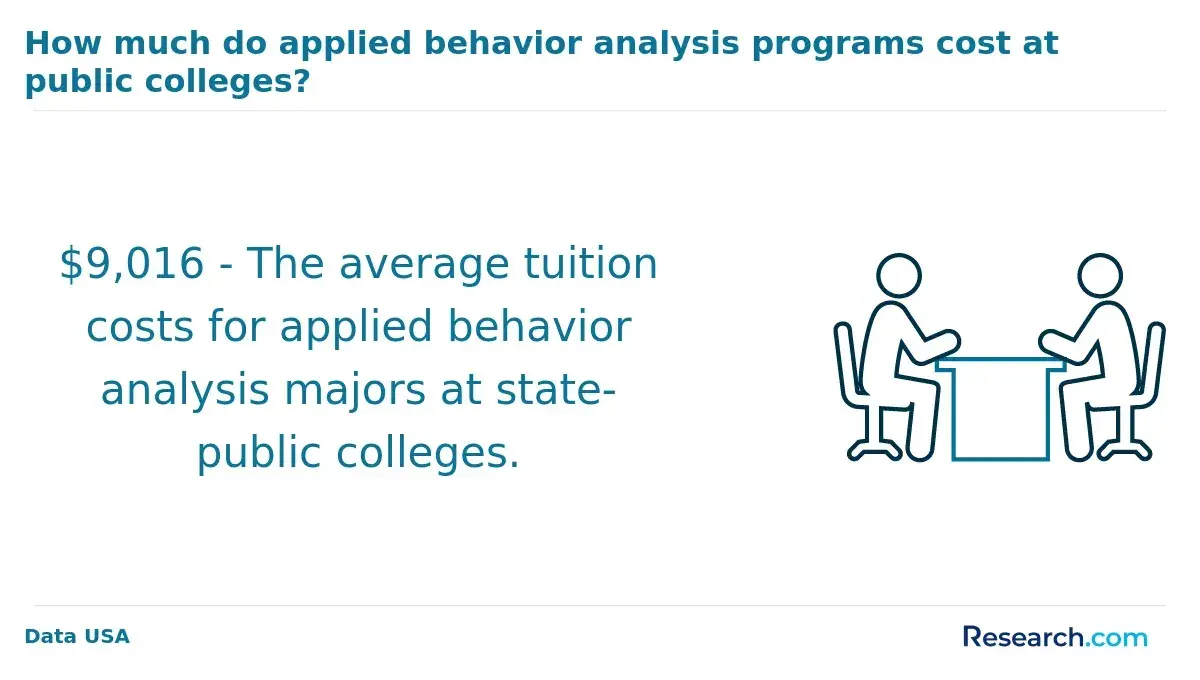
Costs vary widely by institution and format. Public universities often charge between $10,000 and $20,000 for the full program, while private institutions range from $20,000 to $40,000. Students should also budget for supervision fees, examination costs, textbooks or study materials, technology fees, background checks, and travel to practicum sites or campus intensives if required. Online programs may reduce commuting or relocation expenses, but they are not automatically cheaper once supervision and fees are included.
| Cost or time factor | Why it matters |
| Tuition and university fees | This is the largest visible cost, but it may not include supervision, exam preparation, or materials. |
| Supervised fieldwork | Some programs include structured placements; others require students to pay for or locate supervision separately. |
| Enrollment pace | Full-time study may reduce time to completion, while part-time study can make work and family responsibilities easier to manage. |
| Delivery format | Online study can improve access, but students still need eligible fieldwork experiences. |
| Research or thesis requirements | These can add time but may be valuable for students seeking academic or research careers. |
Students interested in supervision, training, or academic roles should pay close attention to who provides mentorship. Supervision-focused roles within universities account for only 0.29% of certified BCBAs, according to the ABA Resource Center, so students who want that path should seek programs with strong faculty advising, teaching opportunities, and practicum supervision experience.
When comparing programs, calculate total cost rather than tuition alone. Ask for a written estimate of tuition, fees, fieldwork costs, exam-related expenses, and any required travel. Also ask how many students complete the program on time, how fieldwork is arranged, and whether graduates are eligible for certification and licensure in the states where they plan to work.
BCBAs in universities and research can pursue teaching, supervision, program development, research coordination, faculty, and applied research roles. The right path depends on degree level, research experience, publication record, teaching ability, and whether the role is primarily academic, clinical, administrative, or grant-funded.
Common university and research career options include:
- ABA instructor or lecturer: teaches undergraduate or graduate ABA courses, often with a focus on applied practice and certification preparation.
- Clinical practicum supervisor: oversees student fieldwork, reviews performance, and helps trainees meet professional and ethical standards.
- Research coordinator or project director: manages participant recruitment, data collection, treatment fidelity, staff training, and reporting for research studies.
- Tenure-track or research faculty member: conducts studies, publishes peer-reviewed work, teaches, mentors students, and seeks grant funding.
- Program director or training coordinator: develops ABA curriculum, manages accreditation or certification-aligned processes, and coordinates faculty or supervisors.
- Interdisciplinary research specialist: contributes behavior-analytic expertise to projects in education, autism research, public health, developmental disabilities, or organizational systems.
University faculty positions differ substantially. A lecturer may focus heavily on teaching and student advising, while a tenure-track professor is usually expected to publish, secure funding, teach, serve on committees, and mentor graduate students. Research staff positions may offer deep involvement in studies but may depend on external funding cycles or grant renewals.
In research contexts, BCBAs may evaluate treatment effectiveness, compare intervention models, study behavioral mechanisms, or test implementation strategies in schools, clinics, homes, and community settings. Many academic BCBAs maintain a connection to applied practice because high-quality research often depends on practical knowledge of real service environments.
The growth of ABA education has created more training needs. The growing demand for university-based ABA experts is reflected in a nearly 250% increase in ABA degree completions from 2016 to 2020, according to Kids First Services' "Crafting Your Destiny: BCBA Career Path to Pursue." Even with growth, academic positions can be competitive. Candidates who can teach, supervise, analyze data, write well, and collaborate across disciplines are better positioned.
Students who want research or faculty careers should build a portfolio early. Useful steps include presenting posters at conferences, assisting with manuscript preparation, learning statistical or single-case analysis tools, joining a faculty research lab, seeking teaching assistant roles, and documenting supervision experience. A BCBA credential can open doors, but universities often hire based on evidence of scholarly and instructional capacity.
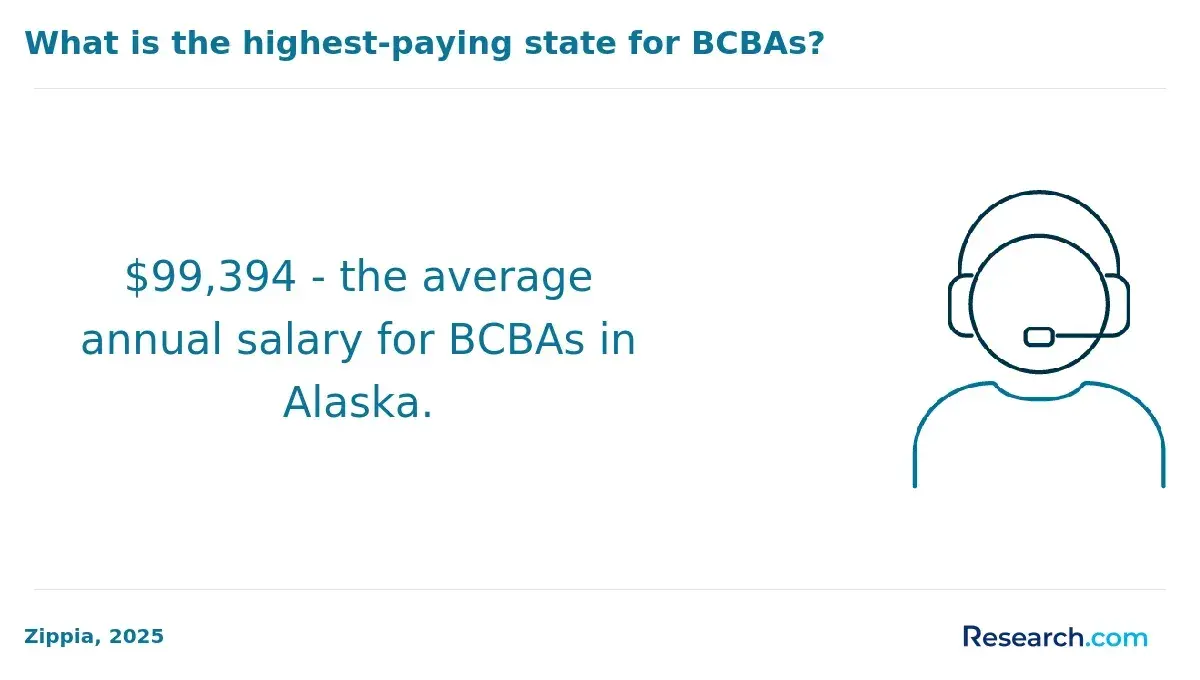
BCBA salaries in university and research settings generally fall between $60,000 and $90,000 annually. Early-career professionals, lecturers, and grant-funded research staff may be closer to the lower end, while experienced faculty, directors, or BCBAs with advanced credentials and research leadership may earn above $85,000. Tenure-track or administrative roles may also offer benefits that are not captured by base salary alone.
Compensation in academic and research settings can differ from clinical service roles. A university job may pay less than some private-sector clinical leadership positions but offer advantages such as a predictable academic calendar, tuition benefits, research support, conference travel, sabbatical eligibility, student assistance, or stronger publication opportunities. Grant-funded research jobs may provide valuable experience but can be tied to project timelines.
The job outlook for behavior analysts remains strong through 2026, supported by demand across educational, clinical, and research domains. According to employment data from BACB and Lightcast statistics, openings have steadily increased from 2010 to 2024. Growth is connected to wider use of ABA in treatment programs, schools, autism services, staff training, and university-based preparation programs.
Several factors influence salary and job prospects:
- highest degree earned, especially whether the candidate holds a doctorate;
- BCBA certification status and any required state licensure;
- teaching experience and course development ability;
- research record, including publications and conference presentations;
- grant writing or project management experience;
- specialization in autism spectrum disorder interventions or other high-demand areas;
- ability to supervise students and trainees ethically and effectively;
- location, institution type, funding source, and appointment type.
When evaluating an offer, look beyond the headline salary. Ask about contract length, summer teaching pay, research expectations, clinical workload, supervision responsibilities, travel support, promotion criteria, and whether the position is permanent, renewable, or grant-contingent. For long-term growth, continued professional development, active certification, networking, and research productivity can improve both employability and earning potential.
How to choose an accredited BCBA program?
Choosing a BCBA program should start with eligibility, quality, and fit. Do not rely on marketing language alone. Confirm that the program's coursework meets current BACB requirements for your intended certification pathway, that the institution is properly accredited, and that the program can support the type of fieldwork, research preparation, and career direction you need.
The term "accredited BCBA program" can be confusing. Institutional accreditation applies to the college or university. Some behavior analysis programs may also hold specialized accreditation, and many programs emphasize BACB-aligned coursework or a Verified Course Sequence. Because certification rules can change, students should verify details directly with the BACB, the university, and any state licensing board before enrolling.
Use the following checklist when comparing programs:
- Certification alignment: Does the coursework satisfy current BCBA eligibility requirements?
- Institutional accreditation: Is the college or university recognized by an appropriate accrediting body?
- Faculty qualifications: Are courses taught by experienced BCBA-certified instructors or research-active behavior analysts?
- Fieldwork support: Does the program provide placements, supervision, partnerships, or clear guidance for documenting hours?
- Exam outcomes: Does the program publish BCBA exam pass rates, and how do those results compare with similar programs?
- Research opportunities: Are there labs, thesis options, faculty projects, or publication opportunities for students interested in academia?
- Delivery format: Is the online, hybrid, or campus format realistic for your schedule and supervision needs?
- Student support: Are advising, career services, exam preparation, and licensure guidance available?
- Total cost: Does the quoted price include fees, supervision, materials, and required travel?
- State licensure fit: Will the program support practice in the state where you plan to work?
Many programs offer combined master's degrees with BCBA coursework, which can be efficient for full-time students. Part-time and online options may better serve working professionals, but flexibility should not come at the expense of supervision quality or certification eligibility. Smaller faculty-to-student ratios can improve mentorship, especially for students who need research guidance or individualized fieldwork planning.
Outcome data can help, but interpret it carefully. Some successful programs report pass rates above 80%, yet pass rates may reflect student selectivity, cohort size, exam preparation, or reporting practices. Ask how many students start, finish, obtain supervised hours, sit for the exam, and pass. Graduation rates, placement outcomes, and student access to qualified supervisors are also important.
Research opportunities add particular value for students aiming at university or research-oriented BCBA careers. Look for faculty whose interests match yours, recent publications, active grants, student conference presentations, and chances to assist with data collection or manuscript development. Location and partnerships with schools, clinics, agencies, and research centers can also diversify practicum experiences.
Despite economic uncertainty, a 58% job growth rate highlights strong BCBA career prospects. Online discussions, including Reddit conversations, often point to continuing demand, but individual outcomes still depend on program quality, certification success, licensure readiness, and the candidate's ability to build practical and scholarly competence.
Other Things You Should Know About Applied Behavior Analysis
BCBA faculty in university research roles are usually expected to publish in peer-reviewed journals and follow APA authorship standards. Many departments also require grant writing, IRB approval for studies involving human participants, and transparent reporting of single-case design data used in applied behavior analysis research.
Yes, BCBAs must adhere to strict ethical guidelines established by the BACB, which include maintaining client confidentiality, obtaining informed consent, and ensuring integrity in data collection and reporting. In university and research settings, additional standards often apply related to human subjects protections and institutional review board (IRB) approvals. These ethics help ensure the responsible practice of behavior analysis in both applied and research contexts.
Research in applied behavior analysis frequently uses single-subject experimental designs to evaluate behavioral interventions on an individual basis. These methods allow researchers to demonstrate functional relationships between interventions and behavior changes. Group designs and qualitative methods may also be used, but the single-subject approach remains a hallmark for producing reliable, replicable data in the field.
- Guide to Becoming a BCBA - Bluesprig Autism https://www.bluesprigautism.com/blog/guide-to-becoming-a-bcba/
- BCBA Programs & Schools | Sunray ABA https://www.sunrayaba.com/post/bcba-programs-schools-203c1
- Path to Becoming a BCBA: Years of College Needed | Blue Jay ABA https://www.bluejayaba.com/blog/how-many-years-of-college-do-you-need-to-be-a-bcba
- What Jobs Can a BCBA Do - What are the Roles? https://www.biermanautism.com/resources/blog/what-jobs-can-a-bcba-do/
- Average BCBA Salaries https://www.magnetaba.com/blog/average-bcba-salaries
- How Much Does it Cost to Take (Or Retake) the BCBA® Exam? https://passthebigabaexam.com/how-much-does-it-cost-to-take-or-retake-the-bcba-exam/
- 29+ ABAI Accredited Programs: B.A. and Master’s Degrees https://abamastersprograms.org/abai-accredited-bcba-programs/
- BCBA Certification Without a Master’s Degree | Little Champs https://littlechampsaba.com/blog/bcba-without-masters-degree/
- ABA Certification Explained: RBT, BCaBA, BCBA, BCBA-D https://onlinecounselingprograms.com/mental-health-careers/how-to-become-behavior-analyst-bcba/aba-certification-explained/
- BCBA Career Options: Exploring Diverse Career Paths for BCBAs https://www.abaresourcecenter.com/post/bcba-career-options