2027 BCBA Pathway for Occupational Therapists

Co-Founder and Chief Data Scientist
Occupational therapists who want to add behavior analysis to their clinical skill set face a practical question: how can they meet BCBA requirements without stepping away from patient care, school-based practice, or full-time employment? The answer depends on your current degree, the coursework you still need, whether your workplace can support supervised fieldwork, and how carefully you choose a program that aligns with Behavior Analyst Certification Board expectations.
For OTs, BCBA certification can be especially useful in autism services, developmental disability care, school consultation, early intervention, and complex behavior support. It does not replace occupational therapy practice; instead, it adds a structured, data-driven behavior analysis framework that can strengthen assessment, intervention planning, caregiver training, and interdisciplinary collaboration.
This guide explains how the BCBA pathway works for occupational therapy professionals in 2026, including education requirements, program length, online versus campus options, clinical experience, costs, admissions, accreditation checks, job outlook, and career paths after certification.
Key Things You Should Know
- Occupational therapists seeking BCBA certification in 2026 must complete a verified course sequence approved by the Behavior Analyst Certification Board, including supervised fieldwork totaling 1500 hours.
- The 2026 BCBA exam eligibility now requires candidates to hold at least a master's degree in behavior analysis or a related field, enhancing interdisciplinary recognition for OTs.
- Data from 2024 indicates over 30% of new BCBA applicants are occupational therapists, reflecting growing integration of behavior analysis into OT practice nationwide.
What is a BCBA certification and how does it relate to occupational therapy practice?
A Board Certified Behavior Analyst, or BCBA, is a graduate-level professional credential in applied behavior analysis. ABA focuses on understanding why behavior occurs, measuring behavior objectively, and designing interventions that use evidence-based behavior principles. For occupational therapists, the credential can add depth in behavior assessment, reinforcement-based intervention, caregiver training, and data-based treatment decisions.
OT and ABA are different disciplines, but they often overlap in real-world practice. Occupational therapists focus on participation, function, sensory processing, motor skills, activities of daily living, and environmental supports. BCBAs focus on the behavioral variables that influence skill acquisition, communication, replacement behaviors, and reduction of unsafe or interfering behaviors. When an OT also earns BCBA certification, the clinician can approach a client’s functional goals with both occupational performance and behavior analytic tools.
BCBA certification generally requires graduate-level ABA coursework, supervised fieldwork, and a passing score on the BCBA examination. For OTs, the strongest value is not simply adding letters after a name; it is learning how to conduct behavior assessments, write behavior intervention plans, use measurable goals, evaluate intervention data, and coordinate services with schools, families, physicians, and therapy teams.
In practice, BCBA-certified OTs may support autistic individuals, clients with developmental disabilities, or people with neurological and behavioral needs. They may help design reinforcement systems, teach replacement skills, reduce barriers to participation, and train caregivers or staff to implement plans consistently. This dual preparation can be particularly useful in school-based services, outpatient pediatric clinics, early intervention programs, and interdisciplinary autism care.
The credential may also help OTs differentiate themselves in a growing workforce. There are over 133,000 licensed OTs in the U.S., and the field has seen 24% workforce growth over the last decade. Some clinicians explore flexible routes such as an accelerated BCBA program online to build ABA expertise while continuing to work.
The key is to understand scope. BCBA certification expands behavior analysis competency, but OTs must still follow occupational therapy licensure rules, state practice acts, payer requirements, and ethical obligations for both professions.
What are the educational requirements to become a BCBA for occupational therapists?
Occupational therapists pursuing BCBA certification in 2026 need to meet the education, coursework, supervised fieldwork, and examination requirements set by the Behavior Analyst Certification Board. Most OTs already hold a graduate degree, which can be an advantage, but they still need to verify that their degree and ABA coursework meet current BACB eligibility rules.
The educational requirement generally includes at least a master's degree in behavior analysis, education, psychology, or a related field with BACB-approved coursework. Many OTs meet the degree requirement through their occupational therapy graduate education, then complete additional graduate-level applied behavior analysis coursework to satisfy the behavior analysis content requirements.
Required coursework includes 270 classroom hours covering areas such as ethics, measurement, experimental design, behavior assessment, behavior-change procedures, intervention planning, and professional practice. OTs whose original OT program did not include this content typically complete a verified or university-attested ABA course sequence through a graduate certificate, post-master’s option, or degree program.
In addition to coursework, candidates must complete at least 1,500 hours of supervised fieldwork under a qualified BCBA. These hours are not a formality. They are intended to show that the candidate can apply ABA principles in assessment, intervention, data collection, treatment modification, documentation, and ethical decision-making.
The final step is passing the BCBA exam. For occupational therapists, this can open access to roles that combine functional intervention with behavior analytic treatment planning. It may also strengthen career options at a time when occupational therapists' median salary is $98,340 nationally, with projected job growth of 14% from 2024 to 2034, adding 22,100 new jobs (BLS, 2024).
Before enrolling, compare programs carefully. A strong behavioral analysis degree program should clearly explain how its coursework aligns with BACB requirements, whether it supports fieldwork planning, and what documentation graduates receive for certification eligibility.
Checklist for OTs before choosing coursework
- Confirm that your existing OT degree satisfies the graduate-degree requirement.
- Ask the program how it documents completion of required ABA coursework.
- Verify whether you must complete prerequisite courses before starting the ABA sequence.
- Identify a qualified BCBA supervisor before assuming your current job can count toward fieldwork.
- Check whether state licensure or employer rules affect how you may provide ABA services.
How long does it take to complete a BCBA pathway program for OTs?
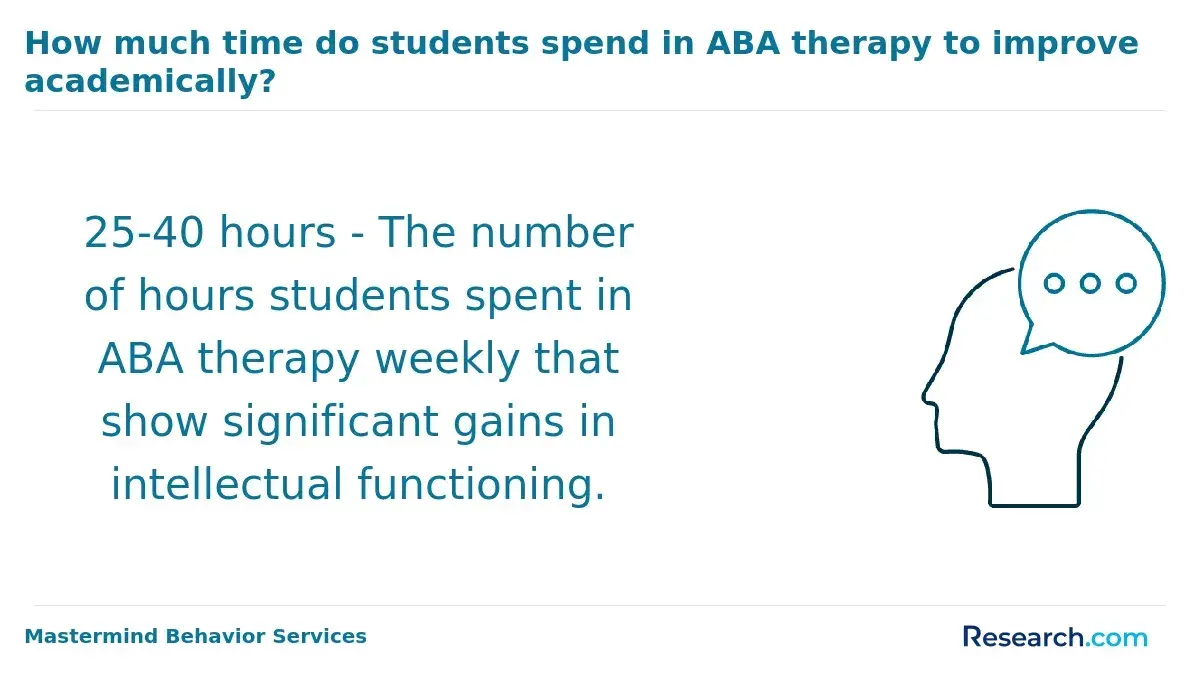
Most occupational therapists can expect the BCBA pathway to take 1 to 2 years, depending on course load, supervision access, work schedule, and whether the therapist already meets the graduate-degree requirement. The two largest time drivers are ABA coursework and the supervised experience requirement of at least 1,500 hours.
Full-time students may finish coursework in about 12 months, especially in accelerated formats. Working OTs who take one or two courses at a time often need 18 to 24 months. Supervised fieldwork typically takes 9 to 18 months, depending on how many qualifying hours the candidate can complete each month and whether supervision is available consistently.
Some OTs can move faster by completing supervised hours in a current workplace, such as a school, clinic, hospital, or autism services program. However, the setting must support behavior analytic activities and supervision must meet BACB requirements. General OT clinical hours do not automatically qualify. Candidates should clarify this before relying on their current caseload.
Program format also affects timing. Online and accelerated programs may make the academic portion easier to schedule around employment. Campus-based programs may offer more structured pacing and local supervision connections. Either way, the program must align with current BACB verification standards so the candidate remains eligible for the BCBA exam.
Demand is one reason many clinicians want an efficient pathway. There were 65,300 BCBA job postings recorded in 2023, nearly matching the 66,300 certificants recognized by the BACB as reported by BH Business. OTs considering a shorter route may compare options such as a BCBA accelerated program, but speed should not come at the expense of supervision quality, exam preparation, or eligibility documentation.
Typical timeline considerations
- Fastest realistic path: about 12 months for full-time coursework, with fieldwork planned aggressively and supervised consistently.
- Common working-professional path: 18 to 24 months, especially for OTs balancing employment, family responsibilities, and part-time study.
- Main cause of delays: starting coursework without a clear fieldwork site or qualified BCBA supervisor.
- Best planning move: map coursework, supervision hours, documentation deadlines, and exam preparation before enrolling.
The main difference is how the coursework is delivered, how much structure the student receives, and how fieldwork support is arranged. Both online and campus-based BCBA programs can prepare occupational therapists for certification if they meet BACB requirements. The better choice depends on your work schedule, location, learning style, supervision access, and need for faculty interaction.
Online BCBA programs are often the most practical option for licensed OTs who cannot relocate or reduce work hours. Asynchronous lectures, remote discussion boards, and flexible assignment deadlines can make it easier to continue clinical practice while completing ABA coursework. This flexibility is valuable for professionals in rural areas or those working in schools, clinics, hospitals, or home-based settings. The trade-off is that online students must be disciplined, proactive, and comfortable managing deadlines without frequent in-person reminders.
Campus-based programs offer more direct contact with faculty and peers. They may provide a predictable schedule, in-person discussions, local professional networking, and easier access to university-affiliated clinics, schools, hospitals, or research projects. For students who learn best through face-to-face interaction or want a structured academic environment, campus programs can be a strong fit. The trade-off is less flexibility and potentially higher commuting or relocation costs.
Fieldwork is the issue that deserves the most attention. Online programs often expect students to find appropriate local settings and supervisors, although some provide placement guidance. Campus programs may have established partnerships with clinics, hospitals, and schools, which can simplify placement. Because occupational therapists work in schools (19%), clinics (23%), and hospitals (26%)-settings often aligned with ABA environments-placement feasibility should be a central part of the decision.
Cost can also differ. Online programs may reduce commuting or relocation expenses but require reliable technology and strong independent study habits. Campus programs may provide easier access to university resources, faculty offices, libraries, and local networks. Certification recognition depends on whether the program meets required standards, not whether classes were online or in person.
OTs comparing options can review the best online ABA masters programs while also asking each school direct questions about supervision, documentation, exam preparation, and outcomes.
How to choose between online and campus-based formats
- Choose online if you need maximum schedule flexibility and already have a realistic fieldwork plan.
- Choose campus-based if you want structured support, in-person faculty access, and local placement connections.
- Be cautious with any program that cannot clearly explain how students complete supervised fieldwork.
- Do not assume lower tuition means lower total cost; include supervision fees, travel, technology, and lost work time.
BCBA pathway programs for occupational therapists combine formal ABA coursework with supervised fieldwork. Coursework builds the conceptual and technical foundation; clinical experience shows that the candidate can apply behavior analysis ethically and effectively with real clients, teams, and data.
The coursework generally totals about 270 classroom hours and is expected to cover behavior assessment, intervention strategies, data analysis, experimental design, ethical practice, measurement, behavior-change procedures, and professional responsibilities. Some OTs complete this coursework through a graduate certificate or standalone sequence, while others enroll in a master’s, doctoral, or post-professional program that includes ABA preparation.
Clinical experience is equally important. Occupational therapists pursuing BCBA certification need a minimum of 1,500 hours of supervised independent fieldwork or practicum under a qualified BCBA supervisor. These hours should include behavior analytic activities such as conducting assessments, defining target behaviors, collecting and interpreting data, designing intervention procedures, training implementers, monitoring outcomes, and revising plans when data indicate that change is needed.
OTs should not confuse occupational therapy fieldwork with BCBA fieldwork. Traditional OT clinical placements may develop strong therapeutic reasoning, but they do not automatically satisfy behavior analysis supervision requirements. To count, fieldwork must be supervised and documented according to BACB standards.
Program structures vary. Some pathways are designed for working clinicians and offer evening, hybrid, or online coursework. Others are embedded in broader graduate degrees or post-professional doctoral options. The occupational therapy field is also changing; almost all OT programs now offer doctoral entry-level degrees, which may make it easier for some institutions to integrate advanced behavioral training.
Core areas OTs should expect to study
- Behavior measurement and data collection
- Experimental design and interpretation of intervention effects
- Functional behavior assessment and behavior support planning
- Reinforcement, prompting, shaping, chaining, and other behavior-change procedures
- Ethical and professional conduct for behavior analysts
- Supervision, caregiver training, and interdisciplinary collaboration
Before enrolling, confirm that the coursework is accepted for BCBA eligibility and that the program can explain how students complete and document supervised practical experience. This is especially important for OTs who plan to use an existing workplace for fieldwork hours.
BCBA certification costs for occupational therapy professionals vary by institution, delivery format, number of credits required, and whether supervision is included. In 2026, tuition for coursework required under BACB standards typically ranges from $4,000 to $12,000. The total out-of-pocket cost can be higher once supervision, application fees, exam fees, books, technology, and travel are included.
Established universities often charge between $8,000 and $12,000 for full coursework sequences. Some hybrid or online programs may cost between $4,000 and $7,000, which can be attractive to working OTs who need flexibility. Additional supervision fees and BACB exam/application fees usually total $1,200 to $1,500.
Program pricing can be difficult to compare because some schools charge per credit hour, commonly about $600, while others use a flat rate for the full sequence. A per-credit model may look affordable at first but become more expensive if you need extra prerequisite or graduate credits. A flat-rate program may be easier to budget for, but only if it includes all required courses and does not add hidden fees.
The Verified Course Sequence (VCS) pathway ended on December 31, 2025, and universities now directly attest to coursework completion. According to Applied Behavior Analysis Edu, this shift may lead to wider cost variability and quality differences. For occupational therapists, that makes program due diligence more important: verify the institution’s accreditation, ask how coursework completion is documented, and confirm alignment with BACB 5th Edition Task List requirements.
A practical budget range is $5,000 to $13,000 for tuition, supervision, and exams. OTs should also consider indirect costs, including reduced work hours, unpaid time spent completing fieldwork, transportation to supervision sites, and continuing education obligations.
Cost questions to ask before enrolling
- Is tuition charged per credit or as a flat program fee?
- Are supervision hours included, arranged separately, or billed independently?
- What fees are required beyond tuition?
- Does the program provide documentation needed for BCBA eligibility?
- Are employer tuition reimbursement, payment plans, scholarships, or assistantships available?
- Will the schedule allow you to keep working while completing coursework and supervised hours?
Admission requirements vary by school, but BCBA programs targeting occupational therapists usually expect applicants to hold a graduate degree in occupational therapy or another related health, education, psychology, or human services field. Because many OTs already meet the graduate-degree baseline, the admissions review often focuses on transcript fit, clinical background, readiness for ABA coursework, and access to appropriate supervised experience.
Most programs require official transcripts. The admissions team may review whether the applicant has prior coursework in behavior, assessment, intervention, research methods, ethics, or data analysis. If an OT’s prior curriculum does not include enough behavior analysis content, the applicant may still be admitted but required to complete the full ABA coursework sequence or selected prerequisites.
Programs may also request a resume or curriculum vitae, letters of recommendation, a personal statement, and proof of professional licensure or clinical experience. The strongest personal statements explain why the OT wants BCBA certification, how behavior analysis fits the applicant’s current practice, and what client populations or settings the applicant plans to serve.
Standardized tests such as the GRE are occasionally requested, but they are increasingly waived for experienced clinicians. Applicants with school-based, pediatric, autism, developmental disability, mental health, or neurorehabilitation experience may have a clear professional rationale for admission, especially if they can describe prior exposure to behavioral intervention or interdisciplinary behavior support.
Some programs ask whether the applicant already has access to a supervised fieldwork setting. This matters because admission to coursework does not guarantee that the student can complete fieldwork on time. If you plan to use your current workplace, confirm that the setting permits behavior analytic activities and that a qualified BCBA supervisor is available.
Application tips for occupational therapists
- Confirm that your prior degree satisfies the program’s graduate-degree requirement.
- Request transcript reviews early if you are unsure which prerequisites you need.
- Choose recommenders who can speak to clinical judgment, ethics, data use, and readiness for advanced training.
- Use the personal statement to connect BCBA training to your OT practice goals.
- Ask whether the program supports part-time, online, or flexible enrollment for working clinicians.
- Document any supervised experience if you have already worked under a BCBA providing behavioral services.
Demand for professionals with behavior analysis expertise continues to influence admissions interest. Nationwide demand for BCBAs increased 14% year-over-year, expanding career opportunities for occupational therapists with this dual qualification (BH Business / BACB, 2024). Early verification of requirements can prevent delays after admission.
The job outlook for occupational therapists with BCBA certification is strong because the combination fits several high-need service areas: autism intervention, developmental disabilities, school-based behavioral support, pediatric therapy, caregiver training, and integrated healthcare. Employers may value clinicians who can address both functional participation and behavior change using measurable, evidence-based methods.
According to the Bureau of Labor Statistics, behavior analysts are projected to grow by 22% between 2022 and 2032. This demand is closely tied to the need for evidence-based behavioral interventions, especially for individuals with autism spectrum disorder and developmental disabilities in healthcare and educational settings.
Salary potential depends on setting, state, caseload, years of experience, supervision responsibility, and whether the role is primarily OT, ABA, or a hybrid leadership position. Entry-level behavior analysts generally earn between $60,000 and $70,000 annually. Occupational therapists who hold BCBA certification often see salaries ranging from $75,000 to $90,000. Those in supervisory or clinical director roles may earn over $100,000, especially when they manage teams, oversee programs, or provide specialized consultation.
Common employers include schools, private clinics, autism service providers, healthcare organizations, early intervention programs, and multidisciplinary therapy practices. Some dual-credentialed professionals move into training, supervision, program development, consulting, or administrative roles rather than carrying a traditional therapy caseload.
The financial decision should still be evaluated carefully. Student debt remains a significant obstacle, with average loans around $80,000 for occupational therapy graduates. The starting salary-to-debt ratio is about 0.85:1, below the recommended 1:1 threshold cited by Beaming Health (2025). Adding BCBA coursework may improve earning potential, but it can also increase education costs if not planned strategically.
Ways to improve the financial return
- Seek employer tuition reimbursement before enrolling.
- Ask whether your current workplace can support supervised fieldwork.
- Compare programs by total cost, not tuition alone.
- Target roles that recognize both OT and BCBA credentials in compensation.
- Consider leadership, supervision, or program development roles after gaining experience.
- Explore loan forgiveness options if working in qualifying public service or nonprofit settings.
BCBA certification can increase marketability and create new career options, but the best return usually comes from aligning the credential with a clear practice niche and a realistic salary plan.
Program quality matters because BCBA eligibility depends on meeting specific education and coursework standards. Occupational therapists should verify both institutional legitimacy and behavior analysis alignment before enrolling. A program that is convenient or inexpensive is not a good choice if it cannot provide the documentation needed for certification.
Start with institutional accreditation. Most reputable programs are housed in universities with regional accreditation, such as from the Higher Learning Commission or another recognized accrediting agency. Institutional accreditation helps confirm that the school meets broader academic and administrative standards.
Next, verify the behavior analysis coursework pathway. Earlier candidates often looked for programs listed as a Verified Course Sequence (VCS) on the official BACB website. Because the Verified Course Sequence (VCS) pathway ended on December 31, 2025, applicants should confirm the current process the university uses to attest coursework completion and how that documentation supports BCBA exam eligibility. If a school still references VCS language, ask for clarification about how it applies to 2026 applicants.
Faculty qualifications also matter. Strong programs employ instructors with BCBA credentials, doctoral preparation or advanced graduate expertise, applied supervision experience, and active involvement in behavior analysis practice or research. For OTs, it is especially helpful when faculty understand interdisciplinary healthcare, school-based practice, developmental disabilities, or autism services.
Students should also review supervision support. Some programs teach coursework only and leave fieldwork entirely to the student. Others offer placement guidance, supervisor networks, or integrated practicum options. Because at least 1,500 supervised hours are required, weak supervision planning can delay certification even after coursework is complete.
Quality checks before enrolling
- Confirm the institution’s regional accreditation status from a recognized agency.
- Ask how the program documents coursework completion for BACB eligibility in 2026.
- Review faculty credentials, including BCBA status and applied experience.
- Ask whether the curriculum aligns with current BCBA standards and the BCBA Task List.
- Request information about supervised fieldwork support.
- Review exam preparation resources, graduate support, and available outcome data.
- Ask about job placement, alumni roles, and employer partnerships.
Employment and exam outcomes can also signal quality, though they should be interpreted carefully. According to Beaming Health (2025), 95% of occupational therapy graduates find jobs within six months, and the NBCOT first-time pass rate is 98%. These figures show strong OT employment and licensure outcomes, but BCBA candidates should still ask each ABA program for behavior analysis-specific outcomes, including exam preparation support and graduate success.
What career roles and specializations are available after completing the BCBA pathway?
After completing the BCBA pathway, occupational therapists can pursue roles that combine functional rehabilitation, participation-focused care, and applied behavior analysis. The most common opportunities are in autism services, pediatric therapy, developmental disability programs, school consultation, behavioral health, early intervention, and interdisciplinary clinical leadership.
Many dual-credentialed clinicians work as clinical behavior analysts, designing interventions for individuals with developmental disabilities, autism spectrum disorder, or significant behavioral challenges. Others remain primarily in OT roles but use ABA expertise to improve caregiver training, treatment planning, behavior support, and data-based decision-making.
In educational settings, BCBA-certified OTs may help develop behavior support plans, consult with teachers and paraprofessionals, train school teams, and align behavior strategies with participation goals. In healthcare or clinic settings, they may support clients with feeding challenges, self-care barriers, transitions, aggression, self-injury, or other behaviors that interfere with therapy participation and daily functioning.
Some OTs move into supervision and leadership. These roles may involve training RBTs or therapy staff, overseeing treatment plans, evaluating program outcomes, managing compliance, or building integrated OT-ABA service models. Others specialize in caregiver coaching, telehealth consultation, program evaluation, research, policy, or administrative leadership within behavioral health organizations.
Projections estimate the occupational therapy workforce will grow by 16% to reach 183,000 practitioners by 2030, driven by rising demand for behavioral health services (Beaming Health, 2025). This growth may create more opportunities in community programs, telehealth, schools, and integrated care models that blend occupational therapy with behavior analysis.
Practical career pathways include:
- Autism services clinician: supports skill acquisition, behavior reduction, caregiver training, and interdisciplinary treatment planning.
- School-based behavior consultant: helps teams design classroom behavior supports and align interventions with functional participation goals.
- Early intervention specialist: combines developmental, occupational, and behavior analytic strategies for young children and families.
- Clinical supervisor or program manager: oversees treatment quality, staff training, documentation, and outcome monitoring.
- Integrated pediatric therapy provider: uses OT and ABA methods to address self-care, play, feeding, transitions, communication-related behavior, and participation.
- Behavioral health consultant: works with healthcare or community teams on complex behavior plans and environmental supports.
- Research, training, or policy professional: contributes to program evaluation, staff education, service design, or advocacy in behavioral health systems.
The best specialization depends on your prior OT experience, preferred population, tolerance for supervisory responsibility, and state practice rules. For many clinicians, the strongest career strategy is to keep a clear OT identity while using BCBA training to add measurable behavior-change expertise to complex cases.
Other Things You Should Know About Applied Behavior Analysis
The Behavior Analyst Certification Board, or BACB, sets the BCBA requirements in 2027. Candidates must meet BACB coursework, supervised fieldwork, and examination rules before they can apply for certification and sit for the BCBA exam.
Occupational therapists who do not meet the BCBA requirements in 2027 can pursue additional coursework in ABA-approved programs, gain fieldwork experience under a certified supervisor, or seek alternative credentials in related fields to enhance their qualifications for future attempts.
Supervision must be conducted by a qualified BCBA or BCBA-D who oversees the trainee's development of competency in applied behavior analysis. Occupational therapists typically complete a set number of supervised experience hours, which can be accrued in clinical or educational settings. This ensures compliance with the Behavior Analyst Certification Board's standards for ethical and effective practice.
Occupational therapists must complete 2,000 hours of supervised fieldwork to qualify for BCBA certification in 2027. The fieldwork must be under the supervision of a BCBA-certified professional and align with the guidelines set by the Behavior Analyst Certification Board (BACB).
- Occupational Therapist Salary, Career Path, and ABA Overlap https://www.appliedbehavioranalysisedu.org/jobs-related-to-applied-behavior-analysis/what-is-occupational-therapy-and-how-does-it-intersect-with-applied-behavior-analysis/
- BCBA Certification Programs Overview | True Progress Therapy https://trueprogresstherapy.com/blog/bcba-certification-programs/
- How To Become A Board Certified Behavior Analyst (BCBA) https://www.goldstarrehab.com/parent-resources/how-to-become-a-board-certified-behavior-analyst-bcba
- BCBA vs Occupational Therapy Certifications (OTR): 2026 Complete Guide https://flashgenius.net/blog-article/bcba-vs-occupational-therapy-certifications-otr-2026-complete-guide
- BCBA Career Path To Take https://www.allaboutaba.com/blog/bcba-career-path-to-take
- BCBA Career Path To Take | Advanced Therapy Clinic https://www.advancedtherapyclinic.com/blog/bcba-career-path-to-take
- How To Become An ABA Therapist | Above and Beyond Therapy https://www.abtaba.com/blog/become-an-aba-therapist
- The Role of a BCBA in ABA Therapy https://blossomchildrenscenter.com/the-role-of-a-bcba-in-aba-therapy/
- Choosing the Right BCBA Career Path | Advanced Autism Services https://www.advancedautism.com/post/bcba-career-path-to-take
- Occupational Therapy Meets Behavior Analysis (with Shalini and Sumanta Das, BCBAs & OTs) https://behavioralcollective.com/podcast/occupational-therapy-meets-behavior-analysis/