2027 Is a BCBA Master's Worth the Cost

Co-Founder and Chief Data Scientist
Choosing a BCBA master's program is not just a school decision; it is a career-change decision. If your degree is in education, psychology, counseling, social work, healthcare, or another field, you may be asking whether the time, tuition, supervised fieldwork, and certification process will lead to a role that is stable, well paid, and aligned with the work you want to do.
A master's route can be worthwhile when it directly supports your goal of becoming a Board Certified Behavior Analyst, supervising behavior technicians, designing behavior intervention plans, or moving into clinical leadership. It may be less efficient if you only want a general introduction to applied behavior analysis or if your target role does not require BCBA certification.
This guide explains what a BCBA is, when a master's degree is required, how much programs may cost, how long they typically take, what the curriculum covers, and how to compare online and on-campus options. It also outlines admissions expectations, common career paths, salary and job outlook information, and the key accreditation checks to make before enrolling.
Key Things You Should Know
- Obtaining a BCBA master's in 2026 offers a median salary of approximately $70,000, with 20% job growth projected through 2032, reflecting robust demand nationwide.
- The degree provides specialized applied behavior analysis skills necessary for certification, a requirement for clinical and educational roles impacting developmental and behavioral disorders.
- Costs vary widely; however, increased earning potential and employment stability often offset the average $30,000-$50,000 tuition investment over time.
What is a BCBA and why pursue a master's?
A Board Certified Behavior Analyst, or BCBA, is a graduate-level behavior analysis professional who assesses behavior, designs intervention plans, evaluates data, and supervises behavior-change services. BCBAs often work with children and adults with autism, developmental disabilities, learning needs, or challenging behaviors, but the credential can also apply in schools, clinics, homes, community programs, and organizational settings.
Pursuing a master's degree matters because BCBA certification is not an entry-level credential. The role requires advanced preparation in applied behavior analysis, ethics, assessment, intervention design, supervision, and research-informed decision-making. A master's program is intended to build the clinical judgment needed to select interventions responsibly, monitor outcomes, and adjust treatment when the data show that a plan is not working.
Typical BCBA master's programs cover behavior assessment, ethical practice, measurement, data analysis, behavior-change procedures, supervision, consultation, and research methods. Students learn how to write individualized support plans, evaluate treatment effectiveness, and work with families, teachers, clinicians, and direct-care staff.
The credential may be especially valuable for professionals who want to move from direct service into assessment, case oversight, clinical leadership, school consultation, or private practice pathways. It can also be a strong fit for educators, psychology graduates, special education professionals, and registered behavior technicians who want broader authority and responsibility in ABA service delivery.
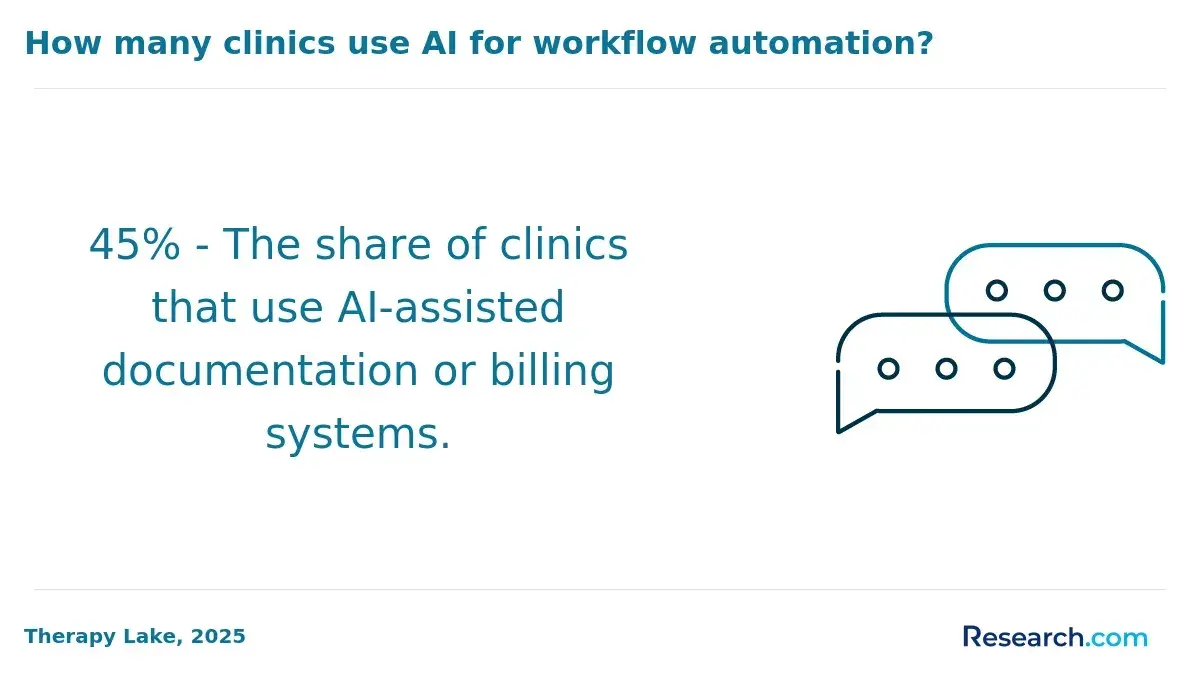
Employment demand is one reason many students consider the investment. Job vacancies increased by 45% year-over-year in 2025, far outpacing many allied health fields, according to the Burning Glass Institute Labor Insight Report, Q4 2025. That demand does not guarantee a specific job or salary, but it does show a strong market need for qualified behavior analysts.
Before enrolling, compare your target career with the credential's requirements. If you want to provide or supervise ABA services as a BCBA, a master's pathway is central. If you are still exploring the field, review program formats, supervision expectations, and online BCBA certification programs before committing to a full degree.
Is a master's degree required to become a BCBA?
Yes. A master's degree is required to become a Board Certified Behavior Analyst. The Behavior Analyst Certification Board (BACB) requires candidates to hold a graduate-level degree in behavior analysis, education, psychology, or a related field, along with approved coursework, supervised fieldwork, and successful completion of the certification exam.
The degree alone is not enough. Students must make sure their coursework aligns with BACB requirements and that their fieldwork is completed under appropriate supervision. Many delays in certification happen because students choose a program that looks relevant but does not clearly support the required coursework or supervised experience pathway.
Common master's pathways to BCBA eligibility
- A master's program in Applied Behavior Analysis designed specifically for BCBA preparation.
- A master's degree in psychology, education, or special education with coursework aligned to BACB requirements.
- A combined or specialized graduate program that includes both the degree and certification preparation.
Students should confirm how each program documents coursework, how supervision is arranged, and whether the school provides clear guidance on exam eligibility. State rules and employer requirements can add additional expectations, so applicants should also check local licensure or practice requirements before choosing a program.
The career value of meeting these requirements can be significant. According to the Behavior Analyst Certification Board BACB Certificant Registry Salary Survey, 2025, new BCBAs earned a median starting salary of $82,500, a 39% increase over the previous year, fueled by workforce shortages.
If you are comparing programs, look beyond the degree title. Review curriculum alignment, supervision support, exam preparation, and outcomes. A useful starting point is a list of BCBA degree programs and schools that can help you compare in-person and online options.
How much does a BCBA master's program cost?
The cost of a BCBA master's program varies widely by institution type, delivery format, residency status, and whether the program includes fieldwork support. Affordable online BCBA-eligible master's degrees typically cost around $19,800 in total tuition, while premium private institutions can charge more than $50,000 for the full program.
Tuition is only one part of the real cost. Students should also budget for books, technology fees, application fees, exam-related costs, supervision fees if not included, practicum expenses, background checks, travel, and any income reduction caused by taking fewer work hours while studying.
| Cost factor | Why it matters | Questions to ask before enrolling |
| Tuition | This is usually the largest direct expense and can differ sharply between public, private, online, and campus programs. | What is the total program tuition, not just the per-credit price? |
| Supervised fieldwork | Fieldwork is required for certification eligibility, and some students pay separately for supervision. | Is supervision built into the program, arranged through an employer, or paid out of pocket? |
| Program pace | Accelerated formats may reduce time in school but can limit work hours. | Can I realistically manage the course load while completing fieldwork? |
| Financial aid | Scholarships, employer tuition benefits, federal aid, and payment plans can change the net cost. | What aid is available, and what costs are not covered? |
| Indirect expenses | Commuting, relocation, childcare, and lost wages can make a lower-tuition program more expensive in practice. | What will this program cost me in time, travel, and missed income? |
Online and part-time programs may help working professionals reduce commuting or relocation costs. However, lower tuition should not be the only deciding factor. A cheaper program that offers weak advising, unclear fieldwork support, or poor exam preparation can cost more in delays and retakes.
To evaluate return on investment, compare the total cost of attendance with your likely career path, local job market, and expected timeline to certification. Students who want a shorter route may also compare an accelerated BCBA program, but speed should be weighed against workload, fieldwork access, and exam readiness.
The typical duration of a BCBA master's program ranges from 1.5 to 3 years. Full-time students often finish in about two years, while part-time students may take up to three years or more. Accelerated programs may allow completion within 12 to 18 months, but they usually require a heavier course load and strong time management.
The total timeline depends on more than the academic calendar. BCBA preparation also includes supervised fieldwork, and the availability of approved placements or qualified supervisors can affect how quickly a student becomes exam-ready. A program that finishes coursework quickly may still leave students needing additional time to complete fieldwork requirements.
| Program format | Typical timeline | Best fit | Trade-off |
| Accelerated | 12 to 18 months | Students with flexible schedules, strong academic preparation, and access to fieldwork. | Less room for work, family demands, or delays in supervision. |
| Full-time | About two years | Students who want a balanced but steady path to completion. | May still require careful planning around fieldwork hours. |
| Part-time | Up to three years or more | Working professionals and students with family or financial obligations. | Longer time before certification and potential salary gains. |
The financial commitment to earning a BCBA master's degree averages around $30,000. However, according to AppliedBehaviorAnalysisEdu.org, certificants often recover this investment within 12 months due to an average annual salary increase of roughly $33,000 compared to registered behavior technician roles.
When comparing timelines, ask each program how coursework and fieldwork are sequenced. The best schedule is not always the shortest one; it is the one you can complete successfully while maintaining strong supervision, ethical practice, and exam preparation. Prospective students can compare formats by reviewing behavioral science masters options that match different schedules and learning preferences.
A BCBA master's curriculum is designed to prepare students to assess behavior, design evidence-based interventions, use data to make decisions, and practice within ethical and professional standards. The strongest programs connect theory with applied casework so students learn not only what behavior-analytic concepts mean, but how to use them responsibly with real clients and systems.
Coursework commonly includes behavior assessment, measurement, experimental design, data collection, intervention planning, behavior-change procedures, ethics, supervision, consultation, and research methods. Students also learn how to conduct functional behavior assessments, interpret behavior patterns, and build plans that are individualized rather than generic.
Core topics students should expect
- Behavior principles: reinforcement, punishment, extinction, stimulus control, motivating operations, and related concepts.
- Assessment: functional behavior assessment, preference assessment, skills assessment, and behavior measurement.
- Intervention design: antecedent strategies, consequence strategies, skill acquisition, behavior reduction, and generalization planning.
- Ethics: client dignity, informed consent, scope of competence, supervision responsibilities, documentation, and professional boundaries.
- Research and data analysis: single-case design, visual analysis, treatment evaluation, and data-based decision-making.
- Supervision and consultation: training staff, monitoring treatment fidelity, collaborating with families, and working across schools or clinical teams.
Many programs use case examples involving autism spectrum disorder, developmental disabilities, educational interventions, and challenging behavior in clinical or school settings. Students may also encounter applications such as discrete trial training, naturalistic teaching, verbal behavior interventions, caregiver training, and organizational behavior management.
Curriculum relevance can vary by region and employer demand. For example, California's BCBA salaries average $105,200, 78% above the national median, while rural Midwest states average $68,400 (Source: BLS Occupational Employment Statistics, SOC 21-1018, May 2025). Students planning to work in a specific state or setting should look for programs with practicum partnerships, faculty expertise, and case training aligned with that job market.
Yes. You can earn a BCBA master's degree online, on campus, or through a hybrid format. The best choice depends on your schedule, location, learning style, supervision access, and need for in-person support. Format alone does not determine quality; certification alignment, fieldwork support, faculty expertise, and student outcomes matter more.
| Format | Main advantages | Possible drawbacks | Best for |
| Online | Flexible scheduling, no relocation, often easier to combine with employment. | Requires self-discipline and a clear plan for supervised fieldwork. | Working adults, career changers, and students without a nearby campus program. |
| On-campus | Face-to-face faculty access, structured schedule, peer networking, and campus resources. | May require commuting, relocation, or reduced work hours. | Students who prefer in-person learning and direct campus support. |
| Hybrid | Combines online flexibility with in-person intensives, labs, or practicum experiences. | Travel or scheduled campus visits may still be required. | Students who want flexibility but also value periodic in-person training. |
Online programs may include recorded or live classes, virtual discussions, case-based assignments, remote advising, and local fieldwork arrangements. On-campus programs may offer closer access to faculty, research labs, clinics, or school partnerships. Hybrid programs can be useful when students want flexibility but still need hands-on training or periodic in-person instruction.
Before choosing an online or campus format, ask how the program verifies fieldwork sites, trains supervisors, tracks hours, and prepares students for the certification exam. A flexible program is only helpful if it also provides enough structure to keep students on track.
All programs must meet Behavior Analyst Certification Board standards to qualify you for BCBA certification. Job growth for BCBAs is strong, with the U.S. Bureau of Labor Statistics projecting a 22% increase in ABA therapist roles through 2030, adding about 28,000 new positions. This demand makes accessible program formats important, but students should still verify certification readiness before enrolling.
BCBA master's admission requirements typically include a bachelor's degree from an accredited institution, official transcripts, letters of recommendation, and a statement of purpose. Many programs prefer applicants with a background in psychology, education, special education, human services, or a related field, but some admit students from other majors if they show relevant experience or complete prerequisites.
A minimum GPA around 3.0 is common, though requirements vary by school. Some programs may request a resume, interview, writing sample, or documentation of experience with children, individuals with disabilities, behavioral services, education, or clinical support. GRE requirements have been waived by several schools recently, but applicants should verify the policy for each program.
Application materials to prepare
- Official undergraduate transcripts from accredited institutions.
- Letters of recommendation from professors, supervisors, or professionals who can speak to your readiness for graduate work.
- A statement of purpose explaining why you want to study applied behavior analysis and how the degree fits your career goals.
- A resume showing relevant work, volunteer, research, teaching, or clinical experience.
- Prerequisite coursework, if required by the program.
Applicants should also evaluate the program's certification support before applying. Students must verify completion of coursework aligned with the BACB's Verified Course Sequence (VCS) standards, including principles, ethics, research methods, and supervised practice in applied behavior analysis. Fieldwork hours under a BCBA supervisor are essential to prepare for certification eligibility.
The high success rate of online BCBA programs-92% first-time pass rates in the most recent BACB exam compared to 85% for on-campus programs-reflects strong curricula and structured supervision (Source: BACB Annual Exam Performance Data, 2025 Report). Applicants should ask each school how it supports exam preparation, supervision matching, fieldwork tracking, and students who are new to ABA.
BCBA certification can lead to roles in clinical services, schools, healthcare organizations, home-based ABA programs, community agencies, and organizational consulting. Most positions focus on behavior assessment, intervention planning, staff supervision, treatment evaluation, and collaboration with families or interdisciplinary teams.
Common jobs for BCBAs
- Behavior analyst: Conducts assessments, develops behavior intervention plans, reviews data, and adjusts treatment plans.
- Clinical supervisor: Oversees Registered Behavior Technicians (RBTs), trains staff, monitors treatment fidelity, and supports case quality.
- School-based behavior specialist: Works with teachers, administrators, families, and support teams to address learning and behavior needs.
- Autism services clinician: Designs and supervises ABA programs for individuals with autism spectrum disorder.
- Program coordinator: Manages service delivery, documentation, scheduling, compliance, and quality improvement.
- Clinical director: Leads clinical teams, develops policies, supervises BCBAs, and oversees program outcomes.
- Consultant: Provides behavior-analytic guidance to schools, agencies, employers, or community organizations.
Some BCBAs work outside traditional autism services. Organizational behavior management, correctional settings, adult disability services, behavioral health programs, and corporate training can also use behavior-analytic expertise. These paths may require additional experience, specialized supervision, or knowledge of the setting.
Telehealth has also expanded remote work options for assessments, parent training, supervision, and consultation. However, remote roles still require ethical service delivery, appropriate client fit, privacy protections, and compliance with state and employer rules.
Financial barriers to entering the field may be reduced through employer support. According to the Action Behavior Centers Graduate Programs Survey, 68% of ABA providers offered partial or full tuition assistance for BCBA master's programs in 2025, reducing student costs by up to 50%. For working RBTs or direct-care staff, employer tuition assistance can make graduate study more realistic while strengthening retention after certification.
When comparing jobs, look at more than the title. Caseload size, supervision expectations, billable-hour requirements, mentorship, travel, documentation load, and ethical support can strongly affect job satisfaction and long-term career growth.
BCBA salaries vary by experience, employer, setting, caseload, supervisory responsibility, and location. Data from the Salary.com BCBA Compensation Report, Q1 2026, shows that BCBAs at the 90th percentile earned a median salary of $118,000 in 2025. Those progressing into leadership roles, such as clinical directors, can expect salaries around $145,000 after approximately five years in the field.
Entry-level BCBA salaries typically range from $60,000 to $75,000, depending on region and employer. Higher compensation is more common in areas with strong demand, higher costs of living, staffing shortages, or larger clinical organizations. Leadership roles usually pay more because they involve supervision, compliance, program development, quality assurance, and responsibility for other clinicians' work.
| Career stage or role | Salary information stated | What affects pay |
| Entry-level BCBA | Entry-level BCBA salaries typically range from $60,000 to $75,000. | Region, employer type, caseload, prior ABA experience, and supervision responsibilities. |
| Experienced BCBA | BCBAs at the 90th percentile earned a median salary of $118,000 in 2025. | Specialization, productivity expectations, market demand, and clinical complexity. |
| Clinical director | Clinical directors can expect salaries around $145,000 after approximately five years in the field. | Team size, multi-site oversight, compliance duties, and leadership scope. |
The job outlook for behavior analysts remains strong because schools, private clinics, healthcare providers, and home-based service agencies continue to need qualified professionals. Demand is tied to autism services, developmental disability supports, behavioral health needs, and the broader use of data-driven behavioral interventions.
Job opportunities are often concentrated in urban and suburban areas with established behavioral health services, though rural and underserved areas may also have meaningful demand. Candidates who are willing to supervise staff, work across settings, or take on leadership responsibilities may have stronger advancement options.
Salary should be considered alongside working conditions. A high-paying role may include large caseloads, extensive travel, high billable-hour expectations, or limited mentorship. A lower-paying role may be more sustainable if it offers strong supervision, manageable caseloads, ethical support, and clear advancement paths.
How to choose an accredited BCBA master's program?
Choosing an accredited BCBA master's program starts with certification alignment. The program should clearly explain how its coursework, supervision support, and degree requirements connect to BCBA eligibility. Accreditation by the Behavior Analyst Certification Board (BACB) is essential when selecting a BCBA master's program. Such accreditation ensures the curriculum includes the required 270 hours of coursework and supervised practical experience that meet BACB standards.
Do not rely only on a program's title. A degree called psychology, education, special education, or applied behavior analysis may or may not include the exact coursework and advising needed for BCBA preparation. Ask direct questions and get answers in writing before enrolling.
Program factors to compare
- Certification alignment: Confirm the program's coursework and fieldwork guidance support BCBA eligibility.
- Faculty expertise: Look for instructors with behavior analysis credentials, research activity, clinical experience, and supervision experience.
- Fieldwork support: Ask whether the program helps students find supervisors, tracks hours, and provides practicum partnerships.
- Exam preparation: Review board exam pass rates, review resources, advising, and remediation support.
- Format and schedule: Compare online, on-campus, hybrid, part-time, full-time, and accelerated options.
- Student outcomes: Consider graduation rates, job placement support, alumni roles, and employer relationships.
- Cost and aid: Compare tuition, fees, supervision costs, scholarships, loans, payment plans, and employer benefits.
- State considerations: Check program location, licensure reciprocity across states, and local practice requirements.
Graduation and board exam pass rates can be useful indicators; programs with pass rates above 75% reflect thorough preparation. Career services and internship opportunities can also matter, especially for students changing careers or entering ABA without an established employer connection.
The demand for credentialed BCBAs has increased sharply, driven by a 52% rise in ABA service needs over five years. This trend aligns with the U.S. autism prevalence reaching 1 in 31 children by 2025 (CDC Autism and Developmental Disabilities Monitoring Network, 2025 Report). In a growing field, the safest choice is a program that is transparent about accreditation, certification requirements, supervised experience, costs, and outcomes.
Other Things You Should Know About Applied Behavior Analysis
A BCBA master's program usually requires around 36 to 48 credit hours to complete. This includes coursework in behavior analysis, research methods, and ethics, fulfilling the prerequisites set by the Behavior Analyst Certification Board for licensure eligibility.
To enroll in a BCBA master's program in 2027, candidates generally need a bachelor's degree in psychology or a related field. Additionally, some programs may require relevant professional experience or completion of specific undergraduate coursework in behavior analysis.
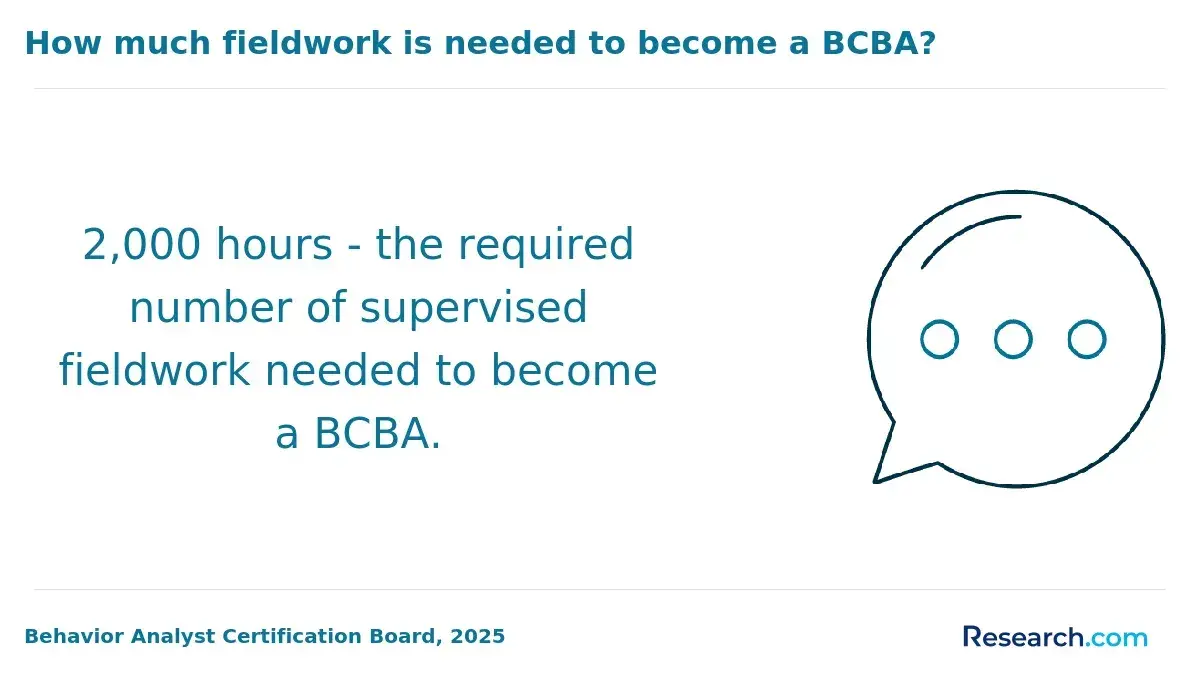
Under the 2027 BACB pathway, supervised fieldwork must total 2,000 hours, or 1,500 hours for concentrated fieldwork. Candidates also need a qualifying master’s degree and verified course sequence before scheduling the BCBA exam through the Behavior Analyst Certification Board.
- Can You Become a BCBA Without a Master's? Find Out Here https://www.connectncareaba.com/blog/bcba-without-masters-degree
- Behavior Analysis Graduate Programs | Masters in ABA Degrees https://www.appliedbehavioranalysisedu.org/masters-in-applied-behavior-analysis/
- BCBA Jobs & Board Certified Behavior Analyst Careers - LEARN Behavioral https://learnbehavioral.com/careers/advance-your-career
- 25+ Affordable ABA/BCBA Online Programs (Masters & Certs) https://abamastersprograms.org/affordable-online-aba-masters-programs/
- BCBA Salary by State | Flywheel Centers https://flywheelcenters.com/bcba-salary-breakdown/
- How Long Does It Take to Become a BCBA? https://bluegemsaba.com/how-long-does-it-take-to-become-a-bcba/
- The Rate of Job Growth for BCBAs (In 2023) https://www.crossrivertherapy.com/behavioral-analysts/job-growth
- Is Pursuing BCBA Certification a Smart Investment? https://blossomabatherapy.com/blog/is-bcba-certification-worth-it
- Is Becoming a BCBA a Good Career in 2026? Salary, Growth, and What to Expect https://mindfulsproutsaba.com/blog/is-becoming-a-bcba-a-good-career-in-2026-salary-growth-and-what-to-expect/
- BCBA Career Path To Take | Advanced Therapy Clinic https://www.advancedtherapyclinic.com/blog/bcba-career-path-to-take