2027 Understanding ABA Data Collection Before You Start Graduate School

Co-Founder and Chief Data Scientist
Choosing an ABA graduate program is not just a question of tuition, format, or speed. Students also need to know whether they are prepared for the data-heavy work that defines applied behavior analysis. In graduate coursework, supervised fieldwork, certification exams, and clinical practice, behavior analysts are expected to measure behavior accurately, interpret trends, document progress, and make ethical treatment decisions from evidence rather than assumptions.
This guide is for prospective ABA graduate students, career changers, educators, and healthcare professionals who want a clearer view of what ABA training involves before enrolling. It explains how ABA is used in healthcare and education, what admissions and accreditation standards to review, how online and campus formats differ, what credentials graduates may need, and how to compare programs with certification, cost, fieldwork, and career outcomes in mind.
Key Things You Should Know
- Understanding ABA data collection methods is crucial for graduate students to ensure accurate behavior measurement and analysis, essential for evidence-based intervention planning.
- By 2025, over 75% of ABA programs emphasize digital data collection tools, improving real-time tracking and reducing human error in clinical and educational settings.
- Clear knowledge of data reliability, validity, and ethical considerations prepares students for rigorous graduate coursework and certification requirements, including the BACB's updated guidelines effective in 2024.
What is Applied Behavior Analysis and why is it important in modern healthcare and education?
Applied behavior analysis (ABA) is the scientific study and application of learning and behavior principles to improve socially significant behaviors. In practice, ABA professionals observe behavior, define it in measurable terms, collect data, identify environmental factors that influence it, and design interventions that can be tested and adjusted over time.
ABA is most widely associated with services for individuals with autism spectrum disorder, but its use is broader. In education, ABA can support communication, academic engagement, classroom routines, social skills, and reductions in disruptive or unsafe behavior. In healthcare and rehabilitation settings, ABA methods may help patients build adaptive skills, improve treatment adherence, or regain functioning after conditions such as traumatic brain injury or chronic health issues.
The reason ABA matters in modern care systems is that it gives teams a structured way to move from observation to intervention. Rather than relying only on impressions, ABA practitioners use data to answer practical questions: Is the behavior improving? Is the intervention being implemented correctly? Does the client need a different support plan? Are gains generalizing across settings?
The job market for Board Certified Behavior Analysts (BCBA) continues to expand rapidly. In fact, the BCBA employment sector saw a 15% increase in demand, exceeding overall healthcare growth rates (BACB 2025 Employment Report). This demand reflects growing recognition of ABA across schools, clinics, home-based services, community programs, and related behavioral health settings.
For prospective graduate students, the key takeaway is simple: ABA is a data-driven profession. Before entering a program, students should become comfortable with basic measurement concepts, observation procedures, graph interpretation, and ethical documentation. Those comparing degree options may also review affordable online BCBA programs as a starting point for understanding available pathways.
What are the educational requirements and prerequisites for graduate ABA programs?
Most graduate ABA programs require applicants to hold a bachelor's degree, often in psychology, education, special education, social work, human services, or a related field. Some programs admit students from other academic backgrounds, but they may expect applicants to show readiness through prior coursework, work experience, or prerequisite classes.
Common prerequisites include exposure to behavior analysis, research methods, experimental design, statistics, developmental psychology, learning theory, or ethics. Programs may also look for experience in schools, clinics, residential programs, autism services, behavioral health agencies, or research labs. A minimum GPA is often required, typically around 3.0, although admissions standards vary by institution.
Applicants should not evaluate prerequisites only as admissions hurdles. They also indicate the level of preparation needed for graduate work. ABA coursework requires precise reading, technical writing, data interpretation, and the ability to connect behavioral theory to client-centered decisions. Students who enter without a basic understanding of measurement or research design may find the early courses more difficult.
The structure of ABA coursework is also important. Programs that provide dedicated measurement and data collection classes report significantly higher Board Certified Behavior Analyst (BCBA) exam pass rates. Strong preparation in these areas supports both certification readiness and competent supervised practice.
What applicants should verify before applying
- Whether the program accepts their undergraduate major or requires prerequisite coursework.
- Whether admissions require a minimum GPA, professional references, a statement of purpose, or documented experience.
- Whether the curriculum includes explicit coursework in measurement, assessment, data analysis, ethics, and intervention design.
- Whether supervised fieldwork is built into the program or must be arranged independently.
- Whether the program publishes outcomes such as BCBA exam results, graduation rates, or placement information.
Students comparing options can review BCBA programs to understand how different schools structure admissions, coursework, and certification preparation.
How do accreditation standards differ across ABA graduate programs in the United States?
Accreditation and approval status can affect program quality, credit transfer, financial aid eligibility, employer recognition, and certification planning. In the United States, students should distinguish between institutional accreditation and ABA-specific curriculum verification or accreditation. They are related, but they are not the same.
Regional accreditation applies to the college or university as an institution. It is often important for graduate school credibility, transferability of credits, and access to certain forms of financial aid. ABA-specific review focuses more directly on whether the program's curriculum aligns with behavior analysis training expectations. The Behavior Analyst Certification Board (BACB) establishes key curriculum requirements, but not all programs have BACB Verified Course Sequence (VCS) status.
Programs that hold both regional accreditation and BACB VCS verification provide students with clearer evidence that the institution and coursework meet recognized standards. Without BACB VCS approval, students must carefully verify whether the coursework will support their intended certification path. Program rigor, documentation processes, and certification eligibility can differ significantly.
Clinical training and supervision also vary across programs. Some universities mandate 1,000 hours of supervised fieldwork post-coursework, while others require fewer hours or alternative supervision models. These differences can affect how quickly students progress, how much hands-on experience they gain, and how prepared they feel for independent professional responsibilities.
Cost should be weighed alongside accreditation. According to the 2025 Behavioral Health Compensation Report from Salary.com, ABA master's graduates earn a median first-year salary of $75,000, resulting in a 3-year ROI of 180% after average tuition expenses. That potential return is strongest when the program actually supports the student's certification and employment goals.
Accreditation questions to ask before enrolling
- Is the university regionally accredited?
- Does the ABA coursework have BACB Verified Course Sequence status?
- Will the coursework meet current certification requirements for the student's intended credential?
- Who provides supervision, and what documentation system is used?
- Are faculty members experienced in ABA practice, research, ethics, and supervision?
- Does the program publish exam outcomes, alumni employment information, or other student success indicators?
Students who need an accelerated route can compare fast track BCBA programs, but speed should never replace verification of accreditation, supervision quality, and certification alignment.
Online, hybrid, and campus-based ABA graduate programs usually cover similar core concepts, but they differ in scheduling, access to faculty, fieldwork support, peer interaction, and the amount of structure students receive. The best format depends on where the student lives, whether they are working, how they learn best, and whether they already have access to an approved supervised fieldwork setting.
Online ABA graduate programs
Online programs offer the greatest flexibility. Courses may be asynchronous, live online, or a mix of both. This format can work well for working adults, rural students, military-connected learners, or students who cannot relocate. The trade-off is that students may need to be more proactive about arranging supervised practical experience, staying organized, and building professional relationships outside the classroom.
Students considering distance learning can review online applied behavior analysis degree programs to compare how schools structure coursework, supervision support, and student services.
Hybrid ABA graduate programs
Hybrid programs combine online coursework with required in-person sessions, campus intensives, labs, or local practicums. They can be a strong middle option for students who want flexibility but still value face-to-face instruction, direct skills practice, and structured faculty contact. Hybrid formats may be especially useful for students who are new to ABA and want more guided interaction.
Campus-based ABA graduate programs
Campus-based programs require regular in-person attendance and may offer easier access to faculty, research labs, peer cohorts, university clinics, and established practicum partnerships. These programs can be valuable for students who want a more immersive graduate school experience. The disadvantages are less scheduling flexibility, commuting or relocation requirements, and fewer options for students who cannot attend during set class times.
| Format | Best fit | Main trade-off |
| Online | Working adults, remote students, and self-directed learners | Fieldwork and networking may require more independent planning |
| Hybrid | Students who want flexibility plus some in-person support | Campus visits or local requirements may limit convenience |
| Campus-based | Students seeking a structured, immersive environment | Less flexible and may require relocation or commuting |
Career prospects can be strong across formats when the program is well designed and certification-aligned. Notably, 98% of ABA master's graduates secured behavior analyst roles within six months of graduation, with 40% achieving supervisory positions. This data from the BACB 2025 Certificant Registry Outcomes highlights the importance of choosing the format that supports both completion and competent practice.
ABA graduates usually need professional credentials before they can practice independently, bill for services, supervise others, or hold certain clinical roles. The most recognized credential is the Board Certified Behavior Analyst (BCBA), issued by the Behavior Analyst Certification Board (BACB). The BCBA is commonly required for behavior analyst positions in schools, clinics, autism service agencies, healthcare organizations, and private practice settings.
Candidates must have a master's degree from an ABAI-accredited program, complete supervised practicum hours, and pass a comprehensive exam. Maintaining BCBA certification requires ongoing continuing education. Because requirements can change, students should confirm current BACB rules directly before enrolling and again before applying for the exam.
State licensing may add requirements beyond BACB certification. Depending on the state, graduates may need a state license, background check, supervised clinical documentation, additional application materials, or other regulatory approvals. Licensing rules vary by state-for instance, California requires both BCBA certification and a state license, while other states may only mandate certification.
The Board Certified Assistant Behavior Analyst (BCaBA) credential is another pathway for professionals who want behavior analysis roles at the bachelor's level. It requires a bachelor's degree and supervised experience but does not allow for independent practice. BCaBAs typically work under the supervision of a BCBA.
| Credential | Typical education level | Practice scope |
| BCBA | Master's degree | May design behavior programs, supervise staff, conduct assessments, and practice according to certification and state rules |
| BCaBA | Bachelor's degree | May provide behavior analysis services under BCBA supervision |
| State license | Varies by state | May be required in addition to certification for legal practice |
Costs should be part of credential planning. Tuition costs for ABAI-accredited master's programs have risen, with the average 2025 tuition reaching $28,500-a 12% increase from the previous year due largely to expanded practicum requirements essential for certification. These supervised experiences can affect both total cost and time to credentialing.
Before committing to a program, students should check three things: whether the degree supports their intended BACB credential, whether supervised experience will meet documentation standards, and whether their state has separate licensure requirements.
ABA graduate curricula are designed to build competence in behavioral theory, assessment, measurement, intervention, ethics, research design, and supervised practice. The strongest programs do more than teach terminology. They require students to define behavior clearly, choose appropriate measurement systems, analyze data, write behavior plans, evaluate intervention effects, and make ethical decisions in realistic practice scenarios.
Core coursework often includes principles of behavior, behavioral assessment, single-subject research design, intervention planning, ethical and professional conduct, supervision, consultation, and data-based decision-making. Students also study direct and indirect measurement procedures so they can collect reliable and valid data in schools, clinics, homes, and community settings.
Measurement deserves special attention. Since Section C (Measurement) accounts for 12.4% of the 2025 BCBA exam, and data analysis questions have the highest failure rate at 18% (BACB 2025 Test Content Outline Analysis), students should not treat data collection as a minor technical skill. It is central to exam readiness and professional competence.
Common graduate ABA coursework
- Basic principles of behavior and learning theories
- Functional behavior assessment and analysis
- Measurement and data collection techniques
- Behavioral intervention development and implementation
- Ethical and professional conduct in ABA practice
- Single-subject research design and analysis
- Supervision, consultation, and service delivery systems
Clinical experience typically takes place through supervised practicum or fieldwork in settings such as schools, clinics, early intervention programs, behavioral health agencies, or community organizations. Students may observe clients, collect baseline data, assist with intervention implementation, graph behavior change, participate in team meetings, and receive feedback from qualified supervisors.
Good fieldwork placements expose students to the realities of ABA practice: imperfect data, competing priorities, caregiver communication, ethical constraints, cultural considerations, and the need to adjust interventions when data show limited progress. Students should ask programs how fieldwork quality is monitored, how supervisors are selected, and how performance feedback is documented.
Data skills students should expect to practice
- Creating operational definitions of behavior
- Selecting continuous and discontinuous measurement systems
- Designing usable data sheets and digital data collection workflows
- Graphing behavior data clearly
- Using visual analysis to evaluate trends, variability, and level changes
- Checking data reliability and treatment integrity
- Connecting data patterns to ethical clinical decisions
ABA graduate programs typically take two to three years to complete, depending on enrollment status, program structure, fieldwork pacing, and whether the student is pursuing a master's or doctoral degree. Master's degrees usually involve about 60 credit hours finished in 24 to 36 months. Doctoral programs may take over three years because they include advanced research, comprehensive requirements, and dissertation work.
Accelerated programs can shorten the academic timeline, but they are not always easier. Students may need to handle heavier course loads while also completing fieldwork, employment, family responsibilities, and certification documentation. Part-time programs can be more manageable but may extend the path to graduation and credentialing.
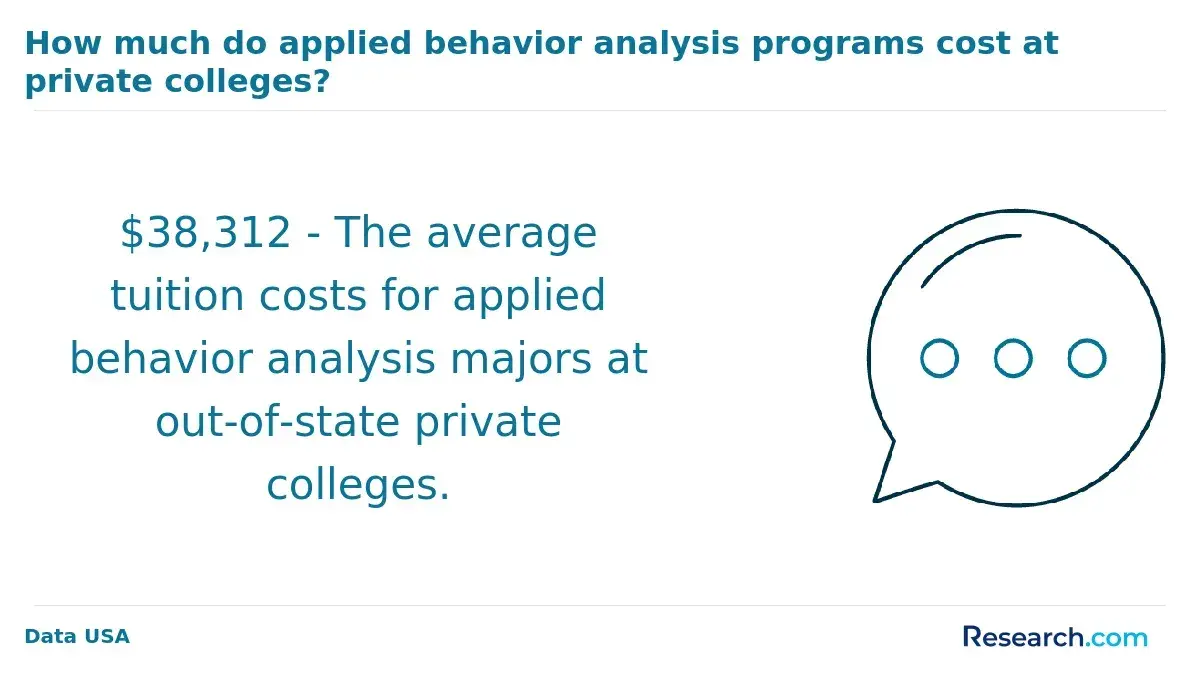
Tuition varies widely by institution, residency status, format, and whether supervision-related expenses are included. On average, ABA master's programs range from $20,000 to $60,000 total. Public universities tend to be more affordable, especially for in-state students, whereas private institutions can exceed $70,000. Students should also budget for textbooks, technology, practicum supervision fees, background checks, travel to fieldwork sites, and Board Certified Behavior Analyst (BCBA) exam fees.
For certification planning, students must also complete supervised fieldwork of 1,500 to 2,000 hours, which can lengthen the timeline if done part-time alongside employment. A program that looks short on paper may still take longer if fieldwork placement is difficult to secure or if supervision hours are not documented correctly.
| Cost or timeline factor | Why it matters |
| Enrollment pace | Full-time study may shorten completion time; part-time study may be more manageable for working students |
| Fieldwork access | Limited placement options can delay certification progress |
| Tuition structure | Per-credit and flat-rate pricing can produce different total costs |
| Supervision fees | Some students pay separately for qualified supervision |
| Residency status | Public universities may charge different rates for in-state and out-of-state students |
According to the 2025 ABA Workforce Survey by Cross River Therapy, BCBAs with skills in visual data analysis earn on average 22% more, around $92,000, compared to $75,000 for generalists. For students weighing cost against career value, this underscores the importance of choosing a program that builds strong data analysis skills rather than only meeting minimum degree requirements.
ABA graduate degree holders can work in clinical, educational, community, research, and organizational settings. The exact job title depends on certification status, state licensing rules, experience level, and employer type. Graduates who become BCBAs may qualify for roles involving assessment, treatment planning, supervision, consultation, and program oversight.
Common roles include Board Certified Behavior Analyst (BCBA), behavior interventionist, behavior specialist, clinical supervisor, clinical director, autism specialist, early intervention specialist, and school behavior specialist. In schools, ABA-trained professionals may support teachers, contribute to Individualized Education Programs (IEPs), conduct behavior assessments, and help teams implement behavior support plans. In clinics or home-based programs, they may design and monitor individualized treatment plans for clients with developmental or behavioral needs.
ABA training can also lead to specialized work outside traditional autism services. Organizational behavior management consultants apply behavior principles to workplace performance, safety, training, and systems improvement. Research coordinators may support studies that evaluate interventions, assessment tools, or service delivery models. Experienced clinicians may move into administration, quality assurance, staff training, or program development.
Examples of ABA-related job titles
- Board Certified Behavior Analyst (BCBA)
- Behavior specialist
- Clinical supervisor
- Clinical director
- Autism specialist
- Early intervention specialist
- School behavior specialist
- Behavior interventionist
- Organizational behavior management consultant
- Research coordinator
Geography can strongly influence both opportunity and pay. The BACB 2025 Geographic Distribution Report shows that 65% of new BCBAs are in five states: Florida, Texas, California, New York, and Massachusetts. Professionals willing to work outside these states may benefit from a 30% salary premium in underserved areas.
Students should think about career fit before choosing a program. Someone aiming for school-based work may value programs with education partnerships and IEP-related training. A student interested in clinical leadership should look for strong supervision, ethics, assessment, and staff management preparation. Those open to underserved regions may find broader opportunities and stronger compensation potential.
The job outlook for board certified behavior analysts (BCBAs) is notably strong, with employment opportunities growing 32% faster than the average for all occupations by 2030, according to the U.S. Bureau of Labor Statistics 2025 Occupational Outlook. Demand is driven by schools, healthcare providers, autism service organizations, behavioral health agencies, and private practices that need professionals trained to assess behavior and design evidence-based interventions.
Salary expectations vary by experience, location, employer type, caseload complexity, and supervisory responsibility. Entry- to mid-level professionals typically earn between $60,000 and $90,000 annually, while experienced BCBAs in leadership or clinical supervision roles may earn over $100,000. In high-cost regions like California and New York, salaries can range from $85,000 to $110,000.
Many BCBAs also increase their income through consultation contracts or private client work, which can add $15,000-$30,000 per year. However, independent or contract work may also involve additional responsibilities, such as liability coverage, billing, documentation, scheduling, business development, and compliance with state practice rules.
Salary growth is often tied to more than years of experience. Employers may value BCBAs who can supervise staff effectively, manage complex cases, communicate with families and interdisciplinary teams, maintain high-quality documentation, and use data to make defensible clinical decisions. Strong visual analysis and treatment evaluation skills can distinguish candidates in competitive markets.
Factors that can affect BCBA salary
- State and local demand for ABA services
- Clinical setting, such as school, home-based care, clinic, or healthcare organization
- Supervisory or director-level responsibilities
- Experience with complex cases or specialized populations
- Ability to conduct assessments and interpret data accurately
- Licensure requirements and payer rules in the state
- Willingness to work in underserved areas
Job seekers should compare regional postings, employer expectations, benefits, supervision responsibilities, billable-hour requirements, and caseload size rather than focusing only on the advertised salary. A higher salary may come with heavier travel, larger caseloads, or more administrative pressure.
How should prospective students evaluate and compare ABA graduate programs before enrolling?
Prospective students should compare ABA graduate programs by asking one central question: will this program prepare me to practice ethically, meet credentialing requirements, and make sound data-based decisions with real clients? Cost, convenience, and program length matter, but they should not outweigh curriculum quality, supervision access, accreditation status, and certification alignment.
Data training should receive special scrutiny. With 28% of BCBA ethical violations linked to inadequate data collection-and 15% of those resulting in license suspensions according to the BACB 2025 Ethics Report-programs emphasizing strong data methodologies help reduce professional risk. Students should look for applied practice with measurement systems, digital data tools, graphing, reliability checks, treatment integrity, and ethical documentation.
Program comparison checklist
- Confirm institutional accreditation and ABA-specific approval or verification status.
- Verify that coursework aligns with current BACB requirements for the intended credential.
- Ask whether supervised fieldwork is arranged by the program or found by the student.
- Review faculty qualifications, including clinical, research, supervision, and ethics experience.
- Look for dedicated instruction in data integrity, analysis, reporting standards, and ethical recordkeeping.
- Ask how the program teaches digital data collection tools and quality assurance procedures.
- Review BCBA exam preparation support and available student outcomes.
- Compare total cost, including tuition, fees, supervision, books, travel, and exam-related expenses.
- Speak with current students or alumni about workload, fieldwork support, and faculty responsiveness.
- Check whether practicum placements expose students to varied populations, settings, and data challenges.
Applicants should also be cautious about programs that advertise speed or flexibility without clearly explaining supervision, certification eligibility, or student support. A convenient program can become costly if students later discover that they must find their own supervision, repeat coursework, or resolve documentation problems.
The best ABA graduate program is the one that fits the student's life while still providing rigorous preparation. Before enrolling, students should request written answers about accreditation, coursework, fieldwork, certification pathways, state licensure considerations, exam preparation, and total cost. Clear answers before admission can prevent delays, unexpected expenses, and credentialing problems after graduation.
Other Things You Should Know About Applied Behavior Analysis
In applied behavior analysis, data collection methods typically include direct observation, frequency recording, duration recording, and interval recording. These methods allow practitioners to quantitatively measure behaviors and analyze patterns for informed decision-making. Consistent and accurate data collection ensures effective treatment planning and progress monitoring.
Yes, technology plays an increasingly important role in improving data collection accuracy and efficiency in applied behavior analysis. Digital tools, such as data collection apps and electronic records, help reduce human error and streamline data analysis. These technologies facilitate real-time tracking and enhance communication between behavior analysts and clients.
A baseline is usually considered stable after at least 3 to 5 sessions with little variability and no clear trend in the target behavior. Graduate programs often expect students to record continuous or interval-based data across multiple observations before introducing an intervention.
- How to Implement Effective ABA Data Collection Strategies for Your Research Study https://www.expiwell.com/post/how-to-implement-effective-aba-data-collection-strategies-for-your-research-study
- Types Of ABA Therapy Jobs And Their Degree Requirements - Blog - Achieve Beyond https://www.achievebeyondusa.com/types-of-aba-therapy-jobs-and-their-degree-requirements/
- ABA History: Applied Behavior Analysis Therapy Evolution - LEARN Behavioral https://learnbehavioral.com/blog/understanding-the-evolution-of-aba
- ABA Therapy Certification Requirements https://www.aprilaba.com/resources/aba-therapy-certification-requirements
- Applied Behavior Analysis Graduate Programs https://www.alumacare.com/blog/applied-behavior-analysis-graduate-programs
- Measurement and Data Analysis in ABA - ABA Masters Programs https://abamastersprograms.org/measurement-and-data-analysis-aba/
- Effective ABA Data Collection: Tips, Methods & Tools https://www.artemisaba.com/blog/aba-data-collection-methods-tips-tech
- ABA Therapy Certification Requirements https://www.besteveraba.com/blog/aba-therapy-certification-requirements
- Applied Behavior Analysis (ABA) https://my.clevelandclinic.org/health/treatments/25197-applied-behavior-analysis
- 32 Best Masters in Education Programs with an ABA Emphasis https://www.appliedbehavioranalysisedu.org/32-best-masters-in-education-programs-with-an-aba-emphasis/