2027 Best Online BCBA Exam Prep Courses & Study Tools

Co-Founder and Chief Data Scientist
Preparing for the BCBA exam is not just a test-prep decision. It is a career-readiness decision for candidates who want to practice as Board Certified Behavior Analysts and show they can apply applied behavior analysis (ABA) ethically, accurately, and consistently. The challenge is that many candidates are completing graduate coursework, supervised fieldwork, and work responsibilities at the same time they are trying to master a high-stakes exam.
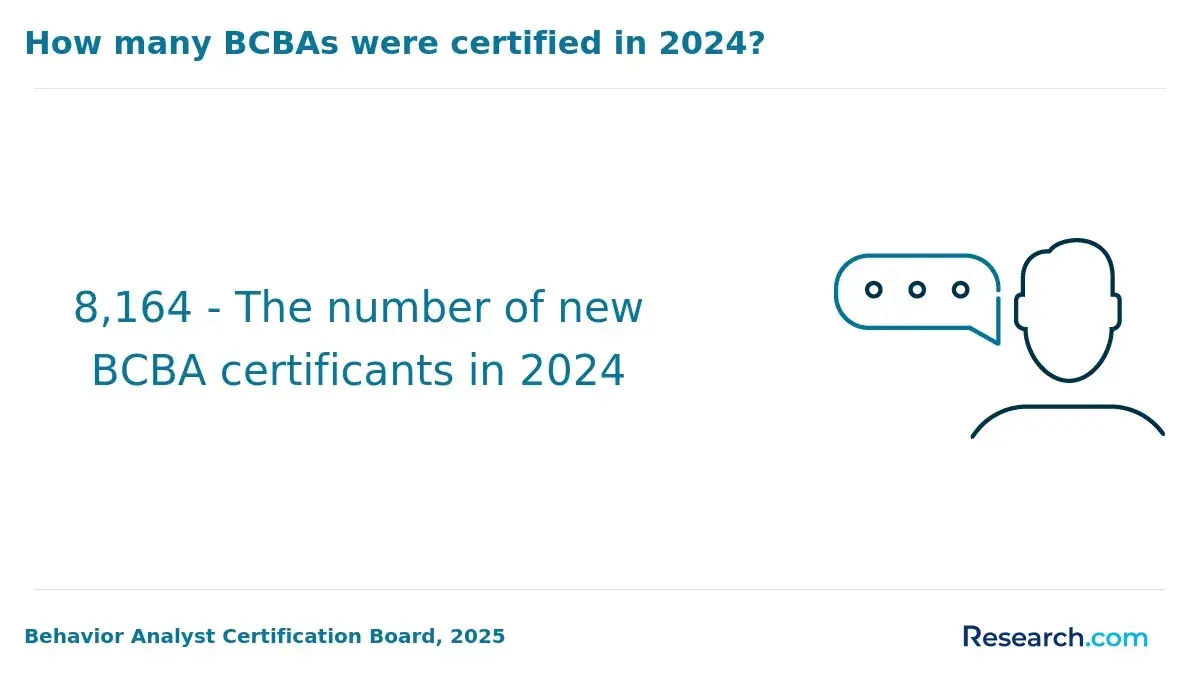
That preparation matters more as the profession expands. Demand for BCBAs has surged 58% from 2023 to 2024, which makes certification an important credential for candidates pursuing roles in autism services, schools, developmental disability services, behavioral health, and supervision. The right online BCBA exam prep course or study tool can help candidates organize the task list, identify weak areas, practice exam-style questions, and build confidence before test day.
This guide explains what the BCBA exam covers, who is eligible to take it, how online prep options differ, which features are worth paying for, and how to build a study plan that fits around coursework, fieldwork, and professional obligations.
Key Things You Should Know About BCBA Exam Prep
- The BCBA exam evaluates knowledge across ethical responsibilities, behavior analysis concepts, measurement, experimental design, assessment, intervention, and supervision.
- Top candidates utilize a combination of prep courses, mock exams, apps, flashcards, and study groups to ensure comprehensive coverage.
- Board Certified Behavior Analysts earn an average annual salary of around $75,000, which increases with experience and specialty focus.
What is the BCBA exam and why is it important for behavior analysts?
The BCBA exam is the certification assessment used to determine whether a candidate has the knowledge and judgment needed to practice as a Board Certified Behavior Analyst. It evaluates advanced understanding of applied behavior analysis, including behavior analytic concepts, assessment, intervention design, supervision, measurement, ethics, and client-centered decision-making.
Passing the exam is important because BCBA certification is widely used by employers, agencies, schools, and service providers as evidence that a professional meets a recognized standard of competence. It does not simply signal that a candidate studied ABA; it indicates that the candidate has met education, fieldwork, and examination requirements and can apply ABA principles in professional settings.
For candidates, the exam can affect access to clinical, educational, supervisory, and program leadership roles. In high-demand areas such as autism treatment, developmental disabilities, school-based services, and behavioral health, certification can strengthen job mobility and credibility. With demand for BCBAs increasing 58% from 2023 to 2024, strong preparation is a practical step toward entering or advancing in a growing profession.
The exam also protects clients and service systems. Behavior analysts often make decisions that affect treatment goals, intervention procedures, data interpretation, caregiver training, and staff supervision. A rigorous certification exam helps ensure that newly certified professionals understand ethical responsibilities and evidence-based practice before taking on independent responsibilities.
How is the BCBA exam structured and what content areas does it cover?
The BCBA exam is a scaled-score, multiple-choice assessment consisting of 185 questions. Its content is based on the BACB’s 5th Edition Task List, which organizes the skills and knowledge expected of entry-level BCBAs. Candidates should prepare for both definition-based questions and applied scenarios that require judgment, interpretation, and ethical reasoning.
The major content areas include:
- Foundations: Philosophical assumptions of behavior analysis, professional standards, ethical decision-making, and the role of behavior analysts in service delivery.
- Concepts & Principles: Core ABA terminology, behavior-environment relations, reinforcement, punishment, stimulus control, motivating operations, measurement, and experimental design.
- Client-Centered Responsibilities: Assessment, goal selection, intervention planning, collaboration, cultural responsiveness, documentation, and supervision of staff or trainees.
- Implementation & Evaluation: Data collection, visual analysis, treatment integrity, progress monitoring, program modification, and decisions about continuing, changing, or fading interventions.
Because the exam uses a transformed score that accounts for question difficulty and performance, candidates should avoid judging readiness only by the percentage correct on one practice test. A better approach is to review performance by task-list area, track repeated errors, and practice with questions that require applying concepts rather than recognizing memorized terms.
Strong online prep courses usually mirror the exam by combining content review, scenario-based questions, timed practice, mock exams, and explanations for both correct and incorrect answers. The best tools help candidates learn why an answer is right, not just which answer to choose.
Which eligibility requirements must candidates meet before taking the BCBA exam?
Before taking the BCBA exam, candidates must satisfy BACB eligibility requirements. These requirements are separate from exam preparation, so candidates should confirm eligibility early rather than waiting until they feel academically ready.
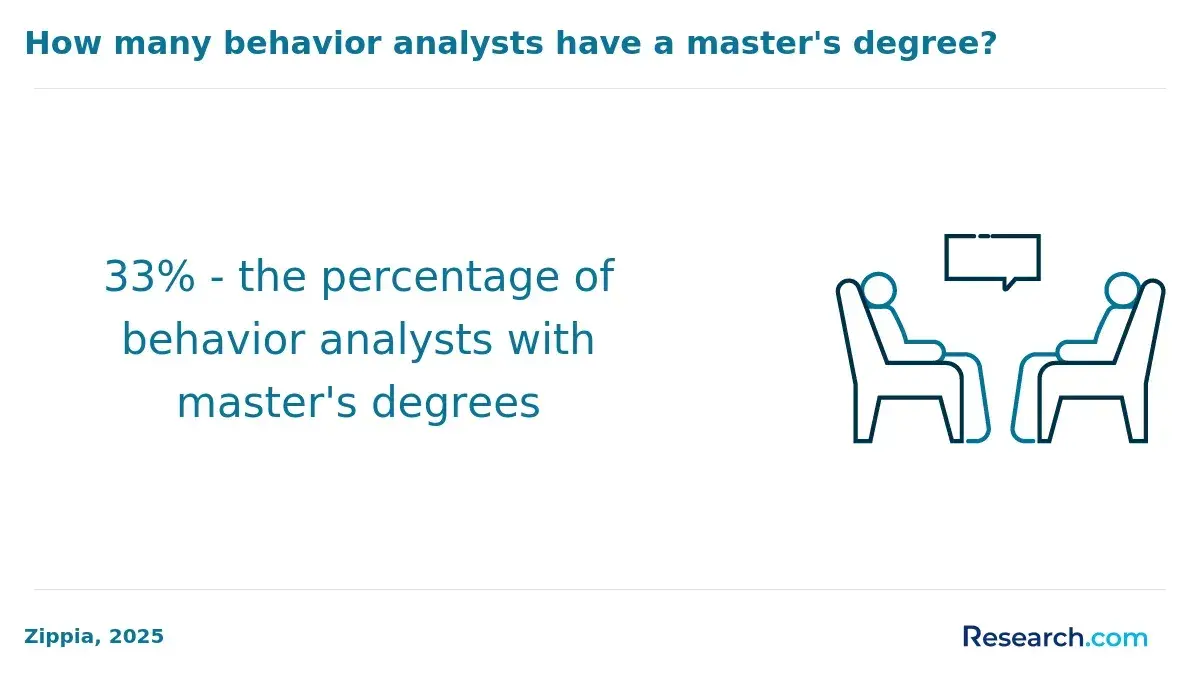
- Graduate Degree: Candidates need a master’s or higher in behavior analysis, psychology, education, or a related field.
- Verified Coursework: Candidates must complete a BACB-approved Verified Course Sequence (VCS) covering required ABA content areas.
- Supervised Fieldwork: Candidates must complete 1,500–2,000 hours of concentrated or supervised practical experience, with hours logged and approved by a qualified BCBA or BCBA-D supervisor.
- Application Approval: Candidates must submit the online application with required documentation and fees, including $245 in 2025.
Common eligibility routes include completing a qualifying master’s program with a VCS, adding a post-master’s certificate for candidates who already hold a graduate degree, or using a doctoral pathway with required fieldwork experience. Candidates typically have two years from approval to schedule the exam.
The most common mistake is treating eligibility and exam prep as separate timelines. Coursework, fieldwork, and studying should reinforce one another. For example, candidates who are learning functional behavior assessment in coursework can intentionally connect that content to fieldwork cases and exam-style questions. Candidates comparing BCBA programs should look closely at coursework alignment, fieldwork support, faculty experience, and whether the program clearly prepares students for the certification process.
Online BCBA exam prep courses generally fall into three categories: self-paced, instructor-led, and hybrid. The right choice depends on how much structure, feedback, accountability, and scheduling flexibility a candidate needs.
| Prep format | Best for | Main advantage | Potential drawback |
| Self-paced courses | Candidates with strong discipline, irregular schedules, or prior familiarity with the material | Flexible access to videos, quizzes, readings, and practice questions | Less accountability if the candidate does not maintain a study routine |
| Instructor-led courses | Candidates who want structure, deadlines, live explanation, and direct support | Guided review, scheduled sessions, instructor feedback, and opportunities to ask questions | Less flexible and often requires attendance or a fixed timeline |
| Hybrid options | Candidates who need flexibility but still want periodic live instruction or coaching | Combines independent study with structured review and support | Quality depends on how well the live and self-paced components are integrated |
Many online prep options include mock exams, flashcards, video lectures, study guides, progress dashboards, question banks, and discussion spaces. Candidates should look beyond the number of resources included. A large question bank is useful only if the questions are well written, aligned with the BACB’s 5th Edition Task List, and supported by clear explanations.
For candidates who have been away from coursework for a while, a structured course may provide a stronger foundation. For candidates who recently completed a VCS and mainly need practice, targeted question banks and mock exams may be enough. The best choice is the one that addresses the candidate’s actual gaps, not the one with the longest list of features.
Self-paced study tools and instructor-led online BCBA prep courses serve different purposes. Self-paced tools give candidates control over when, where, and how they study. Instructor-led courses provide external structure, explanations from experienced professionals, and built-in accountability. Neither format is automatically better; the stronger choice depends on the candidate’s learning style, schedule, and readiness level.
| Factor | Self-paced study tools | Instructor-led online courses |
| Schedule | Flexible and available on demand | Usually follows a set schedule or timeline |
| Accountability | Depends on the candidate’s self-discipline | Supported by deadlines, sessions, assignments, or instructor check-ins |
| Feedback | Often limited to automated explanations or score reports | May include instructor clarification, live Q&A, and group discussion |
| Best use | Daily review, flashcards, mock exams, targeted practice, and weak-area drilling | Comprehensive content review, concept clarification, and guided exam strategy |
| Risk | Candidates may avoid difficult areas or study inconsistently | Candidates may rely too heavily on lectures without doing enough independent practice |
How to choose between the two
Candidates who are highly organized, recently completed ABA coursework, and can commit to a study calendar may do well with self-paced tools such as mock exams, flashcards, and digital workbooks. These tools are especially useful for repetition and for turning short breaks into productive review time.
Candidates who struggle with abstract concepts, need help interpreting exam-style scenarios, or have not studied consistently may benefit more from an instructor-led course. Live or structured instruction can make it easier to ask questions, correct misunderstandings, and stay on track.
A hybrid approach often works well. Candidates can use an instructor-led course for comprehensive review and then use self-paced tools for repeated practice. According to the Behavior Analyst Certification Board (BACB), pass rates for the BCBA exam often hover in the 60-70% range, so preparation should include both content mastery and exam endurance. A candidate should not assume that completing a course alone means they are ready; readiness is better measured by consistent performance on timed, mixed-topic practice and the ability to explain why answers are correct.
A good BCBA exam prep course should do more than summarize ABA content. It should help candidates identify gaps, practice decision-making, and build test-taking stamina. When comparing options, candidates should prioritize features that improve readiness rather than features that simply make the course look comprehensive.
- Alignment with the BACB 5th Edition Task List: The course should clearly organize content around the exam domains, including ethics, assessment, intervention, measurement, supervision, and evaluation.
- High-quality practice exams: Mock exams should reflect the format, timing, complexity, and scenario-based style of the real BCBA exam.
- Detailed answer explanations: Explanations should clarify why the correct option is best and why the distractors are incorrect. This is essential for correcting reasoning errors.
- Progress tracking: A useful course should show performance by topic so candidates can focus on weak areas instead of repeatedly reviewing material they already know.
- Interactive support: Live Q&A sessions, discussion boards, coaching calls, or group review can help candidates resolve confusion before it becomes a pattern.
- Ethics and applied case practice: Because many exam questions require judgment, candidates need practice with realistic client, caregiver, supervision, and service-delivery scenarios.
- Study planning tools: Calendars, checklists, and recommended timelines can help candidates balance studying with fieldwork and employment.
Candidates should be cautious of any course that promises a guaranteed pass without explaining what the guarantee requires or how readiness is measured. They should also avoid choosing a prep course based only on the number of videos or questions. More material is not always better if it is poorly organized or not aligned with the exam.
A strong course gives candidates a roadmap: what to study, how to practice, how to evaluate progress, and when to shift from content review to timed exam simulation.
Digital study tools are most effective when used as reinforcement, not as a substitute for a full study plan. Apps, flashcards, and online question banks can help candidates review frequently, test recall, and practice weak areas in short sessions. They are especially useful for candidates balancing exam prep with fieldwork, employment, or graduate coursework.
- ABA Wizard App: Offers 1,400+ practice questions with immediate feedback, making it useful for quick review and repeated practice.
- Interactive flashcards: Support active recall of ABA terminology, concepts, task-list items, and ethical principles.
- StudyNotesABA: Provides video lectures, mini mocks, and accessible explanations for complex topics.
- Rogue ABA: Combines weekly study sessions with interactive graphics, which may help visual learners organize difficult concepts.
These tools work best when candidates use them intentionally. For example, flashcards are useful for definitions and discrimination between similar terms, but they are not enough for scenario-based decision-making. Question banks are useful for practice, but candidates should spend time reviewing explanations instead of rushing to complete as many questions as possible.
A practical approach is to pair digital tools with a weekly study objective. If the week’s focus is measurement, the candidate might review measurement concepts, complete related flashcards, answer practice questions, and then apply the concepts to fieldwork examples. This turns digital review into structured learning instead of random repetition.
Retention improves when candidates actively retrieve, apply, and explain material over time. Passive rereading may feel productive, but it often fails to reveal whether a candidate can use the concept correctly under exam conditions. The most effective BCBA exam preparation combines content review with repeated, applied practice.
- Use spaced repetition: Review material over increasing intervals rather than cramming. This helps move concepts from short-term recognition to long-term recall.
- Practice active recall: Use flashcards, closed-book summaries, and practice questions to force retrieval before checking notes.
- Map study sessions to the task list: Track which BACB task-list areas have been reviewed, practiced, and reassessed so no major domain is neglected.
- Review errors systematically: Keep an error log that identifies whether each missed question came from a knowledge gap, misread wording, weak discrimination between concepts, or poor test strategy.
- Use ethics scenarios: Apply ethical principles to realistic cases involving consent, documentation, supervision, collaboration, cultural considerations, and client welfare.
- Teach concepts aloud: Explaining a concept in plain language exposes weak understanding and improves fluency.
- Simulate exam conditions: Take timed practice sets and full mock exams without interruptions to build pacing, focus, and endurance.
Candidates should also protect study quality. Short, focused sessions with active practice are usually more productive than long sessions spent passively watching videos. If a candidate repeatedly misses questions in the same domain, the solution is not simply more questions; it is targeted review, concept clarification, and then fresh practice.
Budget is also part of the strategy. Candidates comparing prep tools, coursework, and certification expenses can review the cost of online ABA certification options to make a study plan that is financially realistic as well as academically effective.
Efficient BCBA exam preparation requires a written schedule. Candidates who study only when they “have time” often overreview familiar topics and delay difficult domains. A better plan divides the task list into weekly goals, includes regular practice, and reserves time for full review before the exam.
- Set a study timeline: Break exam content into weekly targets and leave time for cumulative review, weak-area repair, and mock exams.
- Use time blocks: Assign specific study blocks to specific domains, such as measurement, assessment, intervention, ethics, or supervision.
- Integrate fieldwork learning: Connect exam concepts to real cases, data sheets, treatment plans, caregiver training, and supervision experiences when appropriate.
- Schedule mixed review: After reviewing individual domains, practice mixed-topic questions so you can shift between concepts the way you will on the exam.
- Plan for fatigue: Include breaks, lighter review days, and realistic study sessions. Burnout can reduce retention and increase careless mistakes.
- Use mobile tools strategically: Apps and flashcards can fill short gaps during commutes or breaks, but deeper topics should still receive focused study time.
A practical weekly study pattern
A balanced week might include content review early in the week, targeted practice midweek, flashcards or app-based review on lighter days, and a timed quiz or mock section at the end of the week. The following week should begin with a review of missed questions before moving to new content.
Candidates should also schedule full-length practice close enough to the exam to build stamina, but early enough to correct weak areas. If mock exam results vary widely, that may signal inconsistent understanding, pacing problems, or overdependence on familiar question formats.
Are online BCBA exam prep courses and study tools worth the investment?
Online BCBA exam prep courses and study tools can be worth the investment when they address a candidate’s actual needs: organization, accountability, content review, practice volume, feedback, or exam confidence. They are less valuable when candidates buy too many resources without a plan for using them.
- Career value: Passing the BCBA exam can open access to roles in autism treatment, education, developmental disability services, and clinical behavior analysis. With average BCBA salaries around $75,000, preparation costs may be reasonable when weighed against long-term career opportunities.
- Readiness value: Structured courses, mock exams, and digital tools can help candidates identify weak areas, practice applied reasoning, and reduce test-day uncertainty.
- Flexibility value: Online prep allows candidates to study while managing work, fieldwork, coursework, and personal responsibilities.
- Risk reduction: A well-chosen prep plan may reduce the chance of underpreparing, but no course can replace consistent study, ethical understanding, and applied practice.
The best investment is not always the most expensive course. Candidates should first identify what is missing from their current preparation. If the problem is motivation and structure, an instructor-led or hybrid course may be worth it. If the problem is fluency and test endurance, mock exams and question banks may provide better value. If the problem is terminology or recall, flashcards and apps may be the most efficient supplement.
Candidates planning a broader education pathway can also compare online applied behavior analysis degree programs to understand how academic preparation, certification planning, and exam readiness fit together. Ultimately, online BCBA prep is worth it when it leads to a clear study routine, measurable progress, and stronger confidence before sitting for the exam.
Other Things You Should Know About BCBA Exam Preps
Online BCBA exam prep courses often require a reliable internet connection and a computer with updated software. In 2027, check for compatibility with platforms such as Windows, macOS, or Linux, and ensure you have access to video conferencing tools like Zoom or Google Meet.
In 2027, interactive options for BCBA exam prep commonly include virtual simulations, gamified learning platforms, and live online study groups. These methods provide engaging ways to reinforce learning, accommodate different learning styles, and often include instant feedback to enhance understanding of complex concepts.
Yes. The best tools map lessons and quizzes to the BACB’s BCBA Test Content Outline, which replaced the old task list format. They should cover ethics, behavior reduction, measurement, experimental design, and supervision, with topic-level tracking so you can see which domains still need review.
- Behavior Analyst Certification Board. (2025). US employment demand for behavior analysts: 2010–2024 [Lightcast report]. https://www.bacb.com/wp-content/uploads/2025/02/Lightcast2025_250204-a.pdf Behavior Analyst Certification Board+1
- The Chicago School. (n.d.). Career development: BCBA certification exam guide. https://www.thechicagoschool.edu/insight/career-development/bcba-guide-bcba-certification-exam/ Behavior Analyst Certification Board+1
- Psychology.org. (n.d.). What is a BCBA? Meaning, career overview. https://www.psychology.org/resources/bcba-meaning-career-overview/ BH Business
- PayScale. (2025). Board Certified Behavior Analyst salary. https://www.payscale.com/research/US/Job%3DBoard_Certified_Behavior_Analyst/Salary
- McDonald, S. (2025, January 13). What is a Board‑Certified Behavioral Analyst (BCBA)? Indeed. https://www.indeed.com/career-advice/finding-a-job/what-is-a-bcba
- Dream Big Children. (2023, September 26). ABA vs BCBA: Unpacking the key differences. http://dreambigchildren.com/blog/aba-vs-bcba-unpacking-the-key-differences/
- Autism Speaks. (n.d.). Applied Behavior Analysis (ABA). https://www.autismspeaks.org/applied-behavior-analysis