2027 Online Communication Degrees for Students Who Want Communication Specialist Careers

Co-Founder and Chief Data Scientist
Choosing an online communication degree is really a career decision: will the program build the writing, media, strategy, and analytics skills employers expect from communication specialists? The U. S. Bureau of Labor Statistics reported a May 2024 median pay of $69,780 for public relations specialists, with 6% projected job growth from 2023 to 2033. This guide is for students comparing online communication bachelor's and master's programs, career changers, and working adults who need flexibility. You will learn how degrees differ, what they cost, which accreditation matters, and how to choose a program that fits your goals.
Key Things You Should Know
- Online communication degrees are best suited for careers in public relations, corporate communication, digital media, internal communication, content strategy, and crisis communication, while clinical speech-language roles usually require a separate accredited graduate pathway.
- College Board's 2024 pricing data shows average published tuition and fees of $11,610 for in-state public four-year students and $43,350 for private nonprofit four-year students, so transfer credit, online fees, and time to completion can strongly affect total cost.
- The BLS reported May 2024 median pay of $69,780 for public relations specialists and $91,670 for technical writers, which means specialization, portfolio quality, industry, and location can matter as much as the degree title.
What is an online communication degree and how does it prepare communication specialists?
An online communication degree is a college program delivered fully or mostly through digital coursework that teaches students how people, organizations, media platforms, and audiences exchange information. In career terms, it prepares students to plan messages, write for different audiences, manage campaigns, analyze communication problems, and protect an organization's reputation.
A communication specialist is usually not a single standardized job title. Employers may use it for public relations staff, internal communication coordinators, media relations associates, content strategists, social media specialists, community engagement staff, or corporate communication professionals. The common thread is the ability to translate goals into clear, ethical, audience-specific messages.
Online programs typically prepare students through a mix of theory and applied work. Theory courses help students understand persuasion, media effects, organizational behavior, and culture. Applied courses build practical skills such as press release writing, campaign planning, brand messaging, presentation design, research methods, and digital content production.
The degree is usually worth considering if you enjoy writing, audience analysis, collaboration, fast deadlines, and public-facing work. It may not be the best fit if you want a heavily quantitative analytics career, a licensed clinical communication role, or a technical role where employers mainly want computer science, engineering, or health credentials.
Current employer expectations are also changing. Communication teams increasingly use AI writing assistants, social listening tools, customer relationship management platforms, analytics dashboards, and content management systems. A strong online communication program should teach students how to use these tools responsibly, not simply how to produce polished copy.
What types of online communication degrees lead to communication specialist careers?
Students can enter communication specialist careers through several degree levels. The right choice depends on your current education, work experience, budget, and whether you want entry-level, advancement, or career-change opportunities.
The table below compares common online communication degree options and the type of student each one typically serves. Use it to match the credential to your career stage rather than assuming the highest degree is automatically the smartest investment.
| Degree type | Typical purpose | Best fit | Career relevance |
| Associate degree in communication | Builds general education and introductory communication skills | Students planning to transfer into a bachelor's program | May support administrative, customer-facing, or junior content roles, but many specialist jobs prefer a bachelor's degree |
| Bachelor's in communication | Provides broad preparation in writing, media, research, campaigns, and organizational communication | First-time college students and transfer students pursuing entry-level specialist roles | Common baseline credential for public relations, internal communication, digital media, and corporate communication jobs |
| Master's in communication | Deepens strategic, leadership, research, and specialized communication expertise | Working professionals seeking advancement or career changers with a bachelor's degree in another field | Can support roles in communication management, strategic communication, crisis communication, or executive communication |
| Graduate certificate | Targets a focused skill area without a full degree | Professionals who already have a degree and need a narrower credential | Useful for digital communication, public relations, health communication, or organizational communication upskilling |
A bachelor's degree is usually the most direct starting point for communication specialist careers. A master's degree can make more sense if you already work in marketing, HR, public affairs, journalism, education, nonprofit administration, or business and want to move into strategic communication leadership.
Students interested in speech and language careers should be careful with terminology. General communication degrees are different from communication sciences and disorders programs, and clinical speech-language pathology has its own graduate education and licensure expectations. If that path is your goal, compare accelerated speech pathology programs instead of assuming a general communication major will meet clinical requirements.
How do online communication programs compare with campus-based options for communication majors?
Online and campus-based communication programs can lead to similar academic credentials, but the learning experience, networking style, cost structure, and schedule demands are different. The best format depends less on prestige alone and more on how you learn, how much structure you need, and whether you can build a portfolio while studying.
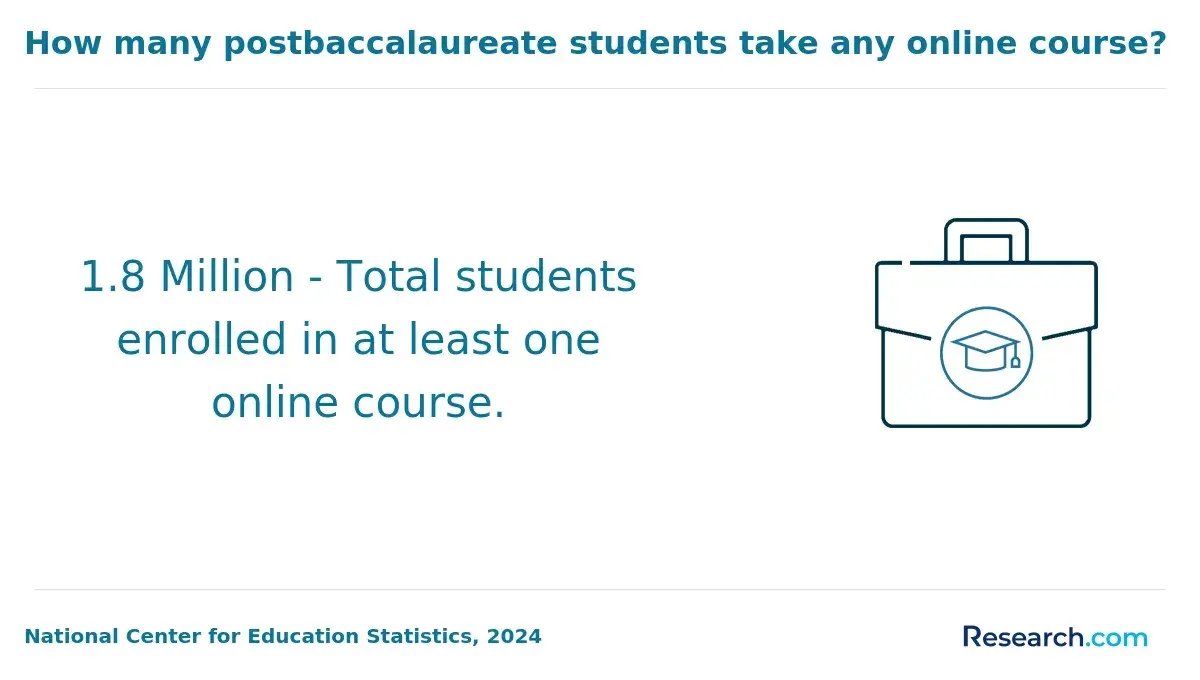
Distance education is no longer unusual in U.S. higher education. NCES data published in 2024 showed that more than half of postsecondary students took at least one distance education course in fall 2022, which means employers and graduate schools are increasingly familiar with online coursework. For communication majors, the important question is whether the online program includes real feedback, collaboration, portfolio assignments, and access to career services.
The table below summarizes major trade-offs. It is especially useful for students deciding whether flexibility is worth giving up some of the built-in campus networking that traditional programs may provide.
| Factor | Online communication program | Campus-based communication program | Decision point |
| Schedule | Often asynchronous or evening-friendly | Usually fixed class times | Online is stronger for working adults; campus may help students who need routine |
| Networking | Requires intentional effort through virtual events, LinkedIn, group projects, and internships | Built-in access to campus events, student media, and in-person faculty contact | Campus may be easier for spontaneous networking, but online students can still build strong professional networks |
| Portfolio development | Can be strong if courses include campaigns, writing samples, analytics projects, and multimedia work | May offer student newspaper, radio, PRSSA chapters, or campus communication offices | Choose the format with more usable work samples, not just more lectures |
| Cost | May reduce relocation and commuting costs but can include technology or distance learning fees | May include housing, transportation, parking, and campus fees | Compare total cost of attendance, not tuition alone |
| Learning style | Requires self-direction, writing discipline, and comfort with digital tools | Provides more face-to-face accountability | Students who procrastinate heavily may need a more structured format |
Online communication programs work well when students can manage deadlines, seek feedback, and create their own professional opportunities. Campus programs may be better for students who want a residential experience, in-person media labs, or close involvement in student organizations.
Students comparing online degrees in different applied fields should also notice how program design varies by discipline. For example, an online construction management bachelors degree may emphasize technical project documentation and field-based experience, while communication programs should emphasize audience strategy, campaigns, writing, and media production.
What accreditation should online communication degree programs have in the United States?
In the United States, the most important accreditation for an online communication degree is institutional accreditation from an agency recognized by the U.S. Department of Education or the Council for Higher Education Accreditation. This matters because it can affect federal financial aid eligibility, transfer credit, graduate school admission, and employer confidence.
Communication programs do not usually require a single specialized accreditor in the same way nursing, teaching, counseling, or speech-language pathology programs might. Some journalism and mass communication programs may hold specialized accreditation from the Accrediting Council on Education in Journalism and Mass Communications, but many reputable communication departments do not have that programmatic credential.
Before enrolling, students should verify accreditation directly rather than relying only on marketing language. These checks reduce the risk of choosing a program that looks legitimate but creates problems later.
- Confirm the institution appears in the U.S. Department of Education's Database of Accredited Postsecondary Institutions and Programs.
- Check whether the school clearly identifies its accrediting agency on its official website.
- Ask whether credits transfer to other accredited colleges, especially if you may change schools.
- Confirm that online students receive the same degree title and transcript language as campus students, if the school offers both formats.
- If you plan to enter a licensed or clinical field, ask whether the program meets the specific requirements for that profession and state.
For students comparing communication with clinical speech-language careers, accreditation is especially important. A general online communication master's is not the same as an online SLP masters, which is designed around different professional standards and licensure preparation.
What courses and specializations are typically offered in online communication programs?
Online communication programs usually combine broad communication theory with applied courses that help students produce professional work. The best programs do not treat communication as only public speaking or writing; they connect message strategy with audience research, organizational goals, ethics, and digital channels.
Course titles vary by school, but students commonly see the following areas. These subjects matter because communication specialist jobs often require both creative execution and strategic judgment.
- Communication theory, including persuasion, interpersonal communication, media effects, and organizational communication.
- Public relations writing, including press releases, media pitches, executive statements, newsletters, and crisis responses.
- Digital and social media strategy, including platform planning, content calendars, engagement metrics, and brand voice.
- Research methods, including surveys, audience analysis, campaign evaluation, and basic data interpretation.
- Visual and multimedia communication, including presentation design, video basics, web content, and digital storytelling.
- Ethics and law, including privacy, copyright, transparency, misinformation, accessibility, and responsible AI use.
- Capstone or portfolio courses, where students complete campaigns, case studies, communication audits, or client-style projects.
Specializations can help students stand out, but they should match a real career target. Strategic communication is useful for PR and corporate roles, health communication can support hospitals and public health organizations, and technical communication is stronger for students who like documentation, software, science, or engineering-adjacent work.
Students who are drawn more to operations, leadership, and cross-functional business strategy than to messaging and media may want to compare communication programs with an online MBA programs comparison. The better choice depends on whether you want to manage communication itself or use communication skills inside a broader business leadership role.
What are the common admission requirements for online communication bachelor's and master's programs?
Admission requirements vary by school and degree level, but online communication programs are generally designed to be accessible to first-time students, transfer students, and working adults. Selective programs may look more closely at writing ability, academic history, professional goals, and evidence that the student can succeed in an online format.
The table below outlines common requirements for bachelor's and master's programs. Students should use it as a planning checklist because missing transcripts, unclear transfer credits, or weak writing samples can delay admission.
| Requirement | Online bachelor's in communication | Online master's in communication |
| Prior education | High school diploma, GED, or transfer credits | Bachelor's degree from an accredited institution |
| Transcripts | High school and any college transcripts | All undergraduate and graduate transcripts |
| GPA expectation | Often minimum standards set by the university; transfer pathways may vary | Often a minimum undergraduate GPA, with possible conditional admission at some schools |
| Test scores | Many schools are test-optional, but policies vary | GRE is often not required, but selective programs may request it or allow alternatives |
| Writing sample or statement | Sometimes required, especially for selective or degree-completion programs | Commonly required to assess goals and writing readiness |
| Professional experience | Usually not required | Helpful and sometimes preferred for strategic or executive communication programs |
Transfer students should pay close attention to credit evaluation. A program that accepts more general education or prior communication coursework may shorten the timeline and reduce cost, while a program with strict residency requirements may require more credits to be taken at the enrolling institution.
Applicants can strengthen their file by preparing early. The most useful steps are practical and within the student's control.
- Request unofficial transcripts first so you can estimate transfer credits before paying application fees.
- Update your resume with writing, presentation, media, leadership, customer service, volunteer, or campaign experience.
- Write a focused personal statement that connects the degree to a specific career goal, such as public relations, internal communication, or digital strategy.
- Ask admissions whether online students have access to internships, portfolio review, tutoring, library services, and career advising.
- Confirm whether the program admits by semester, rolling cycle, cohort, or accelerated term.
How long do online communication degrees take and what do they cost?
Most online bachelor's degrees in communication require about 120 credits, while master's programs commonly require about 30 to 36 credits. Time to completion depends on transfer credits, course load, term length, and whether the program is full-time, part-time, or accelerated.
Cost varies widely by institution type, residency rules, and fee structure. College Board's 2024 Trends in College Pricing reported average published tuition and fees of $11,610 for in-state students at public four-year institutions and $43,350 at private nonprofit four-year institutions for the 2024-25 academic year. Those figures are not online-specific, but they give students a useful benchmark for judging whether an advertised online price is unusually low, typical, or expensive.
The table below summarizes the main timeline and cost variables. It can help students compare programs beyond the headline tuition rate.
| Factor | Typical impact | What to ask |
| Transfer credits | Can significantly shorten a bachelor's degree-completion pathway | How many credits will apply to the major, general education, and electives? |
| Residency rules | Some public universities charge different rates for in-state and out-of-state students | Do online students pay a separate flat rate or standard residency-based tuition? |
| Online fees | Technology, course, proctoring, or distance education fees can raise total cost | What is the full cost per course after fees? |
| Course load | Full-time study is faster but harder to combine with work; part-time study spreads cost over time | What course load is realistic for working students? |
| Books and software | Communication courses may require media tools, design subscriptions, or textbooks | Are materials included, open-access, or billed separately? |
| Internship or capstone requirements | Can improve career readiness but may require scheduling flexibility | Can working adults complete applied projects through their current employer? |
Students should compare total cost of attendance, not just tuition. A lower per-credit rate may be less valuable if the program accepts few transfer credits, charges high fees, or requires extra prerequisites.
To reduce cost without weakening academic quality, students can take several practical steps.
- Prioritize accredited public universities or nonprofit institutions with transparent online tuition.
- Complete transferable general education credits at a community college before enrolling in a bachelor's program, if the target school confirms transferability.
- Ask employers about tuition assistance, especially if you already work in marketing, HR, communications, healthcare, government, or education.
- File the FAFSA if eligible and compare grants, scholarships, work-study, and loans before choosing a payment plan.
- Choose a program with portfolio-based coursework so tuition also produces career materials you can show employers.
What communication specialist jobs can you pursue with an online communication degree?
An online communication degree can lead to a wide range of roles because organizations need people who can explain ideas clearly, manage reputation, coordinate campaigns, and communicate across audiences. The strongest candidates usually combine the degree with a portfolio, internship, work samples, and tool fluency.
The table below connects common communication specialist career paths with typical responsibilities. It can help students choose electives and projects that align with a real job target.
| Career path | Typical responsibilities | Useful preparation |
| Public relations specialist | Writes press materials, pitches media, supports campaigns, monitors reputation, and coordinates announcements | PR writing, media relations, campaign planning, crisis communication |
| Corporate communication specialist | Creates company messaging, supports leadership communication, writes internal updates, and aligns departments | Organizational communication, business writing, presentation design |
| Internal communication coordinator | Manages employee newsletters, intranet content, change communication, and culture messaging | Employee communication, HR-adjacent writing, change communication |
| Social media specialist | Plans content calendars, writes posts, tracks engagement, supports community management, and adapts brand voice | Digital strategy, analytics, multimedia content, platform governance |
| Content strategist | Plans web, email, blog, or campaign content based on audience needs and organizational goals | Writing, SEO basics, audience research, content management systems |
| Technical communication specialist | Creates manuals, help content, process documents, release notes, or knowledge-base materials | Technical writing, usability, information design, collaboration with subject matter experts |
| Community relations specialist | Builds relationships with local groups, supports events, handles outreach, and communicates public initiatives | Public affairs, intercultural communication, event communication |
Entry-level jobs often emphasize writing, coordination, and execution. Advancement usually requires stronger strategy, leadership, analytics, stakeholder management, and the ability to advise senior leaders during sensitive communication moments.
AI is changing these jobs but not eliminating the need for human judgment. Tools can draft social posts, summarize feedback, or generate message variations, but employers still need communication professionals to check accuracy, understand audience risks, protect brand voice, and make ethical decisions. Students should graduate with examples of both original work and responsible tool-assisted workflows.
What are typical salaries and job outlook for communication specialists in the U.S.?
Salary depends on occupation, industry, location, experience, and specialization. Communication is a broad field, so students should compare specific job categories rather than relying on one average for all communication majors.
The BLS May 2024 wage data provides a useful baseline for several roles connected to communication degrees. These figures are national medians, so they should be used for comparison rather than as predictions of what any individual graduate will earn.
| Occupation | May 2024 median annual pay | How it relates to communication degrees |
| Public relations specialists | $69,780 | One of the most direct communication specialist pathways |
| Technical writers | $91,670 | Relevant for students who combine communication skills with technical, software, science, or compliance knowledge |
| Market research analysts | $76,950 | Relevant for students who add analytics, survey research, and consumer insight skills |
| Writers and authors | $73,690 | Relevant for content-focused roles, though employment conditions vary by industry and freelance status |
| Editors | $75,260 | Relevant for publishing, content quality, brand standards, and editorial management roles |
Job outlook also varies by role. The BLS projected 6% growth for public relations specialists from 2023 to 2033, which is faster than the average for all occupations. For students, this suggests continued demand for reputation management, media relations, stakeholder communication, and digital outreach, but it does not remove competition for desirable roles.
Higher pay is often associated with specialized industries, measurable campaign results, supervisory responsibility, technical subject knowledge, or experience in high-stakes communication. Students who want stronger salary mobility should build evidence of outcomes, such as campaign metrics, writing samples, executive communication projects, or analytics reports.
Geography also matters. Major metro areas, corporate headquarters, government centers, healthcare systems, technology companies, and large universities may offer more communication roles, but they can also have higher living costs and stronger applicant pools. Remote and hybrid work can expand options, yet many communication jobs still value local market knowledge and real-time collaboration.
How can students evaluate and choose a reputable online communication program?
Choosing a reputable online communication program requires more than comparing rankings or picking the lowest tuition. The strongest choice is the program that is accredited, affordable, career-aligned, transparent about requirements, and able to help you graduate with evidence of real communication skill.
Use the following process before applying. It is designed to help you avoid common mistakes such as choosing an unaccredited school, ignoring transfer policy, or enrolling in a program that does not match your intended career path.
- Define your target role first, such as PR specialist, internal communication coordinator, content strategist, or technical writer.
- Match the curriculum to that role by checking for relevant courses, portfolio assignments, capstones, internships, or client-based projects.
- Verify institutional accreditation through an official accreditor database, not just the school's homepage.
- Request a written transfer credit evaluation if you have prior college credits.
- Compare total program cost, including tuition, fees, books, software, and any required travel or residency.
- Ask whether online students receive career advising, internship support, writing center access, library services, and faculty feedback.
- Review faculty backgrounds to see whether instructors have research, industry, agency, nonprofit, government, or corporate communication experience.
- Look for portfolio outcomes, not just course lists; you should know what work samples you will have by graduation.
- Ask how the program addresses AI, analytics, accessibility, ethics, misinformation, and crisis communication.
- Contact current students or alumni if possible to ask about workload, responsiveness, and career support.
Red flags include vague accreditation claims, unclear tuition pages, pressure to enroll immediately, no sample degree plan, limited faculty information, and promises of guaranteed job placement or salary. Reputable schools can explain costs, curriculum, support services, and outcomes without relying on high-pressure sales tactics.
The best program is not always the cheapest, fastest, or most famous. It is the one that fits your schedule, keeps debt manageable, teaches marketable skills, and helps you build a portfolio that can survive an employer's close review.
Other Things You Should Know About Communication
Yes. A portfolio is one of the most practical ways to show employers what you can do. Include writing samples, campaign plans, social media content calendars, communication audits, presentations, press materials, analytics summaries, or capstone projects.
They can be useful when they fill a specific skill gap, such as crisis communication, digital strategy, technical writing, or health communication. A certificate is less useful if it repeats skills you already have or does not produce portfolio-ready work.
The most important soft skills include clear writing, active listening, adaptability, collaboration, judgment under pressure, audience awareness, and comfort receiving edits. Communication work is rarely solitary, so the ability to revise and coordinate with others is essential.
References
- Accrediting Council on Education in Journalism and Mass Communications - (ACEJMC) https://www.chea.org/accrediting-council-education-journalism-and-mass-communications
- How to Choose the Best Specialization for Your Online Degree https://dsuonline.com/resources/blogs/how-to-choose-the-best-specialization-for-your-online-degree/
- Evaluating Online Education: Key Criteria for Genuine E-Learning Platforms https://elqn.org/evaluating-the-quality-of-online-education-key-criteria/
- What is a master's degree in communication and how do I get in? - Sup de Pub https://www.supdepub.com/en/guide/what-is-a-masters-degree-in-communication-and-how-do-i-get-in/
- Bachelor's in communication | edX https://www.edx.org/bachelors/communication
- 2025 Most Affordable Online Communications Degrees https://www.onlineu.com/most-affordable-colleges/communications-degrees
- How Long is an Online Master’s in Communication Program? https://www.onlineeducation.com/communication/faqs/how-long-to-earn-a-communications-masters-degree-online
- Where can you do a Master's degree in Digital Communication? - INSEEC https://www.inseec.com/en/guides/orientation-guide/where-can-you-do-a-masters-degree-in-digital-communication/
- Admissions Requirements for Master's in Communication Programs (Campus, Online) https://www.mastersincommunications.com/faqs/admissions-requirements
- How To Get A Communications Degree Online - Best Communications Degrees https://www.bestcommunicationsdegrees.com/degrees/how-to-get-a-communications-degree-online/