2027 BCBA Success Checklist From Enrollment to Certification

Co-Founder and Chief Data Scientist
The decision to pursue BCBA certification is not just a school choice; it is a certification, supervision, exam, and career-planning decision. Candidates often lose time when they enroll in coursework that does not fit certification rules, wait too long to secure qualified supervision, or underestimate the BCBA exam. A strong plan helps you avoid unnecessary delays and make each step count.
This guide explains the path from ABA program enrollment to Board Certified Behavior Analyst credentialing. It covers what a BCBA does, education and supervised fieldwork requirements, how to compare online and campus programs, what to expect from the curriculum, admissions, cost, timeline, career options, salary outlook, and the steps to take after graduation. Use it as a practical checklist, then confirm current requirements directly with the Behavior Analyst Certification Board before making final enrollment or licensure decisions.
Key Things You Should Know
- The 2026 BCBA certification process requires completion of a verified coursework sequence aligned with the 2022 BACB Task List and at least 1,500 hours of supervised experience.
- Passing the BCBA exam, with a national pass rate near 60%, is essential; thorough preparation and understanding of behavior analytic principles increase success chances.
- Maintaining certification demands ongoing supervision and 20 continuing education units every two years, reflecting the evolving standards in Applied Behavior Analysis practice.
What is a BCBA and certification process?
A Board Certified Behavior Analyst, or BCBA, is a graduate-level professional trained to assess behavior, design evidence-based behavior intervention plans, supervise implementation, and evaluate outcomes using data. BCBAs commonly work in autism services, schools, clinics, residential programs, behavioral health organizations, and consulting roles.
The BCBA certification process generally includes four major steps: earning an eligible graduate degree, completing BACB-verified coursework, accumulating supervised fieldwork, and passing the BCBA exam administered by the Behavior Analyst Certification Board. Candidates are commonly expected to hold a master's degree with BACB-verified coursework and complete 1,500 to 2,000 hours of supervised independent fieldwork in settings such as clinics, schools, or residential facilities.
The exam is comprehensive. It tests ethics, assessment, intervention, measurement, research design, and the practical application of behavior-analytic principles. Recent data shows the exam's difficulty, with first-time pass rates dropping from 66% in 2020 to 51% in 2025. That decline makes early preparation essential, not something to postpone until the final semester.
For candidates asking how to become a BCBA in the US, the safest approach is to choose a program that clearly maps coursework to BACB expectations, secure supervision before fieldwork begins, keep accurate documentation, and build an exam plan around weak content areas. Prospective students can compare BCBA accredited programs online if they need flexible or lower-cost options.
Before enrolling, confirm the following:
- The degree level and discipline meet current BACB eligibility rules.
- The coursework is BACB-verified or otherwise accepted for certification eligibility.
- Fieldwork supervision is available, documented, and aligned with BACB standards.
- The program provides exam preparation, practice questions, and performance feedback.
- You understand whether state licensure is required in addition to BCBA certification.
What education requirements for BCBA certification?
BCBA education requirements center on graduate-level study in behavior analysis and related fields. In the United States, candidates must earn a master's degree or higher in behavior analysis, education, or psychology from an accredited institution. The degree alone is not enough; the coursework must also satisfy BACB expectations for certification eligibility.
Programs typically cover ethics, measurement, experimental design, behavior assessment, intervention strategies, supervision, and research-based decision-making. The Behavior Analyst Certification Board has required coursework aligned with the Fourth Edition Task List, and many programs use a Verified Course Sequence, or VCS, to show that required content has been reviewed. A VCS typically involves 225 classroom hours through a university program or vetted online provider.
Supervised practical experience is also required. Common options include 1,500 hours of supervised independent fieldwork or 2,000 hours of supervised practicum, overseen by a current BCBA. This requirement is where many candidates experience delays, especially if they begin coursework without identifying an approved supervisor or a workplace that allows behavior-analytic practice.
Students whose undergraduate degrees are outside behavior analysis may still qualify, but they may need prerequisite courses or a specific VCS pathway. Before applying, ask each program for a written explanation of how its degree, coursework, and supervision support BCBA eligibility.
Demand planning matters as well. The field has been associated with rapid growth in demand for BCBAs, projected at 58% through 2032 by the U.S. Bureau of Labor Statistics. Students who want to enter the workforce efficiently should compare program structure, fieldwork access, and exam support before choosing among the top BCBA programs.
- Degree requirement: master's degree or higher from an accredited institution.
- Coursework requirement: behavior-analytic content such as ethics, assessment, measurement, experimental design, and intervention.
- Fieldwork requirement: supervised experience completed under a qualified BCBA.
- Documentation requirement: accurate records of coursework, supervision, hours, and supervisor qualifications.
How to choose accredited ABA programs?
Choosing an ABA program for BCBA preparation should begin with eligibility, not convenience. A program may be affordable, flexible, or well marketed, but it is not a good choice if its coursework does not support certification or if it leaves you to arrange supervision without guidance.
Start by confirming the program's status with the Behavior Analyst Certification Board and whether it offers a Verified Course Sequence. Where degree-level accreditation is relevant, also review recognition by the Association for Behavior Analysis International. University-affiliated programs are often preferred because they tend to provide clearer academic oversight, faculty access, and certification advising. Reported first-time pass rates have reached up to 67% for university-affiliated programs, compared with 47% for non-accredited programs, which highlights the value of program quality and accountability.
Review the curriculum carefully. Strong programs update syllabi to reflect current BACB content areas, include ethics throughout the program, and teach students how to use data to make clinical decisions. Avoid programs that describe ABA broadly but cannot show where required content is taught.
Supervision support is equally important. Some programs include practicum placement assistance, while others expect students to find supervisors independently. If you are working full time, living in a rural area, or changing careers, supervision access may be the deciding factor.
Questions to ask before applying
- Does the program offer a BACB-recognized Verified Course Sequence?
- Are faculty members BCBAs or experienced behavior analysts?
- What are the program's published exam pass rates?
- Does the school help students locate supervised fieldwork placements?
- Are exam preparation resources built into the program or offered separately?
- How often is the curriculum reviewed against current certification requirements?
- What career services, alumni data, or employer connections are available?
The best ABA program is the one that fits your certification timeline, learning style, finances, and fieldwork needs while maintaining transparent outcomes and clear compliance with certification standards.
Online and campus BCBA programs can both prepare students for certification, but they serve different learners. The right choice depends on your schedule, location, need for structure, access to supervision, and comfort with independent study.
Online BCBA programs usually offer more flexibility. Asynchronous lectures and remote coursework can be valuable for working professionals, parents, military students, and candidates who do not live near a university. The trade-off is that online study requires strong time management. You may have fewer informal conversations with faculty and classmates, and practicum support can vary significantly by school.
Campus-based BCBA certification programs provide more in-person interaction, immediate feedback, study groups, and access to university-based practicum networks. They can be especially helpful for students who learn best through live discussion, structured deadlines, and direct faculty engagement. However, campus programs may be less convenient and may require commuting, relocation, or a more fixed schedule.
Accreditation and certification alignment matter more than delivery format. A well-designed online program with strong faculty, supervised fieldwork support, and exam preparation is often a better choice than a campus program with weak outcomes. Likewise, a campus program with integrated practicum and strong mentoring may be worth the added time or cost.
Program support has become more important as exam outcomes have tightened. Some reports show first-time BCBA exam pass rates declining from 62% in 2020 to 22% in 2025, which points to the need for structured exam preparation and high-quality supervision.
- Choose online if: you need schedule flexibility, can study independently, and already have access to a qualified fieldwork site.
- Choose campus if: you want live interaction, structured accountability, and stronger local networking opportunities.
- Be cautious with either format if: the program cannot explain supervision options, exam support, or certification alignment.
- Compare total cost: online programs may be less expensive, but some provide fewer local networking or practicum opportunities.
Students seeking broader preparation in applied behavior analysis may also review a behavioral science masters to understand how ABA study can support long-term career development.
BCBA degree programs are built around the science and practice of behavior analysis. A strong curriculum teaches students to identify behavior patterns, measure change, design interventions, supervise implementation, and make ethical decisions based on evidence rather than assumptions.
Core courses typically include behavior assessment, ethics, behavior change procedures, single-subject research designs, measurement, supervision methods, and data-based decision-making. These subjects align with Behavior Analyst Certification Board coursework requirements and prepare students for both fieldwork and the certification exam.
Many programs also include applied assignments, case study analysis, treatment plan development, and supervised field experience. Programs accredited by the Association for Behavior Analysis International often align closely with BACB standards and may include specialized study in verbal behavior, research methods, autism intervention, developmental disabilities, and diverse behavioral interventions.
Curriculum focus can differ by career path. Students interested in autism services may need stronger training in developmental disabilities, caregiver training, and early intervention. Students interested in school-based practice should look for coursework related to functional behavior assessment, classroom consultation, and collaboration with educators. Those considering organizational behavior management may want courses in performance improvement, staff training, and systems-level behavior change.
Regardless of specialization, ethics should not be limited to one course. Good programs integrate ethical reasoning into assessment, intervention, documentation, supervision, cultural responsiveness, and client rights.
Completing a BACB-approved curriculum is essential for certification eligibility and may influence employability and salary potential. According to BACB Certificant Data and BLS updates, the median annual salary for BCBAs reached $98,000, with top earners exceeding $120,000 in some high-demand states. Prospective students should verify that their program meets the BACB's 2026 requirements to avoid certification delays and protect their career timeline.
Admission requirements for BCBA programs vary by university, but most programs expect applicants to show academic readiness for graduate study and a clear interest in applied behavior analysis. A completed bachelor's degree or higher from an accredited institution is typically required. Preferred undergraduate majors often include psychology, education, behavior analysis, human services, or related fields.
Programs commonly ask for official transcripts and may require a minimum GPA, often around 3.0. Some competitive programs set higher expectations or review the applicant's last 60 credits, prerequisite performance, professional experience, and readiness for graduate-level writing and research.
Experience in applied behavior analysis is often recommended and may strengthen an application, especially if the applicant has worked as a behavior technician, teacher, paraprofessional, case manager, or direct support professional. Verified supervised fieldwork hours may be required or strongly recommended in some pathways. Applicants without ABA experience should look for programs that provide orientation to the field and support for securing fieldwork.
Prerequisite coursework can also matter. Some programs expect prior study in psychology, learning theory, statistics, research methods, ethics, behavior assessment, or intervention techniques. Others admit students from different backgrounds but require foundation courses before advanced ABA coursework begins.
Standardized tests such as the GRE are rarely mandatory for BCBA-focused programs, though some universities may accept or request them as part of broader graduate admissions. Letters of recommendation are usually more useful when they come from people who can speak directly to the applicant's academic ability, clinical judgment, professionalism, reliability, and ethical conduct.
The importance of strong preparation is underscored by low pass rates on BCBA exam retakes: only 23% pass rate in 2025, with just 8,021 new certifications out of 23,151 attempts, according to the CertifyNDABA BACB report. Applicants should treat admission as the start of exam readiness, not merely a paperwork step.
- Review whether your bachelor's degree meets program expectations.
- Confirm GPA requirements before applying.
- Ask whether prerequisite courses are required.
- Use your statement of purpose to explain your ABA experience and career goals.
- Choose recommenders who can evaluate your readiness for ethical, data-driven practice.
BCBA programs generally take between 1.5 and 3 years to complete, depending on the student's prior education, enrollment status, program format, and fieldwork plan. Full-time students may finish coursework in about 18 months. Part-time students, especially working professionals, may need up to 3 years.
The total timeline is not limited to coursework. Required supervised fieldwork often lasts 1 to 2 years and may run at the same time as coursework or immediately afterward. Candidates who delay finding a supervisor can extend their certification timeline even if they finish classes on schedule.
Costs vary widely by school type, location, delivery format, and whether the program is a full master's degree, graduate certificate, or ABA concentration. Tuition typically ranges from $10,000 to $30,000 for the entire program. Additional expenses may include textbooks, technology fees, application fees, supervision fees, background checks, graduation fees, and exam-related costs.
Applicants should also plan for the BACB exam fee, approximately $245. Supervision can be a major hidden cost if it is not included through an employer, practicum site, or university-supported placement. Before enrolling, ask whether supervision is built into the program, arranged separately, or entirely the student's responsibility.
Verifying compliance with BACB standards is essential. A lower-cost program can become expensive if its coursework does not support certification eligibility or if students must repeat courses elsewhere. Conversely, a more expensive program may be worthwhile if it provides strong supervision support, exam preparation, and career placement resources.
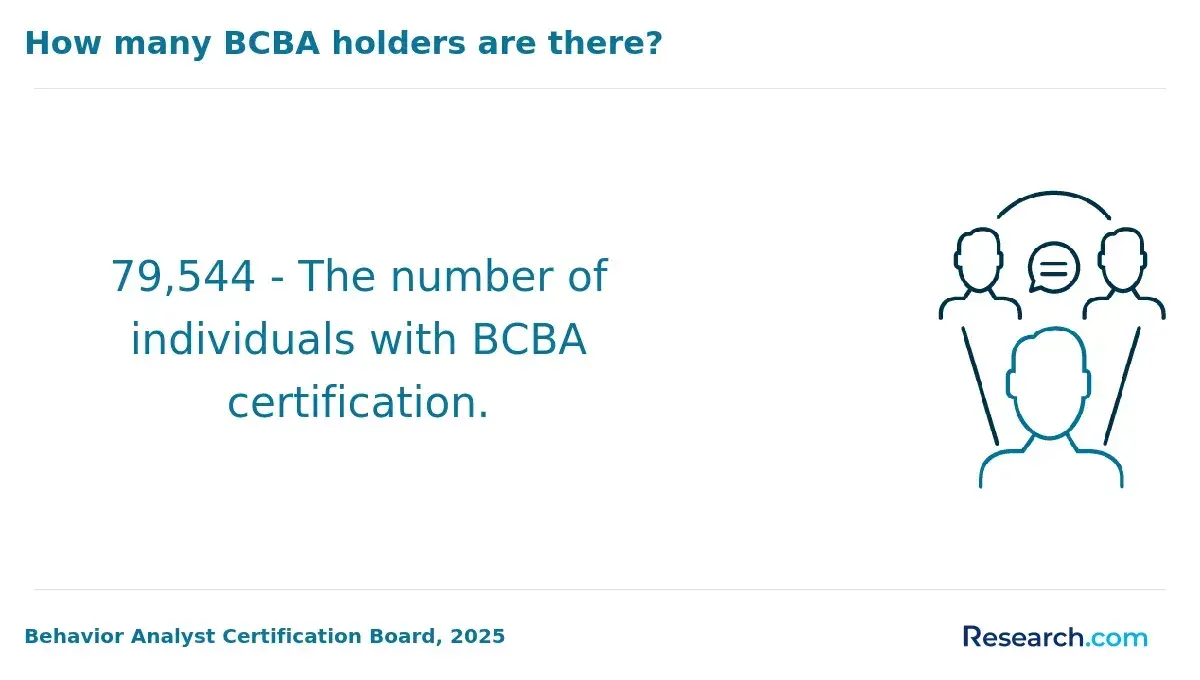
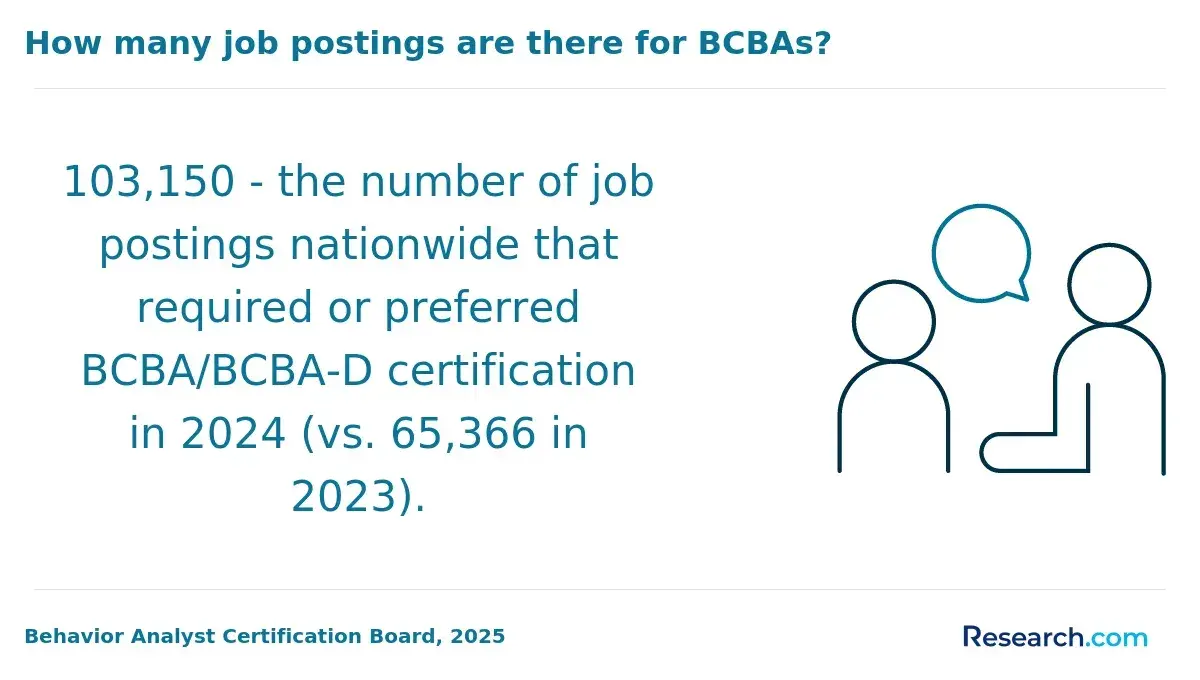
The ABA therapy market's rapid 12.4% compound annual growth rate has pushed demand for BCBAs above 81,566 certificants worldwide, increasing both job opportunities and competition for well-prepared candidates. Students should budget for the full certification path, not just tuition.
- Fastest route: full-time study with fieldwork arranged early.
- Most flexible route: part-time or online study while working in an ABA setting.
- Most common delay: completing coursework before securing approved supervision.
- Most overlooked cost: supervision fees and exam preparation materials.
BCBA certification can lead to clinical, educational, supervisory, consulting, and administrative roles. Many BCBAs work directly with individuals with autism, developmental disabilities, behavioral health needs, or learning challenges. Others move into leadership, staff training, program design, research, policy, or organizational consulting.
Common roles include clinical director, behavior analyst consultant, autism services coordinator, school-based practitioner, ABA program supervisor, and private practice provider. In clinical settings, BCBAs often conduct assessments, write behavior intervention plans, train caregivers and staff, supervise registered behavior technicians, and evaluate client progress. In schools, they may support functional behavior assessments, individualized education planning, classroom behavior systems, and teacher consultation.
Some BCBAs specialize in organizational behavior management, using behavior analysis to improve workplace productivity, safety, employee performance, and systems design. Others focus on telehealth, early intervention, adult services, severe behavior, caregiver training, or interdisciplinary care.
Career prospects vary by location and employer type. Analysis from Blossom ABA Therapy reports a 70% first-time BCBA pass rate in California versus 47% internationally, a difference that may affect local competitiveness, employer expectations, and salary potential. Candidates should examine state licensure rules, reimbursement systems, job availability, and supervision culture before choosing where to practice.
Career growth often depends on more than certification. Employers may look for strong documentation, ethical judgment, experience with diverse cases, leadership ability, and skill in training other professionals. Maintaining BCBA credentials also requires continuing education and attention to changing certification, licensing, and payer requirements.
- Clinical path: direct assessment, intervention planning, and supervision in ABA or behavioral health settings.
- Education path: school consultation, classroom supports, and collaboration with special education teams.
- Leadership path: clinical director, program manager, quality assurance, and staff supervision.
- Consulting path: private practice, organizational behavior management, telehealth, or specialized behavior services.
BCBA salary varies by experience, location, employer type, caseload complexity, and supervisory responsibility. In the United States, the salary for a Board Certified Behavior Analyst typically ranges from $60,000 to $95,000 annually. Entry-level BCBAs generally earn between $60,000 and $75,000, while experienced professionals or those with specialized skills may earn over $90,000.
Higher pay is often found in urban areas, healthcare organizations, school systems with high behavioral support needs, and private practices serving complex clinical populations. BCBAs who supervise teams, manage programs, provide specialized assessment, or move into leadership roles may have stronger earning potential than those in entry-level clinical positions.
The job outlook remains strong. Projections show a 20% or higher increase through 2030. Demand is driven by expanded use of behavior analysis in autism treatment, developmental disabilities services, education, behavioral health, caregiver training, and organizational behavior management.
Certification is valuable, but it is not automatic job security. Employers increasingly expect candidates to have quality supervised fieldwork, exposure to varied cases, clear documentation habits, and ethical decision-making skills. The BCBA certification process is challenging; only 54% of first-time candidates passed the exam, according to the BACB Annual Data Report. Strong supervision and exam preparation can improve both certification readiness and job readiness.
Prospective BCBAs should compare local demand before choosing a program or job market. State licensing rules, Medicaid and insurance reimbursement, school district hiring patterns, and availability of ABA providers can all affect salary and career stability.
- Best salary factors: experience, specialization, leadership duties, high-demand location, and clinical complexity.
- Best job outlook factors: strong supervision background, licensure readiness, ethical practice, and data-based clinical skills.
- Common mistake: focusing only on salary without evaluating caseload expectations, supervision quality, and burnout risk.
BCBA certification steps after program?
After completing an ABA program, aspiring Board Certified Behavior Analysts must finish the remaining certification requirements, document their eligibility, apply for the exam, and maintain the credential after passing. Graduation is an important milestone, but it is not the same as certification.
Candidates must complete 2,000 to 2,500 supervised fieldwork hours as required by the Behavior Analyst Certification Board. Supervision must be provided by a qualified BCBA and should include observation, feedback, skill development, ethical guidance, and review of applied work. Accurate fieldwork documentation is critical because incomplete or inconsistent records can delay approval.
After coursework and fieldwork are complete, applicants submit an application to the BACB for BCBA exam authorization. The application demonstrates that the candidate has met academic, experience, and ethical requirements. Once approved, the candidate schedules the exam, which covers behavior-analytic principles, measurement, assessment, intervention strategies, ethics, supervision, and research design.
Many candidates improve readiness through structured exam prep courses, practice exams, task-list review, study groups, and targeted remediation of weak areas. Passing the exam is required to earn BCBA certification.
Certification maintenance is also part of the process. BCBAs must complete continuing education units every two years, follow professional ethics requirements, and meet any applicable state licensure rules. Failure to maintain continuing education or comply with certification standards can lead to suspension or revocation.
The financial benefit of certification can be substantial. BCBA certification is associated with a $1.2 million lifetime earnings premium compared to non-certified roles, based on salary trends and certification growth data from BLS and BACB.
- Finish all required ABA coursework.
- Complete supervised fieldwork under a qualified BCBA.
- Audit your documentation before applying.
- Submit the BACB exam application.
- Schedule and prepare for the BCBA exam.
- Pass the exam and confirm any state licensure requirements.
- Maintain certification through continuing education every two years.
Other Things You Should Know About Applied Behavior Analysis
During the BCBA credentialing process, supervision involves structured mentorship from a qualified BCBA. Candidates must complete a specific number of supervised practical experience hours, where they apply learned concepts under guidance, receive feedback, and refine their skills. The supervision ensures candidates are prepared for independent practice and meet all practical requirements for certification.
BCBA candidates must complete graduate-level behavior-analytic coursework verified by the Behavior Analyst Certification Board, usually a master’s degree with the required sequence of courses. The BACB currently requires a minimum of 315 verified course sequence hours, plus supervised fieldwork before eligibility for the BCBA exam.
Ethics in applied behavior analysis focus on protecting client rights, ensuring informed consent, and maintaining confidentiality. Practitioners must adhere to professional codes of conduct, avoid conflicts of interest, and use evidence-based interventions. Ethical practice safeguards both clients and the integrity of the discipline.
- ABA Program Curriculum: What You Will Study - ABA Masters Programs https://abamastersprograms.org/curriculum/
- ABA Certification Explained: RBT, BCaBA, BCBA, BCBA-D https://onlinecounselingprograms.com/mental-health-careers/how-to-become-behavior-analyst-bcba/aba-certification-explained/
- Exploring Leading BCBA Educational Pathways: Masters and Doctoral Programs - apricott ABA https://www.apricott.com/resources/bcba-programs-schools
- Association for Behavior Analysis International Accreditation Board https://accreditation.abainternational.org/accredited-programs.aspx
- Master of Science in Applied Behavior Analysis (ABA) https://tsengcollege.csun.edu/programs/ABA/curriculum
- Guide to Becoming a BCBA - Bluesprig Autism https://www.bluesprigautism.com/blog/guide-to-becoming-a-bcba/
- Certification Pathways, VCSs, & Accreditation: A Student's Guide https://www.abatechnologies.com/blog/certification-pathways-vcss-accreditation-a-students-guide
- How Much Does it Cost to Take (Or Retake) the BCBA® Exam? https://passthebigabaexam.com/how-much-does-it-cost-to-take-or-retake-the-bcba-exam/
- Board-Certified Behavior Analyst (BCBA) Salary Guide â Trusted Health https://www.trustedhealth.com/allied-career-guide/behavior-analyst/salary-guide
- 20 Best Schools Offering Master's in ABA Programs https://www.appliedbehavioranalysisedu.org/20-best-schools-offering-aba-masters-programs/