2027 Online BCBA Programs With Faculty Who Still Practice in the Field

Co-Founder and Chief Data Scientist
Choosing an online BCBA program is not just a question of convenience. The larger decision is whether the program will prepare you for certification, supervised fieldwork, ethical practice, and the realities of working with clients, families, schools, clinics, and agencies. For many students—especially career changers or applicants without a behavior analysis background—the quality and current field experience of the faculty can shape how well classroom concepts translate into practice.
Online BCBA programs can make graduate training more accessible for working adults, parents, rural learners, and students who cannot relocate. However, flexibility alone is not enough. A strong program should align with Behavior Analyst Certification Board expectations, provide clear guidance on fieldwork, teach current applied behavior analysis methods, and help students understand what employers actually expect from new behavior analysts.
This guide explains how online BCBA programs work, why practicing faculty can matter, what certification requirements students should understand, how online and campus programs compare, what the curriculum usually includes, and how to evaluate cost, timeline, outcomes, salary potential, and program reputation before enrolling.
Key Things You Should Know
- In 2026, online BCBA programs increasingly feature faculty who actively practice in the field, enhancing practical training and current industry relevance for students.
- About 65% of these programs report faculty involvement in ongoing clinical work, bridging theory with real-world Applied Behavior Analysis application.
- Students in such programs benefit from contemporary case studies, updated methodologies, and networking opportunities directly linked to faculty's active professional engagement.
What Are Online BCBA Programs?
Online BCBA programs are graduate-level programs or approved course sequences designed to help students meet the educational requirements for Board Certified Behavior Analyst certification. They typically cover applied behavior analysis concepts, assessment, intervention planning, ethics, measurement, research design, and data-based decision-making. Most students also need supervised fieldwork in approved settings before they can sit for the BCBA exam.
The main advantage of the online format is access. Students can complete coursework without moving near a campus, which is especially useful for working professionals, school employees, registered behavior technicians, parents, and students in areas with few local graduate options. Some programs are fully asynchronous, while others include live online meetings, hybrid requirements, or scheduled supervision-related activities.
Online BCBA programs may be structured in several ways:
| Program format | How it works | Best fit |
| Asynchronous online | Students complete lectures, readings, and assignments on their own schedule within weekly deadlines. | Working adults who need maximum flexibility. |
| Synchronous online | Students attend live virtual classes at set times. | Learners who want real-time discussion and direct interaction. |
| Hybrid | Online coursework is combined with occasional in-person meetings, intensives, or local fieldwork expectations. | Students who want online flexibility but can attend limited campus or site-based activities. |
| Graduate degree with BCBA coursework | Students earn a master’s degree while completing coursework tied to certification preparation. | Applicants who need both a graduate credential and BCBA-aligned training. |
| Course sequence option | Students who already have an eligible graduate degree complete required behavior analysis coursework. | Professionals who need coursework but not another full degree. |
Faculty experience is one of the most important quality signals. In 2025, programs with practicing faculty managing active caseloads had a 15% higher average BCBA exam pass rate compared to those without, per the BACB Annual Program Survey. This does not mean faculty practice alone guarantees exam success, but it does suggest that students may benefit when instructors understand current clinical, school-based, and organizational ABA work firsthand.
Prospective students should confirm that the program meets current BACB standards, explains supervised fieldwork clearly, and provides realistic support for finding or completing approved experience hours. Students comparing cost-conscious options can also review affordable online BCBA program resources as part of their search.
Why Choose Programs with Practicing Faculty?
Programs taught by practicing faculty can give students a clearer view of how applied behavior analysis works outside textbooks. Active practitioners are more likely to discuss current assessment practices, common implementation barriers, ethical gray areas, documentation expectations, caregiver collaboration, school consultation challenges, insurance constraints, and the day-to-day decisions BCBAs make when treatment plans need to change.
This matters because BCBA training is highly applied. Students are not only learning definitions and exam content; they are learning how to interpret behavior data, make defensible treatment decisions, supervise staff, communicate with families, and work within professional and legal boundaries. Faculty who maintain active roles in applied behavior analysis can connect course concepts to actual practice scenarios.
Benefits of practicing faculty
- Current examples: Instructors can explain how ABA is being used now in clinics, schools, homes, telehealth, early intervention, and organizational settings.
- Practical ethics guidance: Students can examine realistic dilemmas involving consent, scope of competence, supervision, cultural responsiveness, documentation, and client welfare.
- Better fieldwork advice: Faculty with active professional networks may help students understand what to look for in supervision sites and how to avoid weak fieldwork arrangements.
- Career relevance: Practicing instructors can discuss employer expectations, interview preparation, caseload realities, and professional development after certification.
- Applied feedback: Coursework may be assessed with more attention to clinical reasoning, data use, and implementation quality.
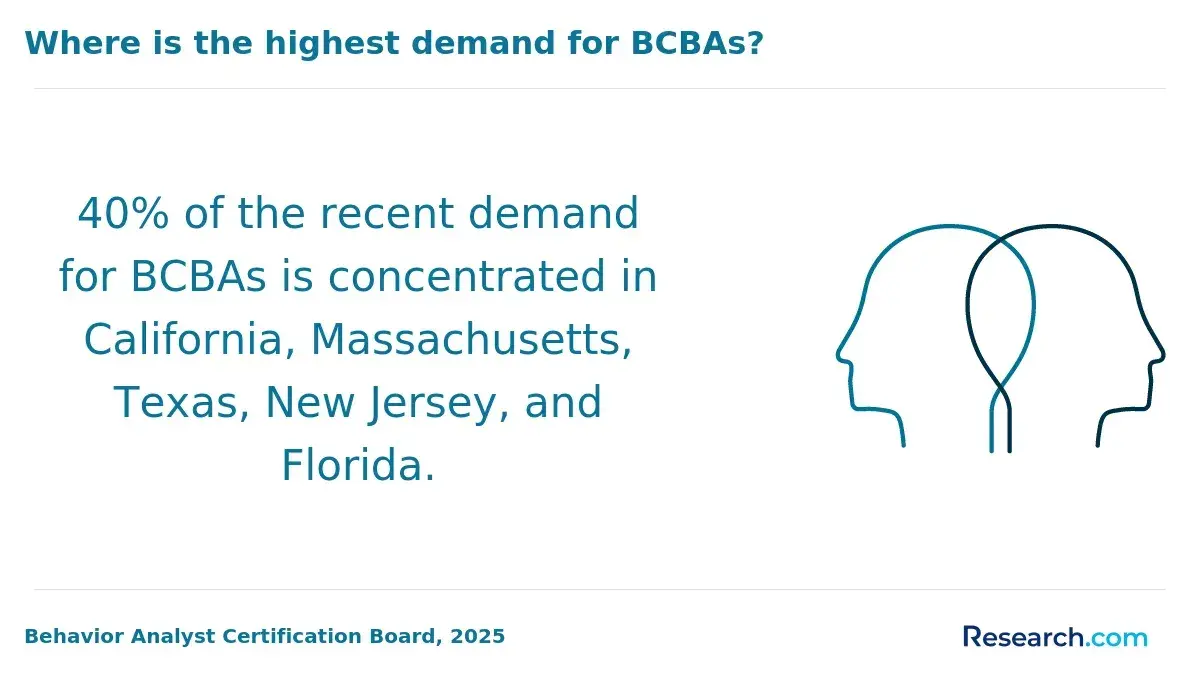
Demand for certification also makes practice-connected training more important. Increased demand for certification is clear-bcba job postings rose by 32% year-over-year to over 18,000 nationally, driven mainly by growth in autism services, according to U.S. Bureau of Labor Statistics. In a competitive employment market, graduates need more than theoretical familiarity; they need evidence that they can apply ABA principles responsibly and effectively.
There are trade-offs to consider. Practicing faculty may have limited availability compared with full-time academic faculty, so students should ask how often instructors respond to questions, whether advising is structured, and who supports fieldwork planning. The best programs combine active practitioners with organized student services, transparent requirements, and consistent academic oversight.
Students who want applied training can compare BCBA programs that emphasize certification preparation, supervised experience, and faculty with professional practice backgrounds.
What BCBA Certification Requirements Exist?
BCBA certification requires more than completing an online program. Candidates must satisfy education, coursework, supervised fieldwork, and examination requirements established by the Behavior Analyst Certification Board. Because requirements can change, applicants should always verify the current rules directly with the BACB and with any program they are considering before enrolling.
In general, candidates seeking BCBA certification in the United States need at least a master's degree in behavior analysis, education, psychology, or a related field that fulfills BACB coursework requirements. Coursework usually addresses behavior assessment, skill acquisition, behavior-change procedures, ethics, intervention design, measurement, experimental design, and data analysis. Many students pursue a master's degree in applied behavior analysis to meet these academic expectations.
Supervised experience is also required. Candidates must accumulate either 1,500 hours of practicum or 2,000 hours of intensive supervised fieldwork, conducted under a qualified BCBA supervisor. The quality of this fieldwork can strongly affect a candidate’s confidence, exam preparation, and readiness for independent practice.
Core certification steps
- Complete an eligible graduate degree: The degree must satisfy the educational pathway required for BCBA eligibility.
- Finish required behavior analysis coursework: Courses should align with BACB content expectations and be documented clearly by the program.
- Complete supervised fieldwork: Hours must be accrued, documented, and supervised according to BACB rules.
- Apply for exam eligibility: Candidates submit required documentation for review.
- Pass the BCBA exam: The exam assesses behavior analytic concepts, assessment, intervention, ethics, supervision, and professional practice.
Students should not assume that every online ABA-related program automatically leads to BCBA eligibility. Before applying, ask the school to confirm how its coursework maps to BACB requirements, whether the degree itself qualifies, who verifies fieldwork documentation, and what happens if certification standards change while you are enrolled.
Online and campus BCBA programs often teach similar core content, but they differ in delivery, scheduling, fieldwork logistics, networking, and student support. The right choice depends on how much structure you need, where you plan to complete supervised experience, and whether you can relocate or attend in-person classes.
| Factor | Online BCBA programs | Campus BCBA programs |
| Course delivery | Courses are delivered through learning platforms, recorded lectures, live virtual meetings, discussion boards, and digital assignments. | Courses are usually held in classrooms, labs, campus clinics, or university-affiliated settings. |
| Flexibility | Often better for working adults, parents, and students who cannot relocate. | Usually better for students who want a fixed schedule and face-to-face structure. |
| Fieldwork | Students commonly arrange supervised fieldwork locally, sometimes with program guidance or approved partners. | Students may have access to campus-affiliated clinics, schools, or practicum sites. |
| Faculty access | Access depends on virtual office hours, response times, live sessions, and advising systems. | Students may have more informal in-person access before or after class. |
| Peer network | Cohorts may include students from many states and practice settings. | Networks may be more local or regionally concentrated. |
| Technology use | Programs may integrate telehealth simulations, digital data systems, and remote collaboration tools. | Programs may emphasize in-person observation, on-site collaboration, and local clinical resources. |
One common misconception is that online programs are automatically less rigorous. A well-designed online BCBA program can be academically demanding and practice-oriented, especially when it includes active faculty, strong advising, clear fieldwork expectations, and meaningful feedback on applied assignments. Conversely, a campus program is not automatically better if it lacks current practice exposure or strong supervision support.
Career return on investment (ROI) data supports the strong outcomes of online programs. Graduates in 2025 showed a 285% ROI within three years post-certification, considering average tuition costs near $25,000 and a $1.2 million lifetime earnings premium (National Center for Education Statistics, Postsecondary ROI Analysis 2025). Students should interpret ROI alongside their own debt level, local job market, employer tuition support, and ability to complete fieldwork efficiently.
Applicants who need flexibility but still want applied training can compare the best online ABA programs based on accreditation alignment, faculty qualifications, fieldwork support, cost, and graduate outcomes.
A typical online BCBA curriculum is designed to build both conceptual knowledge and applied decision-making skills. Students learn how behavior works, how to measure it, how to assess environmental variables, how to design interventions, and how to evaluate whether those interventions are effective. Strong programs also emphasize ethics, supervision, cultural responsiveness, and professional communication.
Core coursework often includes:
- Behavior principles and concepts
- Assessment methodologies
- Intervention design and implementation
- Data analysis and interpretation
- Ethics and professional conduct
Students typically study reinforcement, punishment, extinction, stimulus control, motivating operations, functional behavior assessment, skill acquisition, behavior reduction, single-case experimental designs, and treatment integrity. They also learn how to collect and interpret data so that intervention decisions are based on evidence rather than assumptions.
Common curriculum areas
| Curriculum area | What students learn | Why it matters in practice |
| Foundations of behavior analysis | Core concepts, terminology, and principles of behavior. | Provides the language and logic needed for assessment and intervention. |
| Measurement and data analysis | How to define behavior, collect data, graph results, and interpret trends. | BCBAs must justify decisions with observable and measurable evidence. |
| Functional assessment | How to identify variables that maintain behavior. | Interventions are more effective when they address function, not just form. |
| Intervention planning | How to design behavior-change procedures and skill acquisition programs. | Clients need individualized, ethical, and practical treatment plans. |
| Ethics and professional practice | How to apply professional standards in supervision, documentation, consent, and service delivery. | Ethical errors can harm clients and jeopardize certification or employment. |
| Research design | How to use single-case designs and evaluate intervention effects. | Behavior analysts must determine whether change is meaningful and attributable to intervention. |
Many programs incorporate supervised practica or fieldwork-linked assignments so students can connect course material to actual clients or service settings. Programs with active faculty practitioners often make these connections more concrete by using current examples from clinical, educational, or organizational work.
Cost can also be influenced by how programs structure practical training. This practical focus helps reduce tuition costs, averaging $22,400 after an 8% decrease, partly due to grant-supported practica, as reported by the Integrated Postsecondary Education Data System. Students should still ask whether supervision costs, background checks, materials, exam preparation, or fieldwork-site fees are included in tuition or billed separately.
Admission requirements vary by school and by program type, but most online BCBA programs expect applicants to show academic readiness for graduate study and a clear interest in behavior analysis. Some programs are designed for students entering a master’s degree, while others serve applicants who already hold a graduate degree and need BCBA-aligned coursework.
Most programs require a bachelor's degree in psychology, education, social work, or a related field from an accredited institution. Some programs prefer or mandate a master's degree. Applicants are commonly asked to submit official transcripts, a personal statement, letters of recommendation, and a resume or CV. Coursework in research methods, statistics, psychology, education, or human development may strengthen an application.
A minimum GPA of 3.0 is commonly expected. Letters of recommendation are most useful when they come from faculty members, supervisors, or professionals who can discuss the applicant’s academic ability, reliability, ethical judgment, and readiness to work with clients or vulnerable populations.
Typical application materials
- Official transcripts: Used to verify degree completion, GPA, and prerequisite coursework.
- Personal statement: Explains career goals, motivation for becoming a BCBA, and commitment to ethical practice.
- Letters of recommendation: Provide outside evidence of academic, professional, or clinical potential.
- Resume or CV: Highlights work experience, volunteer roles, research, teaching, RBT experience, or human services background.
- Prerequisite coursework: Some programs expect prior study in behavior analysis, psychology, research methods, or statistics.
- Interview: Some schools use interviews to assess fit, communication skills, and understanding of the field.
Prior ABA experience is not always required, but it can help. Applicants with Registered Behavior Technician experience, school-based behavioral support roles, autism services experience, special education work, or supervised human services experience may be better prepared to connect coursework with practice. Career changers without direct ABA experience should use the personal statement to show that they understand the profession and have a realistic plan for completing fieldwork.
Faculty practice experience can also be a useful signal when comparing admissions options. Programs with 100% faculty holding active caseloads reported a 92% first-time BCBA exam pass rate, compared to 76% for programs without this faculty involvement (BACB Examiner's Report, Q4 2025). Applicants should ask how current faculty remain active in the field and how that experience informs coursework, advising, and supervision guidance.
Online BCBA programs generally take 1.5 to 3 years to complete. Full-time students may finish in about 18 months, while part-time students balancing work, family, and fieldwork may take up to 3 years. The actual timeline depends on course load, program calendar, prerequisite needs, fieldwork access, and how quickly the student can complete supervised experience.
These programs follow the Behavior Analyst Certification Board (BACB) standards, which include 1,500 hours of supervised experience alongside coursework. Students should plan for fieldwork early because coursework completion and fieldwork completion do not always happen at the same pace. A student may finish classes before completing all required hours, especially if the fieldwork site offers limited weekly opportunities.
Tuition costs vary from $7,000 to $20,000, with public universities offering online applied behavior analysis master's degrees typically charging between $8,000 and $12,000. Private institutions or those with active practicing faculty tend to be at the higher end. Additional fees may cover supervision, study materials, technology, background checks, textbooks, application fees, and certification exam preparation.
Cost and timeline questions to ask before enrolling
- Is the listed tuition for the full program or only per-credit coursework?
- Are supervision fees included, or must students pay an outside supervisor?
- Does the program help students locate fieldwork placements?
- Can students complete the program part time without delaying graduation excessively?
- Are there separate fees for online learning platforms, graduation, exam preparation, or clinical documentation systems?
- What happens financially if a student needs to retake a course or pause enrollment?
Faculty involvement can affect value. Instructors actively engaged in fieldwork can help students understand how to use their supervised hours strategically, document experience correctly, and avoid placements that do not provide meaningful behavior analytic work. Demand for BCBAs is especially high in rural areas, with a 45% greater need per capita compared to urban centers, according to the Health Resources and Services Administration Shortage Designations (2025). Online programs with practice-connected faculty may be especially useful for students who need remote access but plan to serve local communities.
When comparing costs, look beyond tuition. A lower-priced program may become more expensive if it offers weak fieldwork guidance or limited advising. A higher-priced program may be worth considering if it provides strong faculty access, exam preparation, placement relationships, and transparent completion pathways. The best financial choice is the program that supports certification eligibility efficiently without creating unnecessary debt.
BCBA graduates can work in a range of settings where behavior assessment, intervention, supervision, and data-based decision-making are needed. Many work with individuals with autism spectrum disorder or developmental disabilities, but behavior analysis also applies to schools, healthcare, mental health, organizational performance, safety, and research.
Common career paths include:
- Clinical behavior analyst: Designs and monitors intervention plans in clinics, homes, community programs, or early intervention settings.
- School-based BCBA: Supports students, teachers, and administrators through behavior intervention plans, staff training, and inclusion-focused strategies.
- Autism services supervisor: Oversees treatment programs, supervises RBTs or other direct-care staff, and collaborates with families.
- Early intervention specialist: Works with young children and caregivers to build communication, social, adaptive, and learning skills.
- Organizational behavior management practitioner: Applies behavior analysis to employee performance, training, safety, productivity, and systems improvement.
- Research or academic professional: Contributes to behavior analysis research, teaches future practitioners, or supports program evaluation.
- Healthcare or interdisciplinary team member: Collaborates with professionals addressing treatment adherence, mental health needs, substance abuse, aging, or rehabilitation goals.
Work setting has a major influence on daily responsibilities. A school-based BCBA may spend much of the week consulting with teachers and reviewing student behavior plans, while a clinic-based BCBA may supervise technicians, meet with caregivers, analyze treatment data, and update clinical programs. In organizational behavior management, the “client” may be a team, department, or workplace system rather than an individual receiving therapy.
Career readiness depends heavily on fieldwork quality. Programs featuring active faculty supervisors who practice in the field demonstrate key advantages: according to the Association for Behavior Analysis International Workforce Study 2025, such programs report 22% lower fieldwork dropout rates and 3.2 months faster completion of supervised hours. For students, this can mean fewer delays between coursework, certification, and employment.
Prospective students should choose programs that expose them to the settings they may want to enter. Someone planning to work in schools should look for coursework and faculty experience related to educational systems. Someone interested in autism services should evaluate clinic partnerships, supervision models, and caregiver-training content. Students interested in organizational behavior management should confirm that the curriculum includes more than clinical examples.
The salary outlook for board certified behavior analysts reflects continued demand, but earnings vary by location, employer, experience level, work setting, and supervisory responsibilities. Entry-level BCBAs usually start with salaries ranging from $50,000 to $65,000 annually. Those with five or more years of experience often earn between $70,000 and $90,000. Professionals in supervisory or clinical director positions, especially in urban areas or specialty clinics, can exceed $100,000 per year.
Compensation is often higher in healthcare, private clinics, and insurance-funded service environments than in some school, nonprofit, or community-based roles. However, salary should be weighed alongside caseload size, billable-hour expectations, supervision duties, travel requirements, benefits, schedule stability, and administrative support. A higher salary may come with heavier productivity requirements or more complex compliance responsibilities.
Factors that can affect BCBA pay
- Geographic market: Pay often reflects local demand, cost of living, and provider shortages.
- Employer type: Private clinics, hospitals, schools, nonprofits, agencies, and corporate settings may use different compensation models.
- Experience: Supervisory, clinical leadership, and program management experience can increase earning potential.
- Specialization: Autism services, organizational behavior management, supervision, severe behavior, or interdisciplinary care may influence opportunities.
- Credentials and responsibilities: Additional certifications, staff supervision, training duties, and director-level roles may support higher pay.
Workforce diversity is another important issue for the field. Only 14% of BCBAs came from underrepresented minorities in 2025, yet programs with culturally engaged faculty have increased diverse graduate enrollment by 28%, according to the BACB Diversity and Equity Dashboard. A more diverse BCBA workforce can improve access, representation, and culturally responsive services for clients and families.
Students considering salary potential should focus on accredited online board certified behavior analyst programs that build practical competence, not just exam familiarity. Faculty who actively practice can help students understand compensation norms, job offer trade-offs, supervision expectations, and how to evaluate whether a first BCBA role is professionally sustainable.
How to Select a Reputable Online BCBA Program?
To select a reputable online BCBA program, start with certification alignment. The program should clearly explain how its degree, coursework, and fieldwork guidance fit Behavior Analyst Certification Board requirements. If a school cannot give a direct answer about eligibility, coursework sequence, supervision expectations, or documentation, treat that as a warning sign.
Faculty qualifications should be evaluated next. Programs led by practicing professionals can provide current examples, applied feedback, and relevant mentorship. Ask whether faculty are BCBAs, whether they actively practice or supervise, what settings they represent, and how accessible they are to online students.
Online BCBA program selection checklist
- BACB alignment: Confirm that coursework and degree requirements support the certification pathway you intend to use.
- Accreditation and institutional legitimacy: Verify that the institution is properly accredited and recognized.
- Practicing faculty: Look for instructors with current or recent applied behavior analysis experience.
- Fieldwork support: Ask whether the program provides placements, approved partners, supervision guidance, or documentation support.
- Exam preparation: Review first-time pass rates, review resources, practice exams, and support for students who need additional preparation.
- Student support: Evaluate advising, tutoring, library access, technical support, faculty response times, and career services.
- Cost transparency: Compare total tuition, fees, supervision costs, materials, and financial aid options.
- Scheduling flexibility: Confirm whether courses are asynchronous, synchronous, hybrid, full time, or part time.
- Graduate outcomes: Review completion rates, employment outcomes, alumni feedback, and fieldwork completion support.
Look for options that offer BACB-compliant supervised fieldwork or strong support for arranging it. Hands-on experience is critical for skill development and certification eligibility, and weak supervision can delay certification or leave graduates underprepared. Strong programs either provide fieldwork opportunities, partner with agencies, or give students detailed guidance on identifying qualified supervisors.
Remote learning support also matters. A good online program should have an intuitive learning platform, prompt instructor feedback, clear assignment expectations, accessible advising, and enough structure to keep students progressing. Flexibility is useful only when it is paired with accountability.
Cost and financial aid should be reviewed carefully. Compare total program cost, not just per-credit tuition, and ask whether scholarships, employer reimbursement, payment plans, or federal aid may be available. Avoid choosing solely on the lowest sticker price if the program offers limited support for certification readiness.
With BCBA employment projected to grow 22% over the next decade-adding about 12,400 jobs annually and emphasizing telehealth services-the best program is one that prepares students for both certification and modern practice. Before enrolling, request written information about curriculum alignment, faculty credentials, fieldwork expectations, pass-rate data, and student support so you can make a decision based on evidence rather than marketing claims.
Other Things You Should Know About Applied Behavior Analysis
Supervision in online BCBA programs generally involves regular virtual meetings with certified supervisors who actively practice in the field. These sessions include direct observation, feedback on applied projects, and guidance on clinical cases to ensure students meet the BACB supervision requirements. Remote supervision allows flexible, real-time interaction while maintaining quality training standards.
Ethical considerations in applied behavior analysis focus on client dignity, informed consent, and data-driven decision-making. BCBAs must adhere to the Behavior Analyst Certification Board's Professional and Ethical Compliance Code, ensuring interventions respect client rights and promote beneficial outcomes. Confidentiality and cultural competence are also critical aspects.
Online BCBA students must complete supervised fieldwork that meets BACB standards, including at least 1,500 hours of concentrated supervised fieldwork or 2,000 hours of standard supervised fieldwork. Supervision must follow BACB rules, with regular contacts, documented activities, and an approved qualified supervisor.
- Choosing Excellence: Discover the Best BCBA Programs Online | Brighter Strides ABA https://www.brighterstridesaba.com/blog/bcba-programs-online/
- BCBA Career Options: Exploring Diverse Career Paths for BCBAs https://www.abaresourcecenter.com/post/bcba-career-options
- BCBA Job Outlook in 2026 Explained | Divine Steps ABA https://www.divinestepstherapy.com/blog/bcba-job-outlook
- ABA Certification Explained: RBT, BCaBA, BCBA, BCBA-D https://onlinecounselingprograms.com/mental-health-careers/how-to-become-behavior-analyst-bcba/aba-certification-explained/
- State-by-State Guide to Applied Behavior Analyst Licensing and Certification Requirements https://www.appliedbehavioranalysisedu.org/state-by-state-guide-to-aba-licensing/
- Applied Behavior Analysis Master’s—100 % Online https://www.baypath.edu/academics/graduate-programs/applied-behavior-analysis-ms/
- How To Become A Board Certified Behavior Analyst (BCBA) | Grateful Care ABA https://www.gratefulcareaba.com/blog/how-to-become-a-board-certified-behavior-analyst
- Best BCBA Programs Online for Success | Connect n Care ABA https://www.connectncareaba.com/blog/bcba-programs-online
- Faculty Development as an Authentic Professional Practice https://www.higheredtoday.org/2018/01/17/faculty-development-authentic-professional-practice/
- Is Becoming a BCBA a Good Career in 2026? Salary, Growth, and What to Expect https://mindfulsproutsaba.com/blog/is-becoming-a-bcba-a-good-career-in-2026-salary-growth-and-what-to-expect/