2027 What to Expect in Your First Year as a BCBA

Co-Founder and Chief Data Scientist
Your first year as a BCBA is a major shift: you move from meeting certification requirements to making independent clinical decisions, supervising others, documenting services, communicating with families, and defending treatment choices with data. The work can be rewarding, but it can also feel intense when client needs, ethical responsibilities, productivity expectations, and workplace systems all arrive at once.
This guide explains what a Board Certified Behavior Analyst does, what education and certification involve, how long the process can take, what programs may cost, and what new BCBAs can expect in career options, salary, and job outlook. It is written for prospective students, supervisees, career changers, and newly certified professionals who want a realistic view of the field before committing time and money to the pathway.
Key Things You Should Know
- New BCBAs often spend significant time on supervision and gaining clinical experience, with 70% reporting adjustment challenges related to practical application versus textbook knowledge.
- Understanding insurance billing and documentation is crucial, as 85% of early-career BCBAs manage complex paperwork that impacts their service delivery and reimbursement.
- Ongoing professional development is vital; 60% of first-year BCBAs engage in specialized training to stay current with ethical standards and emerging techniques in Applied Behavior Analysis.
What is a BCBA and what do they do?
A BCBA, or Board Certified Behavior Analyst, is a credentialed professional who uses applied behavior analysis to assess behavior, design interventions, measure progress, and help clients build safer, more effective skills. BCBAs often work with children with autism, students with behavioral support needs, adults with developmental disabilities, and individuals receiving services in clinical, school, home, residential, or community settings.
The core of the job is not simply “managing behavior.” A BCBA identifies why a behavior is happening, chooses evidence-based strategies, trains the people who will implement those strategies, and evaluates whether the plan is actually working. Strong practice depends on careful assessment, ethical decision-making, clear communication, and consistent data review.
Common BCBA responsibilities
- Conducting functional behavior assessments and interpreting behavioral data.
- Writing individualized behavior intervention plans and skill acquisition programs.
- Training caregivers, teachers, Registered Behavior Technicians, and other team members.
- Supervising BCaBA and RBT staff while monitoring treatment quality.
- Updating interventions when data show that a plan is ineffective or no longer appropriate.
- Documenting services, progress, supervision, and treatment changes according to professional and payer requirements.
- Following the ethical and professional standards set by the Behavior Analyst Certification Board.
The work requires both clinical judgment and operational discipline. A BCBA may spend part of the day observing a client, part of the day coaching a technician, and part of the day writing notes, reviewing graphs, meeting with a school team, or explaining treatment goals to a parent. New professionals are often surprised by how much of the role involves collaboration and documentation, not only direct client contact.
The board certified behavior analyst job description also reflects a demanding credentialing process. The BCBA exam's first-time pass rate has declined from 66% to 51%, reflecting increased exam rigor. Prospective BCBAs should be prepared to develop strong analytical skills, understand ethics deeply, and apply behavioral principles across varied client needs rather than memorizing terminology for an exam.
Students who need a flexible route to graduate coursework may compare BCBA online programs, especially if they are balancing work, fieldwork, and family responsibilities.
What education is required to become a BCBA?
To meet the education required to become a BCBA in the United States, candidates must hold a master's degree or higher in behavior analysis, psychology, education, or a related field. The Behavior Analyst Certification Board requires verified coursework in applied behavior analysis, including ethics, measurement, experimental design, assessment, intervention, and behavior-change procedures. These verified courses typically include 270 hours of classroom instruction.
Education alone is not enough. Candidates must also complete 1,500 hours of supervised practicum or internship work, applying behavioral techniques under the supervision of a qualified BCBA. This supervised experience is where candidates learn to translate coursework into professional judgment: writing usable plans, collecting meaningful data, responding to treatment barriers, and communicating with families and interdisciplinary teams.
What to look for in a BCBA education pathway
- Eligibility alignment: Confirm that the coursework is accepted for BCBA certification before enrolling.
- Supervision access: Ask whether the program helps students secure supervised fieldwork or expects them to find it independently.
- Faculty expertise: Look for instructors with applied experience in settings relevant to your career goals, such as schools, autism services, behavioral health, or adult services.
- Exam preparation: Review how the program supports exam readiness, including practice questions, ethics application, and concept fluency.
- Schedule fit: A program that is academically strong but impossible to complete alongside fieldwork may delay certification.
Many students pursue a master's degree in applied behavior analysis. Others complete verified coursework while enrolled in a psychology, education, or related graduate program. Either route can work if it satisfies certification requirements, but students should verify details before committing tuition dollars. For help comparing options, review reputable BCBA certification schools and confirm program requirements directly with the institution.
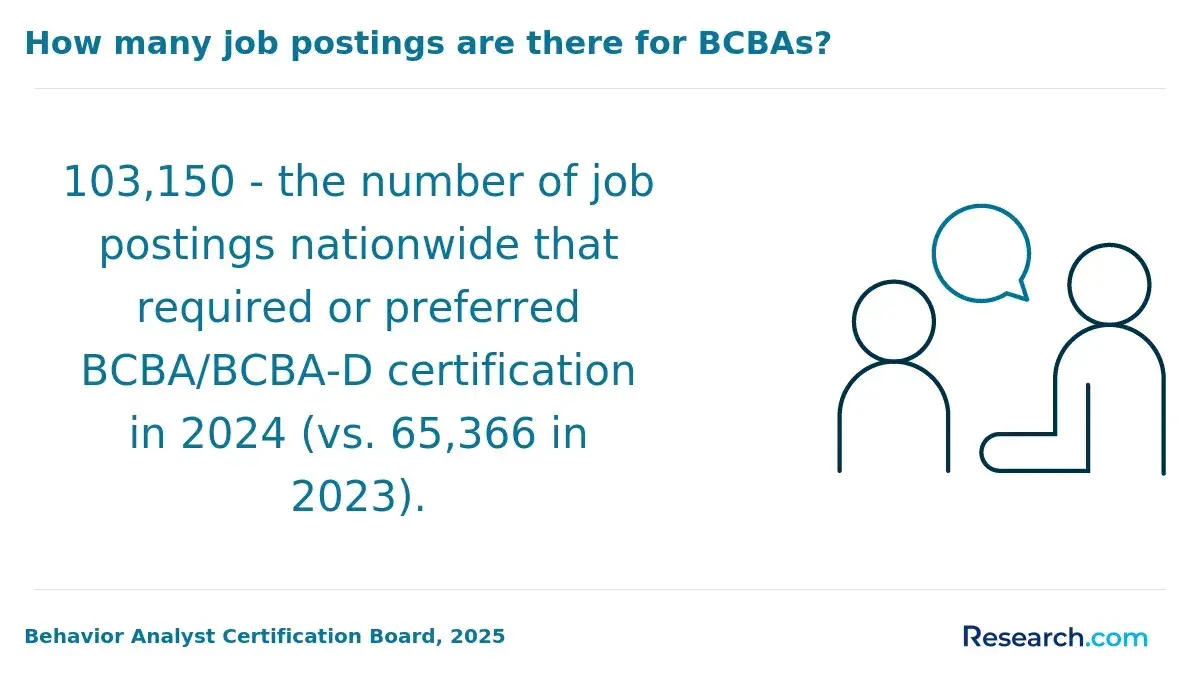
The requirements for BCBA certification and degree programs have become more important because employment demand is projected to remain strong in the U.S. through 2025. Completing coursework and fieldwork on a realistic timeline can help candidates enter the labor market with fewer delays.
How do I get BCBA certification?
To get BCBA certification, candidates must complete qualifying graduate education, finish supervised fieldwork, apply to the Behavior Analyst Certification Board, pass the BCBA exam, and maintain certification through continuing education. The process is structured, but delays are common when students choose the wrong coursework, start fieldwork late, or fail to document supervision correctly.
Basic steps to certification
- Complete an eligible graduate program or course sequence. Candidates typically study behavior analysis, psychology, or education through coursework that satisfies Behavior Analyst Certification Board requirements. Accreditation by the Association for Behavior Analysis International can help streamline fulfillment of coursework standards.
- Secure qualified supervision early. Supervised fieldwork of 1,500 to 2,000 hours is required, with supervision provided by a qualified BCBA and documented thoroughly.
- Choose the appropriate fieldwork pathway. There are two main experience pathways for supervised fieldwork: 2,000 hours completed independently over up to 36 months or a concentrated practicum of at least 1,000 hours within 12 months.
- Submit documentation and apply for the exam. Candidates should keep accurate records throughout the process rather than trying to reconstruct fieldwork later.
- Prepare for and pass the BCBA exam. The computer-based exam covers areas such as ethics, measurement, assessment, experimental design, and intervention strategies.
- Maintain certification. After passing, certification renewal every two years requires continuing education credits.
The best fieldwork option depends on your schedule, access to clients, supervisor availability, and ability to receive meaningful feedback. A faster path is not always better if it limits the quality of your clinical learning. Poor supervision can leave new BCBAs technically certified but underprepared for independent decision-making.
Demand for newly certified BCBAs remains strong, reflected in competitive entry-level salaries per the BACB Certificant Annual Data. Even so, applicants should avoid assuming certification is automatic once coursework is complete. The most common preventable problems are incomplete documentation, supervision that does not meet requirements, and underestimating the exam’s applied and ethical reasoning demands.
Students comparing flexible options on how to obtain bcba certification in the United States may consider online masters ABA programs, especially if they need to coordinate graduate study with employment and fieldwork hours.
A first-year BCBA curriculum typically builds the foundation for assessment, intervention design, ethical practice, supervision, and data-based decision-making. The goal is not only to teach behavioral terminology, but to prepare students to make defensible clinical decisions with real clients in real service systems.
Students learn how to conduct functional behavior assessments, interpret patterns in behavior, and develop behavior intervention plans that are practical for families, schools, technicians, or care teams to implement. Coursework also covers skill acquisition, behavior reduction, generalization, maintenance, and the use of data to decide whether to continue, revise, or discontinue an intervention.
Core areas in early BCBA coursework
- Behavior analytic principles such as reinforcement, extinction, prompting, shaping, stimulus control, and chaining.
- Functional behavior assessment and functional analysis methodologies.
- Measurement systems, graphing, data interpretation, and treatment evaluation.
- Behavior intervention planning and individualized goal development.
- Ethical decision-making under the Ethics Code for Behavior Analysts.
- Documentation standards, data reporting, and clinical justification.
- Supervision, performance feedback, and staff training practices.
- Collaboration with families, schools, medical providers, and interdisciplinary teams.
Applied training is essential. Programs may use role-play, case studies, treatment-plan writing, mock supervision, and supervised client-based hours to connect theory with practice. This is where students begin learning how to handle treatment nonresponse, caregiver disagreement, inconsistent implementation, and competing priorities in schools or agencies.
Nearly 75% of new BCBAs report imposter syndrome during their first year, which is why strong curricula should also teach professional judgment, consultation skills, reflective practice, and how to seek support without over-relying on others. Confidence grows when students repeatedly practice explaining decisions, reviewing data, and revising interventions based on evidence.
Individuals who need a flexible academic format can compare online ABA masters programs while paying close attention to supervision support, faculty access, and whether online coursework includes enough applied practice.
BCBA admission requirements vary by institution, but most programs require a bachelor's degree or higher from an accredited institution. Programs may prefer applicants with academic or professional experience in behavior analysis, psychology, education, special education, social work, speech-language services, or related human-service fields.
Typical application materials include transcripts, a statement of purpose, letters of recommendation, a resume, and sometimes an interview. Some programs expect prior coursework related to behavior analysis, psychology, or education, including topics such as ethics, measurement, experimental design, and behavior assessment. Applicants without this background may be asked to complete prerequisite courses before admission or early in the program.
Fieldwork and certification planning
Applicants should distinguish between admission requirements and certification requirements. A school may admit you to a program before you have completed supervised fieldwork, but you will still need qualifying fieldwork for BCBA certification. Options cited in BACB-related planning include 1,500 hours of independent fieldwork, 1,000 hours of concentrated fieldwork, or 750 hours of practicum under qualified BCBA supervision. Documentation, detailed logs, and supervisor evaluations are essential for verifying competency.
Connect n Care ABA reports a 25% rise in first-time BCBA candidates between 2020 and 2023, highlighting increased accessibility to fieldwork opportunities. Greater access does not eliminate the need for careful planning. Students should ask whether a program provides practicum placement support, whether supervision is included in tuition, and whether their employment site can count toward fieldwork.
Questions to ask before applying
- Does the program meet current BCBA coursework requirements?
- Is the institution accredited, and are credits likely to transfer if needed?
- Does the program help students find qualified supervision?
- Are fieldwork hours built into the curriculum or arranged separately?
- What exam-preparation support is included?
- How do students balance coursework, employment, and fieldwork expectations?
Effective time management is critical because many candidates work while completing graduate study and supervised hours. Before enrolling, confirm program eligibility, fieldwork policies, documentation expectations, and total costs in writing.
Becoming a BCBA generally takes 1.5 to 3 years, depending on your graduate program format, prior education, work schedule, access to qualified supervision, and pace of fieldwork completion. Candidates who attend full time and have consistent supervised experience may finish faster, while part-time students or career changers may need longer.
The process usually includes graduate coursework, supervised fieldwork, application review, exam preparation, and the BCBA exam. Candidates then complete 1,500 hours of supervised fieldwork, which may take 12 to 24 months based on supervision intensity.
What affects the timeline?
- Program format: Full-time programs may move faster, while part-time or online formats may be easier to balance with employment.
- Supervision availability: Delays often occur when students start coursework before securing a qualified supervisor.
- Fieldwork setting: A job with consistent behavior-analytic responsibilities may help candidates accrue hours more steadily.
- Documentation quality: Missing or inaccurate supervision records can slow the certification application process.
- Exam preparation: Preparing for the exam often takes several months, especially for candidates balancing study with client caseloads.
The BACB offers flexible fieldwork pathways: intensive supervision requires weekly direct contact with a supervisor, while concentrated supervision involves fewer, longer sessions. Choosing the right path affects both the pace and the quality of preparation, so candidates should not select a route based only on speed.
Managing exam preparation alongside client caseloads can increase pressure, particularly since first-time BCBA candidates reached over 23,000 in 2025. Delays may also arise if supervision hours do not align with coursework or if exam slots are limited locally. Early planning of coursework, supervision, and exam study is the best way to reduce avoidable setbacks.
Further details about earning your BCBA certification can be found at research.com.
Costs for BCBA programs in 2026 generally range from $10,000 to $25,000, depending on the institution, program format, degree level, and whether supervision or exam preparation is included. Online certificate options may begin near $8,000, while comprehensive master's degree pathways with BCBA certification preparation often exceed $20,000.
Students should look beyond advertised tuition. A lower tuition figure may not include supervision, materials, application fees, exam preparation, or travel for practicum requirements. In some cases, the least expensive program upfront may become more costly if students must pay separately for supervision or repeat exam preparation.
Common cost categories
- Tuition and university fees.
- Supervision fees, which may vary between $50 and $150 per hour based on supervisor credentials and location.
- BCBA exam fee of about $245, payable to the Behavior Analyst Certification Board.
- Study materials and prep courses, ranging from $200 to $1,000 for higher-quality resources.
- Textbooks, technology fees, background checks, liability insurance, or site-specific onboarding costs.
Practicum or clinical experiences may not be fully included in tuition. Before enrolling, ask whether supervised fieldwork is embedded, optional, or entirely separate. Also confirm whether employer tuition assistance applies only to specific institutions, state-approved programs, or degree-seeking enrollment.
Ethical application challenges remain significant, with retake pass rates dropping to 23% in 2025. This makes program quality important, not just cost. Strong ethics instruction, high-quality supervision, and frequent applied practice can influence readiness for both the exam and real clinical work.
Prospective students should request a written cost breakdown that separates tuition, supervision, fees, materials, and exam-related costs. If comparing programs, calculate the total estimated cost to certification rather than the cost of coursework alone.
New BCBAs can work in several settings, and the right path depends on clinical interests, tolerance for travel, preferred population, supervision responsibilities, schedule needs, and long-term career goals. Many new professionals begin in direct clinical service before moving into supervisory, consultative, program-development, or leadership roles.
Common career paths
- Clinical ABA services: BCBAs design and oversee behavior-analytic treatment in clinics, homes, schools, or community settings, often serving individuals with autism spectrum disorder or developmental disabilities.
- School-based behavior support: BCBAs support students, teachers, and special education teams through assessment, intervention planning, classroom consultation, and staff training.
- Supervision and team leadership: BCBAs may supervise Registered Behavior Technicians and junior staff, monitor treatment integrity, review documentation, and train teams. Agencies typically expect at least one year of post-certification experience before assigning broader supervisory responsibilities.
- Program development: Some BCBAs build curricula, staff-training systems, parent-training models, or agency-wide behavior support procedures.
- Consultation: BCBAs may advise schools, organizations, government agencies, or care systems on implementing behavior principles at a broader level.
- Research support: Research careers are less common without advanced graduate training, but BCBAs may assist with data collection, analysis, and evaluation projects.
The first role after certification matters because it shapes clinical habits. New BCBAs should look for positions with manageable caseloads, access to senior consultation, ethical billing practices, and a culture that values data quality over productivity alone. A high salary is less attractive if the role provides little support and assigns responsibilities beyond a new clinician’s competence.
Persistent professional growth is essential, underscored by the 46% retake pass rate reported by Connect n Care ABA for certification candidates. Certification is the starting point, not the end of learning. New BCBAs should continue developing competence in assessment, supervision, cultural responsiveness, interdisciplinary communication, and ethical problem-solving.
First-year board certified behavior analysts in 2026 can generally expect starting salaries ranging from $55,000 to $75,000 annually. Actual pay depends on location, employer type, funding source, workload, travel requirements, billable-hour expectations, and the level of supervision or leadership included in the role.
Urban centers and specialized clinical settings often offer salaries close to or exceeding $80,000, while rural areas and educational environments may fall toward the lower end of the spectrum. Nonprofits, school districts, private ABA agencies, healthcare providers, and consulting organizations can use very different pay structures, so candidates should compare total compensation rather than salary alone.
What affects first-year BCBA pay?
- Location and cost of living: A higher salary in an expensive metro area may not translate into greater purchasing power.
- Employer type: School-based roles may offer different schedules and benefits than clinic or home-based service models.
- Caseload expectations: Higher pay may come with larger caseloads, more travel, or stricter billable-hour requirements.
- Specialization: Areas such as early intervention or behavioral health often correlate with distinct salary ranges.
- Experience and credentials: Certification alone does not guarantee top pay; relevant experience and additional credentials can improve earning potential.
Salary growth in this field remains strong as demand expands. Data indicates 5,346 new BCBAs were certified from 2024's 9,911 first-time exam takers, reflecting ongoing momentum. Many employers also provide incentives such as sign-on bonuses, performance-based raises, continuing education support, mileage reimbursement, and benefits that affect total compensation.
New BCBAs should ask detailed questions before accepting an offer: expected caseload size, billable-hour targets, travel radius, supervision duties, documentation time, bonus conditions, and access to senior clinical support. These factors often determine whether a salary is sustainable in practice.
What is the job outlook for BCBAs?
The job outlook for board certified behavior analysts remains strong through 2026, supported by demand in healthcare, education, autism services, developmental disability supports, and social services. Employment growth for BCBAs is expected to outpace the average for all occupations, reflecting broader use of behavioral interventions across age groups and service settings.
BCBAs work in autism treatment centers, public schools, hospitals, private practices, residential programs, early intervention services, and community-based organizations. Entry-level analysts often begin in schools or clinics, where they learn to manage caseloads, coach staff, communicate with families, and adjust plans based on data.
Drivers of demand
- Expansion of Medicaid and insurance coverage for behavior analytic services.
- Legislative mandates promoting applied behavior analysis access in education.
- Increased recognition of behavioral interventions' benefits across populations.
- Ongoing demand for early intervention and developmental disability services.
Geographic location strongly affects opportunity. Urban areas and states with more developed funding systems may offer more positions and competitive pay. Rural areas may have fewer openings, but they can provide broader responsibilities and faster professional growth for BCBAs who are comfortable working with limited local resources.
New BCBAs can improve their prospects by maintaining certification, completing continuing education, documenting outcomes carefully, and building competence in supervision and interdisciplinary collaboration. Networking also matters: many higher-quality roles are found through supervisors, practicum contacts, professional associations, and colleagues rather than job boards alone.
Other Things You Should Know About Applied Behavior Analysis
First-year BCBAs commonly work in diverse settings such as schools, clinics, hospitals, and home-based programs. Each environment offers unique opportunities to apply behavioral interventions tailored to specific populations, including children with autism or individuals with developmental disabilities. Gaining experience across various settings can help new BCBAs refine their skills and adapt strategies to different client needs.
Ongoing supervision remains essential even after BCBA certification, especially in a first-year practitioner's development. Supervision supports professional growth by providing feedback, ensuring ethical compliance, and helping navigate complex case situations. Many agencies require continued oversight to maintain treatment quality and foster skill advancement.
New BCBAs often encounter challenges such as managing caseloads, balancing administrative duties with direct client interaction, and developing effective treatment plans. Additionally, navigating insurance documentation and multidisciplinary collaboration can be complex. Over time, experience and mentorship help build confidence and efficiency in these areas.
A BCBA must complete 32 continuing education units every two years to renew certification, including at least 4 units in ethics and 3 units in supervision if applicable. Renewal is managed by the Behavior Analyst Certification Board, and documentation must be kept for audit.
- What Does a Behavior Analyst Do? - How to Become a BCBA | UMass Global https://www.umassglobal.edu/blog-news/what-does-a-behavior-analyst-do
- BCaBA vs BCBA: What’s the Difference Between a BCaBA and a BCBA? - LEARN Behavioral https://learnbehavioral.com/blog/bcaba-vs-bcba-whats-the-difference-between-a-bcaba-and-a-bcba
- How Long Does It Take To Become a BCBA? https://my.clevelandclinic.org/health/articles/board-certified-behavior-analyst-bcba
- Guide to Becoming a BCBA - Bluesprig Autism https://www.bluesprigautism.com/blog/guide-to-becoming-a-bcba/
- 11 Best BCBA Programs & Schools (In-Person & Online) https://www.crossrivertherapy.com/behavioral-analysts/best-bcba-programs
- BCBA Salary by State | Flywheel Centers https://flywheelcenters.com/bcba-salary-breakdown/
- BCBA Job Outlook 2025 Shows Strong Growth and Demand https://blossomabatherapy.com/blog/bcba-job-outlook
- BCBA Career Options: Exploring Diverse Career Paths for BCBAs https://www.abaresourcecenter.com/post/bcba-career-options
- BCBA Certification Without a Master’s Degree | Little Champs https://littlechampsaba.com/blog/bcba-without-masters-degree/
- BCBA master's programs | edX https://www.edx.org/masters/psychology/online-aba-programs/bcba-programs-online