2027 What Makes an ABA Master's Program Worth the Investment

Co-Founder and Chief Data Scientist
Choosing an ABA master’s program is a high-stakes decision because the degree can affect your certification eligibility, supervised fieldwork plan, debt, timeline, and career options. This is especially true for students coming from psychology, education, social work, human services, or an unrelated undergraduate major who need a clear path into applied behavior analysis without wasting time on a program that does not support their goals.
This guide explains what an ABA master’s degree is, who it is designed for, what certification pathways it can support, how long programs usually take, what they cost, and how to compare curriculum, admissions requirements, career outcomes, and salary expectations. The goal is to help you evaluate programs with practical criteria: accreditation or verified coursework status, BCBA exam preparation, fieldwork support, flexibility, faculty expertise, and total return on investment.
Key Things You Should Know
- Completion of a master's in applied behavior analysis offers eligibility to sit for the BCBA exam, crucial for careers with a 20% job growth forecast through 2030 per BLS data.
- Programs accredited by the Behavior Analyst Certification Board ensure curriculum rigor and up-to-date ethical standards, a priority since updated guidelines in 2024.
- Graduates typically see a median salary near $65,000, with advanced clinical training and supervision hours directly impacting earning potential and job placement.
What Is an ABA Master's Degree?
An ABA master’s degree is a graduate program focused on applied behavior analysis, a field that uses behavioral science to assess behavior, design interventions, measure progress, and improve socially significant outcomes. Most students pursue this degree because they want to qualify for advanced behavior analysis roles, including eligibility pathways toward Board Certified Behavior Analyst certification.
Coursework typically covers behavior assessment, intervention design, ethics, supervision, research methods, data-based decision-making, and behavior-change procedures. Strong programs do more than teach theory; they help students learn how to translate behavioral principles into practical treatment plans, school supports, parent training, staff supervision, and program evaluation.
ABA master’s programs are offered in full-time, part-time, online, hybrid, and in-person formats. Full-time programs may appeal to students who want the fastest route into the field, while online and part-time options often fit working professionals who need to balance employment, family responsibilities, and supervised fieldwork.
Meeting the master's degree requirements for applied behavior analysis certification usually involves two connected pieces: graduate coursework aligned with current professional expectations and supervised fieldwork that allows students to practice under qualified oversight. Fieldwork is not a minor add-on. It is where students learn to conduct assessments, write measurable goals, collect and interpret data, adjust interventions, and communicate with families, teachers, clinicians, and other stakeholders.
Program quality can be reflected in outcomes such as BCBA exam pass rates, graduation support, advising, and fieldwork access. For example, Florida Institute of Technology's online ABA master's program has a 100% first-time BCBA exam pass rate, showing the importance of rigorous academic preparation and exam readiness.
When comparing ABA master’s degree programs in the United States, pay close attention to:
- Accreditation status, verified coursework, and alignment with certification expectations
- BCBA exam pass rates and how recently they were reported
- Access to qualified supervised fieldwork placements or guidance
- Faculty experience in clinical, educational, research, or supervisory settings
- Student support, including advising, exam preparation, and career services
- Total cost, including tuition, fees, books, technology, and supervision-related expenses
Students who need flexibility often consider online BCBA program options, especially when affordability and work-life balance are major factors.
Why Pursue a Master's in Applied Behavior Analysis?
A master’s in applied behavior analysis is worth considering if your career goal requires advanced training in behavior assessment, intervention planning, supervision, and ethical practice. For many students, the main reason to pursue the degree is that it can help satisfy the graduate education component needed for the Board Certified Behavior Analyst exam pathway, when paired with the required supervised experience and other certification requirements.
The degree can prepare graduates to work in schools, autism service organizations, behavioral health agencies, hospitals, residential programs, early intervention settings, private practices, and community-based services. It is also useful for professionals already working in education, psychology, special education, counseling support, case management, or human services who want to move into more specialized behavior analysis roles.
The practical value of the degree comes from learning how to use evidence-based procedures responsibly. Students typically learn to define behavior in measurable terms, conduct assessments, identify environmental variables, design intervention plans, train caregivers or staff, monitor progress, and adjust supports based on data. These skills are especially relevant when supporting people with autism spectrum disorders, developmental disabilities, learning needs, or behavioral challenges.
Career advancement is another reason students choose this path. A master’s degree may support movement into supervisory, clinical coordination, consulting, training, or program leadership roles. However, the return on investment depends heavily on program cost, certification outcomes, supervised fieldwork access, and the job market in your state or region.
Cost-effectiveness should be part of the decision. For example, the University of South Florida offers ABA master's tuition at $431 per credit hour for both in-state and out-of-state students, making it one of the most affordable ABAI-accredited programs nationally according to abamastersprograms.org. That kind of pricing can matter significantly for students trying to limit debt while completing a credential-focused graduate program.
Before enrolling, compare tuition against certification preparation, exam outcomes, fieldwork support, and career placement. A low-cost program is not automatically the best choice if it leaves students without adequate advising or supervised experience options. Likewise, a higher-cost program needs to justify its price through strong outcomes and support. Students can start by reviewing BCBA master’s program options that align with their career goals, schedule, and budget.
What ABA Certifications Require a Master's Degree?
The main ABA credential associated with master’s-level education is the Board Certified Behavior Analyst certification. The BCBA credential requires a master's-level graduate degree in behavior analysis, education, psychology, or a related field, along with supervised practical experience and a passing score on the BCBA exam. This credential is commonly pursued by professionals who want to design behavior intervention programs, supervise staff, consult with teams, and take on advanced clinical or educational responsibilities.
The Board Certified Behavior Analyst-Doctoral credential builds on the BCBA. The BCBA-D requires an additional doctoral degree, usually with advanced study in research, behavior analytic methods, or a related specialization. It is not a separate independent certification from the BCBA in the same sense; rather, it reflects doctoral-level training in addition to BCBA status.
Other ABA-related credentials have different education thresholds. Registered Behavior Technician roles are typically entry-level and do not require a graduate degree. Board Certified Assistant Behavior Analyst roles are generally associated with bachelor’s-level preparation. These credentials can be valuable, but they do not provide the same independent practitioner or supervisory pathway that many students seek when they enroll in a master’s program.
If your goal is independent clinical responsibility, supervision, program development, or higher-level consultation, a master’s degree is usually the key academic step. However, students should confirm the current requirements with the certifying body and their state licensing board, because credentialing and licensure rules can differ by jurisdiction and can change over time.
Program choice also affects financial and career outcomes. Florida Institute of Technology's ABA master's program shows a strong return on investment with median graduate debt of $20,500 and solid starting salaries. Students who need a shorter or more flexible path can also compare accelerated online BCBA program options, while making sure the program still supports certification preparation and supervised experience planning.
ABA master’s programs in the United States typically take between 1.5 to 3 years to complete. The exact timeline depends on the program format, credit load, course sequencing, fieldwork requirements, and whether the student attends full time or part time. A full-time student in a structured program may finish faster, while a working professional taking one or two courses at a time may need a longer timeline.
Full-time, on-campus programs often finish within two years. Part-time and online programs may extend to three years because they are designed for students balancing graduate school with employment, caregiving, or ongoing clinical work. Some universities offer accelerated tracks that condense courses and fieldwork into 12 to 18 months, but these are best suited for students who can manage an intensive weekly workload and already have access to appropriate professional settings.
Supervised fieldwork is one of the most important timeline factors. Programs may help students arrange experience sites, but not every program guarantees placement. Supervised fieldwork, usually requiring at least 1,000 hours, can become a bottleneck if qualified supervisors are limited, if a student changes jobs, or if the fieldwork site does not provide the right range of activities.
Before choosing a program, ask specific questions about scheduling and fieldwork:
- Can students complete coursework and fieldwork at the same time?
- Does the program help identify supervisors or approved experience sites?
- Are courses asynchronous, synchronous, or a mix of both?
- How many courses do working students typically take each term?
- Are there required campus visits, weekend sessions, or practicum meetings?
- What happens if a student cannot secure enough supervised hours on schedule?
Graduates from top ABA master's programs, like Auburn University, report strong employment outcomes, underscoring the value of choosing a timeline that supports both completion and certification readiness. Students comparing degree pathways can review behavioral science master’s programs to find options that match their work schedule, certification goals, and preferred pace.
Costs for ABA master’s programs in 2026 vary widely by institution type, credit requirements, residency status, delivery format, and fieldwork structure. Tuition generally ranges from $15,000 to $50,000. Public universities are often less expensive, especially for in-state students, with many falling between $15,000 and $25,000. Private universities and specialized programs can exceed $40,000.
Tuition is only one part of the total cost. Students should also budget for textbooks, technology fees, background checks, liability insurance if required, supervision-related expenses, travel to fieldwork sites, graduation fees, and certification exam costs. Additional fees for textbooks, supervision during practicum hours, certification exams, and technology for online programs typically add $2,000 to $5,000.
Many programs charge by the credit hour, usually between $500 and $1,200. For example, a 30-credit program at a public university may cost about $18,000, while a 36-credit private program can reach $43,200. These examples show why students should compare total program cost rather than looking only at the per-credit price.
Online programs may reduce commuting and relocation costs, but they are not always cheaper. Some online programs charge the same tuition to all students, while others apply out-of-state rates or distance-learning fees. Hybrid programs may create additional travel costs if students must attend campus intensives or in-person supervision meetings.
To estimate the real cost of attendance, request a written breakdown from each program and ask about:
- Total credits required for graduation
- Per-credit tuition and whether rates differ by residency
- Mandatory university, technology, or program fees
- Costs tied to practicum or supervised fieldwork
- Books, software, assessment materials, and exam preparation resources
- Scholarships, assistantships, employer tuition benefits, and federal financial aid eligibility
Financial aid, scholarships, and employer tuition reimbursement can reduce out-of-pocket costs. Prospective students should weigh total expenses against salary prospects, BCBA exam outcomes, and career support. Graduates of high-value ABA programs, like Florida Tech, often benefit from lower debt and higher post-certification earnings, which can improve return on investment.
An ABA master’s curriculum is designed to build competency in behavioral theory, assessment, intervention, ethics, supervision, research, and data-based decision-making. The strongest programs connect these topics to real practice so students learn not only what behavior analytic concepts mean, but also how to use them responsibly with clients, families, schools, and organizations.
Core coursework commonly includes behavior assessment, intervention strategies, ethical conduct, data collection, skill acquisition, behavior reduction, functional behavior analysis, and supervision. Students learn to identify the function of behavior, select appropriate interventions, evaluate whether those interventions are working, and revise plans when data show limited progress.
Many programs also include applied research methods and single-subject design. This matters because ABA professionals must be able to evaluate change over time, interpret graphs, distinguish meaningful progress from random variation, and make defensible clinical decisions. Research training also helps students read professional literature critically rather than relying on unsupported methods.
Electives may allow students to focus on areas such as autism spectrum disorders, organizational behavior management, school-based ABA, developmental disabilities, early intervention, staff training, or behavioral consultation. Students should choose electives based on the population and setting where they expect to work after graduation.
Accreditation and curriculum verification are important quality signals. Accreditation status is a crucial factor, with only 29 U.S. graduate schools holding ABAI accreditation, a mark linked to superior BCBA exam success, as reported by onlineabaprograms.org in 2026. Students should confirm that a program’s curriculum aligns with current certification requirements and ask how often the curriculum is reviewed for professional updates.
Hands-on training through supervised fieldwork hours, often connected to coursework, is essential for readiness. A strong curriculum should help students practice assessment, intervention planning, treatment integrity checks, ethical problem-solving, supervision skills, and professional documentation. Before enrolling, ask whether the program provides structured support for fieldwork or expects students to secure all supervised experience independently.
Admission to ABA master’s programs generally requires a bachelor’s degree from an accredited institution. Many applicants come from psychology, education, special education, sociology, social work, speech and hearing sciences, human services, or related fields, but some programs also consider students from other academic backgrounds if they can show readiness for graduate study and a clear interest in behavior analysis.
Many programs expect a minimum GPA around 3.0. Applicants are usually asked to submit official transcripts, letters of recommendation, and a personal statement explaining their career goals, relevant experience, and reasons for pursuing applied behavior analysis. Work or volunteer experience in schools, clinics, autism services, developmental disability support, mental health settings, or community programs can strengthen an application.
Standardized test requirements vary. GRE scores are increasingly optional, but some programs may still request or consider them. International applicants usually need to demonstrate English proficiency through tests such as the TOEFL or IELTS. Some programs may require prerequisite coursework in statistics, research methods, psychology, education, or basic behavioral science before enrollment or during the first part of the program.
Admissions committees often look for more than grades. They may evaluate whether the applicant understands the field, can communicate professionally, has realistic career goals, and is prepared for the ethical responsibilities of working with vulnerable populations. Competitive programs may conduct interviews to assess motivation, interpersonal skills, and fit with the program’s training model.
Regional quality and outcomes can differ. For example, Queens College in New York reports a 100% first-time BCBA exam pass rate in its ABA master's program, far exceeding the national average. That type of outcome can be a useful signal, but applicants should also review curriculum structure, faculty qualifications, fieldwork support, tuition, and licensure alignment.
To improve your chances of admission, prepare early. Request transcripts before deadlines, choose recommenders who can speak to your academic or professional readiness, write a focused statement of purpose, and explain any gaps or weaknesses in your record directly. If you are changing careers, connect your previous experience to the skills needed in ABA, such as observation, documentation, communication, data use, teaching, caregiving, or problem-solving.
ABA master’s graduates commonly pursue roles that involve assessment, intervention planning, supervision, training, consultation, and program evaluation. The most recognized pathway is becoming a Board Certified Behavior Analyst, but career options can vary based on certification status, state licensure rules, prior experience, and the populations a graduate is trained to serve.
Common roles include board certified behavior analyst, behavior therapist, clinical supervisor, case supervisor, program coordinator, behavioral consultant, school-based behavior specialist, autism services clinician, parent training specialist, and staff trainer. These professionals may work with individuals with autism, developmental disabilities, behavioral health needs, communication challenges, or learning and adaptive skill needs.
Employment settings often include:
- Autism service providers and ABA therapy organizations
- Public and private schools
- Early intervention programs
- Behavioral health clinics
- Hospitals and healthcare organizations
- Residential or community-based service agencies
- Private practice or consulting firms
- Research teams or university-affiliated programs
Beyond direct service, graduates may move into program management, staff supervision, training, policy implementation, quality assurance, or consultation for educational and developmental agencies. Some continue into doctoral study or research-focused roles, especially if they are interested in teaching, advanced clinical leadership, or academic work.
Salary and career mobility depend on the role, setting, geography, certification, licensure, and supervisory responsibility. Education cost should be considered alongside expected career outcomes. Median graduate debt can reach approximately $37,615 at leading ABA programs, which makes it important to compare tuition, exam pass rates, and employment support before enrolling. Programs with affordable tuition and strong outcomes, such as those offered by Florida Tech, may offer a stronger return on investment for some students.
Students should also check state licensure requirements before choosing a program or relocating for work. In some states, behavior analysts must meet specific licensing rules in addition to certification requirements. Access to clinical hours, supervisor availability, and alignment with BCBA certification standards can directly affect employability and long-term career growth.
The salary outlook for ABA professionals is generally strongest for those who complete graduate training, earn BCBA certification, gain supervisory experience, and work in settings with high demand for behavior analytic services. Entry-level Board Certified Behavior Analysts can expect salaries from $55,000 to $70,000 annually. With more experience, compensation often rises to between $75,000 and $95,000, especially in supervisory, specialized clinical, or program leadership positions.
Some ABA professionals earn above $100,000 when they move into program development, research, university teaching, senior clinical leadership, consulting, or private practice. Contract work and private practice can offer more flexibility and control over caseload, but income may be less predictable and can depend on referrals, payer contracts, business expenses, and local demand.
Several factors influence pay:
- Certification and state licensure status
- Years of experience and supervisory responsibility
- Employer type, such as school, clinic, hospital, agency, or private practice
- Geographic region and cost of living
- Population served and level of clinical complexity
- Ability to train staff, manage programs, and document outcomes
Benefits should be part of the compensation comparison. Health insurance, retirement plans, paid time off, continuing education funds, exam support, liability coverage, mileage reimbursement, and professional development can meaningfully change the value of an offer. Some states and districts also provide differential pay scales based on licensure and credentials.
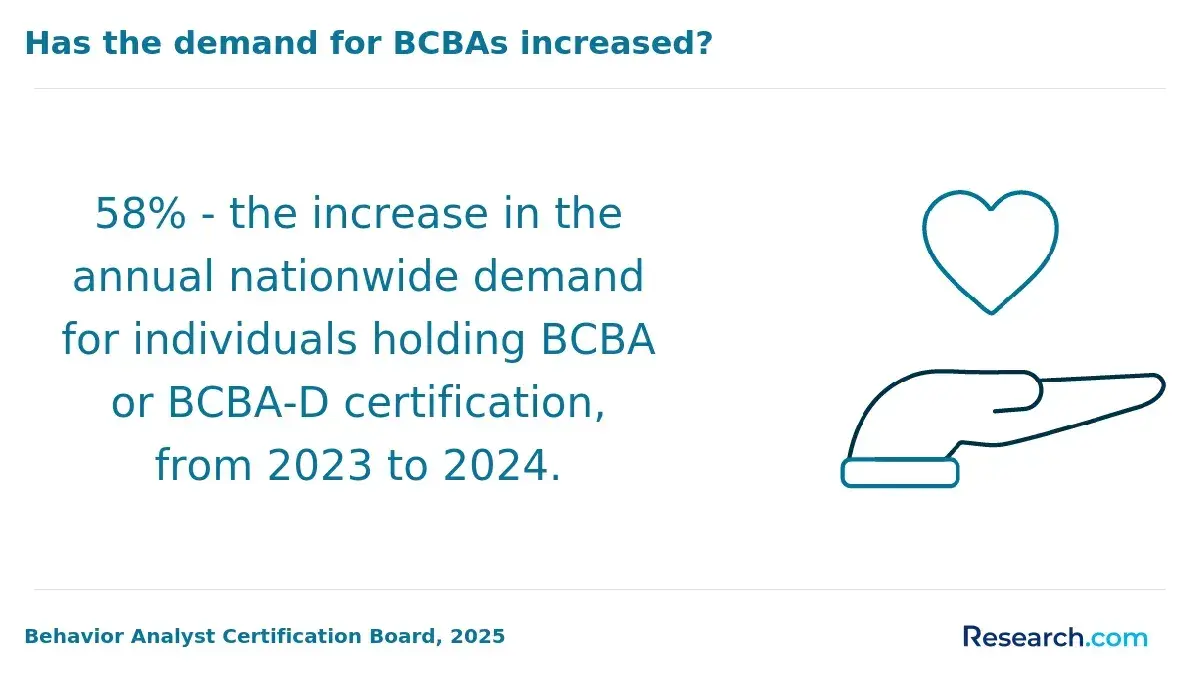
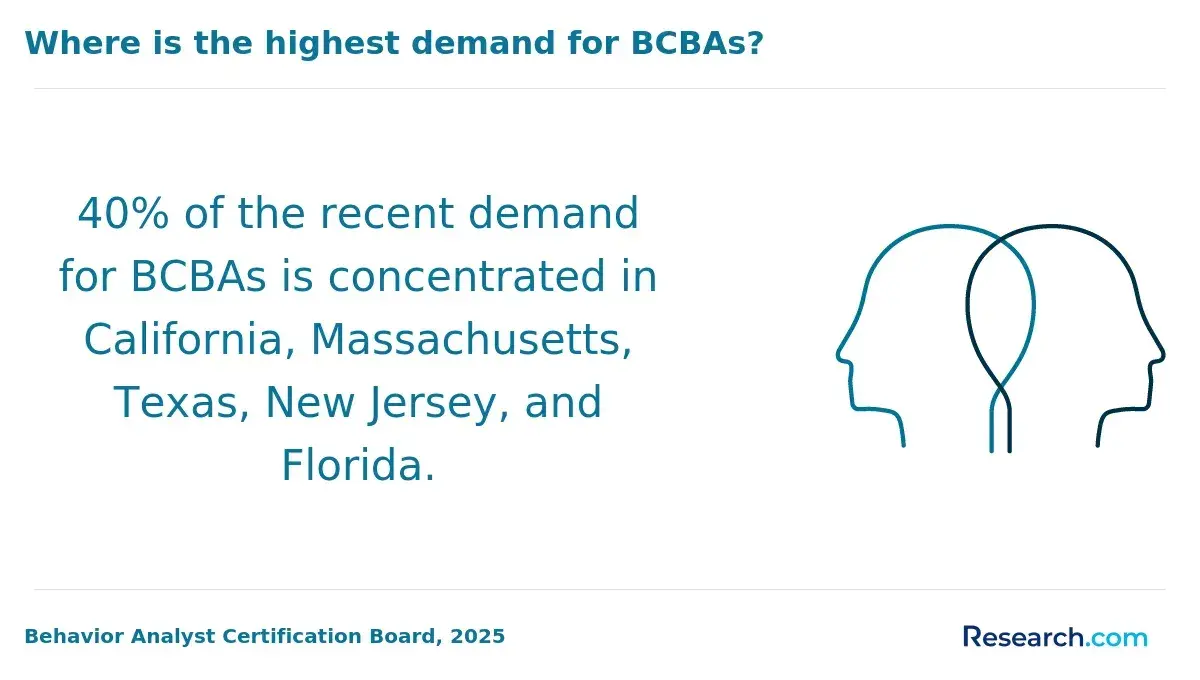
Program reputation and outcomes may affect early career opportunities. For example, the University of South Florida's online ABA master's program, known for an 89% BCBA exam pass rate and steady tuition for out-of-state students, illustrates how exam preparation and affordability can support career readiness. Demand for qualified ABA professionals is increasing nationally, but local job markets vary. Students should research job postings in their preferred region before enrolling so they understand typical salaries, licensure expectations, and employer requirements.
How to Choose the Best ABA Master's Program?
The best ABA master’s program is the one that fits your certification goal, learning format, budget, fieldwork needs, and career direction. A program with strong academics but weak fieldwork support may slow your progress. A low-cost program with poor exam preparation may cost more in the long run. A highly flexible online program may be ideal for working professionals, but only if it provides enough advising and structure to keep students on track.
Start with eligibility and quality signals. Confirm whether the program is accredited by the appropriate accrediting bodies, whether its coursework aligns with BCBA exam requirements, and how it supports students pursuing certification. Auburn University, for example, has a 98% long-term BCBA certification success rate, reflecting rigorous preparation and strong student support (onlineabaprograms.org, 2026). Outcomes like this can help students identify programs with a record of preparing graduates effectively.
Delivery format matters. Asynchronous online programs can be convenient for working professionals and students outside major metro areas. Synchronous online courses may provide more interaction but less schedule flexibility. Hybrid programs can offer face-to-face learning and practicum connections, but they may require travel. On-campus programs may provide stronger local networking and direct faculty access, but they can be harder for students who cannot relocate or attend during the day.
Faculty expertise is another key factor. Look for instructors who hold BCBA certification and have active clinical, supervisory, research, or school-based experience. Faculty who understand current practice demands can help students connect coursework to real cases, ethical dilemmas, documentation requirements, and interdisciplinary collaboration.
Fieldwork support can make or break the student experience. Ask whether the program helps students find placements, provides supervision, maintains partnerships with clinics or schools, or only offers coursework. Students should also ask how fieldwork quality is monitored and what happens if a placement ends unexpectedly.
When comparing programs, prioritize these questions:
- Does the curriculum support your intended certification pathway?
- What are the program’s BCBA exam pass rates and completion outcomes?
- How much will the full degree cost, including fees and fieldwork expenses?
- Can you complete the program while working?
- Does the program help with supervised experience planning?
- Are faculty members experienced in the settings where you want to work?
- What academic advising, exam preparation, and career services are available?
- Do alumni move into the types of roles you want?
Finally, compare return on investment, not just prestige or convenience. A strong ABA master’s program should help you graduate with relevant skills, meet certification-related academic expectations, access appropriate supervised experience, prepare for the exam, and enter the workforce with a realistic plan. The right choice is the program that supports both your immediate certification steps and your long-term professional goals.
Other Things You Should Know About Applied Behavior Analysis
Individuals with autism spectrum disorder are the primary beneficiaries of applied behavior analysis interventions. However, ABA techniques are also effective for children and adults with developmental disabilities, behavioral disorders, and other conditions requiring behavior modification. Additionally, ABA is used in educational, organizational, and healthcare environments to improve outcomes.
Yes, supervised practice is a critical component of ABA training and certification. Most certification boards, like the Behavior Analyst Certification Board (BACB), require candidates to complete specific hours of supervised fieldwork to gain hands-on experience before becoming credentialed. This ensures competency in applying ABA principles in real-world situations.
A strong ABA master's program should include the Verified Course Sequence requirements aligned with the Behavior Analyst Certification Board. Those courses cover behavior assessment, intervention, ethics, and research methods, and they must add up to the credit hours needed for BACB eligibility, often 21 to 27 credits of ABA-specific coursework.
- The 10 Best ABA Masters Programs [updated for 2025] https://abamastersprograms.org/best-aba-masters-programs/
- Key Factors of ABA Therapist Salary | True Progress Therapy https://trueprogresstherapy.com/blog/aba-therapist-salary/
- Online ABA Master's Programs: View & Compare Top Schools https://www.edumed.org/online-schools/masters-programs-aba/
- ABA Therapy Job Outlook | Advanced Autism Services https://www.advancedautism.com/post/aba-therapy-job-outlook
- Behavior Analysis Certification With an ABA Graduate Certificate https://www.appliedbehavioranalysisedu.org/behavior-analysis-certificates/
- BCBA Certification Requirements - Bluebell ABA https://bluebellaba.com/blog/bcba-without-masters-degree/
- How Long Does It Take to Become an ABA Therapist? Our Guide https://championsaba.com/how-long-does-it-take-to-become-an-aba-therapist/
- Future Job Outlook for ABA Therapists | Level Ahead ABA https://www.levelaheadaba.com/aba-therapist-job-outlook
- 6 ABA career paths with M.S. Applied Behavior Analysis - Insight Digital Magazine https://www.thechicagoschool.edu/insight/psychology/applied-behavior-analysis-career-paths/
- ABA Therapy Job Outlook Brightens Up | Links https://linksaba.com/aba-therapy-job-outlook/