2027 BACB Requirements Explained for First-Time BCBA Applicants

Co-Founder and Chief Data Scientist
Becoming a Board Certified Behavior Analyst® can be confusing when your undergraduate degree is not in behavior analysis or when you are comparing online, hybrid, and campus-based ABA programs. The main decision is not simply where to enroll; it is whether your degree, coursework, supervised fieldwork, and exam preparation will line up with BACB requirements before you spend time and money.
This guide explains the BCBA pathway for first-time applicants, including degree expectations, verified coursework, fieldwork options, exam content, online program choices, costs, salary potential, and job outlook. Use it as a practical checklist for choosing a program, planning your timeline, avoiding documentation problems, and understanding what BCBA certification can lead to professionally.
Key Things You Should Know
- The 2026 BACB requirements mandate completion of a verified graduate program in applied behavior analysis aligned with the 5th edition task list to qualify for BCBA certification.
- Applicants must accrue 1500 supervised fieldwork hours meeting BACB standards, with 5th edition competencies integrated into supervision to ensure professional readiness.
- The BCBA exam content updated for 2026 reflects expanded ethical guidelines and new behavior-analytic practice areas, emphasizing cultural competence and data-based decision making.
What are the BACB requirements for BCBA certification?
BCBA certification generally requires four core pieces: an eligible graduate degree, BACB-aligned behavior-analytic coursework, supervised fieldwork, and a passing score on the BCBA certification exam. Candidates must also follow the BACB ethics code and submit a complete application with the required documentation and fees.
To qualify, candidates must earn a master's degree or higher in behavior analysis, education, psychology, or a related field from an accredited program. They must also complete verified coursework matching the BACB's Fourth Edition Task List, including ethics, measurement, assessment, intervention, and related applied behavior analysis content areas.
Supervised fieldwork is one of the most important parts of the pathway. In California BCBA eligibility and application criteria, candidates typically complete either 1,500 practicum hours under close BCBA supervision or 2,000 hours of supervised independent fieldwork. The purpose is not only to log hours, but to demonstrate supervised practice with assessment, intervention design, data collection, ethical decision-making, and behavior-change procedures.
| Requirement | What to verify before applying |
| Graduate degree | Confirm that the institution and degree field meet BACB eligibility rules. |
| Coursework | Make sure the course sequence covers the required BACB content areas and is properly documented. |
| Supervised fieldwork | Check whether your hours, supervisor credentials, contracts, and monthly forms meet BACB rules. |
| Exam | Prepare for a computer-based exam that tests applied knowledge across ABA practice areas. |
| Ethics and application | Submit accurate records, fees, and required attestations, and maintain professional conduct. |
After coursework and fieldwork are complete, applicants must pass the BCBA certification exam, a computer-based test administered at approved centers. The exam evaluates whether candidates can apply behavior-analytic concepts, interpret data, select appropriate interventions, and make ethical professional decisions.
Demand for qualified BCBAs remains strong. The U.S. Bureau of Labor Statistics projects 22% employment growth in related counseling fields from 2021 to 2031. Because eligibility depends on documentation, prospective students should confirm program accreditation, coursework approval, and supervision quality before enrolling. Those interested in advanced study can also compare options such as online BCBA doctoral pathways that may support long-term career goals.
Who qualifies as a first-time BCBA applicant?
A first-time BCBA applicant is a candidate entering the BCBA certification process for the first time rather than renewing, reactivating, or managing an existing BCBA credential. This typically includes graduate students, recent graduates, and career changers who have completed or are completing the required degree, coursework, and supervised fieldwork.
First-time applicants must meet the eligibility criteria for BCBA certification applicants, including a master's degree or higher in a qualifying field and verified coursework aligned with BACB standards. Graduates from ABAI-accredited programs under Pathway 1 are directly eligible if they also satisfy supervised experience requirements.
Applicants who completed non-accredited coursework may still qualify, but they usually need stronger documentation. Their studies must meet coursework equivalency standards, and they must still complete supervised fieldwork and pass the exam. This is where many delays occur: missing syllabi, unclear course titles, insufficient content coverage, or incomplete fieldwork records can slow the review process.
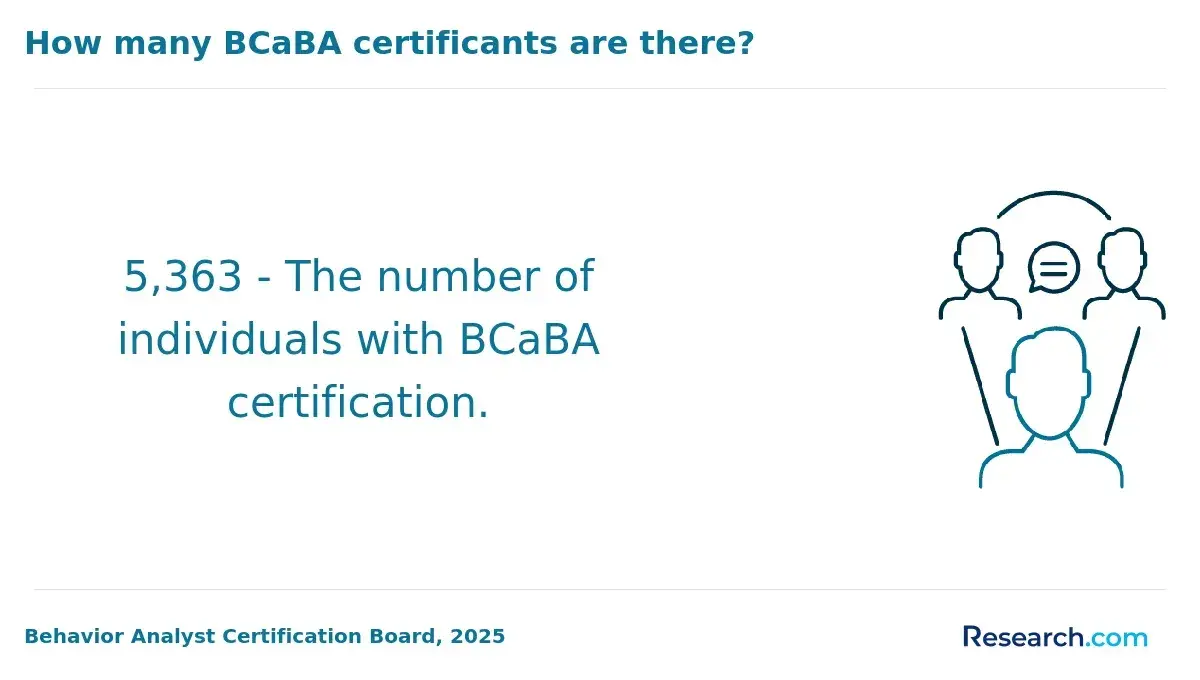
Enrollment trends show why many candidates prefer accredited pathways. In recent data, 68% of new BCBA certificants earned degrees through BCABA accredited programs under Pathway 1, up from 52% previously. For first-time applicants, this can mean clearer course alignment, more predictable documentation, and fewer eligibility questions.
- You are likely a first-time applicant if: you have not previously held BCBA certification and are applying after completing the required degree, coursework, and fieldwork.
- You may need extra documentation if: your coursework was not part of an accredited or verified sequence, your degree field is less direct, or your fieldwork records are incomplete.
- You should verify early if: you are applying through Pathways 2 or 3, because coursework equivalency and verified hours can require more review.
What degrees meet BACB coursework standards?
Degrees that meet BACB coursework standards usually combine an eligible graduate degree with a BACB-approved Verified Course Sequence (VCS). The degree alone is not enough; candidates must be able to show that their coursework covers the required behavior-analytic content areas.
The BACB coursework standards for first-time BCBA applicants require completion of a master's, doctoral, or graduate certificate program that includes Verified Course Sequences approved by the BACB. These sequences are designed to cover essential content areas such as ethics, measurement and data analysis, experimental design, behavior assessment, and behavior intervention.
Common degree fields include behavior analysis, education, psychology, and closely related disciplines that integrate the VCS curriculum. Applicants from programs without an approved VCS may need supplemental VCS courses to close content gaps. This can add cost, time, and documentation requirements, so it is better to check before enrolling than after graduation.
ABAI accreditation is a useful quality signal because many programs recognized by the Association for Behavior Analysis International are built around BACB-aligned expectations. ABAI-accredited master's programs consistently align with BACB standards, making this accreditation a key indicator of program quality.
| Program type | How it usually fits BCBA coursework standards | What to watch for |
| ABAI-accredited master's program | Typically offers a direct, structured route to required coursework. | Confirm current accreditation and fieldwork support. |
| Graduate degree with VCS | Can meet coursework standards if the verified sequence is completed as required. | Make sure every required course is included in your plan of study. |
| Graduate certificate in ABA | May supply the required coursework for candidates who already hold an eligible graduate degree. | Verify that your existing degree also meets BACB degree requirements. |
| Non-VCS graduate program | May require coursework review or additional classes. | Higher risk of missing content areas or needing supplemental coursework. |
Cost matters because meeting coursework standards can require a full graduate program or additional graduate-level ABA courses. Tuition for full-time students in ABAI-accredited master's programs averaged $28,450 annually, with a recent 7.2% increase. Students comparing flexible options can review online BCBA master's programs that meet these standards.
- Eligible degrees must include BACB-approved Verified Course Sequences.
- Master's or doctoral programs in behavior analysis or related fields with VCS are accepted.
- Supplemental VCS coursework may be required for non-VCS programs.
- ABAI accreditation is a key indicator of program quality and compliance.
The BCBA certification timeline for first-time applicants usually ranges from 18 to 36 months. The exact timeline depends on how quickly you finish graduate coursework, how many supervised hours you can complete each month, whether your supervision is consistent, and how soon you sit for the exam after approval.
The fieldwork route is the biggest timeline variable. Candidates must complete a verified course sequence, pass the exam, and fulfill supervised fieldwork hours before applying. Two primary options exist for supervised fieldwork:
- Concentrated supervised fieldwork: Requires 1,500 hours under supervision. According to the BACB Fieldwork Compliance Report, 2025, candidates completing this option typically achieve certification about 18 months faster than those using the standard route.
- Standard independent fieldwork: Involves 2,000 hours with less supervision, generally extending the process by more than a year compared to concentrated hours.
| Timeline factor | How it can speed up or delay certification |
| Course load | Full-time enrollment can shorten coursework time, while part-time study may be better for working adults. |
| Fieldwork type | Concentrated supervised fieldwork requires 1,500 hours; standard independent fieldwork requires 2,000 hours. |
| Supervisor access | Delays often occur when candidates cannot secure qualified supervision or enough client-facing opportunities. |
| Documentation | Incomplete contracts, monthly forms, or final verification forms can slow the application review. |
| Exam readiness | Some candidates apply quickly but need additional study time before scheduling the exam. |
For example, a full-time candidate pursuing concentrated supervised fieldwork may finish requirements in roughly 18 months, while a candidate using independent fieldwork may take closer to 36 months. A faster route is not always better if it leads to weak supervision, limited clinical variety, or poor exam preparation.
Candidates who need flexibility may prefer the longer independent path. Candidates who have employer support, reliable supervision, and steady fieldwork opportunities may benefit from concentrated supervised fieldwork. Many prospective students also compare online ABA programs to balance coursework with employment and supervised practice.
The BCBA exam measures whether candidates can apply behavior-analytic principles in real practice situations. It is not just a vocabulary test. Strong candidates must understand concepts, interpret data, choose appropriate interventions, evaluate outcomes, and make ethical decisions when client needs, caregiver preferences, and professional standards intersect.
The exam covers critical knowledge areas such as ethics, data measurement, experimental design, behavior assessment, behavior-reduction procedures, and skill-acquisition procedures. Candidates should be ready to analyze behavior-environment relationships and use evidence-based reasoning rather than rely on memorized definitions.
Questions often use practical scenarios. For example, a candidate may need to select a data collection system, interpret a graph, identify the function of behavior from assessment information, or decide whether an intervention respects client dignity and professional boundaries. Other tested skills can include preference assessments, functional behavior assessments, reinforcement and punishment procedures, group experimental designs, confidentiality, and responsible supervision practices.
| Exam area | What candidates should be able to do |
| Ethics | Apply professional standards involving consent, dignity, confidentiality, boundaries, and responsible practice. |
| Measurement and data | Select data systems, interpret graphs, and use data to guide decisions. |
| Assessment | Understand functional behavior assessments, preference assessments, and behavior-environment relations. |
| Intervention | Choose procedures for skill acquisition, behavior reduction, reinforcement, and behavior support. |
| Experimental design | Understand how behavior-change procedures are evaluated and how conclusions are supported by data. |
Applicants should expect scenario-based questions that require critical thinking. A common mistake is studying only terminology without practicing application. Exam preparation should include graph interpretation, case examples, ethics scenarios, and intervention-selection practice.
Changes effective January 1, 2027, allow Pathway 2 applicants more flexible degree fields. Early pilot data show a 15% improvement in approval rates for these candidates, indicating that a broader range of educational backgrounds can still prepare individuals adequately for the exam when coursework and fieldwork standards are met (BACB Eligibility Pathway Analysis, 2026).
Online BCBA training is available through several universities that offer BACB-aligned applied behavior analysis coursework for first-time applicants and working professionals. The best choice is not simply the cheapest or fastest program; it is the program that clearly supports eligibility, supervision planning, exam preparation, and documentation.
Universities with verified course sequences approved by the BACB include Florida Institute of Technology, Simmons University, and University of Cincinnati. These programs cover BACB-required content areas such as ethics, assessment, and intervention strategies, often through flexible asynchronous formats for students balancing work, family, and fieldwork.
Clinical practicum and fieldwork support vary widely. Some online programs require students to find local BACB-certified supervisors, while others offer remote supervision by program-affiliated Board Certified Behavior Analysts. This difference matters because supervision access can affect your timeline, cost, and quality of preparation.
| What to compare | Why it matters for first-time BCBA applicants |
| Current BACB approval status | Confirms whether coursework is aligned with certification requirements. |
| Supervision model | Determines whether you must find your own supervisor or can use program-affiliated support. |
| Course format | Asynchronous formats can help working adults, while synchronous courses may offer more live interaction. |
| Exam preparation | Built-in review tools can reduce the need for separate prep resources. |
| Tuition and fees | Total cost should include coursework, supervision, materials, application fees, and possible retakes. |
Before applying for certification, first-time BCBA applicants must complete a BACB-approved course sequence. Many online programs also provide exam preparation materials. According to the BACB Fee Schedule, 2025, applicants typically pay $370 for the application and an additional $125 exam fee, totaling $495 upfront.
Other institutions offering online BCBA training include Ball State University, University of North Texas, and Endicott College. Prospective students should confirm current BACB approval status directly, compare tuition and financial aid, ask how fieldwork is supported, and review whether graduates receive structured exam preparation.
BCBA program costs vary by institution, delivery format, degree level, supervision model, and whether the program includes exam preparation or fieldwork support. Candidates should budget beyond tuition because certification-related expenses can include application fees, exam fees, textbooks, practice exams, supervision, and state licensing or certification fees after credentialing.
Tuition for verified course sequences generally ranges from $4,000 to over $15,000. Online programs typically charge between $5,000 and $9,000, while on-campus options often exceed $12,000, especially when additional fees are included. The BCBA exam fee is currently $245, with study materials such as practice exams and textbooks adding another $200 to $600.
Supervision can be the most unpredictable cost if it is not built into employment or the academic program. Supervision fees may apply if a program does not include supervised fieldwork, with rates commonly between $75 and $150 per hour. Accumulating the 1,500 hours of supervised experience required for certification can therefore become a major financial consideration. Some employers, scholarships, assistantships, or tuition benefits may offset these expenses, so candidates should ask about support early.
| Cost category | Typical amount stated | Planning tip |
| Verified course sequence tuition | $4,000 to over $15,000 | Confirm whether the amount covers all required courses. |
| Online program tuition | $5,000 to $9,000 | Ask about technology fees, textbooks, and exam prep resources. |
| On-campus options | Often exceed $12,000 | Include campus fees, commuting, and possible relocation costs. |
| BCBA exam fee | $245 | Budget for retakes if you are not fully prepared. |
| Study materials | $200 to $600 | Use materials that match the current exam content and your learning style. |
| Supervision fees | $75 to $150 per hour | Clarify whether supervision is employer-provided, program-provided, or privately paid. |
| State licensing or certification fees | $50 to $300 after certification | Check your state requirements before accepting a role. |
The first-time BCBA exam pass rate dropped to 54% recently, down from 62% after task list revisions focusing on ethics and unrestricted activities. That decline highlights why cost planning should include high-quality preparation and the possibility of retesting. A low-cost program can become expensive if it provides weak academic support, limited advising, or poor exam readiness.
BCBA certification can lead to clinical, educational, supervisory, consulting, administrative, and research-oriented roles. Most BCBAs work in settings where they assess behavior, design intervention plans, train caregivers or staff, monitor data, and adjust treatment based on measurable outcomes.
Many behavior analysts focus on autism services. In these roles, they design and supervise treatment plans that support communication, social skills, adaptive behavior, and daily living skills for individuals on the autism spectrum. BCBAs also work with people with developmental or intellectual disabilities and in some mental health settings. Common workplaces include hospitals, schools, private practices, clinics, community agencies, and home-based service organizations.
Beyond direct clinical services, BCBAs may move into supervisory or administrative positions. These roles can involve overseeing registered behavior technicians, training staff, auditing treatment fidelity, coordinating care teams, and ensuring that programs follow behavior-analytic and ethical standards.
Organizational behavior management is another path. In this specialty, behavior analysis principles are applied to workplace performance, safety, training, and systems improvement. Academic and research positions are also available for professionals interested in teaching, publishing, or contributing to the science of behavior analysis. Additional specialties include pediatric feeding, gerontology, and developmental pediatrics.
| Career direction | Typical focus |
| Autism and developmental services | Assessment, treatment planning, skill acquisition, behavior support, and caregiver training. |
| Schools | Behavior intervention plans, staff consultation, student support, and data-based decision-making. |
| Clinical leadership | Supervision of treatment teams, quality assurance, documentation, and ethical practice. |
| Organizational behavior management | Workplace performance, safety, systems design, and staff training. |
| Research and academia | Teaching, research, program evaluation, and development of behavior-analytic knowledge. |
The U.S. Bureau of Labor Statistics reports a median annual salary of $98,910 for BCBAs, with top earners exceeding $142,000. This reflects strong demand connected to autism-related services nationwide, though actual pay varies by state, employer, experience level, specialization, and leadership responsibilities.
Prospective BCBAs should choose fieldwork settings that match their intended career path. A candidate interested in schools should seek school-based experience; a future clinical director should develop supervision and case-management skills; and someone interested in organizational behavior management should pursue relevant projects and mentors. Maintaining certification and pursuing specialized training can support long-term advancement.
The average BCBA salary in 2026 ranges between $65,000 and $85,000 annually, depending on region, experience, employer type, specialization, and job responsibilities. Entry-level BCBAs typically start around $60,000, while those with five or more years of experience can earn upwards of $90,000. Urban areas and specialized clinical roles often pay more than rural positions or some education-based roles.
Salary is shaped by more than the BCBA credential itself. Employers often pay more for candidates who can supervise teams, manage complex cases, train staff, support compliance, or lead specialized programs.
- Healthcare facilities and private practices generally provide better compensation than schools or government agencies.
- Specializing in areas like autism spectrum disorder or organizational behavior management can increase earning potential.
- Leadership duties, supervision responsibilities, and strong documentation skills can improve salary negotiations.
- Geographic location matters because reimbursement rates, service demand, and cost of living vary widely.
Continuing education also affects long-term earning power. Maintaining certification signals that a BCBA is current with professional standards and ethical expectations. In 2025, 92% of active BCBAs completed the annual requirement of 32 continuing education units. Ethics-focused CEUs rose by 25% year-over-year, underscoring their growing importance in practice and employer expectations.
Current and prospective BCBAs should document continuing education, supervision experience, specialty training, and measurable outcomes when negotiating compensation. A strong salary case is usually built on credential status, experience, proven clinical judgment, and the ability to improve service quality.
How strong is the BCBA job outlook?
The BCBA job outlook is strong because behavior-analytic services are used across healthcare, education, autism treatment, developmental disability services, and organizational settings. Demand is especially visible in areas with extensive clinical infrastructure, school-based service needs, and insurance-funded autism services.
Several factors continue to support demand for BCBAs:
- Rising autism spectrum disorder diagnoses are increasing the need for qualified BCBAs in schools and clinics.
- Behavior-analytic services are expanding into mental health, elder care, and organizational behavior management.
- Enhanced insurance coverage and government funding are improving access to behavior analysis services.
- Telehealth and remote consultation models are broadening access in areas with fewer local providers.
Financially, BCBA certification can offer a strong return on investment. According to the National ROI Study on ABA Certifications, degree holders recoup tuition costs in less than 2.2 years on average. Certified BCBAs earn approximately $1.2 million more in lifetime earnings compared to non-certified peers, emphasizing the long-term value of the credential for many professionals.
Still, job outlook depends on preparation. Candidates who complete BACB-aligned coursework, secure high-quality supervised fieldwork, and understand local licensing rules are better positioned for employment. Employers may also expect experience with documentation, caregiver training, staff supervision, insurance requirements, and ethical service delivery.
First-time BCBAs should research state licensing requirements, compare regional demand, and build professional networks through behavior analysis associations. Specialty experience can also improve employability. Overall, the field offers substantial career growth for candidates who choose an eligible program, complete fieldwork carefully, and continue developing practical expertise after certification.
Other Things You Should Know About Applied Behavior Analysis
First-time BCBA applicants must submit proof of an accepted graduate degree, approved coursework, and supervised fieldwork that meets BACB standards. The application is reviewed through the BACB account, and candidates must also pass the BCBA exam before certification is issued.
Supervision is a critical component of BCBA training, providing first-time applicants with practical experience under the guidance of a qualified BCBA. This supervised experience helps candidates apply theoretical knowledge to real-world cases while meeting BACB requirements for hands-on practice. It also ensures professional growth and adherence to ethical standards throughout the credentialing process.
Applied behavior analysis relies heavily on a code of ethics established by the BACB, which emphasizes client dignity, competence, and confidentiality. Practitioners must obtain informed consent, use evidence-based interventions, and regularly evaluate treatment effectiveness. Ethical considerations guide every stage of assessment and intervention to protect client welfare and promote positive outcomes.
- Steps to Become a Board Certified Behavior Analyst (BCBA) - Big Dreamers ABA https://www.bigdreamersaba.com/blog/how-to-become-a-board-certified-behavior-analyst-bcba
- Is BCBA Certification Worth It? Expert Analysis | Level Ahead https://www.levelaheadaba.com/blog/is-bcba-certification-worth-it
- ABA Courses https://abacourses.com/
- BCBA Exam First Time Pass Rates Explained | Little Champs https://littlechampsaba.com/blog/bcba-exam-first-time-pass-rate/
- Board-Certified Behavior Analyst (BCBA) Salary Guide â Trusted Health https://www.trustedhealth.com/allied-career-guide/behavior-analyst/salary-guide
- What is a BCBA? Your Guide to the BCBA Certification and Exam https://www.thechicagoschool.edu/insight/career-development/bcba-guide-bcba-certification-exam/
- BCBA Career Path To Take | Advanced Therapy Clinic https://www.advancedtherapyclinic.com/blog/bcba-career-path-to-take
- BCBA Job Outlook 2025 Shows Strong Growth and Demand https://blossomabatherapy.com/blog/bcba-job-outlook
- 25+ Affordable ABA/BCBA Online Programs (Masters & Certs) https://abamastersprograms.org/affordable-online-aba-masters-programs/
- How to Become a Behavior Analyst https://onlinecounselingprograms.com/mental-health-careers/how-to-become-behavior-analyst-bcba/