2027 BCBA Master's Programs With January Start Dates

Co-Founder and Chief Data Scientist
If you want to become a Board Certified Behavior Analyst but missed the fall admissions cycle, a January-start master’s program can keep your certification timeline moving. These programs are especially useful for working adults, recent graduates, teachers, psychology majors, and career changers who do not want to wait several months to begin graduate coursework in applied behavior analysis.
A BCBA master’s program is not just a degree decision. It affects your eligibility for certification, your supervised fieldwork plan, your budget, your schedule, and in some states, your future licensure options. January enrollment can be a smart choice, but only if the program’s coursework, fieldwork support, accreditation status, and start-date policies match your goals.
This guide explains what January-start BCBA master’s programs are, which universities may offer them, what to check before applying, how long programs typically take, what they cost, and what career and salary outcomes students should realistically consider.
Key Things You Should Know
- Several accredited BCBA master's programs offer January start dates, providing flexible enrollment options for students planning mid-academic year entry in 2026.
- Programs typically include 30-45 credit hours, meeting BACB coursework requirements, with many offering hybrid or fully online formats to accommodate working professionals.
- Data from 2024 indicates growing demand for BCBA credentials, with a projected 20% job growth through 2030, making January admission increasingly attractive for career advancement.
What Are BCBA Master's Programs with January Start Dates?
BCBA master’s programs with January start dates are graduate programs in applied behavior analysis or a closely related field that allow students to begin coursework at the start of the calendar year instead of waiting for a traditional fall cohort. They are designed for students who need a faster entry point because of job changes, missed deadlines, relocation, military schedules, family responsibilities, or career-transition plans.
Most January-start options are offered online or in hybrid formats, though some universities also allow on-campus students to begin in spring. Online formats often appeal to working professionals because courses may be asynchronous, scheduled in the evenings, or structured around part-time enrollment. Some programs also offer accelerated course sequences for students who can manage a heavier academic load.
The best January-start programs do more than open a spring application window. They provide a clear plan for completing required behavior-analytic coursework, arranging supervised fieldwork, preparing for the BCBA exam, and meeting any state-specific requirements that may apply after graduation.
Who January-start BCBA programs are best for
- Students who missed fall admissions but want to begin graduate study quickly.
- Teachers, paraprofessionals, RBTs, case managers, and psychology graduates moving into behavior analysis.
- Working adults who need online, evening, part-time, or hybrid scheduling.
- Students who already have access to a fieldwork site and want to align coursework with supervised experience.
- Career changers with unrelated bachelor’s degrees who need a structured transition into ABA.
These programs usually cover core areas such as ethical practice, behavioral assessment, intervention design, research methods, data-based decision-making, and supervision. Demand remains strong: employment growth for BCBAs is projected at 22%, supported by expanding use of ABA in autism services, education, behavioral health, and organizational behavior.
Before applying, confirm whether the January cohort offers the same courses, faculty access, fieldwork support, and certification preparation as fall enrollment. Also check whether spring admission affects course sequencing; in some programs, starting in January may change when certain required courses become available. Students comparing speed and cost may also want to review an accelerated BCBA program online if they can handle a compressed schedule.
Which U.S. Universities Offer BCBA Master's with January Enrollment?
Several U.S. universities offer BCBA-focused master’s programs or applied behavior analysis graduate programs with January enrollment options. Examples include Endicott College in Massachusetts and Ball State University in Indiana, both of which are commonly considered by students seeking behavior analysis graduate study with flexible start dates.
Other universities associated with applied behavior analysis master’s study include Simmons University and Southern Illinois University. Program availability, start dates, modality, and certification alignment can change by year, so students should verify current January admissions directly with the university before applying.
What to verify before choosing a January-start university
- Exact start term: Confirm that January enrollment is available for the master’s program itself, not only for a certificate or nondegree course option.
- Certification pathway: Ask how the curriculum supports BCBA exam eligibility and whether the program provides advising on current BACB requirements.
- Fieldwork support: Determine whether the university helps students locate supervised fieldwork or expects students to arrange it independently.
- Course sequencing: Make sure a January start will not delay required courses or create gaps between terms.
- Delivery format: Compare online, hybrid, and in-person expectations, including synchronous class meetings and practicum requirements.
- State considerations: If you plan to practice in a state with licensure rules for behavior analysts, ask whether the program routinely prepares graduates for that state’s requirements.
January enrollment can be valuable because it shortens the waiting period between deciding to pursue the credential and beginning graduate coursework. That timing matters for students entering a field with strong demand. The median annual wage for behavior analysts rose to $75,610 in 2025, reflecting a 12% increase since 2023 (Lightcast 2025 Wage Data).
Use university websites, admissions offices, and certification advising pages to confirm details rather than relying only on general graduate program listings. For a broader comparison of programs and credential considerations, review Research.com’s guide to BCBA schools.
What Accreditation Do BCBA Master's Programs Require?
BCBA master’s programs should be evaluated through two separate quality checks: institutional accreditation and certification alignment. Institutional accreditation confirms that the college or university meets broader higher education standards. Certification alignment confirms that the coursework and supervised experience plan can support eligibility for the BCBA exam under current Behavior Analyst Certification Board requirements.
The BACB certifies individuals, not universities. Students should therefore avoid assuming that a program is “BACB accredited” without checking the exact status of the coursework and the school’s claims. A program may offer behavior analysis courses, but that does not automatically mean those courses meet current certification requirements.
Key terms to understand
- Institutional accreditation: Applies to the college or university and affects academic legitimacy, credit transfer, and access to many forms of financial aid.
- Verified Course Sequence: A coursework review designation associated with BACB eligibility requirements. Students should confirm whether the program’s courses appear on the BACB Verified Course Sequence list when relevant.
- Supervised fieldwork: Practical experience completed under qualified supervision. Coursework alone is not enough for BCBA certification eligibility.
- State licensure: Some states regulate behavior analysts separately from BACB certification. Licensure rules may include additional education, supervision, application, or background-check requirements.
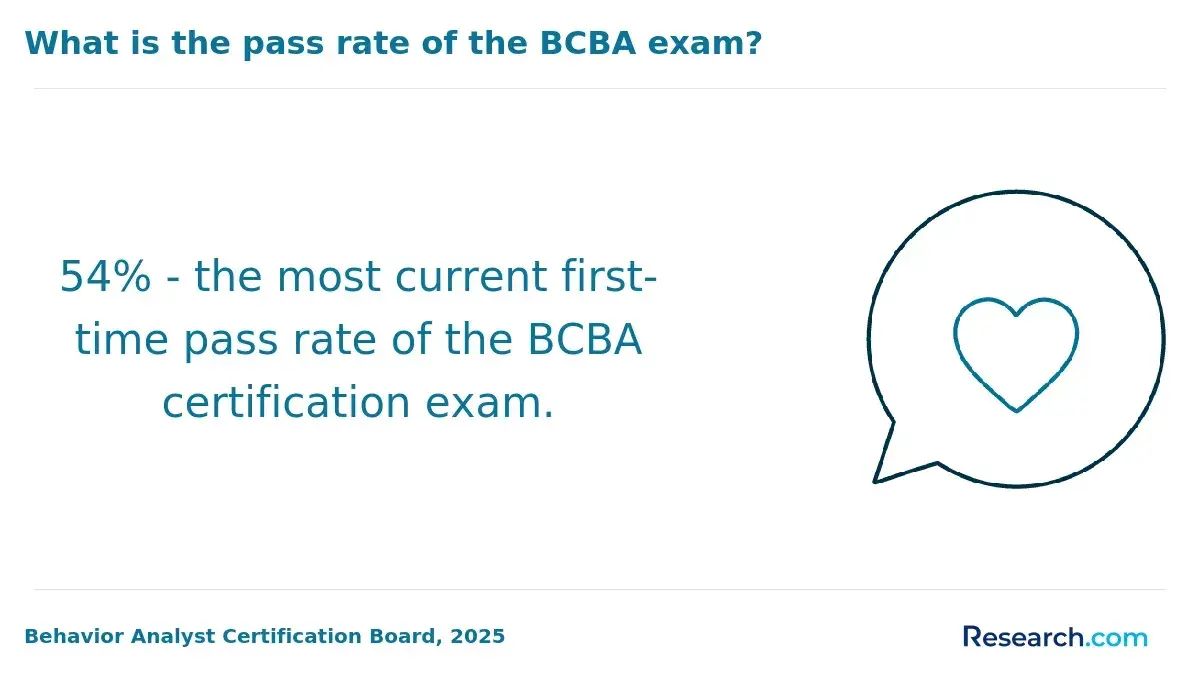
There are two main certification pathways discussed by many programs. Pathway 1 integrates required coursework and supervised experience during the program, while Pathway 2 separates coursework from extensive fieldwork. According to the BACB 2025 Exam Pass Rate Report, those completing Pathway 1 have a higher pass rate-72% versus 65% for Pathway 2-highlighting the potential value of integrated supervised experience.
Before enrolling, ask the program to explain your complete certification plan in writing. At minimum, students should verify the following:
- Completion of graduate-level coursework based on BACB standards.
- Supervised fieldwork hours aligned with Pathway 1 or Pathway 2 requirements.
- Successful application approval through the BACB portal before registering for the exam.
- Whether January-start students receive the same advising and fieldwork support as fall-start students.
Some institutions offer combined master’s and supervised experience tracks that begin in January, which can make the path more organized for students who do not already have a supervision site. Students comparing timelines should also consider whether an accelerated BCBA program provides enough fieldwork support, not just faster coursework.
Admission requirements for BCBA master’s programs usually begin with a bachelor’s degree from an accredited institution. Many applicants come from psychology, education, human services, communication sciences, social work, or related fields, but some programs admit students from other majors if they show academic readiness and a clear reason for entering applied behavior analysis.
Most programs expect a minimum GPA of around 3.0, though policies vary. Applicants generally submit official transcripts, a personal statement, letters of recommendation, and a resume. Some schools may request GRE scores, while others waive testing based on professional experience, undergraduate performance, or program policy.
Common application materials
- Official transcripts: Used to confirm degree completion, GPA, and prerequisite coursework.
- Personal statement: Should explain why you want to study ABA, what populations or settings interest you, and how you understand the ethical responsibilities of behavior analysis.
- Letters of recommendation: Strong letters usually come from faculty, supervisors, clinical managers, school administrators, or professionals who can speak to your judgment and readiness for graduate study.
- Resume or CV: Include relevant experience with children, adults with developmental disabilities, schools, behavioral health, data collection, teaching, caregiving, or supervised ABA services.
- English proficiency documentation: International applicants may need TOEFL or IELTS scores, depending on the university’s policy.
- Interview: Some programs use interviews to assess professional fit, communication skills, and understanding of the field.
Prerequisites vary. Some programs expect prior coursework in psychology, learning theory, research methods, statistics, education, or behavior analysis fundamentals. Applicants without these courses may still be considered, but they may need to complete bridge courses or enter conditionally.
For January admission, timing matters. Spring cohorts may have earlier application deadlines than students expect, and fieldwork planning can take time. Ask admissions staff whether spring applicants are reviewed on a rolling basis, whether seats are limited, and whether financial aid packages are available for January entry.
Cost and format also affect admissions decisions. Students enrolling in affordable online ABA master's programs achieve a 15% higher ROI within five years post-graduation compared to traditional on-campus programs, according to the Georgetown University Center on Education and the Workforce. That does not mean the cheapest program is always the best choice, but it does mean applicants should compare total cost, fieldwork support, certification outcomes, and scheduling flexibility together.
BCBA master’s programs generally take 18 to 24 months to complete. The actual timeline depends on the program format, course load, term structure, fieldwork pace, and whether the student enrolls full time or part time. A January start can help students begin sooner, but it does not automatically shorten the degree unless the program offers year-round or accelerated coursework.
Typical completion timelines
- Accelerated online programs: Often structured for 12 to 18 months, with intensive courses and limited breaks.
- Full-time traditional programs: Commonly take about two years.
- Part-time programs: May extend closer to three years, especially for students balancing work and family responsibilities.
Supervised fieldwork is often the variable that affects the timeline most. Students who already work in an ABA setting with qualified supervision may progress more smoothly than students who must find a placement after enrollment. However, fieldwork should not be rushed at the expense of quality supervision, ethical practice, or exam readiness.
Program calendars also matter. Some January-start programs use semester schedules, while others use shorter terms or quarter systems. Students should ask when required courses are offered and whether spring entry creates any waiting periods before advanced courses or practicum components.
Cost can also be tied to length. Shorter program lengths may reduce certain expenses, but accelerated study can limit students’ ability to work full time. For example, out-of-state online ABA programs averaged $12,500 in tuition, marking an 8% decrease due to rising competition, according to College Board's 2025 Trends in Graduate Education Costs.
The practical question is not only “How fast can I finish?” but “Can I finish with the coursework, supervision, documentation, and preparation needed for certification?” Students should choose the shortest timeline that still supports strong learning and fieldwork quality.
The cost of BCBA master’s programs varies widely by university type, residency status, credit requirements, delivery format, and whether supervised fieldwork support is included. Full-program tuition generally ranges from $15,000 to over $40,000. Public universities may offer lower rates for in-state students, sometimes around $500 per credit hour, while private schools may charge over $1,200 per credit hour.
Online programs can be less expensive, but students should compare the full cost rather than only the per-credit rate. Some online programs charge technology fees, distance-learning fees, clinical placement fees, or flat term-based tuition. Others may look affordable at first but require students to pay separately for supervision or travel.
Costs to include in your budget
- Tuition: The largest cost and the easiest to compare across programs.
- University fees: May include online learning, student services, registration, graduation, or technology fees.
- Books and materials: Required textbooks, assessment tools, software, or course platforms can add to the total.
- Supervision fees: Supervision fees can add $1,000 to $3,000, depending on required hours and supervisor rates.
- Certification exam costs: The BACB exam fee is approximately $245.
- Travel or residency expenses: Hybrid programs may require campus visits, weekend intensives, or local practicum travel.
Common ways to manage cost include federal loans, scholarships, employer tuition reimbursement, assistantships, military education benefits, and university payment plans. If you already work for a school district, clinic, or behavioral health provider, ask whether your employer supports tuition assistance in exchange for a service commitment after graduation.
Demand for BCBAs specializing in autism interventions is expected to increase by 28%, fueled by expanded school-based services under federal mandates (U.S. Department of Education 2025 Special Education Data Report). Even with strong demand, students should avoid borrowing based only on optimistic salary assumptions. Compare debt, likely starting pay, state licensure requirements, and the program’s fieldwork support before committing.
A cost-effective program is not simply the cheapest option. It is the program that provides recognized coursework, practical supervision planning, reasonable completion time, transparent fees, and enough support to help you reach certification without unnecessary delays.
A BCBA master’s curriculum typically trains students to assess behavior, design interventions, evaluate outcomes, apply ethical standards, and supervise behavior-change programs. Coursework is usually grounded in applied behavior analysis, research methods, data collection, and evidence-based intervention planning.
Common curriculum areas
- Foundations of behavior analysis: Principles such as reinforcement, extinction, punishment, stimulus control, motivating operations, and behavioral measurement.
- Behavioral assessment: Functional behavior assessment, preference assessment, skills assessment, and interpretation of behavioral data.
- Intervention design: Behavior-change procedures, treatment planning, generalization, maintenance, and individualized intervention strategies.
- Research methods: Single-subject design, experimental analysis of behavior, visual analysis, and data-based decision-making.
- Ethics and professional conduct: BACB ethical standards, client rights, consent, confidentiality, scope of competence, documentation, and supervision responsibilities.
- Supervision and consultation: Training staff, monitoring treatment fidelity, coaching caregivers, and collaborating with interdisciplinary teams.
Many programs emphasize work with individuals with autism and developmental disabilities, but ABA training can also apply to schools, adult services, behavioral health, safety programs, and organizational behavior management. Some programs offer specialized tracks in areas such as early childhood intervention, school consultation, or organizational behavior management.
Students should look closely at how the curriculum connects to fieldwork. A strong program teaches assessment and intervention skills before students are expected to use them in practice, provides feedback on applied projects, and requires students to interpret real behavioral data rather than only memorize concepts.
Notably, BCBA roles in organizational behavior management report average salaries around $92,000, about 25% higher than general clinical positions (Behavior Analyst Certification Board 2025 Compensation Survey). Students interested in that path should choose a curriculum that includes performance management, systems assessment, staff training, and workplace behavior applications.
Prospective students must complete supervised fieldwork totaling at least 1,500 hours to fulfill BACB certification requirements. Because fieldwork quality affects both competence and exam readiness, students should ask how coursework assignments, supervision, and practicum experiences are coordinated.
A BCBA master’s degree can lead to roles in clinical ABA, schools, early intervention, developmental disability services, behavioral health organizations, residential programs, research, supervision, and organizational behavior management. The most common path is becoming a board certified behavior analyst who assesses behavior, designs intervention plans, trains staff or caregivers, and monitors client progress using data.
Common BCBA career paths
- Clinical BCBA: Works in clinics, homes, community programs, or telehealth settings, often serving individuals with autism or developmental disabilities.
- School-based behavior analyst: Supports students with behavioral needs, collaborates on individualized education programs, trains educators, and helps design positive behavior supports.
- Program supervisor or clinical manager: Oversees RBTs, behavior technicians, case teams, service quality, documentation, and treatment implementation.
- Early intervention specialist: Works with young children and families on communication, adaptive behavior, social engagement, and behavior reduction goals.
- Adult services behavior analyst: Supports adults in residential, vocational, community, or supported-living environments.
- Organizational behavior management practitioner: Applies behavior analysis to employee performance, safety, productivity, training, and systems improvement.
- Research or academic professional: Studies intervention outcomes, teaches, contributes to program evaluation, or advances evidence-based practice.
The right career path depends on your preferred population, tolerance for travel, interest in supervision, comfort with data systems, and desired work environment. For example, clinic-based roles may offer structured teams and higher caseload intensity, while school roles may provide a more predictable calendar but require strong collaboration with educators and families.
Students should also check state requirements. Certification maintenance and state licensure vary, requiring ongoing professional development. In some states, BCBA certification alone may not be sufficient to practice independently or bill for services.
- Specialties include pediatric ABA therapy, school-based consultation, and adult services, each targeting different populations.
- Certification maintenance and state licensure vary, requiring ongoing professional development.
- Job prospects are strong, with 92% of online ABA master's graduates employed within six months, surpassing the national graduate employment rate of 85%, according to the National Center for Education Statistics 2025 Graduate Outcomes Survey.
To improve employment prospects, choose a program that gives you documented experience with assessment, intervention planning, caregiver or staff training, ethical decision-making, and data interpretation. Employers often value evidence that graduates can practice responsibly, not just that they completed coursework.
The salary outlook for BCBA-certified professionals is strong, but earnings vary by role, region, employer type, specialization, and experience. Entry-level BCBAs generally earn between $50,000 and $65,000 annually. Professionals in supervisory roles or with specialized expertise can expect $75,000 to $90,000. Experienced BCBAs working in high-demand areas such as pediatric autism treatment or organizational behavior management may earn over $100,000 per year.
Salary should be evaluated alongside workload. Some higher-paying roles involve billable-hour expectations, travel between client sites, evening family sessions, staff supervision, crisis response, or larger caseloads. Lower-paying roles may offer stronger benefits, more predictable hours, pension plans, or school-year schedules.
How setting affects compensation
- Public school systems: Often offer lower salaries but may provide stable hours, benefits, and predictable calendars.
- Healthcare facilities and private clinics: May offer higher pay, productivity incentives, and overtime opportunities, but workloads can be more intensive.
- Consulting and independent contracting: Can exceed salaried roles for professionals with a strong client base, but income may be less predictable and benefits may need to be self-funded.
- Organizational behavior management: May offer higher compensation for BCBAs who can apply behavioral systems to workforce performance, safety, and management challenges.
Hybrid training programs are also influencing career growth. The Association for Behavior Analysis International 2025 Program Enrollment Report highlights a 35% increase in enrollment for hybrid ABA programs, accompanying an 18% rise in supervisory roles among hybrid-trained BCBAs. This suggests that programs combining flexibility with practical training may support advancement into leadership roles.
Other compensation factors include certification level, continuing education, BCBA-D credentials, licensure status, years of experience, supervision responsibilities, and geographic location. Urban centers and higher-cost states may offer higher wages, though living expenses can offset those gains.
For students choosing a program, the most salary-relevant question is whether the degree builds job-ready skills. Coursework, supervised fieldwork, documentation practice, ethical decision-making, and specialization options can all influence how quickly graduates move into higher-responsibility roles.
How Does Job Demand Look for BCBAs in the U.S.?
Job demand for BCBAs in the U.S. remains strong through 2026, especially in autism services, special education, early intervention, behavioral health, and supervised ABA service delivery. Demand is also expanding beyond traditional clinical roles as employers, schools, healthcare organizations, and community agencies recognize the value of behavior-analytic expertise.
Average BCBA job growth is projected at 20% over the next decade, exceeding the overall occupational growth rate. Demand is strongest where service needs outpace the supply of qualified supervisors, including high-population states, rapidly growing regions, and underserved rural areas.
Where demand is coming from
- Autism and developmental disability services: Continued need for assessment, intervention planning, caregiver training, and supervision of direct-service staff.
- Schools: Support for students with behavioral needs, special education teams, positive behavior systems, and individualized intervention plans.
- Healthcare and behavioral health providers: Integration of behavioral services into broader care models.
- Early intervention programs: Demand for professionals trained to work with young children and families.
- Organizational behavior management: Use of behavioral principles in workplace performance, safety, and systems improvement.
Workforce research also points to the importance of applied preparation. The 2025 Workforce Study in the Journal of Applied Behavior Analysis reports a 40% retention increase after two years when ABA programs integrate capstone projects, underscoring the value of practical, high-quality training experiences for long-term career sustainability.
Students can improve their marketability by choosing programs with supervised practicum options, capstone projects, strong faculty advising, and opportunities to work with real behavioral data. Employers often prefer graduates who can document experience with functional assessment, treatment planning, staff training, ethical case analysis, and progress monitoring.
Geographic flexibility can also help. Competition may be stronger in major metropolitan areas with established ABA programs, while rural and fast-growing regions may have more urgent hiring needs. Specialization in autism spectrum disorder, gerontology, school consultation, or organizational behavior management can further help candidates stand out in a growing but increasingly professionalized field.
Other Things You Should Know About Applied Behavior Analysis
BCBA certification requires 2,000 supervised fieldwork hours or 1,500 concentrated supervised fieldwork hours under the BACB pathway. Programs with January starts may help students begin accumulating hours sooner, but the experience must be documented and supervised according to BACB rules.
Yes, applied behavior analysis principles are applied broadly beyond clinical settings. They are used in educational environments, organizational behavior management, animal training, and even sports coaching to improve performance and promote positive behavior change. This versatility highlights the field's wide applicability.
Supervision in BCBA programs is a structured process that ensures trainee competence before certification. Applicants must complete a specified number of supervised fieldwork hours under a qualified BCBA. Supervisors provide direct observation, feedback, and support, which is essential for meeting BACB requirements and gaining practical experience.
Ethical practice is foundational in applied behavior analysis. Professionals must adhere to BACB's guidelines, which stress respect for client dignity, confidentiality, and informed consent. Ethical behavior also includes using evidence-based interventions and avoiding any harm or exploitation of clients.
- Top Online ABA Master's Degrees Of 2026 | Psychology.org https://www.psychology.org/rankings/best-online-masters-applied-behavior-analysis/
- Association for Behavior Analysis International Accreditation Board https://accreditation.abainternational.org/accredited-programs.aspx
- The Rate of Job Growth for BCBAs | Advanced Therapy Clinic https://www.advancedtherapyclinic.com/blog/the-rate-of-job-growth-for-bcbas
- Behavior Analyst Job and Salary Outlook https://teach.com/online-ed/psychology-degrees/online-masters-applied-behavior-analysis/careers-and-salary/
- BCBA Job Outlook in 2026 Explained | Divine Steps ABA https://www.divinestepstherapy.com/blog/bcba-job-outlook
- Best Practices for BCBA Job Postings: A Guide for ABA Hiring Managers https://www.abaresourcecenter.com/post/best-practices-for-bcba-job-postings
- 38+ No GRE-Required Online ABA/BCBA Masters Programs https://abamastersprograms.org/online-aba-programs-no-gre/
- ABA Degree: How it Can Bolster Your Career Prospects https://www.appliedbehavioranalysisedu.org/2023/07/aba-degree-bolster-career-prospects/
- Applied Behavior Analysis Master’s—100 % Online https://www.baypath.edu/academics/graduate-programs/applied-behavior-analysis-ms/
- How Long Does It Take to Become a BCBA® and Keep Learning? https://dobettercollective.com/how-long-does-it-take-to-become-a-bcba-and-keep-learning/