2027 ABA Programs With No Thesis Requirement: What to Know

Co-Founder and Chief Data Scientist
Choosing an Applied Behavior Analysis program is not only about earning a graduate degree. For many future behavior analysts, the real decision is whether to choose a thesis-based route or a practice-focused program that replaces the thesis with fieldwork, a capstone, an exam, or another applied requirement.
No-thesis ABA programs can be a strong fit for working professionals, educators, therapists, and career changers who want a more direct path toward behavior analytic practice. They may reduce the time spent on original academic research and allow students to concentrate on assessment, intervention planning, ethics, data collection, supervision, and certification preparation.
This guide explains what no-thesis ABA programs are, how they compare with thesis-based and campus options, what certifications they may support, what admissions teams usually expect, how long these programs take, what they may cost, and how to evaluate program quality before enrolling.
Key Things You Should Know
- Several ABA master's programs in 2026 waive thesis requirements, focusing instead on practical experience and coursework to meet BACB certification standards.
- ABA programs without theses often appeal to working professionals seeking faster certification pathways, with some reporting a 20% shorter completion time compared to traditional tracks.
- Most no-thesis ABA programs maintain rigorous content aligned with updated BACB task lists, ensuring graduates remain competitive despite the absence of a research component.
What Are ABA Programs Without Thesis Requirements?
ABA programs without thesis requirements are graduate-level Applied Behavior Analysis programs that do not require students to complete a formal research thesis before graduation. Instead, they usually replace the thesis with a comprehensive exam, capstone project, applied portfolio, supervised practicum, or another practice-based requirement.
The main purpose of this format is to prepare students for applied behavior analytic work rather than academic research. Students still study the principles of behavior, assessment methods, intervention design, ethics, measurement, and data-based decision-making. The difference is that the final requirement is typically tied more closely to professional practice than to producing an original scholarly thesis.
This structure can be useful for students whose primary goal is Board Certified Behavior Analyst preparation, clinical service delivery, school-based behavior support, autism services, or related applied roles. The Behavior Analyst Certification Board (BACB) Employment Demand Report showed a 47% year-over-year increase in BCBA job postings in 2025, which reflects continued demand for professionals with practical ABA training.
Common no-thesis completion options include:
- Clinical practicums involving direct or supervised client service
- Comprehensive exams covering behavior analytic concepts and ethics
- Applied capstone projects based on real or simulated cases
- Professional portfolios documenting assessment, intervention, and data-analysis skills
- Additional supervised fieldwork preparation instead of a traditional research thesis
A no-thesis format does not automatically mean a program is easier or lower quality. A strong program should still align with certification requirements, provide rigorous instruction, and prepare students for ethical practice. Before enrolling, students should confirm that the curriculum meets current BACB eligibility expectations and that any advertised certification pathway is clearly documented by the school.
Cost is also part of the decision. Students comparing programs should review tuition, fees, fieldwork costs, and certification expenses. Research.com's guide to BCBA certification online cost can help applicants understand what to budget for when comparing online and campus-based options.
Why Choose No-Thesis ABA Programs?
Students usually choose no-thesis ABA programs because they want a more practice-oriented route into behavior analysis. Instead of spending a large portion of the program designing, conducting, and defending a thesis, students can focus on supervised experience, applied assignments, exam preparation, and the professional competencies needed in schools, clinics, homes, and community settings.
A 2025 survey by the Association for Behavior Analysis International (ABAI) found that 68% of ABA master's students prefer non-thesis tracks to prioritize practical experience over research. For many working adults, that preference is practical: they need a program that fits around employment, family responsibilities, and required fieldwork hours.
No-thesis ABA programs may be especially useful for students who:
- Plan to work as practitioners rather than researchers.
- Want a clearer connection between coursework and clinical or educational practice.
- Need a flexible schedule while completing supervised experience.
- Prefer capstone projects, exams, or portfolios over long-form academic research.
- Are not planning to apply immediately to a research-focused doctoral program.
The trade-off is important. A no-thesis program may offer less preparation for doctoral research, faculty roles, or careers centered on publishing original studies. Students who may later pursue a PhD should ask whether the program offers optional research opportunities, faculty mentorship, or an applied research project that can support future applications.
| Choose a no-thesis ABA program if... | Consider a thesis track if... |
| You want to move into applied practice as efficiently as possible. | You are considering a research-intensive doctoral program. |
| You prefer fieldwork, case application, and certification preparation. | You want deep experience designing and defending original research. |
| You are balancing graduate school with full-time work. | You want to publish or build an academic research portfolio. |
| Your career goal is clinical, school-based, or consulting work. | Your career goal includes university teaching or laboratory-based research. |
Students exploring BCBA master's programs should compare thesis and no-thesis options carefully. The best choice is the one that matches your career goal, learning style, certification timeline, and need for flexibility.
What ABA Certifications Do No-Thesis Programs Prepare For?
No-thesis ABA programs most commonly prepare students for certification pathways connected to applied behavior analytic practice, especially the Board Certified Behavior Analyst credential. Some programs may also support preparation for the Board Certified Assistant Behavior Analyst credential, depending on the student's degree level, coursework, and fieldwork plan.
The absence of a thesis does not, by itself, determine certification eligibility. Certification readiness depends on whether the program provides the required coursework, whether the student's degree meets credential rules, whether supervised fieldwork is completed correctly, and whether the candidate satisfies current Behavior Analyst Certification Board requirements at the time of application.
In a strong no-thesis ABA program, students should receive preparation in areas such as:
- Behavior assessment and functional behavior assessment
- Behavior intervention planning
- Measurement, data display, and data interpretation
- Ethical and professional conduct
- Supervision and collaboration
- Client-centered and culturally responsive service delivery
- Preparation for certification exams and supervised practice expectations
No-thesis applied behavior analysis certification options often appeal to working professionals who need a practical and structured route through graduate coursework. Career data shows BCBAs from non-thesis tracks earn a median starting salary of $78,500, 22% higher than peers from research-intensive programs, highlighting the market value placed on applied readiness and field-based skills.
Students should not rely on a program's marketing language alone. Before enrolling, ask the school to identify exactly which certification requirements the program supports, whether the coursework is verified or aligned for the intended credential, how supervised fieldwork is arranged, and what responsibilities remain with the student after graduation.
Flexible BCBA online masters programs often include no-thesis tracks, but applicants should still verify coursework, fieldwork support, and exam preparation before committing.
Online and campus no-thesis ABA programs can both prepare students for applied behavior analysis careers, but they differ in scheduling, support, fieldwork access, cost structure, and learning environment. The best format depends on how much flexibility you need and how easily you can secure supervised experience near you.
Online no-thesis ABA programs are often designed for working adults. Many offer asynchronous coursework, allowing students to complete lectures and assignments around employment or family responsibilities. Campus programs may provide more immediate access to faculty, classmates, university clinics, and local practicum partners.
The need for trained ABA professionals remains significant. ABA service demand is projected to rise by 18% by 2030 due to increasing autism prevalence, now 1 in 31 children according to the CDC Autism Report. Because supervised fieldwork is central to professional preparation, students should evaluate not only the course format but also how each program helps them obtain meaningful applied experience.
| Factor | Online no-thesis ABA programs | Campus no-thesis ABA programs |
| Schedule | Often more flexible, with asynchronous or evening coursework. | Usually more structured, with set class meeting times. |
| Fieldwork | May require students to find approved local sites or use program partnerships. | May offer easier access to university-affiliated clinics, schools, or practicum sites. |
| Faculty access | Often through video meetings, email, discussion boards, and virtual advising. | More opportunities for in-person meetings and informal support. |
| Peer network | Can include students from many regions and professional settings. | Often stronger local networking and cohort interaction. |
| Costs | May reduce commuting, relocation, and housing expenses, though tuition varies. | May involve transportation, campus fees, or relocation costs. |
Online programs are not automatically less rigorous, and campus programs are not automatically better. The key questions are whether the program's curriculum meets certification expectations, whether faculty have relevant ABA expertise, whether fieldwork support is realistic, and whether the format fits your learning habits.
If you need flexibility, online study may be the better choice. If you benefit from in-person mentoring, structured routines, and direct access to campus-based clinical opportunities, a campus program may be worth the additional logistics. To compare more options, review Research.com's guide to applied behavior analysis schools.
The typical curriculum in a no-thesis ABA program covers the same core professional areas students need for applied behavior analytic practice, but it substitutes a thesis with a capstone, comprehensive exam, portfolio, practicum, or other applied requirement. The focus is on using behavior analytic principles accurately and ethically in real service settings.
Common courses include:
- Basic principles of behavior analysis
- Behavior assessment and functional behavior assessment
- Measurement and data analysis
- Single-subject research designs
- Behavior intervention planning
- Verbal behavior and language development
- Behavioral ethics and professional conduct
- Supervision, consultation, and collaboration
- Supervised fieldwork preparation
Although these programs do not require a thesis, they still teach students how to use data and evaluate intervention outcomes. That matters because ABA practice depends on measurement, ongoing analysis, and treatment decisions based on observed behavior rather than opinion or guesswork.
Many no-thesis tracks use one of the following final requirements:
| Requirement | What it usually involves | Best for students who... |
| Capstone project | An applied project, case analysis, or intervention plan tied to professional practice. | Want to demonstrate job-ready skills through a practical final product. |
| Comprehensive exam | A cumulative assessment of ABA concepts, ethics, and applications. | Want structured preparation for credentialing exams. |
| Professional portfolio | A collection of work showing assessment, intervention, data, and reflection skills. | Want evidence of competencies that may be useful for employers. |
| Additional practicum focus | More emphasis on supervised field experience and applied service delivery. | Need direct preparation for clinical or school-based practice. |
Some programs mandate a supervised practicum of 1,500 hours, offering applied ABA experience instead of traditional research. Students should ask how hours are documented, who provides supervision, whether fieldwork can be completed at a current workplace, and what happens if a placement changes.
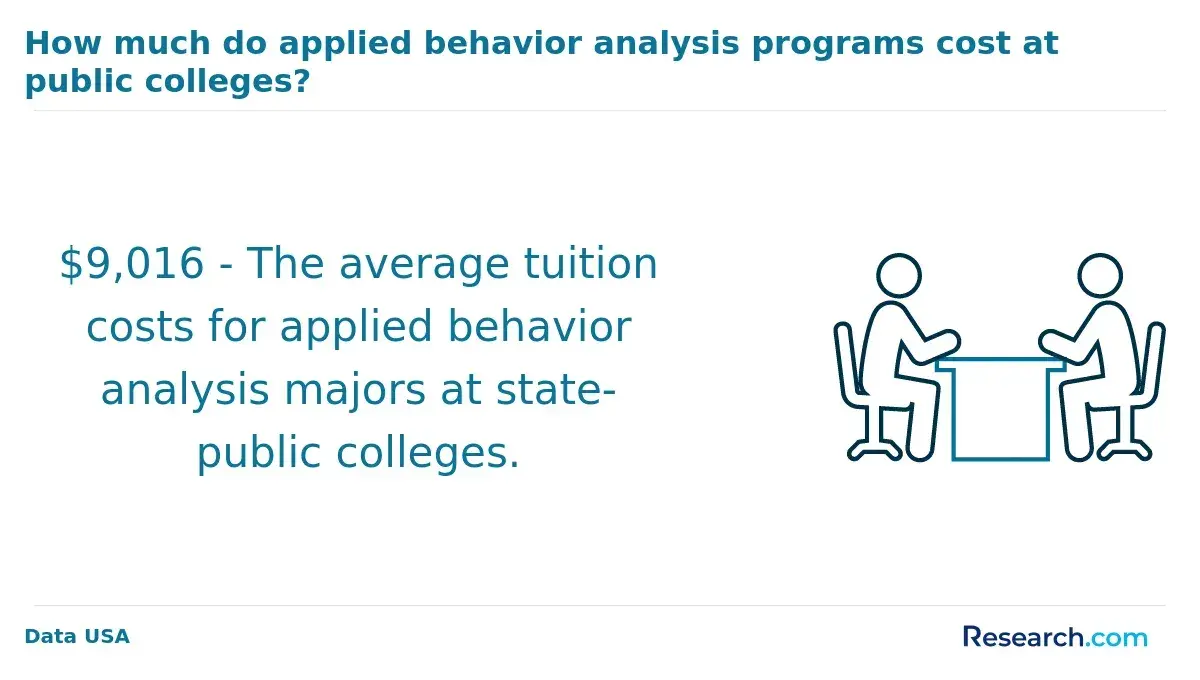
Cost can also vary by format and institution. According to AppliedBehaviorAnalysisEdu.org's 2025 Program Cost Analysis, the average tuition for no-thesis online ABA master's programs is $15,200, which is approximately 35% less than the $23,400 average cost for thesis-based programs. Lower tuition can make a no-thesis route appealing, but students should still calculate total costs, including fees, books, background checks, travel to fieldwork sites, and certification-related expenses.
Admission requirements for no-thesis ABA programs usually look similar to other graduate programs in psychology, education, special education, counseling, or behavior analysis. Most schools require a bachelor's degree from an accredited institution, official transcripts, recommendation letters, and a statement of purpose explaining the applicant's interest in ABA.
A minimum GPA around 3.0 on a 4.0 scale is standard, although requirements vary by university and more competitive programs may expect stronger academic records. Applicants from psychology, education, social work, speech-language pathology, human services, or related fields may be well positioned, but many programs also consider career changers who can show relevant experience and clear goals.
Common admission materials include:
- Completed graduate application
- Official transcripts from prior colleges or universities
- Bachelor's degree from an accredited institution
- Minimum GPA around 3.0 on a 4.0 scale
- Letters of recommendation from professors, supervisors, or professional references
- Personal statement or statement of professional goals
- Resume or CV showing work, volunteer, teaching, clinical, or human services experience
- GRE scores if the university requires them, though many schools make them optional
- English proficiency documentation and credential evaluations for some international applicants
Experience with individuals who need behavioral, developmental, educational, or mental health support can strengthen an application. Admissions committees often look for applicants who understand the responsibilities of ABA work, including ethical service delivery, data-based decision-making, collaboration with families and professionals, and respect for client dignity.
Some schools require prior coursework in psychology, statistics, child development, special education, or behavior analysis. Others allow students to complete foundational courses after admission. If you lack an ABA background, ask whether the program offers leveling courses or academic support for students new to the field.
According to data from the Georgetown University Center on Education and the Workforce, graduates of no-thesis ABA master's programs see a 285% return on investment within five years, earning a median salary of $92,000 by year three versus a $65,000 baseline. While individual outcomes depend on location, certification, employer type, and experience, the data underscores why applicants should treat admissions as the first step in a larger career investment.
No-thesis Applied Behavior Analysis master's programs generally take between 18 and 24 months to complete. Full-time students often finish in about 18 months, while part-time students may take closer to two years. The exact timeline depends on course load, term structure, transfer credits, fieldwork requirements, and whether the program runs year-round.
Costs for no-thesis ABA programs can vary widely, typically ranging from $20,000 to $40,000 for the complete program. Tuition is only one part of the budget. Students should also plan for textbooks, technology fees, application fees, graduation fees, background checks, liability insurance if required, transportation to fieldwork sites, and certification exam-related costs.
Capella University's 2025 Online Learner Outcomes Report found that 79% of ABA master's enrollees were full-time employees, and no-thesis programs had a 92% retention rate due to flexible scheduling. That flexibility can matter for students who cannot pause their careers while completing graduate school.
| Program feature | What to ask before enrolling |
| Timeline | Can the program be completed in 18 months, or is 24 months more realistic for working students? |
| Course format | Are courses asynchronous, synchronous, hybrid, accelerated, or cohort-based? |
| Total cost | Does the published cost include fees, materials, and other required expenses? |
| Fieldwork support | Does the school help arrange placements, or must students secure their own sites? |
| Financial aid | Are federal aid, scholarships, payment plans, military benefits, or employer tuition assistance available? |
| Certification alignment | Does the curriculum meet current Behavior Analyst Certification Board requirements for the intended credential? |
A no-thesis program may shorten the path to graduation by removing the time-intensive thesis process, but students should avoid choosing a program based only on speed. A faster program is valuable only if it still provides strong instruction, ethical training, fieldwork preparation, and transparent certification guidance.
A no-thesis ABA degree can lead to many of the same applied career paths as a thesis-based ABA degree, especially when the graduate also meets certification and supervised experience requirements. Employers are typically most interested in whether candidates can assess behavior, design effective interventions, use data responsibly, collaborate with teams, and practice ethically.
Graduates often pursue roles in autism services, schools, early intervention programs, behavioral health clinics, hospitals, residential programs, community agencies, and private practice settings. Some also work in organizational behavior management, where behavior analytic principles are applied to workplace performance, safety, training, and systems improvement.
Certified BCBAs from no-thesis programs show strong field readiness, evidenced by a 71% first-time BCBA exam pass rate in 2025-higher than the national average of 65%, according to the BACB Annual Certification Report. This suggests that no-thesis routes can still support rigorous credential preparation when the program is well designed.
Possible career paths include:
- Board Certified Behavior Analyst, after meeting all credential requirements
- Behavior analyst in autism service organizations
- School-based behavior specialist or behavior consultant
- Early intervention behavior specialist
- Clinical supervisor in ABA service settings
- Behavior interventionist or program coordinator
- Organizational behavior management consultant
- Behavioral services manager in healthcare or community agencies
ABA graduates can expect to:
- Provide individualized behavior intervention plans for people with developmental disorders such as autism spectrum disorder.
- Support early intervention programs focused on children's developmental milestones.
- Work as behavior specialists in schools, collaborating with teachers and families to manage challenging behaviors.
- Apply ABA techniques in healthcare settings to assist patients with behavioral or cognitive challenges.
- Consult with corporate clients to improve employee performance and organizational culture.
Students should distinguish between degree completion and professional authorization. Some roles may require BCBA certification, state licensure, supervised experience, background checks, or employer-specific qualifications. Requirements vary by state and setting, so graduates should verify the rules for the location and role they plan to pursue.
Salary expectations for ABA professionals vary by credential, state, employer type, experience, supervision responsibilities, and cost of living. The median annual salary for Board Certified Behavior Analysts (BCBAs) across the U.S. is about $78,000. In some states, earnings are higher. California shows a median salary near $115,000, largely due to state mandates integrating ABA services into public schools, which increases demand and wages.
Entry-level ABA practitioners earn between $50,000 and $65,000 depending on employer and location. Professionals with more experience, advanced certification, supervisory duties, or private-practice responsibilities often exceed $100,000 annually. Healthcare systems, private clinics, metropolitan employers, and regions with strong service mandates may pay more than rural or community-based organizations.
| Career stage or setting | Salary information stated |
| Entry-level ABA practitioner | Between $50,000 and $65,000, depending on employer and location |
| Median annual salary for BCBAs across the U.S. | About $78,000 |
| California median salary | Near $115,000 |
| Experienced, certified, or supervisory roles | Often exceed $100,000 annually |
Key factors influencing salaries include:
- Certification level, especially whether the professional holds the BCBA credential
- State mandates requiring ABA services in education and healthcare
- Employer type, such as public school, hospital, private clinic, nonprofit agency, or private practice
- Years of experience and leadership responsibilities
- Demand for ABA services in the region
- Cost of living in the area
- Caseload complexity and supervision duties
Students should be cautious when comparing salary figures. A high advertised salary may reflect a high-cost region, heavy caseload, supervisory expectations, or additional licensure requirements. The strongest long-term strategy is to complete a reputable program, meet certification requirements, build supervised experience, and pursue roles that align with both compensation goals and ethical practice standards.
How to Select an Accredited No-Thesis ABA Program?
To select a strong no-thesis ABA program, start with certification alignment and academic quality. A program should clearly explain how its coursework supports the credential you plan to pursue, what fieldwork support is available, who teaches the courses, and what students must do after graduation to become eligible for certification or licensure.
Be precise about accreditation language. The Behavior Analyst Certification Board sets certification requirements, while program-level recognition may involve ABAI accreditation or verification, institutional accreditation, or other approval processes depending on the school and credential pathway. Do not assume that a no-thesis program qualifies you for certification just because it uses ABA or BCBA in its marketing materials.
Use the following checklist when comparing programs:
- Confirm that the institution is properly accredited.
- Verify that the curriculum supports current Behavior Analyst Certification Board requirements for your intended credential.
- Check whether the program has ABAI accreditation, verification, or another relevant form of recognition where applicable.
- Ask how supervised fieldwork is arranged and documented.
- Review faculty credentials, professional experience, and availability for advising.
- Compare BCBA exam preparation resources, graduation rates, and pass-rate information when available.
- Evaluate whether the program offers online, hybrid, evening, part-time, or full-time formats that fit your schedule.
- Review tuition, fees, financial aid, scholarships, employer tuition assistance, and payment plans.
- Ask whether the program supports students in your state, especially if licensure or fieldwork rules differ by location.
- Look for student support services such as academic advising, career counseling, writing support, and placement guidance.
Program outcomes deserve close attention. Ask for graduation rates, certification exam pass rates, employment outcomes, and student support data. If a school cannot provide clear information, treat that as a reason to ask more questions before enrolling.
According to ABAI's 2025-2030 Education Trends Forecast, by 2030, 62% of ABA programs will eliminate thesis requirements, driving a 25% rise in BCBA certifications. This trend points to growing acceptance of practice-centered ABA education, but it does not remove the need for careful program vetting.
The right no-thesis ABA program should help you move toward your professional goal without sacrificing quality. Prioritize certification alignment, transparent fieldwork support, qualified faculty, realistic cost, and a format you can complete successfully.
Other Things You Should Know About Applied Behavior Analysis
A no-thesis ABA program should be accredited by the ABAI Accreditation Board or the Higher Learning Commission if the degree is part of a university’s approved applied behavior analysis track. Accreditation matters because BCBA certification requires coursework that meets ABAI or BACB-approved content standards, plus supervised fieldwork.
Yes, no-thesis ABA programs are designed to meet the coursework and supervised experience requirements needed for the Board Certified Behavior Analyst (BCBA) exam. These programs often emphasize practical skill development and applied research methods without the formal thesis component. Students should ensure the program is accredited by the Behavior Analyst Certification Board (BACB) or meets their criteria.
Most no-thesis ABA programs include required practicum or fieldwork components that provide hands-on clinical experience. These experiences are critical for certification eligibility and professional development. The scope and quality of practicum opportunities generally match those offered by thesis-based programs.
Admission requirements for 2027 no-thesis ABA programs typically include a bachelor's degree in a related field, letters of recommendation, and a statement of purpose. Some programs might also require GRE scores for entry. The specifics vary by institution, so it's advisable to check with individual schools.
- Key Factors of ABA Therapist Salary | True Progress Therapy https://trueprogresstherapy.com/blog/aba-therapist-salary/
- 40+ Best Online ABA Masters Programs [for 2025] https://abamastersprograms.org/online-aba-masters-programs/
- 20 Best Schools Offering Master's in ABA Programs https://www.appliedbehavioranalysisedu.org/20-best-schools-offering-aba-masters-programs/
- BCBA Certification Requirements - Bluebell ABA https://bluebellaba.com/blog/bcba-without-masters-degree/
- Association for Behavior Analysis International Accreditation Board https://accreditation.abainternational.org/accredited-programs.aspx
- Future Job Outlook for ABA Therapists | Level Ahead ABA https://www.levelaheadaba.com/aba-therapist-job-outlook
- Association for Behavior Analysis International https://www.abainternational.org/higher-education/tiered-model-of-education/recognized-programs.aspx
- ABA Therapy Job Outlook | Advanced Autism Services https://www.advancedautism.com/post/aba-therapy-job-outlook
- ABA Therapy Job Outlook Brightens Up | Links https://linksaba.com/aba-therapy-job-outlook/
- How to Identify a High-Quality ABA Therapy Program https://www.magnetaba.com/blog/how-to-identify-a-high-quality-aba-therapy-program