2027 ABA Graduate Admissions Guide: What BCBA Programs Look For

Co-Founder and Chief Data Scientist
Choosing a BCBA graduate program is not just a school decision. It affects whether you can meet certification requirements, complete supervised fieldwork on time, qualify for the BCBA exam, and move into behavior analysis roles without avoidable delays. Applicants often come from psychology, education, human services, healthcare, or unrelated fields, so the strongest applications show both academic readiness and a clear understanding of applied behavior analysis work.
This guide explains what BCBA programs teach, what educational and fieldwork requirements typically apply, how online and campus formats differ, what accreditation and certification standards to verify, and how to compare cost, timeline, curriculum, admissions expectations, and career outcomes. Use it to narrow your options, avoid programs that do not align with certification goals, and prepare a more competitive graduate application.
Key Things You Should Know
- BCBA programs prioritize candidates with strong foundational knowledge in behavior analysis, often requiring completion of verified course sequences aligned with BACB standards updated through 2025.
- Admissions increasingly emphasize practical experience, with 65% of programs preferring applicants who have completed supervised fieldwork or relevant internships before applying.
- Competitive GPAs, typically above 3.0, and clear demonstration of research or clinical competencies enhance acceptance chances amid increasing demand for BCBA certification in the U.S. job market.
What is Applied Behavior Analysis and what do BCBA programs teach?
Applied behavior analysis (ABA) is the scientific study of behavior and the environmental factors that influence it. In practice, ABA professionals use assessment, data, and evidence-based interventions to understand why behavior occurs and how to support meaningful behavior change. BCBA programs prepare graduate students to apply these methods ethically in settings such as schools, clinics, homes, hospitals, community programs, and organizations.
A strong BCBA curriculum goes beyond memorizing behavioral terminology. Students learn how to assess behavior, design interventions, collect and interpret data, monitor progress, and make decisions based on measurable outcomes. Common topics include reinforcement, punishment, stimulus control, functional behavior assessment, functional analysis, behavior-change procedures, single-subject research design, ethics, and professional conduct.
Programs also emphasize applied decision-making. Students are expected to connect theory with real cases, communicate with families and multidisciplinary teams, and adapt plans for individuals with different ages, cultural backgrounds, diagnoses, communication needs, and support systems. Many graduates work with people with autism, developmental disabilities, or behavioral challenges, but ABA is also used in education, healthcare, performance improvement, and organizational behavior management.
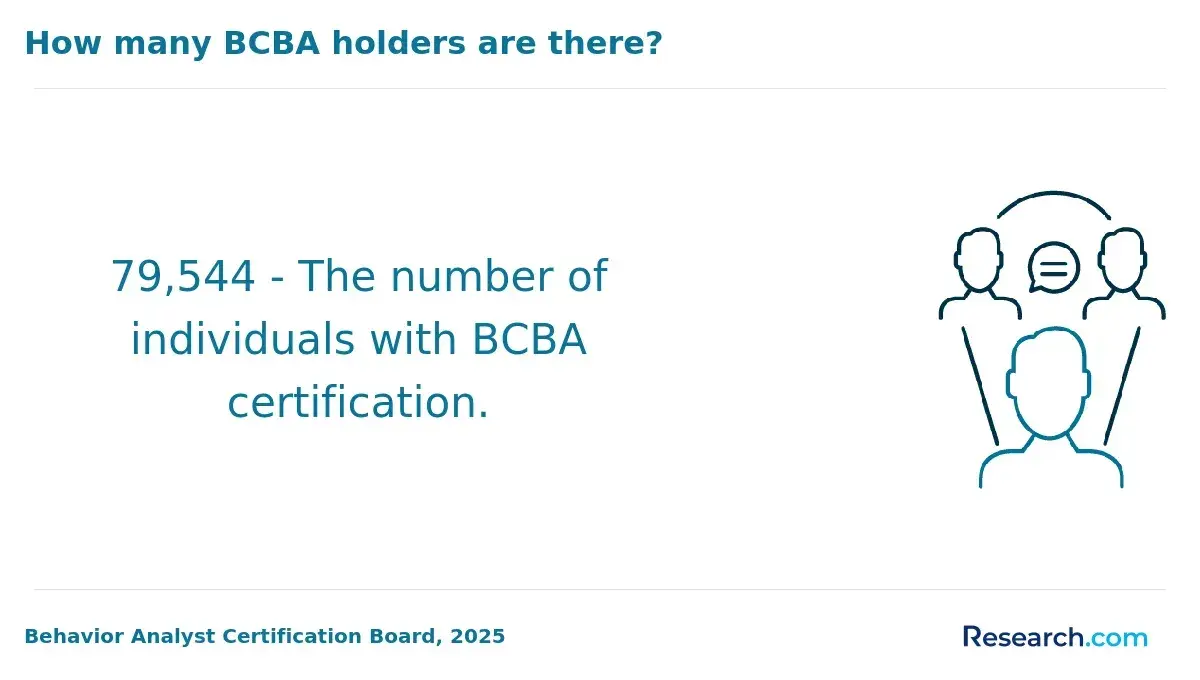
Because behavior analysts are accountable for client outcomes, BCBA programs usually require strong analytical and research skills. Students learn to evaluate behavioral studies, use data collection systems, graph and interpret trends, and determine whether an intervention is working. The Behavior Analyst Certification Board reports over 73,000 active certificants worldwide, reflecting strong demand and continued growth in the field.
Prospective students comparing program options should look closely at cost, fieldwork access, certification alignment, and student support. Reviewing top applied behavior analysis graduate programs can help identify affordable pathways that still meet professional goals.
What are the educational requirements to become a Board Certified Behavior Analyst?
To become a Board Certified Behavior Analyst, candidates in the United States generally need a qualifying graduate degree, behavior-analytic coursework, supervised fieldwork, and a passing score on the BCBA certification exam. The degree is commonly in behavior analysis, psychology, or education, and the coursework must align with Behavior Analyst Certification Board expectations, including ethics, assessment, research methods, measurement, and intervention design.
Many applicants look for programs with a Verified Course Sequence (VCS) because it helps confirm that the coursework component has been reviewed for BACB alignment. A VCS does not automatically make a student eligible for certification by itself; candidates must still meet degree, fieldwork, examination, and any applicable state requirements. Before enrolling, applicants should confirm the exact pathway the program supports.
Supervised fieldwork is another major requirement. Candidates typically complete between 1,500 and 2,000 hours, depending on supervision type. These hours are not a formality. They are where future BCBAs learn how to conduct assessments, write treatment plans, supervise implementation, document progress, and respond to ethical and clinical challenges under qualified supervision.
Exam preparation also matters. Programs with strong advising, structured fieldwork support, faculty mentoring, and exam review resources may help students stay on track. For example, California State University, Northridge reported a 100% pass rate for 13 first-time BCBA candidates, as noted by Action Behavior Centers: Top ABA Graduate Programs.
When comparing BCBA certification schools, verify the following before applying:
- The graduate degree meets the credential pathway you plan to use.
- The coursework is BACB-aligned and clearly mapped to certification requirements.
- The program explains how supervised fieldwork is arranged, documented, and monitored.
- Faculty or advisors can answer certification and exam-readiness questions accurately.
- The school discloses relevant outcomes, such as exam pass rates when available.
What is the difference between online and campus-based BCBA graduate programs?
The main difference between online and campus-based BCBA graduate programs is delivery format, not necessarily academic content. Both formats can prepare students for certification when the coursework, degree, and fieldwork requirements are properly aligned. The better choice depends on your schedule, location, learning style, supervision access, and need for in-person support.
| Factor | Online BCBA programs | Campus-based BCBA programs |
| Schedule | Often more flexible, with asynchronous coursework and occasional live sessions. | Usually follows fixed class times and campus schedules. |
| Access | Useful for working professionals or students who do not live near a program. | Best for students who can commute or relocate and want in-person engagement. |
| Faculty and peer interaction | Depends on discussion boards, video meetings, virtual office hours, and cohort design. | Offers more immediate face-to-face interaction with faculty and classmates. |
| Fieldwork | Students may need to locate and coordinate approved supervision locally. | Students may have easier access to university-affiliated placements or local partnerships. |
| Best fit | Self-directed learners who can manage deadlines and fieldwork logistics. | Students who prefer structure, campus resources, and in-person support. |
Online BCBA programs can be a strong option for students balancing employment, family responsibilities, or geographic limitations. However, online students should ask detailed questions about fieldwork support. A flexible course schedule is helpful only if the student can also secure appropriate supervised experience.
Campus-based programs may provide a more structured environment, including on-site resources, study groups, faculty access, and established practicum relationships. The trade-off is less scheduling flexibility and, in many cases, added commuting or relocation costs.
Program outcomes are more important than format alone. For instance, the University of North Carolina Wilmington recently admitted 5 students to its MS Psychology with ABA concentration, with cohorts of 4-6 candidates achieving a 96% first-time BCBA exam pass rate. Students comparing flexible pathways can also review the cheapest BCBA online program options, while still verifying certification alignment and supervision support.
Before choosing a BCBA program, verify that the school, degree, coursework, and fieldwork structure support your intended certification pathway. This is the most important due-diligence step because an affordable or convenient program can still become costly if it does not meet credential requirements.
First, confirm whether the program includes coursework approved by the Behavior Analyst Certification Board (BACB) as a verified course sequence (VCS). VCS approval helps show that the coursework has been reviewed for BCBA exam eligibility requirements. Programs without BACB-approved coursework may require students to complete additional classes elsewhere, which can delay certification.
Second, review institutional accreditation. Regional accreditation from U.S. Department of Education-recognized agencies adds credibility beyond BACB approval and can affect transferability, financial aid eligibility, employer recognition, and admission to future doctoral study. Accreditation is not the same as certification approval, so both should be checked separately.
Third, examine the curriculum’s alignment with the BACB Task List, version 4 or later. The curriculum should cover behavior assessment, intervention design, measurement procedures, ethics, research methods, supervision, and professional responsibilities. If a program cannot clearly explain how its courses map to certification standards, treat that as a warning sign.
Fourth, verify fieldwork expectations. Programs should explain how students obtain supervised hours, who may supervise them, how documentation is handled, and whether the program provides placement support. Fieldwork is another crucial component; verify programs provide supervised hours meeting BACB's minimum 1,500 hours under qualified BCBA supervisors.
Cost, speed, and delivery format matter, but they should not outweigh certification eligibility. The BACB Annual Data Report 2025 shows a median salary of $92,500, with the top 10% earning over $130,000, reflecting growing demand in the field. That earning potential depends on actually reaching credential eligibility, passing the exam, and meeting any state requirements that may apply.
Students comparing ABA programs should verify these standards directly with the school and, when needed, with BACB guidance rather than relying only on marketing language.
An accredited BCBA master's program typically combines graduate-level theory, research, ethics, assessment, intervention design, and supervised applied practice. The curriculum is designed to prepare students to make data-based decisions, work within professional and ethical standards, and support clients in real-world environments.
Core coursework commonly includes:
- Foundations and concepts of behavior analysis
- Measurement, data collection, and data analysis
- Functional behavior assessment and functional analysis
- Experimental design and research methods
- Single-subject research design
- Behavior-change procedures and intervention strategies
- Ethical and professional issues in behavior analysis
- Supervision, consultation, and professional practice
Students usually learn how to define behavior in observable terms, select appropriate measurement systems, analyze graphs, identify environmental variables, and adjust interventions when progress is limited. Programs also train students to write behavior intervention plans, evaluate treatment integrity, communicate with caregivers and teams, and document services appropriately.
These programs integrate supervised practical experience, often requiring a minimum of 1,000 hours of fieldwork in areas like developmental disabilities, autism spectrum disorder, or organizational behavior management. This applied component is essential because BCBA work requires more than classroom knowledge; students must demonstrate professional judgment in complex settings.
Electives may help students tailor their training. Some programs offer options related to pediatric feeding disorders, autism services, school consultation, severe behavior, behavioral health, or organizational behavior specialties. Applicants should choose electives based on the populations and work settings they expect to pursue after graduation.
Program format and cost can vary widely. For instance, Florida Institute of Technology offers an online ABA master's program with tuition near $25,000 for 2025-2026, catering to distance learners seeking accredited credentials.
Before enrolling, students should confirm that the course sequence meets BACB Verified Course Sequence (VCS) standards and that academic advising clearly explains how coursework, degree requirements, supervised fieldwork, and exam eligibility fit together.
Admission requirements for BCBA graduate programs vary by school, but most programs look for evidence that applicants can succeed in rigorous graduate coursework and understand the responsibilities of behavior analysis practice. A bachelor’s degree is usually required, often in psychology, education, behavior analysis, social work, human services, or a related field. Some programs admit students from unrelated majors if they complete prerequisite coursework or show relevant professional experience.
Common prerequisites may include undergraduate or introductory coursework in psychology, learning principles, behavior analysis, research methods, or statistics. These courses help students prepare for graduate work involving data collection, experimental design, assessment, and intervention planning.
Applicants usually submit official transcripts, a resume, letters of recommendation, and a personal statement. Many programs expect a minimum GPA of around 3.0. GRE scores might be required but are often optional or waived at many schools. Competitive programs may also request interviews, writing samples, or documentation of relevant work or observation hours in ABA, education, disability services, mental health, or related settings.
A strong application should do more than state interest in helping people. It should show that the applicant understands ABA as a data-driven and ethically regulated discipline. Admissions committees often value applicants who can connect their background to specific career goals, explain why BCBA training is necessary, and demonstrate readiness for supervised clinical or educational work.
Key preparation steps include:
- Review each program’s prerequisite courses before the application deadline.
- Strengthen academic readiness in statistics, research methods, and behavioral science.
- Gain relevant exposure through work, volunteering, shadowing, or observation when possible.
- Choose recommendation writers who can speak to your judgment, reliability, communication, and academic ability.
- Use the personal statement to explain your goals, fit with the program, and understanding of ABA practice.
For example, University of South Florida's ABA master's graduates achieved an 86% first-time BCBA pass rate, with starting salaries 25% higher than general psychology master's holders, according to USF MS Program Data. This highlights why applicants should take prerequisites, program fit, and selection criteria seriously before applying.
Completing a BCBA degree usually takes 1.5 to 3 years. Full-time students may finish in about 18 to 24 months, while part-time students and working professionals may need up to 3 years. The timeline depends on course load, program format, practicum availability, and how efficiently students complete supervised fieldwork.
Graduate coursework is only one part of the timeline. Students also need supervised fieldwork, and many candidates must complete 1,500 hours of supervised fieldwork, as mandated by the Behavior Analyst Certification Board (BACB). If fieldwork begins late, supervision is inconsistent, or documentation is incomplete, certification can be delayed even after the degree is finished.
Tuition generally ranges from $15,000 to $30,000 for the full certificate or master's program. Public universities typically cost less for in-state students, while private institutions often charge more. Online programs may reduce commuting and relocation costs, but they do not automatically cost less once all fees are included.
Students should budget beyond tuition. Additional expenses may include supervision fees, BACB exam fees, textbooks, technology, background checks, liability insurance, and materials. Some programs bundle supervision and exam preparation fees; others require separate payments. Always ask for a full cost breakdown before enrolling.
| Cost or timeline factor | Why it matters |
| Full-time versus part-time enrollment | Determines whether completion is closer to 18 to 24 months or up to 3 years. |
| Fieldwork access | Limited supervision options can extend the path to certification. |
| Tuition and fees | The published tuition may not include all required expenses. |
| Online versus campus format | Online study may reduce indirect costs but may require more independent fieldwork planning. |
| BACB approval status | Misaligned coursework can create additional cost and delay. |
Demand for BCBA professionals is growing rapidly, especially in the U.S. South, where ABA job postings are projected to increase 18% due to expanded autism service mandates (BACB Annual Data Report 2025). Timely completion can help candidates enter the workforce sooner, but speed should not come at the expense of certification alignment or quality supervision.
BCBA graduates can work in clinical, educational, healthcare, community, research, telehealth, and organizational settings. The most common roles involve assessing behavior, designing intervention plans, supervising service delivery, monitoring progress, training staff or caregivers, and ensuring ethical practice.
Many BCBAs work with individuals with autism spectrum disorder or developmental disabilities in clinics, homes, schools, and community programs. In schools, they may support students with behavioral needs, collaborate with special education teams, train teachers, and help develop behavior intervention plans. In healthcare and outpatient settings, BCBAs may work with interdisciplinary teams to address behavioral health concerns and improve treatment outcomes.
BCBAs can also pursue organizational behavior management, where behavior analytic principles are used to improve workplace systems, safety, productivity, training, and employee performance. This path may appeal to students interested in business, operations, leadership, or performance improvement rather than direct clinical services.
Common career paths include:
- Clinical behavior analyst working with children, adolescents, or adults
- Autism services supervisor or program coordinator
- School-based behavior specialist or educational consultant
- Behavior intervention plan developer or consultant
- Organizational behavior management specialist
- Research coordinator or applied research staff member
- Telehealth ABA provider or remote supervision specialist
- Clinical director, supervisor, or administrator overseeing BCBAs and behavior technicians
Career fit depends on population, setting, supervision responsibilities, tolerance for documentation, and interest in direct client work versus consultation or leadership. Students should use fieldwork placements to test different settings before committing to a long-term path.
Job seekers should also evaluate workplace culture. Only 18% of BACB certificants in 2025 identified as racial or ethnic minorities, highlighting ongoing diversity challenges within the field. Applicants may want to ask employers about inclusive hiring, culturally responsive practice, mentorship, caseload expectations, and support for ethical decision-making.
The job outlook for board certified behavior analysts is strong, with employment growth projected at around 20% over the next decade. Demand is driven by expanded autism services, school-based behavioral supports, behavioral health programs, and broader use of applied behavior analysis in clinics and community settings.
Salary potential varies by region, employer, experience, caseload complexity, supervisory responsibility, and service setting. Entry-level BCBAs typically earn between $50,000 and $65,000 annually. Mid-career professionals with three to five years of experience often see salaries from $70,000 to $90,000, while highly experienced BCBAs or those in supervisory roles may exceed $100,000 per year.
Higher pay is often tied to leadership duties, specialized expertise, supervision of teams, hard-to-staff locations, or roles with significant clinical responsibility. Urban areas may offer higher wages but can also have higher living costs. Rural or underserved regions may offer strong demand but fewer employer options.
Program quality can affect career readiness. Online applied behavior analysis programs, such as those at the University of Alabama in Huntsville, have demonstrated 100% BCBA pass rates for graduates, rivaling in-person programs. This shows that delivery format alone does not determine outcomes; curriculum alignment, faculty support, fieldwork quality, and exam preparation matter more.
To improve long-term salary potential, BCBA candidates should prioritize supervised experience, ethical practice, strong documentation skills, interdisciplinary communication, and leadership development. Specialization certificates and supervisory experience can further expand job options.
How do you evaluate and select a reputable BCBA program that fits your goals?
To select a reputable BCBA program, start with certification alignment, then evaluate fit. A program that is inexpensive, fast, or convenient is not a good choice if it does not support your route to BCBA eligibility. Confirm the school’s accreditation, the program’s BACB approval status, and the fieldwork structure before comparing tuition or format.
Use the following checklist when narrowing programs:
- Certification alignment: Confirm whether the program includes a verified course sequence (VCS) and how it supports BCBA exam eligibility.
- Institutional accreditation: Make sure the institution has recognized accreditation that supports graduate study, financial aid, and employer acceptance.
- Fieldwork support: Ask whether the program helps students find supervisors, tracks hours, and provides guidance on documentation.
- Curriculum fit: Review whether courses cover ethics, behavior assessment, intervention design, research methods, measurement, and supervision.
- Career focus: Determine whether the program emphasizes autism services, schools, clinical practice, research, or organizational behavior management.
- Faculty expertise: Look for instructors whose clinical or research backgrounds match your goals.
- Student outcomes: Review BCBA exam pass rates, graduation rates, alumni roles, and employment support when available.
- Format and workload: Choose online, hybrid, or campus study based on your schedule, learning style, and ability to complete fieldwork.
- Total cost: Compare tuition, fees, supervision costs, exam costs, books, and any travel or residency requirements.
Applicants should also ask direct questions before enrolling. Who advises students on certification requirements? How often are courses offered? What happens if a student cannot secure fieldwork locally? Are live sessions required? Does the program provide exam preparation? Are faculty accessible to online students?
Align the program with the work you want to do after graduation. Students aiming for school-based roles may value education partnerships and special education coursework. Those pursuing clinical autism services may prioritize practicum access and supervision quality. Students interested in organizational behavior management should look for faculty expertise and electives in that area.
The field of Applied Behavior Analysis is growing, with the BACB projecting a 15% increase in certificants by 2027 due to rising autism prevalence and expanded federal funding. That growth may create more opportunities, but it also makes program quality and preparation more important. Choose the program that gives you the clearest, most supported path from admission to certification and employment.
Other Things You Should Know About Applied Behavior Analysis
Most BCBA graduate programs in 2027 typically require a minimum GPA of 3.0 for admission. Some competitive programs may demand higher GPAs, so it is advisable to check specific schools for their precise admission criteria.
Yes, experience in fields such as psychology, education, or social work can enhance your BCBA program application. Relevant work or volunteer experience demonstrates your commitment and provides practical exposure to behavioral principles. This background often supports your understanding of client needs and intervention strategies.
BCBA candidates must complete 2,000 supervised fieldwork hours or 1,500 concentrated supervised fieldwork hours under a qualified supervisor. Programs often ask applicants to understand supervision rules from the Behavior Analyst Certification Board, including required contacts, documentation, and approved settings before admission or enrollment.
Many BCBA graduate programs include a research component or require a thesis to fulfill degree requirements. This allows students to engage deeply with behavioral research methods and contribute original findings to the field. However, not all programs mandate a thesis; requirements vary based on the institution.
- The Rate of Job Growth for BCBAs (In 2023) https://www.crossrivertherapy.com/behavioral-analysts/job-growth
- Applied Behavior Analysis (ABA) https://my.clevelandclinic.org/health/treatments/25197-applied-behavior-analysis
- 8 Tips for Selecting a Fantastic ABA Graduate Program! - ABA Centers of America https://www.abacenters.com/aba-graduate-program/
- BCBA Requirements: College Years Explained | Divine Steps https://www.divinestepstherapy.com/blog/bcba-exam-college-years
- Certification Pathways, VCSs, & Accreditation: A Student's Guide https://www.abatechnologies.com/blog/certification-pathways-vcss-accreditation-a-students-guide
- Quality ABA Therapy Program: How to Choose the Right One https://championsaba.com/quality-aba-therapy-program/
- Board-Certified Behavior Analyst (BCBA) Salary Guide â Trusted Health https://www.trustedhealth.com/allied-career-guide/behavior-analyst/salary-guide
- BCBA Career Options: Exploring Diverse Career Paths for BCBAs https://www.abaresourcecenter.com/post/bcba-career-options
- What Is a BCBA? Your Guide to Becoming a Board Certified Behavior Analyst https://jumpaheadpediatrics.com/what-is-a-bcb/
- Applied behavior analysis - Wikipedia https://en.wikipedia.org/wiki/Applied_behavior_analysis