2027 BCBA Career Paths in Private Practice

Co-Founder and Chief Data Scientist
Building a private practice as a Board Certified Behavior Analyst (BCBA) is not just a certification decision. It is also a clinical, business, supervision, licensure, and financial planning decision. This is especially true for professionals coming from psychology, education, counseling, healthcare, social work, or another undergraduate background who want to move into applied behavior analysis without disrupting work or family obligations.
This guide explains what BCBAs do in private practice, how certification generally works, what education and fieldwork are required, how online and campus programs compare, and what to look for before enrolling. It also covers curriculum, admissions, costs, career paths, salary expectations, and practical program-selection criteria for readers who want a realistic path into private ABA work in 2026.
Key Things You Should Know
- In 2026, BCBA professionals in private practice benefit from a growing demand driven by a 14% projected employment increase through 2030 in the behavior analysis field.
- Private practice BCBA roles often blend clinical supervision, direct client services, and business management, requiring strong multidisciplinary and entrepreneurial skills.
- Reimbursement from insurance and evolving telehealth regulations significantly affect income potential and service delivery models in private practice settings.
What is a BCBA in private practice?
A BCBA in private practice is a Board Certified Behavior Analyst who provides applied behavior analysis services outside a traditional agency, hospital, or school-district employee role. Private practice may mean owning an ABA business, working as an independent contractor, joining a small clinician-led group, or consulting with families, schools, healthcare providers, or organizations.
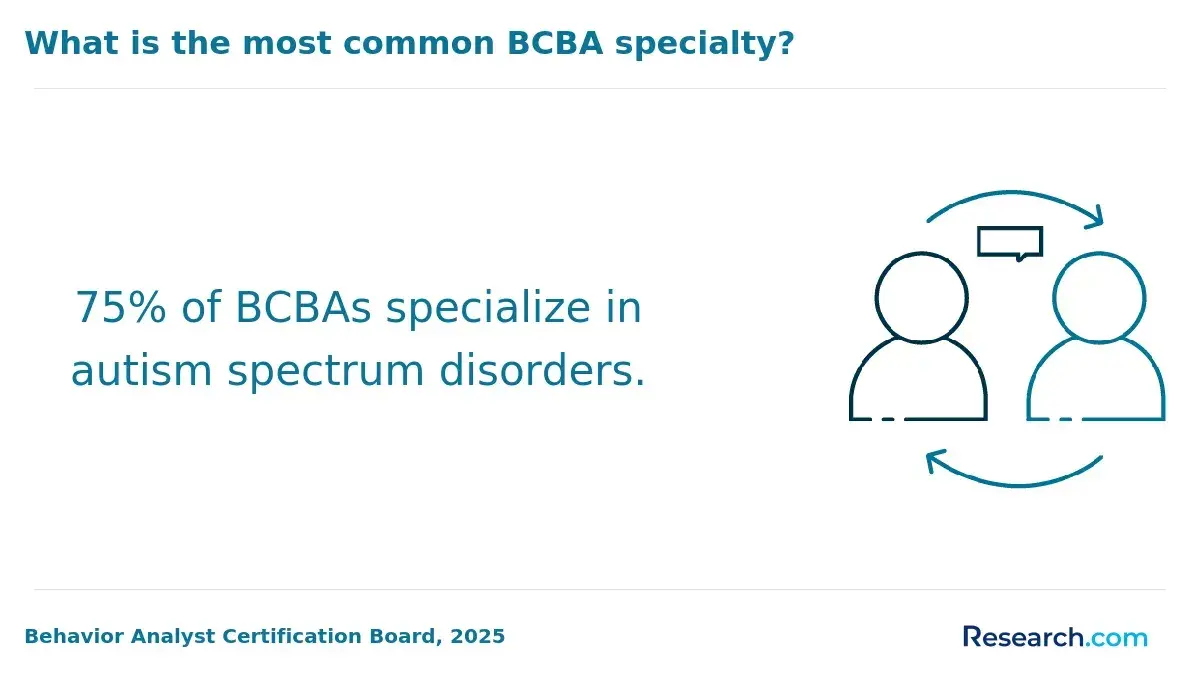
The clinical work usually includes assessment, treatment planning, data review, caregiver training, and supervision of behavior technicians or other support staff. Many private-practice BCBAs serve children with autism spectrum disorder or developmental disabilities, but the field can also include feeding support, severe behavior intervention, parent coaching, school consultation, adult services, organizational behavior management, and staff training.
Private practice offers more autonomy than many institutional roles, but it also adds responsibilities that are not part of most graduate curricula. A BCBA who runs or helps manage a practice may need to understand intake workflows, documentation standards, insurance authorization, billing, contracts, client retention, HIPAA-related privacy practices, state licensure rules, and referral relationships.
For many candidates, the appeal is control: the ability to choose a specialty, shape a caseload, build long-term client relationships, and design a practice model around clinical values. The trade-off is that independence requires stronger business judgment and tolerance for uncertainty. Revenue can depend on payer contracts, local demand, supervision capacity, staffing, and the ability to maintain ethical service quality while growing.
Professionals planning this route should focus early on three areas: meeting certification requirements, gaining supervised experience in the population they hope to serve, and learning the basics of practice operations. Flexible pathways, including BCBA online programs, can help working adults complete coursework while preparing for the clinical and administrative realities of private practice.
How do you become a BCBA?
Becoming a BCBA generally requires graduate education, behavior-analytic coursework, supervised fieldwork, and a passing score on the BCBA certification exam. Candidates should also check state licensure rules, because certification and state permission to practice are related but not always identical.
The first step is completing a qualifying graduate degree, either a master's or doctoral degree, through a program accredited by the Behavior Analyst Certification Board (BACB) or one that meets BACB coursework requirements. Coursework typically covers behavior-analytic concepts, ethics, assessment, research methods, intervention design, measurement, and professional practice. Students comparing degree options can review BCBA certification schools to understand common formats and requirements.
The second step is supervised practical experience. Candidates may complete a practicum with at least 1,000 hours or intensive fieldwork totaling a minimum of 2,000 hours under a qualified BCBA supervisor. This period is where candidates learn how to conduct assessments, write treatment goals, collect and interpret data, train caregivers or staff, and make ethical treatment decisions with real clients.
After completing coursework and supervision, candidates apply for and take the BCBA certification exam. The exam evaluates knowledge of behavior analysis, ethics, assessment, intervention, supervision, and professional responsibilities. Passing the exam allows candidates to use the BCBA credential, subject to BACB rules and any applicable state licensure requirements.
For private practice, certification is only the baseline. New BCBAs should also build competence in the population and setting they plan to serve. Someone who wants to open an early-intervention clinic needs different preparation than someone planning school consultation, adult services, or corporate behavior-change work. With more than 103,000 job postings nationwide, demand is broad, but long-term success depends on matching training, supervision, and business planning to a specific service model.
Strong candidates often prepare by seeking supervisors who model ethical clinical decision-making, learning insurance and documentation expectations, networking with pediatricians, schools, and therapists, and completing BACB-approved continuing education after certification. These steps are especially important for clinicians who eventually want to operate independently rather than remain in a staff role.
What education is needed for BCBA certification?
BCBA certification in 2026 requires graduate-level preparation in behavior analysis or a related field, along with BACB-aligned coursework and supervised fieldwork. Common graduate backgrounds include behavior analysis, psychology, education, special education, and related human-service disciplines.
The academic portion must include specific behavior-analytic coursework approved by the Behavior Analyst Certification Board (BACB). Core areas usually include ethics, measurement, behavior assessment, behavior-change procedures, experimental analysis of behavior, supervision, and professional practice. The coursework is typically about 270 classroom hours, although candidates should verify current requirements directly with the BACB and with the program they plan to attend.
Fieldwork is equally important because certification is not based on classroom learning alone. Candidates complete between 1,500 and 2,000 hours of supervised fieldwork, depending on the pathway. During this experience, students learn to apply behavior-analytic principles with clients, collect and analyze data, write reports, communicate with caregivers and other professionals, and adjust interventions based on measurable outcomes.
After the degree, coursework, and supervised experience are complete, candidates must pass the BCBA certification exam. The exam tests both conceptual knowledge and applied decision-making, including ethical scenarios and practical implementation issues that BCBAs face in schools, clinics, homes, organizations, and private practice settings.
Working adults often choose online or hybrid graduate programs because they can continue earning income while completing the academic requirements. Many universities offer Verified Course Sequences (VCS) or otherwise align coursework with BACB standards. Students who need flexibility may compare online masters in behavior analysis, but speed should not be the only factor. Fieldwork quality, faculty access, exam preparation, and supervision support matter as much as program length.
The investment can be significant, but the career outlook is one reason many students pursue the credential. Average BCBA salaries stood at $73,600 with a projected 16% job growth. Those figures suggest meaningful opportunity, but private practice income still depends on location, payer mix, specialization, clinical reputation, and the ability to manage caseloads responsibly.
The best BCBA program format depends on how you learn, where you can complete fieldwork, and how much structure you need. Online programs often work well for employed adults, career changers, parents, military-connected students, and learners who do not live near a campus-based ABA program. Campus programs may be better for students who want regular in-person faculty contact, built-in practicum settings, and a more traditional graduate-school environment.
Online BCBA programs
Online programs typically offer asynchronous coursework, scheduled virtual meetings, remote advising, and the ability to complete supervised experience near where the student lives. This flexibility can be valuable for candidates already working in schools, clinics, or human-service agencies. The main risk is that students may need to arrange or verify their own fieldwork site, so it is important to ask exactly how the program supports supervision.
Campus BCBA programs
Campus programs often provide more direct access to faculty, peers, research labs, and affiliated practicum placements. They may suit students who benefit from predictable schedules, face-to-face mentorship, and immediate exposure to clinical settings. The trade-off is cost and logistics: relocation, commuting, reduced work hours, and limited geographic flexibility can make a campus program less practical for some students.
Accredited programs by the Behavior Analyst Certification Board (BACB) should prepare students for certification eligibility and integrate the scientific and ethical foundations of ABA. With certified BCBAs reaching about 66,300 nationally, program quality matters. A weak fieldwork arrangement can delay certification, limit clinical confidence, or leave graduates underprepared for private-practice responsibilities.
When comparing online and campus options, focus on practical evidence of quality rather than marketing language. Important factors include:
- BACB accreditation or verified alignment with certification requirements.
- Clear support for supervised fieldwork hours and documentation.
- Faculty with relevant behavior-analytic experience and current professional involvement.
- Exam preparation resources, advising, and student outcome transparency.
- Opportunities to learn private-practice skills such as documentation, consultation, caregiver training, and supervision.
- Total cost, including tuition, fees, travel, technology, lost work time, or relocation.
Students who want a flexible credentialing route may also compare the best online ABA certificate programs. The strongest choice is the program that fits your schedule while still giving you credible coursework, reliable supervision, and enough applied practice to work safely and ethically after certification.
Accredited schools offering BCBA degrees usually provide graduate certificates, master's degrees, or related graduate pathways in applied behavior analysis. The most important issue is not brand recognition alone; it is whether the coursework and fieldwork structure meet current Behavior Analyst Certification Board (BACB) expectations for BCBA eligibility.
Universities such as Arizona State University, University of Nebraska, and Ball State University offer BACB-approved course sequences with coursework and supervised fieldwork components designed around certification requirements. Other institutions, including Florida Institute of Technology and Simmons University, offer fully online BCBA programs with supervised practicum options in varied settings, which can be useful for working professionals or students who cannot relocate.
Before enrolling, verify the program's current BACB verification status through official sources. Program approvals can change, and students are responsible for making sure their coursework will count toward certification. Admissions representatives can be helpful, but candidates should confirm details in writing and compare them against BACB guidance.
Key questions to ask each school include:
- Is the program currently verified or aligned with BACB coursework requirements?
- Does the university hold appropriate institutional accreditation?
- Is the program a master's degree, certificate, or another graduate pathway?
- How are supervised fieldwork sites identified, approved, and monitored?
- Can students complete fieldwork in a private practice, school, clinic, home-based, or telehealth-supported setting?
- What support is available for exam preparation, advising, and career placement?
- How large are cohorts, and how accessible are faculty and supervisors?
Location can also matter. Regional demand for BCBAs varies, and states like Oregon, Kansas, and New Hampshire saw increased BCBA demand linked to autism prevalence and policy shifts. Students in higher-demand regions may benefit from local practicum partnerships and referral networks, while online programs can help candidates in areas with fewer campus options access qualifying coursework.
A BCBA curriculum teaches students how to assess behavior, design interventions, measure change, and make ethical treatment decisions using applied behavior analysis. The goal is not simply to memorize terminology; it is to prepare future analysts to solve real behavior problems with data, professional judgment, and respect for clients and families.
Core coursework usually begins with the principles of behavior, including reinforcement, punishment, stimulus control, motivating operations, generalization, and maintenance. Students learn how behavior is shaped by environmental variables and how to translate those concepts into socially meaningful intervention plans.
Assessment is another major part of the curriculum. Students study functional behavior assessments (FBA), interviews, direct observation, preference assessments, skills assessments, and data-collection systems. They also learn how to interpret data and use it to decide whether an intervention is working, needs adjustment, or should be discontinued.
Behavior-change coursework covers intervention design, skill acquisition, behavior reduction, caregiver training, and treatment integrity. Ethical training is woven throughout because BCBAs must balance effectiveness, client dignity, consent, cultural responsiveness, scope of competence, supervision responsibilities, and documentation requirements.
Many programs also address the settings where BCBAs commonly work, including autism services, developmental disability supports, education, early intervention, adult services, and organizational behavior management. As telehealth becomes more common, programs may include remote consultation, technology-supported data collection, and privacy-aware communication strategies. Growing telehealth adoption has increased focus on technology skills and remote assessment strategies, supporting a notable 14% demand rise for private practitioners according to Building Blocks Therapy data.
Supervised fieldwork connects coursework to practice. Under supervision, students learn to write professional reports, communicate with caregivers and interdisciplinary teams, train staff, monitor progress, and respond when interventions do not produce expected outcomes. For future private-practice BCBAs, this is also where they begin to see how documentation, scheduling, payer requirements, and supervision quality affect service delivery.
Admission requirements vary by school, but most BCBA-focused graduate programs expect applicants to have a bachelor's degree from an accredited institution and meet graduate admissions standards. Programs may prefer or require prior coursework or experience in psychology, education, special education, human services, behavior analysis, or a related field, but many applicants come from adjacent disciplines.
To become a Board Certified Behavior Analyst (BCBA), candidates must ultimately have a master's degree in behavior analysis, psychology, education, or a closely related field from an accredited university. The required coursework should align with Behavior Analyst Certification Board (BACB) standards in ethics, assessment, behavior-change procedures, research methods, measurement, and professional practice.
Applicants should review each program's specific requirements before applying. Common materials may include transcripts, a statement of purpose, resume, recommendation letters, prerequisite coursework, a minimum GPA, or proof of relevant work experience. Programs designed for working adults may also ask applicants to identify possible fieldwork settings or explain how they plan to complete supervision hours.
Supervised fieldwork is a major time commitment. Candidates must complete supervised fieldwork, typically 1,500 hours through the standard experience pathway or 2,000 hours for the concentrated experience pathway. Because supervision can affect both certification progress and professional competence, students should ask whether supervision is included, externally arranged, paid separately, or available through an employer.
Costs can include tuition, fees, books, technology, application fees, supervision expenses, exam fees, and professional costs. Tuition fees range from $10,000 to $30,000, depending on the program. The BCBA exam costs about $245. Supervised experience may be paid or unpaid based on the employer, and additional expenses may include professional liability insurance and credential application fees.
Students planning private practice should budget beyond graduation. Certification maintenance requires ongoing renewal and continuing education every two years. Future practice owners may also need business registration support, legal consultation, billing software, electronic health record systems, liability coverage, marketing, and training for staff or contractors.
Specializing in areas like organizational behavior management can open opportunities in corporate consulting and private practice, with growing industry demand highlighted by sources such as the Blossom ABA Therapy Blog. However, specialization should be chosen carefully. The best return usually comes from matching your clinical strengths, supervised experience, local demand, and long-term practice goals.
BCBAs in private practice can build careers around direct clinical care, supervision, consultation, program development, business ownership, training, or a combination of these roles. The private-practice path is broad because ABA services are delivered in homes, clinics, schools, communities, workplaces, and increasingly through telehealth-supported models.
Many private-practice BCBAs provide assessment and intervention for clients with autism spectrum disorder or other developmental disabilities. Their work may include functional behavior assessment, skill-acquisition programming, severe behavior support, caregiver coaching, school collaboration, and data-based treatment modification. Some specialize in verbal behavior, social skills, feeding concerns, early intervention, or transition supports.
Other BCBAs focus on supervision and clinical quality. They train and oversee behavior technicians, review treatment plans, monitor documentation, and ensure that services follow ethical and evidence-based standards. This role can be especially important in private practices that are growing and need consistent clinical systems.
Consulting is another option. BCBAs may contract with schools, pediatric therapy groups, residential programs, healthcare providers, businesses, or insurance-related organizations. Consulting can offer flexibility, but it requires strong communication skills, clear scopes of work, and careful attention to licensure, confidentiality, and documentation rules.
Private practice also creates opportunities for leadership and entrepreneurship. A BCBA may open a solo practice, develop a small group practice, manage a clinic, create caregiver-training programs, provide professional development, or build a niche service line in an underserved community. Demand for ABA private practices remains strong, with waitlists and staff shortages seen in recent years, but demand alone does not guarantee success. Practices still need ethical service models, qualified staff, sustainable billing systems, and measurable outcomes.
Telehealth expansion can help BCBAs reach families in remote or underserved areas and provide consultation, parent coaching, or supervision support. However, telehealth is not suitable for every client or service. BCBAs must evaluate clinical appropriateness, consent, privacy, payer rules, and state requirements before delivering services remotely.
Some BCBAs move into research, clinician training, advocacy, policy work, or regulatory improvement. These paths can complement private practice by improving service standards and helping the field respond to workforce shortages, payer requirements, and evolving expectations for quality care.
The average salary for a Board Certified Behavior Analyst (BCBA) in private practice typically ranges from $65,000 to $95,000 annually. Pay varies by region, experience, specialization, payer mix, caseload size, supervision responsibilities, and whether the BCBA is an employee, contractor, partner, or practice owner.
Entry-level BCBAs often earn near the lower end of the range because they are still developing clinical judgment, supervision skills, and referral networks. Experienced practitioners with established clients, strong documentation practices, and specialized expertise can exceed $100,000 per year. Private practice owners may earn more, but ownership also involves overhead, payroll, billing delays, liability risk, marketing, staff turnover, and compliance obligations.
The U.S. Bureau of Labor Statistics projects an 8% growth in BCBA employment from 2020 to 2030, surpassing the 5% average growth across all occupations. This outlook reflects continued need for behavioral health, autism services, school consultation, caregiver training, and specialized behavior supports.
Several factors can influence earnings and job stability:
- Geographic demand: Some regions have shortages of BCBAs, while others are more competitive.
- Insurance reimbursement: Rates, authorization rules, and payment timelines can affect practice revenue.
- Specialization: Early intervention, autism spectrum disorder, severe behavior, feeding, supervision, or consultation skills may increase demand.
- Experience level: Senior clinicians who can supervise others or manage programs often have stronger earning potential.
- Business model: Solo practice, group practice, school consulting, private pay, and insurance-based models have different financial risks.
New graduates can improve their prospects by seeking strong supervision, choosing underserved or high-demand regions, and developing competence in a defined service area. Experienced BCBAs may increase income by supervising clinicians, expanding services, improving referral relationships, or building specialized programs. The main challenges are reimbursement complexity, staffing, client acquisition, and maintaining quality as caseloads grow.
How to choose a reputable BCBA program?
A reputable BCBA program should do more than help students complete coursework. It should prepare them to meet certification requirements, pass the exam, complete quality fieldwork, practice ethically, and enter the workforce with realistic clinical skills. This is especially important for students who plan to work in private practice, where weak preparation can affect clients, staff, and business viability.
Start with accreditation and eligibility. Confirm that the program holds appropriate institutional accreditation and that its coursework aligns with Behavior Analyst Certification Board (BACB) requirements. Ensure the program holds accreditation from the Behavior Analyst Certification Board (BACB), which is crucial for eligibility to take the BCBA exam. Regional accreditation also signals academic rigor and may affect credit transfer, financial aid eligibility, and employer recognition.
Review the curriculum carefully. A strong program should address the BACB's fifth edition task list, including ethics, behavior assessment, intervention strategies, measurement, data analysis, supervision, and professional conduct. Coursework should connect concepts to applied decision-making rather than relying only on lectures or exams.
Fieldwork support is one of the most important selection factors. Some programs help students locate placements, while others expect students to arrange their own supervision. Ask whether the program provides approved supervisors, tracks hours, reviews documentation, and supports students who change jobs or fieldwork sites. Some programs offer field placements in private practice settings, which can be valuable for students who want to understand billing, caregiver communication, staffing, and service delivery outside large institutions.
Delivery format should match your life and learning style. Online, in-person, and hybrid programs can all be reputable if they provide faculty access, timely feedback, advising, exam preparation, and meaningful supervision support. Quality online programs should offer interaction with expert faculty, not just recorded content and isolated assignments.
Compare cost with outcomes. Look beyond advertised tuition and ask about fees, books, supervision costs, exam preparation, graduation timelines, and student support. Be cautious of programs promising rapid certification with minimal training or vague fieldwork arrangements. Fast completion is not useful if the program leaves you unprepared for the exam or for ethical practice.
The BCBA field is growing, with employment projected to increase 22% through 2030, driven by societal investment in behavioral health. A well-chosen program can help you enter that market with stronger credentials, better supervision, and a clearer plan for the type of private-practice career you want to build.
Other Things You Should Know About Applied Behavior Analysis
A BCBA private practice usually needs a state business registration, an employer identification number from the IRS, and any state or local professional licensing required for behavior-analytic services. If you bill insurance, you may also need payer credentialing and a tax classification such as an LLC or corporation.
Yes, BCBAs are trained to deliver applied behavior analysis services to individuals across the lifespan, including both children and adults. While much of the focus is often on early childhood intervention, many BCBAs work with adults with developmental disabilities, mental health diagnoses, or behavioral challenges.
BCBAs must adhere to the Behavior Analyst Certification Board's Professional and Ethical Compliance Code, which outlines expectations for client welfare, confidentiality, and professional conduct. Ethical practice in private settings is essential to maintaining client trust and delivering effective behavior analytic services.
- How Do I Get a BCBA Without a Degree? | Level Ahead ABA https://www.levelaheadaba.com/blog/how-do-i-get-a-bcba-without-a-degree
- Starting Your Own Practice as a BCBA https://www.mentalyc.com/blog/starting-your-own-practice-as-a-bcba
- BCBA Private Practice Guide to Start and Scale Fast https://www.alpacahealth.io/provider-resources/private-practice-bcba-guide
- ABA Certification Explained: RBT, BCaBA, BCBA, BCBA-D https://onlinecounselingprograms.com/mental-health-careers/how-to-become-behavior-analyst-bcba/aba-certification-explained/
- 8 Key considerations when choosing an ABA service provider for your child with autism — Lake Ridge Community Support Services https://www.lrcss.com/blog/how-to-choose-an-aba-provider
- BCBA Career Path To Take | Above and Beyond Therapy https://www.abtaba.com/blog/bcba-career-path-to-take
- BCBA Programs and Schools: How to Choose https://www.apexaba.com/blog/bcba-programs-and-schools
- BCBA Jobs and Salary: Demand for Behavior Analysts Continues to Grow, New Report Finds https://www.abamatrix.com/bcba-jobs-and-salary-demand-for-behavior-analysts-continues-to-grow-new-report-finds/
- Association for Behavior Analysis International Accreditation Board https://accreditation.abainternational.org/accredited-programs.aspx
- BCBA Certification Without a Master’s Degree | Little Champs https://littlechampsaba.com/blog/bcba-without-masters-degree/