2027 Sociology Career Paths With the Best Advancement Potential

Co-Founder and Chief Data Scientist
Sociology majors often face a practical question: which paths lead beyond entry-level service or research roles? The answer increasingly depends on data skills, specialization, and industry fit. BLS wage data released in 2025 shows sociologists had a median annual wage of $101,770 in May 2024, but many sociology graduates advance through adjacent fields such as research, human resources, policy, analytics, and community leadership.
This guide helps students, career changers, and working professionals compare options, avoid weak program choices, and choose a path with better long-term mobility.
Key Things You Should Know
- The strongest sociology advancement paths usually combine social research with applied skills in analytics, public policy, human services management, UX research, market research, or organizational leadership.
- Recent BLS data places the May 2024 median wage for sociologists at $101,770, while adjacent roles such as data scientists and social and community service managers can offer broader hiring markets.
- A bachelor's degree can open entry-level roles, but higher-responsibility positions often require a master's degree, supervised experience, specialized software skills, or a field-specific credential.
Which sociology career paths offer the strongest long-term advancement opportunities?
The sociology career paths with the best advancement potential are usually not limited to the job title "sociologist." Sociology trains students to study groups, institutions, inequality, behavior, culture, and systems. Those skills become more valuable when paired with research design, statistics, program evaluation, data visualization, interviewing, or policy analysis.
For long-term growth, the best paths tend to meet three conditions: they exist in more than one industry, they reward graduate-level or technical skills, and they offer clear promotion ladders. The table below compares common sociology-related paths by advancement potential and the type of preparation that usually matters most.
| Career path | Why it can advance well | Common next-step roles | Best fit for |
| Social research and policy analysis | Employers need evidence to evaluate public programs, social trends, education outcomes, health access, and labor issues. | Research analyst, policy analyst, senior evaluator, research director | Students who like statistics, writing, interviews, and applied research |
| Data analytics and social data science | Sociology graduates who add coding, survey methods, and statistical modeling can compete for analytics roles beyond academia. | Data analyst, people analytics specialist, data scientist, analytics manager | Students willing to build quantitative and technical depth |
| Human resources and organizational development | Sociological knowledge of groups, work, bias, culture, and institutions fits hiring, workforce planning, employee relations, and diversity strategy. | HR specialist, HR business partner, organizational development manager | Students interested in workplaces, conflict resolution, and employee experience |
| Community and nonprofit leadership | Human services organizations need managers who understand populations, funding, outcomes, and service delivery. | Program coordinator, program manager, executive director | Students motivated by public service and leadership |
| UX research and consumer insights | Qualitative interviewing, ethnography, and behavior analysis translate well into product, service, and customer research. | UX researcher, insights analyst, research operations manager | Students who enjoy fieldwork, user interviews, and problem framing |
| Criminal justice, courts, and reentry services | Organizations need staff who can understand institutions, social inequality, rehabilitation, and community-based interventions. | Case manager, reentry program specialist, policy advocate, program director | Students interested in justice reform, public safety, and social services |
For most students, the strongest advancement path is not the one with the highest starting title. It is the one that lets them build a stack of transferable capabilities: research, analysis, communication, management, and domain knowledge.
A smart sequence looks like this:
- Use the undergraduate degree to build a foundation in theory, inequality, research methods, statistics, and writing.
- Add applied experience through internships, community research projects, campus research assistantships, or nonprofit work.
- Choose a specialization based on the work setting you want, such as health, education, labor, crime, urban policy, technology, or organizations.
- Develop one technical advantage, such as R, Python, SQL, SPSS, Tableau, GIS, survey platforms, grant writing, or program evaluation.
- Consider graduate study only when it clearly supports the role you want, rather than using it to delay career decisions.
The biggest mistake is assuming a sociology degree has only one linear career path. In practice, sociology is a platform degree: its value rises when students connect it to a labor-market problem that employers already fund.
What are the highest-paying sociology-related jobs and typical salary ranges?
The highest-paying sociology-related roles are usually those that combine social science judgment with analytics, management, consulting, policy, or specialized institutional knowledge. Salary varies by region, employer, degree level, experience, and whether the role sits in government, private industry, higher education, health care, or nonprofit administration.
The salary figures below use recent U.S. labor market wage data where available. Use them as directional benchmarks, not promises of individual earnings.
| Role | Typical sociology connection | Recent U.S. salary context | Advancement note |
| Sociologist | Researches social behavior, institutions, demographics, and social problems | BLS reported a median annual wage of $101,770 in May 2024 | Often requires a master's or PhD for independent research roles |
| Data scientist or social data analyst | Applies quantitative methods to behavior, populations, workforce, policy, or consumer data | BLS reported a median annual wage of $112,590 for data scientists in May 2024 | Strong potential for students who add coding, statistics, and database skills |
| Urban and regional planner | Studies communities, land use, inequality, transportation, housing, and public needs | BLS reported a median annual wage of $83,720 in May 2024 | Many roles prefer a planning-related master's degree |
| Social and community service manager | Leads programs serving families, youth, older adults, people with disabilities, or underserved communities | BLS reported a median annual wage of $78,240 in May 2024 | Management experience and grant knowledge can matter as much as degree title |
| Market research analyst | Studies consumer groups, opinions, culture, markets, and behavior | BLS reported a median annual wage of $76,950 in May 2024 | Quantitative tools and presentation skills improve competitiveness |
| Human resources specialist | Applies knowledge of organizations, work, groups, conflict, and equity | BLS reported a median annual wage of $72,910 in May 2024 | Can lead to HR manager, employee relations, compensation, or people analytics roles |
The highest-paying path for a sociology graduate is often an adjacent role rather than a traditional academic one. For example, a student who enjoys inequality research might become a policy analyst, but a student with the same interest and stronger quantitative training might move into labor analytics, public health evaluation, or workforce strategy.
Readers should also compare salary ceiling with accessibility. A role may pay well but require a graduate degree, a strong portfolio, specialized software, or years of experience. A lower starting salary can still be worthwhile if the field has clear promotion steps and strong skill accumulation.
How does the job outlook for sociology graduates compare across major industries?
Sociology graduates enter a broad labor market, so job outlook depends heavily on the industry they target. Traditional "sociologist" roles are specialized and relatively limited, while applied roles in analytics, human services, market research, HR, and policy often have larger employer pools.
BLS occupational projections released in 2024 show especially strong demand in data-centered roles. For example, data scientist employment is projected to grow much faster than average from 2023 to 2033, which matters for sociology students because employers increasingly value people who can interpret human behavior through data rather than simply report numbers.
| Industry or setting | Common sociology-related roles | Outlook for advancement | What improves competitiveness |
| Government and public policy | Policy analyst, research assistant, program evaluator, planner | Stable but often credential-sensitive | Writing samples, statistics, public finance knowledge, policy internships |
| Health and human services | Program coordinator, case manager, community outreach specialist, evaluator | Good for mission-driven advancement into program management | Population health knowledge, grant reporting, supervised service experience |
| Technology and product organizations | UX researcher, trust and safety analyst, community analyst, research operations specialist | Competitive but high-upside for applied researchers | Portfolio projects, interview methods, survey design, product thinking |
| Business and consulting | Market researcher, organizational analyst, DEI analyst, change management associate | Strong when paired with analytics and presentation skills | Excel, SQL, dashboards, client communication, business writing |
| Education and higher education | Student success analyst, admissions researcher, institutional research analyst | Moderate, with advancement tied to data and assessment skills | Assessment methods, FERPA awareness, database and reporting skills |
| Nonprofit organizations | Community organizer, program manager, development associate, advocacy specialist | Good for leadership, but pay can vary widely | Grant writing, fundraising, evaluation, coalition-building |
Industry choice affects both pay and career mobility. Nonprofit roles may offer early responsibility and mission alignment, while private-sector analytics roles may require more technical screening. Government roles can provide stability and strong benefits, but hiring timelines can be slower and degree requirements more formal.
A common mistake is applying to every "social impact" role with the same resume. Sociology graduates get better results when they translate coursework into the language of the industry: outcomes for nonprofits, evidence for policy, users for technology, employees for HR, and customers for market research.
Which sociology degrees and specializations best support career growth?
The right sociology degree depends on the role you want, how much research responsibility you expect to hold, and whether you need licensure or a specialized graduate credential. A bachelor's degree can be enough for many entry-level roles, but research leadership, teaching, clinical practice, urban planning, and advanced policy work often require graduate study.
Students comparing undergraduate options can start with a bachelors degree in sociology online if they need flexibility, but they should still evaluate internship access, research methods coursework, faculty expertise, and transfer policies.
The table below compares degree levels by career use. It is designed to help readers avoid overpaying for credentials they do not need or underpreparing for roles that expect advanced training.
| Degree or specialization | Best for | Typical advancement value | When it may not be enough |
| Associate degree with sociology coursework | Exploring social science, transferring to a bachelor's program, entry support roles | Lower-cost entry point and general education foundation | Most professional research, policy, and management roles require a bachelor's degree or higher |
| Bachelor's in sociology | Entry-level research, nonprofit, HR, criminal justice, social services, and business roles | Strong generalist degree when paired with internships and applied skills | Independent research and specialized professional roles may require graduate study |
| Master's in sociology | Applied research, program evaluation, policy analysis, teaching at some institutions | Can improve access to analyst, evaluator, and supervisory roles | Clinical licensure and some planning or counseling roles may require different degrees |
| PhD in sociology | University research, advanced research leadership, academic careers, high-level policy research | Highest research credential but long time commitment | Not necessary for many industry roles and may not be the fastest ROI path |
| Criminology or criminal justice concentration | Justice policy, corrections, courts, reentry, victim services | Useful for public-sector and nonprofit roles tied to safety and justice | Law enforcement, forensic, or legal roles may have separate requirements |
| Medical sociology or public health concentration | Health equity, population health, community health, health program evaluation | Strong fit for health systems, nonprofits, and public agencies | Clinical care roles require separate healthcare credentials |
| Organizations, work, and inequality concentration | HR, labor research, organizational development, DEI, workforce analytics | Good bridge into business and people-focused roles | Senior HR roles may expect certification or HR-specific experience |
Specialization matters because sociology is broad. A student who wants UX research should prioritize qualitative methods, interviewing, survey design, and portfolio work. A student who wants policy analysis should prioritize statistics, economics exposure, writing, and internships with agencies or think tanks. A student who wants nonprofit leadership should build management, grant, and evaluation experience early.
The most valuable specialization is the one that creates a coherent story for employers: the population you understand, the method you can use, and the problem you can help solve.
What admission, length, and cost factors matter most in sociology programs?
Sociology programs vary widely in admission requirements, time to completion, internship access, and total cost. Students should compare programs by total investment rather than tuition alone, because fees, transfer-credit policies, residency requirements, technology costs, commuting, and lost work hours can change the real price.
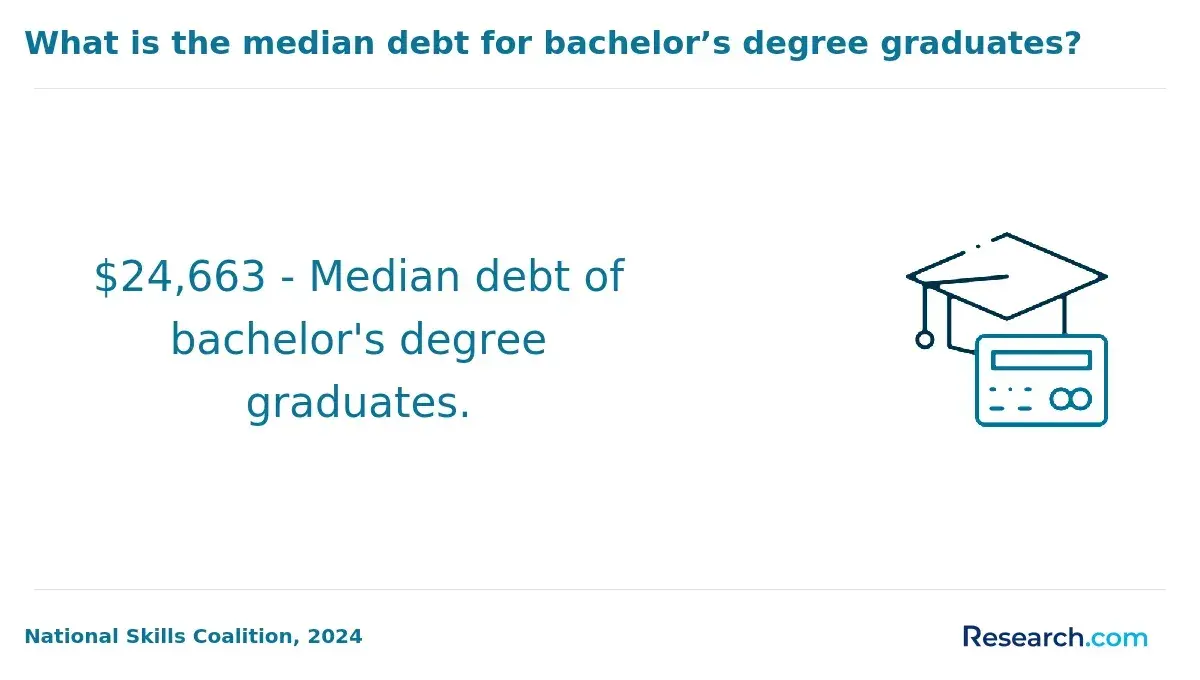
Recent College Board pricing data for 2024-25 listed average published tuition and fees of $11,610 for in-state students at public four-year institutions and $43,350 at private nonprofit four-year institutions. This gap does not automatically mean one option has better ROI, but it shows why grants, scholarships, transfer credits, and completion time should be central to the decision.
| Program factor | What to check | Why it matters for advancement |
| Admission requirements | GPA minimums, transfer credits, essays, prerequisite courses, test policies | A less selective program can still be strong if it offers rigorous methods training and career support |
| Program length | Full-time, part-time, accelerated, cohort, and maximum completion timelines | Longer completion can delay earnings, while overly compressed schedules may reduce internship time |
| Total cost | Tuition, fees, books, software, travel, housing, lost work hours, and graduation fees | Total cost affects ROI more than the advertised per-credit price |
| Transfer policy | Maximum accepted credits, general education equivalencies, residency credit rules | Generous transfer policies can reduce cost and completion time |
| Internship or practicum access | Employer partnerships, credit-bearing internships, research labs, community placements | Experience often determines whether sociology graduates move into stronger entry roles |
| Research methods depth | Statistics, qualitative methods, survey research, data analysis, capstone projects | Methods training is one of the clearest differentiators for advancement |
Before enrolling, students should ask targeted questions rather than relying only on rankings or marketing language. The most useful questions include:
- How many sociology students complete internships, research assistantships, or community-based projects before graduation?
- Which software tools are used in required methods or statistics courses?
- Can transfer students receive a degree plan before committing financially?
- What career outcomes does the department track for sociology majors?
- Are there alumni working in policy, analytics, HR, public health, nonprofit leadership, or UX research?
- Does the program help students build writing samples, research portfolios, or capstone projects they can show employers?
Common red flags include vague career placement claims, unclear accreditation, few methods courses, limited advising for transfer students, and programs that describe sociology only as preparation for graduate school. A strong program should help students prepare for both employment and further study.
How do online sociology programs differ from campus options for career advancement?
Online sociology programs can be a strong fit for working adults, caregivers, transfer students, military-connected students, and learners who cannot relocate. Campus programs may offer more spontaneous networking, in-person research labs, local internships, and faculty interaction. Neither format is automatically better; the best choice depends on support, structure, and career goals.
Students comparing social science routes sometimes also look at a psychology degree online, especially if they are interested in human behavior but unsure whether they want research, counseling, HR, or social services. The key distinction is that sociology focuses more on groups and institutions, while psychology typically focuses more on individuals and mental processes.
The table below summarizes the practical trade-offs between online and campus sociology programs. Use it to decide which format is more likely to support your career advancement, not just which one is more convenient.
| Factor | Online sociology program | Campus sociology program | Decision guidance |
| Flexibility | Often better for working adults and part-time learners | More fixed schedule and location-dependent | Choose online if schedule control is essential |
| Networking | Requires intentional outreach through virtual events, faculty office hours, and alumni groups | More natural access to campus events and peer networks | Choose campus if you need structured in-person networking |
| Internships | May require students to find approved local placements | May have established partnerships near campus | Ask both formats about placement support before enrolling |
| Research experience | Can be strong if faculty include online students in projects | May offer easier access to labs, centers, and assistantships | Research-oriented students should verify faculty access |
| Cost | May reduce relocation and commuting costs, but fees vary | May include more housing, transportation, and campus fees | Compare total cost, not just tuition |
| Employer perception | Usually strongest when institution is accredited and well-established | Often familiar to local employers | Accreditation and outcomes matter more than format alone |
Online students can improve career outcomes by being more deliberate. They should schedule faculty meetings, join professional associations, complete a capstone with an employer-relevant topic, and pursue internships in their local market. Passive online study is a common mistake; strong online students treat the format as flexible, not isolated.
Campus students should avoid assuming proximity alone creates opportunity. They still need research samples, internships, faculty references, and a clear explanation of how sociology connects to the jobs they want.
How can prospective students identify reputable, accredited sociology programs in the U.S.?
Accreditation is one of the most important quality checks for sociology programs. In the U.S., students should verify that the institution holds recognized institutional accreditation. Programmatic accreditation is not usually required for sociology in the same way it may be for nursing, counseling, social work, or psychology training, but institutional accreditation affects financial aid eligibility, transfer credit, graduate admission, and employer confidence.
Students should use a structured review process before applying. This helps avoid programs that are expensive, poorly supported, or misaligned with career goals.
- Confirm institutional accreditation through official accreditor or federal recognition resources, not only the school's marketing pages.
- Check whether credits are likely to transfer if you later change schools or pursue graduate study.
- Review the required curriculum for statistics, research methods, theory, writing, and applied electives.
- Look for evidence of career support specific to sociology majors, not just general university career services.
- Ask whether online and campus students have equal access to advising, faculty, internships, and research opportunities.
- Request transparent information on total cost, financial aid, fees, and refund policies.
- Review faculty expertise to see whether it matches your interests, such as health, crime, race, gender, work, education, migration, or urban life.
Reputable programs are clear about what sociology can and cannot do. Be cautious if a program implies that a sociology degree automatically leads to counseling licensure, social work licensure, or high-level research jobs without explaining additional requirements. Those outcomes often depend on graduate degrees, supervised hours, exams, or state-specific licensing rules.
Another red flag is a curriculum with minimal research methods. Sociology is not only discussion of social issues; it is a research discipline. Students seeking advancement should expect training in evidence, data, methods, theory, and ethical interpretation.
What core sociology coursework and skills are most valued by employers?
Employers value sociology graduates when they can turn social insight into practical decisions. The most marketable graduates can explain patterns, evaluate evidence, communicate with diverse groups, and translate research into recommendations.
Coursework matters most when it produces usable skills. The table below connects common sociology courses to employer-facing capabilities.
| Course area | Skill developed | Employer use |
| Research methods | Designing studies, choosing methods, evaluating evidence | Program evaluation, policy research, UX studies, market research |
| Statistics for social science | Interpreting data, testing relationships, understanding uncertainty | Analytics, reporting, survey analysis, institutional research |
| Sociological theory | Understanding institutions, power, culture, and social change | Strategic analysis, advocacy, organizational development, policy framing |
| Race, class, gender, and inequality | Analyzing disparities and structural barriers | Equity work, public health, education, HR, community programs |
| Urban sociology | Understanding neighborhoods, housing, transportation, and local systems | Planning, community development, housing policy, nonprofit work |
| Medical sociology | Studying health systems, access, stigma, and population health | Public health, patient advocacy, health program evaluation |
| Criminology | Understanding crime, social control, institutions, and justice systems | Reentry programs, courts, corrections, justice policy |
| Organizations and work | Analyzing workplaces, culture, conflict, and employee behavior | HR, organizational development, labor research, people analytics |
Beyond coursework, students should build a practical skills portfolio. Employers often look for evidence that applicants can do the work, not just discuss it.
- Quantitative skills: Excel, statistical reasoning, survey analysis, SPSS, R, Python, SQL, or data visualization.
- Qualitative skills: interviewing, focus groups, field notes, coding themes, ethnographic observation, and ethical consent.
- Communication skills: policy memos, executive summaries, presentations, grant narratives, and plain-language reporting.
- Project skills: timelines, stakeholder communication, data collection plans, and documentation.
- Ethical judgment: confidentiality, bias awareness, informed consent, and responsible interpretation of sensitive data.
AI and automation are changing the skill mix. Tools can summarize interviews, clean data, and draft reports, but they do not replace the sociological judgment needed to ask good questions, detect bias, understand context, or explain why findings matter. Students who learn to use AI responsibly while protecting privacy and research ethics will be better positioned than those who avoid technology entirely.
Which certifications or advanced credentials enhance sociology career progression?
Certifications and advanced credentials can help sociology graduates specialize, but they should be chosen carefully. A credential is worth more when employers in the target field recognize it, when it fills a real skill gap, and when it connects to a specific role.
Students interested in mental health careers should understand that sociology alone typically does not qualify someone for independent counseling or psychology licensure. Comparing online APA accredited PsyD programs may be relevant for those aiming at doctoral-level psychology practice, but that is a different professional route from sociology research or policy work.
The table below shows credentials that may complement sociology depending on the intended career direction.
| Credential or advanced path | Best for | How it supports advancement | Important caution |
| Master of Public Policy or Public Administration | Policy analysis, government, public leadership, nonprofit administration | Adds budgeting, governance, economics, and administrative training | Choose programs with applied projects and policy analytics, not only theory |
| Master of Public Health | Health equity, population health, community health programs | Connects sociology to epidemiology, health systems, and program evaluation | Some public health roles prefer specific concentrations or practicum experience |
| Master of Social Work | Clinical social work, case management leadership, human services | Can lead toward social work licensure when state requirements are met | Licensure rules vary by state and require supervised experience |
| HR certification | Human resources, employee relations, workforce planning | Signals HR-specific knowledge beyond sociology coursework | Eligibility may depend on education and experience |
| Project management credential | Nonprofit programs, research projects, operations, consulting | Supports advancement into coordination and management roles | Most valuable when paired with real project experience |
| Data analytics certificate | Research, analytics, people analytics, policy evaluation | Builds technical credibility in tools such as SQL, Python, R, Tableau, or Power BI | Portfolio quality matters more than certificate branding alone |
| GIS or urban planning credential | Community development, housing, transportation, urban policy | Adds spatial analysis skills relevant to cities and public systems | Some planner roles prefer or require planning-specific graduate degrees |
The best credential strategy is selective. Before paying for a certificate or graduate program, students should review job postings for target roles and identify repeated requirements. If the same tools, licenses, or degrees appear across many postings, the credential may be worth considering.
Common mistakes include stacking unrelated certificates, assuming a certificate replaces experience, and enrolling in a graduate program before confirming whether the target field requires it. Credentials should clarify your career story, not make it more scattered.
What strategies help sociology majors transition into in-demand, nontraditional fields?
Sociology majors can move into nontraditional fields by translating their training into employer language. Instead of saying "I studied society," stronger candidates say they can analyze user behavior, evaluate programs, interpret workforce patterns, improve community outreach, or explain population-level trends.
Students considering helping professions should also compare sociology with the different types of counseling degrees, because counseling, social work, psychology, and sociology lead to different credentials and responsibilities. This matters most for students who want direct therapeutic practice rather than research, advocacy, or program work.
To transition into in-demand fields, sociology majors should follow a deliberate positioning strategy:
- Pick a target function, such as analytics, HR, policy, UX research, public health, nonprofit management, or market research.
- Translate sociology projects into measurable outputs, such as survey findings, interview themes, dashboards, literature reviews, or policy memos.
- Build a portfolio with two or three work samples that show research design, analysis, and communication.
- Learn the tools used in the target field, such as SQL for analytics, Qualtrics for survey research, Tableau for reporting, or Figma basics for UX collaboration.
- Use internships, volunteer research, campus projects, or freelance work to gain applied experience before graduation.
- Rewrite resumes for each field using the employer's language rather than sociology department terminology.
- Network with alumni in adjacent roles and ask how they converted sociology skills into their current work.
Several nontraditional transitions are especially realistic for sociology graduates who build the right evidence of skill. A criminology student can move toward reentry program evaluation. A medical sociology student can move toward public health outreach or health equity analytics. An organizations concentration can support HR, people analytics, or employee experience. A qualitative methods background can support UX research or consumer insights.
The main red flag is waiting until after graduation to define a direction. Sociology is flexible, but flexibility without positioning can look vague to employers. Students should choose a target field early enough to build relevant projects, references, and tools before they enter the job market.
Other Things You Should Know About Sociology
Sociology can be a good major for students who are interested in people, institutions, inequality, research, and social change but have not yet chosen a specific profession. It works best when students add internships, statistics, writing samples, and a clear career focus before graduation.
Sociology can prepare students for law school by strengthening reading, writing, argumentation, social analysis, and understanding of institutions. Law school admission still depends on GPA, LSAT or other accepted admission criteria, application quality, and each school's policies.
In 2027, sociology graduates can find significant advancement potential in career paths such as data analysis, market research, and human resources. These fields increasingly value the qualitative and quantitative skills that sociology majors develop, combined with their understanding of social dynamics and behavior.
Many sociology graduates work in social services, community outreach, case coordination, advocacy, and nonprofit programs. However, licensed clinical roles usually require a specific graduate degree, supervised experience, and state licensure beyond a sociology bachelor's degree.
References
- Sociology Careers https://www.affordablecollegesonline.org/college-resource-center/careers-for-sociology-majors/
- Social Sciences https://www.cameron.edu/social-sciences/career-planning-resources
- Factors in the Admission Decision - National Association for College Admission Counseling (NACAC) https://www.nacacnet.org/factors-in-the-admission-decision/
- Top 25 Career-Enhancing Certification Programs for Sociologists | Sociology Plus https://sociology.plus/top-25-career-enhancing-certification-programs-for-sociologists/
- How to Apply Your Degree in Sociology to Any Career – Norton Learning Blog https://nortonlearningblog.com/2022/10/how-to-apply-your-degree-in-sociology-to-any-career/
- Careers & Income Opportunities https://www.frc.edu/sociology/careers-income-opportunities
- Best Sociology Degree Jobs: 12+ Career Paths for 2026 | Extern https://www.extern.com/post/sociology-degree-jobs-career-guide