2027 Online Sociology Degrees With Low Total Student Debt Potential

Co-Founder and Chief Data Scientist
Choosing an online sociology degree is partly an academic decision and partly a borrowing decision. College Board's 2024 pricing data shows average published tuition and fees at public four-year colleges were $11,610 for in-state students and $30,780 for out-of-state students, before living costs and aid. This guide is for students who want a sociology degree without taking on unnecessary debt. You'll learn how online formats, transfer credits, financial aid, accreditation, program length, and career goals affect total cost so you can compare programs more confidently.
Key Things You Should Know
- Low-debt online sociology programs usually combine regional accreditation, reasonable per-credit tuition, generous transfer-credit acceptance, federal financial aid access, and flexible pacing that lets students keep working.
- A typical bachelor's degree requires about 120 credits, so entering with an associate degree or approved transfer credits can cut both time in school and loan exposure substantially.
- BLS May 2024 wage data shows sociology-related paths vary widely, from social and community service management at a median of $78,240 to sociologist roles at $101,770, so borrowing should match the career path you are realistically pursuing.
What makes an online sociology degree a low total student debt option?
A low total student debt option is not simply the program with the lowest advertised tuition. It is the program that helps you complete the degree with the fewest borrowed funds after tuition, fees, transfer credits, grants, scholarships, books, technology costs, and lost work hours are considered.
For online sociology majors, the biggest debt drivers are usually credit price, number of credits remaining, whether the school charges online or out-of-state premiums, and whether the student can keep earning income while enrolled. A $350-per-credit program can be cheaper than a $250-per-credit program if it accepts far more of your previous credits and gets you to graduation faster.
These are the cost factors that matter most when estimating debt before enrollment:
- Net price after grants: Compare the amount students actually pay after institutional, state, and federal grants, not just sticker tuition.
- Credits required after transfer review: Ask for an official or preliminary credit evaluation before committing, because unused credits can add semesters and loans.
- Online fees: Technology, proctoring, distance-learning, graduation, and course-material fees can change the real per-term cost.
- Pacing flexibility: Asynchronous courses and part-time options can reduce borrowing if they allow you to work, but taking too few credits may extend fees and delay earnings.
- Financial aid eligibility: Regionally accredited, Title IV-eligible schools allow eligible students to use federal grants and loans, which are usually safer than private loans.
Debt potential is also tied to fit. Sociology is a strong option for students interested in social services, research, policy, criminal justice, nonprofit work, human resources, community programs, or graduate study. It may be a weaker borrowing choice if the student wants a highly prescribed licensed profession and has not checked whether additional graduate education will be required.
How do online sociology degrees compare to campus programs in cost and value?
Online and campus sociology degrees can lead to the same credential when they are offered by the same accredited institution, but the cost structure is often different. Online programs may reduce relocation, commuting, parking, and housing costs, while campus programs may offer more in-person research labs, student organizations, and local internship networks.
The table below compares the main decision points. Use it to identify which format is likely to reduce your total cost without weakening your academic or career preparation.
| Comparison point | Online sociology degree | Campus sociology degree | Debt impact |
| Living costs | Often allows students to remain at home or avoid relocation | May require housing, commuting, or relocation expenses | Online study can lower non-tuition borrowing when the student has stable housing |
| Work flexibility | Often asynchronous or evening-friendly | Usually fixed class times and campus attendance | Online study may reduce loans if the student can keep working |
| Networking | Requires intentional use of virtual advising, faculty office hours, and internships | More built-in access to campus events and local contacts | Campus may offer stronger informal networking, but online students can compensate with planning |
| Course access | May be limited by online course rotation | May offer more electives in large departments | Delayed course availability can extend time and cost in either format |
| Credential value | Comparable if the school is properly accredited and the transcript does not signal a lesser credential | Comparable if the program is accredited and academically rigorous | Accreditation and completion matter more than delivery mode |
Online study is usually the better low-debt choice for working adults, transfer students, caregivers, military-affiliated students, and students who cannot relocate. Campus study may be worth the added cost for students who need structured in-person support, want daily faculty interaction, or plan to pursue research-intensive graduate training and need close mentorship.
One common mistake is assuming "online" automatically means cheap. Some online programs charge high per-credit rates or online fees, while some campus-based public universities become affordable after state grants. Always compare net price, credits remaining, and completion support together.
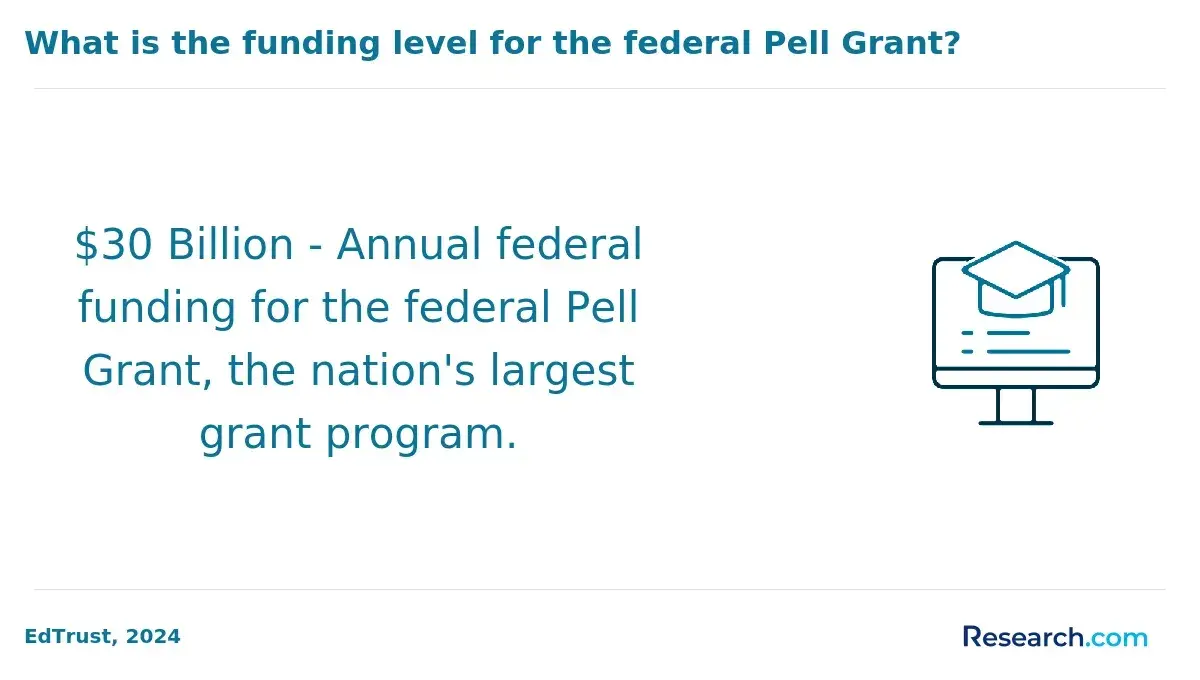
Which accredited schools offer online sociology degrees with strong financial aid?
Accredited online sociology programs are offered by public universities, private nonprofit universities, and a smaller number of private for-profit institutions. The strongest low-debt candidates are usually regionally accredited schools that participate in federal student aid, publish transparent tuition, offer transfer pathways, and provide institutional scholarships or state-aid access for eligible students.
If you are starting your search, a curated list of the best online bachelor degree in sociology programs can help you identify accredited options before you request school-specific aid estimates.
The examples below show the kinds of institutions students often compare. Availability, tuition, and financial aid policies can change, so verify current program status and aid eligibility directly with the school before applying.
| School example | Online sociology credential to verify | Accreditation signal to check | Why it may support lower debt |
| University of Florida Online | Bachelor's-level sociology option | Regional accreditation through the institution | Public-university pricing and access to federal aid may help eligible students control costs |
| Arizona State University Online | Online sociology bachelor's option | Regional accreditation through the institution | Large online infrastructure and aid counseling may benefit working and transfer students |
| Oregon State University Ecampus | Online sociology bachelor's option | Regional accreditation through the institution | Established online delivery and transfer pathways can help reduce completion friction |
| University of Central Florida Online | Online sociology or closely related social science option | Regional accreditation through the institution | Public institution with online advising and potential state-aid opportunities for eligible students |
| Penn State World Campus | Online social science or sociology-related pathway | Regional accreditation through the institution | Recognized online platform and structured student support may improve persistence |
Strong financial aid does not mean a school will be inexpensive for every student. Your aid package depends on residency, income, dependency status, credits attempted, enrollment intensity, state programs, institutional scholarships, and satisfactory academic progress rules.
What admission requirements and transfer-credit policies affect total debt for sociology majors?
Admission requirements influence debt because they determine how quickly you can enter, how many credits you can use, and whether you need remedial or prerequisite coursework. Most online bachelor's programs ask first-year applicants for a high school diploma or equivalent, transcripts, and sometimes a minimum GPA. Transfer applicants usually submit transcripts from every college attended.
Transfer policy is often the larger debt issue. A student with 60 accepted credits may need only upper-division major requirements and remaining general education courses, while a student whose credits are not accepted may pay for courses twice.
Before you enroll, ask the admissions or registrar's office to clarify these policies because they directly affect your total borrowing:
- Maximum transferable credits: Some schools accept up to 60, 75, 90, or more credits, but limits vary by institution and degree level.
- Residency requirement: Many colleges require a minimum number of credits to be completed through their institution, even if you already have many credits.
- Major-course transfer rules: Sociology electives may transfer as general electives if they do not match the receiving school's curriculum.
- Credit age limits: Some programs review older statistics, research methods, or technology-related credits more carefully.
- Alternative credit: CLEP, AP, International Baccalaureate, ACE-evaluated military training, workplace learning, or prior-learning assessments may reduce remaining credits if accepted.
A practical debt-saving move is to request a written degree audit before paying a deposit. The audit should show which credits apply to general education, the sociology major, electives, and graduation requirements. If a school will not provide enough clarity, compare other options before committing.
How long do online sociology degrees usually take, and how does program length impact debt?
Most bachelor's degrees in sociology require about 120 semester credits. A first-time, full-time student often needs around four years, while a transfer student with an associate degree may finish in about two years if credits apply cleanly and required courses are offered on schedule.
The table below summarizes common completion timelines. It is useful because the cheapest program on paper may not be the cheapest if it takes longer to finish.
| Student profile | Typical remaining credits | Common timeline | Debt consideration |
| First-time bachelor's student | About 120 credits | About four years full time | Requires the most semesters, so grants, low tuition, and academic momentum matter most |
| Associate-degree transfer student | About 60 credits if the transfer is efficient | About two years full time | Often a strong low-debt route when community college credits apply toward the major |
| Part-time working adult | Varies by prior credits | Often three to six years depending on course load | May borrow less per term but pay fees longer and delay career advancement |
| Accelerated online student | Varies by transfer and course load | Potentially faster than traditional pacing | Can reduce time costs but may be risky if the workload causes withdrawals or repeated courses |
Program length affects debt in two ways: direct cost and opportunity cost. Direct cost includes tuition, fees, and books for each term. Opportunity cost includes delayed full-time employment, delayed promotion eligibility, or reduced work hours while studying.
Accelerated programs can be smart for disciplined students with transfer credits, stable schedules, and strong writing skills. They can be a poor choice for students balancing heavy work hours, caregiving, or weak academic preparation because withdrawals and failed courses can erase the expected savings.
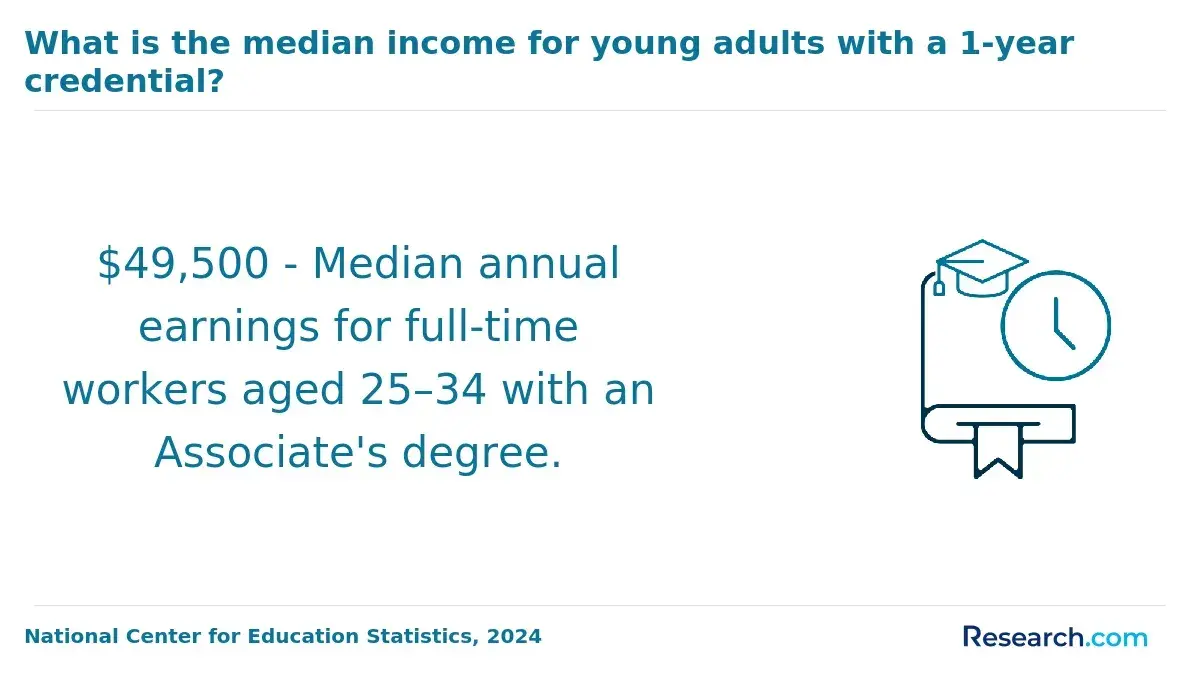
What core courses and specializations are included in online sociology programs?
Online sociology programs usually combine social theory, research methods, statistics, inequality, institutions, culture, and applied electives. The goal is to help students understand how groups, organizations, communities, and social systems shape behavior and opportunity.
Students who want business-facing roles may pair sociology with organizational behavior, workforce analytics, or labor relations; those considering graduate study in people operations can also compare an accredited online masters degree in human resource management after finishing the bachelor's degree.
Common sociology degree requirements often include the following course areas:
- Introduction to sociology: Foundational concepts such as socialization, institutions, culture, norms, and social change.
- Social theory: Classical and contemporary frameworks used to explain social structure and behavior.
- Research methods: Survey design, interviewing, observation, ethics, sampling, and evidence-based analysis.
- Statistics for social sciences: Quantitative reasoning, data interpretation, and basic statistical software use.
- Social inequality: Study of class, race, gender, education, health, and economic opportunity.
- Deviance, crime, or social control: Analysis of rule-making, justice systems, punishment, and community responses.
- Capstone or senior seminar: Applied research, policy analysis, or a final project that demonstrates degree-level skills.
Popular specialization areas include criminology, social services, family and community studies, health and society, diversity and inequality, global sociology, data analysis, nonprofit leadership, and workplace behavior.
Because employers increasingly expect comfort with data tools, students should prioritize programs that include statistics, research software, data visualization, or applied projects rather than only discussion-based electives.
What careers can you pursue with an online sociology degree, and what do they pay?
A sociology degree can prepare students for roles that involve understanding people, systems, organizations, communities, and data. Entry-level jobs often include case management support, program coordination, research assistance, human services, community outreach, recruiting support, victim advocacy, corrections, and nonprofit operations. Some higher-paying or licensed roles require graduate education, supervised experience, or specialized certification.
Students interested in behavior analysis or autism services should note that sociology alone is not usually enough for BCBA eligibility; they should compare the best BCBA programs and current certification requirements before planning that path.
The table below uses BLS May 2024 median annual wage data for U.S. occupations commonly connected to sociology training. These are occupation-level medians, not guaranteed outcomes for sociology graduates.
| Career path | Typical responsibilities | Common education expectation | May 2024 median annual wage |
| Social and community service manager | Coordinate programs, manage staff, evaluate community services, and work with funders | Bachelor's degree often required; experience important | $78,240 |
| Market research analyst | Analyze consumer behavior, survey data, trends, and campaign performance | Bachelor's degree commonly required; data skills valuable | $76,950 |
| Human resources specialist | Recruit, onboard, support employees, and interpret workplace policies | Bachelor's degree commonly required | $72,910 |
| Probation officer or correctional treatment specialist | Monitor clients, prepare reports, connect people with services, and support rehabilitation plans | Bachelor's degree often required; government requirements vary | $64,520 |
| Sociologist | Conduct research, analyze social trends, write reports, and advise organizations or agencies | Master's or doctoral degree often expected | $101,770 |
The strongest return on investment usually comes when students pair sociology with practical skills: data analysis, grant writing, interviewing, case documentation, program evaluation, conflict resolution, public speaking, and basic project management. For students aiming at clinical counseling, therapy, or independent practice, sociology can be a foundation but usually is not the final credential.
How does the job outlook for sociology-related careers influence borrowing decisions?
Job outlook should influence how much you borrow because sociology is a flexible degree rather than a single-occupation pipeline. Flexibility is valuable, but it also means students need to connect the degree to a specific labor-market plan before taking on debt.
BLS projections for 2024 to 2034 show social and community service managers growing by 8%, faster than the average for all occupations. For sociology students, that signals opportunity in program administration, nonprofit leadership, public agencies, and community organizations, but these roles often reward experience and management skill in addition to the degree.
Borrowing decisions should reflect the role you are targeting. A student planning to work in case management or community outreach should borrow more cautiously than a student who already has human services experience and is using the degree to qualify for management. A student planning graduate clinical training should calculate the combined cost of the bachelor's degree and the later credential.
For example, students who want to become therapists should compare sociology with counseling-oriented graduate options such as the best online MFT programs, because licensure paths are state-regulated and usually require a specific graduate degree, supervised hours, and exams.
AI and automation also affect the outlook. Routine administrative tasks, basic survey summaries, and simple reporting can be automated, but employers still need people who can interpret social context, manage sensitive client situations, evaluate programs ethically, and communicate findings clearly. To protect ROI, choose courses and internships that build both human judgment and data literacy.
What strategies can sociology students use to minimize loans and out-of-pocket costs?
The best debt-reduction strategy is to reduce the number of paid credits, increase grant and scholarship funding, and avoid avoidable delays. This requires planning before enrollment, not after the first bill arrives.
Use the following steps to lower total borrowing while keeping your degree plan realistic:
- Complete the FAFSA early: Federal, state, and institutional aid may depend on deadlines, and some grant funds are limited.
- Start with community college when appropriate: Completing general education or an associate degree at a lower-cost institution can reduce bachelor's-level tuition if credits transfer cleanly.
- Request a written transfer evaluation: Do not rely on verbal estimates; ask how each course applies to your actual sociology degree plan.
- Apply for small scholarships repeatedly: Departmental, local, employer, union, nonprofit, and community foundation awards can reduce the need for loans.
- Use employer tuition benefits: Human services agencies, government offices, healthcare organizations, and large employers may reimburse job-related coursework.
- Choose a sustainable course load: Taking too many credits while working can lead to withdrawals, repeated courses, and lost aid eligibility.
- Buy or rent materials strategically: Confirm required editions, use library reserves when allowed, and avoid buying bundled materials before the syllabus is final.
- Limit private loans: Private loans may lack the repayment protections available with federal loans, so exhaust grants, scholarships, payment plans, and federal aid first.
A useful rule is to compare projected annual loan payments with realistic entry-level wages in your target field. If the payment would force you to avoid lower-paid but mission-aligned roles, reconsider the school, pace, or transfer plan before borrowing.
How can you evaluate and choose a reputable, accredited online sociology program?
A reputable online sociology program should be accredited, transparent about cost, clear about transfer credits, strong in student support, and aligned with your career goals. Accreditation is especially important because it affects federal aid eligibility, credit transfer, employer recognition, and graduate-school admission.
Students comparing sociology with adjacent education and behavioral science pathways can use resources on Research.com, including guides to the best online bachelor's options and career-specific graduate programs, but the final choice should be based on accreditation, net price, curriculum, and outcomes rather than rankings alone.
Ask each school these questions before applying or enrolling:
- Is the institution regionally accredited? Confirm accreditation through the school and recognized accreditation databases, especially if you may transfer or attend graduate school later.
- What is my estimated net price? Request a financial aid estimate that includes tuition, mandatory fees, books, and online charges.
- How many of my credits will apply to the degree? Ask for a degree audit, not just the number of credits accepted by the university.
- Are courses asynchronous, synchronous, or mixed? Schedule fit affects whether you can keep working and avoid withdrawals.
- What support is available online? Look for remote tutoring, library access, writing help, advising, career services, disability services, and internship support.
- What outcomes are reported? Ask about retention, graduation rates, career services use, graduate-school placement, and alumni examples, while remembering that outcomes vary by student.
Watch for red flags. Be cautious if a school pressures you to enroll immediately, will not explain fees, avoids accreditation questions, promises specific salaries, gives vague transfer answers, or encourages large private loans before you see an aid package. A good program should make the decision clearer, not more confusing.
Other Things You Should Know About Sociology
In 2027, prospective sociology students can find online programs with a range of costs. Selecting an accredited university with competitive tuition rates and financial aid options can significantly reduce student debt, narrowing the debt potential substantially.
Some programs require an internship, practicum, field experience, or capstone project, while others make it optional. Even when it is not required, an internship can be valuable because sociology is broad and practical experience helps students qualify for entry-level roles.
Yes, sociology can support law school preparation because it develops reading, writing, research, inequality analysis, and policy thinking. However, law schools do not require a specific undergraduate major, so students should also focus on GPA, analytical writing, LSAT preparation if required, and relevant experience.
Useful minors include statistics, data analytics, psychology, criminal justice, public health, social work, business, human resources, political science, and communications. The best choice depends on whether your goal is research, social services, policy, nonprofit work, business, or graduate study.
References
- How to lower the cost of college tuition: Smart ways to save | Dupaco https://www.dupaco.com/learn/blog/5-ways-to-lower-the-cost-of-tuition
- 2025 Most Affordable Online Sociology Degrees https://www.onlineu.com/most-affordable-colleges/sociology-degrees
- Best Sociology Courses- Online & Offline Certifications for Students https://www.upes.ac.in/blog/liberal-studies/sociology-courses
- 7 Overlooked Strategies That Cut College Costs https://www.cuofco.org/resources/7-overlooked-strategies-cut-college-costs
- Best Sociology Degree Jobs: 12+ Career Paths for 2026 | Extern https://www.extern.com/post/sociology-degree-jobs-career-guide
- 5 Strategies to Avoid Student Debt - OnToCollege https://www.ontocollege.com/strategies-to-avoid-student-debt/
- The Importance of Understanding Transfer Credit Policies https://www.sophia.org/blog/higher-education/understanding-transfer-credit-policies/
- Sociology https://www.careerpilot.org.uk/job-sectors/subject/sociology
- Bachelor of Arts in Sociology https://online.mountsaintvincent.edu/degrees/undergraduate/bachelor-sociology/
- Earn a Degree with Existing Student Debt https://www.marian.edu/blog/2026/02/how-to-earn-a-degree-when-you-have-existing-student-loan-debt.php