2027 Best Online Master's Degree in Human Resource Management Programs

Co-Founder and Chief Data Scientist
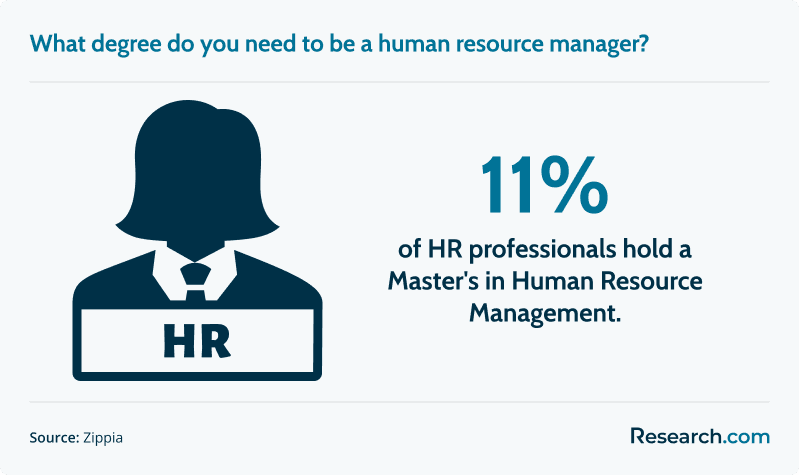
As the HR field becomes more strategic, advanced skills are increasingly in demand. Yet, as of the most recent HR data, only 14% of HR managers in the U.S. hold a master’s degree. This means there's still plenty of opportunity to stand out in the field by earning an advanced degree. For those aiming to move up or shift into HR, online master’s programs offer a practical, flexible path to gain those in-demand skills.
Choosing the right online master’s program in human resource management can be tough. To make the search easier, I reviewed several programs and pulled together the ones that offer the best value. I also included details like program length, tuition, and the types of certifications you might qualify for after graduating. This list is meant to give you a clear starting point, whether you’re aiming to move up in your current job or switch into HR.
What are the benefits of taking an online master’s degree in human resource management?
- Completing a master’s degree opens doors to senior HR positions such as HR Manager, Compensation and Benefits Manager, Training and Development Manager, and Labor Relations Specialist.
- HR Managers earn a median annual salary of about $140,030.
- Studying online gives you flexibility. You can maintain your job while gaining advanced skills and preparing for certifications like PHR® or SHRM-CP/SCP.
What can I expect from an online master’s degree in human resource management?
An online master’s in HRM is more than just reading textbooks and writing papers. It’s a career-focused program designed to build leadership skills in one of the most people-centered professions.
Here is what students can expect from the program:
- Core Curriculum with a Strategic Edge: Courses often include organizational development, HR analytics, labor relations, talent management, compensation and benefits, and employment law.
- Certification Prep Included: Students are trained to sit for certifications like SHRM-CP®, SHRM-SCP®, or PHR®. These credentials are highly valued by employers.
- Unexpected Perks: Some programs include added benefits such as virtual networking events, access to career coaches, or internship placement support.
Where can I work with a master’s in human resource management?
Graduates often work in roles such as HR manager, talent acquisition specialist, training and development manager, compensation and benefits analyst, or employee relations advisor. Some graduates work in specialized areas like diversity and inclusion, HR analytics, or labor relations.
In terms of work settings, HR professionals can be found in hospitals, universities, corporate headquarters, tech companies, retail chains, and public agencies. Larger organizations often have full HR departments with room for advancement. Meanwhile, smaller companies may offer generalist roles with a broad range of responsibilities.
Remote and hybrid roles in HR are also becoming more common in 2027, with 40% of HR job postings offering hybrid work arrangements.
How much can I make with a master’s in human resource management?
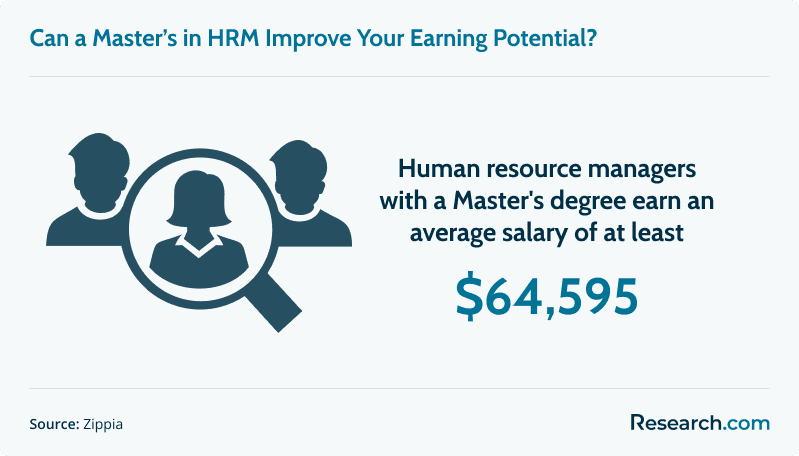
HR managers earn a median annual salary of $140,030. Those in the top 10%, often with years of experience and advanced credentials, earn more than $239,200 per year.
Salaries also vary by industry. HR professionals in finance, tech, and consulting sectors generally command higher pay than their peers in education, healthcare, or nonprofit fields. HR managers in healthcare and social assistance have a mean wage of about $120,010. Meanwhile, those in the management of companies and enterprises earn around $163,180.
- The Fastest Online Master’s in Human Resource Management Programs in 2027 List of Programs
- How long does it take to complete an online master’s in human resource management program? Completion Time
- How does an online master’s in human resource management program compare to an on-campus program? How does an online master’s in human resource management program compare to an on-campus program?
- What is the average cost of an online master’s in human resource management program in 2027? Average Cost
- What are the financial aid options for students enrolling in an online master’s in human resource management program? Financial Aid
- What are the prerequisites for enrolling in an online master’s in human resource management program? Requirements
- What courses are typically in an online master’s in human resource management program? What courses are typically in an online master’s in human resource management program?
- What types of specializations are available in an online master’s in human resource management program? What types of specializations are available in an online master’s in human resource management program?
- How do you choose an online master’s in human resource management program? How do you choose an online master’s in human resource management program?
- What career paths are available for graduates of an online master’s in human resource management in 2027? Career Paths
- What is the job market like for graduates of an online master’s in human resource management program? Job Market
- Does an online master’s degree in HRM offer a strong return on investment? Does an online master’s degree in HRM offer a strong return on investment?
- How do online master’s programs in HRM foster networking and experiential learning? How do online master’s programs in HRM foster networking and experiential learning?
Fastest Online Master’s in Human Resource Management Programs in 2027
An online master’s in human resource management can help HR professionals move from administrative or specialist roles into strategic leadership, analytics, employee relations, compensation, talent development, and workforce planning. The key question is not simply which program is fastest. It is which accelerated program is credible, affordable for your situation, aligned with your career goal, and flexible enough to finish while you keep working.
This guide is for working adults, HR generalists, recruiters, training specialists, business graduates, and career changers comparing fast online HRM master’s programs. You will learn how long these programs take, what they cost, how online study compares with campus-based study, which admissions requirements to expect, what careers may follow, and how to judge whether a degree is worth the investment. If you are also comparing adjacent business fields, you may want to review accelerated options such as the fastest online business communication degree.
Quick answer: What is the fastest way to earn an online master’s in human resource management?
The fastest online master’s in human resource management programs are typically accelerated, competency-based, or low-credit programs that can be completed in about 9 to 12 months by students who study intensively. Many standard online HRM master’s programs take 1 to 2 years, especially when they require 30-36 credit hours. The best fast option is not always the shortest one; students should also verify accreditation, employer reputation, SHRM or HR certification alignment, transfer policies, course pacing, and total cost.
How we rank schools
Research.com evaluates online programs using a structured review process that considers speed, affordability, academic quality, accreditation, flexibility, and relevance to career outcomes. For this HRM ranking, the goal is to identify programs that help students complete graduate-level human resources training efficiently without overlooking credibility or practical value.
Our research relies on verified education and institutional data sources, including:
- Integrated Postsecondary Education Data System (IPEDS)
- Peterson's database, including the Distance Learning Licensed Data Set
- College Scorecard from the U.S. Department of Education
- National Center for Education Statistics (NCES)
You can review the broader ranking process on our methodology page.
Fast online HRM master’s programs at a glance
| School and Program | Credits | Cost Listed | Accreditation Listed | Best Fit |
| Penn State World Campus – MPS in Human Resources & Employment Relations | 33 | $1,037 per credit | Middle States Commission on Higher Education (MSCHE) | Students who want multiple HR concentration choices |
| New York University – MS in Human Resource Management and Development | 36 | $2,020 per credit | MSCHE | Students seeking strategy, coaching, and access to a major business hub |
| Purdue University – MS in Human Resource Management | 30 | $1,139 per credit | Association to Advance Collegiate Schools of Business (AACSB) | Students interested in analytics and experiential business projects |
| Rutgers University – Professional Master's in Human Resource Management | 36 | $1,144 per credit | Middle States Commission on Higher Education | Mid-career professionals seeking practical HR leadership training |
| University of Southern California – M.S. in Human Resource Management via Bovard College | 24 | $2,035 per credit | WASC Senior College and University Commission | Students prioritizing brand recognition and leadership development |
| Texas A&M University – Mays Business School M.S. in Human Resource Management | 37 | $1,161 per credit (in-state); $2,078 (out-of-state) | AACSB | Students who value business school recognition and alumni connections |
| Florida International University – M.S. in Human Resource Management | 38 | $25,000 total tuition | AACSB | Students interested in global HR and applied capstone work |
| Webster University – MA in Human Resources Management | 36 | $730 per credit | ACBSP, Higher Learning Commission | Working adults and military-affiliated students seeking flexibility |
| Western Governors University – M.S. in Human Resource Management | 30-36 | ~$6,500/year flat-rate tuition | ACBSP, NWCCU | Self-paced learners who can move quickly through familiar material |
| University of Illinois Urbana‑Champaign – Master of Human Resources and Industrial Relations | 48 | $780 per credit hour | Higher Learning Commission (HLC) | Students seeking a long-established labor and industrial relations reputation |
1. Penn State World Campus – MPS in Human Resources & Employment Relations
Penn State offers an online human resources and employment relations master’s program with eight concentration options, giving students room to focus on areas such as AI/HR analytics, labor relations, and recruiting strategy. The curriculum is aligned with SHRM expectations and carries “approved provider” status from the HR Certification Institute, which may appeal to students planning to pursue HR credentials.
- Cost: $1,037 per credit
- Required Credits: 33
- Accreditation: Middle States Commission on Higher Education (MSCHE)
- What Makes It Stand Out: Broad concentration selection, including AI/HR analytics, labor relations, and recruiting strategy
2. New York University – MS in Human Resource Management and Development
NYU combines HR strategy, analytics, coaching, and global talent management in a program taught by practitioner-scholars with professional experience. Its New York City setting and alumni network may be especially useful for students targeting corporate, consulting, or global HR roles.
- Cost: $2,020 per credit
- Required Credits: 36
- Accreditation: MSCHE
- What Makes It Stand Out: Strategy-oriented and coaching-focused coursework delivered by experienced professionals
3. Purdue University – MS in Human Resource Management
Purdue uses an experiential model that can include consulting-style projects tied to large employers. The STEM designation may be attractive to students who want to build stronger analytics, workforce planning, and evidence-based decision-making skills.
- Cost: $1,139 per credit
- Required Credits: 30
- Accreditation: Association to Advance Collegiate Schools of Business (AACSB)
- What Makes It Stand Out: Analytics-centered curriculum and corporate project exposure through Krannert
4. Rutgers University – Professional Master's in Human Resource Management
Delivered online through the School of Management and Labor Relations, the Rutgers University program is designed for professionals who already understand workplace operations and want deeper HR leadership expertise. Its faculty includes scholars and practitioners connected to large employers, and its proximity to New York City may support networking and employer access.
- Cost: $1,144 per credit
- Required Credits: 36
- Accreditation: Middle States Commission on Higher Education
- What Makes It Stand Out: Applied HR curriculum, regional employer connections, and rolling starts during the year
5. University of Southern California (USC) – M.S. in Human Resource Management via Bovard College
USC emphasizes strategic workforce planning, international HR law, leadership, and evidence-based HR analytics. Because the program is housed within a major research university, it may appeal to students who want a recognizable institution and a curriculum focused on modern HR decision-making.
- Cost: $2,035 per credit
- Required Credits: 24
- Accreditation: WASC Senior College and University Commission
- What Makes It Stand Out: Strong institutional reputation, leadership focus, and excellent graduate earnings outcomes
6. Texas A&M University – Mays Business School M.S. in Human Resource Management
Texas A&M offers an MSHRM through Mays Business School that combines HR strategy, ethical decision-making, leadership development, and workforce management. The program’s connection to industry partners and the Aggie Network may be valuable for students who want a business-school-backed HR credential.
- Cost: $1,161 per credit (in-state); $2,078 (out-of-state)
- Required Credits: 37
- Accreditation: AACSB
- What Makes It Stand Out: Recognizable business school brand, Aggie Network access, and an ethics-centered HR approach
7. Florida International University (FIU) – M.S. in Human Resource Management
FIU offers an SHRM-aligned online HRM program with a global orientation. Students can study topics such as HR analytics, international HR, and organizational behavior, while the program’s applied capstone gives them a way to connect coursework to workplace problems.
- Cost: $25,000 total tuition
- Required Credits: 38
- Accreditation: AACSB
- What Makes It Stand Out: Applied capstone work and a strong international HR perspective
8. Webster University – MA in Human Resources Management
Webster University combines HR planning, organizational psychology, analytics, and legal compliance in an online MA format. Its flexibility and global campus network may suit working adults, military-affiliated students, and learners who want adaptable scheduling.
- Cost: $730 per credit
- Required Credits: 36
- Accreditation: ACBSP, Higher Learning Commission
- What Makes It Stand Out: Global education focus and practical HR analytics applications
9. Western Governors University (WGU) – M.S. in Human Resource Management
Western Governors University uses a competency-based format, which can let motivated students progress more quickly through topics they already understand. The program also prepares students for recognized HR certifications and includes a separate certificate in HR Technology and Analytics.
- Cost: ~$6,500/year flat-rate tuition
- Required Credits: 30-36
- Accreditation: ACBSP, NWCCU
- What Makes It Stand Out: Self-paced model and an included HR Technology & Analytics Certificate
10. University of Illinois Urbana‑Champaign Master of Human Resources and Industrial Relations
UIUC has one of the longest-standing names in human resources and industrial relations education. The online program is designed for working professionals who want research-informed faculty, employer recognition, and alumni reach across Fortune 500 companies and public agencies.
- Cost: $780 per credit hour
- Required Credits: 48
- Accreditation: Higher Learning Commission (HLC)
- What Makes It Stand Out: Deep history in labor and industrial relations and strong employer awareness
How long does it take to complete an online master’s degree in human resource management?
Most full-time students complete an online master’s in human resources management in 1 to 2 years. Many programs require 30-36 credit hours and are structured around an 18 to 24‑month schedule. Accelerated programs can be shorter, with some formats allowing highly focused students to finish in as few as 9 to 12 months.
The timeline depends on pacing, credit load, transfer credit policies, and whether the program uses a fixed cohort or a self-paced format. Cohort programs offer a predictable course sequence and stronger peer continuity, while flexible programs may work better for students with changing work schedules, family responsibilities, or prior HR knowledge.
| Program Format | Typical Completion Pattern | Best For | Trade-Off |
| Accelerated online | As few as 9 to 12 months in some programs | Students who can handle an intensive schedule | Less room to pause or reduce workload |
| Standard full-time online | Often 1 to 2 years | Working adults who can study consistently | Requires steady weekly time commitment |
| Part-time online | Longer than full-time formats | Students balancing demanding jobs or caregiving | Slower career payoff and longer enrollment period |
| Competency-based online | Varies by student progress | Learners with prior HR or business experience | Requires strong self-discipline and independent pacing |
How does an online master’s degree in human resource management compare to an on-campus program?
An online HRM master’s can be a strong fit for professionals who want to keep working while earning a graduate degree. Instead of relocating or commuting, students complete coursework through learning platforms, live sessions, discussion boards, group projects, recorded lectures, and applied assignments. Many students use workplace challenges as material for class projects, which can make the degree immediately useful.
Campus programs may offer more in-person interaction, local recruiting events, and face-to-face faculty access. Online programs, however, often provide stronger schedule control and broader geographic access. Recent NCES data show that by 2021, 60% of U.S. college students took at least some courses online, reflecting how common online learning has become. Students comparing HRM with technology-oriented business fields may also want to explore the best technology management degree online.
| Factor | Online HRM Master’s | On-Campus HRM Master’s |
| Schedule | Often easier to balance with full-time work | More fixed class times and commuting requirements |
| Networking | Built through virtual cohorts, live sessions, online groups, and alumni platforms | Built through in-person classes, campus events, and local employer visits |
| Learning style | Works best for self-directed students | Works best for students who prefer face-to-face structure |
| Career application | Students can often apply assignments directly to current workplace issues | Students may benefit from local internships or on-campus recruiting |
| Best choice when | You need flexibility and do not want to pause your career | You want campus immersion and in-person access to faculty and peers |
What is the average cost of an online master’s degree in human resource management in 2027?
Total tuition for an online master’s in human resource management often falls between $15,000 to $30,000. Lower-cost public university options may charge approximately $8,000 to $12,000 per year, while private institutions may cost $30,000 to $50,000 in total tuition depending on credit requirements and price per credit.
Students should not compare programs by tuition alone. Online programs may charge technology fees, typically ranging from $10 to $50 per term. Books and course materials can add $400 to $1,200 annually. Some schools also charge fees for graduation, capstone work, optional residencies, or student services.
A realistic budget should include tuition, fees, books, a reliable computer, stable internet, and any travel connected to residencies, networking events, or graduation. These costs matter when comparing degree options and planning how to become a human resources manager.
| Cost Category | What to Check Before Enrolling |
| Tuition | Compare total program cost, not only price per credit |
| Required credits | A cheaper per-credit rate may still cost more if the program requires more credits |
| Technology fees | Ask whether fees are charged per term, per course, or per program |
| Books and materials | Confirm whether digital resources are included or billed separately |
| Residencies or events | Ask whether any in-person travel is required or optional |
| Time away from work | Consider whether the course load could reduce your working hours or income |
What are the financial aid options for students enrolling in an online master’s degree in human resource management?
Graduate students in online HRM programs may use several forms of financial support. Completing the FAFSA is usually the first step for students seeking federal loan eligibility. Direct Unsubsidized Loans allow borrowing up to $20,500 per year, while Grad PLUS loans may provide additional funding beyond that limit. These loans accrue interest and must be repaid, so students should compare projected monthly payments against realistic salary expectations.
Grants and scholarships can reduce borrowing. Around 43% of master's degree students receive grants, including institutional scholarships or tuition waivers. Students should search the university’s financial aid page, departmental scholarship listings, employer tuition benefits, and outside scholarship databases. Scholarship research can be especially useful for students comparing business-related online degrees, including programs such as best online esports business degree programs.
Federal Work‑Study may also be available at thousands of U.S. institutions. Graduate students who qualify can work part time and use earnings for tuition, fees, or living expenses. Availability varies by school and funding level, so students should ask the financial aid office early.
- Start with FAFSA: It determines eligibility for many federal aid options.
- Ask about employer reimbursement: HR professionals may be able to use tuition assistance from their current employer.
- Compare net cost: Subtract scholarships, grants, and employer support before judging affordability.
- Watch loan totals: A faster program may reduce time in school, but high tuition can still create significant debt.
What are the prerequisites for enrolling in an online master’s degree in human resource management?
Admissions requirements vary, but most online HRM master’s programs look for academic readiness, professional direction, and communication ability. Applicants do not always need an undergraduate HR major, although business, psychology, social sciences, management, or communication backgrounds may help.
- Bachelor’s degree from an accredited institution: Most programs accept applicants from many undergraduate majors, though some prefer business or social science preparation.
- Minimum GPA requirement: Many schools expect a GPA of 3.0, while some consider applicants with a 2.5 if they show relevant experience or strong application materials.
- Professional experience: Around 60% of programs prefer applicants with 1–2 years of HR or related experience, although some waive this expectation for strong academic records or test scores.
- Transcripts and resume: Official undergraduate records and a current resume or CV are commonly required.
- Letters of recommendation: Programs often request one or two letters from supervisors, faculty members, or professional contacts.
- Personal statement: A 500 to 1,000-word essay may be required to explain career goals and interest in HRM.
- English language proficiency: International applicants are commonly asked to submit TOEFL or IELTS scores.
- Foundation coursework: Applicants without business preparation may need statistics, accounting, management, or business communication coursework.
- Application fee: Some schools charge a fee, typically $40–$80, though waivers may be available.
Students without a degree in human resources can still be competitive applicants. However, they should look carefully at prerequisite policies because some schools require foundation courses before or during the program.
What courses are typically in an online master’s degree in human resource management?
A fast-track online master's degree in human resources management usually blends HR strategy, employment law, organizational behavior, analytics, compensation, leadership, and applied projects. The strongest programs move beyond personnel administration and teach students how to connect people decisions to business outcomes.
Common courses include:
- Human Capital Management: Covers workforce planning, hiring strategy, retention, and talent systems.
- Employment Law and Labor Relations: Reviews workplace regulations, compliance issues, labor relations, and dispute resolution.
- Organizational Behavior: Explores motivation, leadership, communication, team dynamics, and workplace culture.
- Compensation and Benefits Strategy: Teaches pay design, incentive structures, equity planning, and benefits compliance.
- Performance Management Systems: Examines employee evaluation, feedback, development planning, and performance tools.
- HR Analytics: Introduces metrics and data tools used to support hiring, retention, engagement, and workforce decisions.
- Ethics and Diversity in the Workplace: Focuses on inclusive practices, ethical leadership, fairness, and cultural competence.
- Capstone Project or Practicum: Gives students a final applied project that connects academic concepts to real HR challenges.
What types of specializations are available in an online master’s degree in human resource management?
Many online HRM master’s programs let students choose electives or formal concentrations tied to specific career goals. A student pursuing people analytics needs a different course mix than someone preparing for labor relations, compensation, DEI leadership, or the HR recruiter career path.
| Specialization | What It Emphasizes | Good Match For |
| Organizational Development and Change Management | Change strategy, leadership coaching, employee engagement, and organizational performance | Students interested in consulting, culture, or transformation work |
| Talent Acquisition and Workforce Planning | Recruiting systems, employer branding, labor market planning, and staffing strategy | Recruiters who want to move into leadership or workforce planning |
| Compensation and Benefits | Pay structures, incentives, equity programs, benefits design, and compliance | Analytical students interested in rewards strategy |
| Labor Relations and Employment Law | Union issues, negotiation, workplace disputes, and legal risk management | Students targeting employee relations, compliance, or labor roles |
| Diversity, Equity, and Inclusion (DEI) | Inclusive culture, representation, equity audits, and organizational accountability | Students who want to lead fairness and inclusion initiatives |
| HR Analytics | Workforce data, turnover analysis, dashboards, and decision support | Students who want data-centered HR roles |
Specializations often require two to four focused electives. Some programs also allow students to complete a capstone in the chosen area, which can become a portfolio piece for roles such as DEI Officer, Compensation Analyst, HR Data Strategist, or talent management leader.
Compensation and Benefits is often viewed as one of the more lucrative HR specialization areas. According to the U.S. Bureau of Labor Statistics (BLS), compensation and benefits managers earned a median annual salary of $140,360, with the top 10% earning more than $239,200.
How do you choose an online master’s degree in human resource management?
Choosing an online HRM master’s requires more than scanning rankings or picking the shortest timeline. The best program for you should match your career target, learning style, budget, and current level of HR experience.
Start with accreditation. Many reputable programs are accredited by recognized institutional or business accreditors such as AACSB, IACBE, ACBSP, the Higher Learning Commission, or regional accrediting bodies. Accreditation helps confirm that the school meets external quality standards and that employers, doctoral programs, and certification bodies are more likely to recognize the degree.
Next, review career outcomes and support. Look for published employment outcomes, promotion data, salary information, employer partnerships, alumni access, mentorship, internship options, and career coaching. This is especially important if you are using the degree to enter HR through the human resources coordinator career path or to move from generalist work into leadership.
Do not assume that a famous school is automatically the best value. Some lower-cost programs provide strong flexibility and practical coursework, while some expensive programs may be worth considering only if their network, reputation, or curriculum directly supports your goal. One useful benchmark from adjacent graduate business education is that 38.7% of online MBA graduates report receiving a promotion during or shortly after their program, but individual outcomes vary by employer, experience, industry, and effort.
| Question to Ask | Why It Matters |
| Is the institution accredited? | Accreditation affects credibility, transferability, and employer confidence. |
| Is the program aligned with SHRM or HR certification content? | Alignment may help if you plan to pursue HR credentials. |
| How many credits are required? | Credit load affects speed, cost, and workload. |
| Are courses asynchronous, synchronous, or blended? | Format determines whether the program fits your work schedule. |
| What career services are available to online students? | Online learners should receive more than recorded lectures and a degree audit. |
| Can you use current workplace projects for assignments? | Applied projects can strengthen your resume and help you demonstrate immediate value. |
| What is the true total cost? | Fees, books, technology, and travel can change affordability. |
Who should choose a fast online HRM master’s?
- HR professionals who need a graduate credential for promotion consideration
- Recruiters, coordinators, or generalists aiming for management roles
- Business professionals moving into people operations or talent strategy
- Students with strong self-discipline who can manage accelerated coursework
- Working adults who need online flexibility more than campus immersion
Who may want a different path?
- Students who need extensive entry-level career exploration before choosing HR
- Learners who prefer daily face-to-face interaction and campus-based networking
- Applicants who cannot currently commit time to graduate-level reading, writing, and group work
- Professionals whose target role values certification or experience more than a master’s degree
- Students taking on high debt without a clear advancement plan
What career paths are available for graduates of an online master’s degree in human resource management in 2027?
An online HRM master’s can support movement into HR management, compensation, employee relations, training, recruiting leadership, organizational development, HR analytics, and executive people strategy. Graduates with prior HR experience may be positioned for mid-level or senior roles more quickly than career changers, who may still need to build practical HR experience.
| Career Path | What the Role Involves | Salary Information Listed |
| Human Resources Manager | Leads HR teams, manages staffing strategy, oversees policy, and supports compliance | Median salary of $140,030 a year |
| Compensation and Benefits Manager | Designs pay programs, benefits structures, and rewards strategies | Annual median salary of $127,530 |
| Recruitment Manager | Directs recruiting strategy, employer branding, and candidate experience | Often needed in fast-scaling industries |
| Organizational Development (OD) Specialist | Supports change management, leadership development, training design, and engagement | Varies by employer and experience |
| Employee Relations Manager | Handles workplace disputes, policy interpretation, employee concerns, and labor issues | Varies by organization and industry |
| People Analytics or HR Data Analyst | Uses workforce data to guide decisions about hiring, retention, performance, and engagement | Varies by technical skill and employer |
| Training and Development Manager | Creates leadership pipelines, upskilling strategies, learning programs, and e-learning systems | Median annual salary of approximately 120,130 |
| Chief Human Resources Officer (CHRO) | Sets enterprise-wide people strategy and works with executive leadership | Typically requires substantial experience |
HR analytics is becoming especially important as employers expect HR leaders to make evidence-based decisions. Students interested in quantitative work may find useful parallels in data-heavy graduate programs such as the best online master’s in mathematics programs.
Employer confidence in graduate business education remains relevant for HRM students. According to GMAC’s Corporate Recruiters Survey, 90% of employers plan to hire MBA or business master’s graduates in 2027. That does not guarantee a specific job outcome, but it suggests continued employer interest in advanced business-trained talent.
What is the job market like for graduates of an online master’s degree in human resource management?
The HR job market is being shaped by workforce analytics, remote and hybrid work policies, compliance complexity, pay transparency concerns, employee experience, and outsourcing of specialized HR functions. Employers increasingly need HR professionals who can interpret data, manage risk, advise leaders, and support workforce strategy rather than simply process administrative tasks.
The HR professional services market is also expanding. According to Precedence Research, the industry's global market value reached $7.40 billion in 2027. It is projected to grow to around $23.13 billion in 2034, with a compound annual growth rate (CAGR) of 13.5% over the period.
This growth may create opportunities in consulting, recruitment services, benefits advisory work, compliance support, HR technology, and people analytics. North America leads the market and is expected to remain a major hub for HR professional services during that period. Graduates who combine HR expertise with analytics, communication, change management, and legal awareness may be better positioned than those with only general HR knowledge.
Does an online master’s degree in HRM offer a strong return on investment?
An online master’s in HRM can offer a strong return when it helps a student qualify for a promotion, move into management, enter a higher-paying specialization, or gain access to a stronger professional network. The ROI is weaker when students overborrow, choose a poorly matched program, or enroll without a clear career plan.
To evaluate ROI, compare total program cost with your likely career path. A lower-cost program may be the better financial choice if you already have HR experience and need a credential to move up. A higher-cost program may make sense if its brand, alumni base, employer relationships, or specialization directly connects to your target role. Students comparing fast leadership-oriented degrees in other industries may also review options such as the quickest construction management degree online.
How to estimate your HRM degree ROI
- Calculate full cost: Include tuition, fees, books, technology, and any travel.
- Subtract aid that does not require repayment: Count grants, scholarships, tuition waivers, and employer reimbursement.
- Estimate debt payments: Review expected loan repayment before enrolling.
- Map the degree to a specific role: Identify whether you are targeting HR manager, compensation, analytics, training, recruiting leadership, or employee relations.
- Check employer expectations: Review job postings to see whether a master’s degree is preferred, required, or optional.
- Ask about outcomes: Request employment, promotion, salary, and alumni data from the school.
How do online master’s programs in HRM foster networking and experiential learning?
Strong online HRM programs build professional connection through live class sessions, group projects, faculty feedback, virtual career events, alumni communities, simulations, and applied case studies. The best programs do not rely only on recorded lectures. They create opportunities for students to solve workforce problems, present recommendations, and receive feedback from peers and instructors.
Experiential learning may include compensation audits, remote work policy reviews, recruiting strategy projects, HR analytics dashboards, employee engagement plans, or labor relations case analyses. These assignments can become useful portfolio examples when students interview for promotions or new roles. Students who want broad business networking may also compare HRM programs with an MBA online program.
Common mistakes to avoid when choosing an online HRM master’s
| Mistake | Why It Can Hurt You | Better Approach |
| Choosing only the fastest program | A short timeline does not guarantee quality, recognition, or career value. | Balance speed with accreditation, curriculum, cost, and outcomes. |
| Looking only at tuition per credit | Total cost depends on credits, fees, books, and program length. | Compare full program cost and net cost after aid. |
| Ignoring accreditation | Unaccredited or weakly recognized programs may limit employer acceptance. | Verify institutional and business accreditation before applying. |
| Assuming online means easier | Graduate HRM coursework can be reading-heavy, writing-heavy, and project-based. | Ask about weekly workload and course pacing. |
| Skipping career services research | Some online programs offer limited support to distance learners. | Ask whether online students receive coaching, employer events, and alumni access. |
| Choosing a specialization too casually | The wrong concentration may not support your target role. | Match electives to job postings and long-term career goals. |
| Assuming salary outcomes are guaranteed | Pay depends on experience, location, industry, employer, and role level. | Use salary data as a planning tool, not a promise. |
What graduates say about online master’s in human resource management programs
- Prince: "I did not expect labor law to be one of my favorite courses, but the instructor used workplace cases that made the material practical. One assignment pushed me to evaluate my company’s remote work policy, and HR ended up using several of my recommendations."
- Samuel: "I completed a large part of the program while traveling for work, often from airports and hotels. It was not always easy, but the ability to log in from anywhere meant I could keep my job and continue the degree at the same time."
- Lisha: "During my third semester, I earned a promotion after using a compensation analytics project to review our department’s pay structure. The project revealed salary compression patterns we had missed, and my director shared my final presentation with senior leadership. That work later helped launch a wider pay equity review across several teams."
Key Insights
- Fast does not always mean best. Some online HRM master’s programs can be completed in as few as 9 to 12 months, but students should weigh speed against accreditation, workload, career support, and cost.
- Most programs take 1 to 2 years. Full-time online students commonly complete 30-36 credit hours in an 18 to 24‑month structure.
- Total cost matters more than sticker tuition. Tuition may range from $15,000 to $30,000 overall, with public options around $8,000 to $12,000 per year and private programs often costing $30,000 to $50,000 in total tuition.
- Accreditation should be nonnegotiable. Look for recognized institutional or business accreditation before enrolling.
- Specialization affects career direction. HR analytics, compensation and benefits, labor relations, DEI, and organizational development prepare students for different roles.
- Online programs can support networking if designed well. Look for live interaction, applied projects, alumni access, mentorship, and employer engagement.
- ROI depends on your plan. The degree is most valuable when tied to a specific promotion path, role change, or specialization—not when chosen only for convenience.
References:
- BusinessBecause. (2024, December 15). Employer confidence in MBA talent remains strong. https://www.businessbecause.com/news/in-the-news/9823/employer-confidence-in-mba-talent-remains-strong
- BusinessStudent.com. (n.d.). Salary outlook with a human resources degree. https://www.businessstudent.com/online-degrees/salary-outlook-with-a-human-resources-degree/
- Byrne, J. A. (2024, June 5). The truth about online MBA programs may surprise you. LinkedIn. https://www.linkedin.com/pulse/truth-online-mba-programs-surprise-you-john-a-byrne/
- EdgeHunter Group. (2025, February 6). Remote work trends & statistics for 2025: Insights from industry leaders. https://edgehuntergroup.com/remote-work-trends-statistics-2025-insights-industry-leaders/
- Grand View Research. (2024, April). Human resource management market size, share & trends analysis report by component, by deployment mode, by enterprise size, by end-use, by region, and segment forecasts, 2024 – 2030. https://www.grandviewresearch.com/industry-analysis/human-resource-management-hrm-market
- Precedence Research. (2025, February). Human resource professional service market (2024 to 2034). https://www.precedenceresearch.com/human-resource-professional-service-market
- U.S. Bureau of Labor Statistics. (2024, September 6). Human resources managers. Occupational Outlook Handbook. https://www.bls.gov/ooh/management/human-resources-managers.htm
- Zippia. (2024, November 10). Human resources manager demographics and statistics [2024]: Number of human resources managers in the U.S. https://www.zippia.com/human-resources-manager-jobs/demographics/
Other Things You Should Know About the Fastest Online Master’s in Human Resource Management Programs
Many online HRM master's programs do not require GRE or GMAT scores. Some schools waive test scores for applicants with a bachelor's degree, a minimum 3.0 GPA, or several years of professional experience. When required, schools state the policy in the admissions section of the program website.
Admission to top online HRM master's programs typically requires a bachelor's degree, a minimum GPA of 3.0, relevant work experience, and GRE or GMAT scores. Some programs also request letters of recommendation and a personal statement by specific application deadlines in 2027.