
2027 Easiest Engineering Degrees

Co-Founder and Chief Data Scientist
The world is a marvel of engineered ingenuity—from the sleek skyscrapers that grace cityscapes to the life-saving medical devices tucked away in hospitals. Engineering is the driving force behind these advancements, and studying it offers a passport to a world of problem-solving and creation.
As a career planning advisor for more than one decade, I know that engineering is the perfect field for those who have a curious mind that thrives on challenges and a desire to leave a lasting impact. As an engineer, you'll delve into the exciting world of scientific principles and use them to design, build, and improve everything from sustainable energy solutions to cutting-edge technologies.
While it is subjective and it would depend on what you will be majoring in, engineering can be one of the most challenging, complex, and difficult disciplines or areas of study. However, there are types of engineering degrees or majors that are easier than others. As such, my team and I have compiled a list of the easiest engineering degrees you can pursue.
What are the benefits of getting a degree in engineering?
- Pursuing an engineering degree goes beyond learning technical skills. You will, for one, hone your communication skills so you can effectively present your ideas and work seamlessly within a team.
- An engineering degree opens doors to a diverse job market and engineering graduates are in high demand across a wide range of industries.
- With an engineering degree, you have good salary potential. While it depends on your major or field of specialization, your location, and your experience, you can earn a median annual wage of over $100,000.
What can I expect from a degree in engineering?
You will delve into core concepts like mechanics and electricity, then choose a specific path like civil or computer engineering to gain specialized knowledge. Expect rigorous coursework, but also practical application through hands-on labs and projects. Here, you'll learn to translate theory into action, tackling problems with a systematic approach and a focus on creative solutions.
The program goes beyond technical skills. Collaboration is key in engineering, so you'll hone your communication skills to effectively present your ideas and work seamlessly within a team. Many programs also incorporate real-world experience through internships or co-ops, allowing you to test your knowledge in a professional setting and build valuable industry connections. Remember, engineering is a field of constant evolution. The program equips you to learn independently, preparing you for a lifetime of continuous learning and growth within this dynamic profession.
An engineering degree opens doors to a diverse job market. Imagine yourself designing bridges, developing life-saving technologies, or creating sustainable energy solutions. Engineering careers offer competitive salaries and strong job security, with the potential to make a real difference in the world. If you're passionate about problem-solving, innovation, and leaving a lasting impact, then engineering might be the perfect path for you.
Where can I work with a degree in engineering?
The beauty of an engineering degree is its versatility. Engineering graduates are in high demand across a wide range of industries. Here are just a few examples of where you can work with a degree in engineering, depending on your major::
- Construction. Civil engineers design and oversee the construction of buildings, bridges, roads, and other infrastructure projects.
- Manufacturing. Mechanical engineers design, develop, and improve machines and manufacturing processes used in various industries.
- Technology. Electrical, computer, or software engineering involves the design and development of electronic components, computer systems, and software applications.
- Energy. Energy engineers focus on developing and improving sustainable energy solutions like solar panels, wind turbines, and energy-efficient power plants.
- Aerospace. Aerospace engineers design, develop, and test aircraft, spacecraft, and related technologies.
- Biomedical. Biomedical engineers apply engineering principles to create life-saving medical devices and prosthetics.
- Automotive. Automotive engineers design, develop, and test vehicles, including their engines, electrical systems, and safety features.
- Government. Government agencies like the Department of Transportation or Defense employ engineers for infrastructure projects, weapon systems development, and other technical endeavors.
- Consulting. Engineering consulting firms provide expertise to various clients on projects like building design, environmental impact assessments, and project management.
How much can I make with a degree in engineering?
The salary potential of those with a degree in engineering is generally good. Here are some points to consider:
- Competitive Salaries. According to the United States Bureau of Labor Statistics, engineers had a median annual wage of $100,640, (as of May 2023), which is significantly higher than the national median wage for all occupations.
- Variations by Discipline. Salaries can vary depending on your chosen engineering specialization. For instance, petroleum engineers typically earn among the highest salaries in the field, while environmental engineers might earn slightly less.
- Experience Matters. As you gain experience and take on more responsibility, your earning potential increases. Senior engineers and those in leadership positions often command higher salaries than entry-level engineers.
- Location Matters. The cost of living can influence salaries. Engineers working in major cities or regions with a high cost of living might earn more than those in less expensive areas.
- What are the easiest engineering degrees for 2027? Best Programs
- What career paths are available for engineering degree graduates? Career Paths
- Is an engineering degree worth it? Is an engineering degree worth it?
- What is the average cost of an engineering program? Average Cost
- What is the job outlook for engineering graduates? Job Outlook
- What are the different engineering degrees or specializations? What are the different engineering degrees or specializations?
- How long does it take to earn an engineering degree? Completion Time
- What courses are typically in an engineering program? What courses are typically in an engineering program?
- What are the prerequisites for enrolling in an engineering program? Requirements
- How do I choose the best and easiest engineering program? How do I choose the best and easiest engineering program?
- How do engineering degrees at accredited online universities support career advancement? How do engineering degrees at accredited online universities support career advancement?
- What is the return on investment (ROI) for an engineering degree? ROI
- What accreditation and ranking factors should you consider when choosing an engineering degree? What accreditation and ranking factors should you consider when choosing an engineering degree?
- How can online platforms bridge theory and hands-on engineering practice? How can online platforms bridge theory and hands-on engineering practice?
Which engineering degrees are easiest for 2027?
Many students look for the “easiest engineering degree” because they want the career options and technical credibility of engineering but are unsure which major they can realistically handle. The concern is valid. Engineering programs are known for calculus, physics, labs, design projects, technical reports, and courses that build on each other quickly.
The better question is not which engineering degree is easy. No accredited engineering degree is easy in the casual sense. The better question is: which engineering major is most manageable for your strengths, learning style, and career goals? This guide compares engineering paths that often feel more accessible, explains why they may be easier for some students, and shows how to choose a program without overlooking accreditation, licensure, cost, career outcomes, or long-term return on investment.
Quick answer: What engineering degrees are usually considered the easiest?
The engineering degrees many students describe as more approachable include civil engineering, architectural engineering, environmental engineering, biological systems engineering, industrial engineering, engineering technology, and general engineering. These majors may feel more manageable because they often connect to practical systems, visible problems, sustainability, business operations, biology, building design, or hands-on technical work.
Still, the easiest choice depends on the student. Industrial engineering may be easier for someone who likes statistics, logistics, and process improvement. Environmental or biological systems engineering may fit students who prefer biology, chemistry, public health, agriculture, or sustainability. Engineering technology may be a better match for hands-on learners who want applied technical roles.
| Engineering path | Why students may find it more manageable | Best fit for | Important caution |
| Civil Engineering | Coursework often relates to visible infrastructure, structures, materials, and mechanics | Students interested in roads, bridges, construction, transportation, water systems, and public projects | Public safety, codes, and licensure expectations can be demanding |
| Architectural Engineering | Technical concepts are tied to buildings, design coordination, and building systems | Students who want engineering work connected to architecture, energy use, and building performance | Requires careful work with structural loads, building codes, HVAC, electrical systems, and safety requirements |
| Environmental Engineering | Blends engineering with chemistry, biology, ecology, and sustainability topics | Students motivated by clean water, pollution control, environmental protection, and public health | Regulatory requirements, treatment design, and field constraints can be complex |
| Biological Systems Engineering | Applies engineering to biology, agriculture, food, natural resources, and environmental systems | Students who enjoy life sciences, sustainability, agricultural technology, or biotech-related applications | The interdisciplinary nature means students still need math, chemistry, biology, and engineering design |
| Engineering Technology | Often emphasizes implementation, labs, equipment, CAD, troubleshooting, and applied projects | Hands-on learners who want practical technical work in industry | Some programs may not offer the same licensure or graduate school pathways as traditional engineering degrees |
| Industrial Engineering | Focuses on systems, efficiency, operations, statistics, logistics, and business processes | Students who like analytics, optimization, management, supply chains, and process improvement | Quantitative modeling, statistics, and communication remain central |
| General Engineering | Provides a broad foundation before students narrow their specialty | Undecided students who want time to explore multiple engineering disciplines | Some career paths may require later specialization |
1. Civil Engineering
Civil engineering deals with the infrastructure communities rely on every day, including roads, bridges, buildings, airports, rail systems, dams, stormwater networks, water treatment facilities, and other public works. Civil engineers support the planning, design, construction, inspection, and maintenance of projects that must be safe, reliable, affordable, and compliant with standards.
Some students find civil engineering more intuitive because the problems are easier to visualize. Courses often cover materials, mechanics, surveying, hydraulics, geotechnical engineering, transportation, construction methods, and structural behavior. If you learn best by connecting formulas to physical systems, civil engineering may feel less abstract than fields built around circuits, electromagnetics, or advanced chemical processes.
The workload is still serious. Civil engineering students must handle physics, calculus, design software, technical writing, lab work, team projects, and code-based decision-making. Many civil engineering careers also involve professional licensure, especially when engineers take responsibility for public-facing designs.
2. Architectural Engineering
Architectural engineering focuses on the technical systems inside buildings. While architecture is often associated with space, form, aesthetics, and user experience, architectural engineering concentrates on how buildings stand, function, consume energy, and protect occupants. Students may study structures, HVAC, lighting, electrical distribution, acoustics, fire protection, energy performance, and materials.
This major can be attractive to students who want engineering in a design-centered environment. Calculations are connected to buildings, occupant comfort, sustainability, construction coordination, and real project constraints. That context can make the degree feel more applied than a purely theoretical engineering path.
The difficulty lies in precision. Architectural engineering requires close attention to building codes, load paths, energy systems, safety rules, contractor coordination, and documentation. Students who like design but want to avoid detailed technical standards may find this field harder than expected.
3. Mining and Minerals
Mining and minerals engineering prepares students to work with the discovery, extraction, processing, and management of mineral resources. Coursework may include geology, rock mechanics, mine planning, mineral processing, environmental safeguards, safety systems, and resource recovery. The field supports industries that depend on metals, aggregates, energy resources, and advanced materials.
This specialty is generally not listed among the easiest engineering degrees. It can involve fieldwork, remote job sites, operational hazards, environmental regulation, and technical analysis of earth materials. Students need to be comfortable with geology, mechanics, risk management, and safety planning.
Mining and minerals engineering can still be rewarding for students who enjoy heavy industry, outdoor or field-based work, resource development, and practical problem-solving. It should be chosen because the work fits your interests, not because you expect an easier academic route.
4. Environmental Engineering
Environmental engineering applies engineering, chemistry, biology, and public health principles to environmental problems. Environmental engineers may design water treatment systems, wastewater plants, air pollution controls, waste management systems, stormwater infrastructure, remediation plans, and sustainability projects.
This major may feel more approachable for students who care about familiar, mission-driven problems such as clean water, air quality, waste reduction, climate resilience, and healthier communities. Compared with some engineering disciplines, the coursework may seem less centered on abstract mechanical or electrical theory and more connected to applied science.
That does not make the degree light. Environmental engineering students still study fluid mechanics, chemistry, microbiology, environmental regulation, risk assessment, treatment design, and field constraints. It is best for students who want engineering with a public health or sustainability purpose and are willing to handle both science-heavy and regulation-heavy work.
5. Biological Systems
Biological systems engineering combines engineering design with biology, agriculture, food systems, natural resources, biotechnology, and environmental applications. Students may explore sustainable agriculture, fermentation, food processing, bio-based production, bioremediation, water systems, and technologies that interact with living systems.
This path can be more manageable for students who already enjoy biology and chemistry. Instead of focusing only on machines, structures, or circuits, the degree applies technical problem-solving to living and natural systems. Students who like life sciences but want an engineering credential may find the subject matter easier to stay engaged with.
The challenge is breadth. Students must move between math, chemistry, biology, engineering design, and systems analysis. Biological systems engineering is a strong fit for students interested in agriculture, sustainability, food systems, biotech, environmental solutions, or applied life science technology.
6. Engineering Technology
Engineering technology is the applied side of engineering education. Students learn to use engineering principles to operate, test, build, maintain, troubleshoot, and improve technical systems. Depending on the program, coursework may include CAD, manufacturing, construction systems, electronics, instrumentation, quality control, energy systems, automation, or technical project work.
For hands-on learners, engineering technology may feel more accessible than a traditional engineering major because it usually places greater emphasis on labs, tools, equipment, drawings, testing, and implementation. Students who learn by doing may find this route more practical and motivating.
The trade-off matters. Engineering technology degrees can lead to strong technical careers, but they may not be treated the same as traditional engineering degrees for every engineering role, graduate program, or Professional Engineer licensure pathway. Before enrolling, confirm the program’s accreditation, typical graduate job outcomes, employer recognition, and alignment with your long-term licensing goals.
7. Computer Engineering
Computer engineering connects electrical engineering with computing. Students study circuits, digital logic, computer architecture, embedded systems, programming, hardware-software integration, firmware, and sometimes networking or cybersecurity. Graduates may work with processors, circuit boards, connected devices, robotics, embedded platforms, or computing hardware.
Although computer engineering has strong career appeal, it is usually not considered one of the easiest engineering majors. Students must handle both hardware and software concepts. One course may require circuit analysis, while another may involve algorithms, operating systems, or embedded programming.
This major fits students who genuinely like both coding and physical computing systems. If your goal is mainly software development, computer science or software engineering may be more direct. If you prefer electronics, communications, controls, or power systems, electrical engineering may be the closer comparison.
8. Materials Science
Materials science and engineering examines how materials are structured, how they behave, how they are made, and how they can be improved for specific uses. Students may study metals, ceramics, polymers, composites, biomaterials, semiconductors, and nanomaterials. The field supports aerospace, automotive, electronics, energy, manufacturing, medical devices, and construction industries.
This major is intellectually rich, but it is rarely described as easy. Students need chemistry, physics, thermodynamics, mechanics, and math. Much of the work involves connecting microscopic material structure to real-world performance, including strength, corrosion resistance, conductivity, flexibility, heat tolerance, and durability.
Materials science may be a good match for students who enjoy lab work, product development, and the science behind advanced technology. It is usually not the best option for students trying to avoid abstract scientific theory.
9. Industrial Engineering
Industrial engineering is about improving systems. Instead of designing a single structure, device, or machine, industrial engineers study how people, data, equipment, materials, time, money, and workflows interact. They work across manufacturing, healthcare, logistics, technology, transportation, consulting, retail, and service industries.
Many students consider industrial engineering one of the more manageable engineering majors because it often emphasizes statistics, operations research, optimization, ergonomics, supply chains, simulation, quality improvement, and business process design. Students who enjoy analytics, productivity, management, and practical problem-solving may find it more intuitive than engineering fields centered on advanced mechanics or electromagnetics.
Students comparing industrial engineering degree programs should review the curriculum carefully. Some programs are very quantitative, while others lean more toward operations, management systems, and applied process improvement. Communication skills are also essential because industrial engineers often work across departments and need to persuade teams to change how work gets done.
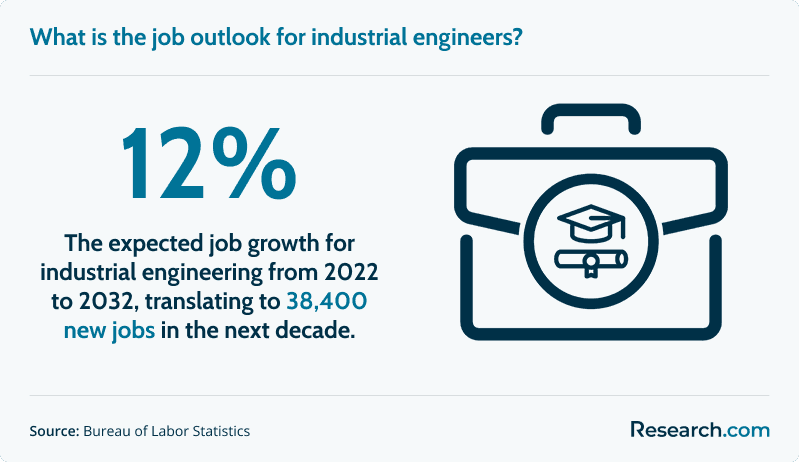
The following chart summarizes projected job growth for industrial engineers.
10. General Engineering
General engineering gives students a broad engineering foundation before they commit to a single discipline. Students may study mechanics, computing, materials, electrical systems, design, physics, chemistry, and mathematics while exploring different branches of engineering.
This path can be useful for students who know they want engineering but are not ready to choose between civil, mechanical, electrical, computer, chemical, industrial, or another specialty. The flexibility can reduce the risk of choosing too narrowly too early.
General engineering is not automatically easier. Students still need to master core technical subjects across several areas. Its main advantage is exploration. If you use advising, introductory courses, projects, and internships strategically, general engineering can help you identify the specialization that best fits your strengths.
What do engineering graduates say about the experience?
- Daniel: "Engineering taught me to think through constraints instead of looking for one perfect answer. Assignments often felt like puzzles with trade-offs, deadlines, and competing requirements. It was frustrating when a design failed, but learning to test, revise, and defend a solution became one of the most useful parts of the degree."
- Michael: "The project work was just as important as the classroom material. Prototypes, design software, and technical problem-solving gave me examples I could talk about with employers. My program was known for being applied, but it still required discipline. What helped was seeing how each assignment connected to the work I wanted after graduation."
- Eleonor: "I worried about engineering because math had never been my strongest area. The difference was having tutoring, supportive faculty, and early courses that rebuilt the fundamentals before the harder material started. It was never easy, but the support system made success realistic and helped me move into work that feels meaningful."
What to know before choosing an “easy” engineering degree
- The most manageable engineering degree is usually the one that matches your strengths, not the one with the smallest workload.
- Accreditation can affect employment, graduate school, transfer credit, and Professional Engineer licensure options.
- Engineering technology can be a practical applied pathway, but students should verify how employers, graduate schools, and licensing boards view the credential.
- Industrial, civil, environmental, biological systems, architectural, and general engineering may feel more accessible because they connect to visible systems, applied science, sustainability, operations, or broad exploration.
- Total cost, transfer credits, internships, co-ops, lab access, completion time, and career support can influence ROI as much as the major itself.
What can you do with an engineering degree?
Engineering graduates can pursue traditional engineering roles, technology jobs, operations careers, research positions, regulatory work, consulting, management, and specialized technical paths. Unlike lists of the easiest online degrees that pay well, engineering requires sustained academic effort. Its value comes from combining a rigorous major with relevant experience, technical tools, and a specialization that employers need.
Traditional engineering roles
- Civil engineer: Designs, plans, evaluates, and manages infrastructure projects such as roads, bridges, buildings, transportation networks, and water systems.
- Mechanical engineer: Develops and improves machines, tools, engines, mechanical systems, equipment, and manufacturing processes.
- Electrical engineer: Works with circuits, electronics, power systems, controls, communication systems, and electrical components.
- Chemical engineer: Uses chemistry, physics, and engineering principles in process design, production, materials, energy, and manufacturing systems.
- Aerospace engineer: Designs, tests, and improves aircraft, spacecraft, propulsion systems, and related technologies.
Technology-focused roles
- Computer engineer: Builds and develops computing hardware, firmware, embedded systems, and hardware-software platforms.
- Software engineer: A software engineering career involves designing, building, testing, deploying, and maintaining software using structured engineering practices.
- Cybersecurity engineer: Protects networks, systems, applications, and infrastructure from security risks. Students interested in this route can review what education is needed to become a cybersecurity engineer.
Specialized and interdisciplinary roles
- Biomedical engineer: Applies engineering methods to medical devices, prosthetics, diagnostics, rehabilitation systems, and healthcare technologies.
- Environmental engineer: Designs systems that improve water quality, reduce pollution, manage waste, and support sustainable resource use.
- Engineering manager: Leads technical teams, project schedules, budgets, quality systems, and engineering execution.
- Patent law or intellectual property: Uses technical knowledge to evaluate inventions, patent claims, product designs, and engineering-related legal questions.
- Operations and process improvement: Uses industrial engineering methods in logistics, healthcare, manufacturing, supply chains, and service systems. Students can compare industrial engineering careers or review additional industrial engineering career pathways.
The best career path depends on your engineering discipline, internships, licensure plans, industry, location, technical portfolio, and preferred work setting. A single engineering degree can lead to office-based design, lab work, field operations, software development, management, consulting, research, or regulatory roles.
The federal executive branch is the highest engineer employer in the U.S., as shown in the chart below.
Is an engineering degree worth it?
An engineering degree can be worth it for students who want technical work, can handle rigorous coursework, and choose a program that fits their budget and career direction. Engineering occupations often require specialized skills, and many roles can offer stable and well-paid career options. However, the degree is not automatically a good investment for every student.
Before committing, compare tuition, fees, time to graduation, accreditation, internship access, transfer policies, graduation rates, debt, and realistic employment outcomes. Engineering may offer stronger earning potential than many nontechnical undergraduate options, including some online bachelor degree programs in accounting, but salary alone should not drive the decision. Work settings vary widely: engineers may work on construction sites, in plants, in offices, in labs, in hospitals, in software teams, in government agencies, or in the field.
The table below shows median annual salaries for selected engineering occupations as of 2023. According to the Bureau of Labor Statistics, computer hardware engineers are the highest paid engineers in 2023 among the occupations listed.
| Engineering Occupation | Median Annual Salary |
| Aerospace Engineers | $130,720 |
| Agricultural Engineers | $88,750 |
| Bioengineers and Biomedical Engineers | $100,730 |
| Chemical Engineers | $112,100 |
| Civil Engineers | $95,890 |
| Computer Hardware Engineers | $138,080 |
| Electrical and Electronics Engineers | $109,010 |
| Environmental Engineers | $100,090 |
| Health and Safety Engineers | $103,690 |
| Industrial Engineers | $99,380 |
| Marine Engineers and Naval Architects | $100,270 |
| Materials Engineers | $104,100 |
| Mechanical Engineers | $99,510 |
| Mining and Geological Engineers | $100,640 |
| Nuclear Engineers | $125,460 |
| Petroleum Engineers | $135,690 |
How much does an engineering degree cost?
The price of an engineering program depends on the institution, residency status, degree level, delivery format, fees, transfer credits, housing, supplies, and how quickly you finish. Engineering students should also plan for textbooks, lab fees, software, hardware, equipment, transportation, exam costs, and possible summer coursework.
| Cost factor | Why it affects the final price | Questions to ask before enrolling |
| Residency status | Public universities often charge in-state students less than out-of-state students. | Can I receive in-state tuition, tuition reciprocity, or a reduced online tuition rate? |
| Institution type | Public, private nonprofit, and private for-profit schools can have very different total costs. | What is the full cost of attendance, including fees and living expenses? |
| Program level | Graduate engineering programs often charge more per credit than many undergraduate programs. | How many credits are required, and what program-specific fees apply? |
| Online or campus format | Online study may reduce commuting or relocation expenses, but tuition is not always lower. | Are labs completed online, on campus, through hybrid formats, or during short residencies? |
| Time to completion | Changing majors, repeating technical courses, or losing transfer credits can increase total cost. | How many of my credits will count directly toward the engineering major? |
For undergraduate engineering programs in the United States during the 2022-2023 academic year, the listed average costs were:
- In-state tuition and fees at public universities: $13,903
- Out-of-state tuition and fees at public universities: $48,096
- Tuition and fees at private universities: This can vary greatly, but the national average is likely higher than both in-state and out-of-state costs at public universities.
The chart below shows how much tuition can vary among engineering universities.
What is the job outlook for engineering graduates?
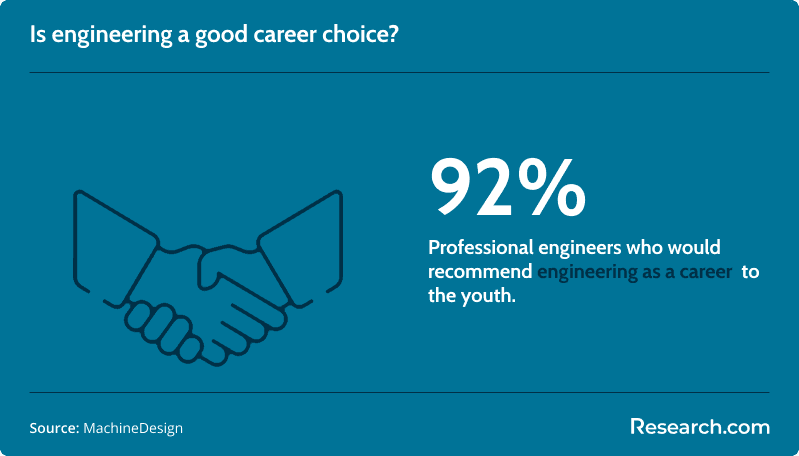
From 2022 to 2032, the Bureau of Labor Statistics projects about 188,000 openings in engineering and architecture occupations. This translates into a 7% job growth over the same period for engineering jobs.
Job prospects differ by specialization. Aerospace engineers may see opportunities tied to aircraft, defense, satellites, and space-related systems. Chemical engineers are also projected to see positive job growth of 8% until 2032, with opportunities connected to alternative energies, nanotechnology, biotechnology, and process innovation.
Technology is reshaping engineering work rather than making engineers unnecessary. AI, automation, simulation, digital twins, robotics, advanced manufacturing, sensors, and data analytics are becoming more common in design, testing, monitoring, maintenance, and quality control. Students who pair engineering fundamentals with software, modeling, data, and communication skills may be better prepared than those who rely only on traditional coursework.
What engineering specializations can you choose?
Engineering includes many branches, and each one has different course requirements, work settings, licensing considerations, and career outcomes. Common options include:
- Civil Engineering
- Mechanical Engineering
- Electrical Engineering
- Chemical Engineering
- Computer Engineering
- Industrial Engineering
- Software Engineering
- Materials Science
- Aerospace Engineering
- Biomedical Engineering
- Environmental Engineering
- Nuclear Engineering
| Specialization | Good match for students interested in | Typical difficulty point |
| Civil Engineering | Infrastructure, public works, buildings, transportation, and water systems | Design codes, safety responsibilities, standards, and licensure preparation |
| Mechanical Engineering | Machines, robotics, manufacturing, thermal systems, and product design | Broad requirements in math, physics, mechanics, and design |
| Electrical Engineering | Circuits, electronics, signals, power, controls, and communications | Abstract math, electromagnetics, circuit theory, and systems analysis |
| Chemical Engineering | Processes, energy, materials, pharmaceuticals, and manufacturing | Chemistry, transport phenomena, thermodynamics, and process design |
| Industrial Engineering | Operations, logistics, analytics, optimization, and systems improvement | Statistics, modeling, process analysis, and cross-functional communication |
| Environmental Engineering | Water, pollution control, waste systems, sustainability, and public health | Chemistry, regulations, treatment systems, and real-world field constraints |
How long does it take to complete an engineering degree?
The timeline depends on the degree level, transfer credits, course load, prerequisites, co-op participation, and whether you study full time or part time. Students asking how long it takes to become an engineer should also account for any licensing, certification, or supervised experience requirements after graduation.
- Bachelor’s degree: Many undergraduate engineering programs take about four years to complete in many countries. Accelerated study, transfer pathways, summer courses, or heavier course loads may shorten the timeline, while co-ops, part-time enrollment, or repeated technical courses can extend it.
- Master’s degree: A master’s in engineering usually adds one to two years after the bachelor’s degree. Some universities offer integrated Bachelor’s/Master’s or BS/MS pathways that may take around five years.
- Doctorate (PhD): A PhD in engineering typically takes four to six years beyond the bachelor’s degree and includes advanced research, a dissertation, and often teaching or lab responsibilities.
What classes do engineering students usually take?
Engineering programs combine mathematics, science, computing, design, lab work, communication, and discipline-specific technical courses. The exact sequence depends on the major, but most curricula move from fundamentals to advanced analysis and design.
- Mathematics: Calculus, differential equations, linear algebra, probability, and statistics help students model systems, solve quantitative problems, and interpret technical data.
- Physics: Mechanics, electromagnetism, thermodynamics, and optics provide the science foundation for many engineering applications.
- Chemistry: Chemistry is especially important for chemical, environmental, biological systems, materials, and biomedical engineering students.
- Engineering fundamentals: Introductory courses often cover design thinking, ethics, teamwork, technical communication, engineering problem-solving, and the basics of multiple fields.
- Major-specific engineering courses: Depending on the discipline, students may study circuits, structures, fluid mechanics, thermodynamics, controls, materials, digital systems, transport processes, manufacturing, or optimization.
- Labs and design projects: Students learn to test ideas, collect and analyze data, use instruments, document results, and work in teams with real constraints.
- Capstone design: Many programs end with a major project that requires students to define a problem, design a solution, manage trade-offs, and present technical work clearly.
What are the prerequisites for an engineering program?
Admission requirements vary by school and program selectivity, but engineering applicants are generally expected to show strong preparation in mathematics and science. Competitive programs may also consider grades in specific high school courses, test scores where required, essays, recommendations, placement results, and evidence of readiness for demanding technical study.
- General college admission requirements: Schools may request an application, transcripts, and admission tests such as the SAT or ACT. Some programs expect strong performance in college-preparatory coursework.
- High school coursework: English, mathematics, chemistry, biology, physics, and other science courses can help students prepare for engineering-level work.
- Program-specific materials: Some applicants may need recommendation letters, personal statements, portfolios, placement tests, or documentation of prerequisite coursework. Students considering an engineering degree online should also check technology requirements, software access, lab arrangements, and learning management systems.
- Academic and personal readiness: Engineering students need persistence, problem-solving ability, teamwork, technical writing, communication skills, and the willingness to learn difficult concepts over time.
How can an online construction management degree support an engineering career?
Engineers who understand both technical design and construction execution can be stronger candidates for project leadership roles. Construction management adds training in scheduling, estimating, contracts, procurement, safety, risk, cost control, and team coordination. For engineers who want to move toward construction leadership or project management, an online construction management degree can complement engineering experience with business and field-management skills.
Should engineers consider graduate school for faster advancement?
A graduate degree can help when it supports a specific goal, such as technical specialization, research, management, licensure preparation, leadership, or a move into a new engineering field. It is less valuable when the program is expensive, unfocused, or not recognized by employers in the target industry. Engineers who want to manage technical projects or teams may compare options such as the cheapest master's in engineering management online programs if flexibility and cost control are priorities.
How do you choose the best and most manageable engineering program?
The best engineering program is not the one with the easiest reputation. It is the one that fits your abilities, career target, budget, schedule, learning style, and licensing needs while still meeting quality expectations. Use the steps below to compare options.
Step 1: Start with the problems you want to solve
- If infrastructure, bridges, transportation, water systems, and public works interest you, compare civil and environmental engineering.
- If you like buildings, energy-efficient systems, and coordination between design and construction teams, consider architectural engineering or construction-related pathways.
- If you enjoy logistics, manufacturing, healthcare systems, analytics, and process improvement, industrial engineering may be a strong match.
- If biology, agriculture, food systems, or sustainability interests you, look at biological systems or environmental engineering.
- If you like both programming and hardware, compare computer engineering with computer science and software engineering.
Step 2: Match the major to your learning style
- Hands-on learner: Look for engineering technology, lab-heavy coursework, applied design, co-ops, and project-based programs.
- Math-strong learner: Electrical, mechanical, aerospace, computer, and materials-focused programs may be good options if the subject matter interests you.
- Systems thinker: Industrial, civil, environmental, and general engineering can offer a broader view of how parts interact within larger systems.
- Science-oriented learner: Chemical, biomedical, environmental, biological systems, and materials science may be more engaging.
Step 3: Confirm accreditation and licensure fit
Accreditation is a major decision point. In the United States, ABET accreditation is commonly associated with engineering and engineering technology programs. If your goal is to become a licensed Professional Engineer, verify that the exact program meets your state’s education requirements. Students comparing online pathways can also review broader options such as the best accredited online bachelor degree programs.
Step 4: Compare total affordability, not tuition alone
Tuition is only part of the cost. Include fees, books, software, lab expenses, travel, housing, lost income, transfer credit limits, and time to graduation. Students seeking lower-cost pathways can compare a cheap online engineering degree, but they should still verify accreditation, lab quality, employer recognition, and licensure compatibility.
Step 5: Ask these questions before applying
| Question | Why the answer matters |
| Is the specific engineering program accredited? | Institutional accreditation alone may not be enough for some engineering careers or licensing routes. |
| Does the program meet Professional Engineer licensure requirements in my state? | Rules can vary by state and may differ for online or engineering technology programs. |
| How are labs and hands-on requirements completed? | Engineering education should include applied work, not only lectures and exams. |
| What internship, co-op, or employer partnerships are available? | Work experience can strongly improve post-graduation job prospects. |
| How many transfer credits will apply to the major? | Credits that do not count toward the degree can raise cost and delay graduation. |
| What jobs do recent graduates actually obtain? | Real outcomes are more useful than broad marketing claims. |
| How many students finish on time? | Delayed completion can significantly change the degree’s return on investment. |
How can accredited online engineering programs support career advancement?
Online engineering education can help students advance when the program is accredited, rigorous, and designed around real technical practice. Students comparing accredited online universities should look past convenience and evaluate whether the program provides appropriate labs, software, faculty guidance, projects, and industry relevance.
- Relevant curriculum: Strong programs connect coursework to current engineering tools, standards, and employer expectations.
- Flexible scheduling: Online formats may allow working adults to study while continuing to build professional experience.
- Professional network: Faculty, alumni, employer partnerships, and team projects can help students develop useful contacts.
- Cost control: Online study may reduce relocation or commuting expenses, but tuition and fees still require careful comparison.
- Career mobility: An accredited credential can support movement into more technical, specialized, or leadership-oriented roles.
What is the ROI of an engineering degree?
The return on investment for an engineering degree depends on total cost, time to completion, debt, job placement, salary, internship experience, and the labor market for the chosen specialization. Engineering can produce a favorable payoff for students who graduate from a credible program, gain practical experience, and enter a field with realistic demand.
Online engineering programs may improve ROI for some students by allowing them to keep working, avoid relocation, or choose a lower-cost school. However, online study is not automatically cheaper or better. The program still needs credible accreditation, appropriate labs, design work, faculty access, and employer-recognized outcomes.
Some engineers later add business or technology training to move into leadership. For example, a technical professional interested in IT leadership may compare the cheapest online MBA in information technology with engineering management, cybersecurity, data science, or project management options. The right choice depends on whether the goal is technical depth, product leadership, operations, people management, or executive advancement.
What accreditation and ranking factors matter most?
Accreditation should matter more than rankings. Rankings can help compare reputation, resources, research activity, selectivity, and student outcomes, but they should not replace direct program evaluation. A highly ranked program may still be a poor personal fit if it is too expensive, too inflexible, or not aligned with your licensure or career goals.
When reviewing engineering programs, check institutional accreditation, programmatic accreditation, graduation rates, internship access, employer partnerships, lab quality, faculty expertise, student support, and graduate outcomes. Students interested in newer technical fields can also compare interdisciplinary options such as a cheap AI online degree, while confirming whether the curriculum matches their intended engineering or technology career.
How can you improve the ROI of an engineering degree?
Students can increase the value of an engineering degree by choosing carefully, controlling unnecessary costs, gaining experience early, and graduating with skills employers can verify. The goal is not just to earn a credential. It is to leave school with evidence that you can solve technical problems.
- Choose a cost-effective program: Compare public universities, transfer pathways, scholarships, employer tuition assistance, online options, and full cost of attendance. Graduate students can also review the cheapest masters in engineering management online options if management is part of their plan.
- Specialize intentionally: Avoid choosing a major only because it sounds easier. Pick a field that fits your strengths and has realistic demand in the industries where you want to work.
- Prioritize internships and co-ops: Paid experience can improve employability, strengthen your resume, and help you confirm whether a specialty fits.
- Build a project portfolio: When permitted, save capstone work, CAD files, code, prototypes, simulations, lab reports, and design documentation.
- Consider licenses and credentials: Depending on the field, a Professional Engineer license, project management credential, software certification, safety credential, or technical certificate may strengthen your profile.
- Learn employer-used tools: CAD, simulation software, programming, data analysis, project management platforms, lab instrumentation, and industry-specific systems can improve competitiveness.
- Network early: Join engineering societies, attend employer events, use faculty connections, and maintain relationships with alumni, internship supervisors, and project teammates.
- Compare and negotiate offers carefully: Use market research, internship performance, certifications, and project experience to make stronger job search decisions.
Is emerging technology essential for engineering careers?
Emerging technology is becoming more important because engineering design, testing, production, monitoring, maintenance, and analysis are increasingly digital. AI, automation, robotics, sensors, simulation, advanced manufacturing, and data analytics are changing how engineers work. Students do not need to master every new tool, but they should be ready to keep learning throughout their careers.
Engineers who want deeper AI training can compare options such as an online AI degree. The strongest strategy is to combine engineering fundamentals with modern tools rather than treating technology as a substitute for engineering judgment.
How can specialized online master’s programs build niche expertise?
Specialized online master’s programs can help engineers move into fields that require knowledge beyond the bachelor’s level. These programs may be useful for professionals targeting bioinformatics, AI, data science, systems engineering, engineering management, cybersecurity, biomedical innovation, or other specialized areas.
For example, engineers interested in biology, healthcare data, or computational life sciences may compare masters in bioinformatics programs. The value depends on whether the curriculum, projects, and employer network connect directly to the role the student wants next.
Can certifications help engineers advance?
Professional certifications can help engineers show specialized competence in areas where tools, standards, safety, management, data, or software skills matter. They do not replace an engineering degree, but they can strengthen a resume when they match the target role.
Examples include project management, quality, safety, software, cloud, cybersecurity, data analytics, and discipline-specific technical credentials. Engineers considering analytics-heavy careers may compare an affordable masters in data science degree with shorter certificate options before committing to a full graduate program.
How can online programs connect engineering theory with practice?
Strong online engineering programs need more than recorded lectures. They should use virtual labs, simulations, remote instrumentation, collaborative design tools, project-based assignments, and structured instructor feedback. Some programs may still require in-person labs, proctored exams, fieldwork, or short campus residencies.
Students interested in AI-related engineering work may compare an online degree in AI with computer engineering, data science, robotics, or software engineering pathways. The key question is whether the program gives students enough applied experience to prove they can use what they learn.
Common mistakes to avoid when choosing an engineering degree
| Mistake | Why it causes problems | Smarter approach |
| Picking a major only because it sounds easy | You may struggle to stay motivated when difficult courses arrive. | Choose based on your strengths, interests, and career direction. |
| Overlooking accreditation | It can affect licensure, transfer credit, graduate school, and employer recognition. | Check both institutional and programmatic accreditation before applying. |
| Comparing tuition only | Fees, housing, labs, software, transportation, and delayed graduation can raise the real cost. | Compare total cost of attendance and likely time to completion. |
| Assuming every online engineering program supports licensure | Licensure rules differ by state and program type. | Contact both the school and your state licensing board before enrolling. |
| Skipping internships or co-ops | Graduating without experience can make the first job search harder. | Prioritize programs with employer connections, practical projects, and work-based learning. |
| Using rankings as the only decision tool | A ranked program may still be too expensive, too rigid, or poorly matched to your goals. | Treat rankings as one input, not the final answer. |
| Assuming salary outcomes are guaranteed | Pay depends on discipline, location, employer, experience, performance, and market conditions. | Review occupation data and ask schools for actual graduate outcomes. |
References:
- United States Bureau of Labor Statistics. (2024, April 17). Occupational Outlook Handbook: Architecture and Engineering Occupations. BLS.
- American Society of Civil Engineers. (2023, September 26). Civil engineering salaries continue to climb. ASCE.
- Bureau of Labor Statistics. (2021, May 14). Architecture and Engineering Occupations. Bureau of Labor Statistics.
- Cecere, C. (2023, June 29). Paying mechanical engineers in the United States 2023. ASME.
- Indeed. (2021, February 23). What Can You Do With an Engineering Degree? Top 17 Engineering Degree Jobs. Indeed.
- Best engineering colleges tuition comparison (2020). College Tuition Compare.
Key Insights
- The easiest engineering degree is not universal. Civil, environmental, industrial, architectural, biological systems, engineering technology, and general engineering may feel more manageable for certain students, but all require serious technical work.
- Fit matters more than reputation. Choose industrial engineering if you like systems and statistics, civil engineering if you like infrastructure, environmental engineering if sustainability and water systems motivate you, and engineering technology if you prefer applied hands-on learning.
- Accreditation should be checked before anything else. Confirm that the exact program supports your employment, transfer, graduate school, and licensure goals.
- Engineering ROI depends on more than median salary. Total cost, debt, completion time, internships, location, licensure, and practical experience all affect the payoff.
- Online engineering programs can be worthwhile when they offer credible accreditation, strong labs or simulations, faculty support, and transparent career outcomes.
- Do not choose engineering only because one major appears easier. The better strategy is to find the most manageable path that still leads to work you want to do.
Other Things You Need to Know About Pursuing a Degree in Engineering
In 2027, the easiest engineering degrees often require foundational math and science courses, such as calculus and physics, along with a high school diploma. Specific program requirements can vary, but these subjects are commonly emphasized to provide the necessary background knowledge.
Yes. In 2027, employers and licensure boards still look for ABET-accredited programs, especially if you want a Professional Engineer license. ABET accreditation confirms the curriculum meets standard math, science, and engineering requirements, usually including design work and a capstone project.
Graduates of 2027's easiest engineering degrees, such as civil engineering, often find roles as design engineers or project managers. These positions are prevalent in infrastructure and construction industries, offering a practical application of skills acquired during their studies.


