2027 Best Online Electrical Engineering Degree Programs

Co-Founder and Chief Data Scientist
Choosing an online electrical engineering degree is not just a question of convenience. It is a decision about accreditation, lab access, transfer credits, cost, career goals, and whether the program can prepare you for engineering work that increasingly involves power systems, embedded devices, semiconductors, telecommunications, automation, and AI-enabled hardware. The right program can help you earn a respected credential while continuing to work or manage other responsibilities; the wrong one can create problems with licensure, employer recognition, or hands-on preparation.
This guide is for students comparing online electrical engineering bachelor’s programs, working adults returning to school, transfer students with prior technical credits, and early-career professionals considering whether an online engineering credential is worth the investment. You will learn what these programs cover, how online labs work, what to check before enrolling, how much featured programs cost, what financial aid may be available, and which career paths commonly align with electrical engineering training.
Quick answer: Is an online electrical engineering degree a good option?
- An online electrical engineering degree can be a practical path if the program is properly accredited, includes meaningful lab or simulation work, and fits your schedule, budget, and career target.
- Graduates may pursue roles such as electrical engineer, electronics engineer, computer hardware engineer, aerospace engineer, or electrical and electronic engineering technologist and technician, depending on degree level, program focus, experience, and employer requirements.
- In May 2023, electrical engineers in the US earned a median annual wage of $106,950, while electronics engineers earned $119,200, according to the US Bureau of Labor Statistics (BLS, 2024).
- Online study can reduce relocation and commuting barriers, but students should carefully review accreditation, lab requirements, exam preparation, software access, transfer policies, and whether the degree meets professional goals in their state or industry.
What can I expect from an online electrical engineering degree program?
An online electrical engineering degree typically combines advanced math, physics, circuit theory, electronics, digital systems, programming concepts, and engineering design. At the bachelor’s level, students usually move from foundational coursework into more specialized topics such as electromagnetics, power engineering, control systems, communications, embedded systems, and semiconductor-related design.
The online format does not mean the program is entirely theoretical. Many programs use virtual laboratories, circuit simulation platforms, engineering software, project kits, remote-access equipment, or short in-person lab sessions. Because electrical engineering is a hands-on field, this lab structure is one of the most important details to examine before enrolling.
Students should expect a demanding workload. Electrical engineering requires strong quantitative reasoning, comfort with abstract concepts, and the ability to troubleshoot designs that do not work on the first attempt. Online learners also need reliable technology, consistent study time, and the discipline to keep pace without the daily structure of a physical campus.
Common outcomes of a strong online electrical engineering program
- Ability to analyze, design, test, and improve electrical and electronic systems.
- Experience using engineering software, simulation tools, and technical documentation.
- Preparation for entry-level engineering, engineering technology, hardware, power, electronics, or systems-related roles.
- A foundation for graduate study, professional certification, or, where applicable, licensure-related exam preparation.
Where can I work with an online electrical engineering degree program?
Electrical engineering skills are used across industries that design, produce, power, connect, test, automate, or secure modern technology. In 2023, 189,100 electrical engineers were employed in the US. BLS data show the largest employment shares for electrical engineers in the following industries:
- Engineering Services: 20%
- Electric Power Generation, Transmission, and Distribution: 10%
- Navigational, Measuring, Electromedical, and Control Instruments Manufacturing: 6%
- Aerospace Product and Parts Manufacturing: 5%
- Research and Development in the Physical, Engineering, and Life Sciences: 5%
Electronics engineers, except those in computer manufacturing, were concentrated in these industries according to BLS data:
- Telecommunications: 19%
- Federal Government, excluding Postal Service: 15%
- Semiconductor and Other Electronic Component Manufacturing: 12%
- Engineering Services: 8%
- Navigational, Measuring, Electromedical, and Control Instruments Manufacturing: 5%
Computer hardware engineers were most commonly employed in the following sectors:
- Computer Systems Design and Related Services: 20%
- Semiconductor and Other Electronic Component Manufacturing: 18%
- Research and Development in the Physical, Engineering, and Life Sciences: 16%
- Computer and Peripheral Equipment Manufacturing: 6%
- Federal Government: 6%
How much can I make with an online electrical engineering degree?
Earnings depend on the role, degree level, industry, region, technical specialization, internship or project experience, and whether the job is engineering, engineering technology, hardware design, power systems, or research-focused. The degree being online is usually less important than whether the institution and program are credible, accredited, and aligned with the employer’s expectations.
The following BLS figures show 2023 median annual wages for occupations related to electrical engineering:
| Occupation | 2023 median annual wage | What the role commonly involves |
| Electrical and Electronic Engineering Technologist and Technician | $72,800 | Testing, troubleshooting, maintaining, and supporting electrical or electronic systems under engineering direction. |
| Electrical Engineer | $106,950 | Designing and improving electrical systems used in power, manufacturing, devices, transportation, and infrastructure. |
| Electronics Engineer | $119,200 | Developing electronic components, circuits, communications systems, control equipment, and related technologies. |
| Aerospace Engineer | $130,720 | Working on aircraft, spacecraft, defense systems, and aerospace-related electrical or electronic systems. |
| Computer Hardware Engineer | $138,080 | Designing and testing processors, circuit boards, embedded systems, and computing hardware. |
For electrical engineers specifically, BLS reported the following 2023 median annual wages by leading industry:
- Research and Development in the Physical, Engineering, and Life Sciences: $133,040
- Aerospace product and parts manufacturing: $130,870
- Navigational, Measuring, Electromedical, and Control Instruments Manufacturing: $117,510
- Electric Power Generation, Transmission, and Distribution: $109,370
- Engineering Services: $101,440
Students should not treat these figures as guaranteed outcomes. Median wage data describe the labor market, not a promised salary for any individual graduate. Your results will depend on your portfolio, internships, location, technical focus, interview performance, and whether your program has the accreditation or employer recognition needed for your target role.
- Online electrical engineering degree programs for 2027
- How long online electrical engineering programs usually take
- Online vs. on-campus electrical engineering degrees
- Typical cost factors for online electrical engineering degrees
- Financial aid options for online electrical engineering students
- Admissions requirements and prerequisites
- Courses commonly found in electrical engineering programs
- Electrical engineering specializations to compare
- How to choose the right online electrical engineering program
- Certifications that may strengthen an electrical engineering career
- Accelerated advanced study options
- Why accreditation and industry partnerships matter
- Career paths for electrical engineering graduates
- Challenges online engineering students should plan for
- How graduate degrees may support advancement
- How online programs handle practical lab work
- Job outlook for electrical engineering-related careers
- Whether an online electrical engineering degree is worth it
- Accelerated research degree options
Online Electrical Engineering Degree Programs for 2027
Engineering remains a major academic pathway in the US. In the academic year 2021–2022, institutions conferred 2 million bachelor’s degrees nationwide, and 6% or 123,000 of those degrees were in engineering, according to NCES data from 2024. Students considering this field can use the following programs as a starting point for comparison, not as a substitute for verifying current tuition, admission policies, accreditation, and online delivery requirements directly with each school.
This list was developed using the Research.com methodology. The research process reviewed recent information from the IPEDS database, Peterson's database, the College Scorecard database, and the National Center for Education Statistics.
| School | Program format and focus | Credits | Accreditation listed |
| Stony Brook University | Online BS in electrical engineering for traditional and non-traditional learners. | 120 credits | Middle States Commission on Higher Education (MSCHE or the Commission); Commission of ABET |
| Florida International University (FIU) | Fully online BS in electrical engineering through the College of Engineering and Computing. | 128 credits | Southern Association of Colleges and Schools Commission on Colleges (SACSCOC); Commission of ABET |
| University of Southern Indiana (USI) | Online and on-campus BS in electrical engineering with access to laboratory and manufacturing space. | 127 credits | Higher Learning Commission (HLC); Commission of ABET |
| Old Dominion University | BS in engineering technology with a major in electrical engineering technology. | 128 to 134 credits | SACSCOC; Engineering Technology Accreditation Commission (ETAC) of ABET |
| Mississippi Valley State University (MVSU) | Online BS in electrical engineering with core, math, science, engineering, and technical writing coursework. | 128 credit hours | SACSCOC; Commission of ABET |
1. Stony Brook University
Stony Brook University offers an online Bachelor of Science in electrical engineering. The program is structured for students who need a flexible route into the field while still completing prerequisite science, mathematics, technical, major, elective, and open elective requirements.
- Program Length: 2 years
- Cost of Attendance: $33,572 (Resident); $55,376 (Non-resident)
- Required Credits to Graduate: 120 credits
- Accreditation: Middle States Commission on Higher Education (MSCHE or the Commission); Commission of ABET
2. Florida International University (FIU)
The College of Engineering and Computing at Florida International University offers a fully online Bachelor of Science in electrical engineering. The curriculum includes areas such as electronics, electromagnetism, nanotechnology, power and energy systems, and communications.
- Program Length: 4 years
- Cost per Credit: $235.57 per credit (Resident); $648.87 per credit (Non-resident)
- Required Credits to Graduate: 128 credits
- Accreditation: Southern Association of Colleges and Schools Commission on Colleges (SACSCOC); Commission of ABET
3. University of Southern Indiana (USI)
The University of Southern Indiana offers both online and campus-based Bachelor of Science options in electrical engineering. The program reports an average class size of 24 students and provides more than 16,000 square feet of laboratory and manufacturing space.
- Program Length: 5.5 years
- Cost of Attendance: $25,340 (Resident); $38,181 (Non-resident)
- Required Credits to Graduate: 127 credits
- Accreditation: Higher Learning Commission (HLC); Commission of ABET
4. Old Dominion University
Old Dominion University, based in Norfolk, Virginia, offers a Bachelor of Science in engineering technology with a major in electrical engineering technology. The program includes preparation connected to the Fundamentals of Engineering exam and may combine live online classes, self-paced online coursework, blended learning, and laboratory experiences.
- Program Length: 4 years
- Cost per Credit: $408 per credit (Resident); $439 per credit (Non-resident)
- Required Credits to Graduate: 128 to 134 credits
- Accreditation: SACSCOC; Engineering Technology Accreditation Commission (ETAC) of ABET
5. Mississippi Valley State University (MVSU)
Mississippi Valley State University offers an online Bachelor of Science in electrical engineering through the Bagley College of Engineering. Students complete the general core along with program requirements in mathematics, basic science, engineering, and technical writing.
- Program Length: 4 years
- Cost per Credit: $419 per credit
- Required Credits to Graduate: 128 credit hours
- Accreditation: SACSCOC; Commission of ABET
How long does it take to complete an online electrical engineering degree program?
A full-time bachelor’s program in electrical engineering commonly takes 4 years, though the actual timeline depends on transfer credits, course load, prerequisites, lab scheduling, and whether the program follows a lockstep or flexible format. Students comparing broader engineering options can also review affordable online engineering degree pathways to understand how cost and pacing vary across schools.
Part-time students often need 5 to 6 years because electrical engineering courses are sequential; for example, later classes may require calculus, physics, circuit analysis, or electronics prerequisites. Some accelerated programs may allow completion in at least 3 years by using heavier course loads, year-round enrollment, prior college credits, or transfer pathways. Master’s programs in electrical engineering usually take 1 to 2 years to complete.
| Student profile | Typical timeline | Best fit | Watch for |
| First-time full-time bachelor’s student | 4 years | Students who can carry a standard engineering course load. | Heavy math, science, lab, and project requirements. |
| Part-time working adult | 5 to 6 years | Learners balancing employment, caregiving, or military obligations. | Course sequencing that may delay progress if a prerequisite is missed. |
| Transfer student | Varies by accepted credits | Students with prior calculus, physics, general education, or technical coursework. | Not all engineering, lab, or major credits transfer cleanly. |
| Accelerated learner | At least 3 years in some programs | Students with strong preparation and time for intensive study. | Higher workload and less flexibility if personal or work demands change. |
| Graduate student | 1 to 2 years | Engineers or technical professionals seeking advanced specialization. | Admissions may require an engineering or closely related background. |
If your interests overlap more with computing infrastructure, systems administration, cybersecurity, or software implementation, comparing engineering programs with the cheapest online IT degree options may help clarify which academic path better matches your goals.
How does an online electrical engineering degree program compare to an on-campus program?
Online and campus electrical engineering programs can cover the same core concepts, but the learning experience is different. The most important differences involve lab access, scheduling, peer interaction, advising, and how much structure you need to stay on track.
| Factor | Online electrical engineering degree | On-campus electrical engineering degree | Decision tip |
| Schedule | Often offers more flexibility through asynchronous courses, evening sessions, or mixed delivery. | Usually follows set lecture, lab, and exam schedules. | Choose online if flexibility is essential; choose campus if fixed structure helps you perform better. |
| Labs | May use simulations, mailed kits, remote labs, or short in-person sessions. | Typically provides regular access to physical labs and equipment. | Ask exactly how each required lab is completed before enrolling online. |
| Networking | Relies on online discussion boards, team projects, virtual office hours, and remote career services. | Provides more spontaneous contact with faculty, classmates, clubs, and recruiters. | If you study online, plan deliberate networking through faculty, projects, internships, and professional groups. |
| Cost structure | May reduce relocation, commuting, and housing costs, but fees and software costs still matter. | May involve additional housing, transportation, campus fees, and relocation costs. | Compare total cost, not tuition alone. |
| Student support | Can include virtual tutoring, advising, library access, career services, and remote office hours. | Offers in-person access to many academic and student services. | Online students should test how responsive advising and technical support are before committing. |
An online program makes the most sense for students who are self-directed, need location flexibility, and can complete lab or project requirements as designed. A campus program may be stronger for students who need frequent in-person support, want more direct access to physical labs, or prefer a traditional engineering community.
What is the average cost of an online electrical engineering degree program?
The cost of an online electrical engineering degree depends on tuition rates, residency status, required credits, student fees, technology fees, software, lab materials, textbooks, transfer credits, and how long you remain enrolled. Some public universities charge different rates for residents and non-residents, while others use a single online tuition rate.
Online students may save money on housing, parking, relocation, and commuting, but those savings do not automatically make a program inexpensive. Engineering programs can also require specialized software, lab kits, proctored exams, or short campus visits. Always ask for a full cost estimate through graduation.
Among the featured programs above, the listed cost per credit figures include:
- Florida International University (FIU): $235.57 per credit (Resident); $648.87 per credit (Non-resident)
- Old Dominion University: $408 per credit (Resident); $439 per credit (Non-resident)
- Mississippi Valley State University (MVSU): $419 per credit
| Cost item | Why it matters | Question to ask |
| Tuition per credit | This is usually the largest direct academic cost. | Is online tuition different for residents and non-residents? |
| Required credits | A lower tuition rate may still be costly if the program requires more credits. | How many credits must I complete after transfer evaluation? |
| Lab and technology fees | Engineering courses may involve software, kits, simulation platforms, or equipment access. | Are lab kits, software licenses, and proctoring fees included? |
| Transfer credit policy | Accepted credits can shorten time to degree and reduce cost. | Which math, science, and engineering credits will count toward the major? |
| Time to completion | Extra semesters can increase tuition, fees, and opportunity cost. | What is the realistic timeline for part-time students? |
The chart below visualizes cost per credit for in-state and out-of-state students in the featured online electrical engineering programs, based on current tuition data from the institutions discussed above.
What are the financial aid options for students enrolling in an online electrical engineering degree program?
Online electrical engineering students may be able to use the same broad categories of aid available to campus students, provided the institution and program meet eligibility requirements. The key is to confirm aid eligibility before enrolling, especially if you plan to study part time or transfer in credits.
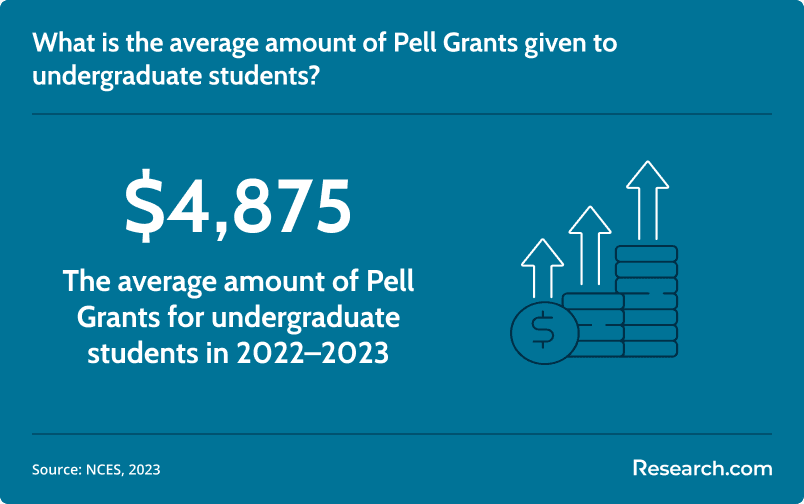
- Federal Grants: Need-based grants, including the Pell Grant, do not need to be repaid if eligibility requirements are met. Students should submit the Free Application for Federal Student Aid (FAFSA) to be considered for applicable federal and state aid. In the academic year 2022–2023, undergraduate students who received Pell Grants were awarded an average of $4,875, according to 5,423 academic institutions (NCES, 2023).
- Scholarships: Colleges, engineering departments, employers, professional associations, private organizations, and STEM-focused groups may offer scholarships based on merit, need, identity, academic interest, or career goals. Unlike loans, scholarships generally do not add to debt.
- Student Loans: Eligible students may use federal Direct Subsidized and Unsubsidized Loans. Private loans may also be available, but borrowers should compare interest rates, repayment protections, and long-term cost carefully. Federal loans generally offer more repayment flexibility than private loans.
Ways to reduce the total cost
- Request an official transfer credit review before committing to a program.
- Ask whether employer tuition assistance can be used for online engineering coursework.
- Compare resident, non-resident, and flat-rate online tuition policies.
- Apply for engineering-specific scholarships, not only general university awards.
- Consider whether starting with lower-cost transferable general education, math, or science credits is permitted by the target program.
What are the prerequisites for enrolling in an online electrical engineering degree program?
Electrical engineering programs are math- and science-intensive, so admissions offices and engineering departments often look for evidence that applicants can handle calculus-based technical coursework. Requirements vary by school, but common prerequisites include the following:
- High School Diploma or Equivalent: Applicants generally need a high school diploma or GED. Some programs may set a minimum GPA, often around 2.5 to 3.0. Strong grades in math and science can strengthen an application.
- Math and Science Preparation: Students are commonly expected to have completed algebra, calculus, physics, and chemistry or to complete prerequisite courses before entering the engineering sequence. Placement tests may be required if prior preparation is unclear.
- Standardized Test Scores: Some institutions have test-optional policies, while others may still request SAT or ACT scores. Applicants should confirm the policy for the specific term they plan to enter.
| Preparation area | Why it matters in electrical engineering | How to strengthen your application |
| Calculus readiness | Core engineering topics use derivatives, integrals, differential equations, and mathematical modeling. | Complete or refresh algebra, trigonometry, precalculus, and calculus before starting major courses. |
| Physics foundation | Circuits, electromagnetics, energy systems, and signals rely on physics concepts. | Take calculus-based physics if available or ask whether a bridge course is required. |
| Computer and software skills | Students often use simulation tools, programming, and technical computing platforms. | Build comfort with spreadsheets, programming basics, and engineering software tutorials. |
| Study discipline | Online engineering courses can be rigorous and sequential. | Create a weekly study schedule before the term begins and protect time for labs and problem sets. |
What courses are typically in an online electrical engineering degree program?
Online electrical engineering programs usually combine theory, computation, design, and applied problem-solving. Course names vary, but students can expect a curriculum that builds from foundational math and science into engineering analysis and specialization.
- Circuit Analysis: Students study voltage, current, resistance, power, network laws, and circuit behavior. Assignments often involve mathematical analysis and simulation-based design.
- Digital Systems: This course introduces binary logic, digital design, microcontrollers, and the building blocks of computing and embedded electronics.
- Electromagnetics: Students examine electric and magnetic fields and how they relate to communications, antennas, power equipment, shielding, and interference.
- Power Engineering: Coursework focuses on generation, transmission, distribution, grid performance, stability, and the integration of energy technologies.
- Control Systems: Students learn feedback, stability, automation, and controller design used in robotics, industrial systems, aerospace, and manufacturing.
Students who are comparing electrical engineering with faster computing-focused pathways may also want to review accelerated computer science degree programs, especially if their main interest is software, algorithms, or application development rather than electrical systems and hardware.
What types of specializations are available in online electrical engineering degree programs?
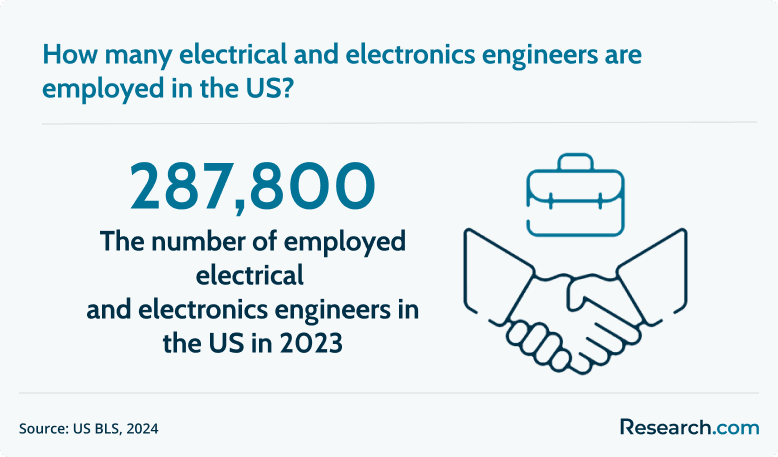
Specializations help students connect a broad electrical engineering foundation to a specific career direction. According to BLS data cited in this guide, 287,800 electrical and electronics engineers were employed in the US in 2023. Within that broad workforce, students often choose focus areas such as:
- Power Systems Engineering: This concentration centers on electricity generation, transmission, distribution, grid reliability, renewable energy integration, and infrastructure.
- Embedded Systems and Robotics: Students work with microcontrollers, real-time systems, sensors, automation, and intelligent devices used in robotics, vehicles, industrial systems, and consumer products.
- Telecommunications and Networking: This area covers signal processing, wireless systems, network infrastructure, communications hardware, and technologies connected to 5G and secure connectivity.
- Electronics and Semiconductor Design: Students study circuit design, semiconductor behavior, integrated circuits, and hardware development for electronic devices and components.
- Control Systems and Automation: This focus prepares students to design, analyze, and optimize automated systems used in manufacturing, aerospace, robotics, and process control.
| If you are interested in... | Consider this specialization | Potential work settings |
| Utilities, grids, renewable energy, and infrastructure | Power Systems Engineering | Energy companies, utilities, infrastructure firms, public agencies. |
| Smart devices, robotics, and vehicle electronics | Embedded Systems and Robotics | Automotive, manufacturing, robotics, consumer electronics. |
| Wireless systems, signals, and connectivity | Telecommunications and Networking | Telecommunications, network equipment, defense, communications providers. |
| Chips, circuits, and electronic components | Electronics and Semiconductor Design | Semiconductor firms, hardware companies, electronics manufacturing. |
| Automation, feedback, and process optimization | Control Systems and Automation | Aerospace, industrial automation, manufacturing, robotics. |
How to choose the best online electrical engineering degree program?
The best program is the one that is credible, affordable for your situation, realistic for your schedule, and aligned with your target role. Rankings and marketing language can be useful starting points, but they should not replace careful verification.
- Accreditation: Confirm institutional accreditation and program-level accreditation where relevant. ABET accreditation is especially important for many engineering pathways because it signals that the curriculum meets recognized standards and may affect employer confidence, graduate study, or licensure-related planning.
- Curriculum and Specializations: Compare required courses, electives, concentrations, software tools, design projects, and lab experiences. A student aiming for power engineering should not choose a program mainly built around communications or electronics unless the curriculum still supports that goal.
- Flexibility and Support Services: Online programs vary widely. Some use live classes, while others rely on asynchronous learning. Check tutoring, advising, career services, library access, technical support, faculty office hours, and internship support.
Questions to ask before enrolling
| Question | Why it matters |
| Is the electrical engineering program accredited by ABET or another relevant accreditor listed by the school? | Accreditation can affect employer recognition, graduate options, and professional engineering plans. |
| How are labs completed online? | You need to know whether labs use simulations, kits, remote equipment, partner facilities, or campus visits. |
| Will my transfer credits count toward the engineering major? | General electives may transfer more easily than calculus, physics, circuits, or upper-division engineering courses. |
| Does the program prepare students for the Fundamentals of Engineering exam if that is part of my plan? | Exam preparation may matter for students who intend to pursue professional engineering licensure. |
| What software and equipment are required? | Engineering software, hardware kits, and computing requirements can add cost and affect readiness. |
| What career services are available to online students? | Online learners should have access to resume support, job boards, employer events, and internship guidance. |
| Are courses offered every term? | If a required course is only offered once per year, missing it can delay graduation. |
Common mistakes to avoid
- Choosing a program without verifying accreditation directly with the school and accreditor.
- Comparing only tuition per credit instead of total cost through graduation.
- Assuming every online engineering program offers the same level of lab access.
- Ignoring course sequencing and discovering too late that prerequisites delay progress.
- Assuming an online degree automatically qualifies you for licensure, graduate admission, or a specific employer’s engineering role.
- Relying only on rankings instead of reviewing curriculum, faculty, labs, outcomes, transfer policy, and student support.
Can additional certifications enhance your electrical engineering career?
Certifications can be useful when they validate specific tools, systems, safety knowledge, or technical domains that employers value. They do not replace a degree, and they are not equally useful for every career path, but they can help professionals demonstrate focused expertise in areas such as power systems, networking, hardware tools, automation, or project management.
Students and working professionals who want shorter credentials alongside or after a degree can compare online certificate programs. The best choice depends on whether the certificate supports the exact roles you want, uses tools found in job postings, and comes from a provider with employer recognition.
Can online electrical engineering programs offer accelerated advanced study options?
Some schools offer pathways that shorten the transition from undergraduate to graduate study. These may include combined bachelor’s-to-master’s formats, graduate credit taken during the senior year, transfer-friendly master’s policies, or compressed academic calendars. Students considering fast graduate routes should confirm whether the program sacrifices flexibility, increases workload, or requires continuous enrollment.
If your goal is to move quickly into advanced coursework, leadership preparation, or specialization, it may be useful to compare the shortest masters programs online. Be careful, however: speed should not outweigh accreditation, faculty expertise, thesis or project fit, and the technical depth needed for your career goal.
How can accreditation and industry partnerships boost the credibility of online electrical engineering programs?
Accreditation and industry engagement are two of the strongest quality signals in an online electrical engineering program. Accreditation shows that an external body has reviewed academic standards, while industry partnerships may help students connect coursework with current tools, projects, internships, workshops, or employment networks.
ABET accreditation is especially important to investigate for engineering programs. Students should verify the specific program name, delivery format, and accreditation status rather than relying only on general university claims. Industry partnerships should also be evaluated carefully: a logo on a website is less meaningful than documented internship pathways, capstone sponsorships, guest lectures, hiring relationships, or access to equipment and software.
Students planning to build quickly on an engineering foundation can also review 1 year master programs online, but should confirm that accelerated graduate programs still provide enough rigor, faculty access, and technical relevance for their goals.
What career paths are available for graduates of online electrical engineering degree programs?
Career options depend on whether the degree is in electrical engineering, electrical engineering technology, electronics engineering, computer hardware, or a related engineering area. Employers may also weigh internships, design projects, lab experience, programming ability, and familiarity with industry tools.
- Electrical and Electronic Engineering Technologist and Technician: These professionals help engineers test, maintain, build, and troubleshoot electrical and electronic systems in industries such as manufacturing, telecommunications, and power distribution. In 2023, they earned a median annual wage of $72,800 (US BLS, 2024).
- Electrical Engineer: Electrical engineers design and improve systems used in power generation, electronics, automation, transportation, manufacturing, construction, and other sectors. Electrical engineers in the US had a 2023 median annual wage of $106,950 (US BLS, 2024).
- Electronics Engineer: Electronics engineers work on electronic devices, communications systems, medical equipment, consumer products, and related components. In 2023, electronics engineers across the US earned a median annual wage of $119,200 (US BLS, 2024).
- Aerospace Engineer: Aerospace engineers may work on aircraft, spacecraft, defense systems, avionics, and related electrical or electronic systems. Aerospace engineers had a 2023 median annual wage of $130,720 (US BLS, 2024).
- Computer Hardware Engineer: Computer hardware engineers design and test processors, circuit boards, embedded systems, and computing components used in areas such as AI, data centers, and consumer electronics. In 2023, computer hardware engineers had a median annual wage of $138,080, placing computer hardware engineering among the highest paying majors connected to this field (US BLS, 2024).
The chart below compares 2023 median annual wages for occupations related to electrical engineering using 2024 BLS data.
What challenges do online electrical engineering students face and how can they overcome them?
Online electrical engineering can be rewarding, but it is not easy. The most common challenges are not only academic; they also involve time management, lab access, isolation, technology problems, and the need to stay motivated through difficult technical courses.
| Challenge | Why it becomes a problem | Better strategy |
| Falling behind in math-heavy courses | Engineering topics build quickly, and weak algebra or calculus skills can affect several classes at once. | Use tutoring early, review prerequisites before the term, and solve extra practice problems weekly. |
| Underestimating lab requirements | Online labs may still require kits, software, scheduled remote access, or campus sessions. | Ask for the full lab plan before enrolling and budget for materials or travel if required. |
| Limited peer connection | Online students may miss informal study groups and faculty contact. | Join discussion boards, form virtual study teams, attend office hours, and participate in engineering organizations when possible. |
| Technology issues | Simulation software, proctoring tools, and remote labs may require reliable hardware and internet access. | Check computing requirements before the first term and test required platforms early. |
| Work-school overload | Electrical engineering courses can be time-intensive, especially with labs and design projects. | Start with a manageable course load and increase only after you understand the workload. |
Students who need a faster, less engineering-intensive academic route may also want to compare quick online degrees that pay well. That comparison can help clarify whether electrical engineering is the right level of rigor and time commitment.
How can advanced degrees accelerate your electrical engineering career?
A graduate degree can support advancement when it adds technical depth, research exposure, management preparation, or specialization that a bachelor’s program does not provide. This may matter for roles in advanced hardware, power systems, semiconductor design, signal processing, research and development, technical leadership, or specialized engineering management.
Graduate study is not automatically necessary for every electrical engineering role. It is most valuable when the target job postings prefer advanced coursework, when the student wants to move into research-heavy work, or when a specialized technical area requires deeper preparation. Professionals comparing graduate ROI may also review fields associated with the highest paid master's degrees, while remembering that salary outcomes vary by occupation, industry, location, and experience.
How are practical lab experiences managed in online electrical engineering programs?
Because electrical engineering involves design, measurement, testing, and troubleshooting, lab quality is central to program quality. Online programs may deliver labs through circuit simulation software, remote-controlled physical equipment, mailed electronics kits, virtual instrumentation, partner sites, or required campus visits.
Before enrolling, ask whether labs are synchronous or asynchronous, whether equipment is provided or purchased separately, whether students work individually or in teams, and how faculty evaluate hands-on competency. If a program cannot clearly explain how students complete required experiments and design work, treat that as a warning sign.
Students who want to build technical foundations before committing to a full bachelor’s pathway can also explore the fastest online associates degree options, but should verify transferability into engineering programs before assuming credits will apply.
What is the job market for graduates with an online electrical engineering degree?
BLS projections for 2023 to 2033 indicate positive outlooks for several electrical engineering-related occupations. These projections do not guarantee individual employment, but they do show where demand is expected to grow across the broader labor market.
- Electrical and electronic engineering technologists and technicians are projected to grow by 3%, which is as fast as the average for all US occupations over the decade. This points to continued need in areas such as manufacturing and telecommunications.
- Electrical engineers and electronics engineers are projected to grow by 9%, which is much faster than average. Growth may be supported by renewable energy, automation, electronics, and other emerging technologies.
- Aerospace engineers are projected to grow by 6%, with opportunities tied to aircraft, spacecraft, defense, and related systems development.
- Computer hardware engineers are projected to grow by 7%, reflecting ongoing work in computing, AI-related hardware, and semiconductor development.
Students interested in a more software-centered engineering direction can compare these pathways with online software engineering degree programs.
The chart below visualizes 2023 to 2033 job outlook projections for occupations related to electrical engineering, based on 2024 BLS data.
Are accelerated research degrees available in online electrical engineering programs?
Some research-oriented students may look beyond a master’s degree toward doctoral study. Online or hybrid doctoral pathways may be available in certain engineering-related areas, but students should evaluate them carefully because doctoral education depends heavily on faculty mentorship, research fit, laboratory access, publication expectations, and dissertation support.
Accelerated doctoral options may use transfer credits, intensive coursework, or structured research milestones. Students considering options such as a 2 years PhD should confirm whether the timeline is realistic for their research goals, funding situation, prior graduate credits, and access to required facilities or data.
How are online electrical engineering programs integrating emerging technologies into their curriculum?
Electrical engineering programs are adjusting to technologies that are reshaping energy, electronics, transportation, communications, manufacturing, and computing. Relevant curriculum updates may include renewable energy systems, smart grids, AI-enabled automation, Internet of Things devices, advanced semiconductors, signal processing, robotics, and hardware used in data-intensive computing.
Students should look for evidence that emerging technologies are integrated through projects, labs, software tools, capstone work, or electives rather than simply mentioned in course descriptions. A strong program should help students apply new tools to engineering problems, not only define industry trends. If you are still exploring broader online academic options, comparing the easiest degrees to get online can help you understand how electrical engineering differs from less technical majors in workload and prerequisites.
Is an online electrical engineering degree a worthwhile investment?
An online electrical engineering degree can be worth it when the program is accredited, affordable, technically rigorous, and connected to the type of engineering or technology role you want. It is less likely to be a good investment if you choose only for convenience, ignore lab quality, take on debt without understanding completion time, or enroll in a program that does not support your career target.
| The degree may be worth it if... | You may want a different path if... |
| You want engineering, electronics, power, hardware, automation, or systems-related work. | You mainly want software development and do not want intensive physics, circuits, or lab work. |
| The program has relevant accreditation and clear lab requirements. | The school cannot clearly explain accreditation, labs, transfer credit, or career support. |
| You can manage a demanding math and science curriculum online. | You need extensive in-person support or struggle without a structured campus schedule. |
| Your expected career path aligns with the degree level and specialization. | Your target job requires a different credential, licensure route, or graduate degree. |
| You have a realistic plan for tuition, fees, materials, and time to graduation. | You are comparing only tuition and ignoring total cost, lost time, or prerequisite delays. |
Students focused on reducing upfront application expenses may also review online colleges with free applications, though application cost should be only one small part of the overall value calculation.
References:
- National Center for Education Statistics. (2023). Financial Aid: What is the average amount of Pell grants awarded to undergraduate students? Integrated Postsecondary Education Data System. https://nces.ed.gov/ipeds/trendgenerator/app/answer/8/36
- National Center for Education Statistics. (2024, May). Undergraduate Degree Fields. Condition of Education. US Department of Education, Institute of Education Sciences. https://nces.ed.gov/programs/coe/indicator/cta#suggested-citation
- US Bureau of Labor Statistics. (2024, August 29). Aerospace Engineers. Occupational Outlook Handbook. https://www.bls.gov/ooh/architecture-and-engineering/aerospace-engineers.htm
- US Bureau of Labor Statistics. (2024, August 29). Computer Hardware Engineers. Occupational Outlook Handbook. https://www.bls.gov/ooh/architecture-and-engineering/computer-hardware-engineers.htm
- US Bureau of Labor Statistics. (2024, August 29). Electrical and Electronic Engineering Technologists and Technicians. Occupational Outlook Handbook. https://www.bls.gov/ooh/architecture-and-engineering/electrical-and-electronics-engineering-technicians.htm
- US Bureau of Labor Statistics. (2024, August 29). Electrical and Electronics Engineers. Occupational Outlook Handbook. https://www.bls.gov/ooh/architecture-and-engineering/electrical-and-electronics-engineers.htm
Key Insights
- An online electrical engineering degree is most valuable when it combines recognized accreditation, rigorous technical coursework, credible lab experiences, and career support for online learners.
- Full-time bachelor’s students commonly need 4 years, while part-time students may need 5 to 6 years; some accelerated formats may take at least 3 years, and master’s programs usually take 1 to 2 years.
- Cost comparisons should include tuition, required credits, fees, software, lab materials, transfer policies, and time to completion, not just the advertised price per credit.
- In the academic year 2022–2023, undergraduate Pell Grant recipients received an average award of $4,875 across 5,423 academic institutions, according to NCES data.
- Electrical engineers earned a 2023 median annual wage of $106,950, electronics engineers earned $119,200, and computer hardware engineers earned $138,080, according to BLS data.
- Employment for electrical engineers and electronics engineers is projected to grow by 9% from 2023 to 2033, which is much faster than average, but individual job outcomes still depend on skills, specialization, location, experience, and program quality.
- The biggest enrollment mistakes are skipping accreditation checks, underestimating labs, ignoring transfer-credit limits, assuming online means easier, and choosing a program before confirming that it matches your intended engineering career path.
Other Things You Need to Know about Online Electrical Engineering Degree Programs
To apply to the top online electrical engineering degree programs in 2027, applicants typically need a high school diploma or GED, proficiency in math and science, and submission of transcripts and standardized test scores, though requirements may vary by institution. Supplemental materials like personal statements and recommendation letters are often required as well.
To verify the credibility of the 2027 best programs, check their accreditation status. Look for regional or national accrediting bodies recognized by the U.S. Department of Education. Research faculty qualifications and student reviews. Assess whether they offer up-to-date coursework in emerging technologies and hold partnerships with notable industry players.
The 2027 Best Online Electrical Engineering Degree Programs are distinguished by their comprehensive curriculum, cutting-edge technology integration, and strong industry connections. They offer flexible learning schedules, and feature experienced faculty who bring real-world expertise, enhancing the quality of education. Many programs also provide opportunities for internships and project-based learning, ensuring graduates are prepared for a competitive job market.